Lower Control Arm Bushing Replacement Cost: Parts & Labor
Lower control arm bushing replacement typically costs about $250 to $550 per side on a mainstream vehicle in the United States. The bushing itself may cost only a few dozen dollars, but removing the lower control arm, pressing the old bushing out, installing the new one correctly, and checking the alignment can make labor the largest part of the bill.
On some vehicles, replacing only the lower control arm bushing is clearly cheaper than replacing the complete arm. On others, the labor required to press in a new bushing makes a complete lower control arm—with new bushings and sometimes a ball joint already installed—the better value.
Lower Control Arm Bushing Replacement Cost at a Glance
| Job | Useful U.S. Planning Range | What to Confirm |
|---|---|---|
| One lower control arm bushing job | About $250–$550+ | Number of bushings and press labor |
| Both sides | About $450–$900+ | Whether both sides actually need service |
| Bushing parts only | Often about $15–$100+ | Rubber, hydraulic, OEM or aftermarket |
| Complete lower control arm instead | About $300–$900+ per side | Whether bushings and ball joint are included |
| Wheel alignment | Often about $90–$200 | Whether it is included in the estimate |
These are planning ranges rather than fixed quotes. Vehicle design matters enormously. A serviceable rubber bushing on a common car can be relatively inexpensive, while a hydraulic bushing, rusted suspension, difficult control arm removal, or premium vehicle can push the price substantially higher.
What Is a Lower Control Arm Bushing?
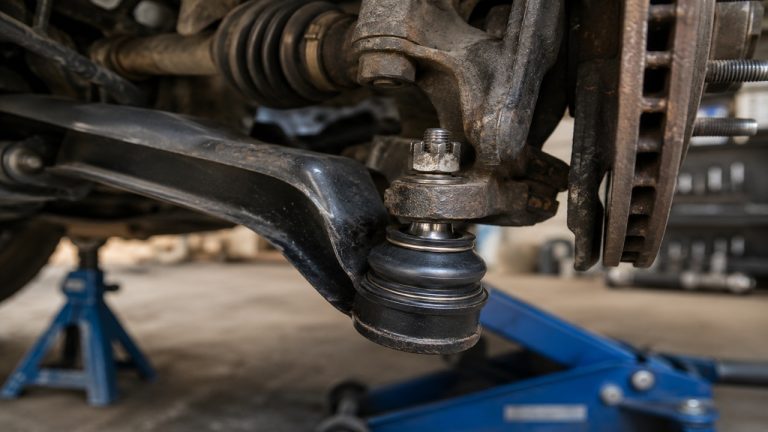
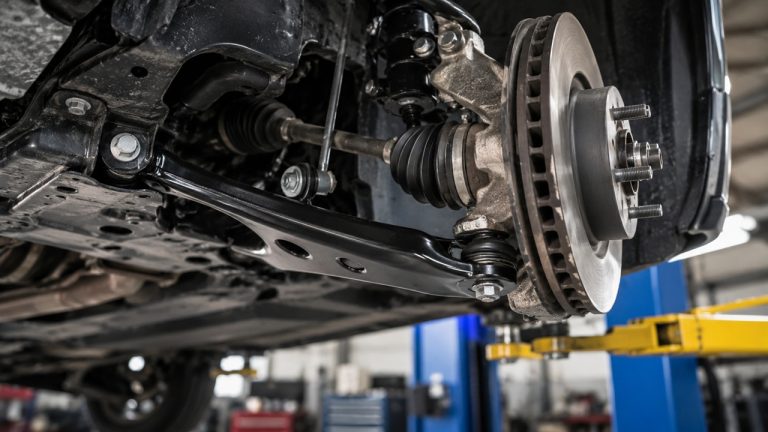
The lower control arm bushing is the flexible connection between the lower control arm and the vehicle’s frame or subframe. It allows the arm to pivot as the suspension moves while limiting unwanted fore-and-aft or side-to-side movement.
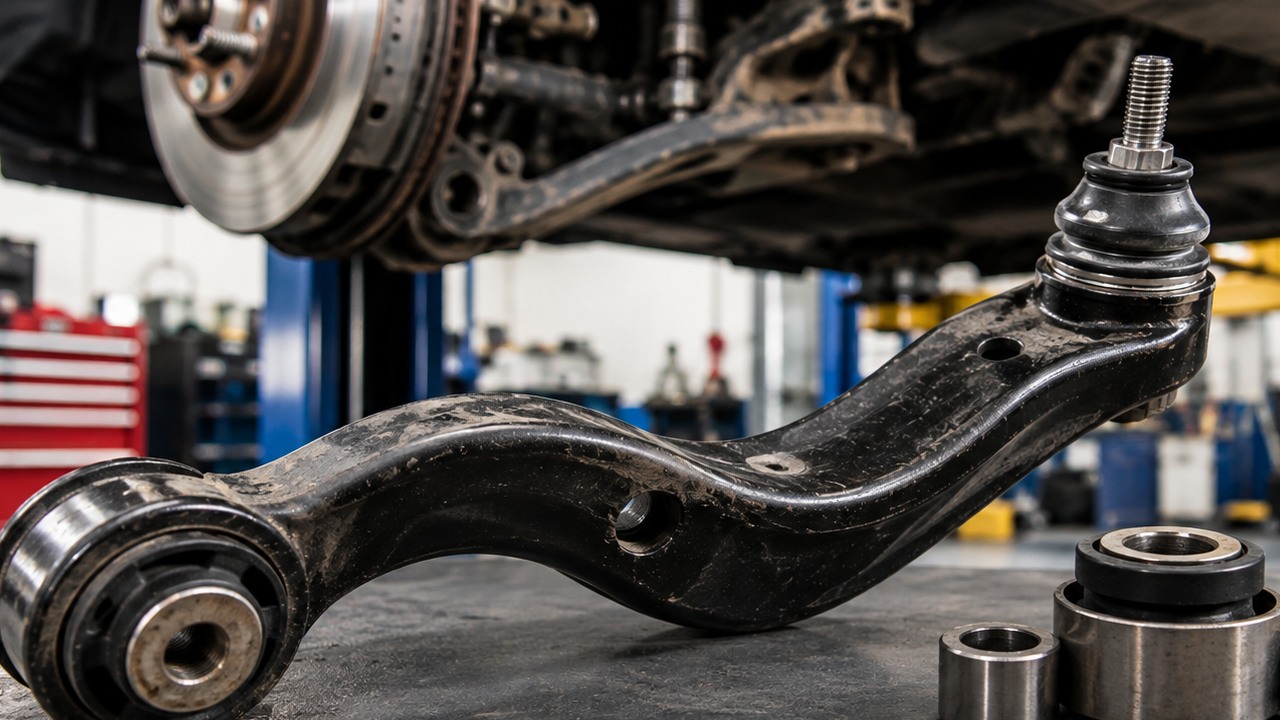
Most factory bushings use bonded rubber around an inner metal sleeve. Some vehicles use fluid-filled hydraulic bushings to improve ride isolation, while performance applications may use firmer polyurethane or other materials.
If your estimate simply says “control arm bushings” without identifying the lower arm, our broader control arm bushing replacement cost guide covers the general repair.
Why the Bushing Is Cheap but the Repair Is Not
The replacement bushing itself is often inexpensive. The labor needed to reach and install it correctly is what drives the total cost.
A typical bushing-only repair may require the technician to:
- raise and safely support the vehicle
- remove the wheel and any components blocking access
- disconnect the lower control arm from the ball joint and subframe
- remove the complete control arm
- press or extract the worn bushing from the arm
- install and orient the new bushing correctly
- reinstall and torque all suspension hardware correctly
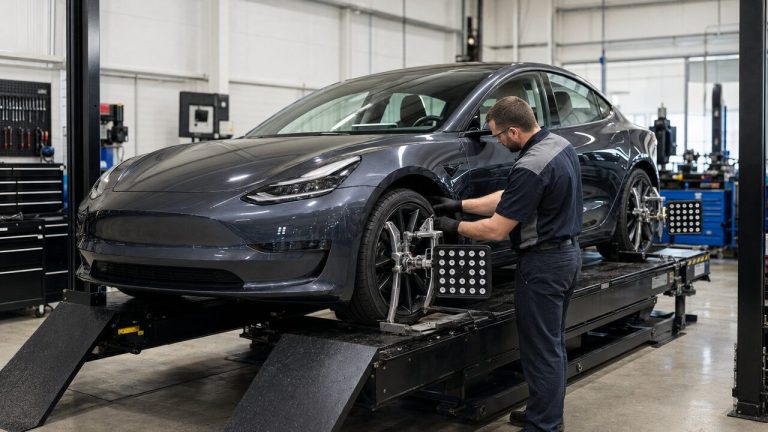
- check or adjust wheel alignment afterward
That is why a $30 or $50 component can still produce a $300, $400, or $500 shop bill.
Parts vs. Labor Cost
| Cost Item | Typical Effect on the Bill |
|---|---|
| Lower control arm bushing | Often about $15–$100+, depending on design and brand |
| Control arm removal | Can account for a significant portion of labor |
| Press or extraction work | Requires correct tools and can become difficult with corrosion |
| Replacement hardware | Seized, stretched or damaged bolts can add cost |
| Wheel alignment | Commonly checked after disturbing lower control arm mounting points |
On a straightforward application, the bushing may be only a small fraction of the invoice. On a heavily rusted vehicle, labor to remove a seized inner sleeve or mounting bolt can exceed the cost of the replacement part several times over.
How Much Does One Lower Control Arm Bushing Cost to Replace?
For one side, roughly $250 to $550 is a useful planning range for many U.S. vehicles when the bushing can be serviced separately.
A simple serviceable bushing with easy access can fall below that range. Hydraulic bushings, premium vehicles, corrosion, difficult press work, or several bushings on the same arm can push the total higher.
Always confirm whether the shop price includes the alignment. A quote for bushing replacement alone should not be compared directly with another estimate that includes parts, labor, hardware, and a four-wheel alignment.
How Much Does It Cost to Replace Both Sides?
Replacing lower control arm bushings on both sides can commonly cost about $450 to $900 or more.
The total is not always exactly twice the one-side price. Both sides can often be completed during the same visit, and the vehicle normally needs only one alignment afterward.
However, both sides should not be replaced automatically just because one bushing is worn. The opposite side should be inspected and the repair based on actual cracking, separation, excessive movement, leakage in a hydraulic bushing, or other measurable deterioration.
Bushing Only vs. Complete Lower Control Arm
This is the most important cost decision in the entire repair.
If the original lower control arm is straight, structurally sound, and its ball joint remains in good condition, pressing a new bushing into the existing arm can save money.
But a complete replacement lower control arm usually arrives with new bushings already installed and may also include a new ball joint. That eliminates separate press labor and renews multiple wear components at once.
If your shop recommends replacing the entire assembly, compare the quote with our lower control arm replacement cost guide before deciding which repair offers better value.
When Replacing the Whole Arm Makes More Sense
A complete lower control arm often becomes the better choice when:
- the replacement arm is inexpensive relative to bushing press labor
- more than one bushing on the arm is worn
- the ball joint also has excessive play
- the original arm is bent, cracked or heavily corroded
- the bushing is not practically serviceable separately
- removing the old bushing requires substantial extra labor
The correct comparison is not “cheap bushing versus expensive control arm.” It is total installed cost of bushing-only service versus total installed cost of a complete arm.
What if the Lower Ball Joint Is Worn Too?
A worn lower ball joint can shift the economics strongly toward replacing the complete control arm, especially when the replacement arm includes both new bushings and a new ball joint.
If the diagnosis specifically calls for the joint rather than the bushing, see our lower ball joint replacement cost guide.
There is little benefit in paying substantial labor to press new bushings into an old control arm if another major wear component on the same assembly also needs immediate replacement.
Front Lower Control Arm Bushing Replacement Cost
Most searches for lower control arm bushings refer to the front suspension. Many cars and crossovers use one lower control arm on each front corner with one or two inner bushings connecting the arm to the subframe.
For a mainstream vehicle, approximately $250 to $550 per side is a sensible starting range for bushing-only service.
Some arms use a small front bushing and a much larger rear compliance bushing. If only one is damaged, the shop may be able to replace that bushing alone. Other technicians may recommend renewing both bushings while the arm is already removed.
Rubber vs. Hydraulic Lower Control Arm Bushings
Rubber bushings
Conventional bonded-rubber bushings are the most common design. They isolate road vibration while allowing controlled suspension movement and are generally the best option when restoring factory-like ride quality.
Hydraulic bushings
Some vehicles use fluid-filled hydraulic bushings for additional vibration isolation. These can cost more than simple rubber bushings and may show visible fluid leakage when they fail.
Because hydraulic bushings are more sophisticated and often vehicle-specific, they can push the parts cost above the typical inexpensive rubber-bushing range.
Do Lower Control Arm Bushings Need to Be Replaced in Pairs?
No universal rule requires lower control arm bushings to be replaced in pairs. Each side should be evaluated according to its actual condition.
That said, opposite-side bushings normally have similar mileage and exposure to road conditions. If one side is badly cracked or separated, inspecting the corresponding bushing on the other side is sensible.
If both sides are near the end of their service life, replacing them together can avoid repeating suspension labor and paying for another alignment shortly afterward.
Do You Need an Alignment After Replacing Lower Control Arm Bushings?
A wheel alignment is commonly recommended after lower control arm bushing replacement. The lower control arm helps establish wheel position, and removing or loosening its inner mounting points can affect alignment geometry.
Some vehicles also use eccentric bolts or other adjustment hardware at the control arm mounts, making alignment particularly important after the arm has been removed.
The exact requirement still depends on the suspension design and repair procedure. Our guide to alignment after replacing suspension parts explains why some jobs disturb alignment more than others.
Why a Lower Control Arm Bushing Quote Can Exceed $550
A high quote is not automatically excessive. Several legitimate factors can push the repair above the typical range:
- multiple bushings being replaced on the same arm
- hydraulic or expensive OEM bushings
- heavy rust or corrosion
- a seized inner sleeve or mounting bolt
- difficult control arm removal
- special press adapters or extraction tools
- replacement suspension hardware
- additional worn suspension components
- wheel alignment after installation
- higher dealership or regional labor rates
If several suspension components appear on the same estimate, use our car suspension repair cost guide to judge the broader repair scope rather than evaluating the bushing line in isolation.
How to Compare Two Lower Control Arm Bushing Quotes
- Confirm the exact side. Determine whether the quote covers the left, right, or both lower control arms.
- Check how many bushings are being replaced. One lower control arm can contain more than one bushing.
- Ask whether the arm is removed. Complete arm removal can account for much of the labor.
- Ask whether press work is included. Extraction and installation may be a separate labor operation.
- Compare the replacement parts. Rubber, hydraulic, OEM and aftermarket bushings can have very different prices.
- Ask for a complete-arm alternative. Compare the installed price of bushing-only service with a new lower control arm.
- Check the ball joint. If it is also worn, replacing the whole arm may make more sense.
- Check alignment. Find out whether it is recommended and already included in the total.
A $450 bushing-only repair may be excellent value when the original arm and ball joint are healthy. But if a complete arm with new bushings and a ball joint costs only slightly more installed, the complete assembly may be the smarter repair.
Symptoms of Worn Lower Control Arm Bushings
Worn lower control arm bushings can create several symptoms, but none proves by itself that the bushing has failed.
- clunking when braking, accelerating, or driving over bumps
- steering that feels loose or inconsistent
- vehicle wandering or requiring frequent correction
- changes in alignment
- uneven or accelerated tire wear
- visible cracking or tearing in the rubber
- separation between the rubber and metal sleeve
- fluid leakage from a hydraulic bushing
Ball joints, tie rods, tires, wheel bearings, and other suspension components can produce similar symptoms. If the vehicle feels unstable or wanders while driving, our loose suspension and wandering guide covers the broader diagnosis.
If uneven tire wear is the main symptom, see our guide to suspension-related tire wear.
Can You Drive With Bad Lower Control Arm Bushings?
Mild surface cracking in an older rubber bushing is very different from a bushing that has torn through or separated from its sleeve.
As wear becomes severe, the lower control arm can move farther than intended during braking, acceleration, and cornering. That can affect steering precision, wheel alignment, tire wear, and vehicle stability.
A severely separated bushing, major control arm movement, unstable steering, or rapid alignment changes should be repaired rather than ignored indefinitely.
Can You Replace Lower Control Arm Bushings Yourself?
Lower control arm bushing replacement is generally an advanced DIY job because the bushing often requires a hydraulic press, specialized extraction tools, or correctly sized adapters.
The lower control arm may need to be completely removed, which involves safely supporting the vehicle, separating the ball joint, removing high-torque mounting hardware, and reinstalling everything correctly.
Bonded rubber bushings may also need their final mounting-bolt torque applied with the suspension at its specified ride-height position. Tightening them with the suspension hanging at full droop can preload the rubber and shorten bushing life.
If you do not have the correct press equipment, safe lifting equipment, and suspension experience, having a professional shop perform the repair—or replacing the complete control arm when appropriate—is usually the safer option. Never work underneath a vehicle supported only by a jack.
Frequently Asked Questions
How much does lower control arm bushing replacement cost?
About $250 to $550 per side is a useful planning range for many U.S. vehicles. Simple serviceable bushings can cost less, while hydraulic bushings, corrosion, difficult press work, and premium vehicles can cost more.
How much are lower control arm bushings themselves?
A conventional replacement bushing can cost roughly $15 to $100 or more depending on the vehicle, design, and brand. Labor is often the larger portion of the installed repair price.
Can you replace just the lower control arm bushing?
Yes, on vehicles where the bushing is sold and serviced separately. The control arm must normally be removed and the old bushing pressed out. On other vehicles, replacing the complete lower control arm may be more practical.
Is it cheaper to replace the bushing or the whole lower control arm?
The bushing is cheaper as a part, but bushing-only replacement can require substantial press labor. If a complete control arm includes new bushings and a ball joint and costs only slightly more installed, replacing the whole arm may provide better value.
Do lower control arm bushings need to be replaced in pairs?
Not automatically. The opposite side should be inspected because both bushings often have similar age and mileage, but replacement should normally be based on actual condition.
Do you need an alignment after replacing lower control arm bushings?
Alignment is commonly recommended after lower control arm bushing replacement because the arm helps establish wheel position and its mounting points may be disturbed during the repair.
How long does lower control arm bushing replacement take?
A straightforward job can take roughly two to four labor hours per side when the control arm must be removed and the bushing pressed out. Corrosion and difficult access can increase the time considerably.
Compare Bushing-Only Service With a Complete Arm
For many vehicles, approximately $250 to $550 per side is a useful starting budget for lower control arm bushing replacement. But the cheapest individual component does not always produce the cheapest installed repair.
Confirm how many bushings are being replaced, how much control-arm removal and press labor is required, whether the ball joint and original arm remain in good condition, what a complete lower control arm would cost installed, and whether alignment is included. Comparing those complete repair scopes is the best way to decide whether replacing only the lower control arm bushings actually saves money.