Jeep Gladiator Lift Kit: Best Height, Tires & Fitment
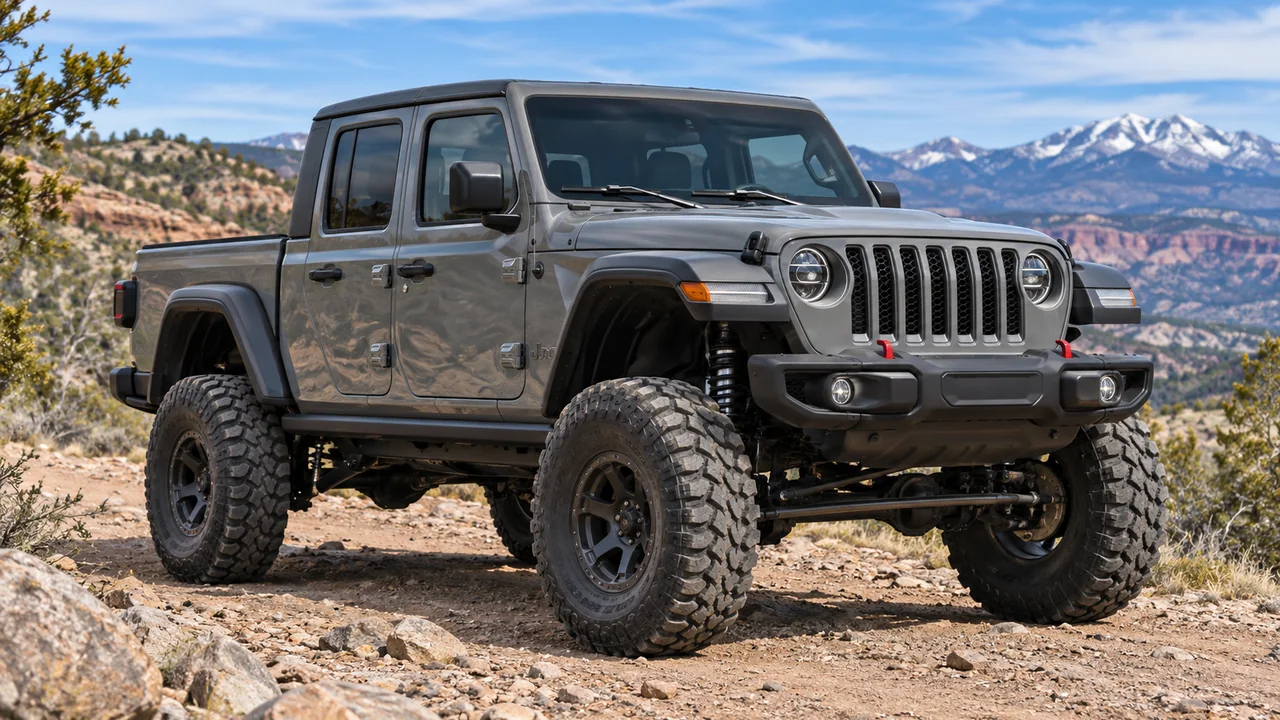
A Jeep Gladiator lift kit is easiest to get right when you decide what the pickup needs to do before deciding how high it should sit. For a mostly stock JT that commutes, carries occasional bed cargo and tackles ordinary trails, a well-matched 2–2.5-inch suspension lift is often a sensible place to start. A 3–3.5-inch system can suit a more demanding trail or overland build, provided it corrects the geometry the extra height changes. Six inches is a substantial project, not a necessary step toward a tougher-looking daily driver.
The complication is that “Gladiator JT” does not identify every detail that matters. A Sport and a Rubicon do not start with identical fenders and suspension equipment. The Mojave has specialized FOX shocks and hydraulic front jounce bumpers. A truck loaded with a bed rack and camping gear will also sit differently from an empty one. Start with the quick choices below, then check the specific kit’s instructions against your year, trim, engine and intended tire size.
Which Jeep Gladiator Lift Kit Fits Your Plans?
A lift height is useful for narrowing a shopping list, but it cannot promise tire clearance or a particular amount of articulation. Use these ranges as a first pass; the final decision depends on the vehicle and the hardware supplied with the kit.
| Your Gladiator use | Lift-kit starting point | What makes or breaks the fit |
|---|---|---|
| Mostly pavement; smaller tire change | Front leveling or about 1–1.5 inches | Loaded rake, existing shocks and trim height |
| Daily driver; mild trails; carefully chosen 35s | Matched 2–2.5-inch suspension kit | Wheel backspacing, shock travel, fender clearance |
| Regular trails or a loaded overland build | More complete 3–3.5-inch system | Spring rates, caster, track bars, bump stops |
| Large tires and a specialized build | Engineered 4–6-inch package | Driveshafts, steering, link geometry, total cost |
A short, well-engineered kit can outperform a taller one that leaves the axles poorly centered or the shocks operating outside their intended range. If you already own 35-inch tires, for instance, check the exact wheel offset and full-compression clearance before assuming you need another inch of spring height. A more complete parts list is often a better purchase than the biggest number on the box.
Gladiator JT Fitment: Year, Trim and Engine
The Gladiator arrived for the US 2020 model year as the JT pickup. It shares some engineering with the Wrangler JL, but the wheelbase, rear suspension application and truck-specific loading are different. Even within the JT family, catalog fitment changes with factory equipment. These are the distinctions worth checking before you compare brands.
JT Gladiator Is Not a Wrangler JL With a Bed
A product may be advertised for both the Wrangler JL and Gladiator JT, and some parts genuinely are shared. That does not make every JL lift a Gladiator lift. The JT’s rear springs, rear ride height, track-bar arrangements and shock requirements must be confirmed for the pickup application. A package that raises a shorter Wrangler correctly may leave a Gladiator sitting oddly or with the wrong rear travel.
If you are actually choosing a kit for the SUV rather than the pickup, use our Jeep Wrangler lift kit guide. It handles YJ, TJ, JK and JL differences separately. This page is for the JT only, and aftermarket listings should say Gladiator JT or name the exact Gladiator application.
Sport, Sport S, Willys and Overland: Check the Starting Height
These are common candidates for a mild coil-spring lift, but factory suspension and tire packages vary by model year. An advertised 2.5-inch kit may be measured against a particular reference trim. If your truck already has a taller factory package, the real increase can be smaller than the number in the product name. Conversely, added bumper weight can reduce the final height.
There is also a practical difference between lifting for appearance and lifting for tires. A truck on modest all-terrain rubber may need only a small front adjustment to reduce rake. The same truck intended for larger, wider tires and regular rocky trails may benefit from a coordinated set of springs, shocks, bump stops and axle-location corrections. Neither choice should be made from the model badge alone.
Rubicon: High-Clearance Equipment Changes the Calculation
The Rubicon has off-road-oriented factory equipment, including different suspension tuning and wheel-opening considerations compared with lower trims. Its greater starting clearance can change what tires are workable with a mild lift. It also means that a kit advertising its height on a Sport may not produce the same measured gain on a Rubicon. Some manufacturers publish separate heights or part numbers for Rubicon applications.
A Gladiator Rubicon equipped with an electronic front sway-bar disconnect deserves a complete droop and linkage check after suspension changes. If the lift increases suspension extension, the brake hoses, shock lengths and sway-bar links must still accommodate the intended movement. Buying more articulation on paper is useless when another part becomes the first hard stop.
Mojave and Mojave X: Do Not Assume Standard Shock Fitment
The Mojave was developed around faster desert driving and has an unusual factory suspension package for a Gladiator, including FOX internal-bypass shocks with remote reservoirs and front hydraulic jounce bumpers. That equipment is worth keeping if it suits the truck’s use. A generic kit can interfere with shock mounting, reservoir routing or jounce-bumper operation even if its springs physically fit.
A Mojave owner should look for a product expressly approved for the Mojave, including the correct model years. Some kits preserve the factory FOX shocks using carefully specified brackets; others require their own shocks and a different approach to bump travel. “Fits 2020+ JT” is not enough. The same caution applies to Mojave X and any special factory suspension package listed separately by the manufacturer.
EcoDiesel and Model-Year Changes: Read the Fine Print
The earlier JT could be ordered with a 3.0L EcoDiesel, while the gasoline 3.6L V6 is a separate engine application. Different engine mass affects spring selection and achieved height, and some manufacturer catalogs split gasoline and diesel kits. A used diesel Gladiator should be shopped by its actual engine and original equipment, not by the current-model specification sheet.
The year range also matters. A product page ending at 2023 is not automatic approval for a 2024, 2025 or 2026 truck. Manufacturers may update springs, mounts, electronic-equipment notes or simply have a newer application that requires its own instructions. Record the VIN, build configuration and any suspension parts installed by a previous owner before placing an order.
How Much Lift Does a Gladiator Really Need?
The advertised height is a starting point, not a measurement of improved wheel travel or a guarantee of 35-inch tire clearance. These ranges describe common shopping decisions for the JT, assuming the kit is specifically engineered for the vehicle. A taller truck can be less pleasant to drive if the links, dampers and steering geometry have not been addressed.
Under 1.5 Inches: Leveling the Nose
A small front spacer or leveling package can reduce the nose-down stance without replacing the complete suspension. It is a reasonable choice when the truck drives well, its existing shocks and springs are healthy, and you mainly want a modest visual change. It is not a shortcut to meaningful new suspension travel, and a spacer will not compensate for tired dampers or overloaded rear springs.
Be careful if you tow or carry a heavy bed load. Factory rake is not necessarily an error: part of the rear-high stance is useful when weight is added. A perfectly level empty Gladiator may look rear-low with tongue weight on the hitch. Measure the pickup in the state in which you actually use it before leveling away all the original difference.
About 2–2.5 Inches: A Practical Daily-Driver Lift
This range gives many owners a useful balance of stance, tire room and manageable changes to suspension geometry. On a moderately loaded Sport or Overland, a matched coil-and-shock system is often more appealing than a basic spacer-only package if the truck sees regular rough roads. You still need the manufacturer to confirm caster provisions, shock travel and bump stops; small does not mean maintenance-free.
Look for a kit designed around both the front and rear of the JT. A listing that calls out “2.5 inches front, 1 inch rear” is doing something different from a full 2.5 inches at both ends. Either could suit your goal, but the rake and load behavior will not be identical. Ask what the truck is expected to measure once the parts settle and it has been aligned.
3–3.5 Inches: Decide How You Will Control the Axles
At roughly three inches and above, axle position and suspension-link angles start to deserve more deliberate attention. The front caster, front and rear track-bar geometry, and available droop all change from the original configuration. One kit might include adjustable track bars and correction arms; another may need separate parts to reach the maker’s intended alignment and travel.
This is often the range considered for a Gladiator used on more serious trails, or for a build targeting larger tires and added equipment. The important word is complete. If you pay for springs alone and then discover that the shocks, sway-bar links, track bar and brake-line routing cannot safely follow the axle through its travel, you have bought the first stage of a kit, not the finished setup.
4–4.5 Inches: Treat the Lift as a System
At this height, the decision extends well beyond springs and tires. Caster correction, steering feel, driveshaft operating angles, brake-line reach and track-bar angles must all be considered together. Longer or relocated control arms and more substantial axle-location changes may be part of the solution. The right arrangement depends on the precise kit rather than an arbitrary four-inch threshold.
A 4.5-inch lift on a pickup that spends most of its time on pavement may cost more in driveline work and day-to-day compromises than it returns in usable capability. There are good reasons to build tall for a specific off-road objective, but that objective should come before the parts order. The extra height is not inherently a substitute for choosing the correct tires, wheel backspacing and bump-stop strategy.
6-Inch Kits: Not the Default Route to 37s
Six-inch Gladiator kits exist, but they belong to builds with a defined tire, steering, driveline and budget plan. They can involve major link or bracket changes, driveshaft evaluation and wheel requirements that go far beyond a simple weekend lift. Higher ride height raises the center of gravity and can make garage access, loading and towing less convenient. None of those drawbacks disappears because the kit bolts on.
If the only goal is fitting 35s—or even a carefully chosen 37-inch setup on some configurations—do not assume six inches is required. Actual tire size, trim and suspension compression are more useful facts than the height of another owner’s truck in a photograph. A reputable installer should be able to explain why that much lift is necessary for your specific build.
Why Your Installed Height May Be Different
Coil-spring lift numbers are generally based on assumptions about original springs, vehicle mass and load. A steel winch bumper, skid plates, a bed rack, hardtop accessories or recovery equipment may alter the result. So can an existing factory-raised trim or worn springs. That is why two Gladiators with the same kit can end up with different visible stances.
Before installation, measure vertically from each wheel hub center to the same fender reference with the truck on level ground, recording fuel and cargo conditions. Repeat after installation and alignment. Measuring from the ground after moving to taller tires mixes two changes: the suspension lift and the extra tire radius. Hub-to-fender measurements separate them.
Will 35-Inch or 37-Inch Tires Fit?
Many buyers start with tire size and only then shop for a lift. That is reasonable, but a Gladiator on 35s is not one fixed recipe. Actual diameter, tire width, wheel backspacing, fender design, steering position and bump-stop compression all change the answer. The following notes focus on JT-specific choices rather than trying to replace a complete tire-fitment article.
33s and 35s: Trim and Wheel Position Matter
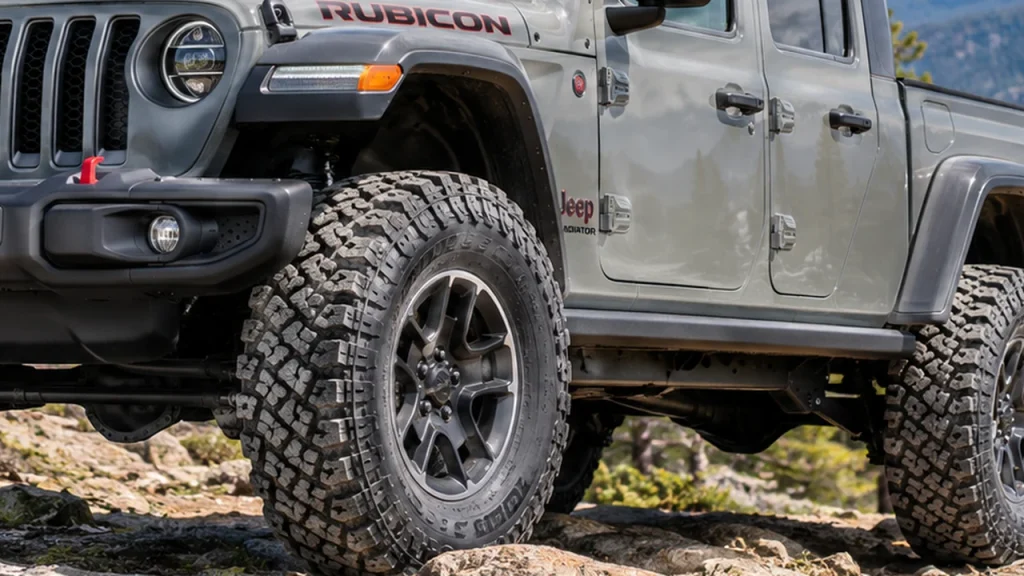
A 33-inch-class all-terrain tire is often a modest step for a Gladiator, while 35-inch-class tires may require more careful planning on lower-clearance trims. Some Rubicon and Mojave setups can accept 35s with little or no suspension-height change in certain driving conditions, but that does not establish full off-road clearance for every tire and wheel combination. A Sport with different fenders may have entirely different contact points.
The tire should be checked at both steering locks and through controlled suspension compression, not merely with the Jeep parked on level ground. If a wider wheel moves the tread outward to clear a control arm, it can create contact at the fender or bumper instead. Our 35-inch tire lift-height guide covers the general fitment variables in greater depth; here, the lift must be chosen around the actual Gladiator configuration.
37s: Articulation Can Matter More Than Parking-Lot Clearance
There are Gladiator builds running 37-inch tires without enormous lifts, especially those starting with high-clearance factory hardware. That is not a universal recommendation. Steering-lock clearance, fender space at full compression, wheel offset, bump stops and axle position are the conditions that matter when a trail obstacle pushes one tire deep into its wheel opening.
Bigger tires also change effective gearing, rotating mass, braking demand, spare-tire storage and the loads carried by axle and steering components. Those questions deserve their own plan, not just an optimistic lift-height chart. See our 37-inch tire lift guide for the tire-specific trade-offs before committing to expensive suspension hardware.
Wheel Backspacing, Tire Width and the Spare
A tire labeled 35×12.50R17, for example, may differ in measured diameter and section width from another tire carrying the same nominal size. Wheel width and offset then determine how the tread sits relative to the steering knuckle, control arms, fender lip and bumper. Some lift manufacturers specify a narrow wheel-and-tire combination they have actually checked; use those measurements, not a vague promise that a kit “fits 35s.”
Do not forget the full-size spare. On a Gladiator, the under-bed spare location, hitch and rear-bumper arrangement may limit how a larger spare can be carried. If the spare ends up in the bed, it affects cargo room and available payload. That is one more reason to plan tires and suspension together rather than treating the wheel purchase as an afterthought.
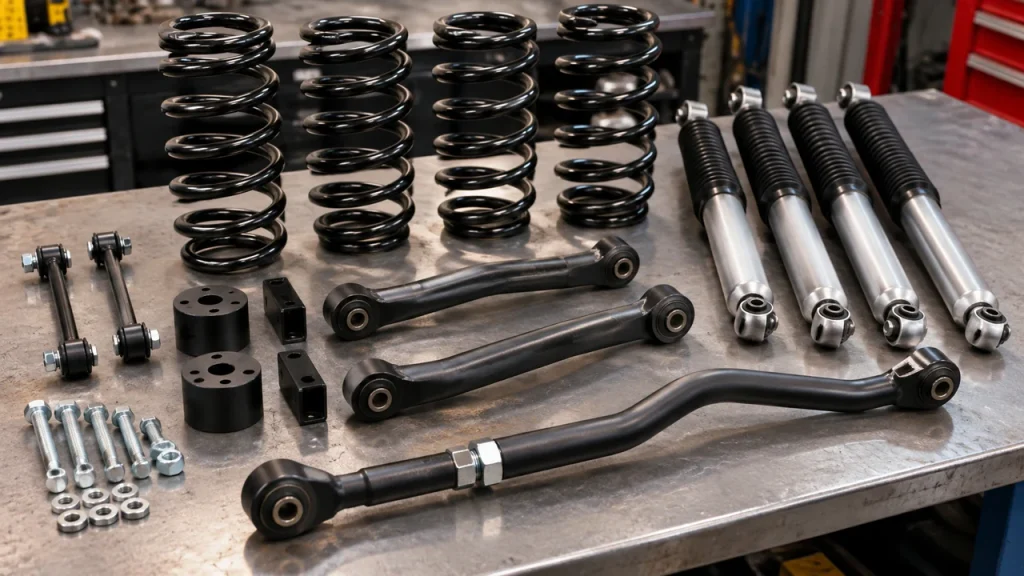
Spacer, Coil-Spring, Shock or Long-Arm Kit?
Two products with the same advertised height can produce very different road behavior. One may move factory springs with a spacer; another may replace spring rates and dampers, correct geometry and include parts for greater controlled articulation. The kit’s actual components and testing matter much more than whether its marketing calls it a “premium” lift.
Spacer Lifts and Leveling Kits
Spacers are useful when the original springs and dampers are in good condition and only a modest change is wanted. They can be relatively inexpensive and straightforward to install, but they do not automatically increase spring capacity or available shock stroke. Even a small spacer can change the installed geometry enough that other parts or checks are required by a particular design.
Pay attention to where the spacer is fitted and how the manufacturer measures the resulting lift. A coil-seat spacer and a shock-extension bracket perform different jobs. Do not stack components from separate kits simply because each one fits physically; the suspension has to remain safe through compression and extension as a complete assembly.
Replacement Coils and Matched Dampers
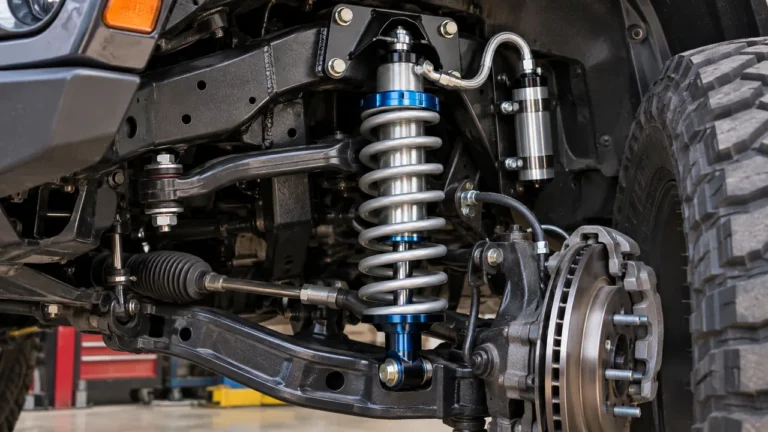
A properly selected coil spring and shock package can match ride height, damping and anticipated load more deliberately. That is particularly useful when the truck regularly carries gear or sees repeated rough-road impacts. Compare spring specifications, actual shock models, compressed and extended dimensions, reservoir clearance and any required bump-stop extensions.
A remote-reservoir shock has more oil capacity and can offer benefits under sustained demanding use, but its presence is not proof that a particular truck will ride better on the street. Spring rate, damper valving, tire pressure and vehicle load all affect comfort. A good suspension system explains the intended use rather than relying on a polished photo of the shock body.
Short Arms, Long Arms and Relocation Brackets
Many moderate lifts work with short control-arm arrangements and targeted geometry corrections. Long-arm systems relocate pivot points and change link geometry, generally with more substantial brackets and installation work. They can be appropriate for a purpose-built Gladiator, but longer arms alone do not create useful suspension travel if the shocks, coils or bump stops are the limiting factor.
If you are considering a long-arm package because someone promised the biggest articulation numbers, compare how it moves through full bump and droop and what underbody clearance it sacrifices. Our long-travel suspension explainer sets out the travel-versus-geometry distinction without duplicating it here. For a daily-driven JT, the more complex choice is not automatically the better one.
Geometry Checks That Matter After a Gladiator Lift
The JT uses coil-sprung solid axles, so changes in ride height move the control arms and track bars away from their original operating positions. A shop that merely installs springs and makes the steering wheel straight may leave important questions unanswered. A complete setup should have a documented way to manage axle centering, steering, shocks and brake-line travel.
Caster, Pinion Angle and Steering Feel
Front caster affects straight-line stability and return-to-center. A lift changes the control-arm geometry that establishes caster, and some systems correct it with longer or adjustable arms or brackets. The front driveshaft and pinion relationship can impose competing requirements, so simply making one angle look stock is not a complete alignment strategy.
If the Jeep wanders or feels vague after the lift, ask for measured alignment readings and an inspection of the entire front end rather than assuming all lifted Jeeps drive that way. Loose ball joints, worn tie rods, tire pressure and a damaged track-bar mount can contribute to poor behavior as well. A steering stabilizer is not a substitute for fixing loose or misaligned parts.
Front and Rear Track Bars
Track bars locate solid axles laterally. Raising the chassis changes their angles, and one or both axles may sit off-center at the new ride height. Depending on the system, an adjustable track bar, relocation bracket or another engineered method may be appropriate. It is not safe to assume that moving a bracket is equivalent to fitting a different bar.
On the front axle, the track bar’s relationship with the drag link is particularly important for steering behavior. A poorly matched relocation can make the vehicle respond to suspension movement in an undesirable way. Our track bar relocation bracket guide explains the geometry and application checks; the Gladiator kit instructions should identify the correct approach for your actual lift.
Shocks, Bump Stops and Spring Retention
The longest shock that bolts into place is not necessarily the right one. If it bottoms out before the axle reaches the intended compression stop, the shock can be damaged. At full droop, coil retention, brake hoses, wheel-speed wiring and driveshaft joints still have to remain within their permitted movement. These limits are easy to overlook when inspecting only the parked ride height.
An installer should verify the designed range through controlled suspension movement, with the springs safely managed and the vehicle properly supported. On a Mojave, the hydraulic front jounce system and special FOX shocks add another layer: brackets, hoses and stops must all work together. Never remove or bypass specialized factory equipment merely to make a generic lift fit.
Driveshaft and Sway-Bar Link Clearance
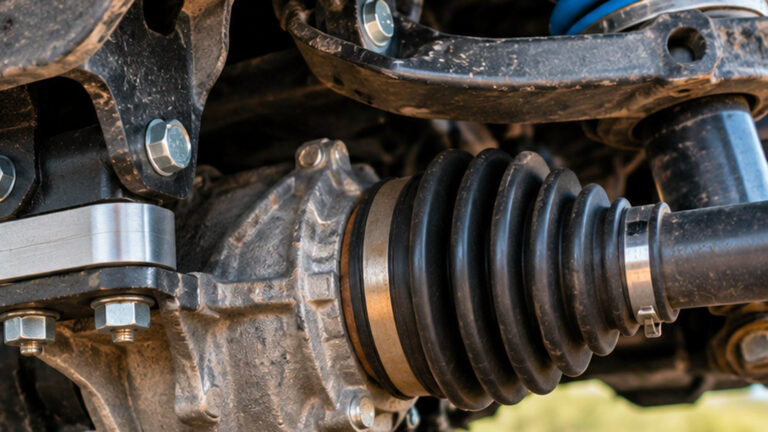
Increasing articulation can reveal a driveshaft or joint-angle problem that never appears during normal road driving. At the front, check nearby components and the shaft through the specified travel; at the rear, the Gladiator’s longer wheelbase does not eliminate every droop or pinion-angle concern. The exact point at which a new shaft is necessary varies by kit and how the Jeep is used.
Sway-bar links and disconnects also need appropriate lengths and clearances. A link may look harmless with the truck sitting flat yet bind or contact another part when one wheel is deeply compressed. Read the maker’s instructions for link placement and bracket orientation instead of using a generic “JT lift install” video as the only reference.
Mojave Owners: Preserve What Makes the Suspension Different
A Mojave-specific discussion deserves its own space because this is where generic buying advice often falls apart. Factory FOX internal-bypass dampers, external reservoirs and hydraulic jounce bumpers were chosen for repeated rough-terrain impacts, not simply to lift the truck. Replacing those pieces without a clear performance goal can lose the very behavior that attracted the buyer to the Mojave.
Shock Extensions Are Not Automatically Mojave-Compatible
A useful manufacturer example is TeraFlex’s JL/JT front shock-extension bracket kit, which lists the Gladiator JT but explicitly says it does not work with Mojave models. That is the kind of exclusion a broad retailer filter can hide. It does not mean every shock extension is wrong for the Mojave; it means fitment must be established product by product.
For a build retaining the original FOX hardware, verify the approved shock mounts, reservoir routing, front jounce clearance, extension limits and the amount of bump-stop adjustment. For a build replacing those components, understand exactly what suspension behavior changes and why. A “Mojave compatible” label is only useful when backed by a specific application and detailed installation sheet.
Rubicon and Mojave Are Built for Different Priorities
The Rubicon emphasizes trail hardware and controlled low-speed articulation, while the Mojave puts more emphasis on high-speed control over uneven desert terrain. Both are capable factory packages, but neither tells you that a particular aftermarket spring set will deliver the advertised lift or retain the original ride. A four-door JT in these trims also carries pickup-specific rear loads that matter to spring choice.
If your Gladiator regularly handles desert washboard, replacing carefully tuned factory dampers with generic shocks just to gain height could be a backwards step. If the vehicle mostly crawls over rocks, the desirable travel and geometry package may be different. Choose for the terrain you actually drive, not for a brand label that happens to fit another Jeep model.
The Bed Changes the Suspension Decision
A Gladiator is not only an off-road Jeep; it is a pickup. That makes the rear spring choice unusually important. A lift that looks balanced with an empty bed can sit nose-high or rear-low when you add a canopy, rack, rooftop tent, recovery tools or a trailer. Kit height should be considered together with the load the rear axle will normally carry.
Daily Cargo Versus Constant Overland Weight
A truck with a removable cooler and occasional camping equipment does not need the same rear spring strategy as one carrying a steel bed rack, drawer system, auxiliary battery and gear every day. Springs designed for heavy constant weight may sit high and feel harsh when unloaded. Softer springs may deliver a better empty ride but sag under permanent accessories. The right rear springs match the usual load, not the heaviest load the truck might carry once a year.
Before choosing springs, estimate the weight of installed accessories and where that weight sits relative to the axle. A rooftop tent on a tall rack changes center of gravity as well as static suspension height. Those effects become more noticeable when the truck already has a lift and larger tires. The final alignment and ride-height measurements should reflect the condition in which it normally travels.
Towing and Payload Are Not Increased by a Lift
A taller Gladiator does not receive higher factory tow or payload ratings simply because the springs are different. Heavier tires, wheels, bumpers and suspension components may consume some of the vehicle’s available payload. A rear spacer does not add legal or mechanical carrying capacity. Hitch height and the trailer’s attitude can also change once the truck is lifted.
For regular towing, assess how the suspension behaves under realistic tongue weight and how the trailer sits behind the Jeep. Maintain the published ratings for the exact truck and hitch arrangement. If leveling the front removed most of the factory rake, the truck may look poorly balanced when loaded. Correcting that with random extra rear spacers is not the same as selecting the proper spring and towing setup.
How to Compare Gladiator Lift Kit Brands and Listings
Rough Country, TeraFlex, AEV, MetalCloak, JKS, Mopar, Clayton Off Road and other makers offer different JT approaches. One company may have a low-cost spacer for a mild stance change and a much more complete suspension system for trail use. A general brand ranking tells you less than the exact part number, instructions and hardware you are paying for.
What a Useful Kit Listing Should Tell You
A credible description identifies the applicable model years, trim exclusions, engine restrictions, front and rear lift figures, included shocks or shock-reuse strategy, bump-stop changes, alignment provisions and wheel-and-tire limitations. It should also make the intended use clear. A product marketed as a basic spacer or leveling package may be perfectly reasonable for road use without being suitable for repeated hard off-road compression.
Read the installation sheet before purchasing. It may call for longer control arms, track-bar adjustments, cutting, new driveshafts or other parts not obvious in the sales summary. If a retailer’s year filter and the manufacturer’s own chart disagree, use the exact part number and current maker documentation to resolve the conflict before spending money.
Mopar, Performance Suspension Packages and the Value of Fitment Notes
Jeep Performance Parts has offered engineered 2-inch Gladiator lift families, but a familiar Mopar name is not a substitute for checking the engine and year application. Manufacturer catalogs distinguish the gasoline 3.6L and older diesel configurations, and shock specifications can change across product generations. Two products described as a “Mopar 2-inch lift” may not be the same bill of materials.
The useful lesson is broader than Mopar: ask what happens to the shocks, steering geometry and available travel on your exact JT. If a kit claims to retain specialized factory dampers, confirm how their compressed and extended lengths are handled. The more technical detail the seller can provide, the easier it is to compare kits fairly instead of guessing from their promotional photographs.
What a Jeep Gladiator Lift Kit Really Costs
The price of the box is only part of the project. In US shops, a simple spacer kit can start at roughly a hundred dollars, while more complete spring-and-shock packages commonly cost several hundred to a few thousand dollars in parts. High-end systems with substantial link or travel changes can exceed that range. These are planning ranges, not live quotations, and the actual trim, shocks, options and installation method can shift the total substantially.
Parts That Commonly Appear After the Initial Quote
Control arms, track bars, longer shocks, bump stops, sway-bar links and driveshaft work may be separate purchases, depending on the lift design. Larger tires, correct wheels and the spare-tire solution can become an even bigger expense than the original kit. An apparently inexpensive lift is not much of a bargain if it forces two more orders before the truck can be aligned and safely driven.
Look at the condition of the original suspension as well. A high-mileage Gladiator with worn joints or corroded fasteners may need repair work that would have been necessary regardless of the lift. Separate those costs on the quote so you can tell what the suspension upgrade actually costs. If the shop will not specify its parts and exclusions, another estimate is worth obtaining.
Labor, Alignment and Reinspection
A modest bolt-on spacer installation is a different job from a lift requiring major geometry changes or new driveshafts. Get a quote that identifies labor, alignment, controlled travel checks and any relevant inspection or calibration after the work. For a broader breakdown of labor ranges and lift complexity, see our lift kit installation cost guide rather than relying on a single Gladiator estimate as a national price.
After installation, follow the manufacturer’s fastener recheck schedule and watch for new steering wander, tire contact, driveline vibration or fluid leaks. A competent shop should document alignment and explain which clearances were checked. The job is not finished merely because the pickup looks good from the sidewalk.
Seven Checks Before You Order
Once you have a likely height and kit style, use this short list to compare the actual product with the truck. It is a better final filter than sorting a retailer’s page by popularity.
- Identify the JT precisely. Record the model year, VIN, engine, trim and any factory off-road package before opening a compatibility chart.
- Write down existing modifications. Include aftermarket springs, shocks, brackets, track bars, steering components and prior lift or leveling parts.
- Record your real load. Note steel bumpers, winch, bed rack, camping equipment and towing use that affect front and rear spring choices.
- Specify the tire and wheel together. Include actual tire dimensions, wheel width, offset and backspacing, plus the planned spare-tire location.
- Check special-trim exclusions. In particular, do not assume that a Rubicon or Mojave uses the same shock and jounce-bumper hardware as a Sport.
- Read the complete kit instructions. Look for axle-centering, caster, driveshaft, brake-hose, sway-bar, bump-stop and shock-travel requirements.
- Compare the installed price. Add parts, labor, alignment, tires, wheels, extra components and the manufacturer’s follow-up checks.
If the installation sheet cannot confirm the vehicle, intended use and expected travel, pause the purchase. A Gladiator lift kit should fit the actual truck, not simply the photo or the broad year range in a search result.
Jeep Gladiator Lift Kit FAQ
There are a few recurring questions worth answering after you have narrowed the lift height and trim. The details change by kit and vehicle, so these are decision guidelines rather than one-size-fits-all fitment approvals.
Is a 2.5-Inch Lift Enough for 35s on a Gladiator?
For many configurations, yes, but there is no guarantee based on height alone. Some high-clearance Rubicon and Mojave setups may already accept particular 35-inch tires with minimal lift; lower trims and different wheels may require more work. Check the exact tire and wheel dimensions at steering lock and full compression and follow the chosen kit’s fitment guidance.
Can I Put a Wrangler JL Lift Kit on a Gladiator JT?
Only if the manufacturer specifically approves that complete kit for the Gladiator JT. Some front components may be shared, but rear spring, track-bar, shock and load requirements differ. Do not infer a complete JT application from a product description that mentions only the Wrangler JL.
Does the Mojave Need a Special Lift Kit?
It needs a Mojave-approved solution. Its FOX internal-bypass shocks, remote reservoirs and hydraulic front jounce bumpers can make ordinary JT hardware incompatible. Some products retain the factory parts with approved brackets, while others replace components. Check the exact model-year application rather than assuming all Gladiators use the same mounts.
How Much Lift for 37-Inch Tires?
There is no universal minimum. Factory high-clearance equipment, tire width, wheel position and available compression travel change the outcome considerably. A 3–3.5-inch system can be a starting point for some purpose-built 37-inch setups, but it is not a promise of safe articulation or clearance. Tires, bump stops, steering and driveline changes must be planned together.
Do I Need Adjustable Track Bars or Control Arms?
Not with every mild lift, but taller systems often need some provision for axle centering and caster correction. Whether that means adjustable bars, revised arms or maker-specified brackets depends on the exact suspension design. Ask for documented installed geometry and a measured alignment, not a generic rule tied to one inch figure.
Will a Lift Kit Make My Gladiator Ride Rougher?
It might, but the height alone cannot predict ride quality. Spring rate, damper tuning, tire pressure and the truck’s normal load matter. A stiff spring built for heavy permanent cargo can be uncomfortable on an empty pickup. A carefully matched system may ride well without being unusually tall.
Does a Lift Increase Ground Clearance Under the Axles?
Not directly. On solid axles, the differential housings move with the axles, so raising the chassis with suspension springs does not by itself add the same amount of clearance underneath the differentials. Taller tires increase clearance under those axle-mounted components by increasing tire radius. A suspension lift changes chassis and body height and can help create tire space.
Can I Keep Towing With a Lifted Gladiator?
Towing remains subject to the vehicle and hitch ratings, and a suspension lift does not increase either one. It can change hitch height, rear rake and handling under tongue weight. Account for the mass of larger tires and new accessories, and verify the loaded suspension and trailer setup before regular towing.
Is a 6-Inch Lift Better for Off-Road Use?
Not automatically. It can suit a very specific build, but more lift can mean a higher center of gravity, more driveline and steering work, and less practical everyday use. The most useful suspension system is the one that clears the tires and controls its full intended travel without unnecessary compromises.