What Size Lift Do You Need for 35-Inch Tires?
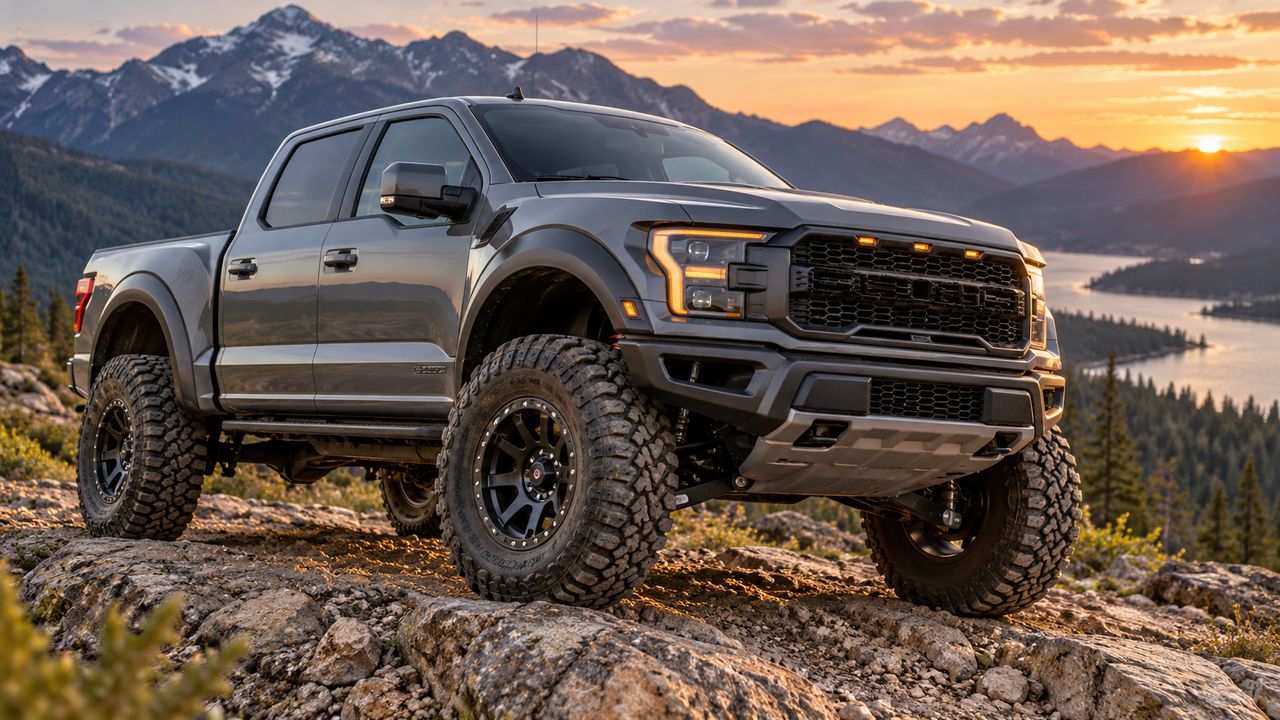
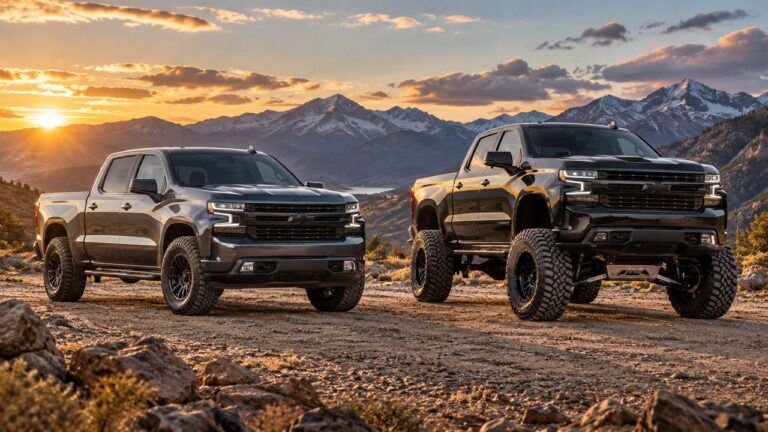
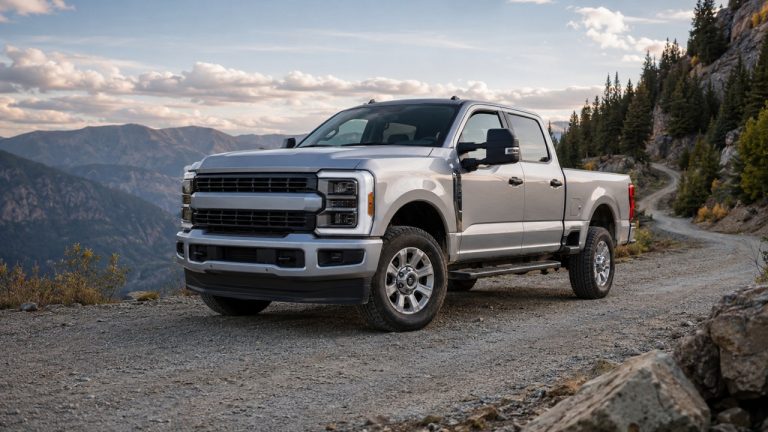
Most trucks need roughly 3 to 6 inches of lift to fit 35-inch tires cleanly, but there is no universal lift height for 35s. Some solid-axle 4x4s and factory high-clearance models can run them with considerably less, while certain independent-front-suspension trucks need more lift, specific wheel offset, trimming or additional suspension parts.
The reason is simple: lift height is only one part of tire fitment. A 35-inch tire also has to clear the body, suspension, frame and steering components while the wheels are turned and the suspension is compressed. Tire width, actual measured diameter, wheel offset, backspacing and how aggressively you use the truck can change the answer by several inches.
If you are asking “what size lift do I need for 35-inch tires?”, use the ranges below as a starting point—not as a guaranteed fitment chart.
| Vehicle / Setup | Lift Range to Investigate | Main Fitment Issue |
|---|---|---|
| Solid-axle 4×4 / Wrangler-type layout | About 2–3.5 inches | Fender, bump-stop and articulation clearance |
| Half-ton IFS pickup | About 3–6 inches | Control arms, body mounts, bumper/fender clearance and wheel offset |
| Factory high-clearance / 35-inch package | Possibly no additional lift | Exact trim and factory wheel/tire package |
| Aggressive off-road build | Vehicle-specific | Full compression, steering lock and articulation matter more than parked clearance |
For a typical full-size IFS truck, 3–4 inches is often where 35s become realistic and 4–6 inches gives more clearance margin. But choosing six inches just because it guarantees more space is not always the better build. Extra lift also changes suspension geometry, center of gravity, driveline angles and cost.
Why There Is No Single Lift Size for 35-Inch Tires
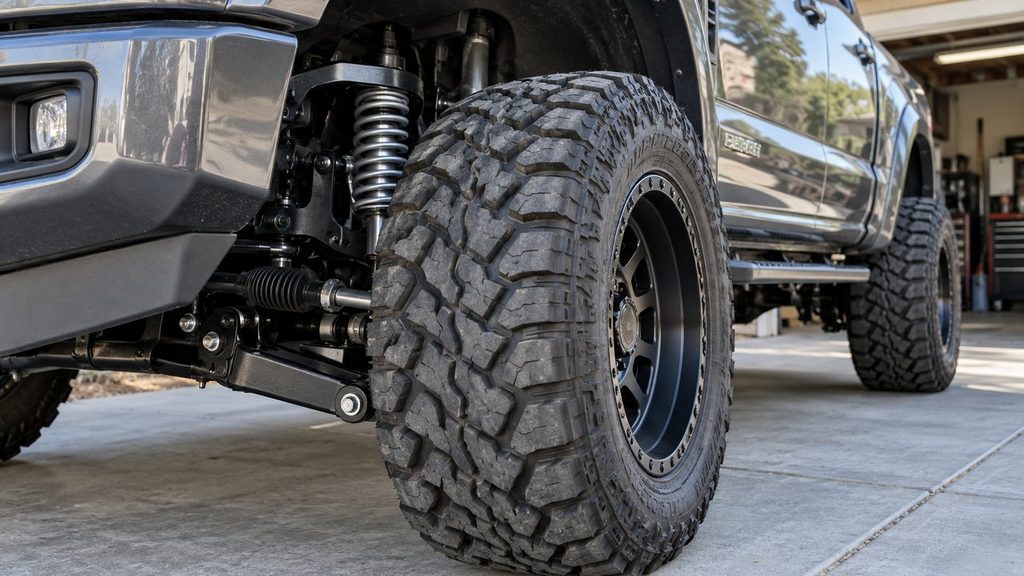
A tire does not care how much lift is advertised on the box. It only cares whether there is enough physical space throughout its entire movement.
That means a truck with a 3-inch lift can sometimes clear 35s better than another truck with a 4-inch lift if the first truck has more generous wheel openings, narrower tires and wheels with a better offset.
The opposite is also true. A tall truck can still rub badly if a wide tire is pushed outward into the fender or inward toward an upper control arm.
Five variables matter most:
- Factory wheel-well clearance — some vehicles are designed around much larger tires than others.
- Actual tire dimensions — the number printed on the sidewall is nominal, not an exact physical measurement.
- Wheel width, offset and backspacing — these control where the tire sits relative to the suspension and body.
- Suspension movement — clearance must remain acceptable at compression, droop and steering lock.
- Your tolerance for trimming — cutting or reshaping liners, brackets or body-clearance areas can change how little lift is required.
A “35-Inch Tire” May Not Actually Measure 35 Inches
This is one of the most overlooked parts of fitting 35s.
A size such as 35×12.50R17 describes a nominal tire approximately 35 inches in diameter and 12.5 inches wide for a 17-inch wheel. Actual published dimensions can vary between brands, tread designs and approved wheel widths.
A metric size such as 315/70R17 is also commonly discussed as a “35,” yet its calculated diameter is closer to the mid-34-inch range before manufacturer-specific differences are considered. To compare those two sizing formats directly, try our tire size comparison calculator for nominal diameter, width, and speedometer differences.
A difference of only half an inch in overall tire diameter sounds minor, but only half of that diameter sits above the hub. When clearance is already tight at a body mount, upper control arm or fender liner, fractions of an inch can decide whether the tire clears or rubs.
Always check the tire manufacturer’s actual overall diameter and section width for the exact size and model you intend to buy rather than assuming every tire labeled 35×12.50 is physically identical.
Can You Fit 35s With a 2-Inch Lift?
Sometimes, but only on vehicles with enough factory clearance. A 2-inch lift should not be treated as a universal recipe for 35-inch tires.
Some solid-axle vehicles, high-clearance trims and trucks designed around unusually large factory tires may physically accept 35s with a small lift or even at stock suspension height. Others will rub badly with the same nominal amount of lift.
With only two inches of additional height, wheel offset, tire width and body clearance become especially important. A setup that clears while driving straight on pavement may still contact the fender liner, bumper, body mount or suspension at full steering lock or compression.
Can You Fit 35s With a 3-Inch Lift?
A 3-inch lift is enough for 35s on some trucks and SUVs, but not all of them. This is where vehicle design becomes more important than the lift number itself.
Solid-axle vehicles with generous wheel openings often have an easier time. On many IFS trucks, a 3-inch front lift can create useful tire room but may still leave interference around the rear of the front wheel well, body mount, bumper or upper control arm.
This is why two owners can both truthfully say they run 35s on a 3-inch lift while having completely different experiences. One may use a narrower tire, factory-style wheel offset and mild street driving; the other may use a 12.5-inch-wide tire on a more aggressive wheel and discover rubbing as soon as the suspension compresses while turning.
Is a 4-Inch Lift Enough for 35-Inch Tires?
Four inches is a common starting point for 35-inch tires on many full-size trucks. It normally provides more body and fender clearance than a small level or mild suspension lift without immediately moving into the tallest lift-kit category.
That still does not make every 4-inch-lift-and-35 combination rub-free. Manufacturers often specify particular wheel widths, offsets and backspacing for their kits because changing the wheel position can move the tire into a control arm on one side or into the body on the other.
If a kit manufacturer publishes a maximum tire size for your exact year, model, drivetrain and wheel specification, use that information ahead of a generic internet chart.
Do You Need a 6-Inch Lift for 35s?
No—not automatically. A 6-inch suspension lift often provides plenty of room for 35-inch tires on compatible full-size trucks, but that does not mean six inches is required.
Choosing more lift than necessary can increase the cost and complexity of the build. Depending on the suspension design, additional height can affect CV angles, control-arm position, steering geometry, driveshaft angles, brake-line routing and center of gravity.
If 35-inch tires are the goal, choose the smallest properly engineered setup that gives the vehicle the clearance and suspension movement you actually require rather than automatically choosing the tallest kit.
Wheel Offset and Backspacing Can Change the Answer
Lift height creates vertical space. Wheel offset and backspacing determine where the tire occupies that space.
Moving the wheel outward can create clearance from an upper control arm or inner suspension component, but it also swings a larger arc as you steer. That can increase contact with the bumper, fender edge, liner or rear of the wheel opening.
Keeping the wheel farther inward can improve outer-fender clearance but may bring a wide tire too close to control arms, frame components or sway-bar hardware.
This is why “35s fit with a 3-inch lift” is incomplete information unless you also know the wheel width and offset used in that successful setup. If those measurements are unfamiliar, our guide to how wheel offset and backspacing differ explains how each one changes inner clearance, outer poke and tire position.
Where 35-Inch Tires Usually Rub
A successful 35-inch tire setup must clear more than the visible fender opening.
- Front bumper or lower valance: commonly contacted as the tire turns outward.
- Rear of the front wheel opening: the tire moves toward this area at steering lock.
- Fender liner: flexible plastic can rub before harder body parts do.
- Body or cab mount: a common limitation on several body-on-frame IFS platforms.
- Upper control arm: wide tires or high-backspacing wheels may reduce inside clearance.
- Frame or sway-bar area: vehicle-specific interference can appear near full steering lock.
Check both sides of the truck. Manufacturing tolerances, alignment settings and previous body repairs can create slightly different clearances from left to right.
Parked Clearance Is Not Enough
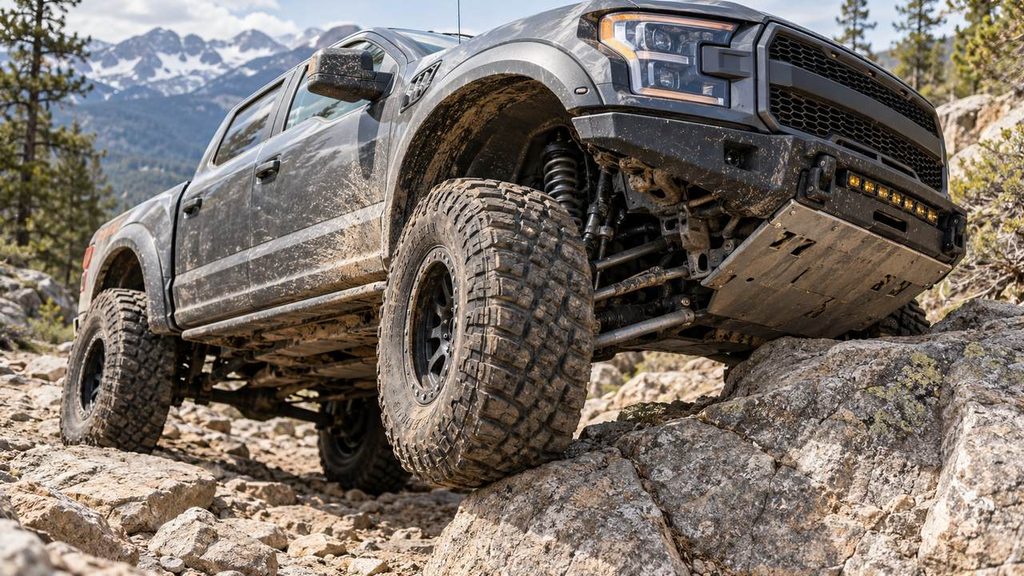
This is where many “it fits” claims become misleading.
A 35-inch tire can look perfectly clear while the truck is parked with the wheels straight ahead. The difficult condition occurs when the suspension compresses and the wheel is turned.
Off-road use makes this even more important because one front wheel can move deeply into compression while steering around an obstacle. If the suspension is capable of significant articulation, the tire needs usable clearance throughout that movement rather than only at normal street ride height.
Do not confuse lift with additional wheel travel either. A taller suspension does not automatically create more usable travel. If that distinction matters to your build, our guide to long-travel suspension explains what actually has to change to increase wheel movement.
Can a Leveling Kit Fit 35-Inch Tires?
On some trucks, yes; on many others, not without additional compromises.
A front leveling kit removes some factory rake and can create extra clearance at the front fenders. Whether that is enough for 35s depends on the platform, tire width, wheel position and acceptable trimming.
A leveling kit should not be chosen solely because someone with a different truck claims to run the same tire size. If you are still deciding whether you need a simple front level or a more complete suspension lift, see our leveling kit vs lift kit comparison.
Can a Body Lift Help Fit 35s?
A body lift can create more distance between the body and frame on compatible body-on-frame vehicles, which may improve tire-to-body clearance without adding the same suspension geometry changes as a suspension lift.
But a body lift does not move the suspension, frame, axles or differentials upward. It therefore solves a different clearance problem from a suspension lift.
If you are considering that route, read our guide to body lift vs suspension lift differences before combining lift methods simply to reach a tire-size target.
35-Inch Tires Do Not Add 2 Inches of Ground Clearance Everywhere
A larger tire raises the wheel hub, axle and vehicle by approximately half the increase in actual tire diameter.
For example, moving from an actual 31-inch tire to an actual 35-inch tire increases radius by about two inches. That can provide approximately two additional inches beneath an axle-mounted differential.
A suspension lift is different. It raises the frame and body relative to the wheels but, on a solid axle, does not by itself increase the clearance between the differential housing and the ground.
That distinction is useful because the real reason many off-road drivers want 35s is not simply appearance—it is the extra tire radius at low components that suspension lift height alone cannot provide. If you are deciding whether that gain justifies moving up from 33s, our 33 vs 35 tires comparison covers the differences in clearance, road behavior, gearing and fitment.
What Else Changes When You Install 35s?
Getting the tire physically inside the wheel well is only the first step. A 35-inch tire is usually taller and heavier than the factory tire it replaces, so the complete vehicle needs to be considered.
Alignment
Suspension lift or leveling work can change camber, caster and toe. After changing ride height, arrange an alignment and verify that the vehicle can reach the manufacturer’s appropriate alignment range. Our guide to alignment after suspension changes covers when and why it is required.
Steering and Suspension Geometry
On IFS trucks, increased ride height can alter upper-control-arm, ball-joint and CV-joint angles. Larger lift systems may use crossmembers, steering knuckles or differential relocation to keep those components closer to their intended operating ranges.
Gearing and Performance
A taller, heavier tire changes effective gearing and rotational mass. Acceleration, transmission behavior and engine braking can feel different, especially if the factory tire was much smaller.
Whether regearing is worthwhile depends on the original axle ratio, transmission, engine, vehicle weight and intended use. There is no single gear ratio that should be recommended for every vehicle running 35s.
Speedometer and Electronic Calibration
A larger rolling circumference changes the relationship between wheel speed and road speed. Depending on the vehicle, tire-size calibration may be needed so the speedometer, odometer, shift strategy and other systems receive the correct tire-size information.
Braking
Larger and heavier wheel-and-tire assemblies require more energy to accelerate and decelerate. Do not assume that because a tire physically fits, the complete setup has no effect on braking feel or stopping performance.
Spare Tire
Plan where a full-size 35-inch spare will go. Factory under-bed carriers, rear doors and interior storage locations may not accept the larger diameter or width without modification.
Daily Driving vs Off-Road Use Changes the Required Clearance
A pavement-focused truck and an off-road truck do not need the same tire clearance even if both use 35s.
A daily driver may spend nearly all of its time close to normal ride height, with suspension compression occurring mainly over potholes, driveways and emergency maneuvers. Mild contact with a flexible liner at absolute full lock may be unacceptable to one owner and tolerable to another.
An off-road truck needs more margin. Steering while one wheel is deeply compressed can place the tire much closer to the body than a parking-lot test suggests. Mud can also pack into tight wheel wells, and a tire contacting a hard body edge under load can damage both the tire and vehicle.
If the truck is being built around a complete suspension system rather than tire clearance alone, our guide to off-road suspension kits for trucks and 4x4s covers that separate buying decision.
How to Determine the Right Lift for Your 35s
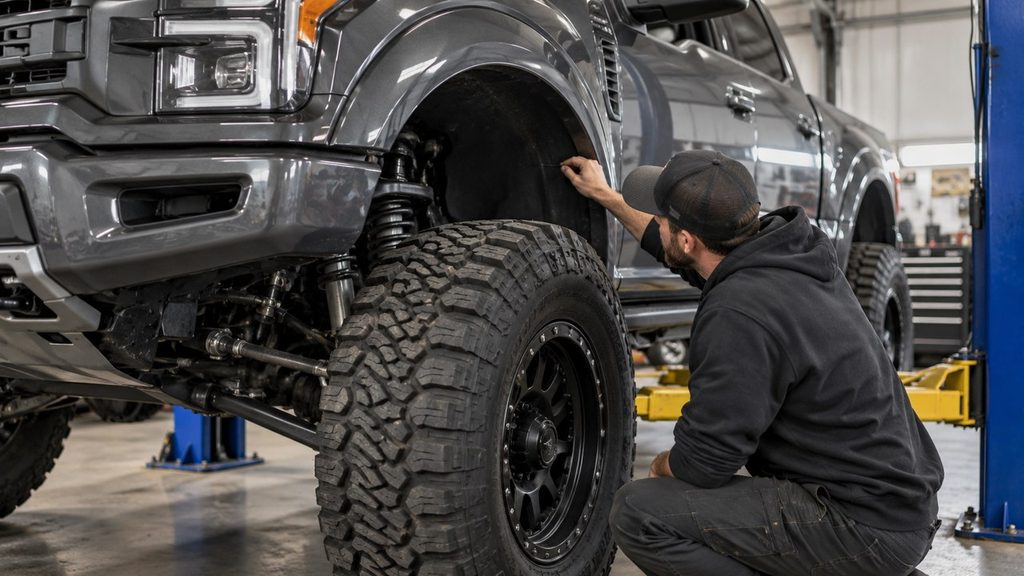
Instead of starting with a random lift number, work backward from the exact tire and vehicle.
- Identify the exact vehicle. Record year, make, model, trim, drivetrain and factory suspension package.
- Choose the exact tire. Look up its published diameter, section width, recommended wheel-width range and load rating.
- Choose the wheel carefully. Confirm wheel width, offset and backspacing against both the tire and lift-kit manufacturer’s recommendations.
- Check manufacturer fitment notes. Look for maximum tire size, trimming requirements and required wheel specifications for the exact lift kit.
- Decide how much trimming you accept. A low-lift 35-inch build may require much more body-clearance work than a taller setup.
- Plan for actual suspension use. A street truck needs less articulation clearance than a vehicle that regularly uses full suspension compression off-road.
- Account for supporting work. Alignment, geometry correction, calibration and driveline considerations may matter as much as the lift itself.
If the lift manufacturer explicitly approves a 35-inch tire only with a particular wheel specification, assume that specification matters. Do not substitute a dramatically different offset and expect the same clearance.
Common Mistakes When Trying to Fit 35-Inch Tires
- Choosing lift height before choosing the actual tire: two nominal 35s may have different real dimensions.
- Ignoring wheel offset: moving the tire outward can fix one interference point while creating another.
- Checking only straight-ahead clearance: rubbing often happens while turning.
- Testing only at normal ride height: suspension compression changes the tire’s relationship to the body.
- Assuming more lift is always better: unnecessary height creates additional geometry and stability compromises.
- Copying another owner’s setup without matching specifications: model year, trim, wheel width, offset and tire model all matter.
- Forgetting supporting changes: alignment, calibration, gearing and spare-tire fitment are part of the build.
Frequently Asked Questions
What size lift do I need for 35-inch tires?
Most conventional trucks need roughly 3 to 6 inches of lift to fit 35-inch tires with useful clearance. Some solid-axle 4x4s and factory high-clearance vehicles need less. Exact fitment depends on the vehicle, tire dimensions, wheel offset, backspacing, trimming and suspension travel.
Will 35-inch tires fit with a 3-inch lift?
They can on some vehicles. A 3-inch lift may fit 35s on platforms with generous wheel openings, while other trucks still require trimming or different wheel specifications. Check exact vehicle and kit fitment rather than relying on lift height alone.
Is a 4-inch lift good for 35s?
A 4-inch lift is a common pairing with 35-inch tires on many full-size trucks and often provides a practical compromise between clearance and excessive suspension height. It is still not a universal guarantee of rub-free fitment.
Can you run 35s with just a leveling kit?
Some trucks can, particularly with the right tire width, wheel offset and minor trimming. Many others cannot clear a typical 35×12.50 tire through full steering and suspension compression with only a small level.
Do 35-inch tires always rub?
No. A properly matched combination of vehicle, lift, tire dimensions and wheel specifications can provide adequate clearance. Rubbing is most likely when tire width, wheel offset or suspension movement has not been considered.
Do you need to regear for 35-inch tires?
Not every vehicle requires regearing, but taller and heavier tires change effective gearing and can reduce acceleration or alter transmission behavior. Whether a gear change makes sense depends on the factory axle ratio, transmission, engine, vehicle weight and intended use.
Do 35-inch tires increase ground clearance?
Yes, if their actual diameter is larger than the tires they replace. Ground clearance beneath axle-mounted components increases by roughly half the increase in tire diameter. A four-inch increase in actual tire diameter therefore adds about two inches of axle clearance.
What Size Lift for 35-Inch Tires? Final Answer
For most trucks, start by investigating a 3- to 4-inch lift for 35-inch tires, then move toward 4–6 inches only when the exact vehicle, wheel setup or intended suspension use requires the additional clearance. Solid-axle 4x4s and factory high-clearance models may need substantially less.
Do not buy a lift based only on the number “35.” Choose the exact tire first, check its real diameter and width, then match the wheel offset and lift kit to your exact vehicle. If you are considering stepping up another size, see how much lift 37-inch tires typically need before deciding between 35s and 37s.
If you are still deciding whether moving up to 37s is actually worth the extra clearance, weight and supporting modifications, see our guide to whether 35s or 37s are the better choice for your truck and driving style.
The best setup is the one that clears the tire at full steering and usable suspension compression without adding more lift, trimming or geometry changes than the vehicle actually needs.