Long Travel Suspension Explained: How It Works, Pros & Cons
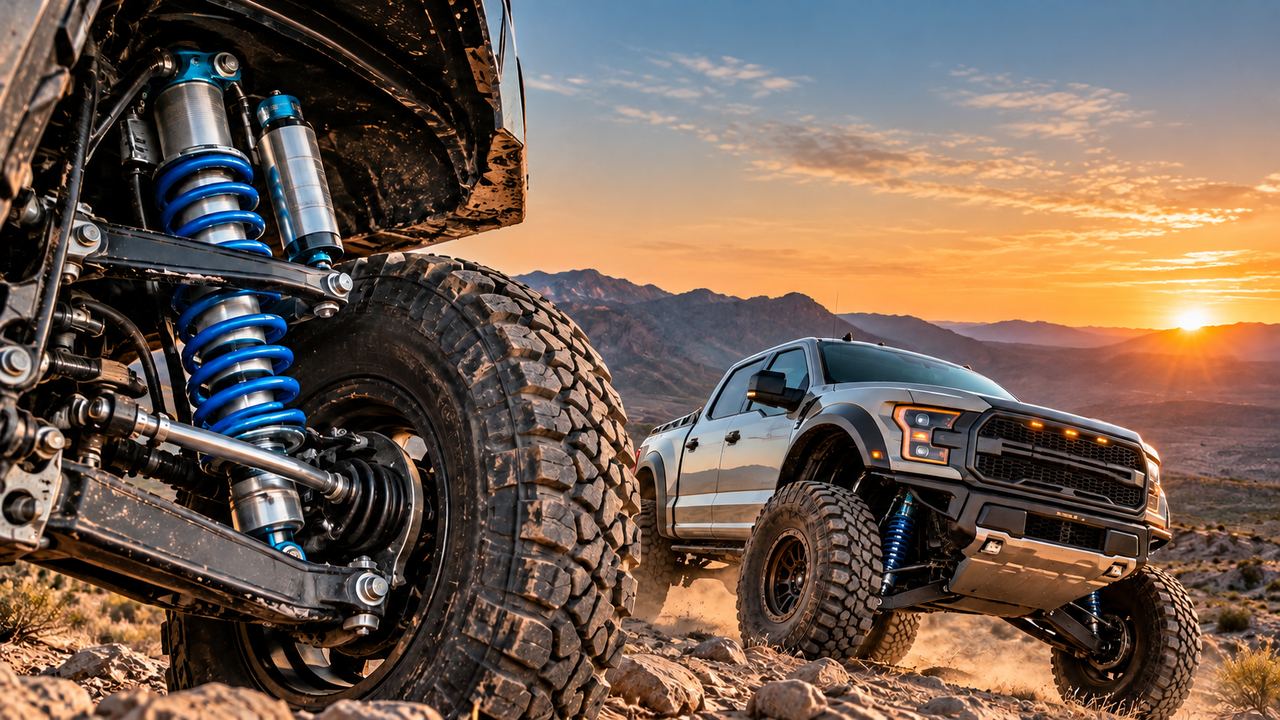
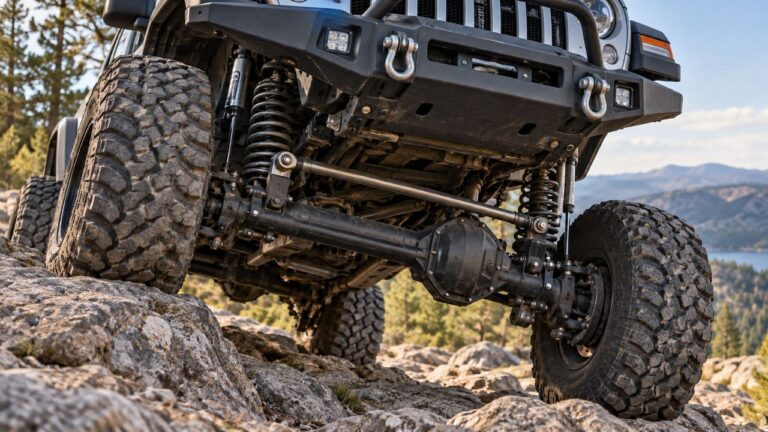
Long travel suspension is an off-road suspension system designed to let the wheels move through significantly more usable vertical travel than the factory setup. On trucks and SUVs with independent front suspension, that usually means longer control arms, longer-travel coilovers, revised steering components and—on 4WD models—changes that allow the CV axles to work across the wider suspension range.
The goal is not simply to make the vehicle taller. It is to give each wheel more room to move upward over impacts and downward into holes while keeping the tire in contact with the terrain and the chassis better controlled.
That can dramatically improve performance across whoops, washboard roads, desert terrain and other rough surfaces. But long travel also adds width, cost, complexity and supporting modifications that many daily-driven trucks simply do not need.
What Is Long Travel Suspension?
Long travel suspension describes a suspension setup engineered to provide substantially more wheel travel than the vehicle’s stock geometry allows.
Wheel travel is the total distance a wheel can move between full compression and full extension. In off-road language, those two directions are usually called bump and droop.
- Bump travel: how far the wheel can move upward toward the chassis before reaching its intended compression limit.
- Droop travel: how far the wheel can move downward from ride height before another component reaches its extension limit.
- Total wheel travel: the usable combination of bump and droop through the complete suspension cycle.
A true long-travel system therefore changes much more than shock length. Control-arm geometry, steering, brake-line length, CV articulation, shock stroke, tire clearance and the limits at full bump and full droop all have to work together.
Long Travel Suspension vs a Lift Kit
Long travel and suspension lift are not the same thing. A lift primarily changes ride height. Long travel primarily increases the suspension’s usable range of movement.
| Feature | Typical Lift Kit | Long Travel Suspension |
|---|---|---|
| Main goal | Increase ride height and clearance | Increase usable wheel travel and off-road control |
| Control arms | May remain stock or use corrected arms | Usually longer or significantly redesigned |
| Track width | Often near stock | Frequently wider |
| Shock requirement | Lift-compatible shock or coilover | Kit-specific long-travel shock commonly required |
| 4WD axles | May remain stock | Extended or modified CV axle setup may be required |
| Steering | Often relatively close to stock | May require longer tie rods or steering changes |
| Body modifications | Often limited | Wider fenders or additional clearance work may be needed |
| Best use | Clearance, larger tires, general off-road driving | Higher-speed or more demanding off-road terrain |
A truck can sit several inches higher than stock without gaining much additional wheel travel. Conversely, a well-engineered long-travel system can greatly increase travel without requiring an extreme increase in ride height.
If your objective is primarily a complete lift or conventional off-road upgrade rather than maximum suspension travel, our guide to the best off-road suspension kits covers that type of build separately.
How Long Travel Suspension Works
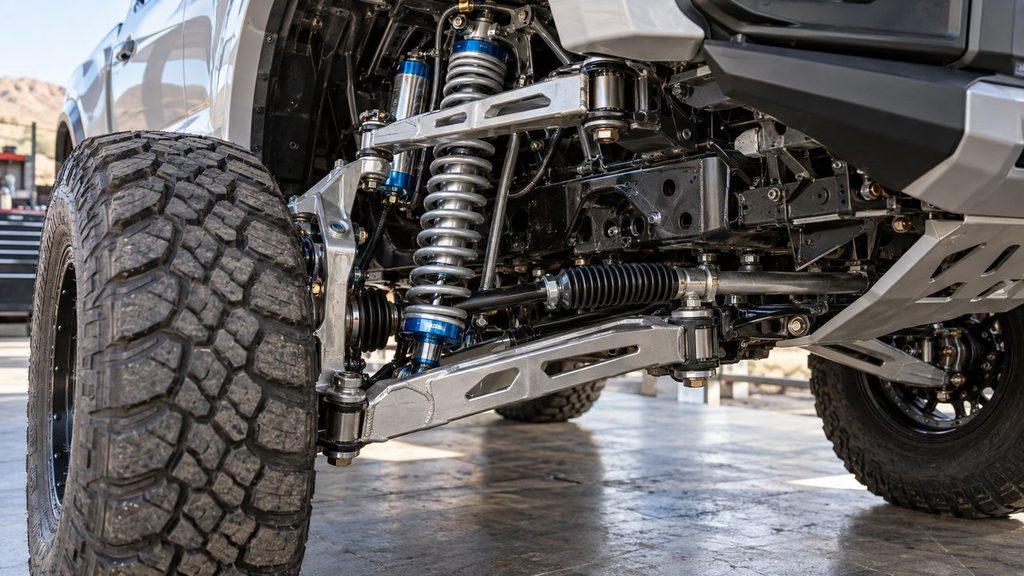
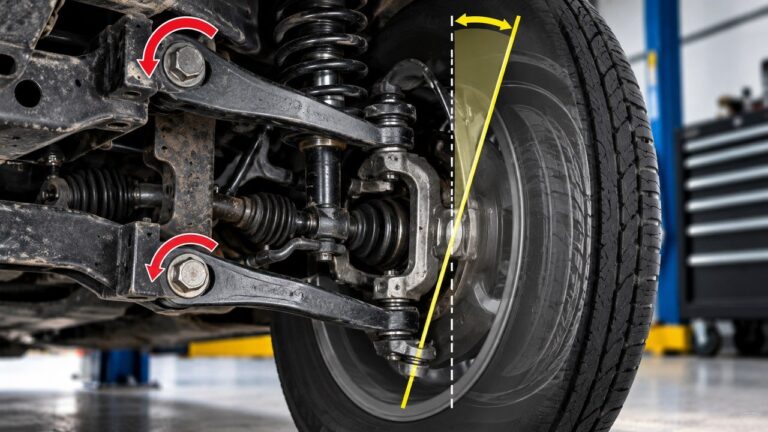
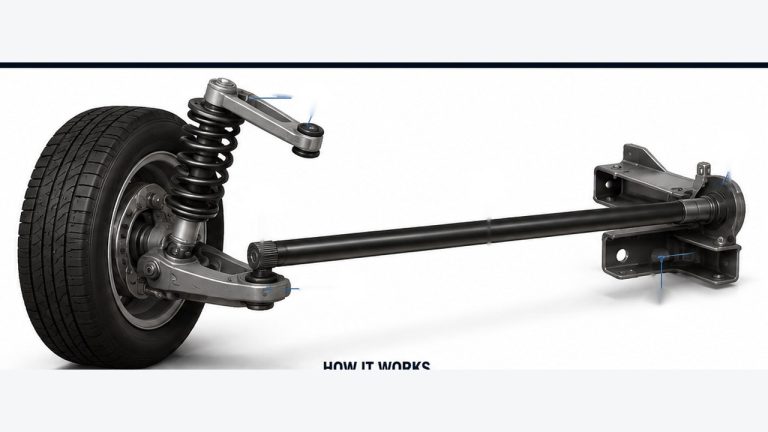
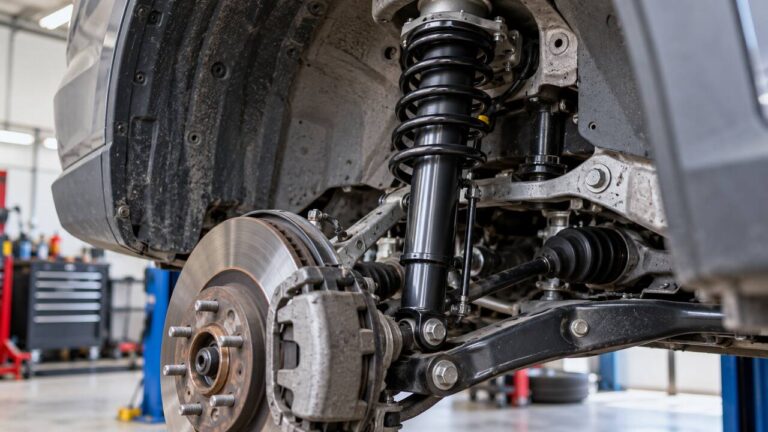
On a typical independent-front-suspension truck, the wheel hub is connected to the chassis through upper and lower control arms. Those arms determine the path the wheel follows as the suspension moves.
A long-travel system generally extends or redesigns those arms so the wheel can move through a larger controlled arc. The shock, steering and drivetrain components must then be matched to that new geometry.
Longer Control Arms Increase the Working Envelope
Longer upper and lower control arms can allow substantially more wheel movement while reducing the angular change required at some pivots for a given amount of vertical travel.
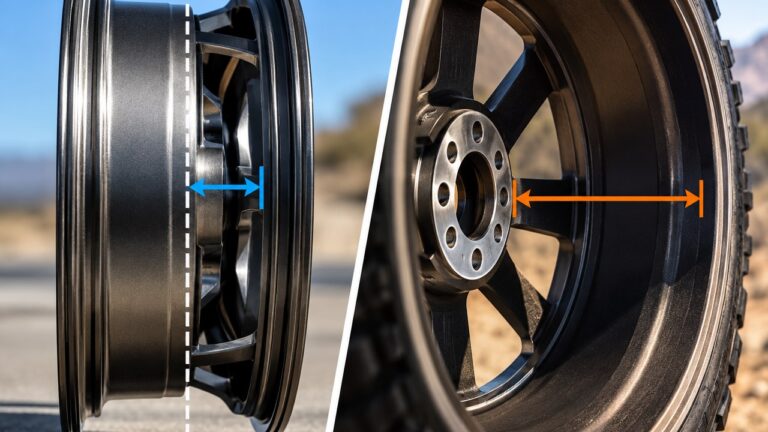
They also commonly push the wheel outward. That increases track width, which is the distance across the vehicle between the left and right wheel centerlines.
The added width is not simply a styling choice. It is often part of how the suspension creates the geometry and clearance needed for additional travel.
Longer Shocks Control the Extra Movement
More wheel movement also requires a damper capable of controlling that movement. True long-travel systems commonly use longer-stroke coilovers designed specifically around the control-arm geometry.
Serious builds may add external bypass shocks or hydraulic bump stops to gain additional damping control at different points in the suspension stroke.
Simply installing a longer shock does not turn a stock suspension into long travel. The control arms, joints, steering, axles and clearances still determine how far the wheel can actually move.
Shock Travel and Wheel Travel Are Not the Same Thing
This is one of the most important specifications to understand when comparing long travel suspension kits.
Shock travel is the difference between a shock absorber’s fully compressed and fully extended lengths. Wheel travel is the actual vertical movement available at the wheel.
Those numbers usually are not equal because an IFS shock is commonly mounted inward from the wheel on a control arm. As the control arm rotates, the wheel and shock move through different distances.
The relationship between those movements is often described using a motion ratio. The exact ratio changes with suspension geometry and sometimes varies as the suspension moves through its travel.
That means a shock with 7 inches of stroke does not automatically produce exactly 7 inches—or exactly 14 inches—of wheel travel. Manufacturer-measured usable wheel travel is much more meaningful than simply comparing shock stroke.
What Is Considered Long Travel Suspension?
There is no universal number of inches that automatically makes a suspension “long travel.”
The term is relative to the vehicle’s factory geometry and the level of modification required to achieve additional movement. Different trucks start with different stock travel, control-arm lengths, shock positions and drivetrain constraints.
On modern IFS trucks, long travel usually implies more than an extended shock or aftermarket upper control arm. Common signs of a true long-travel system include:
- Extended or redesigned upper and lower control arms
- Noticeably increased usable wheel travel
- Increased front track width on many designs
- Long-travel-specific coilovers
- Extended steering components
- Extended brake lines
- Revised droop limiting
- Additional CV axle requirements on many 4WD applications
Some modern systems add only a couple of inches of width per side yet still achieve a meaningful percentage increase in wheel travel. Others are much wider and intended for prerunner or race-style builds. The engineering matters more than attaching a fixed numerical threshold to the name.
What Comes in a Long Travel Suspension Kit?
A long travel suspension kit should be treated as a system rather than a pair of longer shocks. The exact components vary by vehicle, but a front IFS setup may involve most of the following.
Upper and Lower Control Arms
The control arms establish the new wheel path and commonly create the additional track width. Heavy-duty long-travel arms may use boxed plate or tubular construction depending on the design.
Uniballs, Ball Joints or Spherical Bearings
The outer pivots need enough angular range to survive the increased suspension movement. Many aggressive systems use large uniballs or spherical bearings, although some newer long-travel kits retain heavy-duty sealed ball joints for lower maintenance.
Long-Travel Coilovers
The coilover must have the correct compressed length, extended length, spring rate and valving for the kit’s geometry. An ordinary replacement coilover may physically bolt into some systems but restrict the wheel travel the control arms could otherwise provide.
Extended Tie Rods or Steering Components
If the wheel moves farther outward, the steering linkage must still reach the knuckle while maintaining acceptable steering geometry throughout the suspension cycle.
Extended Brake Lines
Factory flexible brake hoses may not have enough length for the increased droop. A properly designed system ensures the brake hose does not become the limiting strap at full extension.
Extended CV Axles on 4WD Trucks
Wider front suspension changes the distance between the differential and wheel hub. Many 4WD long-travel systems therefore require longer axle shafts, different CV components or other application-specific modifications.
The CV joints must also retain adequate plunge and articulation through steering, bump and droop. A system can have enough arm travel mechanically but still be limited by the drivetrain.
Limit Straps
Suspension limit straps control maximum droop so the suspension does not repeatedly hang from the shock, CV joint, brake hose, uniball or another component at full extension.
They are not a shortcut for incorrect geometry. They are a deliberate way to establish a safe extension limit within a properly engineered system.
Bump Stops
At the other end of the travel, bump stops control the final stage of compression. Performance builds may use hydraulic or air bump stops to absorb large impacts more progressively before hard parts collide. Our guide to how bump stops work explains their role in controlling bottom-out, progressive compression and the safe end of suspension travel.
Why Track Width Usually Increases
Many long-travel systems move each front wheel outward because longer control arms create additional room for suspension movement and reduce some of the extreme joint angles that would occur if designers tried to generate the same travel within the stock width.
A wider track can also make the vehicle feel more planted laterally. However, it would be misleading to say that width alone automatically makes a lifted truck safer or impossible to roll. Center of gravity, tires, suspension tuning, terrain and vehicle speed still matter.
The practical disadvantage is that the tires may extend beyond the stock bodywork. That can lead to wider fiberglass fenders, different wheel offsets and additional clearance work around the wheel well.
Long Travel Suspension Geometry Matters as Much as Travel
A huge travel number is not very useful if the wheel moves through that range with poor alignment characteristics.
As an independent suspension cycles, several geometric relationships change. A well-designed long-travel system tries to keep those changes predictable rather than simply allowing the wheel to move farther.
Camber Gain
Camber describes how much the wheel tilts inward or outward when viewed from the front. The suspension designer controls how camber changes through bump and droop so the tire maintains useful contact with the terrain.
Caster
Caster affects straight-line stability, steering effort and return-to-center behavior. After changing control arms and ride height, the vehicle still needs enough alignment adjustment to reach the manufacturer’s or kit designer’s intended range.
Bump Steer
Bump steer occurs when suspension movement causes a wheel to steer without input from the driver. Changing control-arm length without correctly matching the tie-rod geometry can make toe change significantly through the suspension cycle.
This is why a proper long travel kit cannot be reduced to “longer arms plus longer shocks.” Steering geometry is part of the suspension system.
If you want to understand that steering effect separately from long-travel design, see our guide to bump steer causes, symptoms and correction, including how toe changes as the suspension moves through bump and droop.
Mid Travel vs Long Travel Suspension
For many truck owners, the real decision is not stock versus long travel. It is mid travel versus long travel.
| Feature | Mid Travel | Long Travel |
|---|---|---|
| Wheel travel | Moderate increase | Larger increase |
| Track width | Usually stock or close to stock | Often noticeably wider |
| Control arms | Commonly stock lower arms with upgraded upper arms | Often new upper and lower arms |
| CV axles | Often factory | Extended or modified axles may be needed on 4WD models |
| Fenders | Usually factory-compatible | Wider fenders may be required |
| Fabrication | Often mostly bolt-on | Can involve welding or chassis modifications |
| Cost | Lower | Substantially higher |
| Best suited to | Daily driving, overlanding and recreational trails | Faster and more demanding off-road use |
A mid-travel build can deliver a major improvement over stock without widening the truck dramatically or replacing nearly every front-suspension component. That is why it is often the more practical choice for a daily driver or overland vehicle.
Long travel makes more sense when suspension performance itself is a major goal of the build and the owner is willing to accept additional width, cost and maintenance to get it.
What Long Travel Suspension Feels Like Off Road
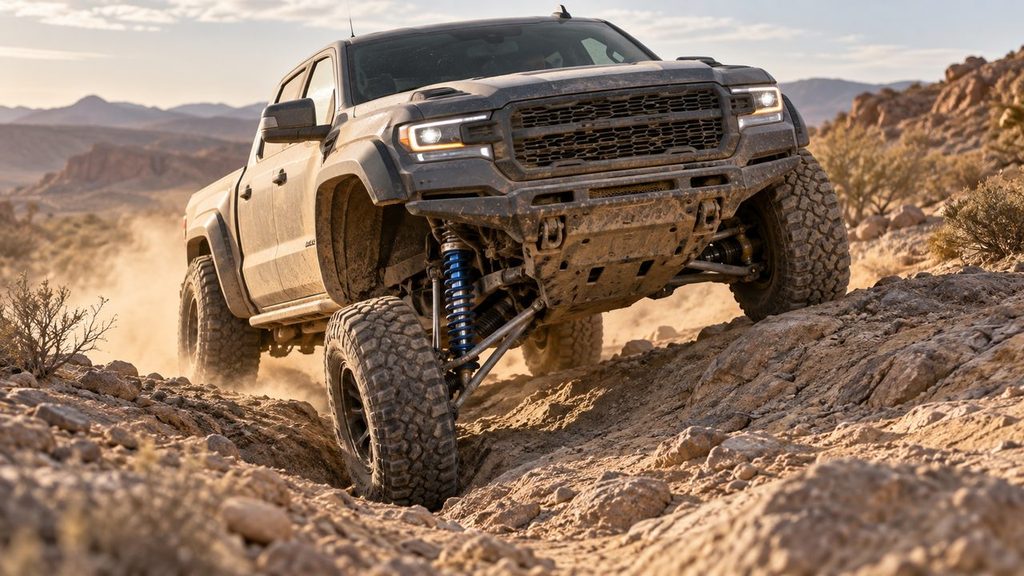
The advantage becomes easiest to understand on terrain that repeatedly forces the wheels through large movements.
On whoops or deep undulations, additional bump and droop travel gives the wheel more distance to follow the terrain before the suspension reaches an end stop. Instead of the chassis being forced to follow every large wheel movement, more of that motion can occur within the suspension.
On washboard roads, the benefit also depends heavily on damping. Extra travel alone cannot control repeated high-frequency movement if the shocks overheat or the valving is poorly matched.
During rock crawling, greater articulation can help maintain tire contact, but maximum high-speed wheel travel is not necessarily the most important requirement. Clearance, gearing, tire placement and controlled low-speed articulation may matter more.
Main Benefits of Long Travel Suspension
More Usable Wheel Travel
This is the defining advantage. Additional bump and droop give the wheels more opportunity to move around terrain without immediately forcing the chassis through the same motion.
Better Control Over Large Repeated Impacts
When correctly sprung and damped, long travel gives the suspension more distance and time to manage an impact before reaching the end of its stroke. This is particularly useful in desert terrain, whoops, rough two-track and higher-speed off-road driving.
More Droop for Uneven Terrain
Additional downward wheel movement can help a tire follow dips and irregular terrain where a shorter suspension would already be fully extended.
Greater Shock Tuning Potential
Serious long-travel systems can accommodate larger coilovers, bypass shocks and hydraulic bump stops, giving suspension tuners more control over damping at different positions and shaft speeds.
The Disadvantages of Long Travel Suspension
The performance gains are real, but so are the compromises. For many trucks, these disadvantages are the reason mid travel remains the smarter build.
- Higher cost: the project can involve arms, shocks, steering components, axles, brake lines, bodywork, wheels, alignment and fabrication.
- Increased vehicle width: wider suspension can make parking, trailers and narrow trails less convenient.
- Fender clearance: factory sheet metal may no longer cover or clear the tires through full bump and steering lock.
- More maintenance: uniballs, heims, spherical bearings, limit straps and rebuildable shocks may require inspection or periodic service.
- More setup work: spring rates, ride height, alignment and damping all need to complement the new geometry.
- Greater complexity: one incorrect component can limit the entire system or create interference somewhere in the suspension cycle.
Is Long Travel Suspension Good for Daily Driving?
It can be, but daily driving alone is rarely a good reason to install it.
A properly engineered and correctly aligned long-travel truck can drive very well on pavement. Some bolt-on systems are specifically designed to retain predictable street manners.
The question is whether the extra performance is worth the compromises when most miles are driven on pavement. Wider track width, expensive replacement parts, exposed spherical joints, larger tires and performance shocks may add inconvenience without providing much benefit during a normal commute.
For a truck that spends most of its time commuting, camping, overlanding and driving moderate trails, mid travel or a conventional high-quality suspension upgrade will usually offer a better balance.
If your truck has a conventional lift rather than a true long-travel system and you mainly need dampers matched to that lift, see our guide to the best shocks for lifted trucks.
Does Long Travel Suspension Lift the Truck?
It can change ride height, but lift is not what makes the suspension long travel.
Many long-travel coilover systems allow some ride-height adjustment, and some are designed to provide several inches of front lift. However, the important specification is still usable suspension travel and geometry, not simply how high the fender sits above the tire.
Too much preload or ride height can actually reduce available droop and push CV joints or other components into less favorable operating angles. The suspension should be set up around its intended ride-height window rather than raised as far as the coilover threads allow.
Long Travel Suspension on 2WD vs 4WD Trucks
Long travel is generally simpler on a 2WD front suspension because there is no front CV axle connecting the differential to the wheel hub.
On a 4WD IFS truck, widening the suspension and adding droop also changes axle length and CV joint angles. Many systems therefore require extended axle shafts, CV modifications, differential-position changes or a specific combination of those solutions.
This is one reason a 2WD prerunner can achieve large front travel with fewer drivetrain constraints than an otherwise similar 4WD truck.
Do not assume that because a long-travel control-arm kit fits both 2WD and 4WD models, all required parts are identical. Extended axles are frequently separate from the basic control-arm package.
Tires, Wheel Offset and Fender Clearance
Long travel suspension should be planned together with the wheel-and-tire package rather than treated as an isolated modification.
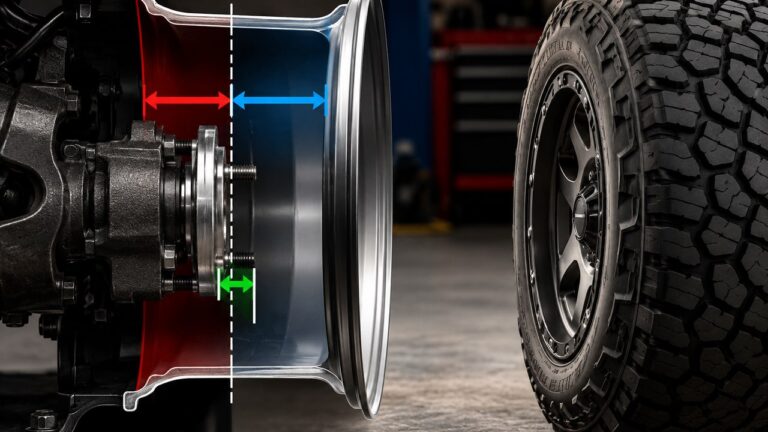
The wider control arms change where the wheel sits relative to the body. Wheel offset and backspacing then move the tire farther inward or outward from that new position.
At full bump and steering lock, the tire also sweeps through a much larger area than it does while the truck is parked. Clearance that looks generous at ride height can disappear when the suspension compresses.
Depending on the vehicle and tire size, a complete build may require wider fiberglass fenders, trimming, cab-mount work or other application-specific clearance modifications.
Why Limit Straps and Bump Stops Matter
More suspension travel means both ends of the stroke have to be controlled deliberately.
At full droop, the designer needs to prevent the shock, CV joint, steering joint or suspension pivot from becoming the component that abruptly stops the wheel. A properly positioned limit strap can establish that maximum extension.
At full compression, the tire must clear the body and the shock must retain enough internal travel that it does not mechanically bottom before the intended bump-stop system takes over.
A suspension can have impressive advertised travel and still be poorly designed if those limits are not coordinated.
Coilovers, Bypass Shocks and Hydraulic Bump Stops
A basic long-travel system may use one large coilover at each corner. More aggressive setups can add a secondary bypass shock and hydraulic bump stop.
Coilovers
The coilover combines the spring and damper, supports vehicle weight and provides the primary damping force. Spring rate, preload and shock valving all need to match the vehicle and suspension motion ratio.
Bypass Shocks
A bypass shock can provide position-sensitive damping by allowing different amounts of oil flow at different portions of the stroke. This gives tuners much greater control over how the suspension behaves near ride height versus deeper into compression or rebound. Our bypass shocks guide explains how those damping zones work, including internal vs external bypass designs and multi-tube configurations.
Hydraulic Bump Stops
A hydraulic bump stop adds controlled resistance near the end of compression travel. It helps manage large impacts without making the entire suspension excessively stiff during normal movement.
Those parts are useful only when they are correctly positioned and tuned. Adding more shocks does not automatically create a better suspension.
For the fundamentals behind compression, rebound and how a damper controls wheel movement, our guide to what damping does in suspension covers the underlying principles.
What About Long Travel Rear Suspension?
Long travel is often discussed as an IFS front-suspension modification, but the rear suspension ultimately needs to keep up with the front if the vehicle is being built for serious off-road use.
Rear designs vary much more by vehicle. A leaf-sprung truck may use longer-travel leaf springs, different shackles, longer shocks and relocated shock mounts. More advanced builds may use a bed cage to create room for longer dampers.
Race-oriented trucks may move to linked rear suspension with coilovers and bypass shocks. That is a much more involved chassis modification and should not be treated as simply the rear equivalent of bolting wider control arms onto the front.
The important goal is balance. A truck with huge front travel but a rear suspension that repeatedly bottoms or unloads can still be difficult to control over rough terrain.
How Much Does Long Travel Suspension Cost?
A real long-travel truck build is usually a several-thousand-dollar project, and a complete front-and-rear build can easily reach five figures.
The control-arm kit is only part of the total. Depending on the vehicle and performance target, the final budget can include:
- Upper and lower control arms
- Long-travel coilovers
- Bypass shocks
- Hydraulic bump stops
- Extended CV axles
- Steering components
- Extended brake lines
- Limit straps
- Fiberglass fenders or bodywork
- Wheels and tires
- Shock hoops or bed cage fabrication
- Installation labor
- Alignment and suspension setup
- Shock tuning or revalving
A lower advertised kit price can therefore be misleading if shocks, axles, fabrication or required supporting parts are sold separately.
Before comparing prices, build a complete parts list for the exact vehicle and desired performance level.
Installation Is More Than Bolting on the Arms
Even a long-travel kit marketed as bolt-on needs to be checked through the complete suspension cycle.
A proper installation verifies clearance at full bump, full droop and steering lock—not only with the truck sitting on the ground.
- Check tire-to-body clearance through bump and steering.
- Verify that brake hoses never become tight at full droop.
- Confirm CV joints retain safe articulation and plunge.
- Make sure tie rods and steering joints do not bind.
- Set limit straps before another component becomes the droop stop.
- Confirm the shock does not bottom mechanically before the bump stop.
- Torque every pivot according to the manufacturer’s procedure.
- Perform a full alignment after installation.
Modern trucks may also require steering-angle, ride-height or driver-assistance-system recalibration after significant suspension and alignment changes. Follow the vehicle and suspension manufacturer’s procedures rather than assuming a conventional toe adjustment is the entire job.
Shock Tuning Matters More as Travel Increases
Long travel gives the suspension more physical movement to work with, but damping determines how well that movement is controlled.
A shock tune should account for vehicle weight, spring rate, motion ratio, tire mass, terrain and driving speed. Added bumpers, a winch, spare tires or camping equipment can materially change what the suspension needs.
The ideal setup uses enough compression damping to control impacts and chassis movement without making small bumps unnecessarily harsh, while rebound damping controls how quickly the suspension extends after compression.
Long travel therefore does not automatically mean a soft suspension. A race-oriented truck can have enormous travel and still use substantial damping force.
Common Long Travel Suspension Mistakes
Choosing the Kit With the Biggest Travel Number
Travel is only useful when the geometry, steering, shocks and drivetrain can use it correctly. Compare usable wheel travel, supporting requirements and intended use—not just the largest number in an advertisement.
Confusing Shock Stroke With Wheel Travel
A longer-stroke shock does not produce an equal increase in vertical wheel movement. Motion ratio and control-arm geometry determine the relationship.
Ignoring the 4WD Axles
A control-arm kit may be only part of a 4WD conversion. Confirm axle length, CV articulation and every required drivetrain modification before buying anything.
Buying Wheels Before Choosing the Suspension
Wheel offset and backspacing affect tire position, steering clearance and fender coverage. Select them around the final suspension geometry rather than trying to make an existing aggressive wheel setup fit afterward.
Setting the Coilovers as High as Possible
Maximum ride height is not maximum suspension performance. Excessive preload can reduce droop, change alignment and place other components closer to their operating limits.
Ignoring Maintenance
Performance joints and rebuildable shocks are not always maintenance-free. Periodically inspect spherical bearings, uniballs, heims, bushings, limit straps, shock leaks and mounting hardware according to the component manufacturer’s schedule.
Is Long Travel Suspension Worth It?
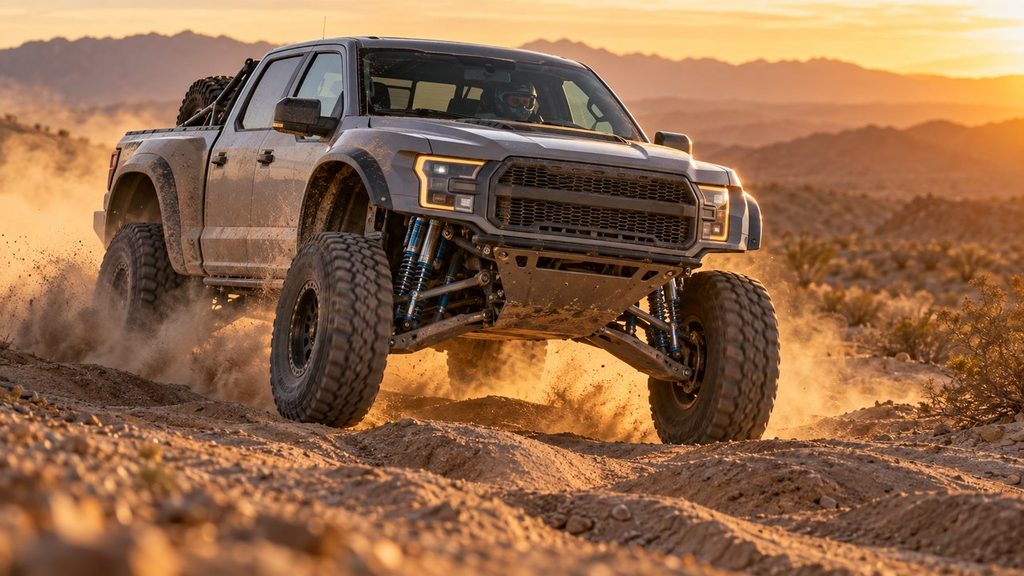
Long travel suspension is worth it when additional usable wheel travel is genuinely limiting how you use the vehicle.
It makes the most sense for drivers who regularly encounter high-speed desert terrain, deep whoops, rough two-track, large repeated impacts or other conditions where a conventional suspension repeatedly reaches its travel and damping limits.
It makes much less sense if the truck is primarily a commuter, overlander, tow vehicle or slow recreational trail rig that rarely uses all of a quality mid-travel suspension.
| Your use | Long travel? |
|---|---|
| Daily commuting with occasional dirt roads | Usually unnecessary |
| Overlanding and moderate trail use | Mid travel is often more practical |
| Slow technical rock crawling | Depends on vehicle and build goals |
| Frequent washboard and rough high-speed trails | Potentially worthwhile |
| Desert running and repeated whoops | Strong use case |
| Prerunner or race-oriented build | Often a core upgrade |
The right question is not “Is long travel better?” It is “Will my driving actually use the extra travel enough to justify rebuilding the suspension around it?”
How to Choose a Long Travel Suspension Kit
If long travel genuinely matches your goals, compare complete systems rather than individual headline specifications.
- Confirm exact vehicle compatibility. Year, drivetrain and suspension generation matter.
- Check measured wheel travel. Do not substitute shock stroke for actual suspension travel.
- Check added track width. Know the final overall width before buying wheels or fenders.
- List every required component. Include shocks, axles, tie rods, brake lines, limit straps and hardware.
- Verify tire and wheel requirements. Backspacing and offset can affect whether the suspension clears properly.
- Understand body modifications. Determine whether fiberglass fenders, trimming or cab-mount work is required.
- Check fabrication requirements. Some kits bolt on while bypass hoops, bump stops and reinforcements may require welding.
- Plan the rear suspension. A serious front setup should not overwhelm an inadequate rear.
- Budget for setup. Installation, alignment and shock tuning are part of the build.
- Choose for your terrain. More travel is useful only when it solves the conditions you actually drive.
Frequently Asked Questions
What does long travel suspension mean?
Long travel suspension is a modified suspension system that allows substantially more usable wheel movement than the factory setup. On IFS trucks it commonly uses longer control arms, longer-travel shocks and supporting steering, brake and drivetrain components.
How many inches of travel is considered long travel?
There is no universal minimum. Different vehicles start with different factory travel and geometry. A better definition is a system that significantly increases usable wheel travel through redesigned suspension geometry rather than merely raising ride height or installing a slightly longer shock.
Does long travel suspension make a truck wider?
Most IFS long-travel systems do increase track width because they use longer control arms. How much depends on the kit. The extra width can require different wheel offsets, wider fenders or other tire-clearance modifications.
Do you need longer axles with long travel suspension?
Many 4WD IFS systems require longer or modified front axle shafts because the wheel hubs move farther from the differential. The exact requirement depends on the vehicle and kit. A 2WD front suspension does not have this CV axle constraint.
Can you use stock shocks with long travel suspension?
Usually not if you want to use the suspension’s full travel. Some kits can physically accept an OE-style replacement coilover, but manufacturers may specify that doing so limits available wheel travel. Use the shock dimensions and specifications intended for the system.
Is long travel suspension good for daily driving?
A properly engineered long-travel truck can drive well on the road, but the system is rarely cost-effective for a vehicle that spends almost all its time commuting. Mid travel generally offers a better balance of road practicality and off-road improvement for mixed-use trucks.
Does long travel suspension improve ride quality?
It can dramatically improve control and comfort over large or repeated off-road impacts because the wheels have more room to follow the terrain. On pavement, ride quality still depends heavily on spring rate, shock valving, tires, vehicle weight and suspension setup.
Does long travel suspension increase ground clearance?
Not automatically. A long-travel system may provide additional ride height or improve clearance around some control arms, but wheel travel and ground clearance are different measurements. Differential, frame and suspension-component clearance depend on the specific vehicle and design.
How much does long travel suspension cost?
A proper front long-travel conversion commonly costs several thousand dollars once shocks and supporting components are included. Complete front-and-rear builds with premium shocks, axles, bodywork and fabrication can easily reach five figures. Compare complete build cost rather than the control-arm kit price alone.
Who should consider long travel suspension?
Long travel suspension makes the most sense for drivers who regularly use their trucks on fast desert terrain, deep whoops, rough two-track roads or other conditions where a conventional suspension frequently reaches its travel limits. For commuting, overlanding and moderate trail use, a well-designed mid-travel setup is usually more practical.
Who Long Travel Suspension Is Really For
Long travel suspension is not simply a taller lift or a longer shock. It is a complete change to the suspension’s operating geometry designed to create more usable wheel travel.
On an IFS truck, that typically means longer control arms, additional track width, long-travel shocks, revised steering and supporting components such as extended brake lines, limit straps and, on many 4WD systems, longer or modified CV axles.
When properly engineered and tuned, the result can transform how a truck handles whoops, washboard roads and repeated rough-terrain impacts. But maximum travel is not automatically the best suspension. Geometry, damping, bump and droop limits, drivetrain clearance and the intended use all matter just as much.
For most mixed-use trucks, mid travel remains the more practical compromise. Long travel starts to make sense when off-road performance is important enough that the extra width, cost and complexity become acceptable parts of the build.