Leaf Spring vs. Coil Spring: Ride, Towing and Load Differences
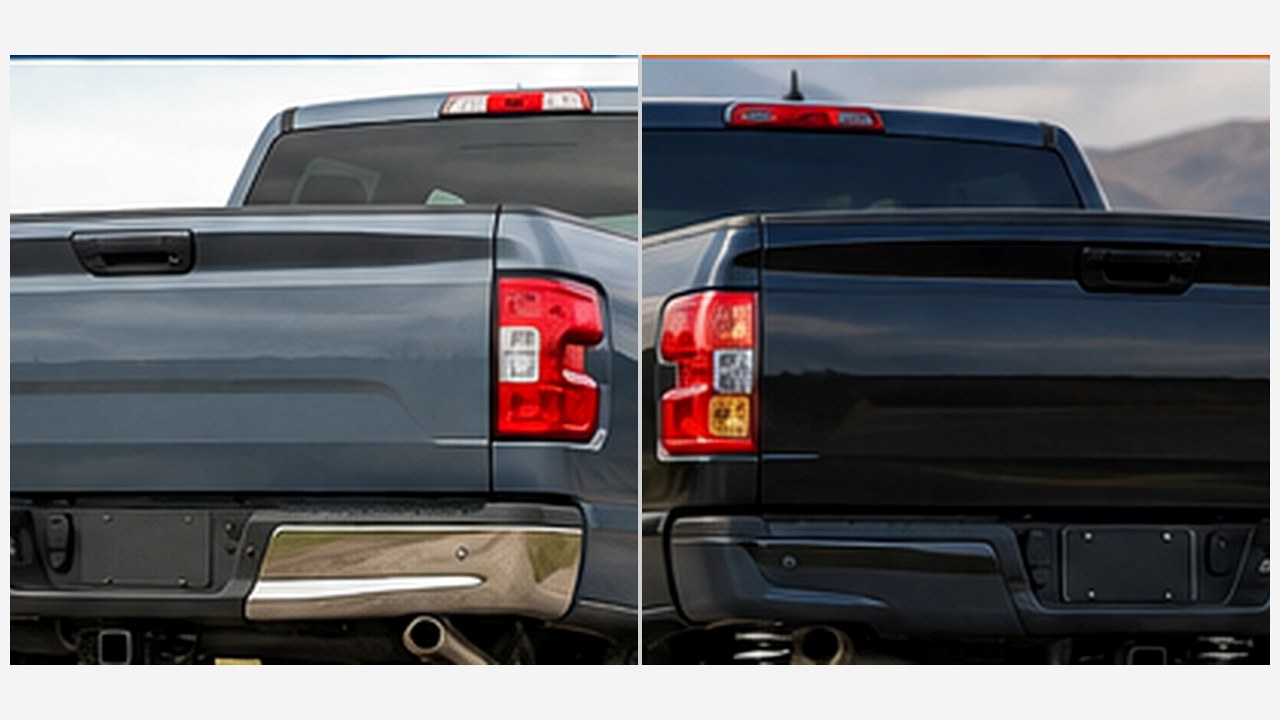
Leaf springs and coil springs both support vehicle weight, but they do much more differently than their shapes suggest. A leaf spring is a long, flexible strip or stack of spring steel that bends under load. A coil spring uses steel formed into a helix that deflects as the suspension moves.
The biggest practical difference is that a traditional leaf-spring setup can support the vehicle while also helping locate a solid axle. A coil spring normally provides spring force only, so a coil-sprung solid axle needs separate links, control arms, or other components to control axle movement.
That difference affects packaging, ride quality, articulation, load behavior, complexity, and maintenance. It does not mean leaf springs always tow more or coil springs always ride better. The complete suspension and vehicle ratings matter more than the spring shape alone.
Leaf Spring vs. Coil Spring at a Glance
| Factor | Leaf Spring | Coil Spring |
|---|---|---|
| Basic shape | Flat or curved spring leaf, often in a pack | Helical spring |
| Spring action | Bends under load | Deflects through the coil |
| Can locate a solid axle? | Yes, in traditional leaf-spring layouts | No, separate locating links are required |
| System simplicity | Can combine spring and axle-location functions | Usually requires separate links or control arms |
| Unloaded ride | Can be firmer in truck-oriented designs | Often easier to tune for compliance |
| Load handling | Well suited to simple high-load applications | Can also support high loads when engineered for them |
| Articulation potential | Good designs can articulate well | Link-and-coil systems can allow substantial articulation |
| Packaging | Long spring mounted along the chassis | Compact spring located near the suspension |
| Common modern use | Pickups, vans, commercial and heavy-duty vehicles | Cars, SUVs, pickups and many independent suspensions |
How a Leaf Spring Works
A leaf spring is made from one or more long pieces of spring material that flex as the axle and body move relative to each other.
Traditional multi-leaf springs use several leaves stacked together. The main leaf normally extends to the mounting eyes, while shorter leaves help support increasing loads and influence the spring’s overall behavior.
When the wheel encounters a bump, the spring bends and its curvature changes. That elastic deformation stores energy. As the load decreases, the spring attempts to return toward its original shape.
On a conventional solid rear axle, the axle housing is clamped to the leaf springs. The spring therefore does more than support weight: its mounting points also help control where the axle sits under the vehicle.
How a Coil Spring Works
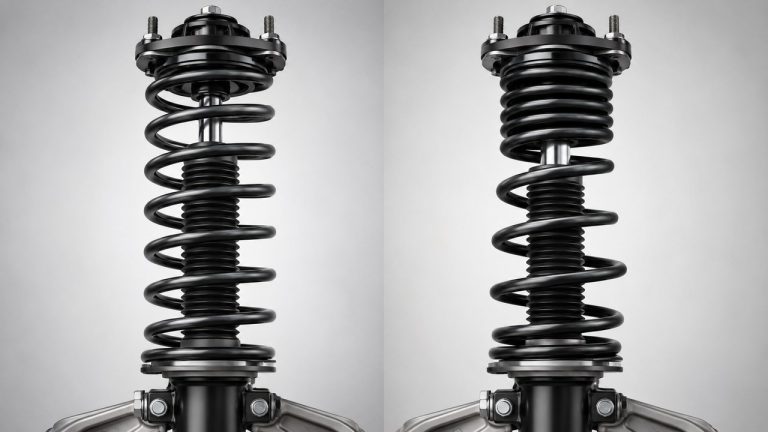
A coil spring is spring steel formed into a helix. As the wheel moves and suspension load changes, the spring deflects and stores elastic energy.
The coil itself normally does not locate the wheel or axle. It provides spring force while other suspension components control movement.
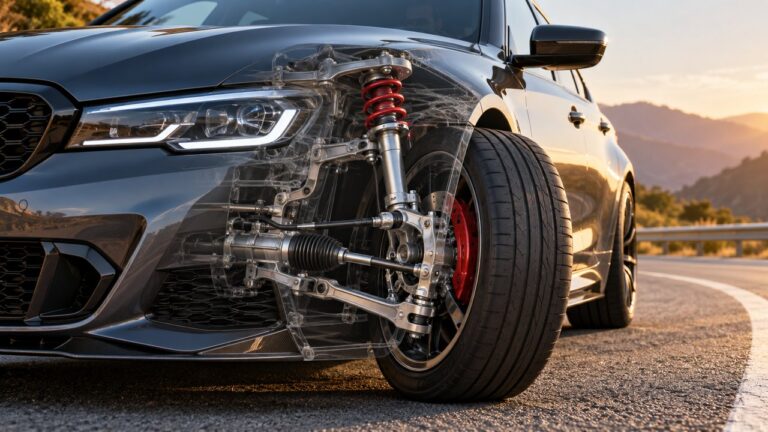
On an independent suspension, those components may be control arms, links, or strut-related geometry. On a coil-sprung solid axle, separate links locate the axle longitudinally and laterally.
This separation gives engineers considerable freedom to tune the spring and axle-control functions independently.
The Most Important Difference: Leaf Springs Can Help Locate the Axle
This is the structural difference that explains many of the other trade-offs.
In a traditional leaf-sprung solid-axle layout, each spring is attached to the chassis and clamped to the axle. The spring resists vertical loads while its length and mounting arrangement also constrain fore-and-aft axle movement and contribute to lateral location.
A coil spring cannot perform those locating functions by itself because it does not positively control the axle’s position.
A coil-sprung solid axle therefore requires separate control links, trailing arms, radius arms, a lateral locating device, or another engineered arrangement to keep the axle in the correct position.
That makes the coil system potentially more complex, but it also allows engineers to design axle geometry separately from the spring.
This distinction should not be confused with the broader question of solid axle vs. independent suspension. Coil springs can be used with either architecture, while leaf springs are most commonly associated with solid axles in modern road vehicles.
Which Rides Better: Leaf Springs or Coil Springs?
A coil-spring design often has an advantage when engineers prioritize unloaded ride comfort, but the spring type alone does not guarantee a smoother ride.
Traditional truck leaf packs must support vehicle weight, control the axle, tolerate payload, and react to acceleration and braking forces. A suspension designed around those requirements may feel comparatively firm when the bed is empty.
A coil-sprung rear axle separates spring force from axle location. Links control the axle while the coils can be selected primarily around spring and ride requirements.
This gives engineers more freedom to tune compliance without asking the spring to perform as many structural functions.
That advantage is visible in some real-world trucks offered with different rear suspensions. Coil-sprung versions can deliver a less busy unloaded ride than comparable leaf-sprung versions while retaining useful truck capability.
However, a well-designed leaf suspension can ride very well, and a poorly tuned coil suspension can ride badly. Dampers, bushings, tires, wheelbase, spring characteristics, axle mass, seat design, and suspension travel all contribute to what passengers actually feel.
Why Leaf-Spring Trucks Can Feel Different When Loaded
Many traditional leaf packs are designed so additional portions of the spring assembly contribute as load increases.
A lightly loaded vehicle may primarily use part of the pack’s available flexibility. As the suspension compresses farther under payload, additional leaves, contact points, or auxiliary leaves can contribute more support depending on the design. For aftermarket load support, our air bags vs mechanical helper springs guide compares adjustable air support with fixed and progressive helper-spring setups.
This allows a truck-oriented leaf suspension to accommodate a wide range between empty and loaded operation without requiring complicated external linkage solely for spring support.
The trade-off is that the same design can have more interleaf friction and a more utilitarian unloaded feel than a suspension optimized primarily for passenger comfort.
Are Coil Springs Always Softer?
No.
A coil spring can be designed to be very soft or extremely stiff. The same is true of a leaf-spring assembly.
Coil springs simply give designers a different set of tools for achieving the required suspension behavior. Spring dimensions, active coils, material, suspension leverage, and other variables determine how the vehicle responds.
Some coil springs are designed with changing characteristics through their travel. That subject belongs to our separate guide to linear vs. progressive springs.
For this comparison, the key point is that “coil” does not mean soft and “leaf” does not mean stiff.
Leaf Spring vs. Coil Spring for Towing
Leaf springs are common in towing-oriented trucks because they provide a simple, durable way to support load and locate a solid axle, but coil springs are not inherently unsuitable for towing.
A truck’s towing capacity is determined at the vehicle level. The frame, axle, tires, wheels, brakes, cooling system, powertrain, hitch configuration, suspension, stability control, and many other components all contribute to the final rating.
The presence of leaf springs should therefore never be used to exceed the manufacturer’s towing limit, and the presence of coil springs should not be interpreted as evidence that a truck has poor towing capability.
Modern coil-sprung pickups demonstrate that a properly engineered link-and-coil rear suspension can manage substantial trailer loads.
Leaf springs nevertheless remain attractive in many work-oriented applications because they combine spring support and axle location in a relatively straightforward package and can be engineered to accommodate large changes in load.
Leaf Spring vs. Coil Spring for Payload
The same caution applies to payload.
A leaf spring does not give a vehicle unlimited payload capacity, and a coil spring does not establish a low payload limit.
Leaf packs are particularly practical in commercial and truck applications because their dimensions, number of leaves, auxiliary elements, and mounting structure can be engineered around large load ranges.
Coil-spring systems can also carry significant loads, but the spring must work together with links, mounts, bump stops, dampers, axle components, and the rest of the chassis.
The correct comparison is always between complete vehicle ratings, not between two spring shapes viewed in isolation.
Which Is More Stable Under Heavy Load?
Stability under load depends on much more than whether the vehicle has leaf or coil springs.
Spring characteristics, rear roll stiffness, damping, tire sidewalls, lateral axle location, wheelbase, center of gravity, trailer tongue weight, load distribution, and electronic stability systems all matter.
A leaf-spring system can feel reassuringly controlled when heavily loaded because the spring pack and axle arrangement may have been designed specifically around commercial or towing demands.
A well-engineered coil-and-link suspension can achieve the same objective while providing better unloaded compliance.
This is why two trucks using different spring types can have similar official towing or payload ratings yet feel noticeably different on the road.
Which Has Better Articulation?
A properly designed coil-and-link solid axle often has greater freedom to articulate because the axle-locating links and springs perform separate jobs.
The links can be arranged to guide the axle through a large range of movement while the coil springs compress and extend without also having to locate the axle.
Leaf springs must flex while simultaneously constraining axle position. Their bushings, shackles, spring length, pack construction, shock travel, and surrounding components all influence how much articulation is available.
That does not mean leaf springs cannot articulate well. Long, appropriately designed leaf springs can provide substantial wheel movement.
The practical advantage of a coil-and-link system is that axle path and spring behavior can be engineered more independently.
Leaf Spring vs. Coil Spring Off Road
For off-road use, coil-and-link systems can offer excellent articulation and allow engineers to control axle geometry independently of the spring.
Leaf springs remain highly effective where simplicity, durability, load carrying, and straightforward field service are important.
Neither spring type alone determines whether a vehicle is good off road. Shock travel, axle architecture, ground clearance, tires, gearing, differential design, link geometry, steering, approach and departure angles, and driver requirements are all more important than choosing a suspension simply because it uses coils or leaves.
A well-engineered leaf-sprung 4×4 can outperform a poorly engineered coil-sprung vehicle, and vice versa.
Which Is Simpler?
For a solid rear axle, leaf springs can create the simpler overall layout.
The springs support the chassis while also helping locate the axle. That can reduce the number of separate links and pivot points required.
A coil-sprung solid axle requires additional components to control fore-aft movement, lateral movement, axle rotation, or some combination of those forces.
More components do not automatically make the coil system worse. Separating those functions allows more precise control over suspension geometry.
The trade-off is between functional integration and greater tuning freedom.
Which Has Fewer Moving Parts?
A basic leaf-sprung solid axle can use fewer separate locating links than a coil-sprung solid axle.
The leaf springs still require bushings, shackles or equivalent mounting arrangements, axle clamps, shock absorbers, and related hardware.
A coil-and-link setup adds link arms and their bushings or joints, plus whatever mechanism controls lateral axle position.
Those additional pivots create more individual service points, although the exact maintenance burden depends heavily on component quality, sealing, lubrication requirements, environment, and vehicle use.
Packaging Differences
Leaf springs and coil springs occupy very different areas of the chassis.
A leaf spring is long and typically runs fore and aft alongside the frame. Its mounts must accommodate changes in spring length as the spring bends, commonly through a shackle or another arrangement.
A coil spring concentrates its spring element into a much shorter vertical package near the axle or suspension arm.
This can free longitudinal space but requires strong spring seats and enough room for the coil to move through its intended travel.
On a solid axle, the coil system also needs space for the axle-locating links that the leaf springs might otherwise replace.
Which Is Lighter?
Comparing only the springs can be misleading.
A coil spring may be compact and relatively light, but a coil-sprung solid axle also needs separate links, brackets, joints, and lateral-location hardware.
A leaf pack can be physically heavy, especially in a high-capacity application, but it performs both spring and axle-location functions.
The meaningful comparison is the mass of the complete suspension system required to meet the same load, geometry, travel, strength, and durability targets.
Unsprung Mass and Ride
Unsprung mass affects how easily the wheels can follow road irregularities, but leaf-versus-coil comparisons should be made carefully.
A portion of a leaf spring’s mass moves with the axle while another portion is connected to the chassis, so it cannot be classified as entirely sprung or entirely unsprung.
A coil spring is also positioned between sprung and unsprung components, while a coil-and-link suspension adds separate arms and joints.
Axle housing weight, wheels, tires, brakes, hubs, control links, shocks, and spring placement all contribute to the real dynamic mass seen by the suspension.
Leaf Spring Friction vs. Coil Spring Movement
Traditional multi-leaf packs can develop friction between individual leaves as they slide relative to one another during suspension movement.
That friction can influence how smoothly the spring begins moving over small road inputs and can contribute some resistance within the spring assembly itself.
Design features such as liners, pads, leaf shape, material, and surface treatment can reduce or manage this effect.
A conventional coil spring does not have stacked leaves sliding against each other. Its movement is therefore not affected by interleaf friction.
That is one reason coil springs can be attractive when engineers want to separate spring behavior cleanly from damping and axle-location functions.
Do Leaf Springs Provide Their Own Damping?
Interleaf friction can resist movement in a multi-leaf spring pack, but it should not be treated as a replacement for properly matched shock absorbers.
Both leaf-spring and coil-spring suspensions normally require dampers to control the rate at which the body and wheels move after disturbances.
Spring type and damper tuning remain separate parts of suspension design.
Axle Wrap: A Leaf-Spring Consideration
Because traditional leaf springs help locate the axle while transmitting forces between the axle and chassis, they can deform under strong drive or braking torque.
Under acceleration, the axle housing attempts to rotate in reaction to driveline torque. That load can distort the spring into an unwanted shape before it returns toward its normal position.
This behavior is commonly called axle wrap.
The severity depends on spring design, axle position, torque, traction, vehicle geometry, and other hardware. It is not an unavoidable problem in every leaf-sprung vehicle.
A properly designed coil-and-link suspension controls axle torque through its locating links rather than asking the coil spring to perform that job.
Which Is More Durable?
Both systems can provide very long service lives.
Leaf springs have a long history in commercial vehicles because the basic layout is robust and well suited to high-load applications.
However, leaf packs can experience corrosion, cracked leaves, damaged center hardware, worn bushings, worn shackles, or other age-related problems.
Coil springs can also corrode, sag, crack, or break. A coil-and-link suspension additionally relies on control-arm or link bushings, joints, brackets, and lateral-location components.
Neither design is maintenance-free. Environment, road salt, loading, mileage, manufacturing quality, impacts, and vehicle use can matter more than spring type alone.
Which Is Better for Commercial and Work Vehicles?
Leaf springs remain common on work-focused trucks and commercial vehicles for good reasons.
They can combine load support and axle location with relatively few major suspension components, and leaf packs can be designed for demanding payload cycles.
That simplicity can be valuable on vehicles where durability, predictable loaded behavior, packaging, and operating cost matter more than achieving the softest possible unloaded ride.
Coil springs are still entirely capable of work-vehicle duty when the whole suspension is designed accordingly. The spring type by itself does not define whether a vehicle is commercial-grade.
Which Is Better for a Daily-Driven Truck?
For a truck that spends most of its life unloaded or lightly loaded, a well-designed coil-sprung rear suspension can offer an appealing balance of comfort and axle control.
For a truck that regularly carries substantial payload or works in demanding service, the simplicity and load-oriented behavior of a leaf-spring suspension may be more valuable.
Those are tendencies rather than rules.
A buyer should compare the actual vehicles, their ratings, suspension tuning, tires, dampers, payload requirements, towing needs, and road behavior rather than selecting a truck solely because one has coils and another has leaves.
Can Coil-Spring Trucks Tow as Much as Leaf-Spring Trucks?
Yes, depending on the vehicle.
There are coil-sprung trucks engineered for substantial towing, and there are vehicles where different rear suspension types do not produce a simple difference in the manufacturer’s maximum tow rating.
That demonstrates why suspension spring type should not be used as a shortcut for determining towing capacity.
Always use the manufacturer rating for the exact configuration, including engine, drivetrain, axle ratio, cab, bed, hitch equipment, tires, and other relevant options.
Do Leaf Springs Automatically Carry More Weight?
No.
A leaf pack can be engineered for very high loads, which is one reason the design is widespread in heavy-duty applications. But a spring’s appearance does not establish the vehicle’s legal or engineered payload capacity.
Coil springs can also be designed for substantial loads.
The payload rating depends on the complete vehicle, and increasing spring support does not automatically increase axle, tire, wheel, brake, frame, or gross vehicle weight ratings.
Does a Coil-Spring Rear Suspension Need More Links?
On a solid axle, yes: the axle requires separate components to perform the locating functions that traditional leaf springs can provide.
A link arrangement may control longitudinal movement, axle rotation, and suspension geometry, while a lateral locating device controls side-to-side movement when required by the design.
This creates more individual components but also gives suspension engineers more control over how the axle moves under acceleration, braking, cornering, and articulation.
Does a Leaf-Spring Suspension Need Control Arms?
A traditional Hotchkiss-style leaf-spring solid rear axle does not normally require the same separate trailing links used by a coil-sprung solid axle because the leaf springs themselves help locate the axle.
That is one of the leaf spring’s biggest packaging and simplicity advantages.
Other suspension designs can combine leaf springs with additional locating or torque-control hardware, so this should not be interpreted as a rule for every specialized vehicle.
Leaf Spring Advantages
- Can support the vehicle and help locate a solid axle
- Relatively simple overall layout for trucks and commercial vehicles
- Well suited to large differences between empty and loaded operation
- Long history in high-load and heavy-duty applications
- Can reduce the need for separate axle-locating links
- Robust and well understood
- Can provide good off-road performance when properly designed
Leaf Spring Disadvantages
- Truck-oriented designs can ride firmly when unloaded
- Interleaf friction can affect small suspension movements
- Spring and axle-location functions are coupled together
- Axle wrap can occur under high torque in some designs
- Long springs require substantial fore-aft packaging space
- Leaf packs can be physically heavy
- Bushings, shackles, leaves, and mounting hardware can wear or corrode
Coil Spring Advantages
- Spring function can be separated from axle-location geometry
- Compact spring packaging near the suspension
- Broad flexibility for ride and handling tuning
- No interleaf friction
- Works with solid-axle and independent suspension designs
- Can provide excellent ride quality and articulation
- Common across a wide range of modern vehicles
Coil Spring Disadvantages
- Cannot locate a solid axle by itself
- Requires additional links or control arms in solid-axle layouts
- More pivots and bushings can mean more individual service points
- Spring seats and link mounts require strong structural attachment points
- A comfortable spring setup still needs to be engineered for payload and towing demands
Leaf Spring vs. Coil Spring: Which Is Better?
Leaf springs are particularly effective when simplicity, load support, axle location, and heavy-duty use are priorities. Coil springs are especially attractive when engineers want to separate spring behavior from axle control and prioritize tuning flexibility, ride quality, and articulation.
Neither design wins every category.
For a work truck regularly carrying substantial loads, a well-designed leaf suspension can be an excellent solution. For a passenger-focused pickup or SUV, a coil-and-link system may deliver the smoother and more controlled unloaded behavior the manufacturer wants.
But those examples should not become universal rules. Modern engineering can produce comfortable leaf-spring suspensions and highly capable coil-spring trucks.
The better choice is the suspension that meets the vehicle’s actual load, travel, comfort, durability, geometry, packaging, and cost targets as a complete system.
Frequently Asked Questions
What is the difference between leaf springs and coil springs?
A leaf spring uses one or more long spring elements that bend under load, while a coil spring uses steel formed into a helix. In traditional solid-axle layouts, leaf springs can also help locate the axle. Coil springs normally require separate suspension links or control arms to perform that job.
Are leaf springs better than coil springs for towing?
Not automatically. Leaf springs are common in towing-oriented trucks because they provide simple load support and axle location, but properly engineered coil-sprung trucks can also have substantial towing capacity. Use the manufacturer’s rating for the exact vehicle rather than judging capacity from spring type.
Do coil springs ride better than leaf springs?
Coil-spring systems can make it easier to separate ride tuning from axle location, which can help provide a smoother unloaded ride. However, actual comfort depends on spring characteristics, dampers, bushings, tires, suspension travel, vehicle weight, and the complete chassis design.
Which is better off road, leaf springs or coil springs?
Coil-and-link suspensions can provide excellent articulation and independent control of axle geometry, while leaf springs offer simplicity, durability, and strong load capability. Either can work well off road when the complete suspension is correctly designed.
Can leaf springs locate the axle?
Yes. In a traditional leaf-sprung solid-axle suspension, the leaf springs support the vehicle while also helping control the axle’s position. This reduces the need for the separate locating links required by a coil-sprung solid axle.
Are leaf springs stronger than coil springs?
Neither spring type is universally stronger. Both can be engineered for different loads and applications. Leaf springs are particularly convenient for heavy-duty layouts, but coil springs can also support substantial loads when the complete suspension is designed accordingly.
Why are leaf springs still used on trucks?
Leaf springs combine several useful functions in a relatively simple package. They can support significant loads while helping locate a solid axle, which makes them practical for pickups, commercial vehicles, vans, and other work-focused applications.
Why do some modern trucks use coil springs?
Coil springs allow the spring and axle-location functions to be separated. That gives engineers more freedom to tune ride quality, articulation, axle movement, and handling through dedicated links while the coil provides spring force.
Two Different Ways to Solve the Same Suspension Problem
Leaf springs and coil springs ultimately perform the same essential spring function: they support the vehicle and allow the wheels and body to move relative to each other while storing and releasing energy.
The major difference is how much else the spring is asked to do. A traditional leaf spring can support weight and help locate a solid axle in one integrated system. A coil spring normally concentrates on spring force while separate components control suspension geometry.
That makes leaf springs attractive for simple, durable, load-oriented applications and coil springs attractive where independent tuning of ride and axle movement is valuable. Neither is inherently superior—the better suspension is the one engineered around the vehicle’s real job.