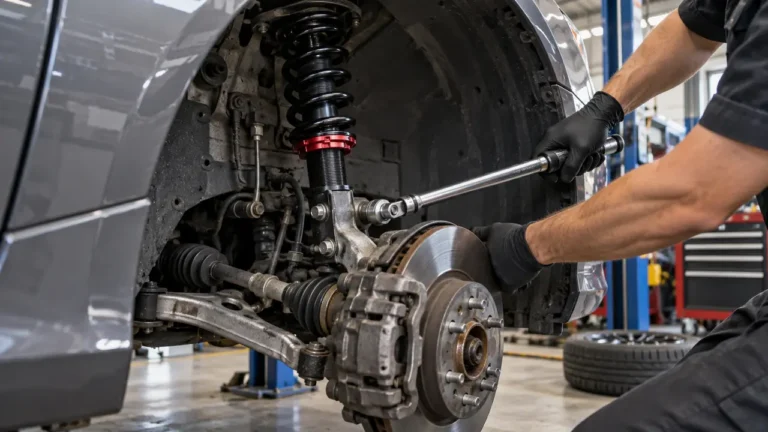
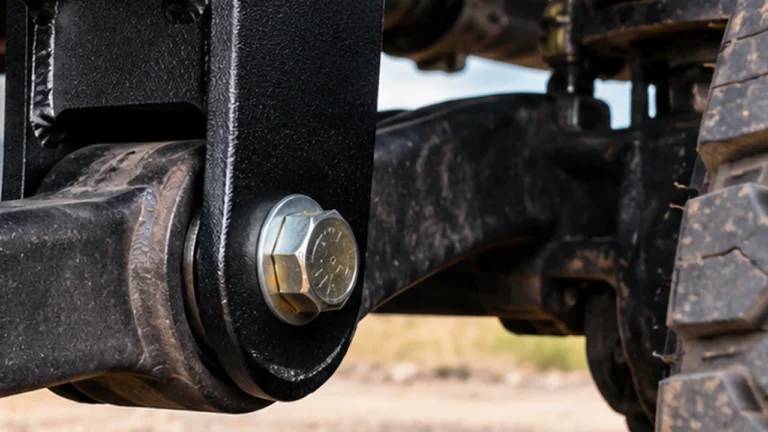
F-150 Leveling Kit: Best Height, Types & Fitment by Year
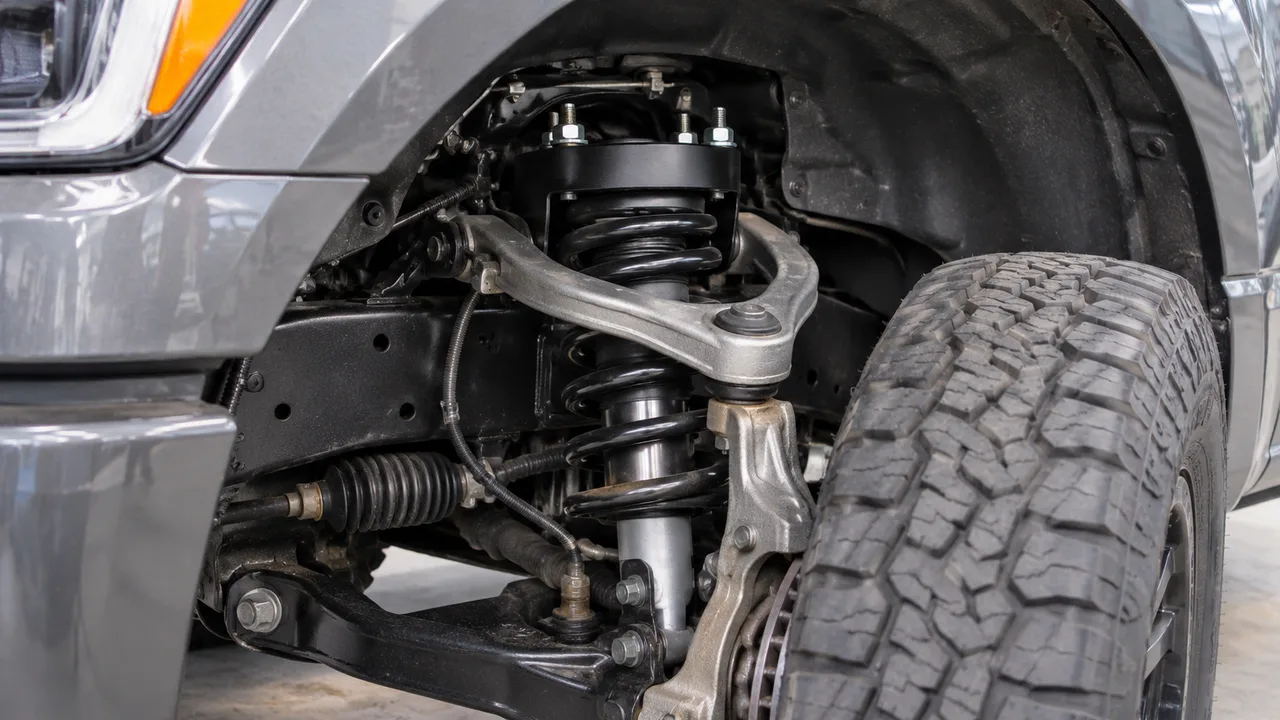
A Ford F-150 leveling kit is usually a front-suspension modification that reduces the truck’s factory nose-down stance. For a stock-height daily driver, a properly matched 1.5- to 2-inch front kit is often the practical starting point. A 2.5-inch kit needs a closer look at measured rake, alignment range, and suspension geometry. A 3-inch front-only change should not be treated as an ordinary spacer upgrade: at that point the design and supporting parts matter much more than the advertised height.
Before buying: identify the model year, 2WD or 4WD, engine, trim, factory suspension and any adaptive damping. Measure the height difference between front and rear at the wheel hubs, decide how much rear-high stance you want to keep, and then choose a kit explicitly approved for that exact truck. Do not assume a kit advertised for a 2026 XLT also suits a 2026 Tremor, Raptor or an F-150 with different factory equipment.
Many shoppers begin with a tire size—33s or 35s—and work backward toward the biggest spacer they can find. That approach can produce rubbing, poor droop travel, an alignment that will not stay in range, or a truck that squats badly with a trailer attached. The better order is to choose the truck-specific suspension solution first and confirm wheel-and-tire clearance separately.
F-150 Leveling Kit: Which Height Makes Sense?
Start with the truck as it sits today, not the height promised on a retail box. The front-to-rear difference varies with equipment, fuel, accessories, mileage and load. The table below gives a buying direction, not permission to install a particular height on every F-150.
| Front height option | Best starting use | Main trade-off | Buying check |
|---|---|---|---|
| About 1–1.5 inches | Mild rake reduction; trucks used for towing | Some nose-down stance remains | Will it preserve the rear-high margin you need? |
| About 2 inches | Common street-focused level on a compatible stock truck | Less usable adjustment room than stock | Does your generation, trim and damping system allow it? |
| About 2.5 inches | More pronounced stance or specific tire plans | Alignment and droop become more sensitive | Is the system engineered at this height, including arms if required? |
| About 3 inches | Vehicle-specific front lift or complete leveling system | Can exceed the scope of a simple spacer | What geometry corrections and other components are included? |
A 1.5-Inch Level Can Be the Smarter Choice
A truck does not need to look perfectly flat when parked to be correctly set up. A modest front raise can remove an exaggerated nose-down appearance without consuming all of the suspension’s intended working range. That is useful if you regularly carry tools, a bed cover, passengers or a trailer that lowers the rear when connected.
There is also an honest aesthetic advantage: you can reduce the factory rake without making the front appear higher after ordinary cargo is added. Look for a kit that states actual front lift on your generation rather than relying on the physical thickness of its spacer.
A 2-Inch Kit Is the Common Middle Ground
For many non-specialty F-150 configurations, two inches provides a noticeable visual change while leaving the rear suspension untouched. It is common enough that several established manufacturers offer application-specific top-spacer or complete strut choices. This does not make every two-inch kit identical—or suitable for every F-150.
The correct decision involves the truck’s measured rake and the part’s actual fit notes. A front end already sitting high because of modifications or suspension differences may not be a good candidate for another full two inches. A manufacturer can also exclude a truck with electronically controlled dampers while another manufacturer’s differently engineered kit accepts it.
When 2.5 Inches Becomes a Compromise
Two and a half inches can look appealing on a truck that starts with substantial rake. It can also put the upper control arm, ball joint and front CV joints, where fitted, at steeper operating positions. That does not prove damage will occur, but it means the kit’s design, remaining droop, bump clearance and alignment capability deserve a closer inspection.
Some 2.5-inch systems include revised upper control arms or engineered struts. Others are simple spacers and may have very different installation conditions. The deciding factor is the complete specification, not the number printed next to a product photograph.
Why a 3-Inch F-150 Level Is Not Just a Bigger Spacer
A three-inch front lift can demand changes to upper control-arm geometry, spring/strut arrangement, bump and droop limits or other components. The word leveling on a listing does not guarantee those corrections are included. On some trucks, three inches would also remove so much rake that the front sits higher than the rear when unloaded.
If three inches is your minimum goal, compare a complete front-lift system with a spacer-only solution and read its fitment notes. If you actually need height at both ends, our leveling kit vs. lift kit comparison addresses that different decision; this article stays focused on choosing a compatible F-150 front leveling setup.
Measure Before Choosing a Number
Park on level ground with the usual amount of fuel, tire pressures set, and the truck unloaded unless the normal working load is part of your goal. Measure from the wheel hub center vertically to a repeatable point on the fender opening at each corner. Comparing hub-to-fender heights avoids treating different front and rear tire diameters as suspension rake.
Suppose the rear measurement is 2.25 inches higher than the front. A nominal 2-inch front increase might leave approximately a quarter inch of rake in a simple static estimate, but real ride-height change can differ from a catalog claim. If towing is frequent, a quarter inch may not be enough margin. Measure the truck you own and choose the result you need, not the flattest side-profile photo.
F-150 Leveling Kit Fitment by Model Year
F-150 suspension parts are not interchangeable merely because they share the nameplate. Manufacturers split their catalogs by platform, sometimes by a mid-cycle change, and often by trim or drivetrain. The year groups below help narrow the correct search; only an actual part number and installation sheet establish compatibility.
| Ford F-150 model years | What changes for the buyer | Practical shopping direction |
|---|---|---|
| 1997–2003 and 2004 Heritage | Older front-end layouts and 2WD/4WD differences | Use the exact chassis/steering/spring application, not a later kit |
| 2004–2008 | Earlier modern-generation mounts and strut kits | Look for 2004–2008-specific or explicitly approved wider-range parts |
| 2009–2014 | Different generation; SVT Raptor exception | Match the exact kit; do not assume 2004–2008 hardware fits |
| 2015–2020 | Aluminum-body generation with its own front suspension parts | Use 2015–2020 fitment and check 2017–2020 Raptor separately |
| 2021–2023 | New generation; trim, hybrid and CCD distinctions | Confirm the precise model, options and all kit exclusions |
| 2024–2026 | Same broad 14th-generation family, but ongoing updates | Check the actual 2024, 2025 or 2026 approval—not just “2021+” |
1997–2003 and the 2004 Heritage Exception
Older F-150 searches still attract leveling-kit listings, but the suspension arrangement may differ substantially from newer coilover-style front ends. The older 2WD and 4WD applications can use different springing, geometry and mounting hardware. A listing for an older torsion-bar-based solution must not be applied to a later strut-front truck.
The 2004 F-150 Heritage is a particularly easy ordering mistake. It continued the previous body style while the redesigned 2004 F-150 was being sold. A retailer’s year dropdown is not enough; confirm whether the vehicle is a Heritage and use the manufacturer’s actual platform fitment.
2004–2008: Check More Than the Advertised Lift
Numerous catalog kits target this group, including conventional front spacers and replacement strut-based options. However, a retailer offering a broad “2004–2014” fit range does not mean every configuration uses the same installation steps or that an old used kit from another F-150 is appropriate.
Pay particular attention to front versus rear components and whether the catalog states 2WD, 4WD or both. Replacement front struts, upper mounts and related hardware must be matched to the exact chassis. A truck that has been lowered, previously lifted or repaired with nonstandard components needs more than a year-based lookup.
2009–2014: Standard Trucks and SVT Raptor Are Different
The 2009–2014 range appears frequently in older spacer and leveling-strut listings. A nominal 2-inch front kit may be offered for regular F-150s, while the SVT Raptor uses a different performance suspension arrangement. Never assume the regular-truck part transfers to the Raptor because the grille says F-150.
A further complication is buying by an online photograph showing the same general spacer shape. Mounting pattern, studs, clearance and approved ride-height range must come from the exact part. For a truck with high mileage, inspect its original struts, springs and joints before expecting a cheap spacer to restore good handling.
2015–2020: The Popular Used-F-150 Search Group
This generation is heavily represented in searches such as 2018 f150 leveling kit and 2019 f150 leveling kit. The 2015–2020 trucks should have their own fitment entry, not be grouped casually with 2021–2026 models. Some manufacturers offer approximately 2.25 inches for this generation, while other products use different heights and construction.
Look for accurate engine and drivetrain notes, the original front suspension arrangement, any factory or aftermarket damping changes, and whether the truck is a Raptor. If you are considering a kit that reuses the factory strut, verify the strut’s condition and the manufacturer’s complete assembly requirements before installation.
2021–2023: Don’t Assume Every New-Shape F-150 Is Alike
The 2021 redesign brought front-suspension changes important enough for manufacturers to create new leveling-kit parts. A 2022 XLT 4WD, a 2023 PowerBoost hybrid, an F-150 Tremor and a Raptor do not automatically share the same suitable height, strut configuration or exclusions. Search results that say “2021 and up” may omit essential conditions in the fine print.
Even conventional 2WD and 4WD models can share one kit in a particular manufacturer’s catalog while other kits are 4WD-only. It is the exact manufacturer’s application statement—not a blanket rule about the whole generation—that decides.
2024–2026: Verify the Current Year Explicitly
The 2024 refresh did not make every 2021–2023 kit obsolete, but neither does that mean each earlier kit is approved for 2024, 2025 and 2026. Trim packages, shock electronics, sensors and manufacturer revisions can affect fitment. A 2026 owner should look for a specification expressly covering 2026, not a seller’s automatic “fits” badge.
As one useful official reference, ReadyLIFT’s 66-2120 F-150 2-inch leveling kit currently lists most 2021–2026 2WD/4WD pickups, states CCD compatibility, includes alignment-cam hardware, and provides specific fitment exclusions. That is a part-specific statement, not authorization to install every two-inch spacer on a truck with the same equipment.
Raptor, Tremor, Lightning, PowerBoost and CCD: Exceptions First
A short answer from a regular F-150 forum can be expensive when applied to a special suspension package. These models and options are not just badges: some change factory ride height, damping, loading or steering and control features. Read exclusions before comparing costs.
Raptor Requires Raptor-Specific Parts
The F-150 Raptor uses a performance-oriented suspension and its own ride-height and travel configuration. Standard F-150 spacer kits commonly exclude it. Raptor-specific leveling products exist, but their advertised front height, allowed years, and relationship to the factory shocks must be checked independently.
Avoid the temptation to install a regular-truck spacer simply because it looks physically similar. If a product page lists “excluding Raptor,” it is not a conservative recommendation to work around. It is a compatibility limit.
Tremor Is Not Just a Higher-Trim XLT
The F-150 Tremor has factory suspension differences and a different starting stance from many conventional trucks. Some generic two-inch leveling kits expressly exclude it. There are dedicated Tremor systems, including products marketed separately for 2021–2024 and 2025–2026 configurations.
Do not assume that a kit adding 2.5 inches on one Tremor generation leaves the same front-to-rear rake on another. Measure the truck and check the exact year, as some product guidance notes a different remaining rake when used on older Tremor versions.
Lightning: Check EV-Specific Approval, Not a Familiar Name
The all-electric F-150 Lightning is not equivalent to a gasoline F-150 for every suspension kit. Weight distribution, rear suspension and other vehicle systems differ. Some retail product pages now claim Lightning compatibility for specific part numbers, while other guides and kits exclude it or have not established fitment.
A Lightning owner should require an explicit model-and-year approval in the current manufacturer documentation. A search result that merely says “F-150 2022–2026” is not sufficient evidence of electric-truck fitment.
CCD and Adaptive Suspension Are Part-Number Questions
Continuous Controlled Damping (CCD) is a controlled damper system available on certain F-150 configurations. Compatibility cannot be decided by saying all spacer kits work or all spacer kits fail. One official two-inch kit lists CCD support, while a competing two-inch Rough Country package specifically excludes trucks with CCD.
That difference reveals why a generic kit comparison often misleads. Identify the truck’s installed damping hardware and compare it against the particular kit’s current instructions. If the suspension uses sensors or electronic dampers, confirm the parts can be installed without compromising the intended system.
PowerBoost, Engine Weight and Driver-Assistance Features
Engine configuration matters when choosing adjustable spring-seat struts: the same setting can produce a different amount of front rise with a different front axle load. PowerBoost hybrid models deserve their own application and published height range. On a product that uses spring preload or adjustable perch positions, do not simply copy the setting from a 5.0L or 2.7L truck.
Driver-assistance features also require care. Some manufacturers state that a kit is compatible with factory safety equipment, while others restrict combinations involving specific cameras, sensors or BlueCruise. Changing vehicle attitude may require checks or calibration under the vehicle manufacturer’s procedures. Read the actual instructions rather than assuming the unchanged dashboard warning lights prove everything is correct.
Spacer, Leveling Strut or Coilover: Choosing the Hardware
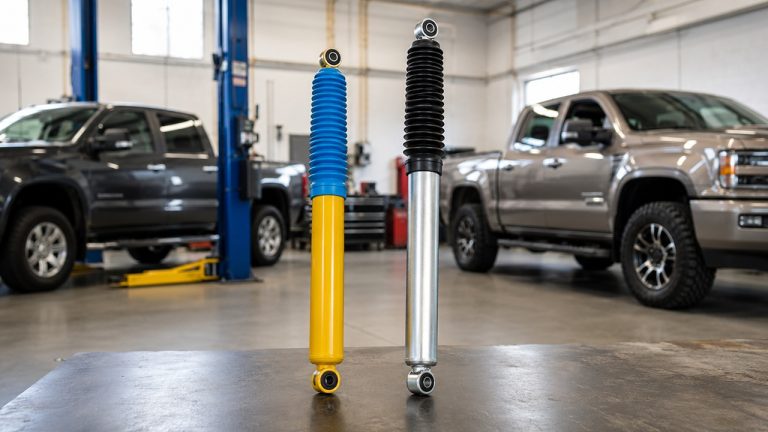
Price comparisons are meaningful only once the hardware type is clear. A small machined spacer retains much of the original spring-and-damper assembly; another product replaces the front struts; a premium suspension system changes damping characteristics as well as ride height. Those are different purchases even when each advertises two inches.
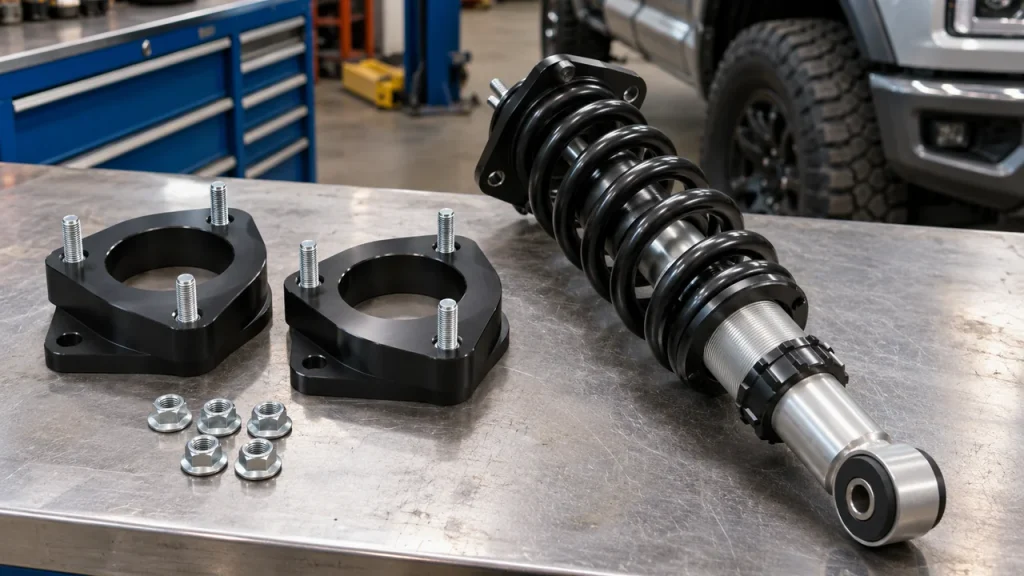
Top-Mount Spacer: Simple, but Not Geometry-Free
A top-mount spacer sits in a designed location at the upper strut mount and changes the installed position of the front assembly. In many applications it retains the factory spring and shock. This can be an affordable way to reduce rake when the original struts are healthy and the kit is engineered for the truck.
The spacer’s physical thickness is not always equal to its advertised change in vehicle height. Suspension leverage and the specific mounting arrangement can amplify or alter the result. Never infer a two-inch front rise from a piece of metal measured with a ruler unless the manufacturer specifies that relationship.
Preload Spacers: Don’t Confuse Spring Position With Free Travel
Preload-oriented spacers alter spring installation conditions rather than functioning exactly like a strut-top extension. Depending on the design, they can change ride height and the operating balance between compression and extension travel. They are not a universal replacement for top-mount designs.
A listing should explain whether the kit requires disassembling the spring-and-strut unit, what equipment is needed and what range the manufacturer approves. Loaded springs store dangerous energy; an unfamiliar assembly is not a suitable place to improvise with ordinary clamps or improvised spring compressors.
Adjustable Leveling Struts Can Solve Two Problems at Once
If the factory shocks are worn, an application-specific ride-height-adjustable front strut may offer a better purchase than keeping a tired damper and adding a spacer. Some Bilstein 5100 and other performance-strut variants offer specified front height positions, but not every shock in the same family is height-adjustable.
Settings vary with part number, engine weight and front suspension. An adjustable perch usually needs to be set correctly during assembly, not treated like a dashboard ride-height switch. For general damping selection—not a new F-150 leveling comparison—see our lifted-truck shock buying guide.
Coilover-Based Leveling: More Performance, More Decisions
A purpose-built adjustable coilover may supply a different piston, damping curve, service plan and mounting arrangement. It can make sense on a truck used regularly on washboard, rocky trails or with a carefully matched load. It is unlikely to earn back its premium on a vehicle used mainly for commuting simply because it has a visible threaded spring seat.
Check whether the quoted package includes two front units, springs, upper mounts and any required control arms. A listing that says “coilover” does not automatically include the rear shocks or every component needed to keep the new geometry within its approved range.
Upper Control Arms: Needed on Some Builds, Not Every Two-Inch Level
As the truck’s front ride height increases, control-arm and ball-joint operating positions change. Some systems include revised upper control arms to restore geometry, droop clearance or alignability; some moderate-height kits are explicitly designed around the original arms.
There is no sound universal rule that every F-150 leveling kit needs aftermarket UCAs. Equally, it is wrong to assume the factory arms are suitable at any advertised height. Follow the kit’s specific requirements, inspect the joints and check the alignment range available on your truck. A more expensive arm should answer a specific need, not just complete the visual look of a parts list.
Tire Sizes and Wheel Fitment After Leveling an F-150
A front leveling kit changes the position of the body and frame relative to the suspension at rest. It does not change tire diameter, wheel offset or the shape of the wheel well. If your real goal is fitting larger tires, those details can matter more than the difference between a two-inch and a 2.5-inch front level.
Will 33-Inch Tires Fit With a Leveling Kit?
Many F-150 owners can run tires in the nominal 33-inch range on a suitable wheel, but that is not a blanket promise across model years or trims. A tire labeled 33 inches may differ in actual mounted diameter and section width from another brand. The original wheel offset, tread shoulder shape, splash guards and remaining suspension travel also matter.
Check clearance at full left and right steering lock, not only while parked with the wheels straight. A truck that does not rub at the curb can contact a fender liner when turning into a driveway with the suspension compressed. Manufacturer tire-fitment statements are valuable when they specify the test wheel and tire rather than only the diameter.
What About 35s on a 2-Inch Leveled F-150?
This is one of the most important search questions and one of the easiest to answer poorly. Some builds make a nominal 35-inch tire work with a mild front level, but others rub against crash bars, liners, the upper control arm or bodywork. Wheel width, offset, tire width and generation can be decisive. “Fits 35s” is meaningless without those conditions.
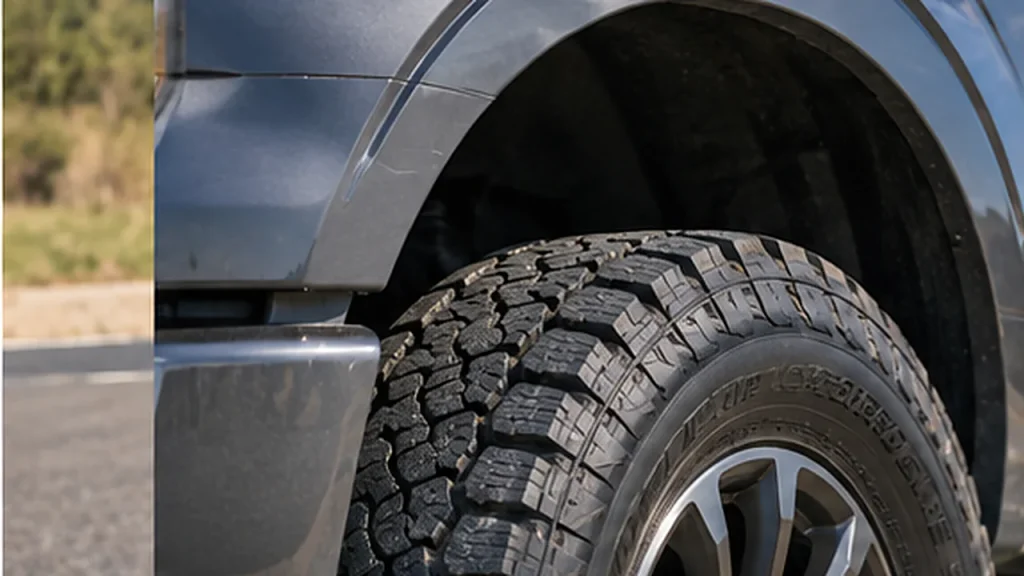
For a concrete reference, ReadyLIFT’s 2021–2026 two-inch 66-2120 kit specifies up to 295/60R20 on a 20×9 wheel with +18 mm offset under the conditions in its own product description. A nominal 35×12.50R20 on a more aggressive wheel is a different fitment claim. Our 35-inch tire lift requirements guide examines those tradeoffs more broadly rather than promising a single F-150 solution.
Wheel Offset and Backspacing Change the Answer
Moving a wheel outward can improve clearance to the upper control arm but create more rubbing at the front and rear edges of the wheel opening as the tire swings through steering. Pulling the wheel inward may help the fender yet bring the tire nearer suspension hardware. Neither direction is automatically better.
This is why two owners with the same year, lift height and stated tire diameter can report opposite results. The relationship between wheel width, offset and backspacing is covered in our wheel offset and backspacing guide. For the F-150 purchase decision, insist on fitment details that match the intended wheel and tire together.
Do You Need Bigger Tires After Leveling?
No. An F-150 can be leveled while retaining its existing wheels and tires if the kit, suspension and tire fitment are correct. That is often a sensible, lower-cost approach for a driver who mainly dislikes the factory rake. The important checks are still wheel alignment, component clearance and whether the front suspension operates in its intended range.
If you later change wheels, rerun the fitment decision from the beginning. A new negative-offset wheel and wider tire can create rubbing on a truck that cleared everything with its factory wheels. The original leveling height is only one piece of the tire-clearance calculation.
A Front Level Does Not Raise Everything Under the Truck
An F-150 with independent front suspension gains front body and frame height at rest when its suspension position changes, but the ground clearance beneath tire-contact-dependent parts and some chassis components follows different rules. The differential housing, lower arms and protection plates do not all move upward by the advertised leveling height.
Taller tires add approximately half their actual diameter increase to clearance beneath axle-related parts, subject to the component and suspension arrangement. That is not the same effect as a two-inch spacer. Do not buy a front level expecting two more inches of clearance beneath every obstacle-contact point.
Alignment, CV Angles and Suspension Travel After a Level
A leveled F-150 may still drive straight while an important suspension angle or available travel margin has changed. The lift moves the suspension’s static operating position, and the front suspension needs to remain safe across the range of movement—not just during a short drive on smooth pavement.
Alignment Is Part of the Job
Expect a post-installation front alignment and inspection according to the kit instructions. Camber, caster and toe can shift when the front height changes, and even a truck that appears to track straight can wear its tires prematurely. The alignment technician needs the appropriate Ford specification and knowledge of the installed parts.
Some kits include alignment cams or related hardware, while others rely on original adjustment points. If the shop cannot reach approved specifications, stop and identify the cause rather than accepting a printout with one value outside range. Our caster adjustment guide explains the relevant adjustment principles without claiming every F-150 uses identical procedures.
Upper Ball Joints and Available Droop
Raising the front can shift upper ball-joint angle and change how close the suspension sits to its extension limit. A truck may look correct at rest but top out harshly over road dips or lose desirable droop on rough tracks. Those symptoms are not repaired by installing a taller spacer on the same assembly.
Look at the complete approved lift range, joint articulation and whether the kit requires a revised upper arm. A joint operating near its travel limit while parked is a warning sign. Do not use a homemade steering-lock or droop test as a substitute for the manufacturer’s suspension inspection method.
Front CV Joints Matter on 4WD Trucks
A four-wheel-drive F-150 has front half-shafts and CV joints whose working angles can change when the front suspension sits higher. That is one reason an aggressive front raise cannot be evaluated solely by how level the hood appears. Joint angles and suspension geometry must be assessed for the particular 4WD configuration.
Two-wheel-drive trucks do not have the same driven front axle arrangement, but they still have ball joints, control arms, steering and travel limits. This is a useful distinction when comparing 2WD/4WD product listings: absence of front CV joints does not mean a three-inch front spacer is automatically acceptable.
Why Shock Length and Bump Stops Still Matter
The installed strut or shock must remain within the working range intended by the kit at compression and extension. A spacer system may retain the original damper, but it does not grant unlimited additional travel. Conversely, a different leveling strut may be designed to manage its own specified height range.
Bump stops and other travel-control hardware protect components when the suspension reaches its limits. If the truck tops out, bottoms out, binds or touches components after leveling, investigate the chosen parts and the complete installation. Do not assume that a rougher ride is an unavoidable price of making the truck sit flat.
Daily Driving, Towing and Payload: Keep the Truck Useful
A leveling kit is usually bought for stance, but an F-150 still has to work as a pickup. The factory rear-high appearance leaves room for suspension compression as load is added. Removing that appearance can make an unloaded truck look better while creating a loaded stance you do not like.
Why Ford Builds in Factory Rake
Many pickup trucks sit slightly higher at the rear when empty because the rear suspension carries varying payload and trailer tongue weight. As the truck is loaded, the rear moves downward. A front-only level reduces that initial visual margin; it does not alter the truck’s GVWR, axle ratings or approved towing capacity.
If you regularly tow a travel trailer or carry a heavy bed load, consider keeping some rake instead of chasing a perfectly horizontal profile. The right amount is specific to the truck, hitch setup and actual loads, not a universal inch figure.
Leveling Does Not Fix Rear Squat
When the rear sinks under a trailer, the primary questions involve tongue weight, weight distribution, spring condition, tire pressure and equipment suitability. Raising the front is not a repair for inadequate rear load support. It can make the loaded truck appear even more nose-high, and headlight aim or handling may become less acceptable.
Do not treat add-on support equipment as permission to exceed the truck’s ratings either. If towing is your priority, inspect the loaded stance and correct the actual loading problem before selecting an appearance-focused front height.
What Changes on the Highway?
A well-matched mild level on healthy suspension may preserve a comfortable daily-drive feel. Nonetheless, front lift, changed tire size, wheel offset and damper choices can influence steering response, braking behavior and ride. A truck wearing much heavier and wider tires should not be expected to handle exactly like its stock-wheel version simply because the spacer itself is lightweight.
After installation, watch for pull, wandering, vibration, unusual contact and uneven tire wear. A proper alignment and verification under the maker’s procedure should happen before the truck returns to ordinary highway duty.
What an F-150 Leveling Kit Really Costs
The sticker price is only one part of the decision. A spacer kit may be inexpensive, but installation, alignment, any worn hardware and future wheel-and-tire changes affect the total. A package of engineered struts and control arms has a higher price because it contains a different set of components, not simply because it lifts the front higher.
Spacer-Only Versus Complete Front System
At the entry end, a vehicle-specific spacer may be advertised for well under the cost of replacement shocks. At the other end are complete assembled leveling struts, adjustable coilovers, and kits with revised upper arms. Comparing these prices as if they were the same product leaves out the main value differences: damping, hardware, geometry and service requirements.
A low-priced spacer can be entirely reasonable for a compatible truck with sound stock dampers. But a 2018 F-150 on failing struts may benefit more from replacing those parts with a properly approved height-adjustable assembly than from spending labor to retain worn units.
Installation Labor and Alignment
Some bolt-on systems are designed for a modest shop job. Others require spring/strut disassembly, specific torque procedures or more extensive suspension work. Published installation hours are estimates, not a promise for a rusty high-mileage truck that has already been modified.
Ask for an itemized quote including the kit, front-end labor, required replacement hardware, alignment and any sensor or headlight checks specified by the vehicle or kit instructions. A shop that merely says “leveling kit installed” without addressing alignment has not explained the entire job.
Hidden Costs: Wheels, Tires and Worn Parts
The expensive part may be the plan that comes after the level. A set of larger all-terrain tires, aftermarket wheels and subsequent trimming can dwarf the initial spacer cost. Heavy tires may change braking feel and effective gearing, and aggressive offset can add fitment problems even when the tire is nominally the same diameter.
Older F-150s may also need attention to original upper mounts, worn shocks, control-arm joints or bushings. These are repairs, not automatic leveling-kit accessories. Deal with unsafe wear first and avoid making a new modification the explanation for every existing noise.
How to Read a Product Listing Before Ordering
A listing headed “F150 leveling kit, 2004–2026” is not enough information to buy a safety-related suspension component. It may cover several unrelated SKUs, rely on a broad catalog filter or leave model exceptions hidden farther down the page. A useful product description should make it easy to reject the wrong option.
Look for a Specific Part Number and Revision
Record the manufacturer’s SKU, stated model-year range, approved drivetrain, special-trim exclusions, actual front height and included hardware. If a product changed design between earlier and later years, make sure the installation document is for the current revision. Sellers sometimes combine review histories for several versions of a kit.
Manufacturer instructions take priority over forum photos and universal marketplace fit claims. A retailer’s promise of “no rubbing” without wheel size, offset, tire dimensions and vehicle configuration is not a complete fitment statement.
The Eight Checks Worth Making
Before ordering, compare the listing with the truck itself. This short list catches most of the expensive misunderstandings:
- Model identification: Exact year, generation, regular F-150 versus Heritage, Raptor, Tremor or Lightning.
- Drivetrain and engine: 2WD/4WD, gasoline or PowerBoost, and any equipment restrictions stated by the maker.
- Damping: Factory strut or shock type and whether the truck has CCD or another controlled system.
- Measured rake: Hub-to-fender heights on both axles with the vehicle in its typical condition.
- Kit mechanism: Top spacer, preload spacer, height-adjustable strut or a complete coilover-based package.
- Required extra parts: Alignment hardware, control arms, replacement fasteners and any prescribed corrections.
- Wheel and tire plan: Actual tire dimensions, rim width, offset, clearance and willingness to modify liners only where approved.
- Installation and use: Alignment, suspension travel checks, towing needs, warranty implications and any applicable inspections.
Don’t Assume Every Brand Makes the Same Trade-Off
ReadyLIFT, Rough Country, BDS, Zone, Bilstein and other manufacturers offer F-150 options, but their ranges, engineering and restrictions differ. A two-inch kit with an offset top mount and supplied alignment hardware is not interchangeable with a two-inch kit that explicitly excludes CCD, even when both look like compact pieces of aluminum.
Brand reputation matters, but correct application matters more. If the original part is damaged, missing its specified studs or sold without any traceable fitment sheet, choose a documented alternative rather than relying on the name cast into the metal.
Problems That Suggest the Level or Installation Is Wrong
A freshly leveled F-150 should not be accepted solely because it looks right from across the parking lot. The first drive and subsequent inspection may reveal that the chosen height, fitment or setup needs correction. These symptoms call for mechanical checks, not an assumption that a tall truck always rides differently.
Clunking at Full Extension or Over Small Dips
A new clunk may come from mounting hardware, loose fasteners, upper mounts, joint movement, contact or a strut operating near the wrong travel limit. A front end that repeatedly tops out can feel abrupt over crests or uneven pavement. Stop and inspect rather than treating the noise as normal break-in.
A spacer is not supposed to substitute for missing travel. Compare the actual assembled installation with the kit instructions, and have the suspension checked through its approved range by a qualified shop.
Pulling, Steering Wheel Off-Center or Fast Tire Wear
A pull or off-center steering wheel after a suspension height change can indicate alignment or installation issues. New uneven tire wear is another reason to check toe, camber and caster before it ruins an expensive tire set. Tire pressure and existing wear can complicate the diagnosis, but they do not remove the need for a proper alignment.
If the alignment settings cannot be reached, investigate the suspension and compatibility instead of masking the problem with an arbitrary steering adjustment. A part may physically bolt on and still be unsuitable for the vehicle’s intended geometry.
Rubbing That Wasn’t There With Stock Tires
When contact begins after wheel and tire changes, establish exactly where it occurs and under what steering and suspension position. Rubbing at full lock may involve the liner, crash bar, upper arm or other components. Adding another half inch of spacer is not a safe universal fix, because the interference may be determined mainly by width and offset.
A fitment check should include articulation and clearance with the exact tire-and-wheel package. Where a manufacturer specifies trimming or a different wheel, that condition belongs to the product’s application—not an optional note to ignore.
F-150 Leveling Kit FAQ
The common questions have short answers, but the model year and hardware still decide what is safe to buy. The answers below are for choosing a kit, not a substitute for the particular manufacturer’s installation procedure.
What is the best leveling kit for an F-150?
The best choice is a correctly engineered kit for your year, trim, drivetrain and desired front height. For an ordinary stock truck that needs a modest appearance correction, a suitable 1.5- to 2-inch kit is often sufficient. Worn factory struts or demanding off-road use may justify a properly matched leveling-strut or coilover system instead of a cheap spacer.
Is a 2-inch leveling kit enough for an F-150?
Often, yes, for reducing a typical factory nose-down stance. Measure the actual front-to-rear hub-to-fender difference first. A nominal two-inch raise does not guarantee the truck will be perfectly level, and retaining some rake may be preferable if you tow or carry substantial cargo.
Can I put a 2.5-inch leveling kit on a 2025 or 2026 F-150?
Only when that specific kit is explicitly approved for the correct year and configuration. Ordinary F-150s, Tremor, Raptor, Lightning and CCD-equipped versions can have different requirements. The fact that a 2.5-inch product appears in a 2026 search does not establish fitment for your 2026 truck.
Do I need new upper control arms for a 2-inch level?
Not automatically. Some 2-inch systems are designed around the factory arms; other configurations or higher front lifts may call for revised arms. Follow the actual kit instructions and check whether acceptable alignment and joint travel remain available. Do not use a generic internet rule as a replacement for that verification.
Will a leveling kit let my F-150 run 35-inch tires?
Not by itself, and certainly not across every model year. Tire width, actual diameter, wheel offset, rim width, front-end design and full-lock clearance affect the result. Some combinations work with extra conditions or trimming; other setups need a more substantial engineered suspension solution.
Are 2024, 2025 and 2026 F-150 leveling kits the same?
Some current product families cover all three years, but not every earlier part number or vehicle configuration does. Use the current application chart for the exact model year, and confirm whether special trims and factory damping equipment are excluded. Broad “2021+” labels are not enough on their own.
Can I use a regular F-150 kit on a Tremor or Raptor?
Do not assume so. Both use special suspension arrangements and many ordinary F-150 leveling kits exclude them. Purchase a product specifically listed for the relevant Tremor or Raptor model and year, with the intended shock and suspension configuration.
Can I stack two leveling spacers for more height?
Not unless the manufacturer explicitly designed and approved that exact combination. Stacking unrelated spacers can change the assembly’s fastener engagement, suspension position and travel in ways neither kit was engineered to handle. If the first kit does not provide enough height, choose a complete approved system for the intended result rather than adding another spacer to an unknown setup.
Does leveling an F-150 affect towing?
It can reduce the factory rear-high margin so the truck looks more nose-high when loaded. A front level does not increase load or towing ratings and does not correct rear squat. Check the truck’s real towing and payload needs before eliminating all factory rake.
Does the ride get worse with a leveling spacer?
Not necessarily, but changes to operating position and travel can influence comfort. Poor fitment, old shocks, steep joint angles or contact can create harshness and noise. A higher-priced spacer does not automatically improve damping, because many spacer systems retain the original struts.
Do I need an alignment after installing an F-150 leveling kit?
Plan on a professional alignment and relevant post-installation checks according to the manufacturer’s directions. Front ride-height changes can alter toe, camber and caster. A straight steering wheel is not proof that tire-wear angles are within specification.
If the Truck Already Has a Leveling Kit
A used F-150 can arrive with an aftermarket front spacer and no information about who installed it. Before ordering larger tires, replacing shocks or increasing the lift, identify the current hardware. Look for part markings, compare left and right strut mounts, measure the actual front and rear ride heights, and determine whether the installed damping and control arms are factory parts.
If you cannot establish the kit’s maker and approved operating range, arrange an inspection rather than stacking another spacer on the existing setup. A truck that already looks level may have had its front height altered more than the seller realized. The next purchase should be based on what is under the truck now—not only what its VIN says left the assembly line.