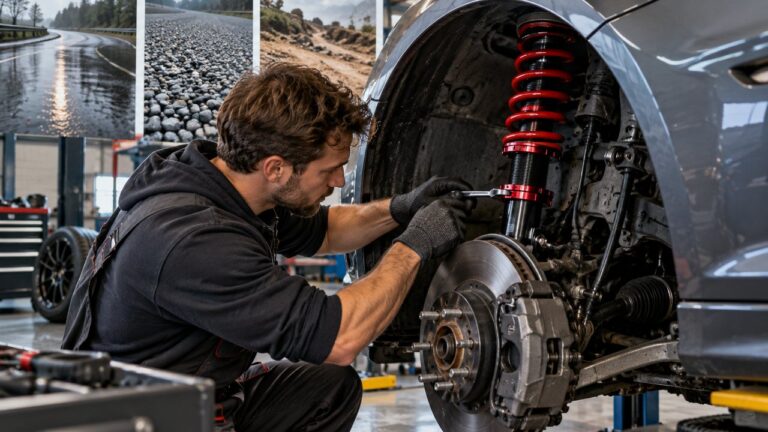
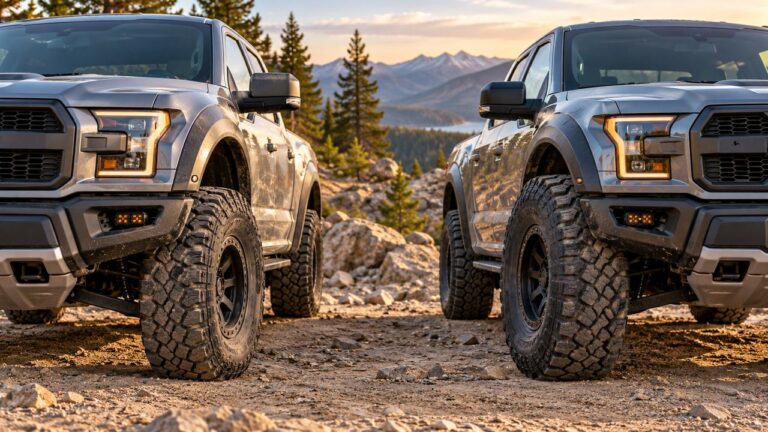
Extended Brake Lines for Lifted Trucks: Length & Fitment Guide
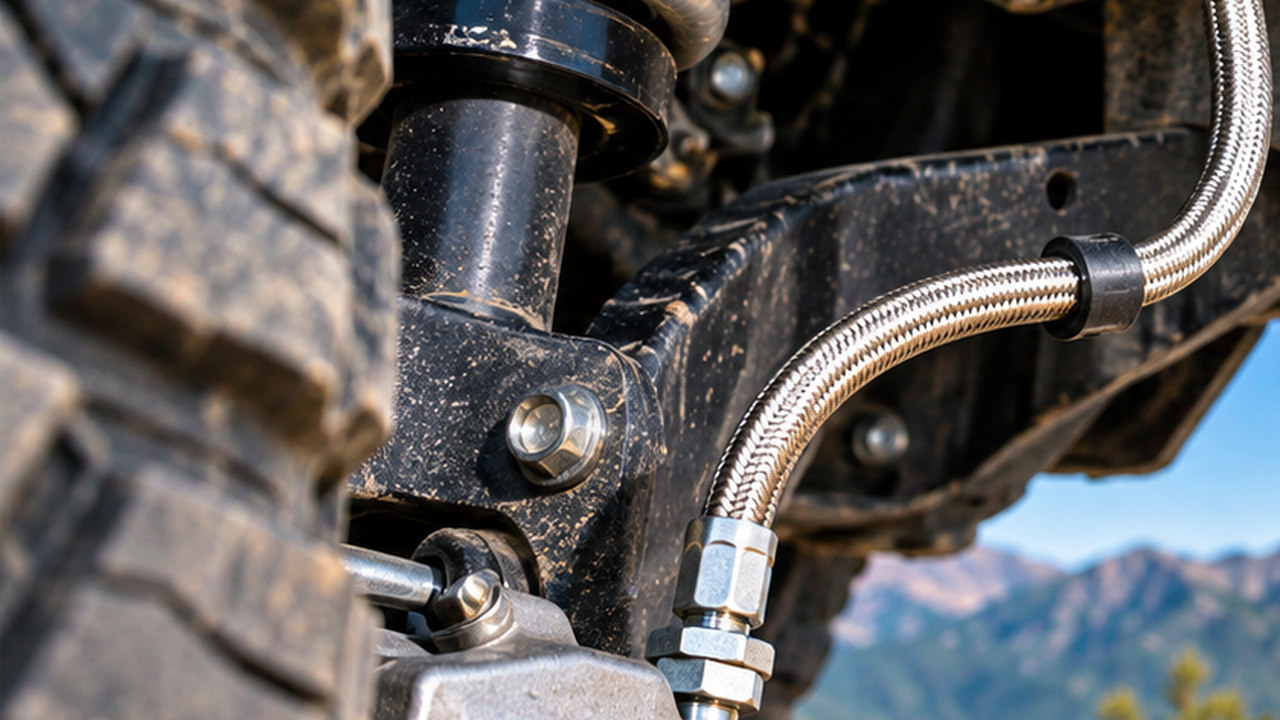
An extra two inches of ride height does not automatically mean you need two inches of extra brake hose. Extended brake lines for lifted trucks are needed when the original flexible hoses cannot follow the suspension and steering through their full, approved range without stretching, kinking or rubbing. If the factory hoses still have safe slack and routing at every limit, replacement may be unnecessary. If a hose goes taut at full droop, though, the truck should not be driven until the problem is corrected.
The short answer: there is no universal “2-inch lift is fine, 4-inch lift needs lines” rule. The right answer depends on the vehicle, whether the axle or wheels gain droop travel, hose attachment points, and the hardware supplied with the lift. A purpose-built longer hose or an approved relocation bracket may be the solution. Neither is a substitute for checking the installed truck.
This guide focuses on hydraulic flexible brake hoses on lifted pickups and SUVs—not rigid brake-pipe fabrication, brake caliper upgrades or the broader choice of suspension lift. We will work through the length and fitment questions you need answered before buying a front or rear kit.
Do You Need Extended Brake Lines After a Lift?
A factory hose has to accommodate movement between its mounting points. A suspension lift can change their resting relationship; longer shocks, revised control arms or a solid axle with more droop may also change the maximum distance between them. Those are related changes, but they are not the same thing.
Here is a useful first-pass decision table. It is a screening guide, not permission to skip the physical clearance check.
| Lift or suspension setup | Likely brake-hose decision | Check that decides it |
|---|---|---|
| Stock suspension, sound hoses | Retain suitable factory hoses | Age, damage and normal travel clearance |
| Mild leveling or suspension lift | Often retain; verify | Full droop, steering lock and routing |
| Lift with longer shocks or added wheel travel | Extended hoses more likely | Actual maximum travel and hose slack |
| Solid-axle lift or long-arm conversion | Frequently needs hose or bracket changes | Frame-to-axle extension at full droop |
| Lift kit already includes hose brackets | Follow the specified arrangement | Approved bracket placement and full-cycle clearance |
| Body lift with unchanged suspension travel | Not automatically an extended-hose job | Any body-mounted connections disturbed by the body lift |
| Hose is taut, pinched or rubbing | Unsafe until corrected | Correct hose length, fitting and routed path |
A body lift does not usually change suspension droop in the same way. If you are deciding which modification actually affects the chassis and wheels, see our body lift vs. suspension lift guide.
A brake hose must never double as a suspension stop. The shock, suspension geometry or designed droop-control system should determine the movement limit, with appropriate clearance remaining for the hose and ABS wiring. Our suspension limit straps guide explains what should control full extension on off-road builds.
How to Check Whether Your Stock Hoses Are Too Short
The quickest mistake is looking at the brake hose with the truck sitting on its tires and deciding it has enough slack. Normal ride height tells you almost nothing about what happens when one wheel drops into a hole or the axle hangs below the frame. That gap between advertised height and actual wheel travel is also explored in our leveling kit vs. lift kit comparison.
Check Full Droop, Not Just Parked Ride Height
At full droop the wheel or axle is at its lowest permitted position relative to the chassis. On a solid-axle truck, the rear center hose or a front hose from frame to axle can become tight as the housing moves downward. On independent front suspension, each wheel moves separately and the hose follows its own bracket and steering path.
A qualified installer should inspect the vehicle through its actual intended travel using safe support and the suspension manufacturer’s prescribed procedure. Look for a hose drawn straight between fittings, a crimp sleeve pulled against a bracket, or a line becoming the thing that stops further extension. Any of those is a reason to stop and correct the arrangement before road use.
The amount of droop is not simply the advertised lift height. A truck with a modest lift and significantly longer shocks can demand more hose movement than a taller setup whose suspension travel remains tightly limited. That distinction catches buyers out.
Turn Lock to Lock With the Suspension in Different Positions
A front brake hose also has to turn with the steering knuckle. A loop that looks relaxed with the wheels straight can twist around a shock or stretch at full steering lock. A hose must not hit the tire, wheel barrel, sway-bar link or control arm at either extreme, including while the suspension moves.
The installer needs to confirm how the factory hose bracket and any replacement tab orient the fitting. A few degrees of twist trapped between the fixed ends can matter more than an extra inch of nominal length. Never rotate or loosen a pressurized connection casually to make a bad route look neater.
Check Bump, Chafing and ABS Wires Too
Full compression, also called bump or jounce, is the opposite test. A hose that clears everything when extended can fold into a tire, spring, upper arm or sharp crossmember as the wheel rises. Extra length only helps if that extra loop has somewhere safe to go.
Inspect ABS wheel-speed sensor wiring separately. It often runs alongside the brake hose, but an extended hydraulic line does not make the electrical lead longer. If the brake hose has enough slack and the ABS wire is stretched, the suspension still needs a different approved routing or component solution.
How Long Should Extended Brake Lines Be?
There is no reliable universal formula that says “stock hose length + lift height = new hose length.” Some retailers use that as a rough shopping description, but the hose does not run in a perfectly vertical straight line. Its end fittings, anchor brackets and steering movement determine the useful routed length.
Measure the Installed Routing and the Limiting Position
For a vehicle with no approved pre-sized kit, a professional hose supplier or suspension shop needs the current mounting layout, the end-to-end route and the suspension positions that make the hose most extended. The measurement follows the intended safe hose path, not a straight line between two fittings. That path must accommodate a relaxed curve and the hose manufacturer’s bend-radius rules.
Record which connection is at the frame, axle, caliper or bracket; the hose-end orientation; and whether a mounting clip or grommet fixes part of the hose in place. Then verify the finished assembly at droop, bump and full steering. In practice, these details are why a known vehicle-specific kit is preferable to ordering a hose by length alone.
Understand What “4–6 Inch Lift” Means on a Product Page
Manufacturers often describe an extended brake hose by the suspension lift range it is intended to fit, not just the physical hose length. As one current example, Rough Country lists a 33.5-inch front hose for certain 2017–2026 4WD Ford F-250/F-350 models and recommends it for a 4.5–6-inch lift. Its fitment notes caution that shorter-lift installations can leave excess slack. That is one specific application, not a length rule for every Super Duty or every brand.
Look for three separate facts before buying: the exact vehicle fitment, the manufacturer’s approved lift range and the actual assembled hose length if provided. Read exclusions and installation notes rather than shopping from a photograph or an “up to 6 inches” headline.
Why Too Long Is Also Wrong
An overlong hose may bow toward the tire, collect around a control arm or rub the sidewall during steering. Off-road debris can catch a poorly supported loop. Even on pavement, repeated contact can damage a protective sleeve or hose cover long before a leak becomes obvious.
Do not try to hide a major length mismatch with a coil of hose, tight zip ties or a sharp bend at the crimp. The better fix is a correctly sized part with proper mounting and a deliberate, movement-safe route. “Extra insurance” is not extra safety if the line can become snagged.
Extended Rubber vs. Stainless Braided Brake Hoses
You will encounter two main aftermarket choices: reinforced rubber-type hydraulic hoses and braided assemblies with an inner tube, often PTFE, protected by stainless braid and sometimes a further outer jacket. The outer finish is not enough to judge whether either is suitable for your truck.
Rubber Hoses: Flexible, Familiar and Application-Specific
A quality rubber brake hose can be a sensible choice when it meets the required specification, fits the stock mounting hardware and offers the correct extension. It may handle repeated wheel movement without the abrasive exposed braid that can harm nearby surfaces when improperly routed.
Rubber is not automatically inferior, and braided is not automatically superior. Hose construction, age, pressure rating, end-fitting quality and correct installation determine performance. A cracked old factory hose may need replacement regardless of whether the truck has a lift.
Stainless Braided: Protection Without a Free Pass on Fitment
Braided stainless lines are popular because the reinforcement can limit expansion under pressure and provide a durable protective structure. Some drivers report a firmer pedal, but that is not guaranteed: the existing brake system, hose condition, pad behavior and bleeding also affect pedal feel. The phrase “stainless steel brake line” usually refers here to a flexible hose with stainless braid, not a rigid metal brake pipe.
A bare braided surface can still abrade another component. Inspect the outer jacket and the intended clip locations. Buy a fully assembled, brake-rated hose from a credible supplier rather than trying to adapt an industrial pressure hose just because it has a metal braid.
Compare the Whole Assembly, Not Just the Cover
Look closely at the transition into each end fitting, reinforcement, abrasion protection, bend allowance and mounting support. A well-made hose that is mounted at the wrong angle can be unsafe; a cheaper-looking hose with correct approved ends and routing may be the better application match.
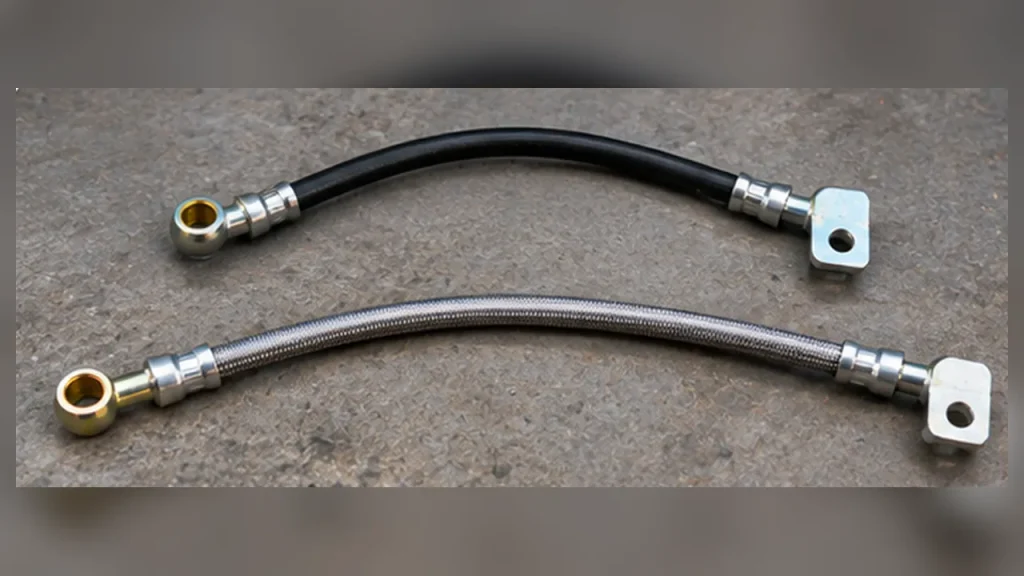
For off-road use, pay special attention to the section exposed behind the tire and near the shock. The risk is often mechanical rubbing or snagging, not a shortage of advertised pressure rating. Buying by the biggest pressure number misses the point.
Front, Rear and Suspension Design Change the Answer
The front and rear of a lifted truck do not necessarily need the same type or amount of hose extension. Some kits are sold as front pairs; others include a single rear center hose; still others use multiple corner hoses. Check what your truck actually has before assuming “a set” means four identical pieces.
Independent Front Suspension: Steering and CV Clearance
On an IFS Tacoma, 4Runner, Silverado or similar truck, each front wheel follows a suspension arc while steering. The hose must clear the control arms, spring or coilover, axle area and inner wheel at all positions. The factory attachment tab may be part of the safe routing, so removing it can create problems instead of freeing the line.
A front lift may change CV joint angles without changing the brake-hose travel enough to require longer lines. Those are separate assessments. A differential-drop modification, for example, does not solve a tight caliper hose or an ABS wire at full steering lock.
Solid Front Axles: Articulation and Long-Arm Builds
On solid-axle Jeeps, older trucks and many Super Duty setups, the axle can move as an assembly beneath the frame. More flex, altered shock mounts or a long-arm conversion can pull the brake hoses toward their limits even if the static ride height does not look dramatic.
If the suspension is designed for more articulation, hose selection must suit the complete travel envelope. That means considering arms, shocks, steering and travel-control changes, not just the hydraulic hose. For the wider system, see our long-travel suspension guide.
Rear Axles: The Center Flex Hose Is Easy to Miss
Many live-rear-axle trucks have a flexible line running from the chassis to a junction on the axle, with rigid tubing then routed along the axle housing. When the rear axle droops, that center hose can be the first brake component to run out of movement. Other rear suspensions use different hose layouts, so check the actual truck.
Do not assume a front-only extended hose kit fixes a rear restriction. Rear hose brackets, vent-hose routing, ABS wiring and parking-brake cables are separate items that may also need attention. The brake hose must not be asked to restrain the axle while another line or cable gets overlooked.
Vehicle Fitment: Jeep, Ford, GM and Toyota
A search for “extended brake lines” returns hundreds of applications. The year and model are just the beginning: drivetrain, axle arrangement, brake package, lift brand and the included brackets can all change the correct part. Below are the platform-specific distinctions worth checking, rather than a universal fitment chart.
Jeep Wrangler TJ, JK and JL: Do Not Mix Generations
Jeep Wrangler TJ, JK and JL models have different factory mounting arrangements and aftermarket hose options. A catalog listing for an older TJ or Cherokee XJ kit is not evidence it will fit a JL simply because both use solid axles and may be lifted four inches. Check the correct front/rear configuration, brake fitting geometry, caliper-side hardware and whether the lift includes its own hose-relocation brackets.
Off-road Jeep owners also need a full articulation check rather than a parked measurement. A hose that is fine on a mild street lift can be too short with longer shocks and increased droop. Some JKS and Rough Country kits specify an application and lift range; follow the exact part’s instructions, not a generic forum diagram.
Ford F-250/F-350: Verify the Axle and Lift Range
Ford Super Duty product listings often separate model years, 4WD configuration and front versus rear applications. As noted above, one Rough Country extended front kit is specified for certain 2017–2026 4WD F-250/F-350 trucks with 4.5–6 inches of lift; the manufacturer explicitly warns about excess hose slack with smaller lifts. A similarly named brake line for an older generation can use a different length or mounting design.
Before ordering, confirm the axle configuration, whether your lift kit uses drop brackets and whether the selected hose is a front pair or a rear assembly. Do not reuse the hose-length specification from a different Super Duty generation without checking.
Silverado, Sierra and Ram: Check Axle, Trim and Kit Contents
GM 1500 and HD trucks can have very different front suspension and differential arrangements, while their rear brake hose routing also varies. A part advertised for a Silverado 1500 should not be assumed to fit a 2500HD. In the same way, a Ram 1500 listing may not cover a 2500 with a different axle or brake layout.
Some lift packages for these trucks include brake-hose drop brackets rather than complete replacement hoses. If that is the approved design, check whether the bracket is already installed before buying a second solution. Adding a longer hose to an incompatible relocated mount could create excessive slack.
Tacoma, 4Runner and Other IFS Trucks: More Lift Is Not Always More Droop
Toyota-style IFS lifts are a good reminder to distinguish ride-height gain from travel gain. A front leveling setup that retains factory droop stops and hose brackets may leave adequate hose clearance. A more involved off-road suspension with different shocks or wheel movement needs a fresh check, even if the advertised lift height is similar.
Confirm whether the proposed part is a true hydraulic hose replacement, a bracket kit, or only a component to reroute a separate line. The seller’s application chart must include the exact year and brake package. The redesigned model generations should not inherit an older fitment claim by assumption.
Brake Line Relocation Brackets vs. Longer Hoses
A lower-cost alternative sometimes exists: reposition the factory hose’s fixed mounting point with a vehicle-specific relocation bracket. This can recover usable travel without replacing an otherwise serviceable hydraulic hose, but only where the brake and suspension manufacturers allow that layout.
When a Relocation or Drop Bracket Makes Sense
A purpose-designed bracket can move the fixed anchor so the flexible section follows the axle or wheel correctly. Some suspension kits already include the bracket, a retainer clip and appropriate hardware. With sound original hoses, approved fittings and proper clearance through travel, that may be all the modification requires.
It is not a universal workaround. An improvised tab can position the hose near a tire or force a hard pipe into a bend. If relocating the chassis attachment puts tension on the rigid brake pipe or changes a flare connection, the modification requires qualified brake-system work—not trial and error.
When Replacement Hoses Are the Better Choice
If the original rubber is cracked, deteriorated or still too short with the approved bracket installed, a correctly sized extended assembly may be appropriate. The same applies where a suspension manufacturer specifically requires replacement hoses for its travel range. Follow that documented arrangement rather than mixing pieces from unrelated kits.
Watch for listings that call a bracket an “extension kit.” A metal bracket does not increase the physical length of the hose; it changes how the available length is distributed. Read the parts list carefully so you do not discover that you purchased brackets when you needed new hydraulic hose assemblies.
Fittings, Quality and DOT Compliance
A hose that seems the right length can still be completely wrong for the truck. Brake connections must seal under hydraulic pressure, and the hardware has to hold the line securely without allowing twist, chafing or excessive bending. These are not places to improvise compatible-looking fittings.
Banjo Bolts, Flare Ends and Mounting Tabs
Check whether the caliper uses a banjo fitting, what sealing washers are supplied, and which hard-line connection type is present at the chassis side. Two fittings can look similar but have different thread pitches or sealing seats. Inverted flare, bubble flare and other connection designs are not interchangeable merely because the threads appear to engage.
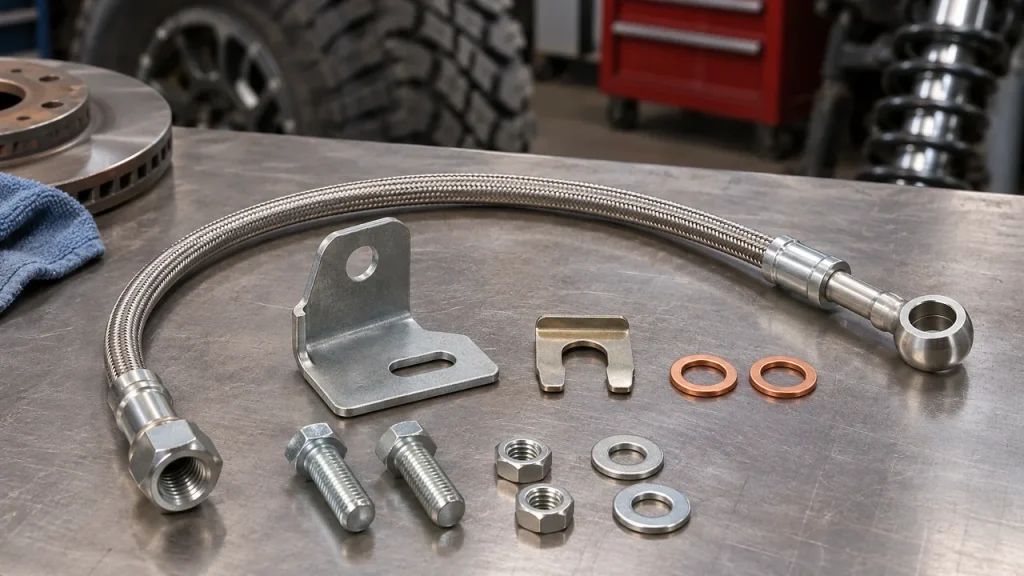
Also confirm the fixed bracket’s shape, retaining clip, fitting orientation and any rubber grommets. If a supplier cannot identify those details for your vehicle, ordering its hose by total length alone is a gamble. Reusing sealing washers or forcing a fitting risks a hydraulic leak.
What “DOT Approved” Really Means
Many aftermarket listings use the words “DOT approved.” In the United States, applicable brake hoses and assemblies must meet the relevant requirements of Federal Motor Vehicle Safety Standard No. 106. NHTSA does not preapprove every individual aftermarket hose: manufacturers are responsible for certifying compliance. The agency explains that distinction in its official FMVSS 106 interpretation.
Ask for a reputable manufacturer’s traceable, application-appropriate assembly and compliance information rather than treating a marketplace badge as proof. A claimed pressure test is useful product information, but it is not an independent substitute for correct fitment, construction, identification and installation.
What Should Come in a Complete Kit?
The box may contain two front hoses, one rear center hose, or a multi-hose arrangement, depending on the axle design. Check for the correct retaining clips, banjo sealing washers where used, brackets, protective sleeves and instructions. Some kits expect you to reuse specified factory components; others provide replacements.
Never assume a photographed washer or bolt is included. Review the manufacturer parts list and identify any separately required fluid, brackets, mounting hardware or professional labor before starting. A hydraulic system that is opened must also be correctly bled and inspected before the truck returns to service.
Installation and Bleeding: The Critical Checks
Brake hose replacement is more than a simple bolt-on suspension accessory. It opens a safety-critical hydraulic circuit. A qualified brake technician should perform the work and follow the vehicle service manual and the exact hose manufacturer’s instructions, including any ABS bleeding procedure.
Avoid Twisting the Hose or Loading Its Crimps
Before disconnecting anything, the installer should identify the hose’s intended route and compare the new assembly with the factory ends and mount locations. After installation, the hose must sit without torsion. End fittings, banjo orientation and fixed retaining clips have to match the engineered installation.
The line should not be forced into place by pulling on a crimped end or bending a rigid brake pipe. A hose that only fits after distorting a bracket is a fitment warning, not a reason to tighten harder. Use the specified new seals and manufacturer torque requirements rather than a generic number from another truck.
Bleed the Hydraulic System Correctly
Any time a brake hose is disconnected, the opened brake circuit requires appropriate bleeding and leak checks. Depending on the vehicle, the correct procedure may involve a particular sequence, pressure bleeding or a scan-tool function for the ABS hydraulic control unit. Do not assume that a firm pedal after a few pumps proves the system is free of air.
Use only the specified brake-fluid type and approved procedure. Contamination, an incorrect fitting seat or trapped air can compromise braking. If a technician cannot obtain a normal pedal, the truck should not be driven to see whether it improves.
Inspect at Every Steering and Suspension Limit
After the system is assembled, the technician should check for leakage under the required conditions and cycle suspension and steering safely through their intended limits. The hose must have enough movement at full droop without going taut, enough clearance at full bump without folding into moving parts, and a clean path at both steering locks.
Finally, the ABS wiring, brackets, hose sleeves, wheel clearance and nearby cables need their own checks. A controlled post-service road test and follow-up inspection should follow the manufacturer procedure only after the brake system has passed its static checks.
Common Problems After Installing Extended Lines
Most troubles are routing or connection problems rather than a simple shortage of advertised hose length. The symptoms below should prompt inspection before the vehicle sees road speed or off-road articulation.
The Hose Rubs the Tire or Coilover
A line that contacts the tire, wheel, shock or spring can wear through a protective cover. The first sign may be polishing, scuff marks or a section of braid exposed to dirt. Do not cover the contact point with tape and assume it is fixed; the route, hose size or mount placement must be corrected with approved parts.
The same caution applies to cable ties. They may be useful for some specified auxiliary routing but should not crush, sharply bend or substitute for the required brake-hose mount. Follow the hose and lift instructions on what may be secured and where.
The Brake Pedal Feels Soft or a Connection Weeps
Air in the circuit, an incorrect fitting, damaged sealing surfaces or a hydraulic leak can produce poor pedal response. Stop and have the system diagnosed; do not attribute a spongy pedal to the new hose’s material or assume it will settle. Brake-fluid loss around a banjo fitting or hard-line connection is never normal.
Likewise, a firmer pedal after installing braided lines is not a reason to skip bleeding and leak testing. Pedal feel alone does not verify hydraulic integrity.
The Hose Is Long Enough but the ABS Wire Is Tight
A common missed detail on lifted or long-travel trucks is an electrical wire pulled straight at full droop while the hydraulic line hangs comfortably. That is still an unsafe travel configuration and can damage the sensor circuit. Treat ABS-wire routing, connector retention and clearance as distinct checks.
This matters especially after changing shock length or installing components that allow more articulation. Brake hoses, wiring, parking-brake cables and differential breather hoses each need their own available movement. Lengthening one does not lengthen the others.
Buyer Checklist Before You Order
A product description can be persuasive and still omit the detail that determines whether it fits your specific truck. Use this short checklist before paying or handing a parts list to your installer.
- Vehicle: exact model year, trim, 2WD/4WD configuration, axle and brake package.
- Suspension: brand and part number of the installed lift, actual ride-height gain and full droop limit.
- Location: front pair, rear center hose or individual rear-corner hoses; confirm quantity.
- Length: approved lift range plus a verified routed-length and movement check, not lift height alone.
- Fittings: correct flare type, banjo style, bracket tabs, retaining clips and new seals where required.
- Protection: suitable bend radius, abrasion sleeve and clearance from tires, shocks and sharp metal.
- Compliance: identifiable brake-rated assembly and credible FMVSS 106 compliance information.
- Installation: qualified technician, correct fluid, bleeding requirements and full-cycle inspection.
The priority is not the cheapest hose or the longest available one—it is the assembly that fits and moves safely. To budget it alongside alignment, steering and driveline expenses, see our lift kit installation cost guide.
Extended Brake Line FAQs
A few questions tend to come up only after an owner starts comparing lift packages and actual hose listings. These are the distinctions that prevent buying twice.
Do I need extended brake lines for a 2-inch lift?
Not necessarily. Many mild lifts retain safe factory hose travel, but some altered shock or bracket arrangements do not. Inspect the specific truck at full droop, bump and steering lock, and follow the lift manufacturer’s requirements. A two-inch number on the box cannot make the decision by itself.
What about a 3-inch or 4-inch lift?
Longer hoses become more common as lift systems add travel or change fixed mounting points, but there is no universal threshold. Some vendors list specific hoses for 4–6-inch lift applications; that is their particular product range, not an instruction to install the same length on every vehicle raised four inches.
Can I just add the lift height to the stock brake hose length?
That is not a reliable measurement method. Hoses follow a curved path and must accommodate motion at the steering knuckle or axle while retaining a safe bend. Choose an approved vehicle-specific assembly or have a qualified specialist establish the required routing and dimensions through the full travel envelope.
Are stainless braided lines better than rubber lines?
Not in every situation. Quality braided assemblies can offer good reinforcement and pedal feel, but they still need correct protection and routing. A properly specified rubber hose can work very well. Condition, compliance, fittings and safe movement matter more than the appearance of the outside covering.
Do extended brake lines improve braking with bigger tires?
Extra length itself does not increase braking power. A different hose construction may change line expansion and pedal feel, but it will not compensate for unsuitable brakes, added tire mass or poor hydraulic maintenance. Buy extended hoses to maintain correct suspension movement, not as a substitute for a brake upgrade.
Do I need to replace both front and rear brake hoses?
Only as required by the vehicle’s layout, condition and approved suspension design. Some setups call for two front hoses and one rear center hose; others need a different combination. Inspect front and rear independently and confirm the exact contents of a proposed kit.
Can I drive with a brake hose stretched tight at full droop?
No. If a brake hose becomes taut enough to limit suspension extension or loads its fittings, the installation is not safe. That can happen when the truck is jacked up, driven off-road or articulated over uneven ground. Correct the hose length, brackets or suspension travel limits before driving.
Can a brake line relocation bracket replace extended hoses?
Sometimes, if an approved vehicle-specific bracket restores safe travel and the original hose remains sound. The bracket changes the anchor location; it does not create extra hose material. When the suspension design requires a longer assembly, a relocation bracket alone is not an adequate substitute.
The useful shopping question is not simply “How many inches longer?” It is which approved hose and routing remain free of tension, twist and contact across the truck’s complete steering and suspension movement. Get that right first; the lift-height label becomes a fitment detail instead of a guess.