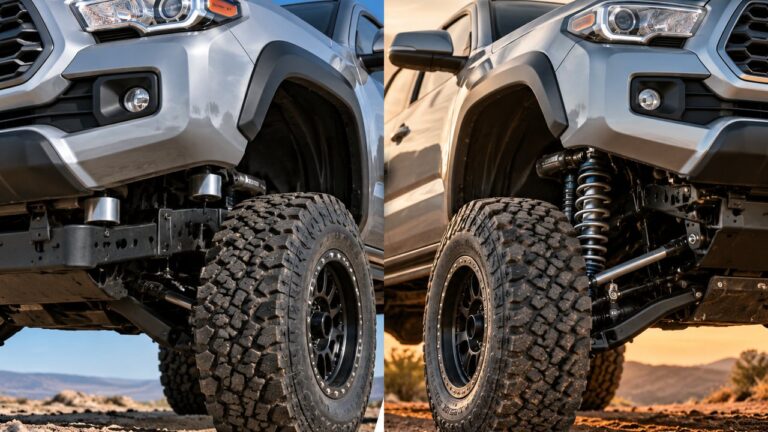
Toyota 4Runner Lift Kit: Heights, Tires & Fitment by Generation
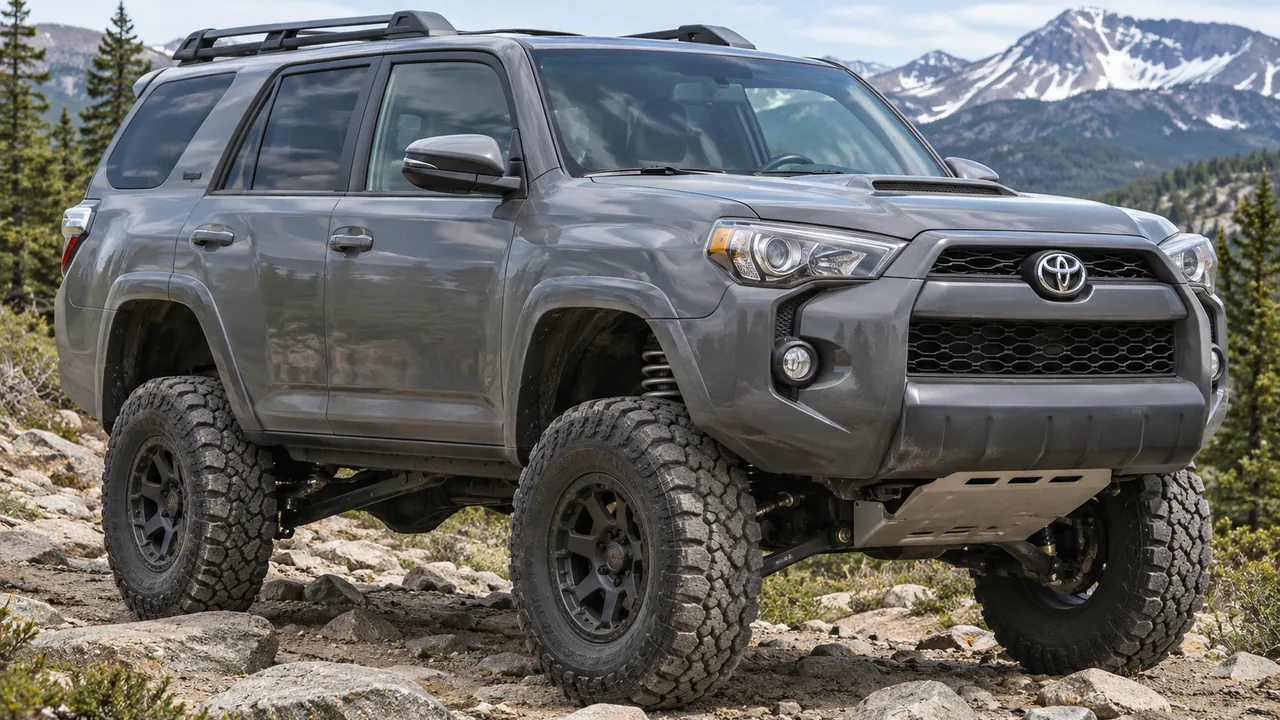
A Toyota 4Runner lift kit should be chosen by generation, factory suspension and intended tire size—in that order. For many street-driven 1996–2024 4Runners, a properly matched 2–3-inch suspension lift is a useful starting point. A smaller 1–2-inch level may be all a daily driver needs. A 4–6-inch lift is a much bigger project and is rarely the simplest route to a good trail vehicle. For a 2025-or-newer 4Runner, shop only for a sixth-generation application; the older hardware is not a shortcut.
The important complication is what Toyota installed at the factory. A 2005 Limited with rear air suspension is not a conventional coil-spring truck. A 2021 TRD Off-Road with KDSS needs different checks from an ordinary SR5. The 2025 redesign brings different front and rear suspension parts, plus new SDM and electronically controlled shock options on certain grades. Here’s how to narrow the purchase before a shiny product photo or a claimed tire size makes the decision for you.
Which 4Runner Lift Kit Should You Buy?
If you want the short answer, start with the situation that most closely describes your SUV. These are shopping ranges, not promises that a particular tire clears or that a specific shock can safely run at the advertised height.
| Your 4Runner and intended use | Lift to investigate | Biggest fitment check |
|---|---|---|
| Mostly pavement, mild stance change | 1–2-inch front level | Factory rake, shocks and upper-arm clearance |
| 1996–2002 daily driver and forest roads | Matched 2–3-inch front/rear kit | Aging springs, CV angles and rear Panhard bar |
| 2003–2009 Sport or Limited | Vehicle-specific 2–3-inch system | X-REAS and optional rear air suspension |
| 2010–2024 SR5 or standard suspension | Complete 2–3-inch coil-and-shock setup | Front alignment, rear load and bump travel |
| 2010–2024 with KDSS or X-REAS | Kit expressly compatible with that system | Sway-bar hydraulics or interconnected shocks |
| 2025–2026 sixth generation | Dedicated 1.5–3.5-inch solution | Grade, SDM, AVS and i-FORCE MAX configuration |
| Specialized build on large tires | Engineered 4–6-inch system, where available | Crossmembers, wheel offset, driveline and total cost |
Don’t treat the table as a height calculator. A 4Runner on 33-inch tires with a carefully selected wheel may need less lift than one on wider rubber that contacts a body mount. Likewise, a vehicle with an overloaded cargo area may sit lower at the rear than the catalog photography suggests. Check the actual part number and both front and rear lift figures before paying.
4Runner Generations: The Fitment Split That Matters Most
The name has been on six generations of SUVs, but the suspension has not stayed the same. U.S. searches for 1999 and 2000 lift kits remain substantial, while shoppers looking at the 2025 redesign are dealing with a newer chassis. Start by identifying the platform, not just the shape of the headlights.
1984–1989: Solid Front Axle or Torsion-Bar IFS?
The original 4Runner has a particularly important break within the generation. The 1984–1985 factory 4WD vehicles used a leaf-sprung solid front axle, while 1986–1989 4WD models moved to torsion-bar independent front suspension. Both can be lifted, but their front components are fundamentally different. A spring-and-shackle package for the early axle is not a torsion-key kit for the later one.
If you’re restoring one of these, examine the frame, steering and spring mounts before shopping for height. Some 4- and 5-inch systems still exist for older IFS models; a classic solid-axle truck might need a very different front and rear spring plan. Model year alone won’t identify a previous owner’s axle conversion, so inspect what’s actually underneath.
1990–1995: Second Generation, Torsion Bars and Rear Coils
A 1994 or 1995 4Runner commonly turns up in searches for 3-inch and taller lifts. The 4WD version uses independent front suspension with torsion bars and a coil-sprung solid rear axle. It is not the same rear arrangement as the earlier leaf-sprung trucks. Raising the torsion-bar front end also changes remaining droop and control-arm operating angles.
The practical concern on an older vehicle is accumulated wear. Check ball joints, bushings, steering linkage, rear control arms and rust around the spring seats. A tall kit on fatigued components is likely to produce a disappointing drive. If a listing mentions a Toyota pickup alongside the 4Runner, read the exact application table rather than assuming all related Toyota chassis share the rear hardware.
1996–2002: Third Generation, Including the Popular 1999–2000 Trucks
This is a major search cluster: owners still look for a 1999 Toyota 4Runner lift kit, a lift for a 2000 4Runner, and 3-inch packages for earlier 1996–1998 vehicles. Third-generation 4Runners have front coil-over-strut-style suspension and a coil-sprung solid rear axle. Typical kits combine front springs or adjustable struts, rear lift coils and suitable dampers.
A 2–3-inch system can be a very reasonable choice for a well-kept third-generation SUV, but don’t ignore its age. Rear coils may have sagged, and old front joints may no longer align as they once did. On a 4WD example, inspect the CV boots and joint angles; at the rear, consider the Panhard bar’s new angle and axle position. A six-inch product designed for another 4Runner generation isn’t a bolt-on substitute.
2003–2009: Fourth Generation, V6/V8 and Unusual Factory Options
The fourth generation deserves an equipment check before any order. Buyers of a 2003, 2004, 2005 or 2006 Toyota 4Runner lift kit may encounter X-REAS cross-linked dampers, especially in Sport and certain Limited configurations. Some vehicles also have height-adjustable rear air suspension instead of ordinary rear coils. Two SUVs from the same year can therefore need very different rear hardware.
The V8 is another clue to record, along with 2WD or 4WD. Weight and drivetrain configuration can affect front spring selection, though a manufacturer may cover more than one version with a verified kit. If you are considering a tall lift, read the instructions for front crossmember changes and wheel requirements. An innocent-looking front spacer listing is no substitute for understanding how the X-REAS lines are routed.
2010–2024: Fifth Generation, but Not One Suspension Package
A 2016 SR5, 2020 Limited and 2024 TRD Pro all belong to the fifth generation. That doesn’t make their factory suspension identical. Conventional coil-and-shock setups coexist with KDSS, X-REAS and special TRD dampers across the model years. Some popular 3-inch kits expressly exclude KDSS and X-REAS; others are designed to accommodate a specific factory system.
The fifth generation has a long aftermarket history, which is useful when comparing installed results and actual tire clearance. Just pay attention to the precise vehicle used in those examples. A forum photo of a standard SR5 won’t verify a KDSS TRD Off-Road, and a 6-inch kit listed only for 2015–2020 should not be assumed to fit a 2024 just because the body looks familiar.
2025–Present: Sixth Generation, New Suspension and New Trim Restrictions
Toyota redesigned the 4Runner for the 2025 model year on its TNGA-F truck platform. It retains an independent double-wishbone front suspension and a coil-sprung multi-link rear axle, but that broad description conceals different mounting and component specifications from the old SUV. 2010–2024 suspension kits are not automatically compatible with 2025–2026 vehicles.
The sixth generation also brings distinct TRD Off-Road, TRD Pro, Trailhunter, Limited and Platinum equipment. A manufacturer may have separate 2025+ kits for standard and TRD Off-Road configurations while excluding TRD Pro or Trailhunter entirely. Sharing a global platform with the Tacoma doesn’t mean every spring, shock or bracket swaps over; the Toyota Tacoma lift kit guide covers the pickup’s own fitment, rear suspension and loading differences.
How Much Lift Is Enough: 2, 3, 4 or 6 Inches?
Lift height is the number people notice in search results, but it is only one dimension of the job. Some kits raise the front more than the rear to reduce factory rake. Others reposition front suspension components to create a much taller chassis without increasing wheel travel. Here’s where each range starts to make sense.
Around 1–2 Inches: A Level Without Rebuilding the SUV
A small front lift suits an otherwise healthy 4Runner whose owner mainly wants a slightly taller front stance. Depending on generation, options can include a strut-top spacer, an approved height-adjustable replacement strut or a mild spring package. The best version retains acceptable compression and extension limits and leaves enough alignment adjustment to steer predictably.
Before removing all the rake, put your normal cargo in the vehicle. A roof rack, rear drawer system or hitch carrier can change the stance more than expected. The difference between a front level and lifting both ends is covered in our leveling kit versus lift kit comparison; for the 4Runner, the extra questions are generation and factory suspension compatibility.
2–2.5 Inches: Sensible for an Everyday Trail 4Runner
This range is worth considering for a daily-driven 4Runner that sees gravel tracks, camping trips and occasional rocky trails. A matched front-and-rear suspension package may offer a better balance than putting spacers on worn original shocks. The useful purchase is often springs suited to the vehicle’s normal weight and dampers properly sized for their new operating range.
Watch the rear ride height if a vehicle carries permanent accessories. A spring designed for a heavy steel bumper can feel stiff and sit tall on an empty SUV. Conversely, a soft spring can sag under a drawer system and full camping load. Get the spring-load recommendation from the kit maker instead of choosing the largest advertised lift and hoping for the best.
Around 3 Inches: A Common Build, With Geometry to Check
Three inches is a very common 4Runner lift target, especially on the third, fourth and fifth generations. You’ll find everything from simple spacer products to more complete systems with replacement dampers, upper control arms and rear coils. Those are different purchases. Paying for height without suitable geometry can leave a truck with poor front caster, little remaining droop or rear axle movement that doesn’t feel right.
For a 4WD 4Runner, inspect front CV operation and read the kit’s guidance on differential position. At the rear, keep the Panhard bar, control arms, shocks and brake lines within their intended motion. A 3-inch photo taken on level pavement tells you little about what will happen when one rear wheel tucks into the wheel opening on a trail.
4–4.5 Inches: Find Out What Has to Move
By this point, many independent-front-suspension applications require more substantial hardware. Some kits use modified or relocated control-arm pivots and front crossmembers; the exact design determines the alignment, driveshaft and wheel restrictions. Don’t assume that 4 inches is simply a 3-inch spring kit with a taller spacer added on top.
This height is easier to justify when you know exactly which tire and wheel combination you’re building around and can accept the step-in height, center-of-gravity and installation compromises. A kit’s advertised height may also differ between the front and rear. Ask for that split before deciding whether the finished vehicle will sit level with its real cargo load.
6 Inches: A Specialty Conversion, Not a Tire-Size Shortcut
A Toyota 4Runner 6-inch lift kit is a real search and shopping category, but its availability and design vary sharply by generation. Certain fifth-generation 6-inch systems, for example, are explicitly listed for limited model-year ranges. They are not universal sixth-generation solutions, and a 1999 4Runner will not use the same front crossmembers as a 2018.
Plan for wheel restrictions, driveline and CV geometry, steering components, longer brake lines where specified, bump-stop travel and substantial labor. Taller lifts also raise the center of gravity and may make roof loading awkward. If you’re only seeking clearance for a moderate all-terrain tire, the extra inches may be money spent in the wrong place.
Measure Installed Height, Not Just the Number on the Box
The advertised lift is typically measured against a manufacturer’s reference truck and springs. Your outcome can differ because of original spring sag, TRD suspension height, steel bumpers, roof equipment, cargo and fuel load. A kit offering three inches at the front and two at the rear won’t have the same final rake as a three-and-three package.
Record hub-center-to-fender measurements on level ground before the installation, with a note of what the SUV is carrying. Repeat them afterward in the same condition. Measuring from the pavement becomes misleading when you also change tire diameter: the taller tire raises the whole vehicle independently of the suspension change.
X-REAS, KDSS and Rear Air: Identify the Factory System First
This is the point at which a generic “fits 4Runner” product page can become costly. Toyota offered several suspension technologies with different jobs. An ordinary shock absorber, a hydraulically linked X-REAS damper and a KDSS-equipped sway-bar system shouldn’t be treated as interchangeable just because they appear on the same general platform.
X-REAS: Cross-Linked Shocks Are Not Four Independent Dampers
X-REAS links the shock damping diagonally through hydraulic lines and control components. It appeared on some fourth-generation vehicles and continued on selected fifth-generation versions, notably road-oriented Limited applications. Before buying a lift for a 2004 Sport or later Limited, look for the lines and connected dampers rather than relying solely on a trim badge.
Some mild spacer systems are expressly designed to work with the existing X-REAS hardware. Others replace the dampers with conventional shocks and require the X-REAS system to be removed or decommissioned according to the appropriate procedure. Don’t disconnect or cut the hydraulic lines casually. If one corner leaks, inspect the whole linked system and decide whether to repair it or use an engineered conversion.
Fourth-Generation Rear Air Suspension: Coil Spacers Won’t Fit the Air Spring
Certain 2003–2009 4Runners were equipped with height-adjustable rear air suspension. That changes the parts at the rear axle. A listing that includes two conventional rear coil springs or coil spacers cannot be assumed to work on an air-equipped Limited. The fact that the front kit fits is irrelevant to that rear compatibility problem.
You have two broad paths: retain the air system with hardware explicitly approved for it, or consider a complete, properly engineered air-to-coil conversion if that meets your needs. Either path needs attention to sensors, shocks, height control and the actual axle travel. A coil conversion is a system change, not a reason to leave air hoses or controls improvised beneath the vehicle.
Fifth-Generation KDSS: Sway-Bar Geometry and Hydraulic Hardware
KDSS (Kinetic Dynamic Suspension System) uses hydraulic sway-bar control to balance on-road roll resistance with off-road articulation. It is not the same thing as X-REAS. On a 2010–2024 KDSS 4Runner, a lift may affect the operating position of sway-bar mounts and the clearance of its associated components, especially on uneven ground.
Some kits include provisions for KDSS. Many standard fifth-generation lift packages explicitly say non-KDSS only. If you’re shopping for a TRD Off-Road or another KDSS-equipped vehicle, read the exact manufacturer’s application and the prescribed sway-bar or bracket adjustments. A bar that looks fine with the SUV stationary may bind or contact other parts when the axle articulates.
TRD Pro and Modified Factory Suspension: Do Not Double-Count Lift
Fifth-generation TRD Pro versions have off-road-focused factory suspension and specific shock hardware that changed over the model years. A 2-inch aftermarket kit advertised against a standard SR5 isn’t necessarily an additional two inches on a TRD Pro. Some products retain the existing dampers; others require replacement shocks, with different resulting travel and ride characteristics.
If the 4Runner is secondhand, check for prior spacers, aftermarket coilovers, shock extensions and sway-bar brackets before adding anything. Mixing parts from several kits can produce a height that looks acceptable while the suspension reaches an unintended limit at full droop. Photograph and identify what’s already fitted before ordering another component.
2025–2026 4Runner Lift Kits: A Different Shopping Checklist
The sixth-generation 4Runner is a good example of why a model-specific article matters. It uses Toyota’s TNGA-F architecture, shared at a platform level with several trucks, but the available trim equipment is surprisingly varied. Toyota’s official sixth-generation 4Runner announcement details the factory FOX, Old Man Emu, Bilstein and Stabilizer Disconnect Mechanism applications. Those distinctions should influence your choice before lift height does.
SR5 and Conventional Suspension: Start With the Smallest Change
For a 2025–2026 SR5 with conventional suspension, a purpose-made modest level may meet the goal without removing useful original hardware. Manufacturers now list 1.5–2-inch products and more complete sixth-generation kits, but their wheel, drivetrain and grade limitations still need checking. Compare front and rear lift figures and make sure the rear springs and shocks match the package actually on your SUV.
A kit marketed as “2025 4Runner” should name the exact grade and application, not just its release year. Newer hardware should be evaluated using installation documents written for that platform; a fifth-generation owner tutorial can be educational about basic principles without being safe fitment guidance for the new truck.
TRD Off-Road: The Factory Bilstein Shocks Change the Calculation
The new TRD Off-Road uses Bilstein remote-reservoir monotube shocks with specific tuning. That isn’t a reason to avoid a lift, but it’s a reason to ask what the chosen kit does to them. Some 2025–2026 lift products list TRD Off-Road applications separately from ordinary 4WD models, including their own spring and shock recommendations.
Make sure you know whether the product retains factory Bilstein dampers, relocates their mounts, or replaces them. Where the original shock is kept, bump and droop limits still matter; adding a spacer doesn’t magically extend its stroke. A factory sway-bar or equipment difference may also make a kit advertised for a standard SR5 inappropriate.
TRD Pro: FOX QS3 Hardware and a Different Starting Height
The sixth-generation TRD Pro comes with TRD-tuned FOX QS3 internal-bypass shocks, rear reservoirs and off-road-oriented factory equipment. It also starts with a distinctive tire and suspension package. A generic spacer designed for a base 4Runner can interfere with the intended operating position of those dampers or other components.
This is not theoretical: some widely listed 2025–2026 4Runner kits from Rough Country explicitly exclude TRD Pro. A specialist system might be appropriate, but ask the manufacturer to identify precisely which factory shock and sway-bar components it preserves. If the stock suspension already suits your terrain, new tires and protection may be a smarter first purchase than another inch of lift.
Trailhunter and SDM: Overland Equipment Is Part of Fitment
The Trailhunter is factory-equipped for overlanding, including Old Man Emu dampers and other vehicle-specific components. Its normal cargo load may also be higher than that of a lightly equipped SR5, especially once an owner adds gear. Again, some general 2025–2026 lift kits expressly exclude Trailhunter. Don’t mistake a product’s compatibility with a Tacoma Trailhunter for confirmation that it fits the SUV.
The new Stabilizer Disconnect Mechanism (SDM) is standard on the sixth-generation TRD Pro and Trailhunter. SDM is not fifth-generation KDSS. A suspension change must preserve the correct sway-bar clearance, end-link movement and approved disconnect operation. Do not buy KDSS-specific brackets simply because the marketing talks about greater articulation; identify the system Toyota actually installed.
Limited, Platinum, AVS and i-FORCE MAX: The Quiet Exclusions
The sixth-generation Limited and Platinum feature Adaptive Variable Suspension (AVS), using electronically controlled damping. A conventional shock replacement may not work with the original electronic system, and simply disconnecting components could cause faults or defeat intended functions. A compatible lift should explain whether it retains the dampers and what, if any, electronic steps are required.
Engine configuration matters too. The i-FORCE MAX hybrid powertrain changes vehicle weight and packaging compared with a non-hybrid, which may affect front spring choice or the maker’s application notes. Never infer that a hybrid SUV cannot be lifted, but don’t assume a generic kit fits it either. Check the VIN, suspension equipment, and the current manufacturer’s chart; 2025 and 2026 labels alone are not enough.
What Tire Size Fits: 31s, 33s, 35s or 37s?
People often shop backward from the tire they want. That can work, provided the plan includes tire width, actual measured diameter, wheel offset, steering lock and suspension compression. The clearance visible above a tire in a parked photograph is only one part of the story. The 4Runner’s generation and factory fenders can change where contact occurs.
31- to 33-Inch-Class Tires: A Common Practical Target
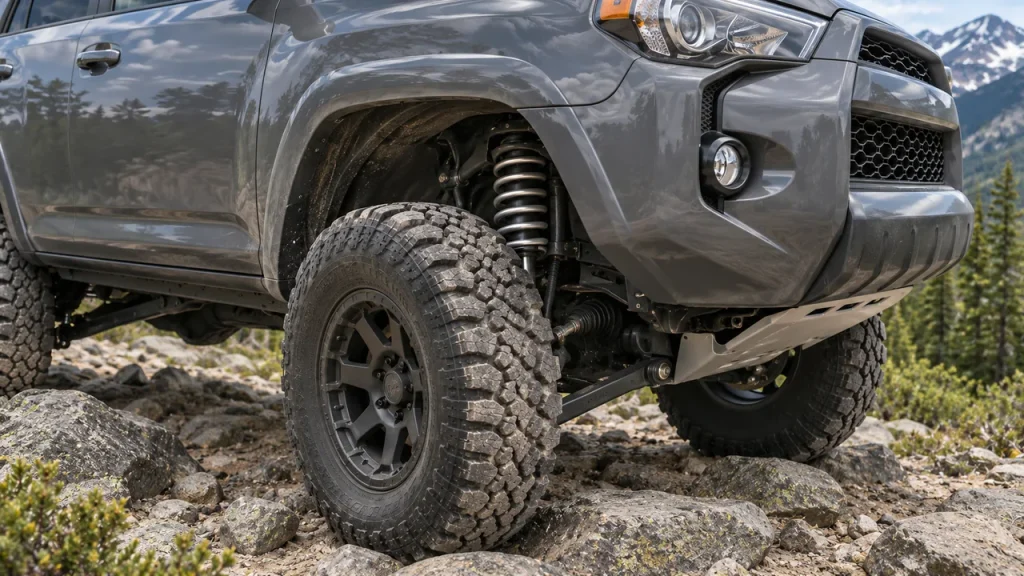
A moderately sized all-terrain tire can give a 4Runner useful trail traction without forcing an extreme lift. Some trims already come with tires near this size, and a careful wheel-and-tire combination may work with a modest suspension change. It is still possible to rub on the body mount, liner or front bumper when a wider tire swings through its steering arc.
Use the actual tire specification rather than a rounded number from an advertisement. A nominal 33 can be a different measured diameter and width from another model with the same label. On a 2025+ TRD Pro or Trailhunter, start by recording the factory 33-inch-class tires before deciding whether an aftermarket lift is needed at all.
35s: Don’t Assume Three Inches Solves Everything
For 35-inch tires, a 4Runner may need carefully chosen suspension height, wheel position and sometimes body-mount or liner modifications. A fifth-generation SUV on 35×12.50 tires faces different packaging than a new-generation one on a narrower metric tire, even if both are described as running “35s.” The tire also needs clearance at full compression with the steering turned.
A larger lift is not guaranteed to fix interference farther back in the wheel opening. In some cases a body mount or cab-side contact point becomes the limitation, not the top of the fender. Our 35-inch tire lift-height guide explains the general clearance and wheel variables; for the 4Runner, use the lift manufacturer’s tested combination and account for its exact generation.
37s: Plan for More Than Fenders
A 37-inch tire brings extra rotating mass, altered gearing, braking demands, spare-tire challenges and more stress on steering and axle components. Putting a tall kit on the SUV doesn’t make those changes disappear. Even if the body clears at rest, full compression, steering lock, front CV operation and the rear axle’s articulation have to be checked.
If 37s are the goal, start with the full tire-and-wheel specification and the terrain you expect to drive. Our 37-inch tire lift guide covers broad tire and gearing trade-offs. For a 4Runner, think carefully about the underbody spare position and whether the required modifications still make sense for a vehicle that spends substantial time on the road.
Wheel Offset, Backspacing and the Body Mount
A tire moved outward by a more negative offset may clear an upper control arm better, then contact the fender or bumper earlier during compression. A more inboard wheel can reverse the situation. Lift manufacturers often specify wheel width and backspacing because those numbers affect whether the suspension itself has room to move.
Don’t buy wheels from one manufacturer’s demonstration and then expect a different lift to fit them without checking. Ask for actual measurements, including tire section width and wheel offset. If trimming or a body-mount modification is proposed, have the installer explain exactly what will be changed and whether steering-lock and full-bump clearance were tested afterward.
What Type of 4Runner Lift Kit Is Worth the Money?
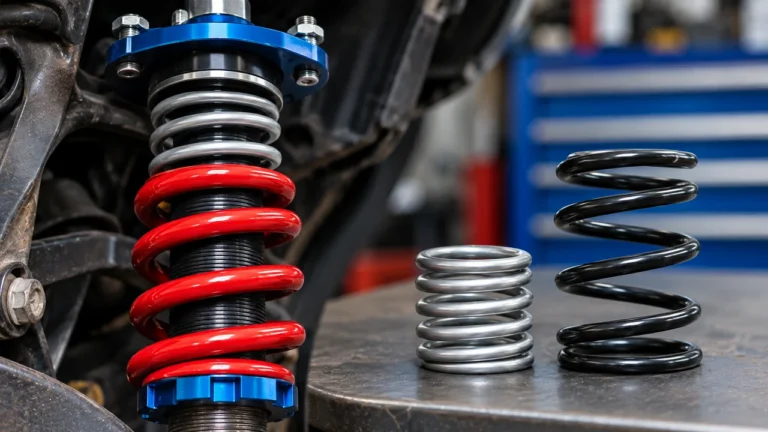
A two-inch spacer and a two-inch spring-and-shock system are sold under the same broad name, but they are not equivalent. One changes the spring’s position; the other can change damping, spring capacity and the designed travel range. The right choice depends on what’s already installed and what the SUV actually does between fill-ups.
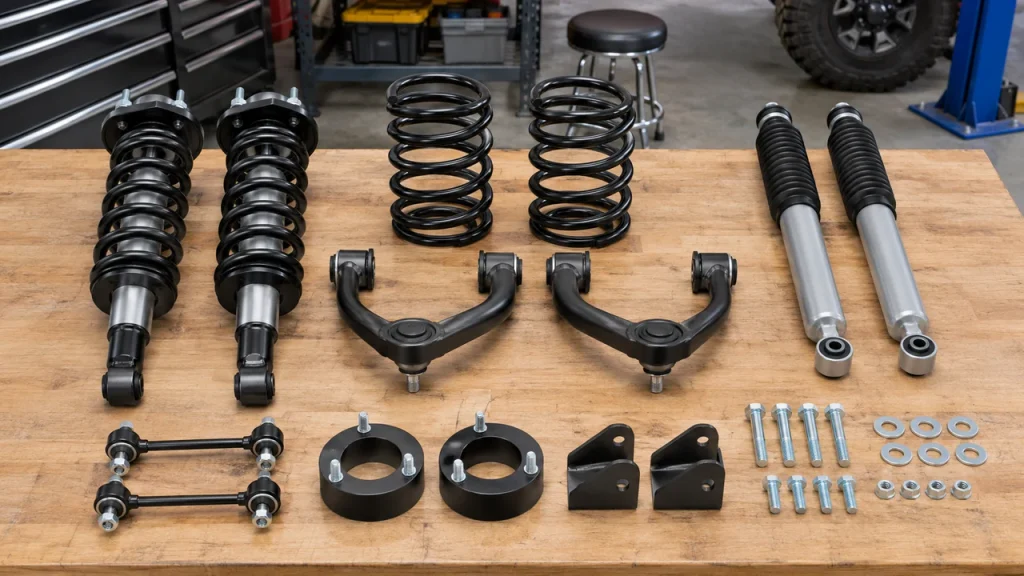
Strut Spacers and Preload Collars
A correctly sized front spacer can be a practical way to adjust stance on a mechanically sound vehicle. It is also easy to misunderstand. A top-out spacer, spring-seat spacer and preload collar do not all affect the damper’s operating range in the same way. Some arrangements consume droop travel or alter how close the upper arm gets to its limits.
With older X-REAS equipment, choose only an expressly compatible design. With a new TRD Pro, check whether the product maker has tested the FOX shock mounting and travel. Never stack unrelated spacers or use a longer shock extension as a substitute for measuring compressed length. The inexpensive option is only inexpensive if the suspension still works safely when fully articulated.
Replacement Coilovers, Springs and Dampers
A complete coilover-and-rear-coil system lets you choose spring rates and damping around the SUV’s normal weight. It may be a better choice for worn third-generation hardware or for a fifth-generation overland build with permanent rear equipment. Some shocks offer reservoirs or adjustable damping for sustained rough-road use, but those features are not proof that a street commuter needs them.
Look for actual damper model numbers, travel measurements, compatible rear spring specifications and the claimed lift at a defined load. Bilstein, FOX, Eibach, Old Man Emu, Dobinsons, ICON, Toytec and other companies sell different levels of equipment. Compare the particular kit, not the reputation of the logo printed on its shocks.
Longer Arms and Crossmember Lifts
As height increases, the required front geometry may go well beyond taller front coils. Some large lifts use drop crossmembers or relocated pivots to keep suspension and driveline angles within their designed range. That can involve cutting, changed skid-plate positions, new hardware around the steering and a specific wheel diameter or backspacing requirement.
These systems can make sense when designed around an ambitious build, but don’t confuse ride height with additional wheel travel. A drop-crossmember design can lift the chassis substantially while leaving the front suspension with roughly its original travel envelope. Check the compressed and extended shock limits and the approach angle created by any new hardware hanging under the SUV.
What a Complete Parts List Should Show
For a useful comparison, insist on separate front and rear lift figures, the supplied shocks or shock-retention method, front spring rates or intended accessory load, rear coil details, bump-stop provisions and any required upper control arms. The installation sheet should also state whether the sway bar, brake hoses, driveshaft or skid plates need attention.
The common mistake is buying a well-priced front kit and discovering that a rear coil, alignment correction or damper upgrade is another order. A complete system isn’t necessarily the biggest box. It’s a set of parts and instructions that properly covers the vehicle’s intended suspension motion and actual factory equipment.
Geometry and Travel Checks After Lifting a 4Runner
Even a modest lift changes where suspension parts operate. The front is independently suspended on most 4Runners, while the rear solid axle moves through a different arc. A correct alignment is necessary, but a good-looking alignment printout alone doesn’t establish bump-stop or brake-hose clearance.
Upper Control Arms, Caster and Ball-Joint Clearance
Raising the front can reduce available caster adjustment and change upper ball-joint or uniball angles. Replacement upper control arms sometimes restore useful alignment range and provide necessary clearance at droop, especially with taller front setups. Other engineered mild lifts work with the original arms. There isn’t a universal rule that every lift over two inches automatically needs new UCAs.
Ask for measured caster, camber and toe after installation, and investigate any steering wander rather than accepting it as the price of a lifted SUV. A fresh steering stabilizer doesn’t repair a bad alignment or worn joint. If the kit requires upper control arms, verify their exact year and generation fitment, including any special factory suspension configuration.
Front CV Axles and Differential-Drop Claims
On 4WD IFS vehicles, a lift can increase the operating angles of the front CV joints, particularly as the suspension approaches full droop. Some kit makers recommend a front differential drop or different CV components for specific heights and designs. That is a model-specific engineering question, not an automatic purchase triggered by the number three.
The front differential may be mounted differently between generations, so an older spacer cannot be presumed to fit a 2025+ chassis. For the mechanical distinction between repositioning a differential and correcting the rest of the suspension, see our differential drop kit guide. Follow the lift manufacturer’s current instructions, then inspect CV boots and shaft clearance through the designed motion.
Rear Panhard Bar and Axle Position
Most later 4Runners use a coil-sprung solid rear axle located laterally by a Panhard bar, also called a track bar. As the body rises relative to the axle, the bar works at a different angle, which can shift the axle sideways and alter how it moves over uneven ground. A lift may therefore call for an adjustable bar, a relocation bracket or another manufacturer-specified correction.
Avoid copying a bracket location from another Toyota model simply because it also has a solid rear axle. The bar’s mounting points, other links and bump-stop clearances have to work together. Our track bar relocation bracket guide explains the component’s purpose; here, the fitment must match your 4Runner generation and chosen lift.
Bump Stops, Brake Lines, Sway Bars and Droop
Longer shocks aren’t always better. A damper that bottoms out before the suspension reaches its intended compression stop can be damaged; at full extension, the axle can pull on brake hoses or wiring. Rear coil retention, exhaust clearance, sway-bar links and driveshaft articulation also deserve inspection, particularly when the vehicle is carrying heavy camping equipment.
Factory KDSS or SDM hardware adds another reason to check clearance throughout suspension travel rather than only at parked ride height. A competent installer should verify the maker’s bump-stop requirements and carry out controlled movement checks with the vehicle safely supported. A shiny set of shocks cannot compensate for a contact point the instructions failed to address.
Overland Loads, Roof Racks and Towing Change the Answer
The 4Runner is often modified to carry far more equipment than the average commuter. A roof tent, steel rear bumper, drawers, spare-tire carrier and fridge may remain on the vehicle for months at a time. That weight changes how the springs sit, and putting it high on the vehicle changes how the SUV feels in corners and on uneven ground.
Rear Springs for Constant Weight Versus Occasional Trips
A rear coil advertised for a heavy constant load may be appropriate when a fully equipped overland setup is always installed. On a mostly empty family 4Runner, the same spring can produce more lift than expected and a harsh ride. A softer spring may be comfortable all week yet sag with the rear fully packed on Friday evening.
Weigh or reasonably estimate permanent accessories and determine where the mass is located. Tell the suspension supplier whether the vehicle is usually empty, carries several hundred pounds every day or makes only occasional loaded trips. That information can matter more than the difference between a 2.5- and a 3-inch marketing claim.
Roof Height, Hitch Position and Payload Limits
A suspension lift does not increase the 4Runner’s factory payload, gross vehicle weight or towing ratings. Heavier tires, wheels and armor can consume some of the available carrying capacity. Larger tires may also change gearing feel and braking demand. Those effects add up before another person or a weekend’s luggage gets into the SUV.
For regular towing, check the loaded hitch height, trailer angle and suspension behavior rather than leveling the vehicle to look attractive with no load. And remember the garage: a lifted 4Runner wearing a rooftop tent or tall rack can become a daily inconvenience. If the purpose is practical travel, a slightly lower suspension with the right springs and shocks may serve it better.
Compare Brands by Fitment, Then Budget the Installed Result
The U.S. market includes everything from inexpensive levels to high-end suspension systems. Rough Country, Ironman 4×4, Bilstein, FOX, Dobinsons, Eibach, ICON, Toytec, Old Man Emu and specialty Toyota shops all appear in searches. Their product ranges overlap in height but differ in included hardware and application restrictions. A ranking of brand names won’t tell you whether a product fits your KDSS, X-REAS or sixth-generation trim.
Read the Installation PDF Before Comparing Ratings
The best product page tells you which years, drive configurations and trims it actually fits. For 2025–2026 models, look for exclusions involving TRD Pro, Trailhunter, AVS and SDM. For 2010–2024, check KDSS and X-REAS. For 2003–2009, check rear air. The same manufacturer may sell a small spacer compatible with a factory system and a taller suspension kit that explicitly excludes it.
Look for the required tools, cutting or drilling, shock model, front and rear lift figures, alignment requirements and tire/wheel restrictions. For example, a current sixth-generation 3.5-inch 4Runner kit may be offered in a TRD Off-Road-specific form while excluding Pro and Trailhunter. That’s not a small-print curiosity; it’s the difference between a viable project and a box that shouldn’t have been ordered.
What the Parts Cost Versus What You Actually Pay
For U.S. budgeting, a simple leveling or spacer package may cost a few hundred dollars or less in parts. A more complete 2–3-inch coil-and-shock setup can run from several hundred dollars into the low thousands. Premium dampers, control arms and specialized factory-system compatibility raise the price. Taller, crossmember-based systems can cost several thousand dollars before a shop touches the vehicle. These are planning estimates, not live prices.
Installation cost varies even more: a modest spacer job is not equivalent to replacing interconnected X-REAS dampers, converting rear air suspension or installing a major front geometry kit. Our lift kit installation cost guide provides broader parts-and-labor ranges. For your 4Runner, ask the shop to itemize alignment, additional arms, shocks, calibration where required and reinspection rather than quoting only the kit’s sticker price.
Warranty and Driver-Assistance Considerations
An aftermarket lift does not automatically cancel every warranty on the vehicle, but damage caused by a modification or an improper installation may not be covered. What applies depends on the failure, the warranty terms and relevant law. Keep the invoice, correct application listing and installation documentation, especially with a newer vehicle that still has factory coverage.
On modern 4Runners, changes in ride height can also affect the relationship between the vehicle and its driver-assistance sensors. Follow the vehicle and kit manufacturer’s required alignment and calibration procedures. Don’t assume that an SUV with no dashboard warning lights has automatically been checked to the standard required after a substantial suspension modification.
Eight Checks Before You Order a Toyota 4Runner Lift Kit
Use this as the final purchase filter after choosing a probable height. It is more useful than sorting a retailer’s catalog by popularity, and it takes only a little longer than reading the product description.
- Identify the generation. Record the VIN, year, 2WD/4WD and any previous front-axle or suspension conversions on an older 4Runner.
- Identify factory suspension. Check for X-REAS, KDSS, rear air, TRD Pro FOX hardware, Trailhunter components, SDM or AVS where applicable.
- Measure the current ride height. Use hub-center-to-fender measurements with the SUV on level ground and carrying its normal equipment.
- List your actual load. Include roof tent, bumpers, winch, drawers, spare carrier and anything regularly packed in the cargo area.
- Specify the wheel and tire together. Record measured tire size, width, wheel diameter, offset, backspacing and the spare-tire plan.
- Read the manufacturer’s fitment and installation sheet. Check exclusions, additional parts, bump stops, differential, UCAs, Panhard bar and brake-line reach.
- Confirm road and off-road requirements. Ask about full-compression tire contact, droop, steering lock, alignment and any electronic calibration.
- Calculate the complete installed price. Include shocks, arms, rear springs, tires, wheels, labor, alignment and the maker’s post-installation fastener checks.
If the fitment chart conflicts with a retailer’s generic vehicle selector, ask the manufacturer about the exact part number before purchasing. A lifted SUV that looks right but can’t complete its intended wheel travel without binding isn’t a finished build.
Toyota 4Runner Lift Kit FAQ
These are the questions that tend to remain after the generation and height have been narrowed down. The answers are intentionally application-specific: the same number of inches can describe very different suspension systems.
Is a 3-Inch Lift Good for a Daily-Driven 4Runner?
Often, yes—provided it is a properly matched system with suitable springs, shocks and front alignment provisions. For a light-duty commuter, 1–2 inches may be enough. A 3-inch setup makes more sense when its additional clearance or load-matched components serve a real purpose, not simply because it is a popular product height.
Can I Use a 2010–2024 Lift Kit on a 2025 4Runner?
Not unless the manufacturer explicitly lists that exact kit for the sixth-generation SUV. The 2025 redesign changed the vehicle platform and suspension applications. Similar-looking parts or shared Toyota truck architecture do not establish that the springs, mounting points, dampers or calibration provisions are interchangeable.
Does KDSS Prevent Me From Lifting a Fifth-Generation 4Runner?
No. It does mean the chosen kit must accommodate KDSS and its related sway-bar hardware. Some otherwise popular 2010–2024 products are non-KDSS-only. A system that actually supports KDSS and includes the maker’s required adjustments can be a valid option; a general 4Runner compatibility badge is not sufficient.
Does an X-REAS 4Runner Need All-New Shocks to Be Lifted?
Not necessarily. Certain mild spacers are designed to retain the factory X-REAS dampers, while more extensive systems may replace them and require appropriate treatment of the hydraulic lines. Which method makes sense depends on the kit, existing component condition and desired suspension performance. Don’t cut or disconnect the linked system casually.
What About a 2004 4Runner With Rear Air Suspension?
Check the rear air suspension before buying a conventional rear-coil kit. You need a lift designed to retain the air system or a complete engineered conversion to coils if you choose to remove it. The front suspension’s compatibility does not establish that the rear parts will fit an air-equipped fourth-generation SUV.
Will a 3-Inch Lift Fit 35-Inch Tires?
Sometimes, but it is not a universal fitment guarantee. Actual tire width and diameter, wheel offset, generation, body mounts and full-compression clearance determine whether a particular combination rubs. Some 4Runners need additional trimming or different wheel placement even with significant lift; verify the manufacturer’s tested combination.
Can I Lift a 2025–2026 TRD Pro or Trailhunter?
Specialist solutions may exist, but do not use a generic sixth-generation kit unless the manufacturer explicitly approves that trim and its factory shocks and SDM equipment. Some common 2025–2026 leveling and 3.5-inch kits expressly exclude both TRD Pro and Trailhunter. Their factory FOX or Old Man Emu suspension deserves a specific plan.
Is a 6-Inch 4Runner Lift Better Than a 3-Inch Lift?
Not automatically. Six inches can serve a specialized build, but it can bring substantial front geometry changes, a higher center of gravity, greater installation cost and everyday compromises. A well-sorted 2–3-inch system may provide more useful travel and a better driving experience than a tall kit designed mainly for stance.
Does Lifting the 4Runner Raise Rear Differential Clearance?
Not by the same amount as the suspension lift. On a solid rear axle, the differential housing moves with the axle; raising the body and frame through suspension changes doesn’t directly create extra clearance below that housing. Taller tires can increase axle-to-ground clearance because they increase tire radius. Front IFS and crossmember clearance are separate considerations.
Do I Need Upper Control Arms or a Differential Drop?
It depends on the exact suspension design, alignment range, CV angles and intended travel. Some modest lifts work with factory arms; other systems include new UCAs or manufacturer-specified differential components. There is no universal rule based solely on two or three inches. Use the application-specific instructions and verify the finished geometry.