Ford F-250 Lift Kit: Heights, Tires & Fitment by Year
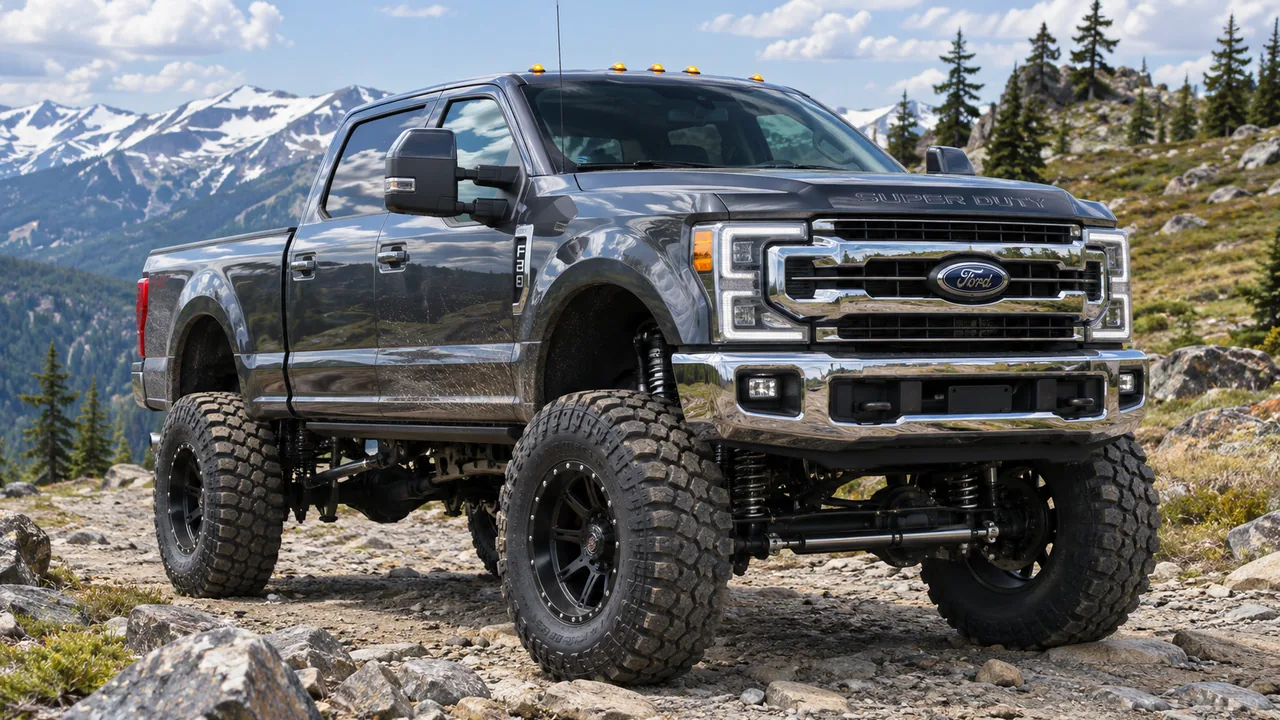
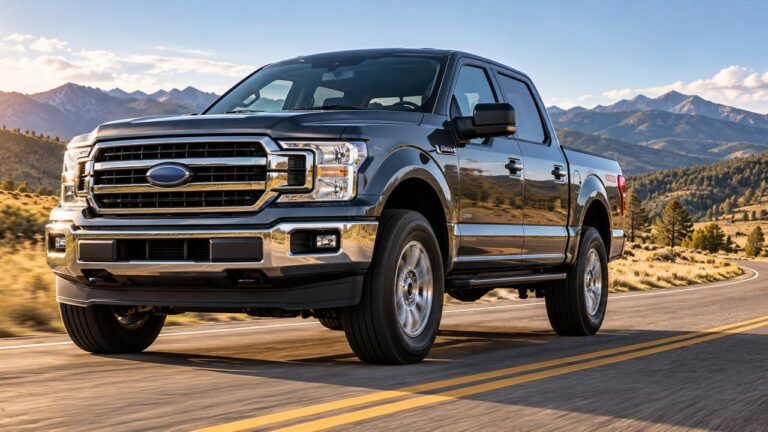
A Ford F-250 lift kit has to match the truck underneath the badge, not just the number of inches on the box. On a conventional four-wheel-drive Super Duty used for commuting, work and occasional trails, a well-engineered 2.5–3-inch suspension package is often easier to live with than a six-inch lift. Four to five inches makes sense when you want more room for a particular tire and are willing to address steering and axle geometry. Six inches or more is a deliberate truck build, with consequences for loading, hitch height, handling and the final bill.
The year is only the first filter. A 1997 F-250 may have an entirely different front suspension from a 2001 Super Duty; 2005 is the major switch from front leaves to coils on 4WD trucks; and a factory-lifted Tremor should not be treated as a standard-height model. For newer trucks, engine weight, rear overload springs and even headlight or ride-height sensors can change the approved part number. Use the quick comparison first, then check the generation-specific details before ordering.
Which Ford F-250 Lift Height Makes Sense?
The useful question isn’t how tall the truck can go. It’s what you want the finished truck to do with the tires, passengers and trailer you actually use. These ranges are starting points for shopping, not universal fitment approvals; the full installation instructions take precedence.
| Your F-250 and goal | Lift to investigate | What needs checking first |
|---|---|---|
| Mostly pavement, stock-size or modestly larger tires | 1–2-inch front leveling adjustment | Factory rake, loaded stance and front travel |
| Modern 4WD Super Duty, daily use and regular dirt roads | Matched 2.5–3-inch system | Front caster, track bar, shocks and engine-specific springs |
| Mixed-use build targeting larger tires | Complete 4–4.5-inch kit | Radius-arm geometry, steering linkage, rear height |
| Taller trail or show-oriented build | Engineered 5–6-inch kit | Axle location, driveline, wheel specs, brake lines and cost |
| Factory Tremor | Tremor-approved suspension only | Existing front lift, factory shocks, electronics and tire clearance |
| 1997 or older truck | Exact OBS suspension application | Twin-Traction Beam, 2WD/4WD and any axle swap |
| 1999–2004 4WD Super Duty | Front-leaf-specific kit | Spring packs, shackles, axle brackets and production year |
If the truck tows frequently, include the loaded rear ride height in the decision. Removing all the nose-down factory rake can make an unloaded F-250 look tidy and a loaded one sit tail-low. A lift also won’t turn a 35-inch tire into a guaranteed fit: tire width, wheel offset and clearance at full steering lock still matter.
Match the F-250 Generation Before You Shop by Inches
Ford has used the F-250 name on trucks that don’t share a front suspension. A product listing saying only “F-250, 4WD” isn’t enough when you are comparing a late-1990s truck with a modern Super Duty. The following distinctions eliminate many wrong purchases before the first price comparison.
1980–1997 OBS F-250 4WD: Twin-Traction Beam Is Its Own Category
The classic old-body-style F-250 4WD commonly used the Dana 50 Twin-Traction Beam (TTB) front arrangement. It is not the same as the single solid front axle found on later four-wheel-drive Super Duty trucks. Lift systems for this layout must account for beam pivot geometry, steering linkage, spring arrangement and alignment changes. Adding lift at the springs without the proper pivot and steering provisions can create severe camber and handling problems.
A search for a 1997 Ford F250 lift kit requires special care. The familiar older-body F-250 Heavy Duty overlaps with the newer, lighter F-250 family introduced for that period. They aren’t interchangeable vehicles. Look at the actual front axle, number of wheel lugs, model identification and manufacturer application notes. If an older truck has been converted from TTB to a solid axle, choose parts for the installed axle and its engineered mounts, not the original badge.
1997–1999 F-250 Light Duty: Don’t Order a Super Duty Kit by Mistake
Ford’s transitional model years catch buyers out. The lighter-duty F-250 based on the contemporary F-150 platform is a different truck from the older F-250 HD and from the Super Duty that followed. A parts search may return all three if it matches “F-250” and “1999” without distinguishing the chassis. These trucks can have different wheel patterns, suspension components and load ratings.
Before you buy, look up the exact VIN and model designation, then compare the chassis photographs and part drawings in the supplier’s catalog. An advertisement using a handsome 2000 Super Duty photo tells you nothing about fitment on a 1997 F-250 Light Duty. The mistake can involve far more than swapping a spring: axle brackets, shock mounts and steering relationships may all differ.
1999–2004 Super Duty 4WD: Front Leaf Springs, Not Front Coils
A 1999–2004 F-250 Super Duty four-wheel-drive pickup generally has leaf springs at both axles. That makes a six-inch suspension package from this era very different from a later radius-arm-and-coil lift. Front spring packs, hangers, shackles, steering correction and track-bar provisions must be considered as one system. Watch for early-1999 production splits in some aftermarket listings, as well as the familiar 1999–2004 year range.
A worn-out 2002 work truck may need steering linkage, spring bushings and shocks before any lift is worthwhile. Replacing old front leaves with a taller pack can improve ride height but doesn’t automatically fix axle location or steering geometry. If the catalog describes radius-arm drop brackets and front coil springs, you are probably looking at a different Super Duty generation.
2005–2010: The 4WD Front Axle Moves to Coil Springs
The big 2005 front suspension change is foundational: four-wheel-drive Super Duty pickups moved to a coil-sprung solid front axle with radius arms and a track bar. That opened up different lift options, from taller coils and appropriately sized shocks to radius-arm correction brackets and more elaborate link conversions. The rear remained leaf-sprung.
A 2008 F-250 with a five-inch kit therefore raises a different set of questions from a 2003 with five inches. On the newer truck, front caster, radius-arm position, the drag link and track bar become especially important. Don’t assume that a front-leaf kit for a 2004 can be adapted with a set of spring spacers. The suspension hardware isn’t the same.
2011–2016: Diesel Weight and Existing Rear Hardware Matter
This era remains a major market for 2.5-, 4- and 6-inch Super Duty systems. The 6.7L Power Stroke diesel and gasoline versions may call for different front spring rates or deliver different final heights with the same nominal kit. The factory rear overload equipment and blocks also vary by build. Before choosing a package for a 2011, 2014 or 2016 F-250, identify what is actually on the truck.
A common problem on an older diesel is paying for a taller coil when the original shocks, radius-arm bushings or steering joints are already worn. Lift parts won’t repair a loose track-bar joint. Budget for inspection and repairs separately, then compare the complete lift with the truck’s intended load. It is entirely possible for a lower, better-damped build to be more useful than a taller spacer-heavy one.
2017–2019: New Super Duty Platform, Different Parts
The 2017 Super Duty redesign brought a new vehicle platform and corresponding changes in suspension fitment. Suppliers commonly group 2017–2019 parts separately from earlier trucks, even though both use a coil-sprung solid front axle on 4WD versions. A radius-arm bracket or track bar engineered for a 2015 should not be assumed to fit a 2017 simply because the desired lift height is identical.
Many catalogs offer 3-, 4.5- and 6-inch systems for these model years, with alternatives for radius arms, shocks and diesel versus gas configurations. Read the installation document for the precise year and intended axle configuration, including the stated wheel requirements. If a seller lumps the years into one enormous range without a current manufacturer application chart, investigate before paying.
2020–2022: Separate the Standard Truck From Tremor
These model years deserve their own shopping check. Ford introduced the Super Duty Tremor package for the 2020 model year, with factory off-road suspension and 35-inch-class tires. At the same time, many aftermarket manufacturers list distinct 2020–2022 4WD packages and may distinguish gas from diesel. A standard-height F-250 lift and a Tremor lift do not necessarily produce the same height gain.
For a conventional 2021 diesel, a matched 3-inch system may include coils, radius-arm corrections, track-bar components and shocks. For a 2021 Tremor, the starting suspension is already different; the same part number could over-lift the front or interfere with the intended shock travel. Confirm additional lift on the exact factory package, rather than adding advertised inches in your head.
2023–2026: Current Super Duty Fitment Isn’t Just “2017+”
The 2023 redesign is another line in the sand. BDS, Rough Country, Fabtech and other manufacturers list dedicated 2023–2026 systems, sometimes splitting kits by gas versus diesel and by included radius-arm geometry. The marketing name may stay “3-inch Super Duty lift” while the actual springs, brackets and steering provisions change. Follow the current installation revision for your year.
Less obvious equipment can matter too. Some kits call out radius-arm-mounted ride-height sensors, while others exclude trucks with LED projector headlamps and automatic headlight leveling. Those are not universal restrictions across every kit; they are real examples of why you must read the exact manufacturer’s exclusions. A 2026 F-250 that looks standard from the outside may still require additional sensor hardware.
2WD F-250: Do Not Confuse Twin I-Beam With 4WD Solid-Axle Parts
This guide spends more time on 4WD because that’s where many popular lift packages are sold. A two-wheel-drive F-250, however, can use a Twin I-Beam front suspension rather than the coil-sprung, solid front axle of its 4WD counterpart. It is not enough to remove the front driveshaft from a four-wheel-drive installation diagram and call the product a 2WD lift.
Look for a 2WD-specific suspension application, including beam pivot, steering and shock provisions. A strut spacer intended for an F-150 isn’t a workaround either. The same Super Duty name covers trucks with distinctly different front-end geometry. Matching the drivetrain is just as important as matching the model year.
2.5, 4, 6 or 8 Inches: What Changes as the F-250 Gets Taller?
A lift number describes approximate ride-height change against a supplier’s reference truck. It does not tell you which steering components are included or how much extra wheel travel you get. For an F-250, the higher ranges can also make a working truck significantly less convenient to enter, load or hitch to a trailer.
Under Two Inches: Mostly a Front-Leveling Decision
A small front coil spacer or purpose-designed replacement spring can reduce the factory nose-down stance on a modern 4WD Super Duty. That makes sense when the original suspension is healthy and the truck mostly drives on pavement. It does not automatically provide additional spring capacity or shock stroke, and it can still alter track-bar angle or remaining droop travel.
Because ford f250 leveling kit is a separate, well-defined shopping intent, this article won’t turn into a detailed leveling-kit installation tutorial. For the lift-kit decision, the key is simple: if the existing truck rides well and you just want modest stance correction, don’t buy an entire six-inch suspension for the photograph. First measure how much rake you actually need when towing or hauling.
2.5–3 Inches: Often the Useful Everyday 4WD Range
This is the range I would examine first for a non-Tremor F-250 that sees mixed highway and unpaved driving. A proper package may include replacement front coils, matched shocks, a track-bar solution, caster correction and a modest rear lift. The important phrase is may include: one $200 spring or spacer package is not equivalent to a $2,000 suspension system with carefully selected geometry components.
A detailed BDS example for newer Super Duty trucks pairs diesel-specific coils with heavy-duty radius arms, an adjustable track bar, sway-bar and brake-line provisions, rear blocks and appropriate shocks. That illustrates the questions to ask; it doesn’t mean every F-250 needs that exact parts list. Check tire clearances and the truck’s regular loaded stance before deciding that the kit is complete.
About Four to 4.5 Inches: Alignment and Link Position Take Priority
Four-inch and 4.5-inch systems are common for modern F-250s and can support a stronger stance without necessarily entering the most extreme build category. But they start to expose differences in radius-arm positioning, caster, front axle centering and the relationship between the track bar and steering drag link. A longer coil by itself is not a complete answer to those changes.
Some packages use drop brackets to reposition the original arms; others replace the arms or convert to a four-link setup. Shock length, bump stops and brake-hose reach also have to match. Two kits with the same advertised height can ride and steer differently because they control the axle differently. That engineering matters more than the thickness of the lift block shown in the product photo.
Five to Six Inches: A Real Suspension Project
A Ford F-250 6-inch lift kit may be appropriate for a purpose-built truck on substantially larger tires. Expect more involved radius-arm or link work, track-bar and steering corrections, longer shocks, rear lift hardware and potentially more than one axle- or trim-specific option. Wheel diameter and backspacing requirements are often part of the kit specification rather than optional styling advice.
At this height, put the total installed truck on paper. How high is the hitch? Can you reach tools in the bed? Will the truck fit your garage? Are 37-inch tires actually required for the intended trails, or is the main goal visual height? These are legitimate choices, but the consequences won’t be solved by selecting the cheapest springs with the right number in the title.
Eight Inches and Above: Specialized Use, Specialized Trade-Offs
Eight- and ten-inch Super Duty systems exist. They can be appropriate for a very specific show or off-road project, but should not be treated as a normal next step from a leveling kit. A high center of gravity, demanding step-in height, large tire and wheel combinations, steering and driveline work, visibility and local road rules all need attention.
More suspension lift does not necessarily mean more differential clearance on a solid front axle. The axle housing stays with the wheels; a tire with a larger radius can raise its lowest point, while longer springs mainly raise the body and frame. A tall truck may also gain no meaningful new articulation unless the shocks and suspension geometry allow it.
Measure the Installed Difference Rather Than Trusting Marketing Height
When a kit says 2.5 inches in front and one inch in back, it is making a different stance change than a matched 2.5-inch front-and-rear package. A diesel engine, winch bumper, camper setup or heavy rear gear can alter the result. So can tired factory springs or existing aftermarket spacers. Tremor’s starting height makes comparisons even less straightforward.
Measure from wheel hub center to the same fender reference at all four corners on level ground, with the fuel and cargo state recorded. Repeat after installation and settling. Measuring from pavement to fender after installing taller tires combines suspension lift with tire-radius gain, making the suspension result look bigger than it is.
Tremor, Gas vs Diesel, and Modern Equipment Exclusions
A year selector rarely asks enough questions. A 2025 Tremor with 35-inch tires and ride-height-sensitive equipment is not necessarily the same suspension application as a 2025 XL work truck. Before comparing brands, write down the factory features you are paying to retain.
Factory Tremor: The Starting Suspension Is Already Raised
Ford’s official Super Duty model introduction identifies the Tremor’s raised front, specially tuned suspension and 35-inch tires. That is why you should shop for a Tremor-approved F-250 lift kit, not simply a standard-height kit that happens to list the same year. The product’s stated lift may describe its additional height relative to a Tremor, or its designed finished geometry; verify which.
Factory shocks, bump stops, sway-bar provisions and tire clearance deserve particular attention. You may discover that the Tremor already meets a moderate tire objective with less aftermarket lift than a conventional truck would need. If you do change it, ask what happens to the suspension’s original off-road behavior and whether the kit retains the factory dampers or replaces them.
6.7L Power Stroke Diesel Versus Gas Engines
A heavy diesel powertrain changes front axle loading and the spring needed to reach a specified ride height. The gasoline 6.2L, 6.8L and 7.3L engines appear across different Super Duty years and may be grouped differently by lift manufacturers. Some vendors offer diesel-specific springs, while others give a predicted height difference if that same spring is installed on a gas truck.
Don’t assume that “fits F-250 4WD” proves the correct ride height on a particular engine. Ask for the part number, listed engine and actual spring-rate strategy. If there is a steel bumper and winch over the front axle, include that permanent mass in the discussion. A truck that sits lower than advertised may not have defective springs; it may be carrying a load the kit wasn’t specified around.
Rear Overload Springs, Factory Blocks and Axle Packages
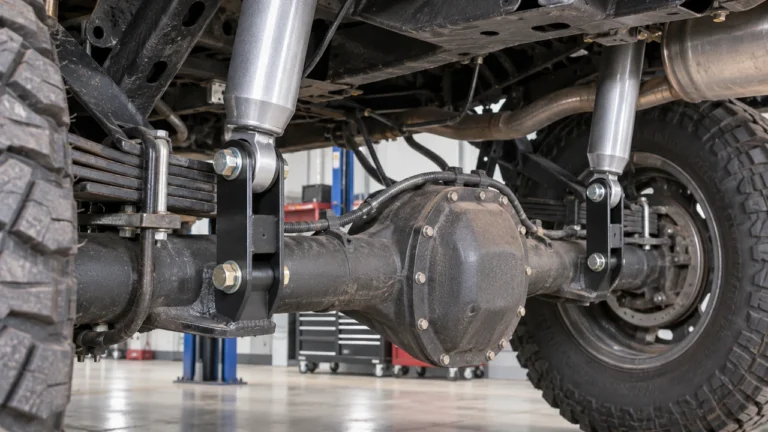
Ford Super Duty rear suspensions can have different leaf packs, overload springs and factory lift blocks depending on year and equipment. A rear block included in one kit may be intended to replace an existing block, not sit on top of it. Other packages offer different rear hardware for trucks with factory overloads. The final rear height and spring-to-axle geometry depend on those details.
Look under the bed before ordering. Record the existing block, U-bolts, overload spring arrangement and any helper air bags or previous modifications. Never assume a block shown on a parts page is a universal addition. The exact included components should match the vehicle’s factory rear configuration and its intended loaded stance.
Ride-Height Sensors, Headlamps and Onboard Scales
On newer Super Duty trucks, electronic options can become suspension fitment issues. For example, a BDS 3-inch radius-arm listing notes additional hardware for radius-arm-mounted ride-height sensors, while a Rough Country Tremor-specific lift lists an exclusion for LED projector headlamps with an automatic leveling function. These restrictions are product-specific, not an assertion that every F-250 with those features cannot be lifted.
If your truck has onboard scales, a load-information feature, auto-leveling headlamps or other ride-height-dependent equipment, check whether the proposed kit preserves sensor travel and calibration. A complete, safe installation isn’t only a matter of tightening the spring hardware. Get the manufacturer’s written instructions and ask the shop which electronic checks it will perform after alignment.
Radius Arms, 4-Link Kits and Coilover Conversions
One reason F-250 lift prices vary so widely is that the boxes can contain entirely different front suspension systems. For modern four-wheel-drive Super Duty trucks, the front axle is solid and coil-sprung, but the way the links control axle position, caster and movement can change with the lift design.
Keeping the Factory Radius Arms With Corrected Pivots
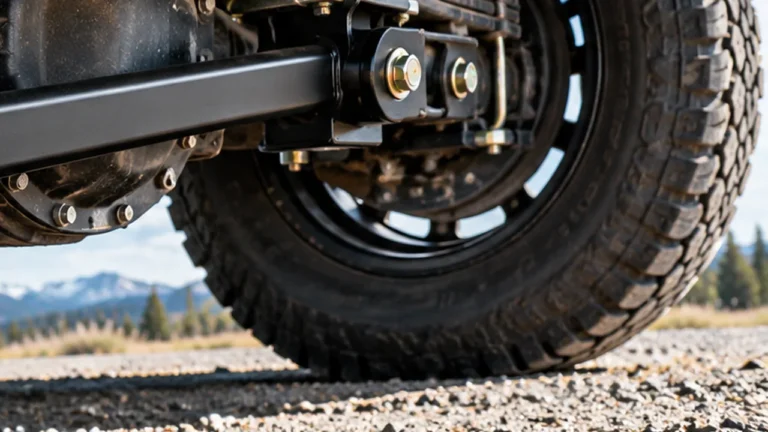
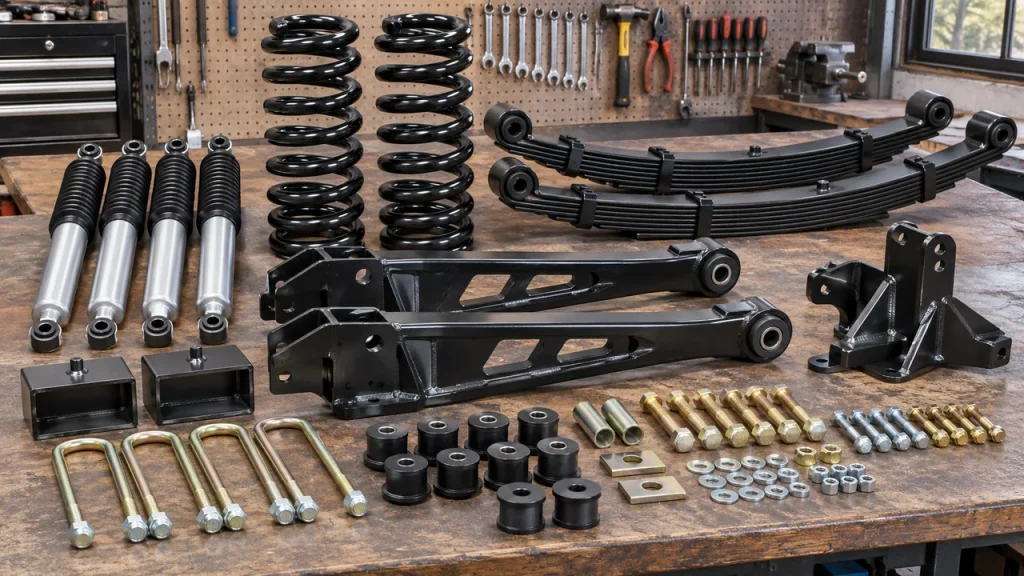
The stock radius-arm layout is a practical, strong arrangement for many daily-driven and towing-oriented F-250s. A mild lift may need only manufacturer-specified alignment and axle-position corrections. At larger heights, a radius arm drop bracket may relocate the frame-side mounting point to recover a more favorable arm angle and caster behavior.
Drop brackets are not universal even when the lift heights match. Some systems already include corrected arms or brackets; stacking additional corrections can create the wrong geometry. Our radius arm drop bracket guide explains which measurements and fitment details matter. Use the bracket paired with your chosen lift, not an unrelated part that happens to have matching bolt holes.
Replacement Radius Arms: Geometry and Mounting Both Matter
Heavy-duty replacement arms may provide caster adjustment, different articulation behavior and clearance around the frame or axle. A properly engineered kit should explain whether those arms use factory mounting locations or modified brackets, and what ride height they are designed to support. A stronger-looking tubular arm is not necessarily the right upgrade if its geometry hasn’t been matched to the coils and steering.
Consider bushings and maintenance as well. A work truck expected to cover long highway distances may benefit from quiet, durable joints, while a dedicated trail build might prioritize a different range of motion. The suspension has to work as an assembly. Replacing the arms while leaving shock, bump-stop or track-bar travel unaddressed doesn’t finish the job.
4-Link Conversions: More Adjustability, More to Install
A front four-link conversion separates suspension-location functions into multiple links, allowing designers more flexibility with caster and axle rotation through travel. That can be useful on a taller or more specialized truck, but it brings additional brackets, joints, alignment complexity and expense. Four links aren’t automatically smoother or safer than well-sorted radius arms on a commuter.
For the underlying geometry and trade-offs, see our radius arm vs 4-link comparison. This F-250 guide stays focused on whether the complete lift kit suits your truck, engine, intended tire and work requirements. Ask the supplier which supporting steering and shock parts it requires before ordering a conversion.
Coilover Conversion Doesn’t Mean “More Travel” by Default
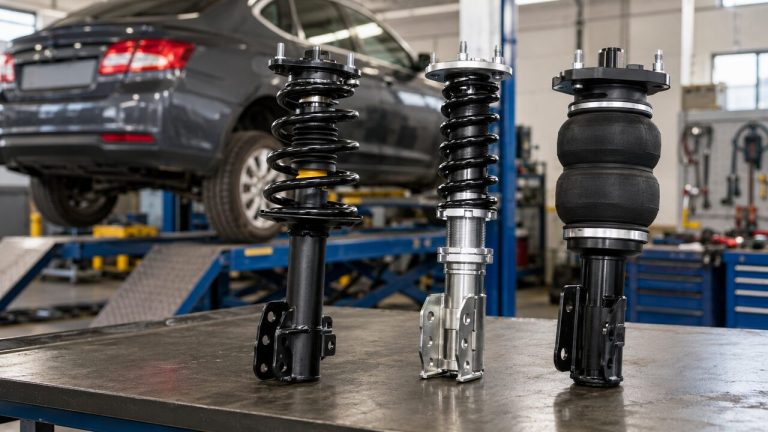
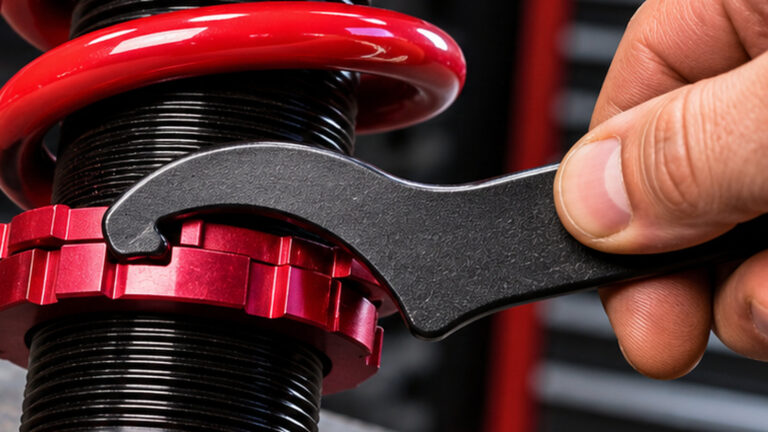
Some premium Super Duty lift systems replace the separate front coil and shock with coilover assemblies, or otherwise substantially change the front damping arrangement. Adjustable spring preload, rebuildable dampers or remote reservoirs can be useful for certain loads and repeated harsh use. None of those features proves that a truck gains unrestricted axle travel.
The brackets and mounts must be designed for the specific axle and chassis. Verify compressed and extended length, spring clearance, bump-stop position, track-bar and radius-arm motion, and any service requirements. A fancy remote-reservoir shock that is too long at full compression can be damaged just as readily as an inexpensive one.
Older Front-Leaf Trucks Need a Different Suspension Plan
On a 1999–2004 4WD Super Duty, front spring packs, shackles and spring mounts are core parts of the lift. A modern coilover or radius-arm illustration isn’t a parts checklist for those years. Many older builds also require attention to steering correction, track-bar positioning and suitable front shocks as the axle moves farther from the frame.
If you are buying for an early 1999 build, watch for manufacturer distinctions involving production dates and front spring hardware. Confirm the truck hasn’t had an axle swap or previously installed lift. The surest way to avoid a mismatched package is to compare the original mounting arrangement with the complete product instruction sheets.
Steering, Caster and Travel: What the Finished Truck Must Pass
An F-250 can look excellent in a driveway and still have poor steering or unsafe suspension limits. Geometry checks are not an optional extra once front ride height changes. The details depend on generation, but a modern 4WD truck has several linked issues that deserve one coordinated installation plan.
Track Bar and Drag Link: Avoid Bump Steer
The front track bar locates the solid axle sideways. Raising the chassis changes its operating position; a lift may use an adjustable bar, relocation bracket or another engineered arrangement to recenter the axle. The steering drag link also moves through an arc, and the relationship between the two affects how the truck responds as the suspension travels.
A poorly chosen bracket can improve static axle centering and worsen steering over bumps. Our track bar relocation bracket guide covers these geometry decisions in detail. Follow the lift maker’s instructions for the correct bar, bracket and pitman-arm combination. A steering stabilizer cannot make incorrect geometry disappear.
Caster, Front Pinion Angle and Wandering
On a coil-sprung solid axle, caster influences straight-line tracking and steering return. A lift changes radius-arm angle and can affect both caster and front pinion orientation. The two aren’t always independently adjustable with basic hardware. A kit designed for a particular height should state how it restores an appropriate operating range without creating a driveline problem.
If a lifted F-250 wanders, ask for the alignment measurements and check the track-bar joints, steering linkage and tire pressure. Large tires can amplify an existing weakness. Don’t accept “all lifted Fords do that” as the entire diagnosis, and don’t buy more springs until the actual reason is understood.
Shocks, Bump Stops and Coil Retention
Shock travel is a limiting system, not a contest to fit the longest damper in the catalog. At full compression, the axle or designed bump stop must limit movement before the shock bottoms out. At full droop, springs must stay safely seated and the shock, brake hoses, electrical wiring and driveshaft joints must remain within their operating ranges.
That requires a controlled inspection through the designed suspension movement, performed safely by someone with the right equipment. A rear shock extension or taller front coil doesn’t automatically establish more useful travel. The right compressed and extended dimensions depend on how the complete suspension is arranged.
Brake Hoses, ABS Wiring and Sway-Bar Links
Modern F-250s route brake hoses and wheel-speed wiring close to suspension hardware. New axle positions or longer shocks can change their required reach. At full droop, a hose that looked relaxed in the driveway can become the unwanted travel limiter; at full compression, the same hardware may contact a spring or bracket.
Check the manufacturer’s specified drop brackets, longer hoses and sway-bar link provisions. Our extended brake lines guide explains the hose-versus-bracket distinction. Do not stretch or reroute hydraulic lines by eye, and don’t rely on a photo taken with both axles hanging unloaded to establish the correct routing.
Rear Driveline and Vibration Checks
An F-250’s rear driveshaft operating angles and center-bearing arrangements, where fitted, can react to changes in rear ride height and load. A tall rear block or spring pack can alter axle pinion attitude. Vibration after a lift deserves a measured inspection of shaft angles, joints and axle positioning, not an improvised shim chosen because it worked on another truck.
The rear axle is also working under substantial torque and trailer loads. Some lift kits specify replacement U-bolts, blocks with locating provisions or other hardware for exactly that reason. Before road testing, confirm correct fastener installation and follow the manufacturer’s retorque schedule.
What Tire Size Fits: 33s, 35s, 37s or 40s?
Tire clearance is a system problem, not a table of lift inches. The F-250’s front axle and factory wheel options, bumper, radius arms, fender liners and wheel backspacing all change the contact points. A tire that clears at rest can still catch a component at steering lock or axle articulation.
33-Inch Tires: Often Less Lift Than You Expect
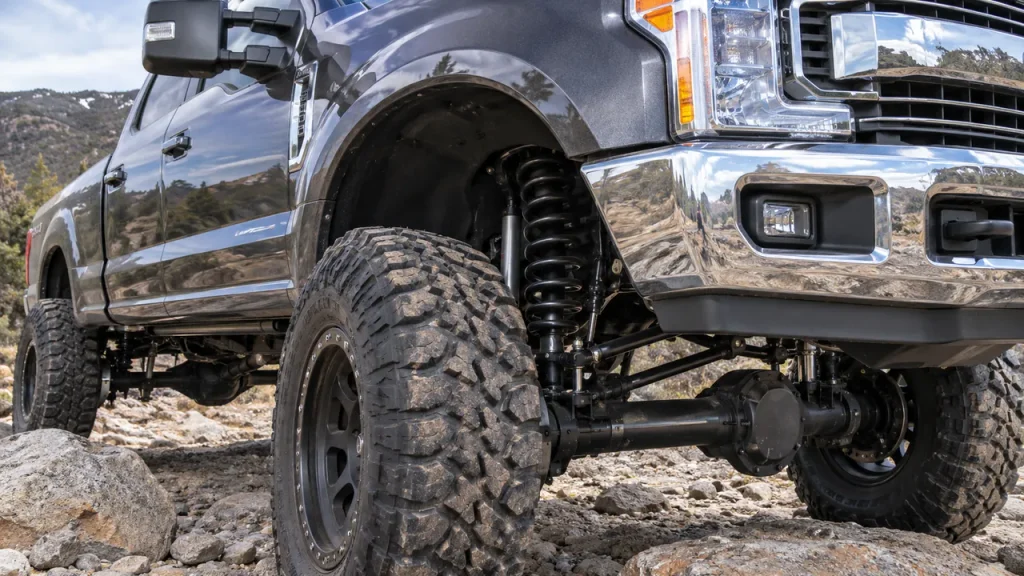
Many Super Duty configurations already run relatively substantial tire sizes. A nominal 33-inch all-terrain is not necessarily a reason for a full suspension lift on a suitable modern truck. Check actual tire diameter, width, rim dimensions and factory wheel clearance before changing the ride height. The steering arc can create rubbing even when there is generous space directly above the tire.
Older and lower factory-height trucks may have different limiting points. A 1997 OBS F-250 and a 2025 4WD Super Duty are not comparable tire-fitment examples. Use the manufacturer-tested configuration for your chassis rather than interpreting a generic “33s fit” statement as a guarantee.
35s: Tremor Starts in a Different Place
35-inch tires are a common objective for F-250 owners, but the recipe varies. A modern factory Tremor already includes a 35-inch-class tire package; a standard-height truck with different springs and bump stops may require more care. Wider tires or more aggressive wheel offset can introduce contact that a narrower 35 doesn’t have.
Check steering at both locks and tire clearance through controlled compression, including the rearward part of the front wheel opening. Some 2.5–3-inch systems publish specific 35×12.50 wheel combinations with particular backspacing; those are evidence for that combination, not universal clearance approval for every 35-inch tire and wheel.
37s: Wheel Backspacing and Steering Matter More Than a Photo
A 37-inch-class tire can be a reasonable goal for some purpose-built modern F-250 builds, but an advertised three-, four- or six-inch lift alone doesn’t settle it. Actual section width, offset, fender and bumper shape, axle position and shock/bump-stop limits all interact. Larger tires also increase leverage on steering parts and change effective gearing and braking demand.
Our 37-inch tire lift guide covers those broader tire trade-offs. Here, insist on an F-250-specific tested wheel-and-tire combination and a realistic full-lock, full-compression check. If the installer recommends 37s with almost no attention to wheels or suspension travel, keep asking questions.
38–40-Inch Builds: Plan the Entire Truck
Tires near 40 inches can change an F-250 dramatically. Suspension height is only one part of making them fit. Steering loads, braking performance, wheel and axle specifications, the spare, bodywork clearance and effective gearing all deserve planning. Very tall lift packages sometimes advertise compatibility with this tire class, but only under defined wheel and trimming conditions.
For a truck that still tows, travels long highway distances and carries a loaded bed, those compromises can become more important than the visual stance. If you can’t describe the wheel, tire, gearing and intended use yet, don’t start with an eight-inch lift just because a manufacturer sells one.
Rear Leaf Springs, Towing and the Working F-250
An F-250 is often chosen because it needs to tow or haul, not just climb a trail. Raising the truck changes hitch geometry and loading convenience; adding heavy wheels, tires and suspension parts uses up some available payload. A lift does not increase the manufacturer’s ratings.
Factory Rear Blocks and Aftermarket Blocks Are Not Additive
Many Super Duty rear lifts use blocks between the leaf springs and axle, with new U-bolts. The important detail is whether the supplied block replaces an existing factory block or adds height as part of a manufacturer-approved design. Randomly stacking blocks may worsen axle wrap and create unsafe spring-to-axle hardware geometry.
Our rear lift blocks guide explains the construction and fitment issues. On the F-250, record the installed factory block height, axle tube size, spring pack and any top overload arrangement first. A taller block changes body height; it doesn’t increase the spring pack’s load rating.
Rear Overload Springs and Air Helpers Have Different Jobs
Factory overload springs, aftermarket helper springs and auxiliary air bags can influence the way the truck supports a load, but none should be confused with a lift-kit approval. A helper air bag isn’t a substitute for the correct rear spring or shock, and it doesn’t raise the truck’s factory payload limits. A heavily optioned bed or camper can make an empty-truck lift estimate misleading.
Tell the suspension supplier whether the vehicle carries permanent tools, a slide-in camper, a fifth-wheel hitch or only occasional light cargo. Some lift kits specify rear hardware based on overload equipment; others offer different rear blocks for the same front lift. Using the wrong rear parts can leave the F-250 nose-high or too low under typical tongue weight.
Towing: More Height Is Not More Capacity
The lift itself does not upgrade the factory GVWR, GAWR, hitch or trailer ratings. Larger tires and wheels can add unsprung mass and alter the effective gearing. Taller suspension also changes bed access and trailer coupling height. A truck that looks level unloaded may settle at the rear with a trailer attached, especially if the front was leveled to remove every inch of factory rake.
Plan to evaluate the truck with its regular trailer or cargo setup, within the manufacturer’s ratings. A compatible weight-distributing or fifth-wheel setup has its own manufacturer requirements. Suspension modifications do not replace the need to check axle loading, braking performance, tire ratings and safe trailer attitude.
Ride Quality, Bed Access and Everyday Ownership
The most obvious downside of an enormous F-250 lift may be the most ordinary one: climbing in every morning and reaching the bed without a ladder. Taller tires can increase road noise and affect braking and highway gearing; very firm springs designed for permanent loads can make an empty truck uncomfortable. More expensive shocks can’t fully compensate for spring rates chosen for the wrong job.
If you mainly drive paved roads and sometimes tow, a restrained suspension with good damping can be worth more than an extra two inches of height. If the truck works off-road with a heavy load, that may point toward a different spring and shock package. Match the hardware to its actual use, not an unloaded photo.
Brands and Product Listings: Compare What Is Actually in the Box
Rough Country, BDS, Fabtech, Carli, ICON, ReadyLIFT, Skyjacker and other suppliers offer different approaches to Super Duty lifts. Some sell simple leveling components; others offer complete radius-arm, four-link or premium damping systems. The F-250 badge doesn’t make those products comparable by default.
Look for Exact Fitment and an Installation PDF
A useful product listing should state the model years, 2WD/4WD, engine, Tremor status, front and rear lift heights, factory overload-spring requirements, wheel/tire restrictions and any sensor-related exclusions. For older trucks, it should identify TTB, front-leaf or coil-front architecture. If a salesperson can’t tell you whether their product is for a 2004 front-leaf truck or a 2005 front-coil truck, that is enough reason to reconsider the order.
Read the full installation instructions before purchasing. Some kits require special tools, modifications or hardware not obvious in the short sales description. Check whether the quoted price includes shocks, caster correction, track-bar provisions, rear U-bolts and everything necessary for the actual vehicle. A “bolt-on” description doesn’t remove the obligation to inspect full suspension travel.
Radius-Arm Kit, Four-Link Kit or Premium Shocks?
Start with what the lift needs to accomplish. If it’s a moderately raised daily driver, a carefully matched radius-arm package with good shocks may be entirely adequate. A four-link may become attractive when you need more tuning flexibility or have a specific off-road goal. Premium reservoirs can help with repeated high-speed rough terrain without being necessary for every F-250 that drives to work.
Compare manufacturers’ actual component lists instead of trying to rank every brand from best to worst. The better purchase is often the one that includes the correct geometry, damping and rear load solution, plus current fitment notes. A lower sticker price isn’t a saving if it requires several unexpected orders before the truck can be aligned.
Read Trim and Equipment Exclusions as Carefully as Height
One brand may approve a Tremor-specific kit and exclude certain automatic-leveling headlights. Another may call for separate sensor-link hardware on a radius-arm-equipped truck. Others divide diesel and gas applications or specify different rear blocks depending on overload springs. These aren’t contradictory recommendations; they reflect different designs and testing limits.
Keep the exact part number, vehicle VIN, instruction revision and written confirmation of any unusual equipment. If the retailer’s year filter conflicts with the manufacturer’s current application list, trust neither until the maker resolves the mismatch. Avoid using another owner’s success with a visually similar truck as the sole source of fitment approval.
What Does an F-250 Lift Kit Cost Installed?
A mild spacer package and a complete 6-inch Super Duty system can differ in price by thousands of dollars. The useful comparison is the finished, aligned truck—with all required parts, compatible wheels, labor and any electronics checks—not just the first item in a retailer’s shopping cart.
Parts Cost: Wide Ranges, Very Different Products
Simple leveling parts may begin in the low hundreds of dollars or less, while complete 2.5–3-inch spring-and-shock packages can cost from several hundred to several thousand. Four- to six-inch lift systems may cost well into the thousands, especially with new arms, steering and track-bar components or premium dampers. These are broad US budgeting ranges, not live quotes; prices depend on year, engine, hardware and shock selection.
An F-250 built around a 37-inch tire can also require wheels with specified backspacing, suitable load ratings, a spare solution and potentially gearing or steering work. Treat those as part of the project budget. Don’t assume the cheapest three-inch kit and the most complete three-inch kit will have the same final cost once the truck is safe to drive.
Labor, Alignment and Reinspection
The shop time for installing modest front springs isn’t comparable with a lift requiring new radius arms, track-bar corrections, rear blocks and a full range-of-motion check. Older trucks may need seized fasteners or worn steering parts replaced. Newer models can bring ride-height sensors and required calibration or inspection procedures. These differences deserve separate lines on the estimate.
For broader cost patterns, see our lift kit installation cost guide. On the actual F-250 quote, ask about wheel alignment, steering centering, brake-line and shock travel checks, electronic work when applicable and the maker’s fastener retorque schedule. A price that excludes those items isn’t the same finished job.
Warranty, Inspection and Insurance Considerations
A suspension lift does not automatically cancel every vehicle warranty, but failures caused or contributed to by a modification can become disputed or excluded under the applicable terms. A kit sold with its own warranty may still require professional installation or periodic hardware checks. Keep the order documents, parts list, measurements, alignment sheet and any calibration records.
Local equipment laws and inspection requirements can also depend on bumper and headlight height, tires and vehicle use. The rules differ across US states, so check the requirements that apply where the truck is registered. For a commercial or heavily loaded Super Duty, don’t assume an aftermarket lift changes any official vehicle or axle rating.
Eight Checks Before You Buy an F-250 Lift Kit
This is the final filter after you’ve selected a likely height. Work through it with the actual kit part number open, not a generic catalog category. Most wrong orders reveal themselves here.
- Identify the exact platform. Confirm VIN, model year, 2WD/4WD, and whether the truck is OBS/Light Duty, front-leaf Super Duty or coil-front Super Duty.
- Record the powertrain and package. List gas or diesel engine, Tremor status, factory shocks and previous suspension changes.
- Inspect the front axle and steering. Confirm TTB, Twin I-Beam or solid axle; note radius arms, track bar and existing caster hardware.
- Inspect the rear hardware. Record factory blocks, leaf packs, overload springs, axle details, helper air bags and any camper or trailer equipment.
- Choose tires and wheels together. Include actual tire model and size, rim dimensions, offset, backspacing and a spare-tire plan.
- Read every fitment note. Look for headlight-leveling, ride-height-sensor, overload, Tremor, engine and wheel exclusions.
- Plan travel and alignment checks. Confirm caster, steering-link geometry, brake hoses, shock stroke, bump stops and driveshaft clearances.
- Price the complete job. Include all suspension components, tires and wheels, labor, alignment, electronic procedures and post-installation inspection.
If any requirement is unclear, contact the kit manufacturer with the VIN and part number before ordering. A Super Duty that sits at the advertised height but cannot steer, brake or move through its intended travel safely is not a complete lift.
Ford F-250 Lift Kit FAQ
These are the questions that tend to remain once year, trim and intended use have been identified. The answers provide shopping direction—not blanket approvals for a particular tire or suspension combination.
Is a 2.5-Inch Lift Enough for 35s on an F-250?
Often on an appropriately equipped modern truck, but the answer varies by wheel, tire width, factory stance and body clearance. Some Tremor models already come with 35-inch-class tires. A kit maker’s example wheel-and-tire combination is a better starting point than a generic height chart; inspect at steering lock and suspension compression.
Can I Fit 37-Inch Tires With a 3-Inch F-250 Lift?
Some builds can, but that doesn’t mean all trucks can safely articulate or steer without contact. Wheel backspacing, tire width, bumper clearance, axle location and bump stops can be more important than the lift figure. Use a kit maker’s documented wheel-and-tire fitment and an actual clearance check.
What’s the Difference Between a 2004 and 2005 F-250 Lift Kit?
On 4WD Super Duty pickups, 2004 generally has a leaf-sprung solid front axle while 2005 uses a coil-sprung solid front axle located with radius arms and a track bar. The kit hardware is fundamentally different. Don’t swap front spring, arm or steering-correction instructions between those generations.
Can I Use a Standard Lift Kit on an F-250 Tremor?
Only if the manufacturer expressly approves it. The Tremor has a different factory suspension and ride-height starting point; some products are Tremor-specific. Verify how much additional lift the kit provides, what factory shocks it retains and whether electronic equipment is excluded.
Do Diesel F-250s Need Different Lift Springs?
Sometimes. Diesel engine weight and permanent front accessories can affect spring selection and achieved height. Some brands publish gas- and diesel-specific parts, while others list one coil with different expected ride height. Match the maker’s exact engine and equipment application.
Do I Need Radius Arm Drop Brackets or a Four-Link?
Not with every lift. A moderate system may work with factory radius arms and maker-specified corrections; taller lifts may benefit from drop brackets, replacement arms or a four-link. The answer depends on caster, axle position, travel and the complete suspension geometry—not a universal threshold in inches.
Is a Six-Inch F-250 Lift Better for Towing?
No. Extra ride height doesn’t raise tow or payload ratings. It can alter hitch position, handling, loading height and the way the trailer sits behind the truck. For frequent towing, prioritize a suspension matched to the loaded vehicle and maintain all manufacturer ratings.
Does a Lift Kit Raise the Axle Differential Off the Ground?
Not directly on a solid axle. Taller springs lift the chassis relative to the axle, but the differential housing stays with the axle and wheels. Larger tires increase the axle-to-ground distance through their greater radius. Frame and underbody clearances are different measurements.
Is a 2023 F-250 Lift Kit Automatically Compatible With a 2026?
No. Both belong to the newer Super Duty generation, but catalog approvals can differ with equipment, axle and sensor configurations or kit revisions. Use a current manufacturer part number, the exact model-year listing and any special notes for your truck.
Can I Keep Stock Wheels With a Six-Inch F-250 Lift?
Possibly, but never assume so. Some large kits specify aftermarket wheels, minimum diameters or particular backspacing to clear steering and suspension components. Confirm wheel fitment in the kit’s instructions before purchasing the lift or tires.