Best Suspension Brands: Which Brand Fits Your Car?
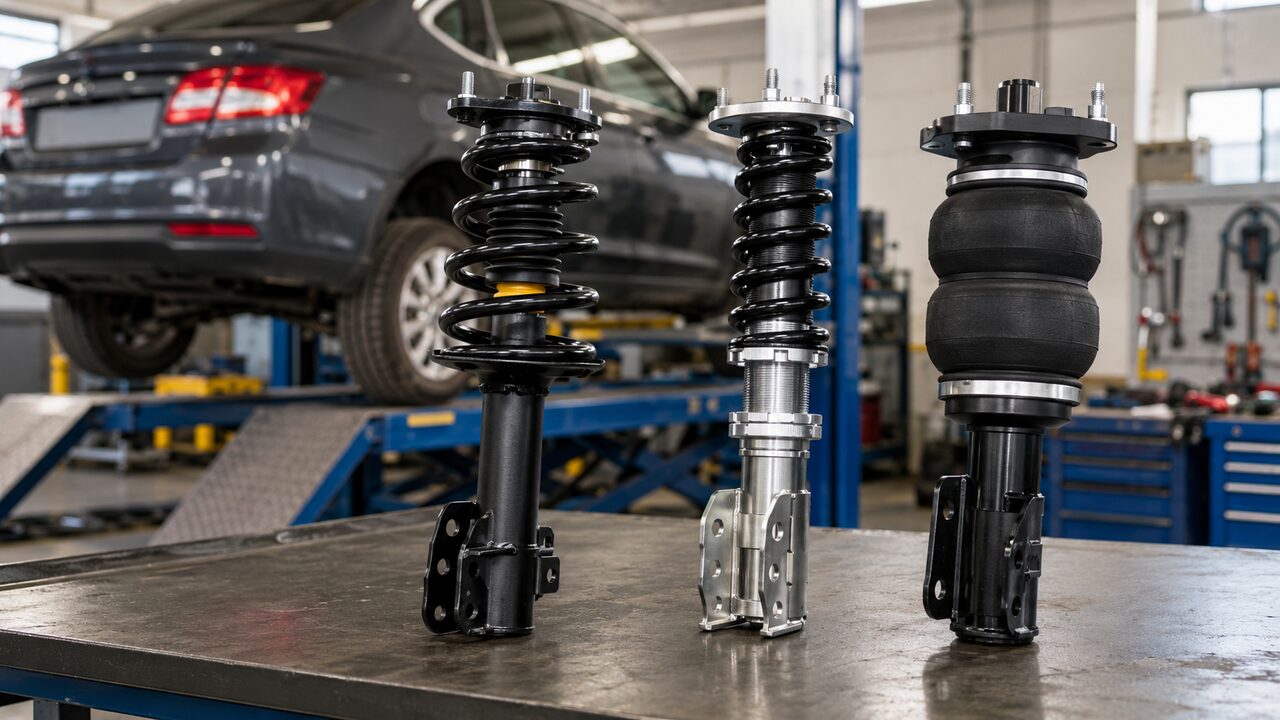
There is no single best suspension brand for every car. For a stock-height daily driver, KYB and Monroe are strong starting points for replacement shocks and struts. BILSTEIN and KONI suit drivers seeking more controlled damping, Eibach specializes in springs and anti-roll bars, KW and BC Racing focus on coilovers, and Air Lift Performance or RideTech make sense when adjustable air ride or a complete vehicle-specific system is the goal.
The right choice starts with the component, ride height, driving goal and exact vehicle application—not the logo on the box. A premium part with the wrong valving, spring length, mount or electronic compatibility can perform worse than a correctly matched OE-style replacement.
Best Suspension Brands by Driving Goal
| Brand | Best starting point for | Main products | Important trade-off |
|---|---|---|---|
| KYB | OE-style daily-driver replacement | Shocks, struts and complete strut assemblies | Choose the correct product line; not every KYB part is a performance upgrade |
| Monroe | Restoring comfort and convenient complete assemblies | Shocks, struts and Quick-Strut assemblies | Ride character varies by product line and application |
| BILSTEIN | Controlled road feel at stock or lowered ride height | Performance shocks, struts and matched suspension kits | B4, B6 and B8 serve different ride-height goals |
| KONI | Street performance with carefully chosen damping | Special Active and adjustable Sport dampers | Adjustment features and procedures vary by application |
| Eibach | Lowering springs and reduced body roll | Spring kits, sway bars and matched systems | Springs must work with the available damper travel |
| KW | Premium vehicle-specific coilovers | Height-adjustable and damping-adjustable coilovers | Higher cost and more setup decisions |
| BC Racing | Broad-fitment adjustable coilovers | Street and performance coilover series | Correct spring rate, ride height and damper setup are essential |
| Air Lift Performance | Adjustable ride height and show/street air ride | Vehicle-specific air struts, air springs and management | More components, installation work and maintenance than passive suspension |
| RideTech | Complete systems for many classics, muscle cars and hot rods | Air ride, coilovers and OE-style upgrade packages | Coverage is strongly application-specific |
Choose the Component Before the Brand
“Suspension” can mean a shock absorber, a structural strut, a coil spring, a coilover, an air spring, a sway bar, a control arm or a complete system. These parts do different jobs, so one company’s reputation for dampers does not automatically make it the best source for every chassis component.
- Restore the original ride: start with a vehicle-specific OE-style shock, strut or complete strut assembly.
- Improve body control without lowering: look for stock-height performance dampers designed for the factory springs.
- Lower the car: use springs with compatible shortened or performance dampers, or choose a complete coilover kit.
- Adjust ride height on demand: compare a complete air-suspension kit, management system and installation requirements.
- Replace control arms, ball joints or bushings: evaluate the exact chassis part separately instead of relying on a shock-brand ranking.
If you have not decided whether the car should retain its original priorities or trade some comfort for response, first compare factory-comfort and performance-oriented suspension.
The Best Suspension Brands for Cars
1. KYB: Best Starting Point for OE-Style Replacement
KYB is a practical first choice when the goal is to restore a stock-height daily driver rather than redesign it. Its Excel-G line is calibrated as an OE-style replacement, while Strut-Plus packages the damper, spring, mount and related components into a complete assembly for supported vehicles.
Do not buy by brand alone: KYB also sells firmer monotube products for selected applications. Match the product family to the original suspension and the ride you actually want.
2. Monroe: Best for Comfort-Focused Replacement Assemblies
Monroe is especially useful for drivers replacing worn factory dampers and for shops or DIYers who want a complete strut assembly. OESpectrum shocks and struts target OE-style ride and handling, while Quick-Strut assemblies reduce the number of old spring-seat, mount and isolator components that must be transferred.
A Monroe badge does not guarantee that every vehicle will feel softer. Tire pressure, spring condition, bushings, mounts and the specific Monroe product line all affect the result.
3. BILSTEIN: Best for a More Controlled Road Feel
BILSTEIN offers distinct passenger-car dampers rather than one universal “better” shock. B4 is the OE-replacement route, B6 is the stock-height performance choice for supported applications, and the shortened B8 is designed to work with lowering or sport springs.
That ride-height distinction matters more than color or popularity. Our dedicated guide explains how to choose among BILSTEIN B4, B6 and B8 without confusing them with the truck-focused 4600 and 5100 families.
4. KONI: Best for Tuned Street Performance
KONI is a strong option when the driver wants sharper control but still uses the car on public roads. Special Active dampers vary their response mechanically according to suspension movement, while KONI Sport products offer adjustment on supported applications.
Check what is actually adjustable before buying. Some dampers adjust differently from others, and the available range, access method and compatible spring setup depend on the specific part number.
5. Eibach: Best for Springs and Sway Bars
Eibach is best known in this comparison for vehicle-specific spring and anti-roll-bar packages. A PRO-KIT can lower a supported car and change its response, while an ANTI-ROLL-KIT targets body roll without replacing every suspension component.
Lowering springs are not a stand-alone cosmetic purchase. Confirm the advertised drop, axle-load range, damper compatibility, bump-stop requirements and alignment needs. Excessive lowering on a damper designed for stock travel can create a harsh ride or frequent bottoming.
6. KW: Best for Premium Vehicle-Specific Coilovers
KW is a premium choice for drivers who want a complete height-adjustable system engineered around a specific vehicle application. Its variants range from preset damping to more advanced adjustment, depending on the kit and car.
The additional adjustment only helps when it is set up deliberately. Leave enough ground and bump travel, establish a sensible starting height, document damping changes and align the car after installation.
7. BC Racing: Best for Broad-Fitment Adjustable Coilovers
BC Racing covers a wide range of vehicles and offers multiple coilover series. The BR Series is the common entry point, with independent ride-height adjustment on supported designs and one-way damping adjustment that changes compression and rebound together.
This is a better fit for an owner willing to measure, adjust and maintain the setup than for someone who simply wants the original ride back. Before choosing either KW or BC Racing, compare coilovers with a conventional shock-and-spring setup.
8. Air Lift Performance: Best for Adjustable Air Ride
Air Lift Performance is aimed at drivers who want vehicle-specific air springs or air struts with adjustable ride height. A complete installation also requires suitable air management, lines, fittings, a tank, a compressor and careful routing—not just the corner assemblies shown in a product photo.
Air ride can combine usable driving height with a lower parked stance, but it adds pneumatic and electrical components that passive suspension does not have. Our separate comparison helps decide between coilovers and air suspension before money is committed to either system.
9. RideTech: Best for Complete Classic and Muscle-Car Systems
RideTech is worth considering when a classic, muscle car or hot rod needs more than replacement dampers. Its application catalog includes air-suspension packages, coilovers and StreetGRIP-style upgrades designed as coordinated systems.
The advantage is the system approach; the limitation is that coverage depends heavily on the platform. Confirm the exact chassis, front and rear architecture, intended stance, brake and wheel clearance, and whether fabrication is required.
Fitment Matters More Than the Brand Name
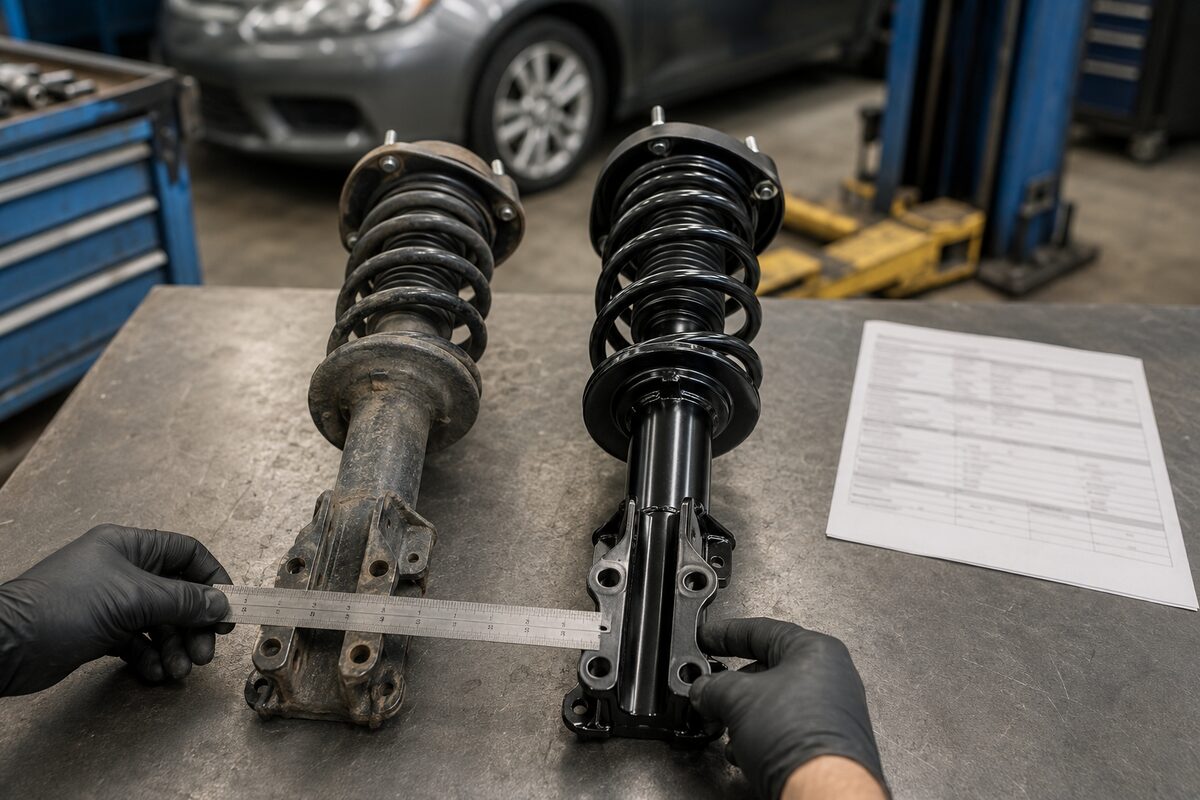
A shock that physically bolts into place is not automatically correct. Damping, travel, extended and compressed length, mounts, spring rate, axle load and electronic controls must all suit the vehicle. Confirm the part number in the manufacturer’s application data; useful examples include the official KYB vehicle catalog and Monroe part finder.
| Fitment check | Why it matters |
|---|---|
| Year, make, model and trim | Suspension may change within the same generation or trim range |
| Body style, drivetrain and axle | Mounts, loads and part numbers can differ |
| Stock, lowered or raised ride height | Damper travel and operating range must match the spring position |
| Standard or electronic damping | Some cars need compatible electronics, cancellation hardware or calibration |
| Individual strut or complete assembly | A bare strut does not include every mount, bearing, isolator or spring |
| Left and right part numbers | Front struts may be side-specific even when rear shocks are not |
| Same-axle matching | Left and right dampers should have matching design and condition |
| Alignment and driver-assistance calibration | Ride-height or geometry changes may require alignment and additional procedures |
Do not rely solely on a marketplace “fits your vehicle” banner. Cross-check the manufacturer’s part number, then compare it with the label on the existing component and the vehicle’s build information. After strut, spring, control-arm or ride-height work, check whether the repair requires a wheel alignment.
Red Flags When Comparing Suspension Brands
- No vehicle-specific part number or application catalog
- No published ride-height range, spring information or adjustment instructions
- A listing that promises comfort, racing performance and extreme lowering from the same unverified kit
- No replacement components, technical support or clear warranty terms
- Unclear contents that make a “complete kit” impossible to identify
- Reviews for a different car, product line or ride-height setup being treated as proof for yours
A well-known brand can still be wrong for a particular build, while a less familiar specialist may have the correct engineered application. Product line, part number and installation support are more useful than a logo-only ranking.
What About Trucks, Jeeps and Lift Kits?
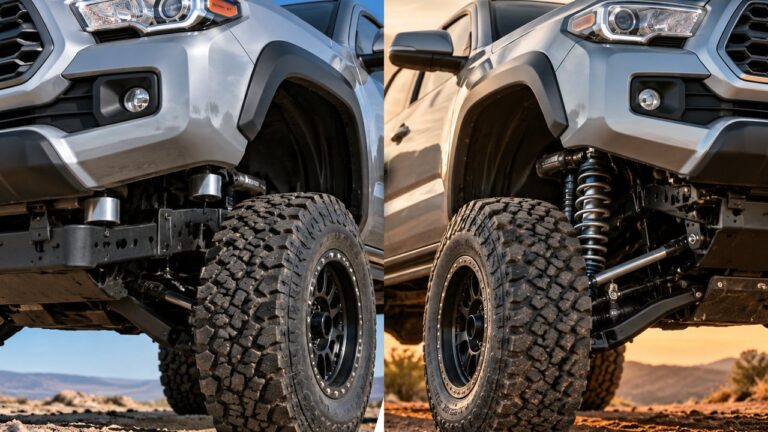
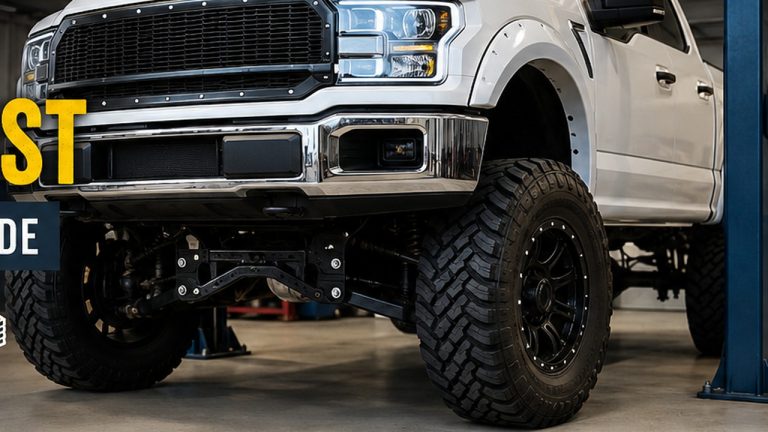
Lift height, axle articulation, added load, tire size and trail use create a different buying decision from the passenger-car categories above. For that purpose, use our dedicated guide to off-road suspension brands for trucks and Jeeps. It evaluates that market without treating a street coilover or OE replacement strut as an equivalent product.
Frequently Asked Questions
What is the best suspension brand for a daily driver?
For a stock-height daily driver with worn shocks or struts, KYB Excel-G and the appropriate Monroe OE-style line are sensible starting points. Choose using the exact application catalog, desired ride character and whether you need a bare damper or complete strut assembly. Cars with factory adaptive or air suspension require a system-specific answer.
Which suspension brand gives the most comfortable ride?
No brand can guarantee comfort by itself. An OE-style damper paired with the correct stock spring is usually a safer comfort choice than an aggressively lowered or track-oriented setup. Tires, pressure, wheel diameter, seats, bushings and available suspension travel also change what the driver feels.
Is KYB or BILSTEIN better?
It depends on the product line and goal. KYB Excel-G targets restoration of original ride control. BILSTEIN B4 also covers OE replacement, while B6 targets stronger stock-height performance and B8 is intended for compatible lowering springs. Compare equivalent applications rather than the two brand names in isolation.
Are expensive suspension brands worth it?
They can be when the extra cost buys the damping range, corrosion protection, rebuildability, technical support or vehicle-specific tuning you will use. They are not automatically worthwhile for a stock commuter that only needs its original ride restored. Correct fitment and installation produce more value than unused adjustment.
Can I mix different suspension brands?
Different brands can sometimes be used across different component types when their specifications are compatible—for example, a spring manufacturer and a damper manufacturer with an approved pairing. Do not mix different shock or strut models from left to right on the same axle. Match the pair and verify that springs, dampers, mounts and electronic systems are designed to work together.
Is the best shock brand also the best for control arms and ball joints?
Not necessarily. Shocks and struts control suspension movement, while control arms and ball joints locate the wheel and carry different loads. For chassis parts, compare the exact design, bushings or joint construction, protective boots, included hardware, warranty and vehicle fitment instead of transferring a damper ranking to another component category.
Choose by Fitment, Then by Driving Goal
For most stock daily drivers, begin with KYB or Monroe OE-style replacements. Move toward BILSTEIN or KONI when more controlled damping is the goal, Eibach when springs or sway bars are the priority, KW or BC Racing for adjustable coilovers, and Air Lift Performance or RideTech when a supported complete system matches the build.
Before ordering, verify the exact part number, ride height, suspension type and included hardware. The best suspension brand for your car is the one that makes the correct component for that specific vehicle and the way you intend to drive it.