Strut Dust Boot: What It Does, Torn Boot Risks & Replacement
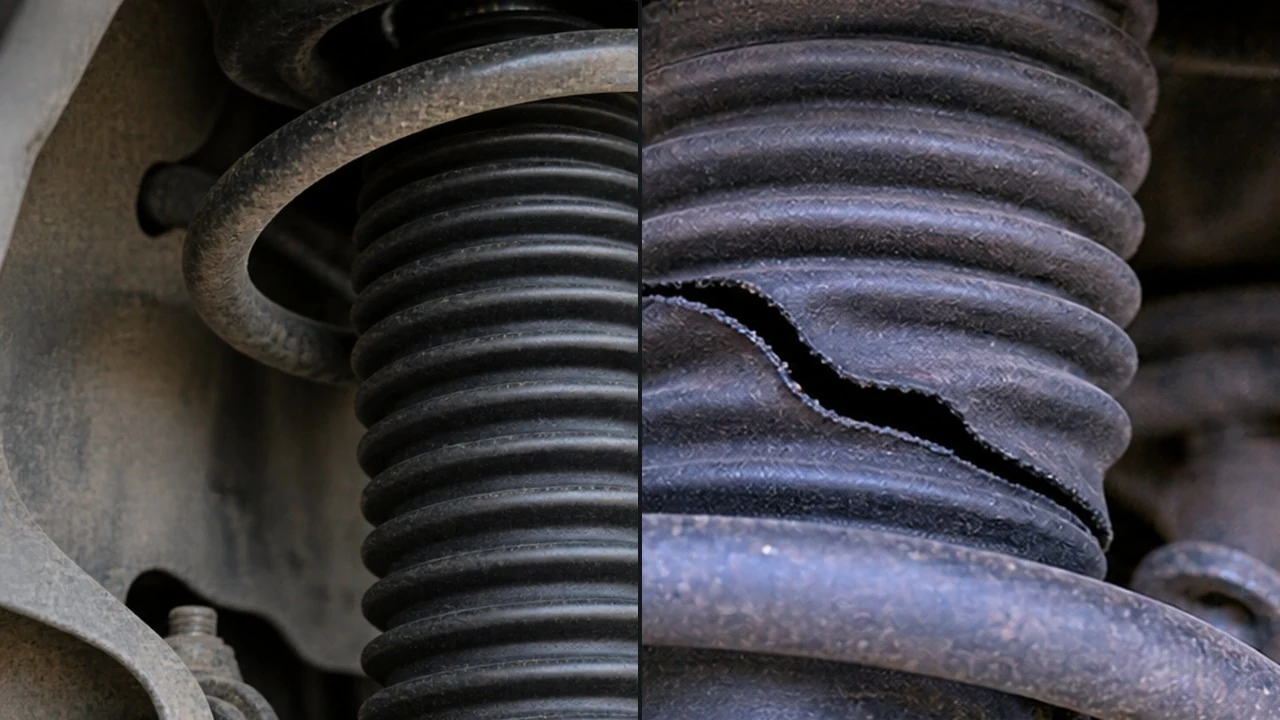
A strut dust boot is the flexible protective cover around the polished piston rod of a suspension strut. It shields the rod and the seal area from road grit, splash, salt and debris as the suspension moves. If the boot is torn, cracked, hanging loose or missing, the cover should be replaced when practical—but a damaged boot does not automatically mean the strut itself has failed. The condition of the rod, the oil seal and the damper matters more than the appearance of the plastic alone.
For a boot that has split while the strut is still dry and controlling the car normally, schedule an inspection rather than assuming you need an entire new suspension assembly. If you can see scoring or corrosion on the rod, fresh hydraulic oil on the strut, or significant changes in handling, the repair becomes more urgent. The expensive part of changing a cheap boot is often the access: on many front MacPherson struts, the spring assembly must be safely dismantled to reach it.
Torn Strut Dust Boot: Replace It Now or Wait Until Strut Service?
Most people land here because a mechanic has pointed out a split accordion-shaped cover—or they have spotted a black plastic tube dangling inside the wheel well. That observation alone does not tell you what the repair should cost or whether the car is safe. Separate damage to the protective cover from damage to the component it protects.
The following guide is a triage tool, not a promise that a particular car is safe to drive. A workshop still needs to verify anything hidden by the spring, tire or suspension geometry.
| What you can confirm | What it usually means | Reasonable next step |
|---|---|---|
| A small tear; rod appears clean and dry; ride control unchanged | The rod is less protected, but strut failure is not established | Plan a professional inspection and discuss replacing the boot during scheduled strut work |
| Bellows hanging down, missing or exposing a large section of rod | Road grit and water can reach the rod and wiper/seal area more easily | Arrange repair sooner, especially where roads are salty or dirty |
| Rust pits, scoring or damage on the polished piston rod | Surface damage can accelerate seal wear; a new cover will not reverse it | Have the strut itself assessed for replacement |
| Wet oil running down the strut body or deteriorating ride control | Possible damper seal or internal performance problem, not just boot damage | Prompt suspension diagnosis; do not assume a boot alone will fix it |
| Spring displaced, tire contact, damaged mounting hardware or unstable steering | A potentially safety-critical suspension fault beyond the dust cover | Do not continue driving; arrange professional assistance |
When a Split Boot Can Be Planned Into a Later Repair
A dry, clean strut that still performs normally is different from one with a scratched rod and fluid dripping onto the spring perch. If the only defect is a minor opening in the cover, the car may remain serviceable while you arrange inspection. The tradeoff is that every mile with the rod exposed increases the opportunity for contamination, particularly on gravel roads, in winter salt or after repeated wet-weather driving.
There is no reliable “you can drive 5,000 more miles” rule. The shape and position of the tear, how much rod becomes exposed during suspension travel, and the local road environment all matter. Deferring an immediate labor-heavy repair can make financial sense on an older but otherwise sound strut; leaving the assembly uninspected for months does not.
When It Is Not Just a Torn Rubber or Plastic Cover
A deep scratch in the shaft, rust along the polished travel area, oil actively leaking, or a sudden change in the car’s stability needs diagnosis on its own terms. The boot cannot seal the damper, restore damping force or repair a damaged piston rod. If a shop recommends a new strut, ask which evidence points to the damper failing rather than simply to a boot that has aged.
What Does a Strut Dust Boot Actually Protect?
A strut is exposed to more dirt than its shiny chrome-colored shaft suggests. At every bump, the piston rod moves in and out of the damper body. A flexible cover must move with it without rubbing through, trapping damaging material or restricting the suspension stroke.
The Polished Piston Rod, Wiper and Oil Seal
The visible rod needs a smooth surface where it passes through the upper seal assembly. Grit on the rod can abrade the outer wiper and damage the surface it is meant to protect. Corrosion or scoring may then increase wear at the hydraulic oil seal, eventually contributing to leakage. A dust boot reduces exposure to these hazards; it is not a substitute for the wiper or internal oil seal.
That distinction explains the advice to replace a torn boot even when the car drives fine. The immediate issue is lost protection. Any damper failure, if it develops, may come later. There is also no guarantee that replacing a boot on a previously exposed, pitted rod will prevent a leak.
Why It Looks Like an Accordion or Bellows
The familiar ribbed shape allows the cover to extend and collapse with suspension travel. Parts catalogs often call the component a strut bellows, dust cover, protective sleeve or suspension strut bumper/bellow. Some are flexible rubber-like pieces; others are molded plastic that feels relatively stiff until it moves through its designed folds.
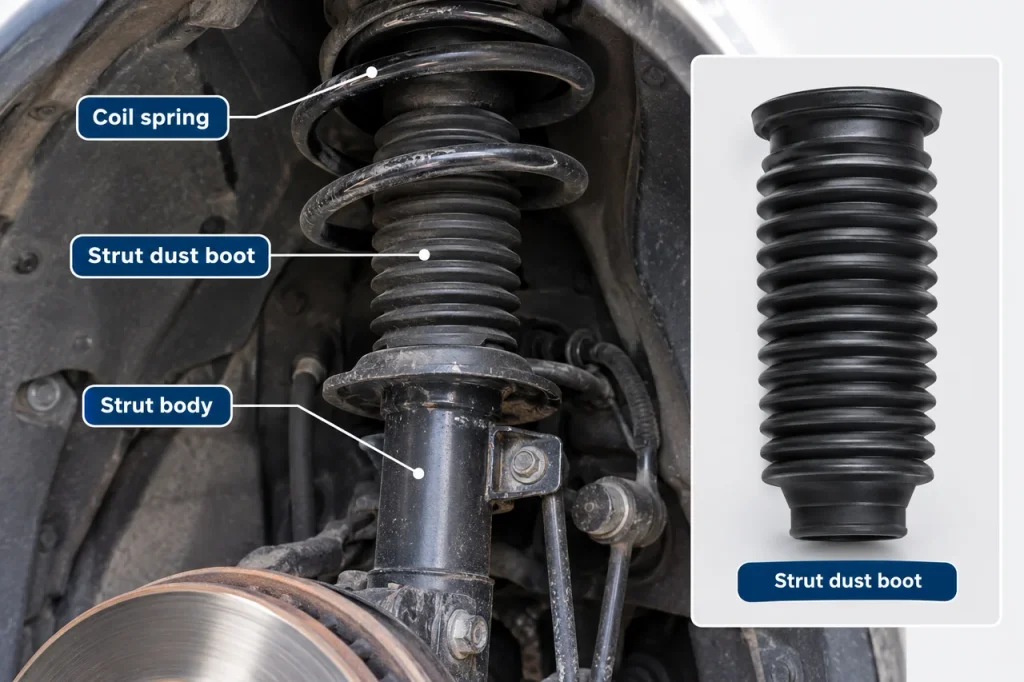
The cover is not always sealed at both ends. Certain OE-style designs intentionally allow drainage so moisture is not trapped against the rod. A boot that does not look watertight may still be installed correctly; fitment and attachment points must be checked against the vehicle specification.
Does the Dust Boot Hold Oil or Air Pressure?
No, not on a conventional hydraulic strut. Oil stays inside the damper body behind its seal. The external dust cover is a shield. A wet strut body is not repaired by fitting a tighter boot or adding sealant around the bellows. Also avoid confusing this cover with the pressurized rubber air spring used in an air-suspension strut; an air-spring bellows serves a very different function.
How to Recognize a Bad Strut Dust Boot
The easiest signs are physical, not something you feel through the steering wheel. A damaged cover may look ugly while the strut still works properly, whereas a completely intact cover can sit over a leaking damper. Look for the condition of the bellows and the neighboring parts together.
Cracked Folds, Split Sides and Missing Sections
Aging materials often split at the ridges where the boot repeatedly bends. Road debris can cut a flap into one side, and cold weather can make some materials more prone to cracking. A small cosmetic mark is not the same as a through-tear; the key question is whether the flexible cover still shields the rod throughout its intended movement.
You might see the torn portion folded back against the spring, a section missing near the lower opening, or fragments caught on the spring perch. Compare with the opposite side only if both corners use the same design. An intact passenger-side boot can help identify a misplaced or missing driver-side part.
A Boot That Has Dropped Down or Is Rubbing
Sometimes the bellows is unbroken but no longer attached where it belongs. A retaining lip may have slipped off a bump stop or mount; a clip may be absent; or a replacement cover may simply be the wrong length. If the boot hangs low enough to chafe the spring, perch or damper housing, correct positioning is important even without an obvious tear.
A loose cover can occasionally rustle, rattle or squeak as it touches another part. But a sharp clunk over bumps, wandering steering or a sustained grinding sound should not automatically be blamed on the boot. Those symptoms justify checking the mount, spring seat, hardware and damper as well.
Oil on the Boot: Which Part Is Leaking?
A little surface dirt on the cover tells you almost nothing about internal damping. By contrast, fresh oily residue running down the strut body or collecting below the rod-seal area calls for an inspection. External oil from a nearby source can also land on the cover, so tracing the fluid matters. A damaged boot and a leaking strut can coexist without the tear being proof of why the seal failed.
Strut Dust Boot vs. Bump Stop, Spring Insulator and Mount
These parts live close together and are sometimes pictured in the same product listing, which is why online searches become confusing. They do different jobs. If you order the wrong one, you may pay for spring disassembly twice.
Dust Boot vs. Jounce Bumper or Bump Stop
The boot protects the piston rod from contamination. The bump stop—also called a jounce bumper or compression bumper—helps control extreme compression travel and prevents damaging bottom-out conditions. The two can clip together or come in a single boot-and-bumper kit, but a torn cover does not establish that the bumper is damaged. Our guide to suspension bump stops covers their separate role in suspension travel.
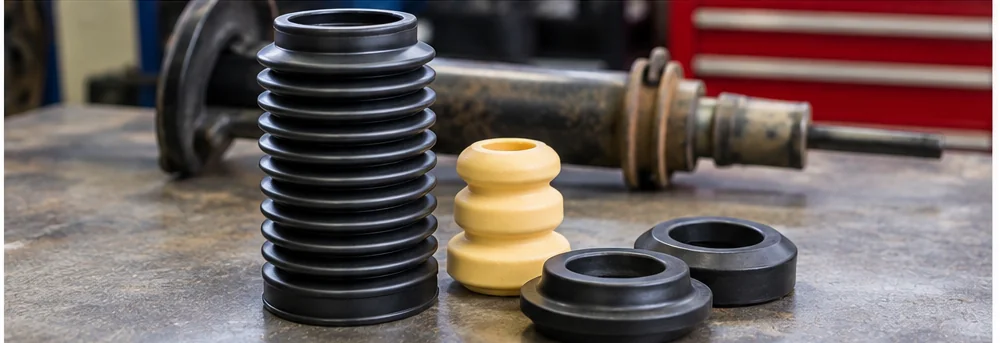
Dust Boot vs. Coil Spring Insulator
A spring insulator is a rubber or elastomer pad at the end of the coil, where the spring bears against a metal seat. It reduces contact noise and helps locate the spring; it does not cover the strut shaft. If the rubber pad is split, the right reference is our coil spring insulator guide, not a dust boot kit.
Dust Boot vs. Upper Strut Mount and Bearing
The mount attaches the strut to the vehicle structure, while a bearing on many front strut systems allows the assembly to rotate as you steer. A worn mount or binding bearing can produce clunks, creaks or spring wind-up. Those are not typical signs of an otherwise stationary torn dust cover. See bad strut mount symptoms when noise during steering is the main complaint.
Why Strut Dust Covers Crack, Tear or Fall Off
A dust boot is a wear-exposed protective part. Its material must flex thousands of times while facing temperature swings, spray from the tires and whatever a road throws into the wheel well. There is rarely one dramatic event behind its failure.
Age, Weather and Repeated Suspension Movement
Plastic and rubber-like bellows can become brittle, develop small cracks at the fold peaks or split as they compress. Grit inside the folds adds abrasion. Road salt and heat do not affect every material equally, so two cars with similar mileage may show very different boot condition. Manufacturer service bulletins have even addressed cold-related cracking in specific applications; that is a reminder to check vehicle-specific information before declaring every early failure “normal wear.”
Wrong Length, Poor Seating or Contact With the Spring
A replacement cover that is too long may bunch up, while a cover with the wrong top diameter can slip off its attachment. A boot may also be pinched during strut assembly, fitted against an incompatible bumper or installed where it rubs another component. If a replacement fails shortly after the repair, check installation and fitment before ordering the same kit again.
Why DIY Tape, Glue and Random Zip Ties Are a Bad Bet
Tape or adhesive is unlikely to withstand the folds repeatedly expanding and collapsing; it can also hold grit or moisture against the very part the boot is supposed to protect. An improvised tight band can pinch a cover that should move or drain. Use only the clips, retainers and repair method approved for the actual kit. A generic split-boot workaround is not automatically equivalent to a one-piece factory bellows.
How to Inspect a Strut Dust Boot Without Disassembling It
A useful first look does not require touching the coil spring or exposing its stored energy. You can often establish whether the boot is visibly torn or displaced; deciding whether the underlying strut is still healthy may require a closer inspection from a technician.
What to Look for With the Car Parked
Park on level ground, switch off the engine and use a light from a safe position at the wheel well. Check for bellows folds that are broken, a cover that has dropped down, or a missing cover where the piston rod should be protected. Photograph the area from more than one angle. If access is poor, ask a shop to inspect it on a lift rather than crawling under a vehicle supported only by a jack.
Look at the surrounding spring and strut for unusual corrosion or fluid. A damaged cover may hide part of the rod, so an external glance cannot rule out scratches underneath. Do not pull an installed boot apart or tug a jounce bumper loose just to see the shaft.
What the Workshop Should Verify
A mechanic can confirm that the correct boot and bumper are installed, the retainer is seated, the spring is correctly positioned, and there is no fresh hydraulic leakage or serious rod damage. They should also check for a bent housing, corrosion around the spring perch and nearby mounting issues if the car has noises or handling complaints. The inspection should distinguish the failed cover from a failed damper, rather than treating them as a single item on the estimate.
Replace Only the Strut Dust Boot or Replace the Strut Too?
This is the real cost decision. A boot can be inexpensive enough to hold in one hand, yet reaching it may involve nearly the same disassembly needed for a much larger repair. The correct choice depends on the strut’s condition, the access method and the remaining service life you reasonably expect.
When Boot-Only Replacement Makes Sense
Replacing the bellows alone is reasonable when the damper is demonstrably sound, the polished rod is undamaged, the part is available separately and the labor is justified. It is particularly attractive when the strut is already coming apart for a different repair, such as a confirmed bad upper mount, spring or jounce bumper. Paying for labor once is better than paying to dismantle the same assembly again next month.
When a Complete Strut Becomes the Better Repair
A leaking strut, damaged piston rod, bent housing or noticeably poor damping calls for more than a new cover. If an older strut must be removed and dismantled solely to fit a cheap boot, ask the shop to compare a boot-only quote with a properly matched strut replacement. Our strut replacement cost guide handles the broader strut price question; this page is about the protective bellows and the decision to replace it.
Do not treat mileage alone as a diagnosis. A clean, dry, properly performing damper is not proven defective by a torn cover. Equally, a new-looking cover does not make a worn damper worth reusing.
Is the Boot Already Included With a Loaded Strut?
A complete or loaded strut assembly typically comes with the spring and upper mounting components already assembled, and many include a new boot and compression bumper. Contents vary by manufacturer and part number. A bare replacement strut is different: the original spring and associated parts may need to be transferred, and a new protection kit may have to be ordered separately. Check the actual product contents instead of assuming the word “complete” guarantees every small component.
Strut Dust Boot Replacement Cost: Part Price vs. Shop Labor
In U.S. retail listings, many common aftermarket bellows-and-bumper kits cost only a few tens of dollars per corner; roughly $20–$50 is a reasonable illustration for ordinary applications, not a quote for every vehicle. Some OE-specific pieces and kits cost more. What makes the invoice jump is the time spent reaching the cover, not the size of the part.
Why a $30 Boot Can Lead to a Much Larger Bill
On a typical spring-over-strut assembly, the shop may need to remove the strut, safely control the spring, take apart the upper assembly, fit the correct boot and bumper, and then reassemble and reinstall everything. Rusted fasteners, awkward access and specialized suspension designs can extend the job. That labor can amount to hundreds of dollars, with wheel alignment potentially charged separately if strut-to-knuckle or other alignment-sensitive attachments were disturbed.
A rear shock with a simple separate cover may be easier, while an integrated rear strut can be just as involved as a front one. There is no reliable universal labor time without the exact vehicle and repair method.
Questions Worth Asking Before Approving the Quote
A good estimate separates the cover itself from the labor and makes clear what is included. Use these questions to avoid comparing two fundamentally different repairs.
- What failed? Is the boot torn, the jounce bumper crumbling, the strut leaking, or more than one of those?
- What is included? Does the kit supply a bellows, bump stop, retainers and any required one-time hardware?
- How much disassembly? Must the strut be removed and the spring safely controlled for this particular vehicle?
- What about the other side? Is it being inspected only, or is a second boot or strut being included in the price?
- Is alignment included? Does the repair procedure disturb the strut-to-knuckle connection or another wheel-locating point?
If the quote includes alignment, that is not automatically padding. If the structural strut is removed and refitted, the wheel geometry may need checking. The distinction between an alignment check and adjustment after suspension work depends on exactly what was disturbed.
How a Shop Replaces a Strut Dust Boot
There is no single removal procedure that fits every MacPherson strut, rear strut and separate shock. The following is the repair sequence at a high level, not instructions for opening a loaded spring assembly at home. A coil spring can store enough energy to cause severe injury if released incorrectly.
- Verify the part and problem. Confirm the correct position, boot style and whether the existing strut has leakage, rod damage or other faults.
- Support the vehicle and access the assembly. Follow model-specific procedures for brakes, sensor wiring, alignment-related fasteners and any components that obstruct removal.
- Control any spring load using approved equipment. On a conventional loaded coil-over-strut design, the assembly must be handled with the manufacturer-specified tools and process before separating spring-retaining components.
- Remove the damaged cover and inspect hidden parts. Check the shaft, wiper area, jounce bumper, spring seat and mounting hardware; a new boot does not correct other failed parts.
- Fit the correct protection kit. Ensure the bellows attaches at its specified points and can accommodate the designed compression and rebound travel without chafing.
- Reassemble, secure and inspect. Apply vehicle-specific torque and replacement-hardware requirements, check the suspension movement and determine whether alignment measurement is required.
Can a Strut Dust Boot Be Replaced Without Removing the Strut?
Sometimes a specific cover or independent shock design permits access without complete strut removal. On many front spring-over-strut assemblies, however, the one-piece cover is trapped by the upper spring seat or mount, so proper replacement requires removing and dismantling the assembly. A split replacement boot is only an option when an approved product and procedure exist for that vehicle—it should not be assumed from a universal online listing.
Do not loosen the central strut-shaft nut on a spring-loaded assembly to “save time.” The detailed work belongs in the vehicle’s service instructions, not in a generic shortcut. For the larger removal and reinstallation process, our how to replace struts guide explains why loaded assemblies differ from bare struts.
What to Inspect While the Spring Is Already Apart
The opportunity is bigger than the dust cover. With proper access, a shop can examine the jounce bumper for crushing or missing material, the spring ends for damage and seating, the upper mount and bearing for looseness or rough rotation, and the perch for corrosion. Where the strut is being reused, its rod and seal area deserve particular attention. A small additional part is worthwhile only when its actual condition warrants it.
Buying the Right Strut Dust Boot or Bellows Kit
Fitment is more than matching the accordion shape in a photo. Two boots may look identical on a store shelf but attach to different upper bumpers, use different lower lips or collapse to different lengths. The wrong one can tear again even when installed carefully.
Match the Car, Suspension Position and Kit Contents
Check the exact year, make, model, trim, drivetrain and suspension package. Confirm front versus rear, left/right differences if cataloged, and whether the boot is sold on its own or with a jounce bumper. Parts listings may use terms such as strut boot kit, strut bumper and bellows, shock absorber dust cover or piston rod protection kit. Those names overlap, but they do not guarantee that the parts are interchangeable.
A VIN-based catalog or matching OE part reference is more reliable than an approximate inside diameter. Inspect how the original boot clips to the bump stop, upper mount or lower housing, and confirm that any supplied retainers are appropriate for the application.
Are Universal Strut Dust Boots a Good Substitute?
Only when the manufacturer lists the universal kit as compatible with the exact application and provides a proper mounting method. Length, compressed height, maximum extension, opening diameter, drainage design and interference with adjacent suspension parts all matter. A cover that simply stretches over the shaft does not necessarily protect it through the suspension’s full travel.
Does the Material Have to Be Rubber?
No. Many original and aftermarket covers are molded thermoplastic or similar flexible polymer rather than soft rubber. The important qualities are appropriate flexibility, resistance to the operating environment and correct shape for the assembly. A stiffer-looking plastic bellows is not automatically defective; neither is a softer one automatically better.
Common Questions About Strut Dust Boots
A few common questions come up after someone spots the tear, especially when the shop recommends replacing more than one part.
Are Strut Boots Really Necessary?
They serve a real protective function. A strut may still work normally without a boot for a time, but leaving the rod exposed raises the risk of contamination and wear at the wiper and seal. If the manufacturer designed the unit with a protective cover, treat it as a serviceable component to maintain—not decorative packaging you can remove permanently.
Can I Drive With a Torn Strut Dust Boot?
A minor boot tear alone does not prove the vehicle is immediately unsafe, but it warrants inspection and a repair plan. You should not infer that the underlying strut is sound if the rod is hidden. If the car has poor control, leaking oil, unusual wheel position, damaged spring hardware or sudden steering problems, stop driving and have the suspension examined before further use.
Does a Torn Boot Mean the Strut Will Leak Oil?
Not inevitably. It removes a layer of protection, which may allow dirt or corrosion to accelerate damage to the rod and seal. A strut can continue working without a visible leak, and a strut can leak even with an intact boot. Inspect the actual damper instead of predicting failure from the cover alone.
Can a Dust Boot Cause a Clunk or Squeak?
A displaced cover can make contact noise if it rubs against a spring, bumper or nearby housing. It is not a common explanation for major clunks or poor steering feel, so those symptoms call for checking the strut mount, bearing, spring, fasteners and other suspension components. Do not treat noise location as proof of a boot defect.
Should Both Strut Boots Be Replaced Together?
Inspect both sides because covers of similar age may deteriorate together. But there is no universal need to replace an intact boot solely because the other one split. If the struts are being serviced as a pair, renewing aged boots and bumpers on both assemblies often avoids duplicating access labor later. Follow the service specification and actual condition.
Is a Torn Shock Dust Cover the Same Problem?
The protective purpose is similar on many conventional shock absorbers, but the repair may be quite different. A separate shock can be easier to remove than a structural strut, and some use a rigid shield rather than flexible bellows. This article focuses on strut dust boots; replacement method and alignment requirements should be based on the vehicle’s actual suspension design.
Before Ordering a Dust Boot, Check the Rod It Is Supposed to Protect
It is easy to approve a cheap part because the torn accordion cover is obvious. The less visible question is whether the polished piston rod is still smooth, the damper remains dry, and the cover can be fitted without trapping dirt or interfering with movement. Those details decide whether the repair protects a good strut or merely hides a damaged one.
Ask the shop to identify the actual fault, show the condition of the exposed rod where practical, and explain why the proposed repair is boot-only or includes a new damper. A correctly fitted protection kit on a sound strut is a sensible fix. A new cover over a pitted, leaking or poorly functioning strut is not.