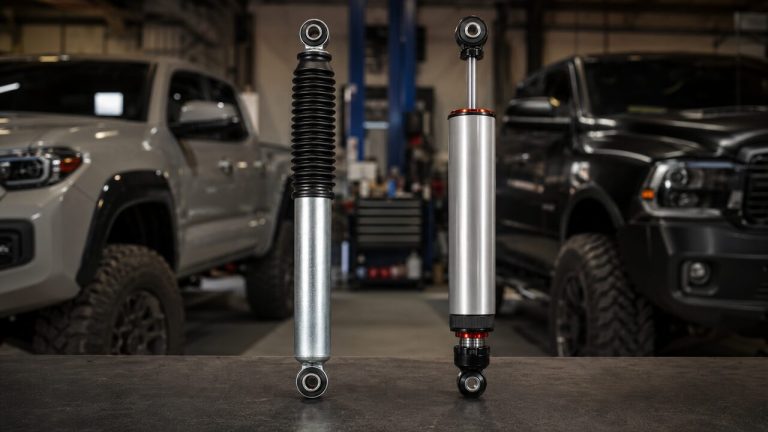
Chevy Silverado 1500 Lift Kit: Heights, Tires & Fitment by Year
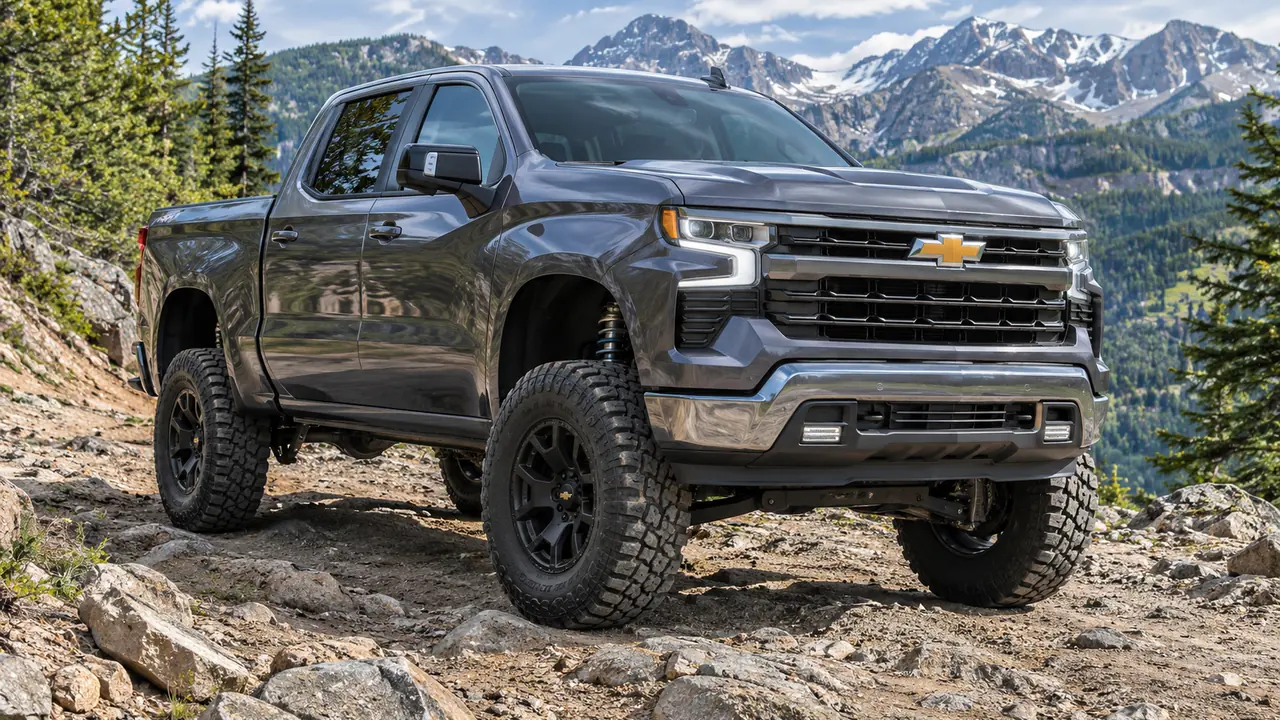
The right Chevy Silverado 1500 lift kit depends on three things a retailer’s height filter cannot settle: which Silverado you own, whether it already has a factory lift, and the tire size you intend to run. For an ordinary 1500 used on the street, a 1–2-inch level or a carefully matched 3–3.5-inch suspension system is usually easier to live with than a full 6-inch conversion. Four inches can be a useful middle ground for the right chassis. Six inches makes more sense when the truck is being built around larger tires and you are prepared for the wheel, steering, driveline and installation requirements.
There are traps here that matter before the price does. A 2019 Silverado 1500 LD is not the same platform as the redesigned 2019 truck. A Trail Boss already sits higher than a conventional Silverado. A ZR2 has specialized dampers. Even among recent non-off-road trims, certain rear leaf-spring configurations and Adaptive Ride Control can exclude popular kits. Start with the quick comparison below; then check your exact model and suspension equipment before ordering.
Which Silverado 1500 Lift Height Should You Choose?
If you have not picked a specific kit, this is the practical short list. The heights are shopping categories, not promises about tire clearance. Rear lift amount, wheel offset, full-compression clearance and factory suspension can all change the outcome.
| Your truck and goal | Lift-kit starting point | Check before buying |
|---|---|---|
| Mostly pavement; reduce factory rake | 1–2 in front level | Loaded stance, strut travel, upper-arm clearance |
| Daily driver with a more substantial stance | 3–3.5 in matched suspension kit | Front CV angles on 4WD, control arms, rear height |
| Mixed road and trail use; larger tires | Around 4 in, generation-specific | Crossmembers, steering geometry, wheel requirements |
| Purpose-built 35s or larger; aggressive stance | 6 in complete suspension lift | Cutting, differential position, wheel backspacing, total cost |
| Trail Boss or ZR2 | Kit approved for factory off-road suspension | Existing 2-in lift, special shocks, model exclusions |
| High Country with Adaptive Ride Control | ARC-compatible system only | Electronic dampers, sensors and approved calibrations |
One important distinction: a “six-inch” kit may not raise both ends exactly six inches, and a front-only level is not the same kind of product as a complete suspension lift. Look for separate front and rear height specifications. If you regularly tow, retain enough rear-high rake that the truck remains properly positioned with the trailer connected.
Match the Kit to the Silverado Generation, Not Just the Year
Chevrolet has sold different Silverado body styles under overlapping model years. Fitment catalogs also distinguish the 1500 from the heavier 1500HD, 2500HD and 3500HD. The correct suspension architecture is more useful than a broad “fits Chevy trucks” label.
1999–2006 and 2007 Classic: The GMT800 Trucks
A first-generation Silverado 1500 4WD generally uses front torsion bars with independent suspension, while the corresponding 2WD setups use a different front spring arrangement. Both have leaf-sprung rear axles. That difference is why a torsion-key leveling product for a four-wheel-drive 2004 does not automatically belong on a 2WD truck, even though the body looks the same. A complete 4- or 6-inch package must be designed for the correct drivetrain and front-suspension configuration.
Chevrolet kept the outgoing design on sale for the 2007 Silverado Classic. If a kit says 1999–2006 and 2007 Classic, it refers to that older platform, not the redesigned 2007 Silverado. On a 20-year-old truck, inspect the torsion-bar mounts, control-arm bushings, steering linkage and corrosion before assuming new lift hardware will solve tired-suspension problems.
2007–2013: New-Body GMT900 Suspension
The redesigned 2007 Silverado brought different front suspension hardware and mounting points. It still uses an independent front end and rear leaf springs, but old torsion-key parts are not a universal substitute for the new generation’s strut-based arrangements. A 2011 Silverado 1500 6-inch lift kit, for example, should be selected from the 2007–2013 application list, with its specific 2WD or 4WD components.
You will find several tall kits advertised for this generation. Compare their front crossmembers, differential and steering provisions instead of starting with the advertised height alone. Check wheel-backspacing limits before buying wheels; a kit that clears a tire on its test wheel may not clear the same tire on your factory rims.
2014–2018 and 2019 LD: Check the K2XX Application
This is the generation behind high-volume searches for 2014, 2015 and 2017 Chevy Silverado 1500 lift kits. Products can depend on more than engine and drive type: manufacturers may distinguish stamped-steel, cast-steel or aluminum factory control-arm components, and some use different kits for particular suspension configurations. Read the required original-equipment descriptions and compare them with what is actually under your truck.
The 2019 Silverado 1500 LD is the carryover older-body truck. Its suspension application belongs with the outgoing generation when the manufacturer confirms it, not automatically with the new 2019–2026 1500. “2019” on a product box without LD or new-body clarification is a reason to stop and check the part number.
2019–2024 New Body: Include the 2022 LTD Distinction
The redesigned 2019 Silverado 1500 uses the newer T1-platform architecture. The 2022 Silverado 1500 LTD is a pre-refresh carryover, whereas other 2022 trucks received the refreshed model. Those trucks are closely related, but catalogs may distinguish the facelift, electronic equipment or a particular kit revision. Do not assume that a 2019–2021 installation sheet has been approved unchanged for every 2022 configuration.
Many current lift listings group 2019–2024 trucks, sometimes specifying “refresh” or excluding the 2019 LD. That year range still has several equipment exceptions: Trail Boss, ZR2, Adaptive Ride Control, engine-specific front springs and certain rear leaf packs. A suitable standard-suspension kit is not automatically suitable for every Silverado 1500 built during those years.
2025–2026: Look for Current Front-Differential Fitment
A Silverado that looks much like a 2024 may still need different big-lift hardware. ReadyLIFT says that changes introduced for 2025, including a larger front differential on supported applications, led it to revise its 6- and 8-inch GM 1500 kits and their steering and driveline provisions. That is a useful warning against simply stretching an older product’s year range on a reseller listing.
For a 2025 or 2026 truck, use the manufacturer’s latest application chart and the exact current part number. Check whether the listing is for a conventional suspension, a Trail Boss or an electronically controlled setup. If you already own a lift that fits a 2023, ask the manufacturer directly rather than assuming the same box will fit the new truck.
Silverado 1500 Is Not 1500HD or 2500HD
Owners sometimes search “Chevy 1500 lift kit” while looking at listings for the old 1500HD or a modern 2500HD. Those trucks are not interchangeable. Their front suspension, frame and axle ratings, wheel requirements and lift hardware can differ substantially. This guide addresses the light-duty Silverado 1500, not the heavy-duty platforms or earlier C/K trucks from the 1990s.
Two Inches, Four Inches or Six? How the Choices Drive
There is no reward for raising a pickup higher than the tires and intended terrain demand. A taller stance changes the climb into the cab, garage clearance, trailer-hitch height and center of gravity. It can also change how much suspension travel remains usable if the kit was designed mainly to create height rather than increase controlled articulation.
1–2 Inches: Leveling Is Usually the Mildest Change
For a standard-height Silverado that is mainly a commuter or tow vehicle, a small front lift is often enough to reduce the nose-down look. Depending on model year, this can come from a strut spacer, adjustable-height replacement strut or a properly specified spring arrangement. None of those automatically provides more shock travel. The kit must leave sufficient room for compression and rebound without binding the upper control arm or overextending the damper.
A completely level empty truck is not always a better working truck. Factory rake gives the rear somewhere to settle under cargo or trailer tongue weight. If the appearance is your chief reason for shopping, our leveling kit vs lift kit guide covers the trade-off; for this Silverado, measure the actual loaded stance before taking the full rake out.
3–3.5 Inches: More Height, but Look at the Control Arms
Around three inches is a common step up from a basic level. Many Silverado kits in this range include revised upper control arms, replacement struts or shock extensions and rear lift components. That is not just an upsell: changing the front ride height moves the ball joints, CV axles on 4WD trucks and steering through different operating angles. The right corrections depend on the kit’s geometry rather than a universal “over two inches” rule.
For a work truck with a modest tire upgrade, consider whether the extra height is worth the changes in access and towing stance. For a truck on rough tracks every weekend, damping and actual suspension movement may deserve more of the budget than another half-inch of advertised lift.
4 Inches: A Middle Ground, Not a Guarantee of 35s
A Chevy Silverado 1500 4-inch lift kit can suit someone who wants more than a level without going directly to a six-inch build. But “four inches” covers very different designs. Some systems move suspension pivots or use a crossmember arrangement; others combine less extensive hardware. Look carefully at the front differential position on 4WD trucks, steering geometry, whether the knuckles change and what the installer must cut.
This is also where the wheel and tire fine print becomes hard to ignore. A wheel with more outward offset can clear a suspension component and then rub the bumper or inner liner. A taller lift will not necessarily fix a cab-side contact point. Choose the tire and wheel together with the lift, not a month later.
6 Inches: The Popular Big-Lift Search, With Bigger Obligations
The Chevy Silverado 1500 6-inch lift kit has strong search demand because it produces the stance many buyers picture when they say “lifted truck.” A credible six-inch system typically involves major front geometry components, differential accommodations on 4WD trucks, rear lift hardware and specific wheel requirements. It is not simply three inches of spacers stacked on a smaller kit.
For a concrete example, a Rough Country six-inch 2019–2024 4WD application lists cutting and drilling, excludes the standard factory wheels and specifies aftermarket wheel dimensions. It also excludes Trail Boss, ZR2 and Adaptive Ride Control. That is not a verdict on the brand; it shows why two packages with the same lift height can have entirely different compatibility and installation bills.
7–9 Inches: Be Clear About the Truck You Are Building
Seven-, eight- and nine-inch lifts exist in manufacturer catalogs, and some owners search specifically for an eight-inch Silverado lift. They are major modifications. Wheel diameter, steering design, driveline angles, suspension travel, brake-hose reach, loading height and local vehicle rules all become central to the plan. A taller truck is not automatically a better trail truck: crossmembers can still hang low, and more lift cannot repair a poorly chosen tire offset.
For daily commuting or occasional dirt-road use, the amount of compromise usually grows faster than the benefit. If you are building a show truck or a dedicated off-road project, have the installer describe the complete system and the intended use before you commit to the height.
4-Inch vs 6-Inch Silverado Lift: Make the Comparison Fair
These are the two heights most likely to compete for the same buyer. The right comparison is not four versus six on a product photograph; it is the finished, aligned truck with the tire and wheel you want. Get complete parts lists for both and ask the same questions of each one.
When Four Inches Is the Better Purchase
Four inches is worth considering when the truck needs a noticeable lift but will still spend substantial time on highways, loading docks or towing duty. It may leave you with a lower step-in height and fewer practical compromises than a taller build, depending on the particular systems. But avoid assuming that the shorter kit automatically needs less cutting or offers better suspension travel. Read the installation instructions.
If 35-inch tires are the goal, ask the maker for the wheel width, backspacing and true tire size used in its fitment testing. There may be a proven four-inch combination that works with minor clearance changes, or there may be a body-mount and bumper issue that makes the plan less straightforward than expected.
When Six Inches Has a Clear Purpose
Six inches becomes more defensible when a specific large-tire build, appearance goal or suspension package calls for it. On independent-front-suspension trucks, well-engineered six-inch kits generally rely on substantial new brackets or crossmembers to keep alignment and driveline operation within the intended range. That extra hardware and the installation time are part of what you are buying.
The larger kit can also introduce real trade-offs: parking garages, step height, a higher hitch, greater aerodynamic drag and harder access to the bed. If you do not need those extra inches to accomplish the build, spending the difference on better shocks, tires and alignment may be more satisfying than lifting the body for its own sake.
Why a Taller Kit Does Not Always Add More Wheel Travel
Ground clearance, body height and wheel travel are related but different measurements. A drop-crossmember lift can raise the frame while preserving much of the original front suspension geometry; it does not necessarily increase how far the wheel can move through its designed bump and droop. The limiting factors may still be shock stroke, CV joints, springs, bump stops and links.
That distinction matters particularly when a kit advertises “off-road performance” but gives only a height and a tire size. Ask for the suspension components and the restrictions at full compression. The truck can look dramatically higher on the street yet have no meaningful improvement in controlled articulation.
Trail Boss, ZR2, Z71 and Adaptive Ride: Four Different Starting Points
A Silverado trim name is not a reliable substitute for identifying the actual factory suspension. Some packages alter ride height; others mainly change dampers or off-road equipment. Here is where ordinary catalog filtering most often creates a wrong order.
Custom Trail Boss and LT Trail Boss Already Have a Factory Lift
Recent Trail Boss models come with a factory 2-inch suspension lift and off-road equipment. A standard-height 1500 lift kit is often explicitly excluded because its springs, brackets or shock strategy assume a lower starting point. Buy a kit listed specifically for the Trail Boss, with the exact year range and amount of additional lift stated.
The word “additional” is especially important. ReadyLIFT, for example, lists separate Trail Boss applications that add four or six inches to the factory-lifted configuration. That does not make every kit’s height naming convention the same. Read the actual front and rear ride-height specifications instead of mentally adding the numbers from a standard-Silverado listing.
ZR2 Has Multimatic DSSV Dampers: Preserve the Correct Hardware
The Silverado ZR2 introduced a factory off-road suspension with a lift and Multimatic DSSV dampers. An ordinary Trail Boss or base Silverado kit should not be treated as a ZR2 kit; the dampers, mounting positions and travel strategy may differ. A manufacturer may have a dedicated ZR2 option, but the product must specifically name the ZR2 and its model years.
If the truck’s appeal is the behavior of those factory dampers, ask what is retained and what the lift replaces. More height with poorly matched shocks can change the way the ZR2 works on repeated rough terrain. This is a situation where retaining the original suspension may be the right decision.
Z71 Does Not Automatically Mean a Two-Inch Lift
Z71 is an off-road equipment package, not a universal lift-height measurement. Its content varies by year and trim, and a Z71 badge on a conventional Silverado is not equivalent to a Custom Trail Boss, LT Trail Boss or ZR2. An owner might see Z71 on the truck and assume that every “off-road” lift is meant for a factory-raised model. That can put them in the wrong catalog category.
Identify the factory RPO and suspension equipment rather than relying on a badge. If the truck was lifted by a previous owner, record those existing components too. Adding a fresh kit on top of unknown spacers can create travel and alignment problems before the first test drive.
High Country With Adaptive Ride Control Is Not a Standard-Damper Truck
Some High Country trucks are equipped with Adaptive Ride Control (ARC), which uses electronically controlled dampers. A kit designed for ordinary passive shocks may not accommodate its wiring, sensors or mounting strategy. You cannot assume the electronics will work correctly after installing generic shocks and clearing a warning light.
The useful news is that ARC-specific aftermarket lift kits exist. The task is to find one for the exact year and model, with instructions covering the retained or replaced components and any calibration or related electronic checks. Do not assume that “not for High Country” means every High Country is incompatible; verify whether it actually has ARC.
Diesel, Wheelbase and Rear Leaf Construction Can Change Fitment
The 3.0L Duramax diesel can change front spring and strut selection because of powertrain mass. Some product listings separate diesel-compatible shocks or specify engine exclusions. Wheelbase and cab/bed configuration can matter for certain large kits as well, so do not rely on an attractive photo of a short-bed 4WD truck to approve your long-bed configuration.
Less obvious: some newer Silverado 1500 variants have composite overload or mono-leaf rear components. Certain suspension and accessory kits exclude those leaf arrangements; Chevrolet even sells a specific steel rear leaf-spring conversion for select applications of its Performance lift. Check the actual spring arrangement and the manufacturer’s notes before ordering rear blocks, U-bolts or a complete lift.
Chevrolet Performance 2-Inch Lift: What the Factory Option Changes
The Chevrolet Performance two-inch suspension lift is worth looking at if you prefer a GM-engineered route on an eligible modern Silverado. It is a specific product family with specific restrictions, not proof that every two-inch aftermarket lift is equivalent or endorsed by Chevrolet.
More Than a Pair of Front Spacers
Chevrolet’s official 2-inch suspension lift listing for eligible 2WD Silverado 1500 trucks describes front and rear tuned passive monotube dampers, jounce bumpers, rear leaf-spring spacing hardware and integrated installation provisions. It also identifies electronic power-steering calibration and front-camera reconfiguration for its supported applications. The exact 4WD offering and part number must be checked separately.
This is a useful reminder that an OEM accessory can address more than ride height. The right result depends on the truck meeting the application conditions and the installation being performed as instructed. A similarly sized generic spacer does not automatically include the same shock or calibration work.
Factory Restrictions Can Rule Out Apparently Ordinary Trucks
Chevrolet’s published application notes exclude Trail Boss trims, several Max Trailering and snow-plow-prep configurations, regular-cab applications and certain rear composite-spring arrangements. It is not safe to extrapolate an eligible 2021 WT or LT application to a different 2025 configuration just because both are Silverado 1500s.
For a truck with composite rear springs, Chevrolet’s separate steel leaf-spring kit is intended to enable the Performance two-inch lift on certain specified models. That is not a universal instruction to swap out rear springs on every Silverado, and it is not a standalone lift kit. Have a dealer verify the VIN, current catalog and compatibility of the parts in the order.
A Factory Accessory Is Not Blanket Tire or Warranty Approval
An OEM-engineered kit may have useful warranty terms when installed on an approved vehicle, but changing tire size, wheel offset or other suspension hardware introduces separate questions. Ask the dealer to identify what the kit itself covers and what the tire and wheel combination is approved to use. Retain written fitment information and installation paperwork, especially if the truck is still under warranty.
33s, 35s or 37s: Tire Clearance Is More Than Lift Height
The usual Silverado tire question is “What size fits with four or six inches?” The answer depends on actual tire diameter and width, wheel backspacing, the front bumper and mud-flap brackets, and how the tire moves when steered or compressed. Clearance in a dealership parking lot is not the same as clearance on a rutted trail.
33-Inch Tires: Check the Wheel Before Buying More Height
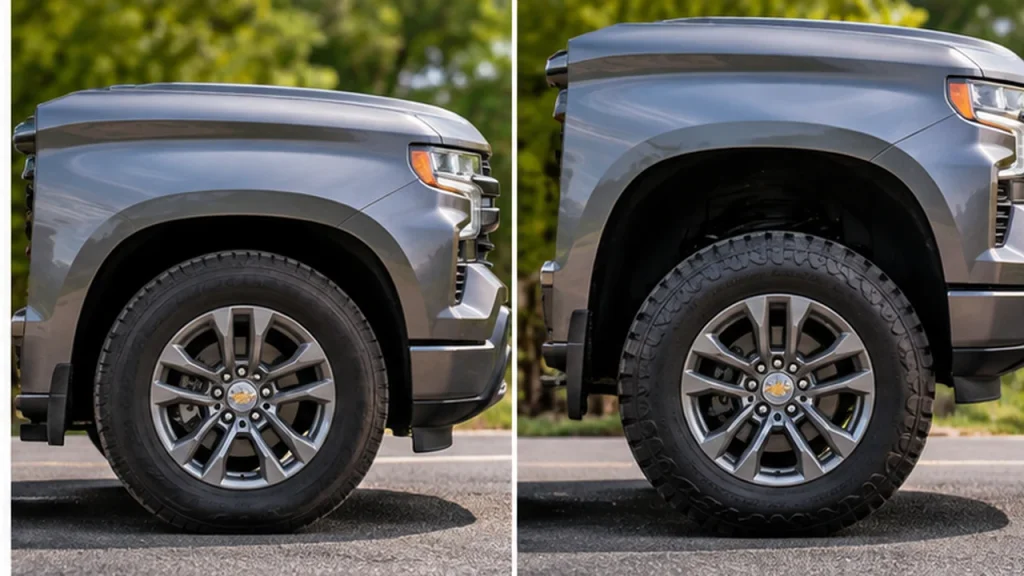
A 33-inch-class all-terrain tire is a common target for a mild level or near-stock truck. Depending on trim and wheel dimensions, some configurations can accommodate that general size without a full suspension lift. A wide tire on a low-backspacing wheel can create rubbing that a narrower 33 on a more conservative wheel would avoid.
Use the complete tire code and actual measured dimensions rather than shopping from a nominal “33” label. If the truck is frequently loaded, make sure the tires have an appropriate load rating and that the rear suspension remains useful under that weight.
35-Inch Tires: The Mud-Flap Bracket and Body Can Be the Limit
Thirty-fives are the most common reason many owners start shopping for a bigger lift. On late-model Silverado 1500s, the front mud-flap bracket, inner liner and body-side clearance can become the limiting points at steering lock, even when there is visible air above the tire. Wheel offset and tire width change where the tire sweeps through that space.
A four-inch kit may fit a particular 35-inch combination with specified wheels and trimming, while another four-inch kit or a wider 35 may not. Conversely, a six-inch system does not excuse ignoring body contact. Our 35-inch tire lift guide explains the general diameter and clearance questions; here, use the lift maker’s Silverado-specific fitment chart for the exact wheel and tire.
37-Inch Tires: Plan Steering, Gearing and Spare-Tire Storage
Moving to 37-inch-class tires affects more than clearance. Added rotating mass, changed effective gearing, greater steering loads and braking demands can alter how the truck feels. A very tall lift may make more vertical room at the fender, yet the tire can still interfere with bodywork or with components at full lock.
If you are committed to 37s, build the wheel-and-tire combination first on paper, then select a lift system proven for that platform and intended use. Our 37-inch tire lift guide handles the broader trade-offs. For a Silverado, do not forget the under-bed spare location, hitch and how much of the truck’s rated payload the new equipment uses.
The Difference Between Offset and Backspacing Matters
A lower backspacing value generally moves the wheel farther outward for a given wheel width, but the exact position depends on both width and offset. Outward movement might avoid contact with the upper control arm and create a different interference at the fender or bumper. Wheels that fit a manufacturer’s six-inch demo truck may be the opposite of what your stock-height truck needs.
This is why some complete lift kits require specific wheel diameters and backspacing and will not clear factory wheels. Read those requirements before spending money on either the lift or a new set of rims. A tire-clearance guarantee given without a wheel specification is not much use.
The Hardware That Separates a Complete Lift From a Tall Stance
On a Silverado 1500, the front suspension does most of the complex work: independently mounted control arms, steering and—on 4WD trucks—CV axles must all operate at the new height. The rear is simpler mechanically, but can be just as consequential for towing and load capacity.
Upper Control Arms and Factory Material Differences
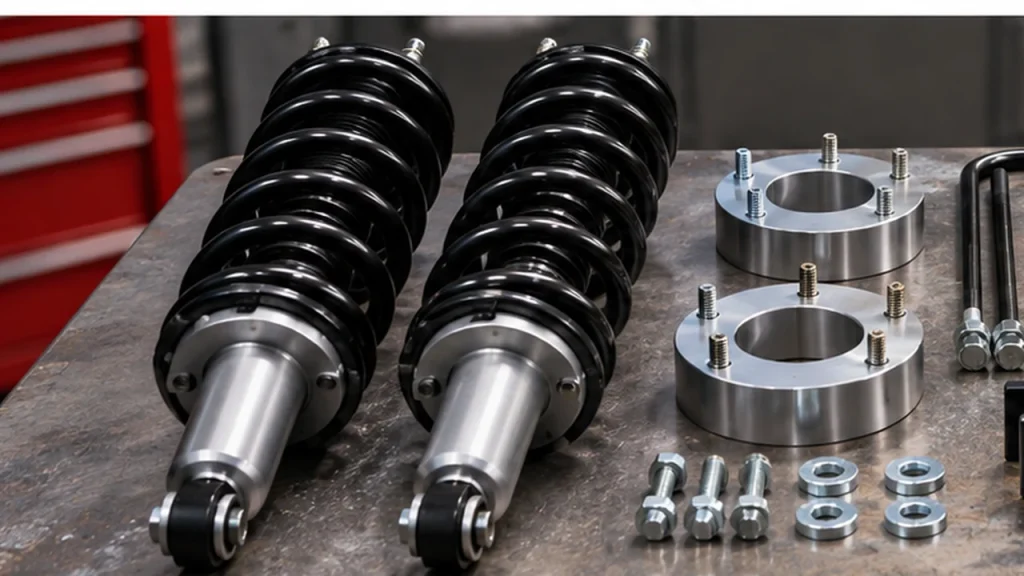
A raised front end changes upper ball-joint angle and the alignment range available to the installer. Some modest kits remain compatible with the factory upper arms; other kits require corrected or replacement arms. For certain GM model years, manufacturers also distinguish stamped-steel, cast-steel and aluminum original suspension components. A matching-looking aftermarket arm is not enough to establish safe joint geometry.
Check the ball-joint or uniball arrangement, shock and coilover clearance and how the chosen kit restores usable caster. The final alignment printout is worth keeping. If the truck wanders afterward, correct the geometry rather than hiding the problem behind a heavier steering stabilizer or lower tire pressure.
CV Axles, the Front Differential and Drop-Crossmember Geometry
On 4WD Silverados, raising the suspension without addressing front CV operating angles can reduce joint life or travel margin. A modest differential drop sometimes helps with particular mild-lift designs; larger kits may relocate the differential and suspension mounting points as part of a full crossmember system. The presence of a differential bracket alone does not prove the system is engineered correctly.
There is no single height where every Silverado must use the same diff-drop accessory. The differential drop kit guide explains what these parts can correct and what they cannot. For the Silverado, follow the exact kit’s CV clearance, driveshaft, steering and differential instructions. On a 2WD truck, the front CV question is different, but steering and control-arm geometry still matter.
Knuckles, Tie Rods, Crossmembers and Cutting Requirements
Many four- and six-inch systems use replacement steering knuckles, relocated crossmembers or brackets that change where the front differential and lower control arms sit. The maker may specify drilling, cutting factory brackets, altered skid plates or replacement steering components. These are not minor footnotes. They affect installation time and how easily the truck can ever be returned to stock.
Ask whether the package preserves the truck’s intended steering range, what wheel and tire restrictions it imposes and whether the instructions have been updated for 2025–2026 hardware. A kit that looks inexpensive in a product carousel can become costly if the shop has to source another knuckle, bracket or shaft halfway through.
Rear Leaf Springs, Blocks and Shocks Under Load
The Silverado 1500’s leaf-sprung rear axle makes rear lift blocks common, but a block raises the chassis relative to the axle; it does not increase the manufacturer’s payload or tow rating. Correct-length U-bolts, suitable spring perches, shock travel and axle-wrap behavior all matter. Composite or special leaf arrangements are a separate fitment check, especially on late-model trucks.
Our rear lift blocks guide covers U-bolt and block-specific details. On a Silverado being lifted for towing or frequent hauling, choose the rear spring and damper setup for the usual loaded condition, not the way an empty pickup looks in the seller’s photos.
Shock Length, Bump Stops and Electronic Calibrations
A longer shock can be damaged if it reaches full compression before the intended bump stop, while too much droop can strain hoses, wiring and driveline joints. Inspect both ends of travel rather than only checking the parked ride height. Modified rear shock mounting may also need dedicated brackets instead of improvising an extension.
Modern trucks add electronics to that mechanical check. Camera alignment, electric power steering and electronically controlled dampers may require kit-specific procedures. On a Silverado with Adaptive Ride Control or driver-assistance equipment, ask the installer which calibration steps the manufacturer calls for and how completion will be documented.
How to Judge Lift-Kit Brands and Product Listings
A brand name is useful for narrowing options, but not for proving fitment. Rough Country, BDS, Zone, ReadyLIFT, Fabtech, Superlift, McGaughys, FOX and other suppliers sell very different levels of suspension hardware. A low-cost level and a purpose-built big lift from the same company should not be judged as though they were comparable kits.
Read the Installation PDF Before the Product Reviews
Start with the installation sheet, not the star rating. It should state the precise model-year range, 2WD/4WD application, trim exclusions, required factory suspension parts, wheel specs, cutting and drilling, and what is included in the box. For some Silverado 1500 years it also needs to distinguish the LD or LTD version and the exact factory control-arm style.
A useful listing should make its starting height explicit. That matters most on a Trail Boss, which is already lifted, but it also matters when a previous owner installed a level. If neither the seller nor the manufacturer can explain the finished front and rear heights for your configuration, there is no reason to place the order yet.
Decide Whether You Are Paying for Height or Better Damping
A spacer preserves much of the factory spring and shock behavior while changing where the truck sits. Replacement coilovers can offer different damping, spring choices and sometimes better sustained heat control. A complete bracketed lift can change major geometry while still using fairly ordinary shocks. These three purchases solve different problems.
For a Silverado used on washboard roads or carrying tools every day, springs and damper tuning may matter more than adding another inch. For a truck built mainly around visual stance and a particular tire size, wheel restrictions and a predictable aligned road feel may be the deciding factors. There is no single “best Silverado lift kit” outside a specific truck and use case.
A Recent Fitment Change Is Worth More Than an Old Top-Ten List
In October 2026, ReadyLIFT described updated big-lift systems for current GM 1500 applications, noting revisions for later-model differential and steering geometry. The takeaway is not that every owner needs those products. It is that fitment information can change even while the Silverado name and broad body style remain the same. Treat old videos and reviews as examples, not current approval for your VIN.
What a Silverado 1500 Lift Kit Costs After Installation
Retail prices range from small spacer kits costing relatively little to complete big-lift systems costing several thousand dollars. The part number, shocks, control arms and structural changes explain much of that spread. These are US budgeting ranges rather than live quotations; do not assume a kit advertised today will be priced the same by the time it is installed.
Typical Parts Budgets by Kit Type
A basic level can start well below $200 in parts. More complete strut, shock and control-arm packages may cost several hundred to over $1,500. Four- and six-inch systems frequently reach $1,000–$3,000 or more, and premium shocks or complex link packages can increase that substantially. The inexpensive kit may still need additional wheels, arms or other items to be completed correctly.
Rather than comparing just two advertised prices, make the shop quote list the front and rear height, spring and shock models, wheel restrictions, alignment provisions and whether any original component must be cut or replaced. You can then tell whether a cheaper box is missing something genuinely necessary.
Labor, Alignment and Calibrations
A straightforward front level is a very different job from installing a six-inch system with crossmembers, knuckles and differential relocation. Labor can move from a modest service appointment to a major workshop project, especially if rust, seized bolts or damaged original joints add repairs. Our lift kit installation cost guide breaks down the general labor and hidden-expense patterns.
Ask whether alignment, full-travel clearance checks, steering-wheel centering, electronic calibrations where applicable and a fastener reinspection are included. Also ask who is responsible if the specified tire rubs after installation. A shop that has installed the exact model and kit can often provide a more realistic answer than a generic labor calculator.
Towing, Payload and Ownership Costs
Lifting a Silverado does not raise its factory gross vehicle weight, axle, towing or payload ratings. Heavier tires, wheels, bumpers and suspension parts can consume payload; lifting the hitch changes trailer attitude. None of that is fixed by adding a rear block or an unusually stiff spring. Keep the manufacturer’s load limits and verify the trailer setup at the truck’s new ride height.
Think about fuel use, tire wear, gearing and ease of loading too. A dramatic six-inch stance may be worth those costs to the right owner. Someone who hauls equipment daily may get more benefit from a lower, properly matched setup that can still carry weight without sacrificing the truck’s working usefulness.
Before Ordering, Check These Eight Silverado-Specific Details
Take the exact kit part number and run it against the truck. This takes less time than returning a pallet of suspension parts, and it forces the retailer to answer questions that a generic fitment filter may have missed.
- Identify the platform. Record the model year, VIN and whether it is a 2007 Classic, 2019 LD, 2022 LTD or regular new-body model.
- Confirm the drivetrain and equipment. Specify 2WD/4WD, engine, factory suspension, Trail Boss/ZR2/Z71 status and any Adaptive Ride Control.
- Inspect the rear leaf pack. Verify standard steel leaves versus any composite or special spring configuration mentioned in the kit exclusions.
- Record existing modifications. A prior leveling spacer, aftermarket upper arm, shock or rear block changes the starting point.
- Choose the actual wheels and tires. Give the installer tire model and size, wheel diameter and width, offset and backspacing.
- Read the manufacturer’s full instructions. Check cutting, crossmembers, knuckles, front CVs, shock travel, bump stops and brake-line reach.
- Ask about electronics and towing. Identify required camera, steering or damper calibration and how loaded rake and hitch height will change.
- Get a finished-price quote. Include every component, alignment, tires, wheels, labor and a post-installation inspection.
If the installation sheet contradicts the retailer’s “fits your truck” banner, pause and contact the manufacturer. The precise application data wins over a broad vehicle selector.
Chevy Silverado 1500 Lift Kit FAQ
These questions come up repeatedly because the same nominal lift height can describe very different Silverado builds. They are useful starting answers, but none replaces a model- and kit-specific fitment check.
Is a 4-Inch Lift Enough for 35s on a Silverado 1500?
It can be, depending on generation, tire dimensions, wheel offset and the kit’s clearance provisions. A 35-inch tire that clears at rest may still contact a mud-flap bracket or liner at steering lock or compression. Look for the maker’s exact tire-and-wheel combination and required trimming, not a blanket promise based on four inches.
Is a 6-Inch Lift Better Than a 4-Inch Lift?
Not automatically. Six inches usually provides a taller stance but can bring more installation work and everyday compromises. A well-matched four-inch package may be preferable for a truck that commutes and tows. The winner depends on the actual tire goal, geometry, damping and finished cost.
Can I Install a Regular Silverado Lift Kit on a Trail Boss?
Only if the manufacturer specifically approves the kit for Trail Boss models. Recent Trail Boss trucks already have a factory two-inch lift, and many standard 1500 kits exclude them. Dedicated Trail Boss products use their own hardware and height conventions; never assume a standard kit adds the advertised inches safely.
Can I Lift a Silverado ZR2 Without Replacing Its DSSV Shocks?
Some aftermarket solutions may preserve factory components, but that compatibility must be confirmed explicitly for the ZR2 and the exact model year. Standard 1500 lift kits may be incompatible with the ZR2’s Multimatic DSSV suspension. Ask how the shock mounts, travel limits and related hardware are retained or changed.
Does Z71 Mean My Silverado Is Already Lifted?
No. Z71 is an equipment package and does not, by itself, guarantee a two-inch factory lift. Trail Boss and ZR2 are separate suspension applications. Check the build information and physical components before selecting a kit intended for a factory-lifted model.
What Lift Kit Fits a 2019 Silverado 1500 LD?
The 2019 LD is the outgoing-body truck and should be matched with kits approved for that platform. It is not automatically compatible with a lift labeled 2019–2024 for the redesigned Silverado. Confirm the full product application, including its 2WD/4WD and factory-component requirements.
Can a 2014–2018 Lift Fit a 2019 Silverado?
Possibly on a 2019 LD, but only when the manufacturer lists that exact application. A redesigned 2019 Silverado uses a different platform. Also verify factory control-arm and other suspension material distinctions, since a broad year range may still have component-specific exclusions.
Why Do 2025–2026 Silverados Have Separate Lift-Kit Listings?
Some lift manufacturers report factory changes, including front-differential revisions on newer 4WD trucks, that led to updated big-lift components. Use a current part number and verify the year, engine, drivetrain and suspension configuration instead of assuming every 2019+ kit is unchanged.
Do I Need Upper Control Arms for a 3-Inch Lift?
Some systems include or require revised upper arms; others are engineered to work with the original components. It depends on ball-joint angles, caster adjustment and the kit’s travel design. Use the maker’s requirements and have the truck professionally aligned after installation.
Can I Keep the Factory Wheels With a 6-Inch Lift?
Do not assume so. Some complete six-inch Silverado kits expressly exclude factory wheels and specify aftermarket wheel diameters and backspacing. Check the kit instructions before purchasing tires or booking the installation.
Will a Silverado Lift Increase Towing Capacity?
No. Suspension height does not raise factory towing or payload limits. A lift can change rear rake, hitch height and loaded handling, while heavier tires and accessories add weight. Verify the truck and trailer at the new ride height and stay within all published ratings.