Wheel Spacers Pros and Cons: Are They Safe for Your Truck?
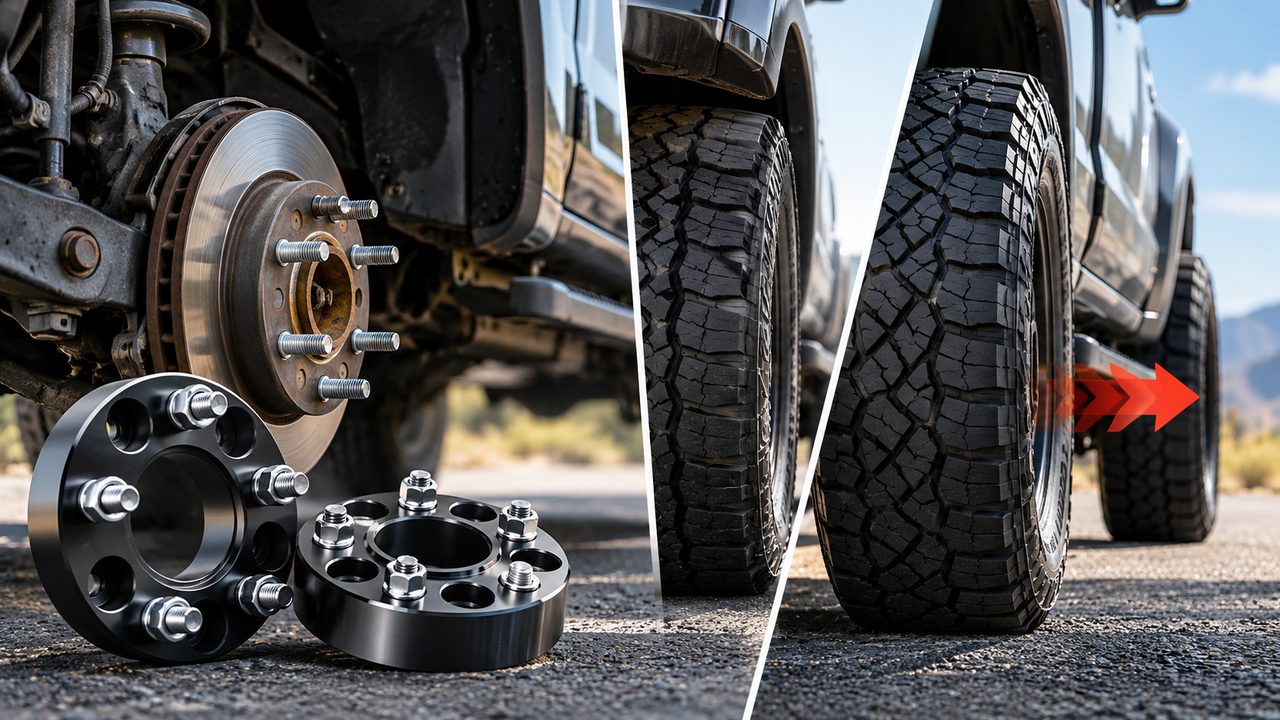
Wheel spacers can be safe and useful when they are the correct size for the vehicle, use proper wheel hardware and are installed and torqued correctly. Their main benefit is simple: they move the wheel outward, creating more inner clearance and a wider stance. The trade-off is that the same movement changes effective wheel offset, steering geometry and the leverage applied through the hub and suspension.
For most street-driven trucks, a small, vehicle-specific spacer used to solve a real clearance or fitment problem is easier to justify than a very thick spacer chosen only for appearance. The farther the wheel is pushed outward, the more important fender clearance, scrub radius, wheel-bearing leverage, stud or bolt engagement and installation quality become.
That is the real answer behind the wheel spacers pros and cons debate: spacers are not automatically dangerous, but they are also not a consequence-free shortcut for incorrect wheel fitment.
Wheel Spacers Pros and Cons at a Glance
| Factor | Potential Benefit | Potential Drawback |
|---|---|---|
| Wheel position | Moves the wheel outward for a wider stance | Reduces effective positive offset and can increase poke |
| Inner clearance | Creates more room near control arms, struts or brakes | Moves the tire closer to the outer fender |
| Track width | Wider stance can slightly change lateral behavior | Does not automatically improve overall handling |
| Steering geometry | Can correct an unwanted tucked-in wheel position | Can change scrub radius and steering feel |
| Wheel bearings | No unique penalty if final wheel position is unchanged | Moving the wheel farther outward increases bearing leverage |
| Installation | Often simpler and cheaper than replacing wheels | Adds another fitment or fastening interface that must be correct |
| Larger tires | May improve clearance from suspension components | Can create new rubbing at the fender, liner or bumper |
| Appearance | Can produce a flush or wider stance | Too much poke can look awkward and create clearance issues |
What Do Wheel Spacers Actually Do?
A wheel spacer sits between the wheel and the hub mounting surface. Its thickness moves the entire wheel-and-tire assembly outward by approximately the same amount.
A 15 mm spacer therefore moves the wheel about 15 mm farther toward the fender. If the same thickness is installed on both sides of an axle, total track width increases by about 30 mm.
That movement also changes the wheel’s effective installed offset. For example, a +30 mm wheel combined with a 15 mm spacer sits approximately where a +15 mm wheel of the same width would sit.
The spacer does not physically alter the offset manufactured into the wheel. It changes where the wheel sits on the vehicle. Our wheel offset vs. backspacing guide explains the geometry in more detail.
This one change in wheel position explains nearly every advantage and disadvantage that follows.
Advantages of Wheel Spacers
1. More Clearance From Suspension Components
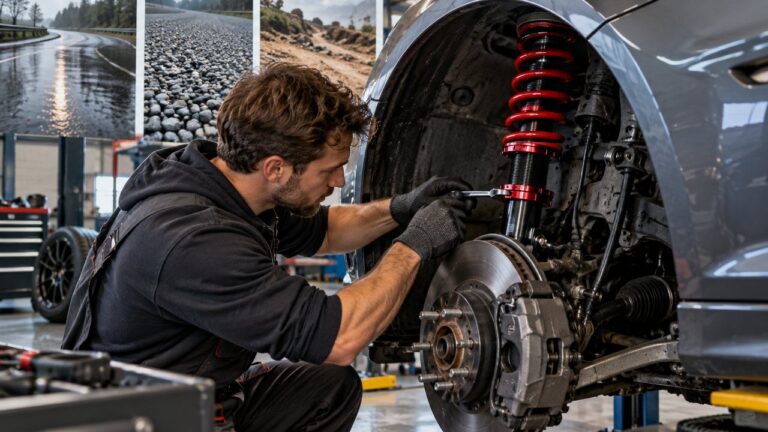
Moving the wheel outward creates additional space on the inboard side of the wheel and tire. That can help when a wider tire is getting too close to a control arm, strut, spring, sway-bar link or another suspension component.
This is one of the most defensible reasons to use a spacer: the wheel nearly fits, the problem is clearly on the inner side, and a measured amount of additional clearance solves it.
But inner clearance is only half of the fitment equation. Every millimeter gained inside is approximately one millimeter lost outside, so the tire must still clear the fender and bodywork through steering lock and suspension compression.
2. Brake-Caliper Clearance in Some Wheel Setups
A spacer can sometimes move the back of a wheel away from a brake caliper when spoke or barrel clearance is marginal.
This should be verified physically rather than assumed from spacer thickness alone. Wheel-spoke shape, barrel diameter and caliper geometry all matter, and the wheel still needs to seat correctly against the spacer and hub.
3. Wider, More Flush Stance
Many owners use spacers because factory wheels sit noticeably inside the fenders. Moving them outward can create a more flush stance without purchasing a new set of wheels.
This can be a cost-effective cosmetic change when the required movement is modest and the factory wheels otherwise suit the vehicle.
4. A Small Increase in Track Width
Installing equal spacers on both sides widens the track. In basic vehicle dynamics, a wider track can slightly reduce lateral load transfer for the same cornering force and center-of-gravity height.
That does not mean wheel spacers automatically transform handling. Tire construction, alignment, suspension geometry, spring and damper tuning and the road surface matter far more. A spacer can also change steering geometry at the same time, so a wider stance should not be treated as a free performance upgrade.
5. They Can Be Cheaper Than Replacing Otherwise Good Wheels
If the wheels are the correct diameter, width, load rating and bolt pattern but sit slightly too far inward, a quality spacer can be considerably cheaper than replacing the complete wheel-and-tire package.
This is especially useful when the problem is measured in a small number of millimeters rather than when the entire wheel specification is unsuitable.
Disadvantages of Wheel Spacers
1. They Change Scrub Radius and Steering Geometry
The steering axis is determined by suspension geometry. A spacer moves the tire contact patch outward while leaving those suspension pivot points essentially unchanged.
That means scrub radius changes. On some vehicles and with modest spacer thickness, the difference may be difficult to notice. With larger changes, steering can become heavier or more sensitive to bumps, road grooves and unequal braking forces. If you want to understand the geometry behind that effect, see our scrub radius explained guide, including positive, negative and zero scrub radius.
This is one reason a 5 or 10 mm fitment correction should not be treated as mechanically identical to pushing each wheel outward by 50 mm.
2. Moving the Wheel Outward Increases Leverage on the Hub
Wheel spacers are often blamed for wheel-bearing failures, but the important variable is the final position of the wheel and tire—not simply the presence of an aluminum spacer.
Moving the wheel centerline farther from the bearing increases the lever arm acting on the hub assembly. That can increase bearing loads and the forces seen by suspension components.
The same principle also applies to choosing a wheel with substantially less positive or more negative offset. If a 20 mm spacer and a different wheel both move the tire centerline outward by roughly the same amount, the change in bearing leverage caused by wheel position is broadly similar.
The spacer does, however, add another component and another mounting interface that must be correctly manufactured and installed.
3. More Inner Clearance Means Less Fender Clearance
Spacers are sometimes installed to stop a larger tire from rubbing a control arm, only for the tire to begin contacting the outer fender liner or bumper at steering lock.
This is particularly important on lifted trucks with larger tires. Moving the wheel outward changes the arc that the tire follows as it steers, so a setup that appears clear while parked straight ahead may rub when turning or when the suspension compresses.
If tire size is also part of the build, compare the broader trade-offs in our 33 vs. 35 vs. 37 tires guide before treating spacers as the only fitment variable.
4. Incorrect Hardware Can Create a Serious Safety Problem
A spacer reduces available stud or bolt engagement unless the design provides replacement hardware or the correct longer hardware is used.
That is why spacer thickness cannot be chosen independently of the wheel studs, wheel bolts and fastening system.
Tire Rack’s wheel-installation guidance emphasizes proper thread engagement, correct fastener fit and manufacturer-specified torque. The spacer manufacturer’s instructions and the vehicle or wheel manufacturer’s specifications take priority for the actual application.
5. Spacers Add Another Surface That Must Stay Flat and Tight
Rust, dirt, incorrect center-bore dimensions, damaged hardware or a spacer that does not sit completely flat can produce runout, vibration or loosening.
The wheel, spacer and hub mounting surfaces need to fit together correctly. This is not a modification where a part that is “close enough” should be forced into place.
Are Wheel Spacers Safe?
Yes, properly engineered wheel spacers can be used safely when they are designed for the exact application, installed with the correct hardware and torqued correctly. The risk rises when universal or poorly fitting spacers, inadequate thread engagement, incorrect hardware or excessive thickness are used.
A good installation should verify at least:
- correct bolt pattern;
- correct center bore and spacer-to-hub fit;
- correct wheel-to-spacer fit;
- adequate stud or bolt thread engagement;
- appropriate hardware for the spacer design;
- clean and flat mating surfaces;
- correct tightening sequence and torque;
- clearance to brakes, suspension and bodywork;
- free wheel rotation after installation;
- any re-torque procedure specified by the spacer manufacturer.
Eibach’s installation instructions, for example, require checking the hub center, bolt pattern, hardware dimensions, thread engagement and free wheel rotation before the vehicle is driven. Those checks are more meaningful than simply asking whether all wheel spacers are “safe” or “unsafe.”
Hub-Centric vs. Lug-Centric Wheel Spacers
A hub-centric spacer is machined so its center bore closely matches the vehicle’s hub pilot, usually with a corresponding lip that helps locate the wheel concentrically.
A lug-centric spacer or universal spacer may rely more heavily on the lug hardware to establish position.
Hub-centric designs are generally preferable when a compatible version is available because they make accurate wheel centering easier and reduce the chance of installation-related vibration.
There is an important technical distinction, however: “hub-centric” does not mean the small hub lip alone carries every road load. Properly tightened wheel hardware creates clamping force between the mating surfaces, while the center bore primarily helps locate the assembly accurately during installation.
That distinction matters because a spacer still needs correct torque and clean mating surfaces even when it fits the hub perfectly.
Slip-On vs. Bolt-On Wheel Spacers
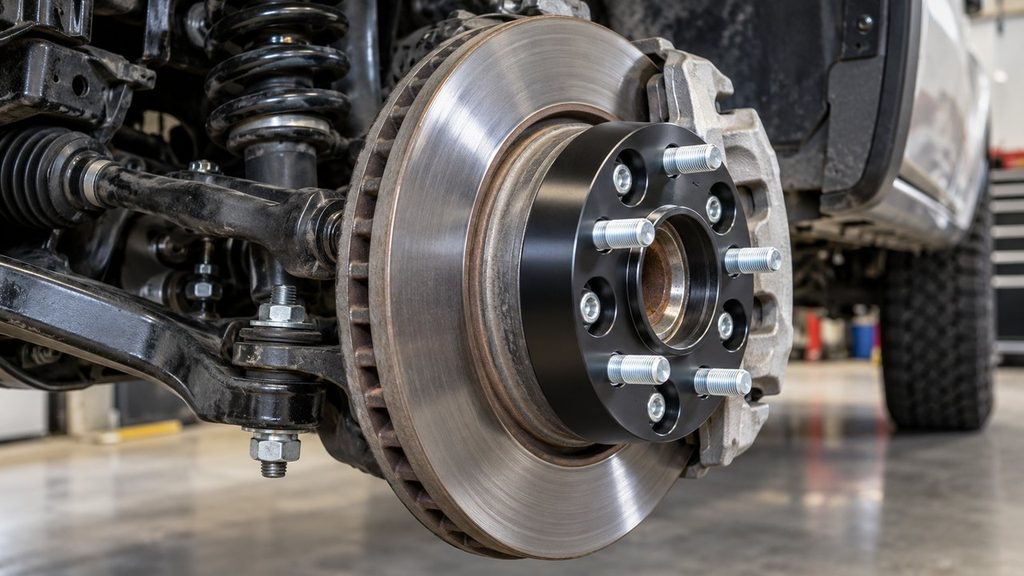
The two common spacer arrangements solve the same basic problem in different ways.
| Type | How It Works | Main Installation Concern |
|---|---|---|
| Slip-on spacer | Slides over the original studs or sits between wheel and hub | Enough usable thread must remain, or the correct longer hardware must be fitted |
| Bolt-on spacer | Attaches to the hub and provides another set of studs or threaded holes for the wheel | Spacer-to-hub and wheel-to-spacer fastening must both be correct |
| Wheel adapter | Can move the wheel outward and sometimes change bolt pattern | Fitment becomes more complex than a simple spacer |
Thicker bolt-on spacers can also create another issue: the original studs may protrude beyond the spacer face. The wheel must have enough recess behind its mounting pad to clear them unless the specific spacer system uses another approved solution.
Do Wheel Spacers Cause Problems With Wheel Bearings?
They can contribute to additional bearing load when they move the wheel farther outward from its original position, but the same concern applies to wheels that create the same final centerline position through lower offset.
This is why “spacers destroy bearings” is too simplistic.
Consider two setups using otherwise equivalent wheels:
- Setup A uses a +30 mm wheel with a 20 mm spacer.
- Setup B uses a +10 mm wheel with no spacer.
Both place the wheel centerline in approximately the same lateral position. From the perspective of leverage created by wheel position, they are much closer to each other than comparing either setup with the original +30 mm position.
That does not make every spacer installation equivalent to a correctly specified wheel. The spacer adds another interface, and wheel design, mass, tire size, driving loads and the exact hub assembly still matter.
Do Wheel Spacers Affect Performance?
They can, but the effect depends on spacer thickness and the vehicle.
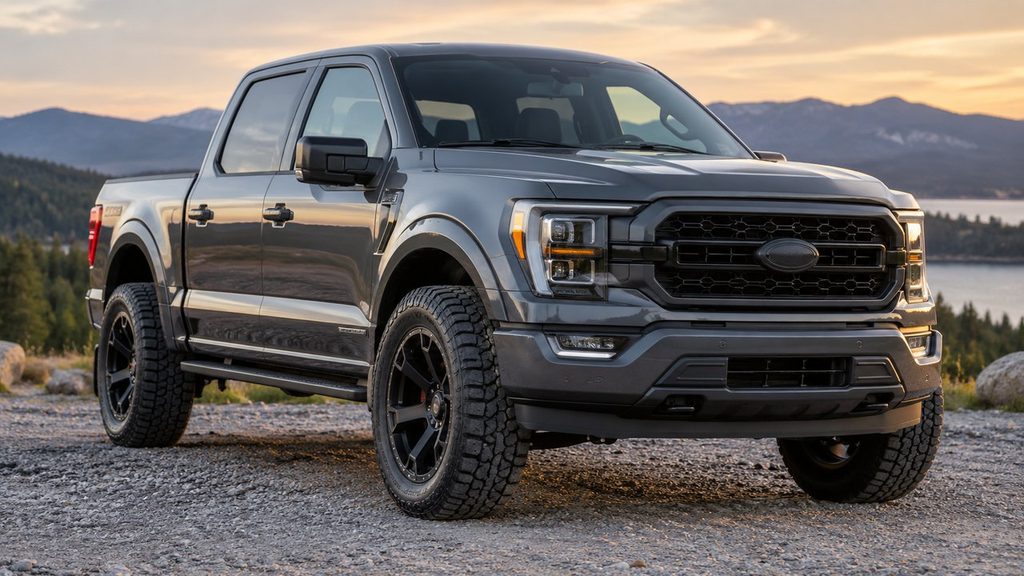
A modest spacer used for clearance may cause little noticeable change. A large outward shift can affect:
- steering effort;
- scrub radius;
- kickback through the steering wheel;
- sensitivity to grooves and uneven pavement;
- bearing and hub leverage;
- fender and body clearance;
- the way the tire loads the suspension during cornering.
Spacers themselves do not add engine power, braking capacity or suspension travel. Their performance effect comes mainly from changing wheel position and track width.
Wheel Spacers on Lifted Trucks
Lifted trucks are one of the most common places to see wheel spacers because larger tires and aftermarket suspension components create new clearance challenges.
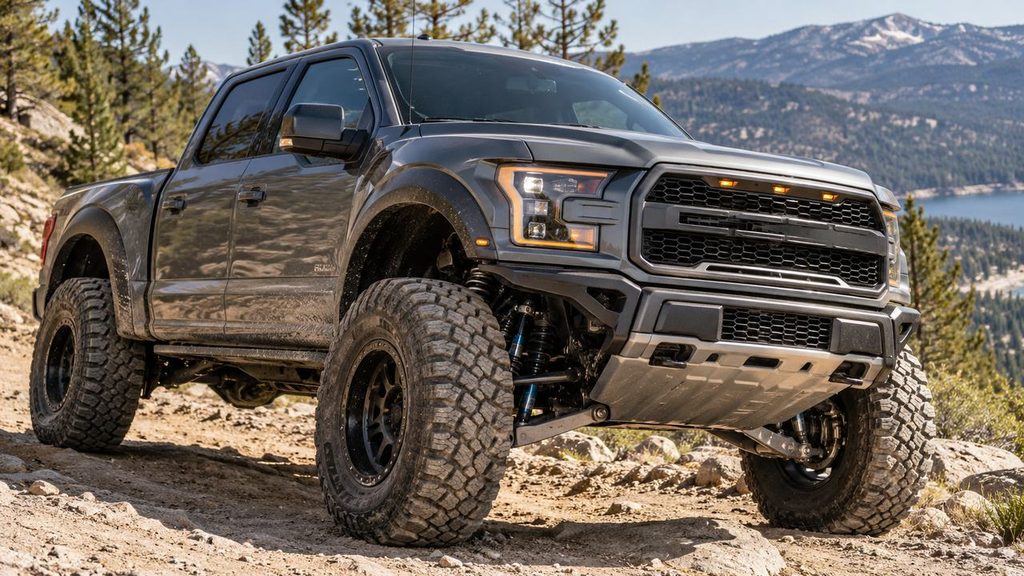
A spacer can move the tire away from an upper control arm or another suspension component, but it does not create more room everywhere in the wheel well. The outward movement can increase contact with the fender liner, bumper corner or body mount as the tire turns.
The correct spacer thickness should therefore come from an actual clearance measurement, not from copying another truck that happens to run the same nominal tire size.
Wheel width and offset can change the result just as much as the tire diameter. If you already know the current and proposed wheel specifications, our wheel offset and backspacing calculator can show how far the wheel moves inward or outward before a spacer is added.
Are 1/2-Inch Wheel Spacers Safe?
A 1/2-inch spacer is approximately 12.7 mm thick. Whether it is safe depends less on the number itself than on the fastening system.
On a slip-on design, losing 12.7 mm of available stud length can be significant. If the original studs no longer provide the required thread engagement, the setup needs the correct longer studs or another spacer system specifically designed for that application.
A correctly designed hub-centric system with appropriate hardware is very different from placing a generic 1/2-inch plate over factory studs and hoping enough thread remains.
Are 2-Inch Wheel Spacers Safe?
A 2-inch spacer moves each wheel approximately 50.8 mm outward. That is a major change in wheel position, not a small fitment correction.
At that thickness, the concerns about effective offset, scrub radius, bearing leverage, outer-fender clearance and overall track width become much more significant.
A properly engineered bolt-on spacer may physically secure the wheel correctly, but that does not mean a 2-inch outward shift is appropriate for every vehicle.
If a build requires two inches of spacer solely to make the wheels fit, it is worth asking whether wheels with more suitable width and offset would produce a cleaner overall solution.
How to Choose the Right Wheel Spacer Thickness
Start with the problem you are trying to solve, then measure the amount of movement required.
- Measure the current inner clearance. Determine how close the tire or wheel is to the suspension or brake component.
- Decide how much additional clearance is actually needed. Add a reasonable safety margin rather than choosing a spacer from appearance alone.
- Measure outer clearance. Confirm that moving the wheel outward will not create a new problem at the fender or liner.
- Check the full steering range. Straight-ahead clearance is not enough.
- Consider suspension compression. Off-road and lifted vehicles need room while articulated, not just while parked.
- Calculate the new effective wheel position. Compare it with wheel-offset options before committing to a very thick spacer.
- Verify hardware and center-bore requirements. Spacer thickness must work with the actual fastening system.
The smallest spacer that solves the measured problem is usually easier to package than adding unnecessary width.
When Wheel Spacers Make Sense
Wheel spacers make the strongest case when:
- a known amount of additional inner clearance is required;
- the existing wheels are otherwise correct for the vehicle;
- a modest change will achieve the desired stance;
- vehicle-specific spacers and correct hardware are available;
- the final wheel position still provides sufficient outer clearance;
- the owner is willing to inspect and maintain the installation correctly.
When a Different Wheel Is the Better Solution
A different wheel specification is often preferable when an extremely thick spacer is required, when the current wheel has the wrong width or load rating, or when the spacer is being used to compensate for several fitment problems at once.
Choosing the correct wheel from the beginning removes one mounting interface and allows width, offset, backspacing, load rating and brake clearance to be considered as a complete package.
That does not make spacers inherently inferior. It simply means a spacer should solve a specific positioning problem rather than disguise an unsuitable wheel choice.
Wheel Spacer FAQ
Do wheel spacers cause problems?
They can if they are poorly fitted, incorrectly torqued, use inadequate hardware or move the wheel excessively far outward. A correctly specified spacer used for a modest fitment correction does not automatically cause problems.
Do wheel spacers affect alignment?
Installing a spacer by itself does not normally change camber, caster or toe because it does not move the suspension control points. It does change wheel position and scrub radius, however. If other suspension or ride-height changes are made at the same time, alignment should be checked according to those modifications.
Do wheel spacers make tires stick out more?
Yes. A 20 mm spacer moves the wheel and tire approximately 20 mm farther outward on that side, assuming the wheel and tire remain otherwise unchanged.
Do wheel spacers change offset?
They do not change the offset built into the wheel, but they reduce its effective installed offset. A +35 mm wheel with a 15 mm spacer sits approximately like a +20 mm wheel of the same width.
Do wheel spacers improve handling?
A wider track can have a small theoretical handling benefit, but spacers also alter wheel position and potentially scrub radius. They should not be installed solely as a handling upgrade without considering the complete suspension and wheel geometry.
Are hub-centric wheel spacers better?
For applications designed around a hub pilot, hub-centric spacers generally make precise wheel centering easier and can reduce the risk of vibration caused by an off-center installation. They still require the correct hardware, clean mating surfaces and proper torque.
Do I need to re-torque wheel spacers?
Follow the spacer manufacturer’s instructions. Many spacer systems specify an inspection or re-torque interval after initial driving. Use a calibrated torque wrench and the torque specification required for the actual vehicle, wheel and spacer system.
When a Spacer Is the Right Fix—and When It Isn’t
Wheel spacers are most useful when the wheel is already close to the correct position and a measured amount of outward movement solves a specific clearance or stance problem.
They become harder to justify when increasingly thick spacers are needed to compensate for the wrong wheel specification. Moving a wheel outward changes more than appearance: effective offset, scrub radius, outer clearance, track width and bearing leverage all move with it.
For a daily-driven truck, the practical approach is to use the smallest spacer that solves a real problem, choose a vehicle-specific design, verify hardware and clearances carefully and follow the manufacturer’s installation and torque instructions.
If the required spacer becomes large enough that several other fitment compromises appear, choosing a wheel with the correct width and offset is usually the cleaner long-term solution.