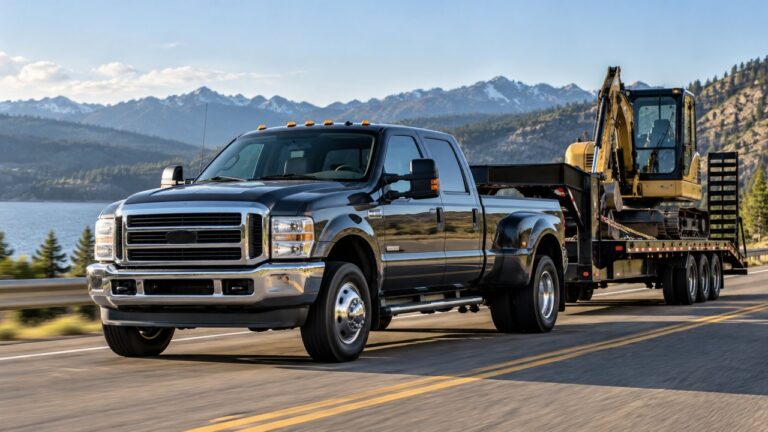
Rear Coil Spring Spacers: Sizes, Fitment & Lift Height
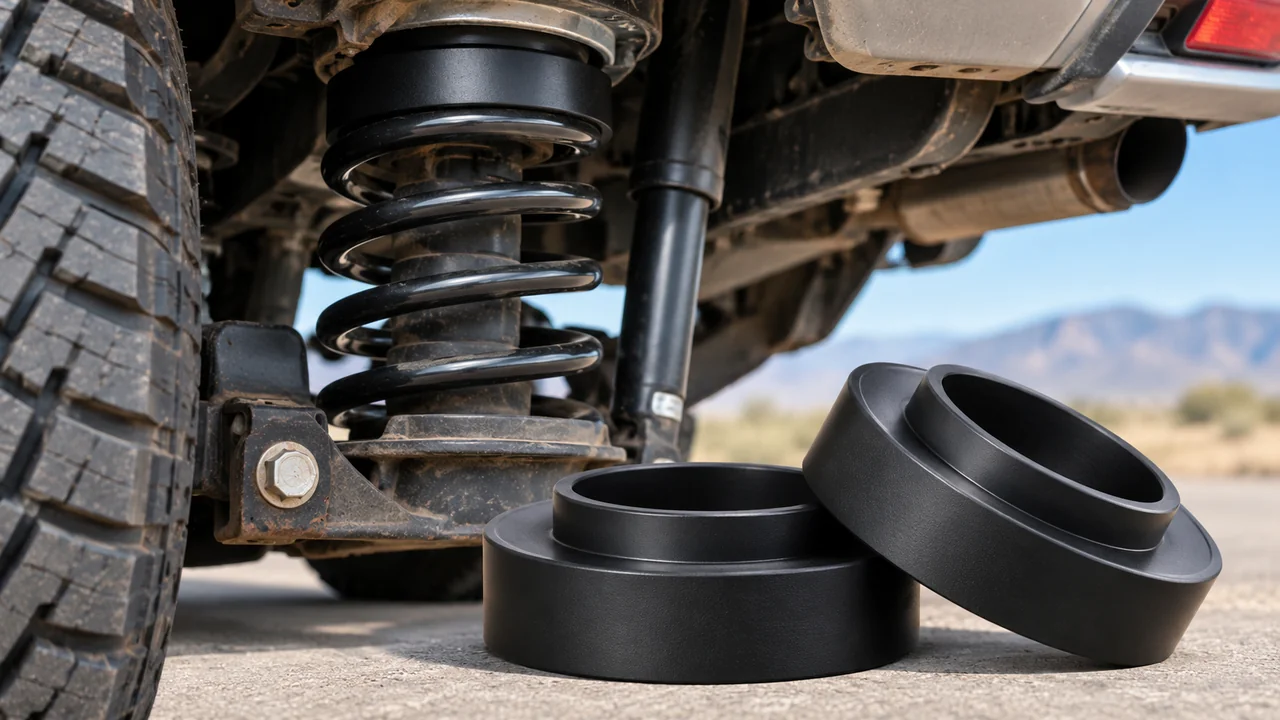
Rear coil spring spacers sit at a rear spring seat to raise the back of a coil-sprung vehicle without replacing its main springs. For most buyers, the right choice is a vehicle-specific 1-inch, 1.5-inch, or 2-inch rear lift kit—but only if the vehicle actually has rear coils, the kit matches its suspension package, and the added height leaves enough safe shock and suspension travel.
If you’re trying to bring the rear up after a front leveling kit, start by measuring the truck’s existing rake. If it’s sagging under a trailer or carrying a constant heavy load, a spacer may change the stance without correcting the underlying spring or load-support problem. Those are two very different purchases.
Choosing Rear Coil Spring Spacers: Start With the Suspension
Shopping by year and model alone is risky. The same vehicle name can cover rear coil springs, leaf springs, air suspension, and optional electronically controlled dampers. An attractive-looking spacer with the right advertised height may still be wrong for the actual rear spring seat.
Use this quick filter before comparing materials or brands. It catches most of the mistakes that lead to a return—or a modification the vehicle didn’t need.
| What you have or want | Best starting point | Check before ordering |
|---|---|---|
| Coil-sprung rear; want a little more rake | Small, application-specific rear coil spacer | Actual ride height, rated lift, shock and brake-line clearance |
| Front leveling kit made the truck look nose-high | Rear spacer sized for the remaining height difference | Measure front and rear rather than copying the front lift number |
| Rear uses leaf springs | Do not buy a coil spring spacer | Use a properly engineered leaf-spring solution instead |
| Factory rear air suspension | Use parts specifically approved for that air system | Do not assume a steel-coil kit fits air springs |
| Rear sags mainly with cargo or tongue weight | Inspect springs and evaluate load support first | A spacer does not increase spring rate or vehicle weight ratings |
A rear coil spacer is not the same as the factory rubber pad that seats the spring and helps control vibration. The lift spacer changes the installed spring-seat position, so its instructions must state whether the original pad remains in place. For the factory part’s purpose and wear signs, see our coil spring insulator guide.
How Much Rear Lift Do You Need: 1, 1.5, or 2 Inches?
There is no universal best spacer height. On a fairly stock SUV, an extra inch may be enough to restore a little rear-high stance. A larger rear lift can make sense as part of a matched suspension package, but it may also demand changes beyond two pieces of metal or polyurethane.
These are shopping categories, not promises about every vehicle. Compare the advertised rear lift on the exact product page—not merely the physical thickness you see in a photo.
| Advertised rear lift | Typical reason to consider it | What deserves extra attention |
|---|---|---|
| About 0.75–1 inch | Minor rake correction or a subtle rear height change | Small differences in left/right height, spring seating, package exclusions |
| About 1.5 inches | Noticeable rear-high stance after front leveling | Available droop, shocks, sway-bar and brake-line clearance |
| About 2 inches | Rear lift as part of a compatible, more comprehensive setup | Spring retention, bump stops, axle positioning, and other required correction parts |
| More than 2 inches | Usually a reason to evaluate a complete rear suspension system | Do not assume stacking spacers is an approved substitute for a lift kit |
Measure the Rake Before Choosing a Spacer
Park on level pavement, set the tires to the correct cold pressures, and measure the vehicle with its normal everyday load. Record wheel-center-to-fender distances at all four corners as repeatable before-and-after references. To assess front-to-rear body rake, compare appropriate chassis or body datum heights on level ground; wheel-arch shapes may differ at the front and rear.
For example, if your body-height measurements indicate only a small rear-low difference after front leveling, adding two inches at the rear may create more rake than you wanted. Conversely, a little factory rear-high stance can be useful when you normally carry cargo. Decide what the unloaded and normally loaded vehicle should look like before spending money.
Spacer Thickness Does Not Always Equal Vehicle Lift
On some solid-axle rear suspensions with a coil mounted close to the axle, spacer height and body lift can be fairly similar. Other layouts have different spring positions and motion ratios. The actual change also depends on the existing spring, mounting hardware, and whether the kit retains the factory isolator. Treat the manufacturer’s claimed lift as an application-specific figure, not a formula you can apply to another vehicle.
Measure again after the suspension has settled and the vehicle is on its tires. The difference between the before-and-after wheel-center-to-fender measurements is more useful than assuming a one-inch ring necessarily gave exactly one inch of lift.
Rear Coil Spring Spacer Fitment: Tacoma, Ram, GM SUVs, and 4Runner
These names appear frequently in U.S. parts catalogs, but none is a single interchangeable fitment group. Within one generation, trim, axle design, suspension options, and existing lift components can determine whether a kit fits.
Toyota Tacoma: Confirm Coils, Not Just the Model Year
The redesigned 2024 Tacoma introduced a coil-spring multi-link rear suspension on many configurations, while the SR, SR5 XtraCab, and TRD PreRunner use rear leaf springs. That distinction matters more than a listing labeled simply “2024 Tacoma rear spacer.” Older Tacomas also commonly have leaf-sprung rears. Check the specific cab, trim, suspension and physical spring before ordering.
Even among coil-sprung versions, performance trims and adaptive suspension packages may be excluded from a particular spacer. Do not borrow a fitment claim from a kit for a different Tacoma or Toyota 4Runner generation.
Ram 1500: Air Ride and Generation Are Key
Some Ram 1500 rear coil spacer kits target the later DT-generation suspension, not every truck sold under the Ram 1500 name. Rancho’s RS70404, for instance, is marketed as a 1.5-inch rear polyurethane spacer kit for specified Ram 1500 DT configurations and excludes air-ride and TRX applications. That tells you how narrow a legitimate application can be.
If a truck has factory air suspension, the solution needs to account for its sensors, height controls, air-spring mounts, and approved operating range. A standard rear coil spacer isn’t a shortcut around that system.
Chevrolet Tahoe and GMC Yukon: Watch the Equipment Exclusions
ReadyLIFT makes aluminum rear coil spring spacer kits for selected coil-sprung GM SUVs. As a real catalog example, its 66-3015 is advertised for 1.5 inches of rear lift, with an explicit exclusion for AutoRide, air-leveling, and MagnaRide-equipped vehicles. Before ordering, check the official ReadyLIFT 66-3015 fitment notes.
Don’t assume another spacer from the same brand shares those restrictions or that a similarly shaped spring seat guarantees fit. Chevrolet and GMC rear suspensions changed across generations; the correct production range and equipment list have to come from the exact kit.
Toyota 4Runner and Jeep: Match the Suspension Package
Rear-coil 4Runner and Jeep applications are another reason to shop by kit number rather than “universal spacer.” A 4Runner with factory suspension, a specialized cross-linked or adaptive system, or an existing lift may have different clearance and travel requirements. On a solid-axle Jeep, a rear height change can also affect the track bar’s working angle and axle position.
A catalog result for a Jeep TJ, JK, JL, or Gladiator JT is not proof that the same spacer works on the other generations. Confirm the actual rear spring-seat design and the suspension manufacturer’s required companion parts.
Top vs. Bottom Rear Coil Spring Spacers
Rear lift spacers can sit above or below the coil spring, depending on the vehicle and product. That isn’t a personal-preference choice. The spacer must match the shape of the spring seat, the locating lip, and any retaining hardware specified by the kit maker.
Keep the Correct Isolator and Spring Seat Arrangement
Some lower-mount kits retain the original rubber isolator on top of the new spacer. Other kits specify a different order of components, and some replace a factory seat entirely. If you guess the stack-up, the spring may sit too high, lose its intended locating feature, or load the seat unevenly.
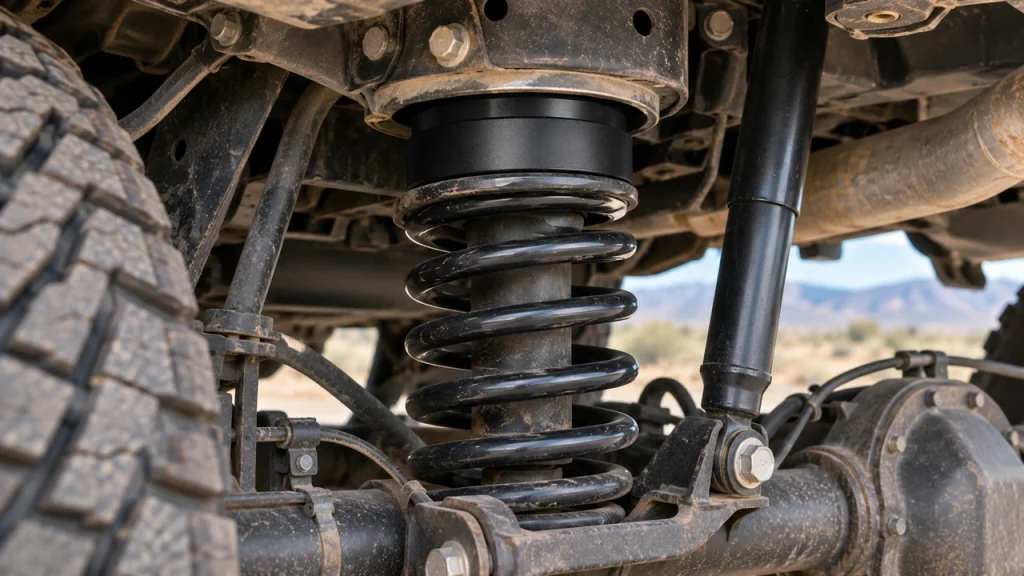
Look for an actual installation diagram showing the spring, spacer, isolator, and retaining hardware in order. A photo of a round spacer by itself does not answer where it belongs.
Don’t Substitute Twist-In Spring Boosters
A twist-in or screw-in booster placed between active spring coils is a different kind of device from a vehicle-specific spring-seat lift spacer. It changes the way adjacent coils can move and should not be treated as an equivalent way to achieve an engineered rear suspension lift. Keep those product categories separate when searching parts sites.
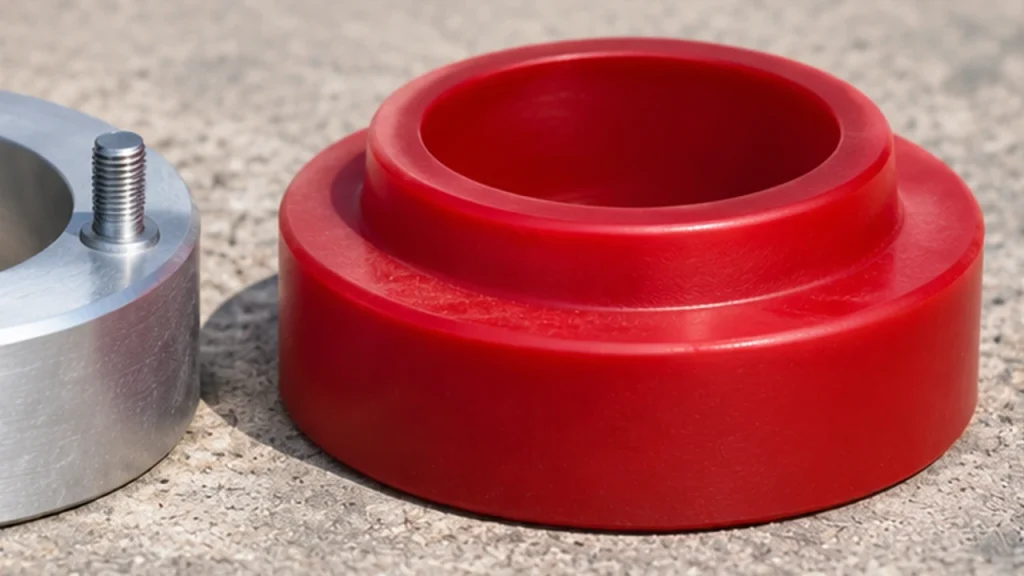
Aluminum, Steel, or Polyurethane Rear Spacers?
Material matters, but the correct shape and mounting method matter more. A well-designed polymer spacer for one vehicle can be appropriate, while a beautifully machined aluminum part for another vehicle can be completely wrong for your spring seat.
Here is the practical difference without assuming one material wins every application.
| Material | Why buyers choose it | What to verify |
|---|---|---|
| Machined aluminum | Rigid, corrosion-resistant construction; common in vehicle-specific lift kits | Grade, spring-seat fit, coating or interface, supplied hardware |
| Fabricated or machined steel | Strong construction for shaped or welded spacer assemblies | Corrosion protection, weld quality, exact mount geometry |
| Polyurethane | Can provide compliant contact in products engineered for the application | Load rating, material design, compression behavior, and manufacturer approval |
| Unspecified universal rubber/plastic | Often marketed as a low-cost solution | Avoid relying on appearance or “universal” claims for a suspension lift |
Color isn’t a specification. Check the part number, construction, load path, and instructions. Also distinguish the spacer from a thin rubber isolator or coil pad sold to stop squeaks: the latter may not be designed to add lift at all.
Will Rear Coil Spring Spacers Change Ride, Towing, or Safety?
A spacer generally leaves the original coil spring’s rate unchanged. That doesn’t mean the vehicle is guaranteed to ride exactly as before. Changing ride height also changes where the suspension operates within its available travel, and it may change link angles, axle position, and how often the bump stops engage.
A Taller Rear Stance Is Not Extra Payload Capacity
Rear spacers can make an unloaded truck sit higher and preserve some visible rake. They cannot increase the vehicle manufacturer’s GVWR, GAWR, or tow rating. Nor do they make a tired coil spring stronger. If the rear drops excessively with an approved load, inspect the springs, dampers, tires, and existing load-support equipment before deciding what needs repair or upgrading.
That is why “helps restore rake for hauling” in a parts description should not be read as “raises towing capacity.” A spacer changes height. A correctly engineered spring or load-support system addresses spring support under a load.
Check Shock Travel, Bump Stops, and Spring Retention
Raising the body relative to the rear axle can leave less shock extension available at the new resting position. At full droop, the spring still needs to remain properly seated; at full compression, the shock must not bottom out before the suspension reaches its intended stop. Neither condition can be checked from the advertised spacer height alone.
Depending on the lift and vehicle, the package may need longer or differently mounted shocks, sway-bar link correction, relocated brake-line brackets, or a change to the suspension’s compression limit. Don’t assume every one-inch lift needs all of them—or that a taller spacer needs none. Our separate guide explains the role of bump stops.
Axle Position, Alignment, and Headlights Can Change
On a rear solid axle located by a Panhard/track bar, a change in ride height can shift the axle slightly sideways through the bar’s arc. Independent rear suspension has its own geometry concerns. Check the manufacturer’s alignment and axle-position requirements rather than assuming a rear spacer is always an alignment-free modification.
After changing ride height, verify rear wheel alignment where applicable, steering behavior, and headlamp aim. For a broader explanation of which suspension jobs warrant checks, see our guide to alignment after suspension work.
What Should Come in a Rear Coil Spacer Kit?
“Pair included” is helpful, but not enough. A correct kit is the one that supplies the required parts for both spring seats and tells the installer whether anything else needs to be reused or changed. Product photos often show the spacer bodies more clearly than the hardware that makes them safe to mount.
Before checkout, confirm each of these details against the actual manufacturer part number:
- Application: exact model, generation, trim, drivetrain, rear spring type, and excluded suspension packages
- Height: advertised rear lift for that vehicle, not an estimated lift from spacer thickness
- Quantity: left and right rear spacers, with matched dimensions where required
- Mounting: correct upper or lower spring seat design, retaining features, and orientation
- Hardware: specified bolts, washers, brackets, or extensions if the kit design needs them
- Factory parts: clear instructions on retaining or replacing the original isolators
- Documentation: installation manual and guidance on shocks, bump stops, brake lines, alignment, and post-installation checks
If the purchase is part of a larger stance change, decide first whether you need a rear-only correction or a complete package. We’ve addressed that wider decision separately in our leveling kit vs. lift kit comparison.
Before Installation: Checks That Matter More Than a Quick How-To
Rear coil spacer installation is not the same on every truck or SUV. Some suspensions let a trained installer unload the separate rear spring with the axle supported; other arrangements require different disassembly and specialized equipment. Coil springs store dangerous energy, so the instructions for the exact vehicle and kit take precedence over a generic video.
Ask the installer to verify the seating and orientation of both springs, safe travel at full droop and compression, clearance around brake hoses and ABS wiring, the correct fastener torque, and whether any bonded-rubber pivots require final tightening at a specified suspension position. The vehicle must be supported mechanically—never just by a hydraulic jack.
Afterward, check that the spring seats remain properly located, that no line or hose becomes taut through travel, and that the rear sits at the intended height. If the steering, tracking, or ride feels different, stop and have the whole modification inspected before treating it as normal.
Rear Coil Spring Spacer FAQs
These are the questions worth resolving before buying a rear spacer rather than a replacement spring or a different lift component.
Do rear coil spring spacers go on top or bottom?
Either is possible, depending on the vehicle-specific kit. The correct location is determined by the spring-seat design and installation manual. Never choose the position based only on which side looks easier to reach.
Do rear coil spring spacers increase ground clearance?
They can raise the body and parts attached to the chassis, providing more clearance in those areas. They usually do not lift the differential housing of a solid rear axle farther off the road; tire radius largely determines that clearance. Check what part of the vehicle you actually need higher.
Can I stack two rear coil spring spacers?
Do not stack spacers unless the vehicle and kit manufacturers expressly approve that configuration. Stacking can affect spring location and suspension travel, and the resulting height may exceed what the original shocks and other components safely allow.
Will a rear coil spacer fix sagging springs?
It may make the vehicle sit higher, but it does not restore a weakened coil’s spring rate or correct a broken spring. If the rear has dropped over time, diagnose the cause before using a spacer to mask it. A constant heavy load may call for a different, properly rated suspension solution.
Are rear coil spring spacers the same as rear lift blocks?
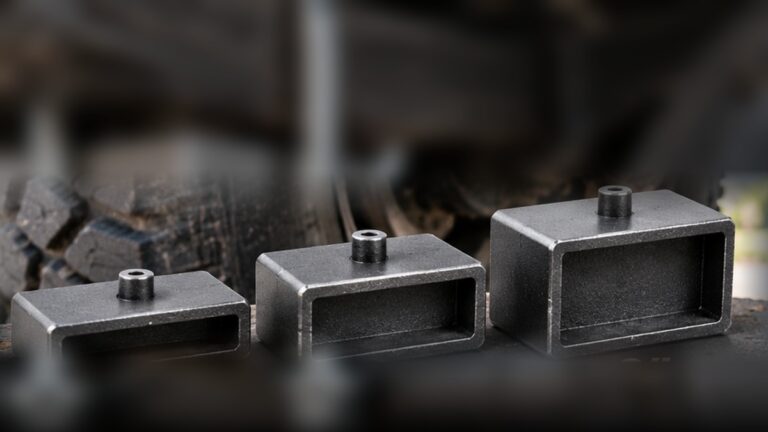
No. A rear coil spacer changes the spring-seat position on a coil-sprung suspension. A leaf-sprung axle has different load paths and mounting hardware. On suitable designs, its ride height may instead be changed using purpose-built rear lift blocks.
Are rear coil spring spacers safe for daily driving?
A correctly engineered, compatible kit can be suitable for daily use when installed and checked according to its instructions. Safety is not guaranteed by material or lift height alone. Improper spring seating, insufficient droop travel, damaged mounts, or an incompatible suspension package can make a seemingly small lift unsafe.