Ford Ranger Lift Kit: Heights, Tires & Fitment by Year
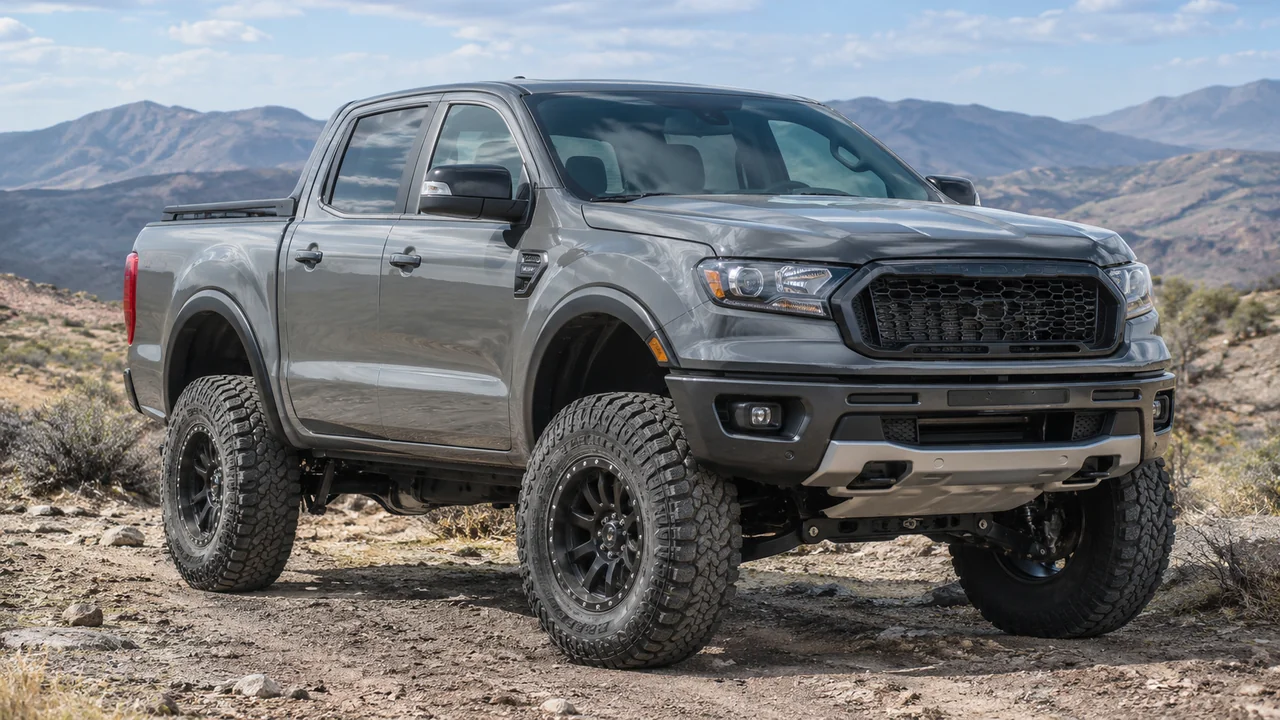
The right Ford Ranger lift kit depends first on which front suspension is under the truck. For a standard 2019-and-newer Ranger used mainly on the road, a modest 1–2.5-inch front level is usually enough to improve the stance; a matched 2–3.5-inch suspension package makes more sense when better damping or additional tire room is the goal. A 1999 or 2000 Ranger needs an entirely different shopping list. And a six-inch lift is not necessary just because you want tires that are called 33s.
Start with the model year, 2WD or 4WD, factory suspension and desired tire size. On the older trucks, the difference between a coil-spring front end and torsion bars can determine whether the parts even bolt on. On a newer truck, the steering knuckle, wheel offset and factory off-road package can be just as important. This guide covers North American Rangers sold in the U.S., rather than the international models that share the name.
Find Your Ranger Before You Pick a Lift Height
Use this chart to identify the type of kit to look for. Tire sizes are shopping targets, not promises that every tire of that diameter will clear. The advertised front lift is measured from the factory configuration specified by the kit manufacturer; rear lift can be a different number.
| Ranger application | Sensible starting point | Tire goal or reason |
|---|---|---|
| 1983–1997 2WD, Twin I-Beam | Mild coil/level package or 4-inch beam-correction system | Around 29–31 inches, depending on the original truck |
| 1983–1997 4WD, Twin Traction Beam | Approximately 1.5–2 inches for a mild build; 4 inches with proper beam geometry correction | 31-inch class on many four-inch systems |
| 1998–2011 2WD, coil-spring front end | Chassis-specific spindle or spring lift | Often 30–31 inches; larger combinations depend on the kit |
| 1998–2011 2WD torsion-bar or 4WD torsion-bar truck | Mild key-based level or separate drivetrain-specific full suspension kit | Roughly 31-inch class with a mild setup; selected tall 4WD kits list 33-inch class tires |
| 2019–2023 standard Ranger | 1–2.5-inch level or 2–3.5-inch matched system | 32–33-inch class with compatible wheels |
| 2024–2026 standard Ranger | Application-specific level or 2–3.5-inch system | Around 33 inches where the wheel and tire combination is approved |
| Modern standard 4WD, deliberately tall build | Full 6-inch system, if listed for the exact year | 35-inch class on selected systems |
| Tremor or Ranger Raptor | Retain the factory package or buy a specifically approved upgrade | Maintain the factory suspension’s useful travel and clearance |
There is a reason the older Rangers occupy several rows rather than one. A two-wheel-drive 2000 Ranger and a four-wheel-drive 2000 Ranger may look similar from across the parking lot, yet their lift hardware is fundamentally different. For those trucks, identifying the suspension is more useful than deciding between four and six inches first.
1983–1997 Rangers: Lifting a Beam Front Suspension
Ford’s compact Ranger used a beam-based front suspension during this period. Two-wheel-drive trucks use the Twin I-Beam arrangement, while four-wheel-drive versions use Twin Traction Beam (TTB), with front axle drive hardware incorporated into the beam layout. Both are different from the short-and-long-arm suspension on later Rangers.
Why a tall coil spring is not a complete lift
As the beams swing through their arcs, the wheel’s camber changes. Raising the truck substantially with springs alone can move the static alignment far from its intended range. A complete four-inch kit normally addresses beam pivot position, radius-arm geometry and steering, with suitable front springs and dampers. The exact bracket arrangement differs between 2WD and 4WD systems.
A modest height increase may be manageable within the available alignment adjustment. For a taller build, ask how the kit restores caster as well as camber. A truck can have acceptable-looking front tires when parked and still wander or wear them rapidly on the highway.
Four inches and 31s on an early Ranger
A four-inch TTB system can be a reasonable approach when the truck will spend time on rough roads or trails. Rough Country’s early 4WD catalog, for example, includes a four-inch system with a 31×10.50R15 tire option. Treat that as a starting combination for the applicable kit, not a blanket approval for a 33×12.50 tire on any early Ranger. Fender shape, actual wheel width and steering clearance still need checking.
Inspect the beam pivot bushings, radius-arm bushings, steering linkage and frame attachment points before ordering. On a truck from the 1980s or 1990s, a complete lift kit cannot compensate for heavily worn suspension or structural corrosion. If choosing between a used kit and a new one, verify that the old kit has every bracket and the correct instructions; fabricating a missing suspension bracket by guesswork is not a safe substitute.
1998–2011 Ford Ranger Lift Kits: The 2WD and 4×4 Split
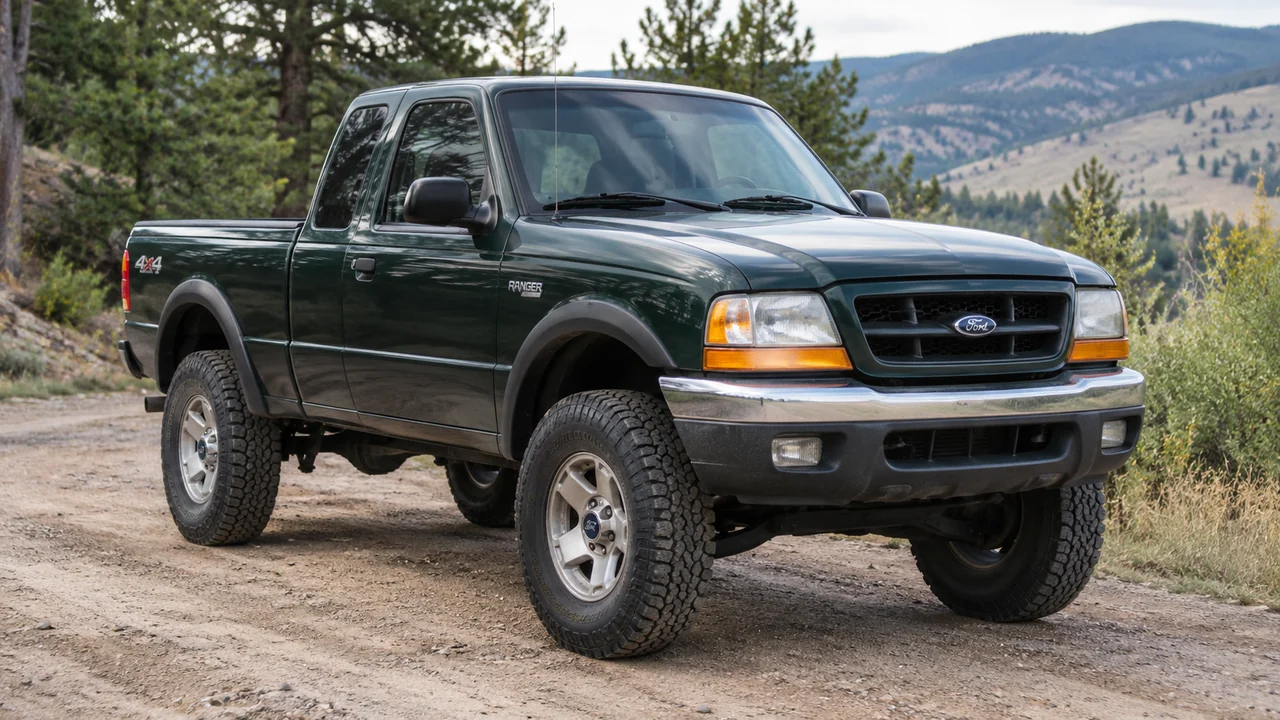
This is where a lot of Ranger lift-kit shopping goes wrong. The front suspension changed to independent short-and-long-arm (SLA) geometry for 1998. Standard 2WD trucks generally have coil springs, whereas 4×4 models and certain raised 2WD versions use longitudinal torsion bars. Do not assume that every 2WD Ranger is the coil-spring version.
1998, 1999 and 2000 Ranger 2WD: check the spindle application
If you have a conventional coil-spring 2WD truck from these years, a lift spindle is one way to gain height without using a much taller front spring. The spindle changes the relationship between the wheel hub and the control-arm mounting points. It still has to fit the correct ball joints, wheel bearings, brakes and steering arrangement. It is not simply a universal four-inch spacer.
MaxTrac’s 703030A spindle application is a useful example: it is intended for the 1998–2000 coil-spring 2WD Ranger. The company catalogs separate spindle hardware for later coil-spring trucks. That distinction is worth checking even when a used kit is described as fitting all 1998–2011 Rangers. If your 2000 Ranger is a high-riding special configuration or has been modified, verify the actual hardware before ordering.
2001–2009 2WD: coil models versus Edge and Sport
A Ranger Edge, or a later Sport with the raised 2WD suspension, can have torsion bars despite having no driven front axle. Look for the long bars that run rearward from the lower control arms; a conventional coil-spring truck will instead have visible front coil springs. The badge alone is not reliable if previous owners have swapped parts or the truck has an unusual option package.
MaxTrac illustrates the distinction with K883042B, its four-inch package for selected 2001–2009 coil-spring 2WD trucks, and K883042C, its corresponding torsion-bar application. Those part numbers are not interchangeable. In particular, the upper ball-joint fit differs. Some spindle listings end at 2009 even though North American Ranger production continued through the 2011 model year. A 2010 or 2011 owner should obtain an expressly approved application rather than extrapolate those earlier listings.
1998–2011 4WD: torsion keys or a full suspension lift?
For a truck that needs only a small front-height correction, a torsion-key package may be the simplest option. Its effect is to change the resting suspension position, not to add an equivalent amount of wheel travel. The amount of droop left after adjustment, shock length, ball-joint angle and front CV axle angle all deserve attention. See our torsion bar key fitment guide for the mechanics of the adjustment.
If you want substantially more height, look for a complete 4WD system that addresses the front differential, control-arm positions and steering. A spindle intended for a 2WD truck does not solve the 4WD hub and CV-shaft requirements. A large torsion adjustment also cannot substitute for the geometry corrections provided by a full system.
The overlooked parts on a 5-inch 4×4 lift
A good example of why a year-range filter is insufficient is the Rough Country 43130 five-inch system for 1998–2011 4WD Rangers. Its application notes contain restrictions that matter more to the purchase than the advertised height. Check these before committing to a similar kit:
- Wheel diameter: the system calls for wheels of at least 17 inches, so a set of 15-inch Ranger trail wheels cannot automatically be reused.
- Front brakes: trucks equipped with the smaller 11.25-inch rotor arrangement require the specified brake upgrade for this particular system.
- Hub arrangement: certain pulse-vacuum-hub (PVH) configurations require a conversion to compatible manual hubs.
- Rear axle: applications with the 31-spline rear axle are excluded from this particular listing.
- Driveline and tools: the supplier recommends an upgraded front driveshaft and specifies a suitable torsion-bar unloading tool.
These are product-specific conditions, not universal rules for every older Ranger. The same listing includes a 285/70R17 on a 17×9 wheel with −12 mm offset as a tire-and-wheel option. That is about a 32.7-inch nominal tire, and the wheel position is an essential part of the recommendation. If a seller offers a five-inch kit without a complete hardware list or fitment notes, establish those details before purchasing.
2008–2011 trucks, FX4 and rear axle differences
Ride height and factory equipment can vary between early and late examples of this chassis. In particular, a key adjustment that produces a certain amount of lift on one Ranger may produce a different result on another with different factory indexing. The nominal lift of an aftermarket key is not a measurement of your individual truck. Measure both front corners before making a decision.
On an FX4 or another truck with special axle equipment, confirm which rear axle and spring arrangement are actually installed. Larger tires make the effective gearing taller, reducing wheel torque for a given engine torque and gear ratio, which is especially relevant on the older four-cylinder and V6 trucks. The fact that a wheel clears the fender does not settle whether the truck will be pleasant to drive on a long highway grade.
2019–2023: A Modern Ranger Has Different Limits
The Ranger returned to U.S. dealerships for the 2019 model year after the 2012–2018 model-year gap in the domestic market. The returning truck has a coilover-style front spring-and-damper assembly and a leaf-sprung rear axle. Torsion keys and the earlier 2WD lift spindles are no longer the appropriate starting point. International Ranger listings from the intervening years should not be treated as U.S. fitment proof.
Leveling a stock XL, XLT or Lariat
A modest front level is a reasonable choice for a daily driver with healthy original dampers. It reduces factory rake and can improve the clearance available to a moderately larger tire, without committing the owner to replacement knuckles and crossmembers. If the truck frequently carries a trailer or bed load, leaving some rear-high rake can be preferable to a perfectly level empty stance.
A strut spacer and a replacement coilover assembly can achieve similar static heights but provide very different damping and travel characteristics. A spacer does not improve the valving of the original shock. If the factory dampers are worn or the truck is intended for repeated rough-road driving, compare a matched spring-and-damper package with the full installed price of the spacer approach.
The 3.5-inch kit and the 2020 steering-knuckle change
One detail that can catch out a modern Ranger owner is the steering-knuckle material. From 2020 onward, the relevant production trucks can have cast steel or aluminum knuckles with different ball-joint fitment. Buying an upper-control-arm package based solely on the year can therefore result in the wrong parts.
The BDS 3.5-inch 2019–2023 4WD system asks buyers to identify the knuckle version. It combines front spacer/preload hardware, revised upper control arms and differential relocation, with rear shackles and matching rear dampers. The published wheel recommendations include 285/65R18 tires on 18×9 wheels with 5.75 inches of backspacing; trimming may be needed. The system also excludes the Tremor because of its preload hardware fitment. These are exactly the details that a generic three-inch lift recommendation leaves out.
FX4, Tremor and Ford Performance suspension packages
FX4 is not another name for Tremor. The latter, offered on selected 2021–2023 trucks, uses factory FOX dampers and different rear leaf-spring equipment, among other off-road changes. A normal Ranger spacer or preload collar can therefore be the wrong component even if it bolts onto a conventional FX4 truck of the same year.
The same care applies to a truck equipped with one of Ford Performance’s suspension packages. Ask the kit maker whether the existing springs and dampers are supported rather than stacking a second height change onto the first. For an overland Ranger with a permanent bumper, winch, rack or camping equipment, consider springs matched to the actual constant load. Increasing height without accounting for that weight can leave the loaded truck sagging or make its unloaded ride unnecessarily harsh.
2024 and Newer Rangers: Do Not Carry Over the Old Shopping Cart
The next-generation U.S. Ranger arrived for 2024. Even where a small leveling product is listed across both modern generations, that is not evidence that all suspension components interchange. The larger lift systems have their own applications, and the Raptor has a different rear suspension entirely. Examples below use published 2024–2026 applications, with narrower ranges where the product requires them.
Standard 2WD and 4WD trucks
For a 2024 or 2025 Ford Ranger lift kit, confirm the drive type, engine, factory suspension and any suspension-linked sensors. The 2.3L and 2.7L EcoBoost engines place different loads on the front suspension. A spring or coilover application should specify which combination it supports, particularly when additional front bumper weight will be fitted. Do not assume a 4WD strut package also fits a rear-wheel-drive truck.
The height or load sensor on the upper control arm
Rough Country’s 51144-series 3.5-inch 4WD system for 2024–2026 provides a specific example. Its catalog excludes trucks with a height/load sensor linked to the upper control arm, as well as Raptor models. The wheel chart lists a 285/65R18 on an 18×8.5 wheel at approximately zero offset. Before buying a replacement-arm system, check whether your truck actually has the linkage and ask the manufacturer about that equipment. Do not simply remove or disable a factory sensor to make an incompatible kit fit.
Ranger Raptor: keep the suspension working as a system
The U.S. Ranger Raptor arrived with 33-inch-class tires, electronically controlled 2.5-inch FOX Live Valve dampers and a coil-sprung rear axle located by trailing arms and a Watts linkage. These features are detailed in Ford’s official Ranger Raptor specifications. The rear of a regular Ranger uses leaf springs, so ordinary rear blocks and shackles are not Raptor lift hardware.
Some Raptor-specific systems retain the original electronically controlled dampers while changing the ride height. Others represent a more comprehensive suspension conversion. Before choosing either, establish how the parts affect available droop, compression travel, electronic damping operation and bump-stop engagement. If your only reason for lifting the Raptor is to run 33-inch tires, it already comes equipped for that size. A larger tire goal should drive the decision, not the standard Ranger’s usual lift-height chart.
Is a 2-, 3-, 4- or 6-Inch Ranger Lift Worth Buying?
Four inches on a 1999 2WD Ranger is not the same project as four inches on a modern 4WD. The older truck might use a spindle arrangement; the newer one may need considerably more geometry hardware. Compare the following approaches in terms of the parts they replace and what they allow you to keep.
Up to about 2.5 inches: the everyday truck
On modern standard Rangers, a front level or mild matched suspension system is usually the lower-cost choice for owners who want a slightly taller stance. On an older torsion-bar truck, even a smaller change should be judged against available front travel and factory service limits. There is no reason to use a taller advertised adjustment if the truck only needs an inch to meet its intended stance. For the underlying distinction, our leveling kit versus lift kit comparison covers the general hardware tradeoffs.
Three to four inches: look beyond the number on the box
A full three- or 3.5-inch modern system can provide revised upper control arms and driveline corrections not included in a simple spacer package. Four-inch systems for older beam or spindle applications address a very different set of geometry requirements. Read the parts list rather than assuming these kits are essentially interchangeable ways of achieving the same fender height.
If the main goal is more control on washboard roads rather than simply a higher truck, a well-matched shock and spring package at a smaller height can be a better use of the budget. Ask about the supported accessory weight and travel limits before paying extra for a larger lift figure.
Five to six inches: plan the complete wheel and driveline package
A tall modern 4WD system typically requires substantial front suspension relocation and replacement steering hardware. For example, Rough Country’s 46830 six-inch system is specifically listed for 2024–2025 4WD Rangers and excludes the Raptor. Its published wheel combinations include a 35×12.50R18 with an 18×8.5 wheel around zero offset. That does not establish fitment for a 2026 truck or a different six-inch product. Confirm the current application before ordering.
A tall lift may make sense for a dedicated build, but a six-inch system can also rule out wheels you already own, increase installation labor and complicate the use of a normal garage or trailer. Replacement crossmembers can remain relatively low even after raising the frame. If the reason for the extra height is ground clearance, check where the lowest suspension and differential components will actually sit after the work.
Which Tires Will Fit a Lifted Ford Ranger?
The label on a tire is only a starting point. A metric tire close to 33 inches may be easier to package than a wide flotation-size tire of the same marketed diameter. The examples below show calculated nominal dimensions; check the actual manufacturer’s mounted dimensions and measuring-rim specifications before buying.
| Tire size | Nominal diameter | Nominal section width |
|---|---|---|
| 235/75R15 | 28.9 in | 9.3 in |
| 265/75R15 | 30.6 in | 10.4 in |
| 265/70R17 | 31.6 in | 10.4 in |
| 285/70R17 | 32.7 in | 11.2 in |
| 285/65R18 | 32.6 in | 11.2 in |
| 305/70R17 | 33.8 in | 12.0 in |
| 33×12.50R17 | 33 in (labeled) | 12.5 in |
| 35×12.50R18 | 35 in (labeled) | 12.5 in |
31-inch tires on an older Ranger
For many compact Rangers, a 31-inch-class tire is already a meaningful increase in size. Some four-wheel-drive factory configurations began with relatively tall tires, whereas a low 2WD truck with smaller factory wheels may need more work. Start by reading the door label and identifying the existing wheel offset, then compare the chosen tire with the specific lift maker’s tested setup. Do not use the front fender gap alone to decide whether the wheel will clear while turning.
33-inch tires on a 2019-and-newer Ranger
A 285/70R17 or 285/65R18 is near the 33-inch class and is a common target for a modern lifted Ranger. Both are narrower nominally than a 33×12.50 flotation tire. The two approaches are not interchangeable when a tire is close to a steering knuckle or the rear edge of the front wheel opening. Some combinations are limited by the factory wheel position even when the lift supplies additional vertical clearance.
35-inch tires and the front intrusion beams
A full six-inch modern system may support a 35-inch tire with the specified aftermarket wheel, but it is not automatically a no-rub setup. On 2019–2023 trucks, the front wheel opening also contains structural intrusion-beam hardware associated with crash protection. A wide tire can interfere with this area as the steering turns. Even a taller suspension may leave limited clearance where the tire swings toward a beam or the liner.
Do not treat cutting or removing crash-related structural members as routine fender trimming. Choose a tire and wheel combination that preserves required safety equipment, and seek manufacturer-approved engineering guidance if an alternative structural component is proposed. A kit supplier’s tire-clearance claim is not a crash-safety certification. If the desired tire does not fit without compromising that hardware, a smaller or narrower tire is the more sensible purchase.
Bolt pattern and wheel offset change the whole calculation
North American compact Rangers through 2011 generally use a five-lug 5×114.3 mm (5×4.5-inch) bolt pattern. The 2019-and-newer U.S. trucks use six-lug 6×139.7 mm (6×5.5-inch) wheels. Check the hub bore, lug hardware, brake clearance, load rating and actual offset as well. A modern Ranger wheel is not a direct replacement for a classic five-lug Ranger wheel, and wheels that share the six-lug pattern still need individual fitment checks.
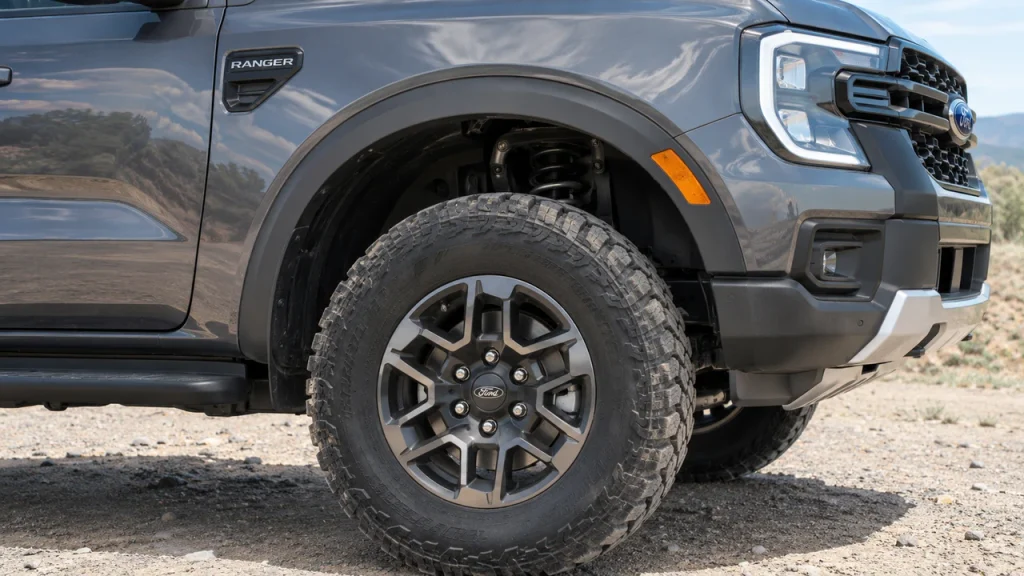
A more outward wheel position can create additional clearance at the upper control arm or steering knuckle while making clearance at the fender or bumper worse. Our wheel offset and backspacing guide explains how to compare the dimensions in a kit maker’s wheel chart. Remember that an advertised wheel diameter alone tells you nothing about the location of its inner edge or the shape of its spokes.
What the Kit Price Leaves Out
A small spacer package for a modern Ranger can cost under $150 in parts, while complete spindle, beam or crossmember kits can range from several hundred dollars to well over $1,000. Premium spring-and-damper systems can cost considerably more. These are broad U.S. shopping ranges, not an installed price or a quotation for a particular model year.
Compare brands by the work they solve
Rough Country offers coverage across several eras of the Ranger, MaxTrac is particularly relevant when shopping for older 2WD spindle applications, and BDS offers modern systems with geometry corrections. Eibach, FOX, ICON and Old Man Emu are worth considering when the goal is a suspension matched to trail use and constant accessory weight. The useful comparison is between specific applications, not a blanket ranking of brand names.
For an older truck, get a price for wear repairs, brake or hub changes and driveshaft work if the kit calls for them. For a newer truck, account for the cost of mandatory wheels, suitable tires, alignment and any necessary calibration. An inexpensive kit that makes your existing wheels unusable may cost more to finish than a higher-priced package that retains them. Our lift kit installation cost guide covers general labor and budget considerations; your Ranger estimate should include the actual required parts.
Get these checks in writing before ordering
A useful quote identifies the model year, drive type, engine, factory suspension package, actual wheel dimensions, desired tire and whether the truck has special brakes, hubs, sensors or axle equipment. On an older 4WD Ranger, ask whether the system covers the original driveshaft and axle configuration. On a 2020–2023 truck, verify the steering-knuckle option if required. On a 2024-and-newer truck, check sensor compatibility. Include the expected rear lift and any permanent cargo weight so the supplier can recommend the right rear components.
What to verify when the work is finished
The installer should check tire clearance at both steering limits and through the relevant suspension travel, as well as brake hose and ABS-wire routing, shock travel and front CV operation on 4WD trucks. Obtain an alignment report and follow the kit’s torque and reinspection schedule. Torsion-bar unloading and spring disassembly require appropriate tools and service procedures; improvised clamps are not an acceptable substitute.
Check headlight aim and whether the vehicle manufacturer requires recalibration of speed-related or driver-assistance systems after the changes. A lift does not increase Ford’s published payload or towing ratings. If the truck pulls, vibrates, repeatedly tops out or rubs a tire after the installation, have it inspected rather than accepting those symptoms as the price of owning a lifted Ranger.
Ford Ranger Lift Kit FAQs
These questions cover the year and drivetrain combinations that tend to cause the most confusion. Use the answer to narrow the shopping list, then verify the exact part number and its installation notes for your truck.
What lift kit fits a 2000 Ford Ranger 2WD?
A conventional coil-spring 2000 Ranger can use a kit expressly made for that front end, such as an approved 1998–2000 spindle application. A torsion-bar truck requires different hardware. Confirm the suspension and front brake/hub arrangement first. Do not buy a later spindle solely because its description includes the word Ranger.
Can I lift a 1999 Ford Ranger 4×4 without a complete kit?
A small torsion-key level may be suitable if the truck is healthy and the remaining droop, alignment and CV angles are within the allowed range. For a substantially taller stance, a complete 4WD suspension lift is the better approach. The parts required for a 1999 4×4 differ from those used on a conventional 2WD model of the same year.
Will a 2001 or 2002 Ranger Edge use a standard 2WD lift spindle?
Not automatically. A raised 2WD Edge can have torsion bars instead of the standard coil-spring arrangement. Use a spindle or suspension kit approved for the torsion-bar configuration and the actual model year. The ball-joint fitment can differ, even when the trucks have similar-looking front suspension arms.
Is there a difference between a 2011 Ranger and a 2019 Ranger lift kit?
Yes. The 2011 U.S. compact Ranger and the 2019 midsize Ranger use different chassis, front spring arrangements and wheel bolt patterns. A kit for an international-market Ranger from 2012–2018 does not establish North American fitment either. Shop by the actual U.S. vehicle generation.
Can a 2-inch leveling kit clear 33s on a modern Ranger?
Sometimes, with a narrower 33-inch-class tire and a wheel combination that the kit maker supports. A 285/70R17 and a wide 33×12.50 tire can require different clearance even at the same nominal height. Check the wheel position, steering-knuckle clearance and front wheel opening. Do not assume the result applies to every 2WD, 4WD or factory off-road package.
How much lift does a Ford Ranger need for 35s?
Selected six-inch modern 4WD systems list 35-inch tire combinations. The exact wheel, tire width, body clearance and model year are essential conditions, not optional details. A smaller lift may be appropriate on a differently configured truck, such as a Raptor-specific build, but there is no universal height that guarantees 35-inch tires will fit all Rangers.
Can I use a regular Ranger lift kit on a Ranger Raptor?
No, unless the manufacturer explicitly approves the Raptor application. Its FOX Live Valve dampers and coil-sprung Watts-link rear suspension require different hardware from the ordinary leaf-sprung Ranger. Use a system that specifies how the factory damping and suspension travel are retained or replaced.
Can I keep the stock wheels after lifting my Ranger?
It depends on the system. Mild packages may retain stock wheels, whereas taller kits can require a larger diameter, different backspacing or additional brake and knuckle clearance. Verify the exact combination with the kit manufacturer before ordering tires, particularly if you own an early Ranger with 15-inch wheels or a modern truck with factory wheels you want to retain.