Lift Kit Installation Cost: Labor, Parts & Alignment
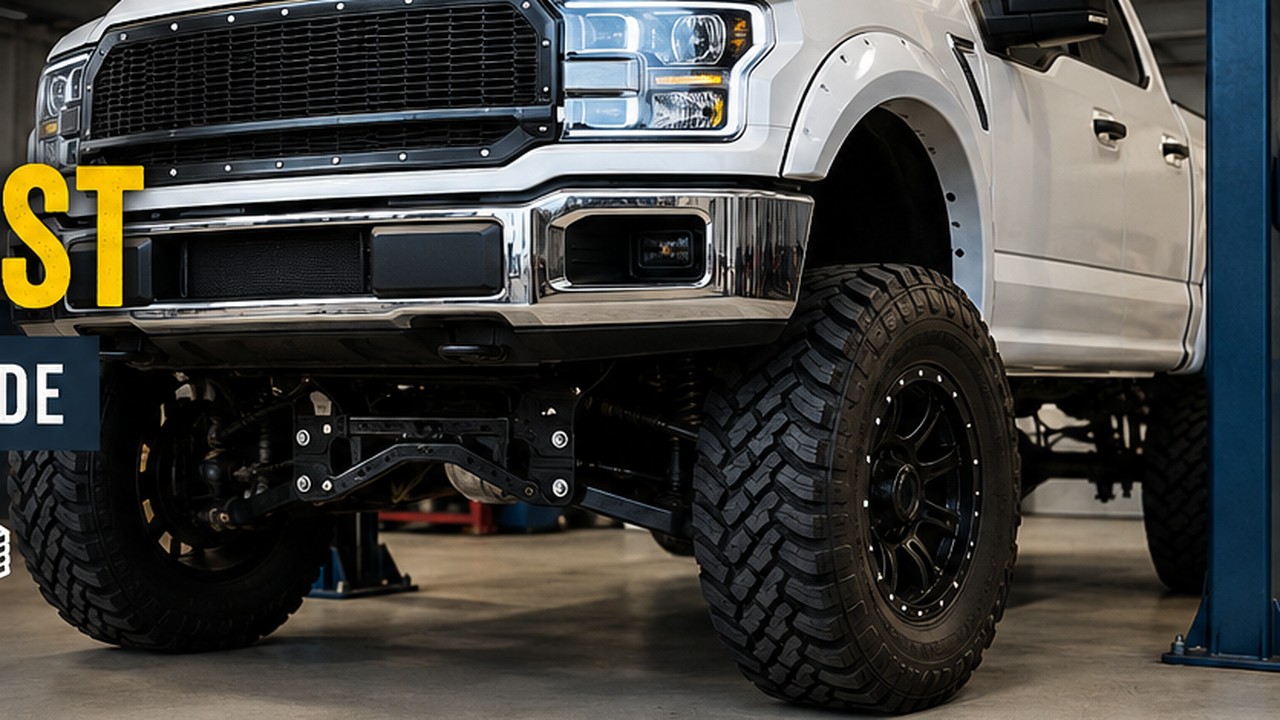
Lift kit installation can cost anywhere from about $300 for a simple spacer setup to $5,000 or more for a complete suspension lift with control arms, shocks and geometry corrections. For a common professionally installed 2- to 3-inch truck or SUV lift, a realistic total budget is often around $1,000 to $3,000 including the kit, labor and alignment.
The number printed on the lift-kit box is rarely the final project price. Labor, alignment, worn factory parts, longer shocks, control arms, brake-line changes and driveline corrections can easily cost as much as the original kit.
What Lift Kit Installation Really Costs
| Lift Setup | Typical Installed Planning Range |
|---|---|
| Basic spacer lift, around 2 inches | About $300–$850 |
| 2–3 inch spring-and-shock suspension lift | About $900–$3,000 |
| 3.5–4 inch lift with control arms | About $2,400–$5,500+ |
| 4+ inch or long-arm system | About $4,000–$8,000+ |
| Alignment after suspension lift | Usually additional unless included |
| Wheels and larger tires | Separate from the lift itself |
Those ranges are useful for planning, not fixed menu prices. A 3-inch lift on one truck may be a relatively simple spring-and-shock job, while another vehicle may require new upper control arms, differential corrections or substantially more disassembly to achieve the same advertised height.
The Kit Price Is Only the Starting Point
A $600 lift kit does not necessarily produce a $600 modification.
Professional installation commonly adds several hundred dollars for a mild lift and can add $1,000 to $2,000 or more when the suspension has to be substantially rebuilt around the new ride height.
Then there are costs that may not appear in the product listing:
- wheel alignment
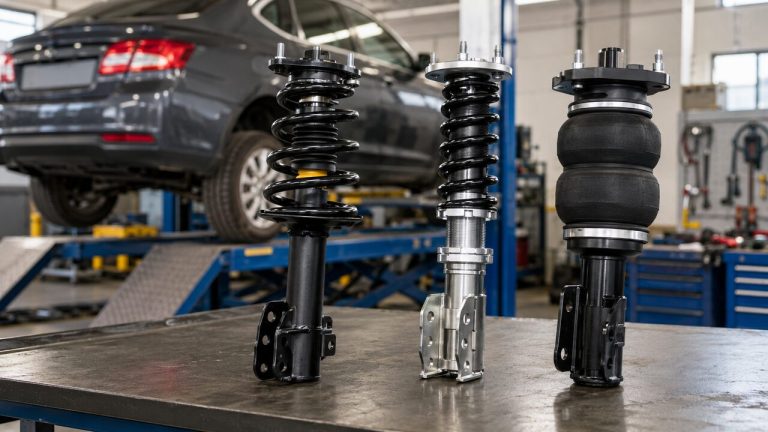
- replacement shocks or struts
- upper or lower control arms
- track bar or track bar bracket corrections on solid-axle vehicles
- extended brake lines or relocation brackets
- ABS-wire extensions or rerouting
- driveshaft or CV-angle corrections
- new U-bolts or suspension hardware
- larger wheels and tires
The taller and more complete the lift, the more likely these supporting components become part of the budget.
A 2-Inch Lift Is Usually the Cheapest Place to Start
A mild 2-inch lift often stays within the operating range of more factory suspension components, which keeps both parts and labor costs down.
A basic spacer system may cost only a few hundred dollars installed. A better spring-and-shock package costs more but replaces rather than simply repositions some of the components controlling ride height and suspension travel.
Even at this height, the vehicle should not be treated as though nothing changed. Steering and suspension geometry should still be checked, and factory shocks need enough travel for the new suspension position.
Why 3- and 4-Inch Lifts Get Expensive Fast
Increasing ride height does more than create extra space between the body and the ground.
Control arms operate at different angles. CV axles and driveshafts may run at steeper angles. Steering geometry changes. Brake hoses and ABS wiring need enough slack through full suspension travel.
That is why many 3.5- to 4-inch kits include significantly more hardware than a basic spacer lift. You may be buying springs, shocks, control arms, brackets, bump-stop extensions and geometry corrections rather than four simple spacers.
Labor rises at the same time because each additional component has to be removed, installed, torqued and checked.
A 6-Inch Lift Is a Project, Not Just a Taller Spring
At larger lift heights, comparing only the kit price becomes especially misleading.
A 6-inch suspension lift may require major changes to control-arm geometry, crossmembers, steering components, differential position or driveline angles depending on the vehicle.
The installation can also expose the limitations of factory wheels, tires, gearing and braking. Many owners choose a large lift specifically to fit larger tires, which creates another substantial expense that is not technically part of the lift-kit installation.
If the real goal is off-road performance rather than height alone, our guide to off-road suspension types explains the broader differences between common suspension approaches.
Suspension Lift vs. Body Lift: Labor Is Very Different
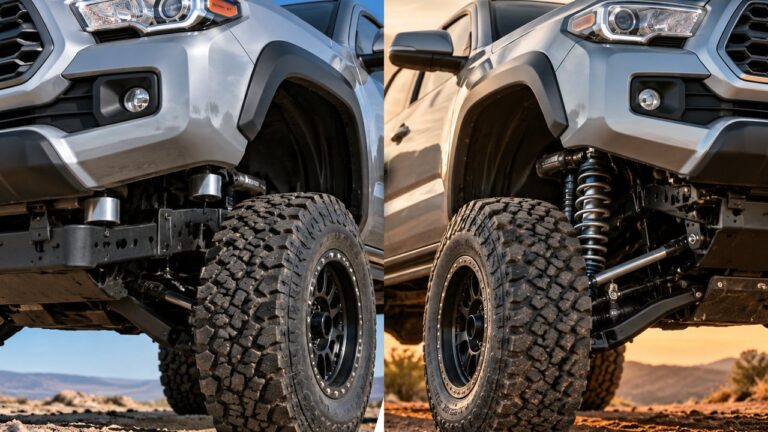
A suspension lift changes the position or components of the suspension itself. Springs, shocks, control arms, brackets or other wheel-locating parts may be altered. If you are still deciding which approach fits your truck, our body lift vs suspension lift comparison explains the differences in clearance, ride, geometry and off-road use.
A body lift is different. On a body-on-frame truck or SUV, spacers raise the body farther above the frame while leaving the basic suspension ride height largely unchanged.
That means a body lift does not create the same suspension-geometry changes as a true suspension lift, but installation can still involve steering-shaft clearance, radiator or fan relationships, bumper brackets, wiring, hoses and other connections between the body and chassis.
A body lift also does not provide the same increase in axle or frame ground clearance as a suspension-and-tire combination. It mainly creates additional body-to-frame clearance, often to help fit larger tires.
Leveling Kit Installation Is a Smaller Modification
A leveling kit typically raises the front of a truck to reduce the factory nose-down rake rather than lifting the entire vehicle equally.
Because the modification is normally smaller, both parts and labor can be substantially cheaper than a complete suspension lift.
However, a front leveling kit can still change control-arm and steering geometry. It should not be treated as though it has no effect simply because the rear suspension remains untouched.
This article does not treat “leveling kit installation cost” as another name for full lift-kit installation; it is a related but smaller modification with its own parts and geometry considerations.
Alignment Should Be in the Budget From the Beginning
A suspension lift changes the operating position of steering and suspension components, so a professional alignment should normally be planned immediately after installation.
Depending on the suspension, the technician may need to correct toe, camber or caster. Larger lifts can also require aftermarket control arms, cam bolts or other components before the desired alignment can be achieved.
If you want to budget that service separately, our wheel alignment cost guide compares typical two-wheel and four-wheel pricing.
A pure body lift normally does not alter wheel alignment geometry by itself because the suspension remains in its original relationship to the frame. That is an important distinction from a suspension or front leveling lift.
Why Control Arms Start Appearing on Bigger-Lift Quotes
Factory control arms are designed around a certain ride-height range.
As the suspension is lifted, the arm angles change and factory adjustment may no longer provide enough range to restore acceptable caster or camber.
Aftermarket arms can correct geometry and may also provide better joint articulation or clearance, but they add both parts cost and installation time.
This is why two kits advertising the same 3.5-inch lift can have dramatically different prices. One may contain mainly springs and shocks, while another includes adjustable control arms and correction hardware intended to make the entire suspension work properly at the new height.
Driveshaft and CV Angles Can Become the Hidden Expense
Lifting a vehicle changes the angle between drivetrain components.
On independent front suspension, CV axles can operate at a steeper angle. On solid-axle and traditional driveshaft layouts, universal-joint and driveshaft angles also change.
Mild lifts may remain within an acceptable range. Larger lifts can require differential-drop hardware, transfer-case corrections, new driveshafts or other measures to control vibration and component wear.
If a kit manufacturer specifies a driveline correction for your exact vehicle and lift height, that expense belongs in the project budget rather than being treated as an optional surprise afterward.
Brake Lines and ABS Wires Need Enough Travel
Suspension does not remain stationary just because the vehicle is sitting taller in the driveway.
At full droop, the axle or wheel assembly moves farther from the body and frame. Brake hoses and ABS sensor wiring therefore need enough length and correct routing throughout the full suspension range.
Some kits include relocation brackets or longer lines. Others assume the factory parts remain suitable at that particular height.
This should be checked during installation rather than discovered when a hose becomes tight off-road.
Rust Can Add Hours to the Labor Bill
A lift kit installed on a nearly new truck and the same kit installed on a fifteen-year-old rust-belt truck are not equivalent jobs.
Suspension bolts can seize inside bushings, shock hardware can corrode and factory fasteners may need to be cut rather than simply removed.
A shop quoting an older vehicle may therefore leave room for additional labor if removal does not go according to the clean-shop-manual procedure.
Replacing obviously worn factory components while the suspension is already apart can make sense, but those repairs should be identified separately from the cost of the lift kit itself.
Larger Tires Can Cost More Than the Lift
A lift is often purchased specifically to create room for a larger tire.
The suspension work may cost $1,500, while a new set of wheels and all-terrain or mud-terrain tires can add another $1,500 to $4,000 depending on size and brand.
Larger tires can also change acceleration, braking, effective gearing, fuel economy and steering feel. At some sizes, owners eventually consider axle regearing as well.
So when budgeting a lift project, decide whether the goal is simply more ride height or a complete wheel-and-tire transformation. They are very different budgets.
A Lift Kit Does Not Increase the Truck’s Payload Rating
A taller suspension or heavier-duty-looking component does not automatically raise the manufacturer’s payload, axle or gross vehicle weight ratings.
Those limits depend on far more than ride height, including the frame, axles, brakes, wheels and tires.
If the real objective is improving towing behavior rather than ground clearance, the best solution may not be a conventional lift at all. For example, our OBS F-350 suspension upgrades guide shows how vehicle use should drive the choice of suspension modification.
Vehicle-Specific Kits Matter More Than Lift Height Alone
A 4-inch kit is not a universal collection of parts that fits every truck the same way.
Suspension architecture, axle type, drivetrain, model year and factory options determine what the kit must change. This is why shopping only by advertised lift height is risky.
Our Ford Excursion lift kit guide, for example, deals with kit sizes and choices for one specific platform rather than treating every truck as interchangeable.
The generic cost ranges on this page are therefore most useful before you narrow the project to a vehicle-specific parts list.
How Long Does Lift Kit Installation Take?
A simple spacer lift may take a professional shop roughly two to three hours.
A spring-and-shock kit commonly moves into the four-to-six-hour range, while a larger system with control arms can take most of a working day or longer.
Long-arm systems and heavily corroded vehicles can extend well beyond that.
Installation time also does not necessarily include the alignment appointment, test drive, retorque inspection or additional work discovered during disassembly.
Can You Install a Lift Kit Yourself?
A mild lift can be a realistic DIY project for an experienced owner with proper lifting equipment and suspension tools. A major suspension lift is a much larger commitment.
The vehicle may need to be supported while axles or suspension arms move independently. Springs can store significant energy, bolts require precise torque and steering or brake components may need to be repositioned.
Even a successful home installation still needs appropriate alignment afterward when suspension geometry has changed.
Before choosing DIY solely to eliminate the labor bill, compare that saving with tool costs, workspace, experience and the consequences of discovering halfway through the job that a critical factory bolt is seized.
Cheap Kit vs. Complete Kit
Two products promising the same lift height can differ by thousands of dollars because the expensive kit may include components the cheaper kit expects you to reuse or buy separately.
Compare the actual parts list rather than only the advertised height:
- springs or spacers
- shocks or struts
- control arms
- track bar corrections
- bump-stop extensions
- brake-line hardware
- driveline correction components
- required cutting or drilling
A more expensive kit that already solves known geometry problems can sometimes produce a cheaper and better final installation than starting with a bare-bones kit and adding corrections one at a time.
Lift Kit Installation Cost FAQ
How much does lift kit installation cost?
A simple spacer lift can cost roughly $300 to $850 installed, while a complete 2- to 3-inch suspension lift commonly totals around $1,000 to $3,000. Larger systems with control arms and geometry corrections can cost $2,500 to $5,000 or more.
How much is labor to install a lift kit?
Labor can be around $150 to $500 for a basic spacer lift, roughly $400 to $1,000 for a moderate spring-and-shock lift, and $800 to $2,000 or more for larger systems with control arms and additional components.
How much does a 2-inch lift kit cost to install?
A professionally installed 2-inch spacer lift can fall around $300 to $850 including parts and alignment. A more complete spring-and-shock setup can push the total closer to $500 to $1,000 or more.
How much does a 4-inch lift kit cost to install?
A complete 3.5- to 4-inch suspension lift with control arms can commonly total around $2,400 to $5,500 or more once parts, professional labor and alignment are included.
How much does a 6-inch lift kit cost to install?
A 6-inch lift can easily become a several-thousand-dollar project. The final price depends heavily on the vehicle and whether the kit requires crossmembers, control arms, steering corrections, driveshaft work or other supporting modifications.
Do you need an alignment after installing a lift kit?
Yes for a suspension lift or leveling kit that changes steering and suspension geometry. A pure body lift does not normally alter alignment angles by itself because the suspension remains attached to the frame in its original position.
Is a leveling kit cheaper to install than a lift kit?
Usually. A basic front leveling kit changes fewer components and normally requires less labor than a full suspension lift, although alignment should still be planned afterward.
Does a lift kit include new shocks?
Some do and some do not. Mild spacer kits may reuse the factory shocks, while complete suspension systems commonly include longer or lift-specific shocks. Check the exact parts list rather than assuming the advertised lift height tells you what is included.
Budget the Finished Truck, Not the Box on the Floor
A lift kit can look inexpensive until the rest of the project is added. Labor, alignment, supporting suspension parts and larger tires can easily turn a $500 parts purchase into a $2,000 or $3,000 modification.
The most useful budget starts with the exact vehicle, desired lift height and intended use, then includes every part required to keep the suspension, steering, brakes and driveline working correctly at that height. The cheapest kit is only a bargain if you do not have to spend the next six months correcting everything it left out.