Track Bar Replacement Cost: Parts, Labor & Jeep Prices
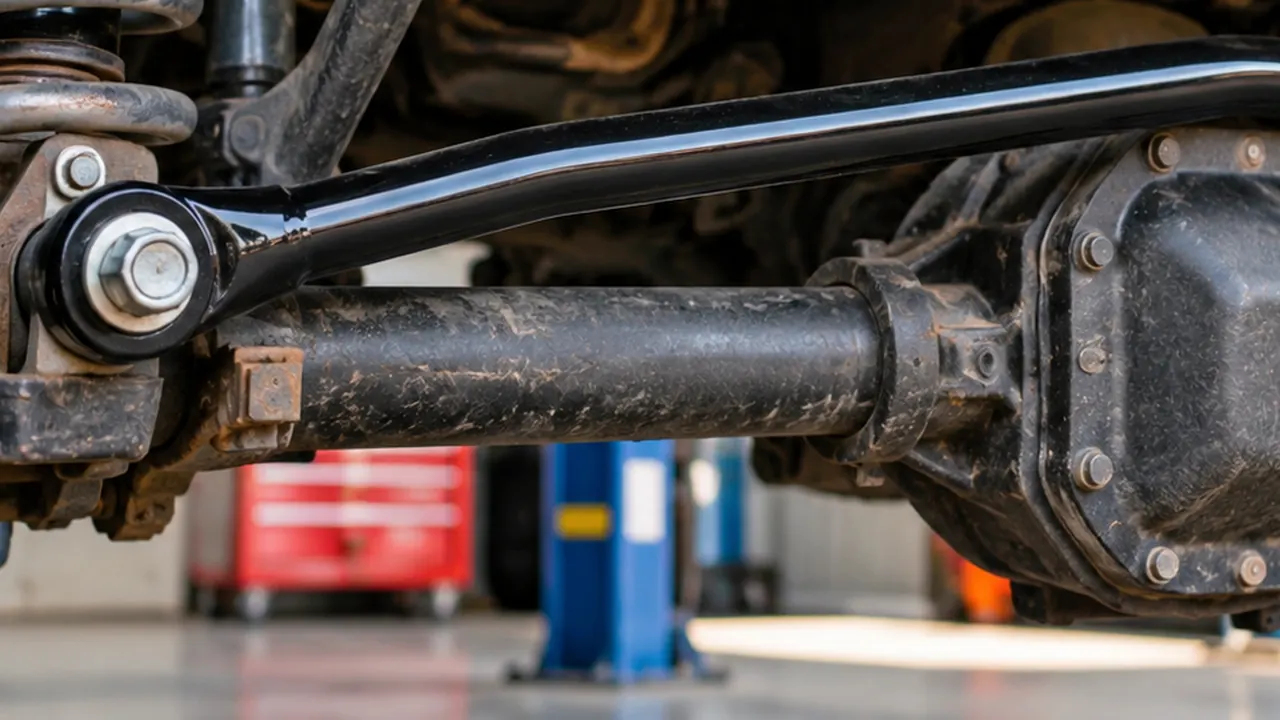
Track bar replacement costs about $393 to $444 in the United States, including approximately $283 for the replacement part and $110 to $161 for labor, according to RepairPal’s September 2026 estimate. A Jeep Wrangler typically falls around $422 to $456, although older models, upgraded track bars, and difficult repairs can cost considerably more.
The important detail is what’s actually being replaced. A worn factory track bar on a stock Jeep is a different job from fitting an adjustable Panhard bar to a lifted truck. And if the problem is a loose mounting bracket rather than the bar itself, buying a new bar may not solve anything. Here’s how to make sense of the prices before approving the repair.
Track Bar Replacement Cost: Parts and Labor
RepairPal’s national estimate is a useful baseline for a complete track bar replacement. It covers the replacement component and installation labor, but not taxes, diagnostic charges, wheel alignment, or additional suspension repairs that may be needed.
| Cost Item | U.S. Estimate |
|---|---|
| Replacement track bar | About $283 |
| Installation labor | $110–$161 |
| Total replacement cost | $393–$444 |
| Taxes, fees, alignment, other repairs | Extra if applicable |
Source: RepairPal national Track Bar Replacement Cost Estimate, updated September 3, 2026. Prices vary by vehicle, location, and repair scope.
That average is not a minimum price. Some conventional replacement bars cost less than the national parts estimate, particularly when an independent shop can use a suitable aftermarket component. On the other hand, an expensive original-equipment assembly or a heavy-duty adjustable track bar can raise the total well beyond $500.
Ask whether the shop has quoted a complete track bar assembly, replacement bushings, or a repair to the mounting hardware. All three may appear on an invoice under similar descriptions, but they involve different parts and labor.
Jeep Wrangler Track Bar Replacement Cost by Model Year
The Jeep Wrangler is a particularly useful example because many generations use track bars on their solid axles. RepairPal’s Wrangler-wide estimate is $422 to $456, but its published model-year figures show substantial differences between older and newer vehicles.
These examples are from RepairPal’s U.S. Jeep Wrangler estimates. They are complete replacement estimates, not prices for a particular aftermarket upgrade or a front-and-rear replacement performed together.
| Jeep Wrangler Model Year | Replacement Estimate |
|---|---|
| 2024–2026 Wrangler | $446–$486 |
| 2019–2020 Wrangler | $402–$442 |
| 2014–2017 Wrangler | $333–$362 |
| 2004–2006 Wrangler | $657–$686 |
| Wrangler overall estimate | $422–$456 |
Source: RepairPal Jeep Wrangler Track Bar Replacement Cost by Year, checked October 2026. Estimates are vehicle-specific reference figures; a local shop may quote differently.
Notice that some older Wranglers have higher published estimates than newer ones. Age doesn’t automatically make a replacement cheaper. Parts availability, the particular assembly specified, mounting design, and estimated labor all affect the price.
YourMechanic also publishes Wrangler track bar estimates, but its general average and individual vehicle examples can differ substantially. Comparing a website’s headline average with a specific shop quote is only useful when both cover the same part, vehicle configuration, and service.
Front vs. Rear Track Bar Replacement
On a Wrangler equipped with front and rear track bars, each is a separate component. A quote for one should not be mistaken for a quote to replace both.
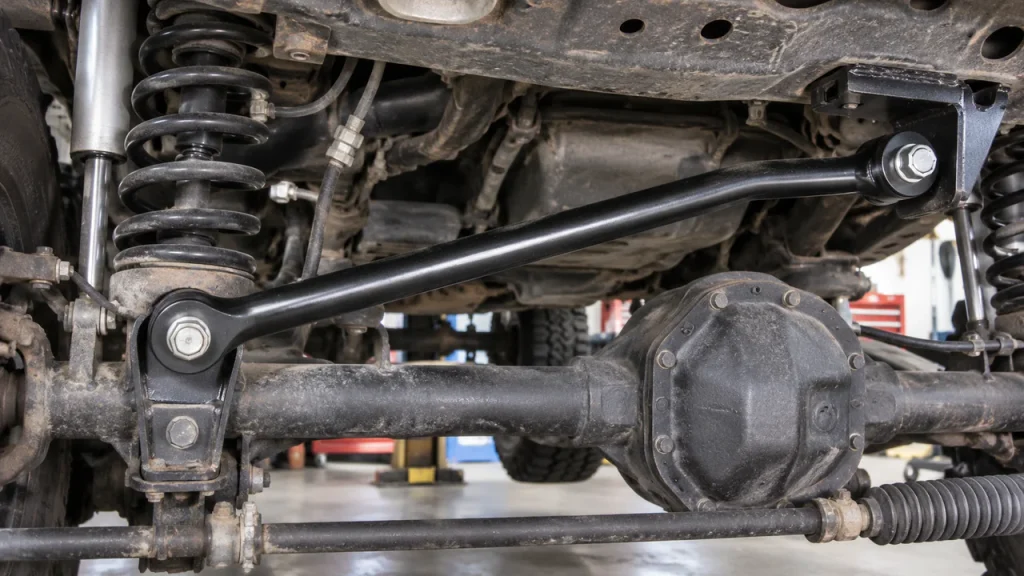
The front track bar has a particularly important relationship with the steering system. Its mounting position and the movement of the drag link must work together correctly, especially after suspension modifications. The rear track bar controls the rear axle’s lateral position without that front steering-linkage relationship.
Front and rear replacement parts can have different prices even on the same Wrangler. The shop should identify which axle is affected and whether the estimate covers one bar or both. Don’t assume the two jobs cost the same simply because the components look similar.
How Much Do Replacement Track Bar Parts Cost?
The bar itself is usually the largest variable in the bill. A standard aftermarket replacement for a factory-height vehicle may be relatively affordable, while an adjustable heavy-duty assembly designed for off-road use can cost several times as much.
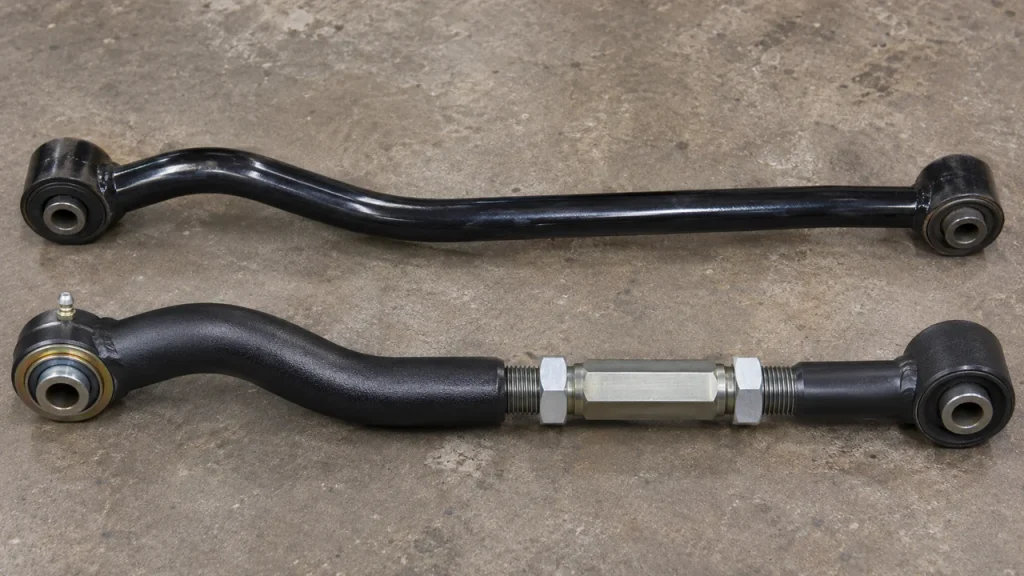
For parts-only budgeting, SYZ Machine’s 2026 replacement-cost guide gives approximately $60 to $220 for an OEM-style replacement and $120 to $500 or more for an adjustable or heavy-duty track bar. These are broad aftermarket planning ranges, not guaranteed prices for every vehicle or an additional charge on top of RepairPal’s parts estimate.
OEM Track Bar vs. Aftermarket Replacement
For a stock vehicle, a properly matched OEM or OEM-quality bar is usually the straightforward choice. It preserves the intended length and mounting arrangement, and it avoids paying for adjustability the vehicle may not need.
An aftermarket replacement can still be an excellent option. What matters is the actual fit, joint or bushing quality, mounting hardware, and whether the design is appropriate for the vehicle’s suspension. An inexpensive part that arrives with incorrect bushings or doesn’t fit the brackets isn’t much of a bargain.
Adjustable bars deserve separate consideration. They are useful on certain lifted Jeeps and trucks because changing ride height can move a solid axle away from its intended lateral position. But an adjustable bar isn’t automatically an upgrade for every factory-height vehicle.
For a detailed explanation of axle centering, Panhard geometry, and the relationship between the track bar and drag link, see our guide to what a track bar does. Those design considerations determine whether a standard or adjustable replacement makes sense.
Can You Replace Only the Track Bar Bushings?
Sometimes. On a serviceable design, replacing worn rubber bushings instead of the entire bar can reduce parts expense. But the correct repair depends on how the assembly is built and what has actually failed.
If the bar is straight, the mounting eyes are undamaged, and compatible bushings are available separately, a bushing-only repair may be reasonable. Some designs use joints or integrated assemblies that aren’t intended to be serviced that way.
Labor matters, too. Removing the bar, pressing old bushings out, installing new ones, and reinstalling the assembly can take enough time to reduce the savings. If the complete replacement bar is reasonably priced, a shop may recommend the full assembly instead.
Get the two options itemized before deciding. The cheaper part doesn’t necessarily produce the cheaper completed repair, especially if pressing equipment or additional labor is required.
Why a Track Bar Replacement Quote Can Be Much Higher
A quote above the national average isn’t automatically unreasonable. What matters is whether the shop has identified a real reason for the additional cost. Track bar repairs can become more involved when mounting components are damaged or the vehicle’s suspension has been modified.
These are the additional items worth checking on an estimate:
- Corroded mounting bolts: Rusted or seized hardware may require additional removal time and new fasteners.
- Damaged mounting brackets: Cracked brackets, loose mounting points, or elongated bolt holes may need separate repair.
- Adjustable-bar installation: The technician may need to establish the correct length and center the axle at normal ride height.
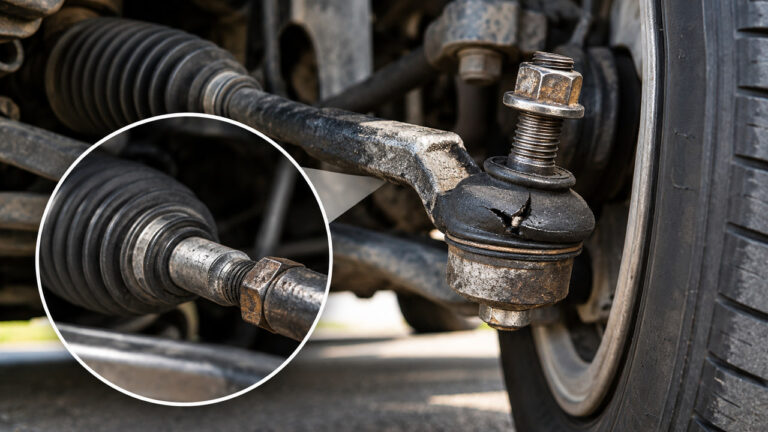
- Additional worn parts: Track-bar looseness may coexist with damaged ball joints, tie rods, or steering components.
- Wheel alignment or geometry checks: These may be quoted separately, particularly after a suspension lift or other front-end work.
- Diagnosis and inspection: Finding the actual source of wandering, clunking, or steering shake can require more work than simply installing a new bar.
One particularly important problem is a worn mounting hole. If the bolt has been moving inside the axle-side or frame-side bracket, the hole can become elongated. Installing a new bar without correcting the damaged mounting point may leave unwanted movement in the system.
That’s not a reason to approve every expensive repair the shop suggests. It is a reason to ask for the specific inspection finding that justifies the extra charge.
Track Bar Replacement Cost on a Lifted Jeep or Truck
Lifted vehicles require a little more care when budgeting this repair. Raising a solid-axle Jeep or truck can shift the axle sideways relative to the body because the factory track bar works through an arc. That shift doesn’t necessarily mean the original bar has worn out.
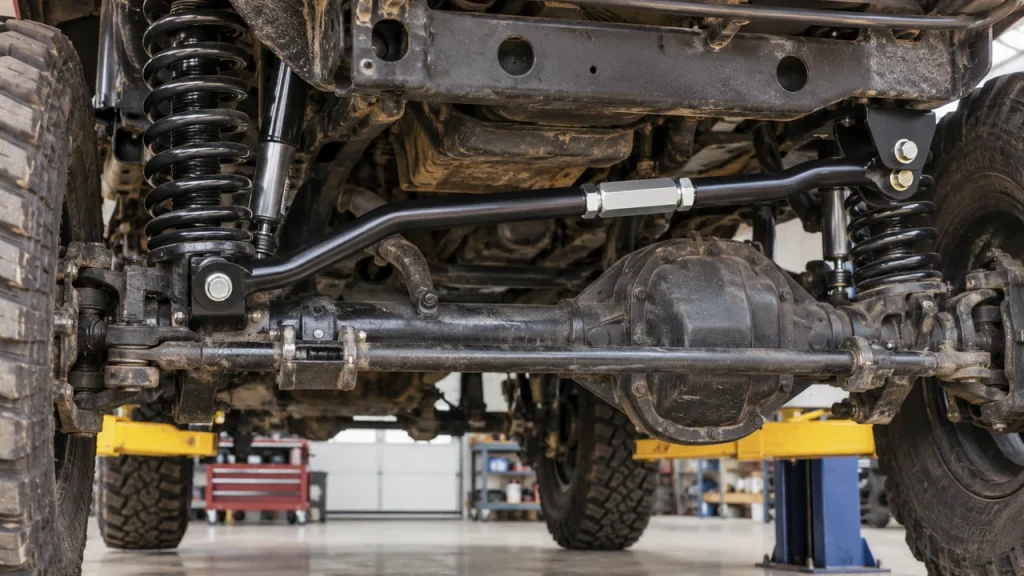
A suitable adjustable track bar can help restore lateral axle position at the new ride height. However, changing bar length does not necessarily correct the angle at which it operates. On a solid front axle, the relationship between the track bar and drag link must also be considered.
That’s why a lifted Wrangler may need more than a standard replacement part and a few mounting bolts. Some setups require vehicle-specific brackets or other geometry corrections, depending on the suspension kit and lift height.
If the track bar is being changed as part of a new suspension lift, ask whether its installation, axle-centering work, and alignment are already included in the kit installation quote. Our lift kit installation cost guide covers the wider project expenses without confusing them with the price of replacing one worn bar.
Be cautious about buying an adjustable bar solely because the Jeep looks slightly off-center. The correct part and adjustment depend on the particular suspension layout, not just the amount of advertised lift.
Does Track Bar Replacement Require an Alignment?
An alignment check is generally advisable after track bar replacement, particularly if the axle position changes or the vehicle has been lifted. Whether a full adjustment is necessary depends on the specific vehicle, the work performed, and the manufacturer’s service procedure.
On a conventional solid axle, replacing a fixed-length track bar with the correct direct-fit part doesn’t directly adjust toe, camber, or caster. However, the repair involves a component responsible for axle location. Confirming the axle is properly positioned and the steering behaves as intended is important.
RepairPal recommends checking alignment following track bar work, especially when suspension modifications are involved. This is sensible, but it doesn’t mean every vehicle will need all four wheels adjusted or that alignment is automatically included in the replacement estimate.
Our wheel alignment cost guide gives typical U.S. pricing of about $75–$120 for a front-end alignment and $100–$200 for a four-wheel alignment. Those are separate service ranges, not charges that should automatically be added to every track bar estimate.
For lifted vehicles, ask the shop to verify axle centering and the relationship between the steering and suspension links. Correcting an off-center axle is not necessarily the same operation as centering the steering wheel or adjusting toe.
How Long Does It Take to Replace a Track Bar?
A straightforward track bar replacement often takes around one to two hours of workshop labor. SYZ Machine describes approximately one to one and a half hours for a typical single-bar job, although the actual time varies with the vehicle and installation conditions.
On a clean, accessible suspension, the technician may only need to safely support the vehicle, remove the appropriate fasteners, exchange the component, install the specified hardware, and verify the repair.
An older truck with severely rusted bolts is another story. Likewise, an adjustable replacement may require additional measurement and setup. If the mounting brackets are damaged, the job is no longer a simple remove-and-replace service.
When comparing quotes, ask for the estimated labor time and whether diagnostic work, suspension adjustments, or a separate alignment appointment are included.
When Is Replacing the Track Bar Actually Necessary?
A track bar shouldn’t be replaced just because a vehicle has reached a certain mileage. The decision should come from inspecting the bar, its bushings or joints, and its attachment points. On some vehicles, the apparent problem is loose hardware or a damaged bracket rather than a failed bar assembly.
Findings that can justify replacement or further repair include:
- Excessive movement in a track-bar bushing or joint.
- A bar bent or damaged by an impact.
- Severely deteriorated or separated mounting bushings.
- A loose attachment that has damaged the bar’s mounting eye or related hardware.
- A replacement design required by a properly engineered suspension modification.
Symptoms can include clunking over bumps, wandering, delayed steering response, or unwanted lateral axle movement. But those complaints are not unique to track bars. A worn tie rod or another steering joint can produce similar behavior while requiring a completely different repair.
For example, if inspection identifies a worn steering tie rod rather than a track-bar connection, our tie rod replacement cost guide explains that repair separately.
Can a New Track Bar Fix Death Wobble?
It can help when confirmed track-bar play or damaged mounting hardware is contributing to severe steering oscillation. A loose front track bar is a serious fault because it allows unwanted movement between the axle and chassis.
But replacing the track bar is not a guaranteed cure for death wobble. Steering linkage wear, ball joints, tire problems, wheel condition, alignment, and modified suspension geometry may also be involved. The repair needs to address the actual measured defects.
It is also worth distinguishing the track bar from the steering damper. The damper reduces steering kickback and unwanted oscillation; it does not provide the axle’s primary lateral location. If the defective part is the damper rather than the track bar, see our steering stabilizer replacement cost guide for that separate service.
If a vehicle develops violent steering shake, unpredictable steering, or clearly visible movement at a track-bar mount, stop driving and arrange a professional inspection. Don’t continue road-testing it to see whether the condition gets worse.
Can You Save Money Replacing a Track Bar Yourself?
On some vehicles, yes. An experienced home mechanic with the correct tools and service information may be able to replace a conventional track bar and avoid the labor portion of the shop bill.
Using RepairPal’s national figures, that could mean saving approximately $110 to $161 in installation labor. It doesn’t include any tools, additional hardware, alignment service, or diagnostic work you might still need.
The part is mechanically simple, but the installation is not something to approach casually. A track bar is a suspension locating link. Incorrectly secured fasteners, damaged brackets, an unsuitable replacement, or the wrong adjustment can affect vehicle control.
Before deciding on DIY replacement, make sure you have the following:
- The exact replacement part for the vehicle’s model, year, axle, and suspension configuration.
- Vehicle-specific service instructions and tightening specifications.
- Suitable support equipment and a safe way to position the suspension as required.
- Any specified replacement fasteners and the correct method for tightening bushing or joint connections.
- A plan to verify axle position, mounting clearance, and steering operation after installation.
Some rubber-bushed suspension connections require final tightening at the manufacturer’s specified ride position to avoid twisting the bushing at rest. Other joint designs have different requirements. Follow the correct procedure for the actual component rather than applying one generic rule to every track bar.
Never work underneath a vehicle supported only by a hydraulic jack. If the mounting brackets are cracked, bolt holes are elongated, or the bar requires significant geometry corrections, professional repair is the safer choice.
Common Track Bar Replacement Cost Questions
These details can help when comparing parts catalogs and repair estimates, particularly if the shop uses a different name for the component or recommends extra work.
Is a Track Bar the Same as a Panhard Bar?
In most conventional solid-axle suspension applications, yes. Track bar, Panhard bar, and Panhard rod refer to the lateral locating link between the axle and chassis. Part catalogs may use different names for the same type of component.
Be careful with the term track rod, though. In some markets it refers to a steering tie rod rather than a Panhard bar. Check the component’s location and part number before ordering.
Is a Track Bar the Same as a Sway Bar?
No. A track bar positions a solid axle laterally, while a sway bar or anti-roll bar resists body roll. Sway bar bushings and end links are separate components with different replacement costs.
Do You Have to Replace Both Track Bars?
No. On vehicles with front and rear track bars, they are separate parts serving different axles. Replacing one does not automatically justify replacing the other. Both should be inspected, but the repair should be based on actual condition and any suspension modifications.
How Long Should a Track Bar Last?
There is no universal mileage interval for track bar replacement. Service life depends on bushing or joint design, road conditions, corrosion, impacts, and vehicle use. A stock vehicle driven on good roads may go many years without needing one, while heavily modified or frequently off-road vehicles can place different demands on their components.
Can You Drive With a Bad Track Bar?
A slightly weathered bushing with no measurable looseness is different from a joint or bracket that is actively moving. If the track bar has substantial play, a broken mount, missing or loose fasteners, or causes unstable steering, the vehicle should not be driven until the problem is assessed and repaired.
Can a Track Bar Cause Uneven Tire Wear?
A worn or incorrectly positioned track bar can contribute to handling or axle-location problems, especially when other suspension geometry is incorrect. However, uneven tire wear should not be attributed to the track bar without checking alignment, tire condition, and other steering or suspension components.
What to Check Before Approving a Track Bar Replacement Quote
A $400 track bar replacement bill can be perfectly reasonable. A $600 estimate might also be justified on a difficult or modified vehicle. The price tells you very little until you know exactly what’s being replaced and why.
Before approving the job, ask the shop these four questions:
- What failed? Ask whether the problem is in the bar, a bushing or joint, the mounting bolts, or the frame-side or axle-side bracket.
- Which component is included? Confirm the front or rear axle, part brand and number, and whether the replacement is standard or adjustable.
- What does the quoted price cover? Check labor, hardware, diagnostics, taxes, any bracket repairs, and whether alignment is included.
- Will the repair address the actual complaint? If the vehicle wanders, clunks, or develops steering shake, ask what inspection finding connects that symptom to the track bar.
For an ordinary replacement, the national $393–$444 estimate is a useful reference. But a fair repair is about more than being close to an average. The bar must fit the suspension, the mounting points must be sound, and the axle and steering geometry need to be correct when the vehicle returns to the road.
If the shop can explain those points clearly, you’re in a much better position to judge the price. If it can’t, get the diagnosis clarified before spending money on a part that may not fix the problem.