Steering Gearbox Replacement Cost: Parts, Labor & Real Prices
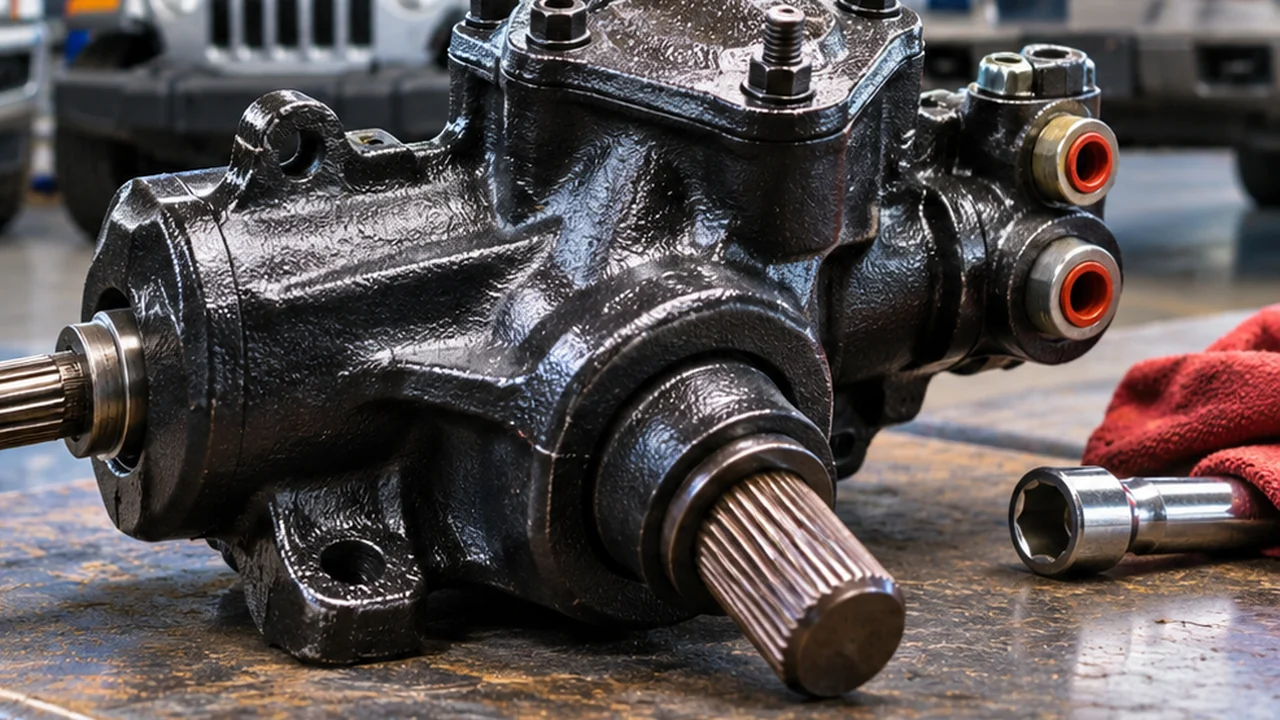
Steering gearbox replacement costs $1,125–$1,241 on average in the United States, according to RepairPal’s September 2026 estimate. That includes approximately $895–$903 for the gearbox and $230–$338 for labor. Taxes, fluid, alignment and additional steering repairs can change the final bill.
That average is only a starting point. A 2003 Ford F-150 has a published estimate of $557–$614, while a 2024 Jeep Wrangler is estimated at $1,874–$1,988. The difference is often the replacement unit itself, not just the number of hours the mechanic spends beneath the vehicle.
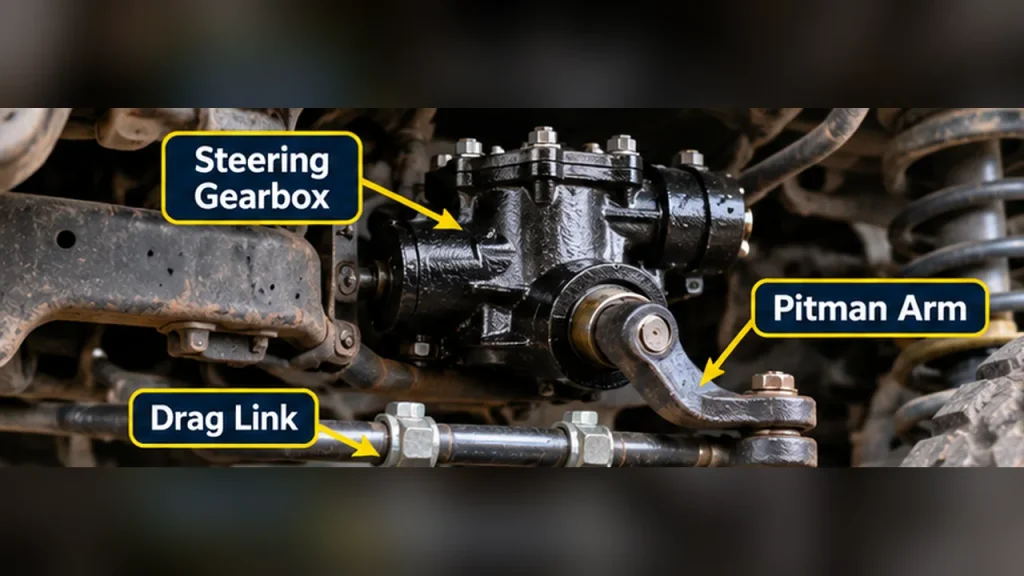
Here, steering gearbox means the conventional steering box that drives a Pitman arm, commonly found on older pickups and certain solid-axle trucks and SUVs. It does not mean the rack-and-pinion steering gear used in many passenger cars. Knowing which system you have is the first step toward comparing a fair quote.
Steering Gearbox Replacement Cost: Parts, Labor, and Extras
A useful estimate separates the actual steering gear assembly from installation labor. It should also say whether the quoted box is new, remanufactured or used, and what will be checked after installation.
RepairPal’s nationwide figures give us a baseline for a complete replacement. They are not a fixed price for every vehicle or a promise that all replacement parts cost the same.
| Cost item | U.S. estimate |
|---|---|
| Steering gearbox assembly | $895–$903 |
| Installation labor | $230–$338 |
| Total parts and labor | $1,125–$1,241 |
| Power-steering fluid and bleeding | Confirm whether included |
| Alignment / steering checks | Potential additional charge |
| Hoses, shafts or linkage repairs | Extra if actually needed |
Source: RepairPal, Steering Gearbox Replacement Cost Estimate, updated September 3, 2026. Ranges are national estimating figures; the rounded component amounts may not add to the published total at every endpoint. Taxes, fees and related work are excluded.
AutoNation Mobile Service gives a similar broad reference of about $1,000–$1,300 installed, with parts around $810–$940 and labor around $230–$340. Neither estimate accounts for the enormous difference between, say, a common older Ford steering box and an expensive newer Jeep assembly.
If a shop quotes $1,800, ask for the gearbox part number before arguing about its hourly rate. If it quotes $700, ask the same question: the lower price might reflect a remanufactured box, a different vehicle application or work that is not included.
Real Steering Gearbox Replacement Prices by Vehicle
The most useful comparison is a vehicle-specific estimate rather than the national average. Exact model year matters, and some names—such as F-150 or Silverado 1500—span generations with very different steering systems.
The following are published RepairPal parts-and-labor estimates. The two model-wide rows should not be mistaken for prices tied to a particular production year.
| Vehicle or application | Published replacement estimate |
|---|---|
| 2003 Ford F-150 | $557–$614 |
| Ford F-250 Super Duty (model-wide) | $1,235–$1,358 |
| Chevrolet Silverado 3500 (model-wide) | $975–$1,088 |
| 2016 Jeep Wrangler (JK) | $1,827–$1,935 |
| 2019 Jeep Wrangler (JL) | $864–$978 |
| 2024 Jeep Wrangler (JL) | $1,874–$1,988 |
Sources: RepairPal vehicle and model-year Steering Gearbox Replacement Cost pages, accessed November 2026. Figures exclude local taxes, fees and unrelated repairs. Model-wide estimates represent multiple years and configurations.
Notice the Wrangler spread: a 2019 model has a far lower published price than either a 2016 or a 2024 model. It would be misleading to call any one of those figures “the Jeep Wrangler gearbox replacement cost” without specifying the year.
Ford F-150 vs. F-250 Super Duty
For an older F-150 that actually uses a steering box, RepairPal’s 2003 estimate is under $650. The model-wide F-250 Super Duty estimate is almost twice as high. Different units, access requirements and parts prices matter more here than the Ford badge.
Not every F-150 generation has a conventional steering gearbox. Some newer trucks use rack-and-pinion steering. Before ordering a box, check the VIN and inspect the fitted steering system rather than relying on the model name alone.
F-250 and F-350 applications also vary by year, drivetrain and steering configuration. A replacement gear must match the vehicle’s mounting, sector shaft, hydraulic connections and specified steering ratio.
Chevrolet Silverado, GMC Sierra and Heavy-Duty Trucks
Older GM pickups commonly use hydraulic steering gearboxes, and certain heavy-duty Silverado and Sierra models continue with steering-box layouts. RepairPal lists $975–$1,088 as the model-wide estimate for the Chevrolet Silverado 3500. A particular year, engine or repair shop can be above or below that range.
The first question on a Silverado quote is which steering system the truck actually has. A part advertised for a Silverado 2500HD may not fit a 1500, and some 1500 generations use a rack rather than a conventional gearbox.
If the estimate also lists a Pitman arm, center link or steering-shaft joint, those are separate components. Have the shop explain the damage or looseness that makes each replacement necessary.
Jeep Wrangler JK and JL: Why the Estimates Differ So Much
Wrangler JK and JL steering boxes are not one universal product. RepairPal quotes $1,827–$1,935 for a 2016 JK, $864–$978 for a 2019 JL and $1,874–$1,988 for a 2024 JL. Part cost is a major driver of those differences.
A 2018 model year can be especially confusing when ordering parts because the JK and JL generations overlap in that year. Confirm the exact generation, steering system and OE number before accepting an aftermarket compatibility claim.
On lifted Jeeps, inspect steering geometry and supporting hardware rather than assuming a new box will correct wandering or shimmy. The steering gearbox should be replaced for a confirmed gearbox fault, not because every other possibility has been ignored.
Jeep JL and Gladiator: Check Steering Bulletin 08-074-20
For some 2018–2020 Wrangler JL and 2020 Gladiator JT vehicles, there is an additional step worth taking before approving an expensive steering-box replacement. FCA published Technical Service Bulletin 08-074-20, with revisions, concerning improved steering feel.
The November 19, 2020 revision addresses complaints such as steering wander, lead or pull and excessive play. Its procedure involves an applicable steering-gear replacement along with Electric Hydraulic Power Steering (EHPS) software work and configuration checks when required. It specifically says the repair is not intended to fix sustained shimmy or vibration.
This is a technical service bulletin, not an automatic recall or a guarantee of free repair. A Jeep dealer should check the VIN, current factory instructions, installed gear and any applicable warranty or service coverage. The bulletin is available in the official FCA steering gear service bulletin hosted by NHTSA.
A shop quoting the updated factory gear plus the required software steps may be describing a different repair from a shop pricing only a used steering box. Make sure the two estimates cover comparable work.
New, Remanufactured or Used Steering Gearbox: What Changes the Price?
The word “replacement” can hide several very different parts. A brand-new factory gearbox, an aftermarket new unit, a remanufactured original housing and a used salvage unit may all be offered for the same vehicle—at very different prices and with very different warranties.
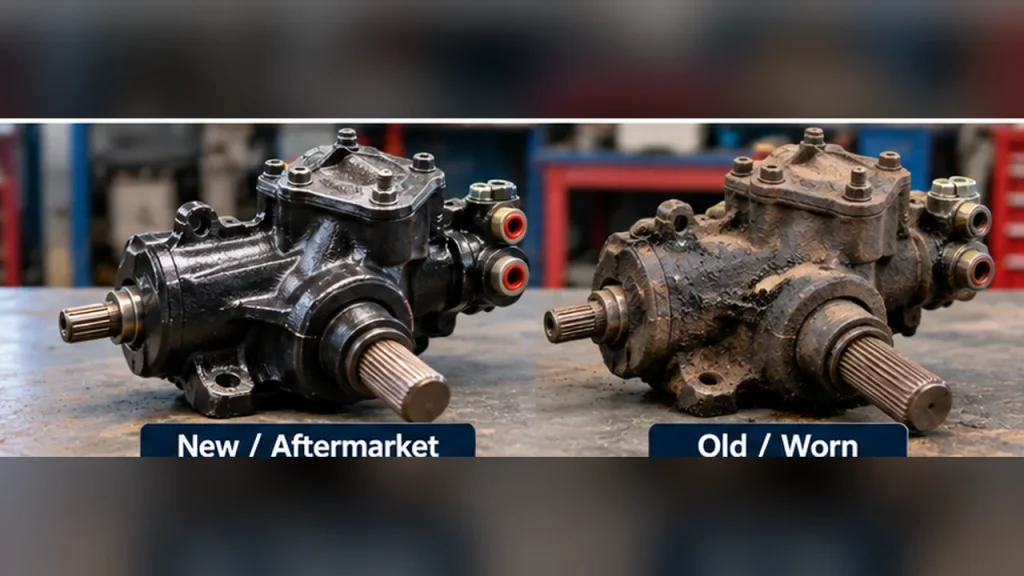
For the 2007–2018 Wrangler JK, Go-Parts publishes these illustrative parts-only ranges. They are not a general price list for every vehicle.
| Type of replacement unit | Wrangler JK parts-only estimate |
|---|---|
| New OEM (Mopar) | $1,100–$1,600 |
| New aftermarket | $450–$750 |
| Remanufactured | $300–$600 plus possible core charge |
| Used OEM | $200–$500 |
| Professional labor allowance in that guide | $250–$400 |
Source: Go-Parts, 2007–2018 Jeep Wrangler JK Steering Box guide, checked November 2026. Figures illustrate sourcing options for that generation; they should not be added together as though every vehicle needs all listed items.
A factory replacement can make sense when exact calibration, fitment and dealer support are priorities. A reputable remanufactured unit may offer better value on an older truck. A used steering box can be inexpensive, but you may not know how much internal wear it already has.
Is a Remanufactured Steering Box a Good Choice?
It can be, provided the rebuild is more than a cleaned housing and fresh paint. Ask whether internal wear, sector-shaft bearings, seals, valve components and steering lash were inspected and corrected as needed. Testing procedures and warranty terms distinguish a serious rebuilder from a bargain listing.
A replacement warranty that covers the part but not removal and reinstallation labor may still leave you paying a substantial bill if the rebuilt box fails. For a work truck, the cost of downtime deserves consideration alongside the parts price.
Correct steering ratio, input connection, sector-shaft dimensions and hydraulic port arrangement are non-negotiable. “Fits similar years” is not enough for a steering component.
What Is a Steering Gearbox Core Charge?
A core charge is a deposit that encourages the return of the old gearbox so it can be rebuilt. It affects the cash you pay upfront, but it may not become a permanent repair cost if the used unit is returned and accepted.
As a concrete retail example, Advantage Steering lists a remanufactured 2007–2018 four-door Wrangler gearbox at $875 and says a $250 core deposit is included in the purchase price. Returning the accepted old unit earns the core refund under that seller’s terms. Other suppliers structure their prices differently.
Ask who receives the refund, whether shipping or return fees apply, and whether the cracked or damaged housing can be rejected. A shop estimate should make the refundable deposit visible rather than burying it in the replacement-part charge.
Why Steering Gearbox Labor and Extra Charges Add Up
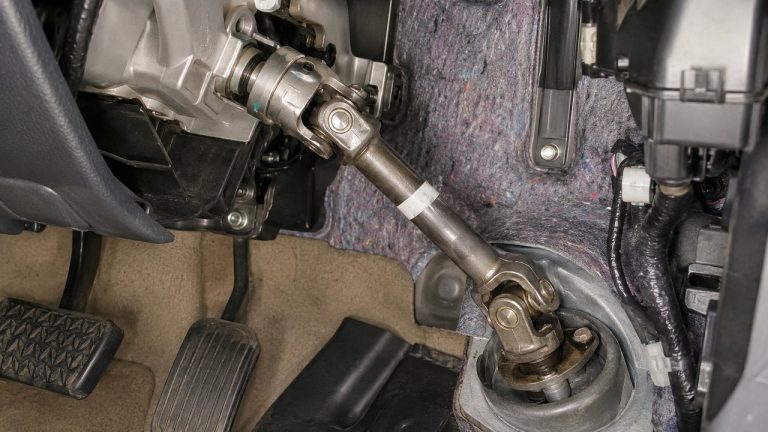
Removing the steering box means dealing with more than the main mounting bolts. On hydraulic systems the shop may have to disconnect fluid lines, separate the intermediate steering shaft, remove the Pitman arm or its linkage connection, and bleed the system afterward.
The most common items that move the final bill away from the advertised national estimate are these:
- Part cost and availability: A vehicle-specific factory box can cost considerably more than a common rebuilt unit.
- Pitman arm removal: A seized arm on the gearbox’s splined sector shaft may need a heavy-duty puller and additional labor.
- Rust or damaged mounts: Corroded fittings, broken bolts or a cracked mounting area can turn a straightforward replacement into a larger repair.
- Hydraulic service: Correct power-steering fluid, seals and proper bleeding are needed after disconnecting the box on hydraulic systems.
- Electronic steps: Certain vehicles require scan-tool checks, vehicle configuration or software work described by the manufacturer.
- Related faults: A leaking hose, worn steering shaft joint or loose external linkage is separate from internal gearbox failure.
- Follow-up checks: Steering centering, interference checks and a wheel-alignment inspection may be billed separately.
A shop can legitimately charge for those items when the vehicle needs them. What it should not do is label everything “steering box replacement” without showing which additional jobs are included.
One frequently overlooked detail is the old Pitman arm. If the shop plans to replace it rather than transfer a sound arm to the new gearbox, that should appear as a separate line. See the typical parts and labor figures in our Pitman arm replacement cost guide.
Steering Box Leaking or Loose: Repair It or Replace It?
Not every wet steering gearbox needs a complete replacement, and not every wandering truck has a bad box. Before authorizing a four-figure repair, the technician needs to pinpoint where the fluid or unwanted movement begins.
Sector Shaft Seal, Input Shaft Seal and Hydraulic Line Leaks
Hydraulic fluid can escape around the sector shaft seal near the Pitman arm, the input shaft seal where the steering shaft enters, or the pressure and return fittings. Fluid that runs down the outside of the casting can make a hose leak look like a failed gearbox housing.
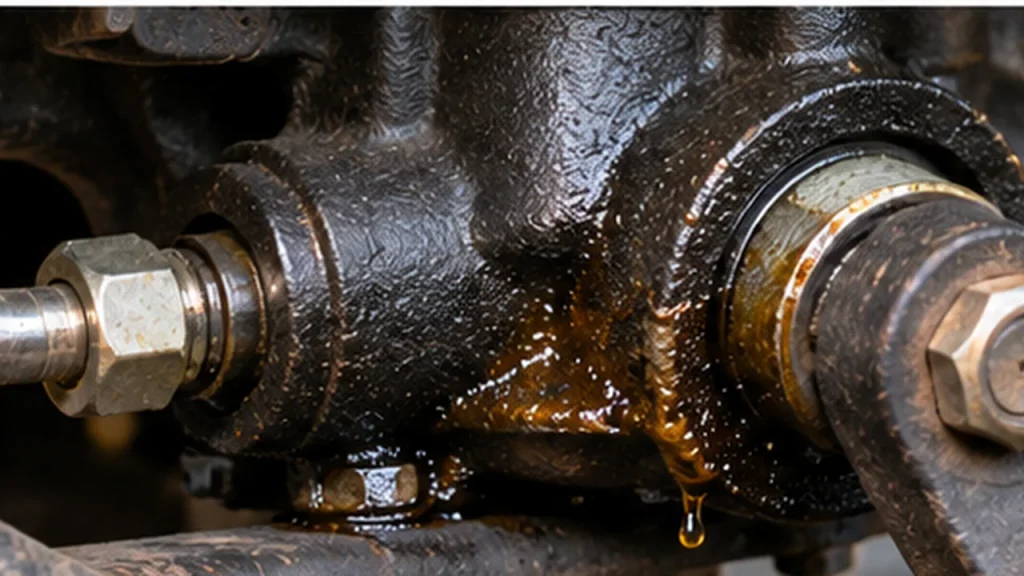
A seal-only repair or professional rebuild may be an option on some units. It becomes less attractive when the shaft is scored, the housing is damaged or the box has significant internal wear. Ask whether the leak source was cleaned and traced before a whole assembly was ordered.
If the problem is a pressure or return hose, that is a separate and often smaller repair. We break down those charges in the power steering hose replacement cost guide.
Steering Wheel Free Play, Wandering and the Input Shaft
A driver may describe a dead spot at the steering wheel, repeated corrections on the highway or inconsistent resistance when turning. Those complaints can come from internal gearbox wear, but they can also come from intermediate shaft joints, tires, mounting hardware and loose steering linkage.
A useful diagnosis follows the movement from the steering wheel to the gearbox input, then from its output shaft through the Pitman arm and steering links. The point where motion is lost helps identify the faulty part. Simply rocking the wheel and noticing “play somewhere underneath” is not enough.
If the clunk or looseness begins at the intermediate shaft rather than inside the box, see our steering shaft replacement cost guide before approving the larger repair.
Can You Just Tighten the Steering Gearbox Adjustment Screw?
Some conventional steering boxes have an adjustment for internal gear lash. That is not a general-purpose fix for a badly worn steering system. Incorrect adjustment can make the steering bind, stop returning smoothly to center or accelerate internal damage.
The factory procedure matters because adjustments are often made under specific conditions and measurements. An inexperienced attempt to remove the “slack” by turning a screw can produce a dangerous result even if the steering wheel initially feels tighter.
If a shop proposes an adjustment instead of a replacement, ask which specification it is following and whether the external joints and gearbox mounting points have already been inspected.
Steering Gearbox vs. Rack and Pinion: Avoid the Wrong Quote
The two systems both turn the front wheels, but they are not interchangeable. A conventional steering box turns a Pitman arm and moves an external linkage. A rack-and-pinion unit moves an internal toothed rack that connects to the tie rods.
Parts catalogs sometimes call both assemblies a “steering gear.” That is why the phrase steering gear replacement cost can return prices that appear inconsistent. Our figures here apply to the conventional steering box, not electric steering racks.
If your vehicle has a rack, the labor process and typical bill can be quite different. Use our separate rack and pinion replacement cost guide rather than comparing its prices with a steering gearbox estimate.
Do You Need a Wheel Alignment After Steering Box Replacement?
A steering and alignment check is sensible after a gearbox is replaced. The technician must verify that the new gear is centered correctly, the intermediate shaft and Pitman arm are installed in their proper positions, and the wheels respond normally without binding or interference.
Replacing the gearbox itself does not necessarily alter camber or caster, and it may not change toe if the linkage adjustments were left untouched. But off-center steering, pre-existing tire wear, other repaired parts or disturbed adjustments can make a full alignment appropriate. Follow the specific vehicle service procedure rather than assuming every truck needs the same package.
As a budgeting reference, standard U.S. two-wheel/front-end alignment prices are often $75–$120, while four-wheel service is often $100–$200. Those are separate service ranges, not fees automatically included in RepairPal’s gearbox estimate.
Ask the shop whether “alignment” means an inspection or actual adjustment. You can compare the differences in our wheel alignment cost guide.
Can You Replace a Steering Gearbox Yourself?
An experienced home mechanic with the correct service manual and heavy-duty tools may be able to replace an accessible steering box. The potential saving is the shop labor, but the job is not simply a bolt-on swap: steering-system compatibility and correct reassembly are critical.
Before considering DIY work, check that you can meet these conditions:
- The replacement gear matches the exact VIN, steering ratio, input shaft, sector shaft and hydraulic connections.
- The vehicle can be supported safely using its approved lifting points, without loading the steering linkage.
- The proper puller, line tools, torque equipment and vehicle-specific service information are available.
- Steering wheel and gear centering, shaft attachment and Pitman arm installation can be performed to specification.
- The correct power-steering fluid, bleeding procedure and any required electronic steps are available.
- The repaired steering can be inspected for leaks, full-travel clearance and correct operation before driving.
Do not rotate an unsecured steering wheel freely while the intermediate shaft is disconnected; on vehicles with a clockspring or steering-angle components, doing so can damage those parts. Do not hammer directly on the sector shaft to release a seized Pitman arm.
If the box mounting area is cracked, the shaft splines are damaged or there is any doubt about correct indexing, a professional repair is the safer choice. A steering failure is not comparable to a minor accessory that can simply be retried later.
Steering Gearbox Replacement: Common Questions
These questions are worth settling before a shop orders an expensive assembly, especially when a lower-priced rebuilt part or a smaller repair is available.
Is $1,500 Too Much for a Steering Box Replacement?
Not automatically. It is above RepairPal’s $1,125–$1,241 national estimate, but below its published $1,874–$1,988 estimate for a 2024 Wrangler. Compare the correct vehicle application, gearbox condition, labor, alignment and warranty rather than judging the quote from one national number.
How Long Does Steering Gearbox Replacement Take?
It depends on access and the vehicle-specific service procedure. Some boxes can be removed with the gearbox mounted externally on the frame; others require substantial clearance work or deal with rusted steering connections. The shop should be able to show the labor allowance used in its quote.
Can a Steering Box Be Rebuilt Instead of Replaced?
Sometimes. A qualified rebuilder may restore a serviceable unit with new seals and other internal work. Whether that is worthwhile depends on shaft and housing condition, parts availability, turnaround time and warranty. A severely damaged housing or worn hard parts may make complete replacement the more reliable solution.
Does a New Steering Gearbox Include the Pitman Arm?
Usually you should not assume it does. Some products are sold as a gearbox only, while other listings or shop quotes include additional hardware. Confirm the exact part number and whether the Pitman arm will be reused, supplied separately or replaced for a documented reason.
Can Low Power Steering Fluid Make the Gearbox Seem Bad?
Yes. Low fluid, trapped air, a failing pump or a restricted hydraulic line can change steering effort and create noise. On a hydraulic system, checking fluid level, leaks and pump operation belongs in the diagnosis before condemning the gearbox. Never keep driving with severe loss of steering assistance or unpredictable control.
Will a New Steering Box Fix Death Wobble?
Only when a confirmed steering-box fault contributes to the problem. Severe shaking on a solid-axle truck or Jeep can involve tires, track bar mounting, ball joints, linkage wear and suspension geometry. Replacing a box or tightening its lash screw without locating the actual fault is not a reliable fix.
Is It Safe to Drive With a Leaking or Loose Steering Gearbox?
A small seepage that has been inspected is different from a rapidly falling fluid level, severe steering play or an unpredictable steering response. If the steering becomes hard to control, a connection is loose or the box is losing fluid rapidly, stop driving and arrange professional assessment or towing. Do not test a questionable steering system at highway speed.
How to Compare Steering Gearbox Quotes Without Paying Twice
A $900 quote using a remanufactured box and a $1,700 quote using a new factory assembly may both be reasonable. The mistake is comparing their totals without checking what the shops intend to install and what work happens after the box is fitted.
Ask for the following details on the estimate:
- Diagnosis: Which test confirms an internal gearbox fault rather than a hose, shaft, mounting or external linkage problem?
- Part specification: What is the gearbox brand, part number, condition and applicable steering ratio?
- Core deposit: Is a refundable charge included, and who receives the refund?
- Labor scope: Does the job include Pitman arm transfer, hydraulic service, software work and the required steering checks?
- Other repairs: Which additional items have failed, and are their prices listed separately?
- Final price and warranty: Are fees, fluids and alignment included, and does the warranty cover replacement labor?
For a conventional steering gearbox, RepairPal’s $1,125–$1,241 national figure is a useful first comparison, but the Ford and Jeep examples show why a universal “fair price” does not exist. Start with a confirmed diagnosis and an exact part specification. Then the quote becomes much easier to evaluate—and much less likely to result in paying for a second repair that should have been identified the first time.