Leaf Spring Replacement Cost: Parts, Labor & Pair Pricing
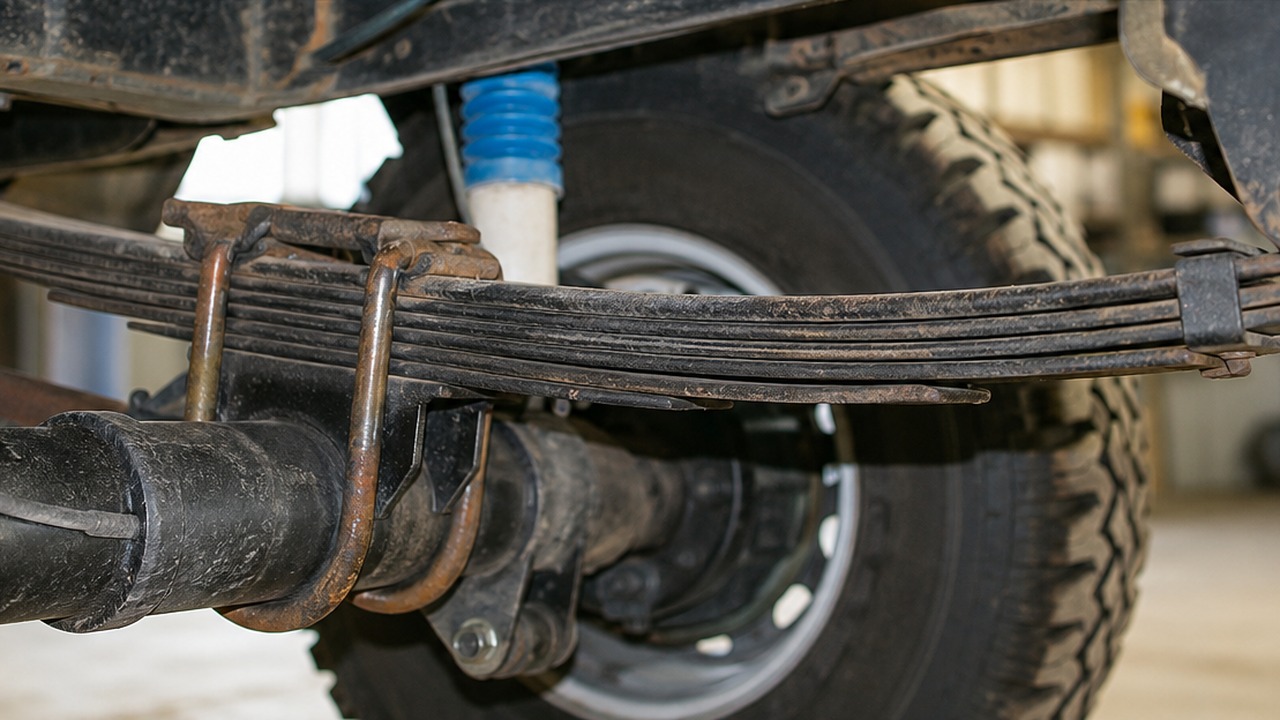
Leaf spring replacement typically costs about $700 to $1,500 for a light-duty truck or SUV, although the exact bill depends on whether one spring or a matched pair is replaced, the size of the spring pack and how much rust is fighting the technician. Current national estimates put the average repair at roughly $860 to $1,030.
A broken leaf is not the only reason for replacement. A truck that sits low on one side, sags badly with normal cargo or has lost its original rear ride height may be riding on springs that have weakened without visibly snapping.
What a Leaf Spring Replacement Bill Usually Includes
| Cost Item | Useful Planning Range |
|---|---|
| Leaf spring assembly | About $150–$500+ each |
| Typical professional replacement | About $700–$1,500 |
| Current national average | About $860–$1,030 |
| Heavy-duty or expensive spring packs | $1,500+ possible |
| Bushings, U-bolts or shackles | Additional if required |
The spring itself may be only part of the estimate. A shop can also discover seized mounting bolts, worn bushings, damaged shackles or U-bolts that should not go back into service.
Should You Replace One Leaf Spring or Both?
If one spring breaks but both rear springs are the same age and have carried the same loads for years, replacing the pair is often the better approach.
A brand-new spring on one side and a tired spring on the other can leave the vehicle sitting unevenly or behaving differently from left to right. Matching springs also reduces the chance of paying for essentially the same labor again when the second old spring fails shortly afterward.
That does not mean every leaf spring must automatically be replaced in pairs. A recently installed spring damaged by an isolated event is a different situation from two original springs with 150,000 miles of towing and hauling behind them.
Rear Leaf Spring Replacement Cost Is Mostly About the Vehicle
A compact pickup and a heavy-duty truck may both use rear leaf springs, but their spring packs are nowhere near equivalent.
Heavier trucks require larger springs with greater load capacity, more leaves or more complex progressive designs. That increases both the price and the physical difficulty of handling the assembly.
OEM springs may also cost considerably more than common aftermarket replacements. On older trucks, aftermarket availability can actually make the parts surprisingly affordable—until corrosion adds hours to the labor bill.
Rust Can Turn a Straightforward Job Into an Expensive One
Leaf spring hardware lives underneath the vehicle, exposed to road water, salt and dirt for years.
On a clean truck, the technician may be able to support the axle, remove the U-bolts, disconnect the spring eyes and shackles and install the new spring without unusual trouble.
On a rusty truck, spring-eye bolts can seize inside the bushings, U-bolts may have to be cut off and shackle or hanger hardware can fight removal at every step.
This is one repair where two otherwise identical trucks can generate very different labor charges simply because one has spent its life in a dry climate and the other has spent fifteen winters on salted roads.
Why U-Bolts Matter During Leaf Spring Replacement
The U-bolts clamp the axle to the leaf spring assembly. They are not decorative hardware: they help keep the axle located correctly under the vehicle.
Many repair procedures call for new U-bolts rather than simply reinstalling heavily torqued old hardware. The correct approach depends on the vehicle and the replacement spring manufacturer’s instructions.
If a quote includes new U-bolts, that does not necessarily mean the shop is padding the bill. What matters is whether the hardware is appropriate for the axle and spring pack and is tightened to the correct specification.
Shackles and Bushings Are Separate Repairs
The leaf spring normally attaches to the frame through spring eyes and bushings, with a shackle at one end allowing the effective spring length to change as the suspension moves.
Those pieces can wear independently of the spring itself.
- A cracked or separated bushing can create movement and noise.
- A corroded shackle can become structurally weak.
- A damaged hanger can require frame-side repair.
- A healthy spring does not automatically need replacement because one of these parts has failed.
Conversely, if the spring is already being removed and the surrounding hardware is badly worn, replacing those parts during the same visit can avoid repeating much of the disassembly later.
Signs a Leaf Spring Is Worn or Broken
A completely broken leaf is usually easy to identify, but progressive spring fatigue can be less obvious.
- rear of the vehicle sits lower than it used to
- one side sits visibly lower than the other
- truck sags excessively under loads it previously carried normally
- visible cracked or separated leaf
- clunking or shifting noises from the rear suspension
- axle movement or instability
- reduced clearance between the axle and bump stops
If the main symptom is noise rather than visible spring damage, our suspension clunking and rattling guide covers several other components that can sound similar.
A Sagging Truck Does Not Always Need New Leaf Springs
Before replacing springs for sag alone, consider how the vehicle is being used.
A truck that sits level when empty but drops dramatically only after being loaded may simply be carrying more weight than its suspension was designed to support. Installing heavier springs does not increase the legal payload rating of the axle, tires, brakes or vehicle.
On the other hand, if the rear remains low with the truck empty and measurements show the springs have lost their original arch, replacement becomes much more plausible.
Leaf Springs and Coil Springs Are Not the Same Repair
Both components support vehicle weight, but their construction and replacement procedures are completely different.
A leaf spring uses one or more long curved steel leaves that also help locate the axle. A coil spring is a helical spring that normally works with separate control arms or links to locate the wheel or axle.
If your vehicle uses coils rather than a leaf pack, see our coil spring replacement cost guide instead.
Can Worn Leaf Springs Cause Uneven Tire Wear?
They can contribute indirectly if the spring problem changes ride height, allows unwanted axle movement or affects how the vehicle tracks.
But uneven tire wear has many possible causes, including alignment, worn bushings, steering components and tire-pressure problems. It should not be used alone as proof that the leaf springs are bad.
If tire wear is the main complaint, our guide to suspension problems and uneven tire wear covers the broader diagnosis.
Can You Replace Only One Broken Leaf in the Pack?
Individual leaves can sometimes be serviced by specialist spring shops, particularly on commercial or older vehicles, but ordinary automotive repair shops often replace the complete spring pack.
A leaf pack is engineered to work as a matched assembly. Replacing one damaged leaf with an incorrect thickness, length or spring rate can alter how the pack carries load and flexes.
For a common pickup or SUV where complete replacement springs are readily available, replacing the full assembly is often the simpler and more predictable repair.
Re-Arching vs. Replacing Leaf Springs
Specialist spring shops can sometimes re-arch a sagging leaf spring to restore ride height.
That can make sense for an unusual, discontinued or hard-to-source spring, but it is not automatically the best value for a common vehicle with inexpensive replacement packs available.
A spring that is cracked, badly corroded or otherwise structurally damaged should not be treated as a simple ride-height adjustment problem.
This is also why searches for “leaf spring repair cost” can describe something different from complete leaf spring replacement.
Do New Leaf Springs Increase Payload Capacity?
Replacing tired original springs with the correct factory-equivalent parts can restore the suspension’s intended ride height and load behavior.
Installing heavy-duty springs may make the rear suspension resist sag more strongly, but it does not automatically increase the truck’s official payload or gross axle weight rating.
Those limits also depend on the axle, frame, wheels, tires, brakes and other components. Springs should not be used as permission to exceed the vehicle manufacturer’s ratings.
Will Heavy-Duty Leaf Springs Make the Ride Harsher?
They can.
A spring designed to support a greater load may resist movement more strongly when the truck is empty. Depending on the design, that can make the rear feel firmer or more abrupt over bumps.
If the goal is simply to restore an aging daily-driven truck, an OEM-equivalent spring is usually a more predictable choice than automatically choosing the highest-capacity pack available.
Do the Shocks Need to Be Replaced at the Same Time?
Not automatically.
Leaf springs support the vehicle and help locate the axle. Shock absorbers control suspension motion. A broken spring does not prove the shocks are worn, and worn shocks do not automatically mean the springs need replacement.
Since the vehicle is already raised and the rear suspension is accessible, inspecting the shocks for leakage, damaged bushings and poor damping is sensible. Replacement should still be based on their condition rather than convenience alone.
Does Leaf Spring Replacement Require an Alignment?
A conventional front-wheel alignment is not automatically required just because rear leaf springs were replaced.
However, leaf springs help locate a solid rear axle. If the axle is not centered correctly on the spring locating pins, U-bolts are installed incorrectly or damaged mounting hardware changes axle position, the vehicle can develop a thrust-angle or tracking problem.
After major rear spring work, the vehicle should sit level and track normally. If it pulls, dog-tracks or shows abnormal tire wear, alignment geometry and axle position should be checked.
Can You Drive With a Broken Leaf Spring?
A visibly broken leaf spring should not be treated as an ordinary wear item that can simply wait until the next convenient service.
The spring supports vehicle weight and helps control the axle. A broken leaf can shift, damage nearby components or allow the vehicle to sit and handle incorrectly.
The risk becomes greater if the main leaf, spring eye or mounting hardware is damaged. If the spring pack is visibly broken or the axle no longer appears securely located, driving should be avoided until the suspension is inspected.
How Long Does Leaf Spring Replacement Take?
A clean, straightforward replacement may take a few labor hours. Replacing both springs on a rusty truck can take substantially longer.
The biggest time variables are usually access and hardware condition rather than the complexity of the spring itself.
Cutting seized U-bolts, freeing spring-eye bolts from old bushings or replacing corroded shackles can easily turn a predictable repair into a much longer job.
DIY Leaf Spring Replacement Is Heavy Work
Leaf springs are not compressed in the same way as a coil spring trapped in a strut assembly, but that does not make the job casual DIY work.
The vehicle frame has to be supported securely while the axle is supported independently. Spring packs are heavy, fasteners can require substantial torque and the axle must remain controlled when the U-bolts are removed.
Rust can also force the use of cutting or heating equipment near fuel lines, brake lines and other components. If the correct lifting equipment and repair procedure are not available, professional replacement is the safer option.
Frequently Asked Questions
How much does leaf spring replacement cost?
Current national estimates are roughly $860 to $1,030. A useful planning range for many light-duty trucks and SUVs is about $700 to $1,500, with heavy-duty springs, rust and related hardware potentially pushing the bill higher.
How much does rear leaf spring replacement cost?
Rear leaf spring replacement commonly falls within the same $700 to $1,500 general range, but the price depends on whether one spring or both are replaced and whether U-bolts, bushings or shackles are also needed.
Should leaf springs be replaced in pairs?
Often yes when both springs are the same age and one has failed from fatigue or sagging. A matched pair helps maintain even ride height and spring behavior. An isolated failure of a relatively new spring may justify replacing only one side.
How do you know when leaf springs need replacing?
Visible cracks, a broken leaf, permanent rear sag, one side sitting low or excessive sag under normal loads are common warning signs. Bushings, shackles and mounting hardware should also be inspected before blaming the spring pack itself.
Can a leaf spring be repaired instead of replaced?
Specialist spring shops can sometimes re-arch or rebuild certain leaf packs. For common vehicles with replacement assemblies readily available, installing a complete new spring is often the more straightforward option.
Does leaf spring replacement require an alignment?
Not automatically, but the rear axle must remain correctly located on the springs. If the vehicle tracks incorrectly afterward or other suspension work was performed, alignment and thrust angle should be checked.
Can you drive with a cracked leaf spring?
A cracked or broken leaf should be inspected promptly. Damage to the main leaf, spring eye or axle-mounting area can affect how securely the axle and vehicle weight are supported.
The Cheap Spring Is Not Always the Cheap Repair
Leaf spring pricing makes more sense when you look beyond the spring itself. A reasonably priced replacement pack can still produce a four-figure invoice if ten-year-old U-bolts, seized spring-eye bolts and corroded shackles have to come apart first.
Before comparing estimates, make sure they cover the same number of springs and the same supporting hardware. If the quote is part of a larger suspension overhaul, our car suspension repair cost guide can help separate the individual repairs from the total bill.