What Happens If You Ignore Suspension Problems?
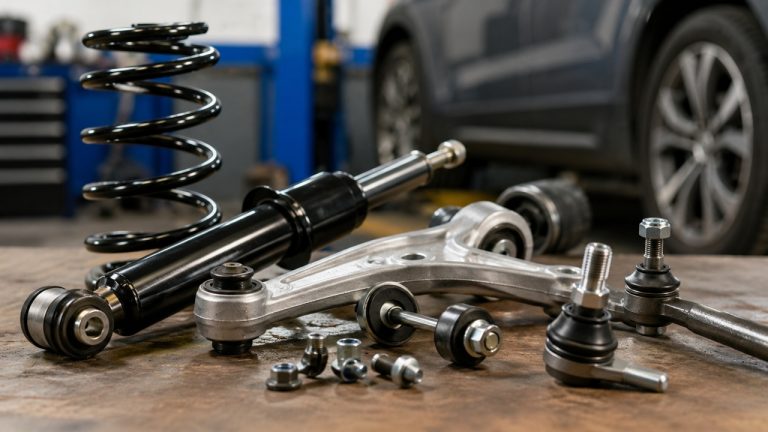
Ignoring suspension problems can reduce tire grip, make steering less predictable, increase stopping distance, accelerate tire wear, and damage other suspension or steering components. What begins as a worn bushing, shock, strut, or ball joint can therefore become a more expensive—and potentially unsafe—repair.
Not every suspension symptom means the vehicle is about to fail, but clunking noises, excessive bouncing, uneven ride height, wandering steering, or abnormal tire wear should not be ignored. The severity depends on which component is damaged and how far it has deteriorated.

What Can Happen If You Ignore Suspension Problems?
| Consequence | Why it happens | What you may notice |
|---|---|---|
| Reduced vehicle control | Worn parts allow excessive wheel or body movement | Wandering, body roll, unstable cornering, or delayed steering response |
| Longer stopping distance | The tires may not maintain consistent contact with the road | Nose-diving, bouncing, or reduced stability when braking |
| Premature tire wear | Excessive wheel movement or altered alignment damages the tread | Cupping, uneven wear, vibration, or increased tire noise |
| Damage to related components | Movement and impact loads are transferred to other parts | More noises, looseness, or a growing repair estimate |
| Loss of ride comfort | Shocks, struts, springs, or bushings no longer control road impacts properly | A harsh, floaty, or excessively bouncy ride |
| Higher repair costs | A neglected fault may place extra stress on tires, joints, mounts, and steering parts | Several components require attention instead of one |
1. The Car Can Become Harder to Control
The suspension helps keep the body controlled and the tires in contact with the road. When shocks, struts, bushings, ball joints, or other components become badly worn, the vehicle may respond less precisely to steering inputs.
You may notice excessive body roll in corners, a floating sensation at highway speed, repeated bouncing after bumps, or a vehicle that wanders and requires constant steering correction. These effects can become more pronounced during sudden lane changes or on wet and uneven roads.
KYB explains that worn shocks and struts allow excessive wheel and body movement, reducing tire contact and making cornering, stopping, and emergency maneuvers more difficult. See its explanation of braking, handling, and stability.
2. Stopping Performance May Get Worse
Your brakes create the stopping force, but the suspension helps the tires use that force effectively. Worn shocks or struts can allow excessive weight transfer, wheel movement, and nose-dive under braking.
When a tire bounces or loses consistent contact with the road, available grip can be reduced. This may make the vehicle harder to steer and stabilize during an emergency stop, particularly on rough or wet pavement.
Monroe also warns that driving with worn shocks or struts can reduce braking efficiency, increase stopping distance, and raise the risk of skidding on wet roads. Its guidance is available in Consequences of Driving With Worn Shocks and Struts.
3. Your Tires Can Wear Out Prematurely
Worn suspension does not always create the same tire pattern. Weak shocks or struts can allow the wheel to bounce, producing a repeated scalloped or cupped pattern. Loose ball joints, bushings, control arms, or tie-rod ends can change wheel positioning and contribute to irregular edge wear.
Suspension wear is only one possible cause. Incorrect tire pressure, wheel imbalance, damaged tires, and poor alignment can produce similar symptoms. Our guide to suspension-related tire wear explains these patterns in more detail without assuming every worn tire has a suspension fault.
Continuing to drive on badly or unevenly worn tires can further reduce grip, especially in rain. The underlying fault should be repaired before fitting new tires or performing an alignment; otherwise, the wear may return.
4. Other Components May Wear Faster
A suspension system works as a group. If one component allows uncontrolled movement, nearby components may receive loads and impacts they were not designed to handle continuously.
- Worn shocks or struts can allow greater movement through springs, mounts, bushings, and control arms.
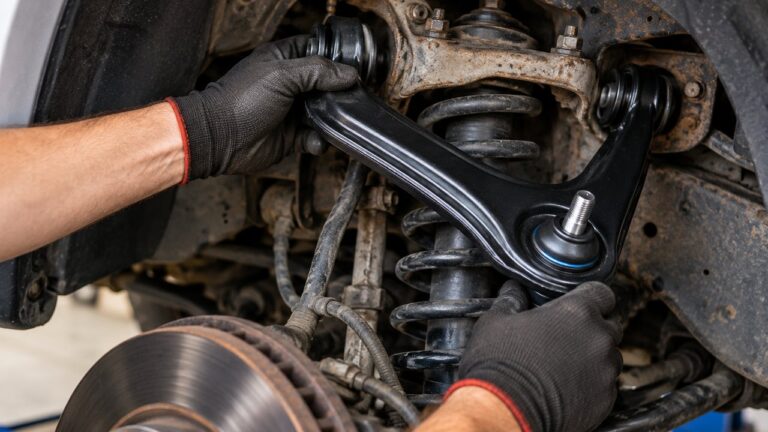
- Loose bushings or ball joints can affect wheel geometry and place additional stress on tires and steering components.
- A broken or sagging spring can alter ride height and overload other corners of the vehicle.
- Damaged mounts or links can worsen noise and allow more unwanted movement.
This does not mean one worn part will automatically destroy every component around it. It means delaying inspection can allow the original problem to progress and make it harder to separate the primary fault from the resulting wear.
5. Wheel Alignment May Not Stay Correct
Some suspension components determine or influence camber, caster, and toe. If a ball joint, control-arm bushing, tie rod, spring, or mounting point develops excessive movement, wheel alignment may change while the vehicle is being driven.
An alignment alone cannot repair loose or damaged parts. The suspension and steering should be inspected first, the failed components replaced, and the alignment checked afterward when required. See when an alignment is needed after suspension work.
6. The Ride Can Become Uncomfortable and Unpredictable
A rough ride is not merely an inconvenience. Excessive bouncing can make it harder to judge how the vehicle will respond to a pothole, corner, crosswind, or sudden maneuver.
Different faults produce different sensations. Weak dampers may make the vehicle float or bounce, while damaged bushings or joints can create knocking, looseness, and sudden changes in steering feel. A harsh ride can also be caused by incorrect tire pressure, damaged tires, or unsuitable aftermarket suspension, so inspection is more reliable than replacing parts based on ride quality alone.
7. The Final Repair Can Cost More
Early suspension repairs may involve a worn link, bushing, mount, shock, or joint. If the problem is left unresolved, the vehicle may also require tires, alignment work, paired component replacement, or repair of related steering and suspension parts.
The exact cost depends on the vehicle, the failed component, labor rates, accessibility, and whether related parts must be replaced together. An inspection is therefore more useful than assuming that every suspension problem requires a complete system replacement.
Warning Signs You Should Not Ignore
- Clunking, knocking, creaking, or rattling over bumps
- Repeated bouncing after a bump
- Excessive body roll or nose-diving
- Vehicle pulling, wandering, or feeling loose
- Steering wheel no longer centered while driving straight
- One corner sitting lower than the others
- Uneven, cupped, or rapidly developing tire wear
- Visible fluid leaking from a shock or strut
- A broken spring, displaced component, or visibly loose joint
These symptoms can overlap with tire, wheel, steering, or brake faults. A proper inspection should identify the failed component instead of treating “bad suspension” as a single diagnosis.
When Should You Stop Driving?
Stop driving and arrange professional assistance if the vehicle is difficult to control, a wheel appears out of position, a spring is broken or displaced, a joint is separating, a tire rubs against the body, or the suspension has partially collapsed.
You should also avoid driving if severe bouncing, violent pulling, or loud impact noises make the vehicle feel unstable. A tow is safer than attempting to drive a vehicle with a potentially detached or structurally damaged suspension component.
If symptoms are mild and the vehicle remains stable, drive only as necessary to have it inspected, reduce speed, avoid heavy loads and potholes, and leave extra stopping distance. This is not a guarantee that the vehicle is safe; the failed part must be identified before its risk can be judged accurately.
What to Do When You Notice a Suspension Problem
- Record the symptoms. Note when the noise or handling problem occurs: braking, turning, accelerating, or travelling over bumps.
- Check the tires. Look for low pressure, damage, unusual wear, or anything rubbing against a tire.
- Avoid unnecessary driving. Do not continue testing a vehicle that feels unstable.
- Request a suspension and steering inspection. Ask for the specific failed component and evidence of excessive movement, leakage, breakage, or wear.
- Repair the cause before aligning or replacing tires. Loose components can prevent an alignment from remaining within specification.
- Recheck the vehicle after repair. Confirm that noises, handling symptoms, ride height, and tire contact have returned to normal.
Frequently Asked Questions
Can you drive with bad suspension?
It depends on the failed component and its condition. Minor wear may allow a careful trip to a repair shop, while a broken spring, separating ball joint, collapsed suspension, severe instability, or displaced wheel can make driving unsafe. When the vehicle cannot be controlled normally, arrange towing.
Can bad suspension affect braking?
Yes. Worn shocks or struts can allow excessive body and wheel movement, reducing consistent tire contact and vehicle stability during braking. The brakes may still operate, but the vehicle may be harder to control and may not stop as designed.
Can suspension problems ruin tires?
They can cause premature or uneven wear. Weak dampers may contribute to cupping, while loose or damaged suspension parts can alter wheel alignment. Tire pressure, balance, alignment, and tire defects should also be checked.
Will an alignment fix a suspension problem?
No. Alignment adjusts wheel angles but cannot repair loose joints, worn bushings, broken springs, or failed shocks and struts. Damaged components must be corrected first, followed by alignment when the repair affects wheel geometry.
Does a bumpy ride always mean bad suspension?
No. A rough or bumpy ride can also result from overinflated or damaged tires, unsuitable wheels, excessive vehicle load, or normal characteristics of a firm suspension. Inspection is needed to confirm the cause.
Act Before a Small Fault Becomes a Safety Problem
Ignoring suspension problems can gradually reduce tire life, steering precision, braking stability, and ride control. More serious failures can make the vehicle unsafe without much additional warning. Identifying the affected component early is usually safer and less expensive than waiting for several related parts to deteriorate.