Strut Mount Replacement Cost: Parts & Labor
Expect to pay roughly $300 to $650 to replace one strut mount on many vehicles in the United States. Replacing both front mounts can commonly put the bill around $550 to $1,100 or more. The mount itself is often not expensive—the labor comes from removing the strut assembly and, on many designs, safely compressing the coil spring to reach it.
That creates an important decision: if the strut already has high mileage or is beginning to wear out, paying almost all of that labor just to reuse the old strut may not make financial sense. On a newer strut that still performs correctly, replacing only the failed mount can save a substantial amount in parts.
What You Are Really Paying For
A typical upper strut mount may cost roughly $40 to $200, depending on the vehicle, whether a bearing is included and whether you choose OEM or aftermarket parts.
The expensive part is getting to it.
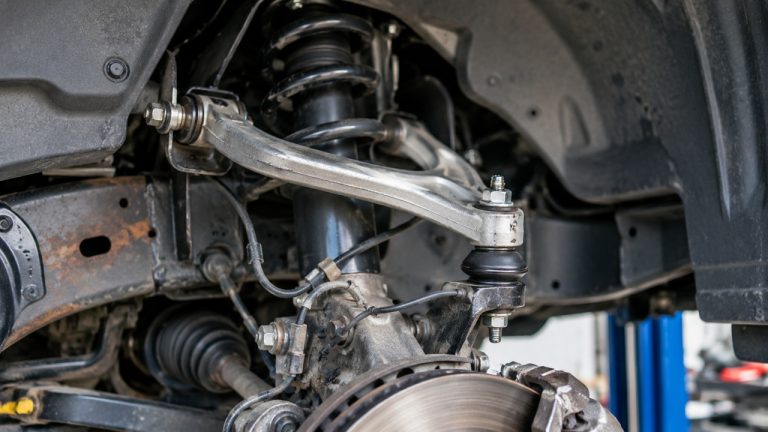
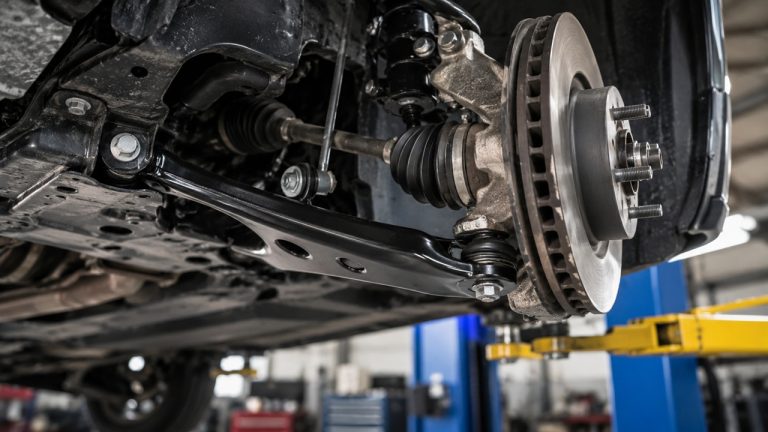
On a conventional front MacPherson strut, the technician normally has to remove the wheel, disconnect the strut from the steering knuckle and other attached components, remove the complete strut assembly from the vehicle, compress the coil spring and then disassemble the top of the strut before the mount can be changed.
That means a relatively inexpensive rubber-and-metal component can generate several hundred dollars in labor.
| Repair | Typical Price Range |
|---|---|
| One strut mount | About $300–$650 |
| Two front strut mounts | About $550–$1,100+ |
| Strut mount or mount kit, part only | Often about $40–$200 each |
| Mount with bearing | Often toward the higher end |
| Premium or difficult vehicle | $700+ per side possible |
| Wheel alignment | Often about $90–$200 when needed |
These figures are useful for budgeting, but the actual labor procedure matters more than the retail price of the mount. A quote can also change substantially if the strut, spring, bearing, dust boot or bump stop needs attention while the assembly is apart.
What Is a Strut Mount?
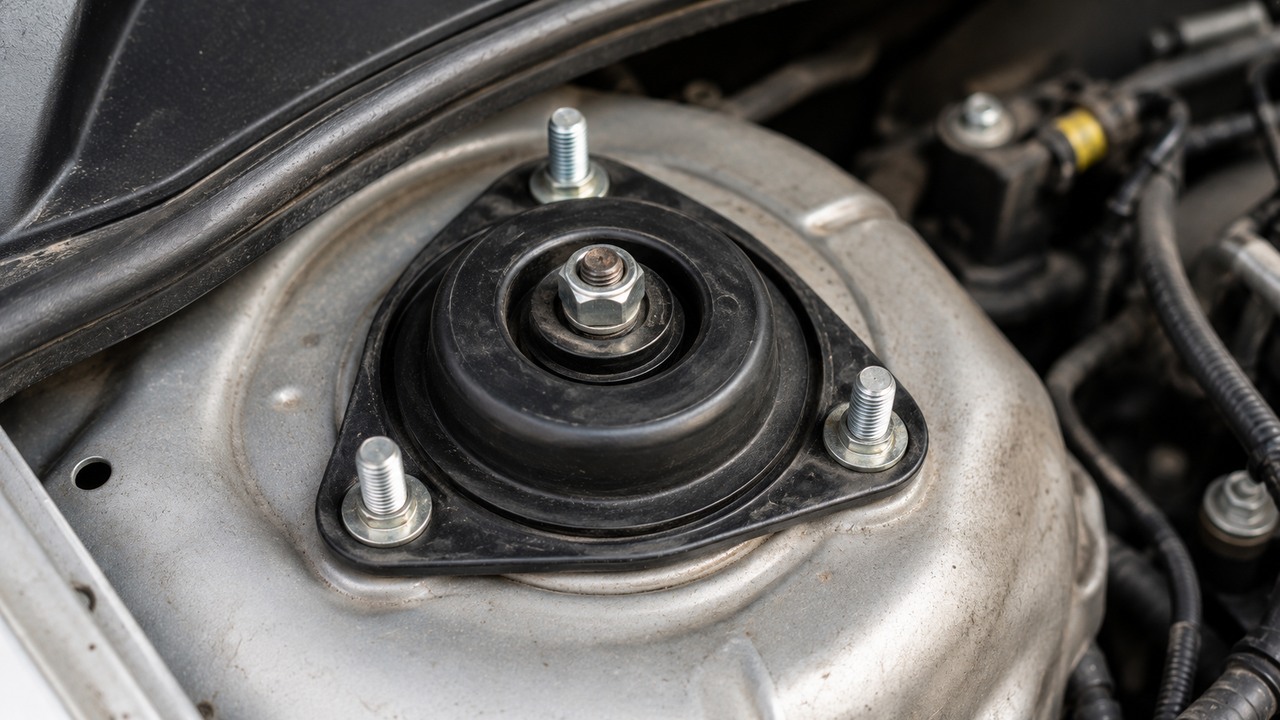
The strut mount attaches the upper end of the strut assembly to the vehicle body or chassis.
It does more than simply hold the strut in place. Most mounts contain rubber or another isolating material that helps keep vibration and impact noise from passing directly into the body of the vehicle.
Many front strut mounts also incorporate a bearing that allows the complete strut and spring assembly to rotate smoothly as the steering wheel is turned.
If you are unsure how a strut differs from a conventional shock absorber, our struts vs. shocks guide explains why the strut is a structural part of the suspension rather than simply a damper bolted between two points.
Strut Mount vs. Strut Bearing
The terms are often used together, but they do not always describe exactly the same piece.
The strut mount is the assembly that attaches the top of the strut to the vehicle. The strut bearing, when fitted, allows the assembly to rotate during steering.
Depending on the vehicle and the replacement part, the bearing may be:
- built into the strut mount
- supplied together with the mount as a kit
- available as a separate component
- not used at all on that particular suspension design
So if a shop quotes a “strut bearing” rather than a “strut mount,” ask whether the estimate includes the complete upper mount assembly or only the bearing.
Why Labor Costs More Than the Mount
Consider a car with a $70 replacement mount. It would be reasonable to wonder why the repair quote is $450.
The answer is that the technician is not simply unbolting a $70 part from the top of the engine bay.
On many front suspensions, the strut assembly has to come out of the vehicle. Brake hoses, ABS wiring or sway bar links may need to be released from their brackets. The lower strut connection is separated from the steering knuckle, and the upper mount fasteners are removed.
Once the assembly is on the bench, the coil spring must be safely compressed before the center nut and upper mount can be removed. Everything then has to be reassembled and installed back into the vehicle.
Rust, seized bolts and complicated suspension layouts can add more time.
Should You Replace the Strut at the Same Time?
This is often the most valuable question to ask before authorizing a strut mount repair.
If the strut is relatively new, dry, controls body movement properly and has no other signs of deterioration, replacing only the failed mount can make perfect sense.
The decision changes when the strut is old or already showing wear.
Because much of the expensive labor required to reach the mount also exposes the strut, replacing an aging strut during the same job may avoid paying for nearly the same disassembly again later.
If the damper itself needs replacement, use our strut replacement cost guide to compare the cost of repairing the complete assembly instead of only its upper mount.
When Replacing Only the Mount Usually Makes Sense
- The strut was replaced relatively recently.
- The damper has no oil leakage.
- Ride control is still good.
- The problem is clearly isolated to the mount or bearing.
- The coil spring and related hardware remain in good condition.
When a Complete Strut Job May Be Better Value
- The existing struts have high mileage.
- A strut is leaking hydraulic fluid.
- The vehicle continues bouncing after bumps.
- Ride control has noticeably deteriorated.
- The spring, bump stop or dust boot also needs replacement.
- The additional parts cost is small compared with repeating the labor later.
This does not mean a shop should automatically sell complete struts whenever a mount fails. The condition of the existing components should determine the repair.
How Much Does It Cost to Replace Both Front Strut Mounts?
Replacing both front mounts commonly costs around $550 to $1,100 on a mainstream vehicle, although premium cars and difficult designs can exceed that.
The total is not always exactly twice the price of one side. Some setup time overlaps, and only one alignment may be needed after both sides are completed.
Parts quality also matters. Two inexpensive aftermarket mounts may cost less than one OEM mount on a premium vehicle.
Do Strut Mounts Have to Be Replaced in Pairs?
Not necessarily. A failed strut mount does not automatically mean the mount on the opposite side is defective.
Both sides should be inspected because they usually have the same age and mileage, and replacing both during one visit may reduce the chance of repeating labor soon afterward.
But a mount damaged by an isolated impact or a defective bearing can fail while the opposite side remains serviceable.
The argument for replacing both sides becomes stronger if both mounts show cracking, noise or bearing wear, or if both struts are being replaced anyway.
Front Strut Mount Replacement Cost
Front mounts are the most common type because MacPherson strut front suspension is widely used.
A single front mount repair often lands around $300 to $650. The price tends to rise when the mount includes a steering bearing, when access is difficult or when corrosion makes the lower strut hardware hard to remove.
The front assembly is also more likely to affect alignment because the strut may attach directly to the steering knuckle.
Rear Strut Mount Replacement Cost
Rear mount pricing varies more because rear suspension designs differ considerably between vehicles.
Some rear mounts are accessible from the trunk or cargo area and do not contain a steering bearing. Others require interior trim removal, partial rear-seat disassembly or significant suspension work.
As a broad guide, a rear strut mount repair may also fall in the $250 to $600+ per side range, but vehicle-specific labor time is especially important here.
What Does a Bad Strut Mount Sound Like?
A failing mount does not have one universal sound. What you hear depends on whether the rubber isolator, bearing or another part of the assembly has failed.
- clunking over bumps
- knocking when entering driveways or crossing uneven pavement
- creaking or groaning while steering
- popping as the steering wheel is turned
- a grinding or rough sensation from a worn mount bearing
- increased vibration reaching the vehicle body
These noises can also come from sway bar links, ball joints, control arm bushings, coil springs and other suspension parts. If the source is still uncertain, our suspension clunk and rattle guide can help narrow down the diagnosis before parts are replaced.
Bad Strut Mount Bearing Symptoms
When the mount contains a steering bearing, failure can produce symptoms that are more noticeable while turning than while driving straight.
You may hear a creak, pop or grinding noise as the steering wheel moves. In some cases, the spring can wind up because the upper bearing is resisting rotation and then release suddenly with a noticeable movement or sound.
Steering that feels unusually notchy or does not return smoothly toward center can also justify inspection of the upper bearing, although steering and alignment problems have many other possible causes.
How a Shop Confirms the Mount Is Actually Bad
A diagnosis should involve more than hearing a noise and guessing that it comes from the top of the strut.
A technician may inspect the upper mount while the suspension is loaded and unloaded, watch for excessive movement, listen while an assistant turns the steering wheel, inspect the rubber for separation or cracking and check whether the bearing rotates smoothly.
The rest of the suspension should also be checked for looseness because several components can transmit noise through the strut tower and make the mount appear guilty when it is not.
Do You Need an Alignment After Strut Mount Replacement?
An alignment is often recommended after front strut mount replacement, but it is better to base the decision on what was disturbed than to call it universally mandatory.
On many MacPherson strut suspensions, replacing the mount requires removing the strut from the steering knuckle. That can affect camber or other geometry, especially where the lower mounting bolts provide adjustment or have enough tolerance to change the strut’s position.
A rear mount or a design where no alignment-related mounting point is disturbed may be different.
If the shop includes an alignment, ask what part of the suspension procedure makes it necessary on your particular vehicle. Our alignment after suspension replacement guide explains this distinction in more detail.
Can a Bad Strut Mount Affect Alignment?
A severely worn or damaged mount can allow movement at the top of the strut assembly, but it is not useful to assume that every tire wear or alignment problem originates at the mount.
Alignment angles can also be affected by bent components, worn control arm bushings, ball joints, tie rods, ride height and collision damage.
If a mount has physically shifted or deteriorated badly, it makes sense to repair the looseness before performing a final alignment.
How Long Does Strut Mount Replacement Take?
A professional repair commonly takes around one to several labor hours per side, depending on the suspension design and whether the complete assembly has to be disassembled.
Easy access does not eliminate the need to deal safely with the coil spring. Corrosion, interior trim removal, unusual electronic suspension hardware or seized strut-to-knuckle bolts can extend the job.
Is It Safe to Drive With a Bad Strut Mount?
The answer depends on how the mount has failed.
A mildly noisy rubber isolator is very different from a mount with severe structural separation, excessive movement or a badly seized bearing that interferes with steering.
If the vehicle has significant clunking, visible movement at the top of the strut, steering that binds or jumps, or a mount that is separating from its metal structure, continuing to drive normally is not a good idea.
The suspension should be inspected promptly so the severity of the failure and the condition of the surrounding parts can be established.
Can You Replace a Strut Mount Yourself?
Replacing a conventional strut mount can involve one of the more dangerous operations in routine suspension work: compressing a coil spring.
A compressed spring stores a large amount of energy. If the compressor slips or is positioned incorrectly, the spring can release violently and cause severe injury.
For that reason, replacing only the mount on a reusable strut is not a good first suspension DIY project.
A complete preassembled strut may avoid disassembling the old spring in some applications, but safe vehicle lifting, correct fastener torque and a proper alignment procedure still matter.
What Else Should Be Inspected While the Strut Is Apart?
Once the complete assembly has been removed, several related parts become much easier to inspect:
- strut for leakage or weak damping
- coil spring for cracks or corrosion
- upper bearing for roughness or binding
- dust boot for tears
- bump stop for deterioration
- spring isolators for damage
- mounting hardware for corrosion or stretching
This does not mean every related part should automatically be replaced. It means this is the cheapest time to identify something that would otherwise require repeating most of the same labor later.
How to Decide Whether a Strut Mount Quote Is Reasonable
Do not start by comparing only the price of the replacement mount online. Instead, compare what each shop is actually doing.
- Confirm whether the quote is for one mount or both sides.
- Ask whether a strut bearing is included. Some mounts include it and others do not.
- Find out whether the existing strut will be reused. This can materially change the parts bill.
- Ask what related hardware is included. Boots, bump stops, spring seats and new fasteners may appear separately.
- Check the labor time. The mount may be cheap while removal and spring disassembly account for most of the quote.
- Ask whether alignment is included. If it is, understand why the procedure requires it on that vehicle.
If the quote contains several suspension components rather than only the upper mount, our car suspension repair cost guide can help put the complete estimate into context.
Frequently Asked Questions
How much does strut mount replacement cost?
For many vehicles, roughly $300 to $650 per side is a useful expectation for parts and professional labor. Both front mounts can commonly total around $550 to $1,100 or more.
Why is a strut mount so expensive to replace?
The mount itself is often inexpensive. The labor can be significant because the complete strut assembly may have to be removed and the coil spring safely compressed before the mount can be accessed.
Is a strut mount the same as a strut bearing?
Not exactly. The mount attaches the strut to the vehicle, while the bearing allows the assembly to rotate on designs that use one. The bearing is often integrated into or sold with the mount.
Should I replace the strut when replacing the mount?
Not automatically. Reusing a healthy, relatively new strut can save money. If the strut is old, leaking or already weak, replacing it while the assembly is apart may avoid paying almost the same labor again later.
Do strut mounts need to be replaced in pairs?
No universal rule requires replacing a good mount solely because the opposite side failed. However, both sides should be inspected because they usually share similar age and mileage.
Do you need an alignment after replacing strut mounts?
An alignment is commonly recommended after front strut mount replacement when the strut has been disconnected from the steering knuckle or another alignment-sensitive mounting point. It is not accurate to assume every strut mount design requires exactly the same procedure.
What are the symptoms of a bad strut mount?
Common symptoms include clunking over bumps, creaking or popping while steering, increased vibration and visible movement at the upper mount. A worn strut bearing may also cause rough or binding steering movement.
The Best Repair Depends on the Condition of the Strut
A strut mount is a relatively small part buried inside a labor-intensive assembly. That is why a $50 or $100 component can produce a repair bill several times larger than its purchase price.
Before approving the work, confirm whether the mount or bearing has actually failed, whether the quote covers one or both sides, and whether the existing struts are worth reinstalling. If the struts are still healthy, replacing only the mounts can be sensible. If they are already near the end of their useful life, doing the complete strut work once can be cheaper than paying for nearly the same disassembly twice.