Steering Knuckle Replacement Cost: Parts, Labor & Alignment
Steering knuckle replacement often costs about $600 to $1,000 per side on a typical vehicle in the United States, although simpler jobs can come in below $600 and expensive truck, SUV or premium-car repairs can exceed $1,200. The knuckle itself can be costly, but the final bill also depends heavily on what has to be removed from the old knuckle and transferred to the new one.
That detail matters more than it might seem. On one vehicle, the wheel hub may bolt into the knuckle and come apart cleanly. On another, the wheel bearing is pressed into the knuckle and requires a hydraulic press, extra labor and sometimes a new bearing simply because removing the old one without damage is impractical.
A Typical Steering Knuckle Bill
A current national estimate for steering knuckle replacement is roughly in the $800 to $900 range, but vehicle-specific estimates vary by several hundred dollars in either direction.
| Part of the Repair | Useful Planning Range |
|---|---|
| Steering knuckle replacement, typical vehicle | About $600–$1,000 |
| Lower-cost/easier application | About $450–$650 |
| Truck, SUV or premium application | About $900–$1,300+ |
| Knuckle part alone | Often $200–$800+ |
| Additional hub or bearing work | Can add several hundred dollars |
| Wheel alignment | Usually recommended after replacement |
Those numbers are best used as a starting point. The useful question is not simply “How much is a steering knuckle?” but “What else has to come off this knuckle before the new one can go on?”
What Is a Steering Knuckle?
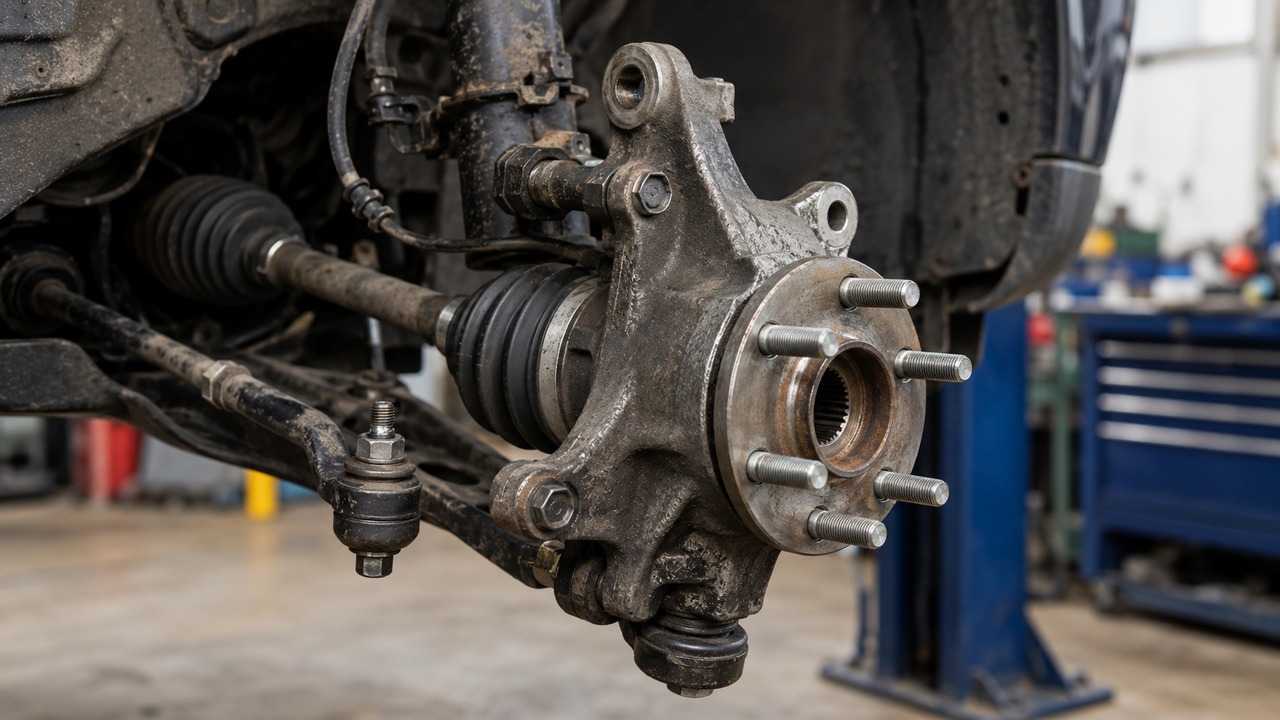
The steering knuckle is the structural suspension component located at the wheel. It provides the mounting point for the wheel hub and bearing and connects the wheel assembly to several suspension and steering components.
Depending on the suspension design, the knuckle may connect to:
- the strut
- one or more control arms
- ball joints
- the outer tie rod end
- the wheel hub and bearing
- the brake assembly
- the CV axle on driven wheels
- the ABS or wheel-speed sensor
Because so many components meet at the knuckle, replacing it can involve much more disassembly than its appearance suggests.
Why Does a Steering Knuckle Need Replacement?
Unlike a rubber bushing or ball joint, a steering knuckle is not normally considered a routine wear item.
Most replacements happen because something has physically damaged the component or made it unsuitable for reuse.
- collision or curb impact
- bending after a severe pothole or accident
- cracks or structural damage
- severe corrosion
- damaged bearing bore
- stripped or damaged mounting threads
- damage caused while removing a seized bearing or hub
A shop should be able to explain what is wrong with the knuckle itself. Normal wear in a ball joint, tie rod or control arm does not automatically mean the knuckle needs to be replaced.
The Wheel Bearing Can Change the Entire Quote
This is one of the biggest reasons steering knuckle estimates vary.
Some vehicles use a bolt-on hub assembly. Once the brakes and axle are out of the way, the hub can be unbolted from the knuckle and transferred or replaced separately.
Other vehicles use a pressed wheel bearing. The old hub may have to be pressed out first, followed by the bearing. A retaining snap ring may also have to be removed before the bearing can be pressed out of the knuckle.
The new knuckle then needs the bearing and hub pressed back into place using the correct fixtures and support points.
That procedure adds labor, requires shop equipment and creates another decision: whether reusing the old bearing makes sense after it has been removed.
Should the Wheel Bearing Be Replaced With the Knuckle?
Not automatically, but it should be inspected.
If the vehicle uses a bolt-on hub that comes apart cleanly and the bearing is quiet, smooth and relatively new, reusing it can be reasonable.
A pressed bearing is a different situation. Removing it can place loads through the bearing that make reuse less attractive, and some bearings simply do not come out of a damaged knuckle without being destroyed.
If your estimate includes a wheel bearing or hub, ask whether it is being replaced because it was already defective or because the knuckle replacement procedure makes reuse impractical. If the bearing itself is the failed component, see our wheel bearing replacement cost guide for typical parts and labor prices.
Parts Cost: Why One Knuckle Is $250 and Another Is $800
The knuckle itself can range from a relatively basic cast component to an expensive OEM aluminum assembly.
Price differences can come from:
- cast iron vs. aluminum construction
- OEM vs. aftermarket parts
- front-wheel-drive, rear-wheel-drive or AWD design
- integrated bearing or hub components
- premium or heavy-duty suspension hardware
- limited aftermarket availability
Ask for the exact part number when comparing two estimates. A bare aftermarket knuckle and an OEM assembly supplied with additional components are not equivalent quotes.
What the Labor Usually Involves
A typical front steering knuckle job starts with the wheel and brake components. The caliper and rotor are removed or moved out of the way, and the wheel-speed sensor may need to be disconnected.
On a driven wheel, the axle nut is removed and the CV axle is separated from the hub. The technician then disconnects the steering and suspension points holding the knuckle in place.
That can mean separating the tie rod end, ball joint and strut or control-arm connections before the knuckle can finally be removed from the vehicle.
If those joints are corroded or seized, the labor time grows quickly.
Tie Rod, Ball Joint and Control Arm: Do They Need Replacement Too?
They should be inspected, but they do not automatically need replacement simply because the knuckle is coming off.
The outer tie rod end has to be separated from the knuckle on most steering designs. If it has measurable play or a damaged boot, that is a separate repair. Our tie rod replacement cost guide covers that work independently.
The same applies to the ball joint. A loose or damaged ball joint can justify replacement while everything is apart, but a healthy joint should not be condemned just because the knuckle is being replaced. See our ball joint replacement cost guide if that component is also on the estimate.
If the shop is quoting a complete control arm rather than only the knuckle, our control arm replacement cost guide explains that repair separately.
What About the Strut?
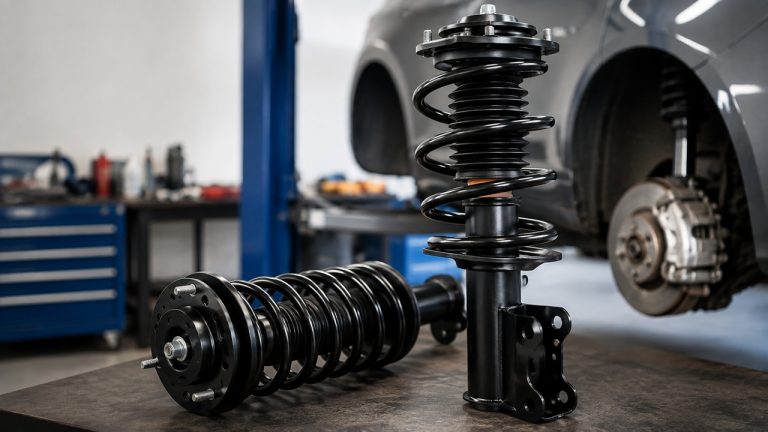
On a MacPherson strut suspension, the strut usually bolts directly to the steering knuckle.
Those bolts must be removed to free the knuckle, but that does not mean the strut itself needs replacement.
If the strut is leaking, damaged from the same impact or already worn out, replacing it during the same repair may make sense. Otherwise, it can normally be reused.
If the estimate includes strut work too, compare it separately with our strut replacement cost guide.
Does Steering Knuckle Replacement Require an Alignment?
Yes, checking and normally performing a wheel alignment after steering knuckle replacement is a sensible part of the repair.
The knuckle locates several components that influence wheel geometry. Replacing it may change the relationship between the strut, ball joint, control arm, tie rod and wheel hub, even when the replacement part is dimensionally correct.
If the old knuckle was bent by an impact, there is an additional reason to check the alignment: another suspension component may also have moved or bent during the same event.
Our alignment after suspension replacement guide explains why this repair deserves more than simply reinstalling the tie rod in approximately the same position.
How a Bent Knuckle Can Show Up in an Alignment
A bent steering knuckle can sometimes create an alignment problem that ordinary adjustments cannot correct.
For example, camber may remain outside specification even after the adjustable points have reached their normal range. A technician may then investigate whether the knuckle, strut, control arm or subframe has been bent.
This is particularly relevant after a curb strike, collision or severe pothole impact.
Can a Steering Knuckle Be Repaired Instead of Replaced?
For most modern passenger vehicles, a structurally damaged knuckle is replaced rather than bent back into shape.
The component carries wheel, suspension, steering and braking loads. Heating, welding or straightening a damaged casting without an approved manufacturer repair procedure can introduce serious questions about strength and geometry.
A damaged thread or removable component may sometimes have a manufacturer-approved service solution, but that is different from attempting to straighten a bent or cracked knuckle.
Symptoms of a Bad or Bent Steering Knuckle
There is no single “bad knuckle” symptom because the component does not normally wear in the same way as a joint or bushing.
Problems are more likely to appear after damage and may include:
- alignment that cannot be brought into specification
- visible bending or impact damage
- a wheel sitting at an unusual angle
- pulling after a collision or curb strike
- abnormal tire wear after impact damage
- cracking or severe corrosion
- damage around the wheel bearing or ball-joint mounting area
Several of these symptoms can also come from a bent strut, control arm, wheel or subframe, so inspection and alignment measurements are more useful than guessing from driving symptoms alone.
Can You Drive With a Damaged Steering Knuckle?
A confirmed cracked, severely bent or structurally damaged steering knuckle should be treated seriously.
The knuckle supports critical suspension, steering and wheel-bearing components. Continuing to drive on a structurally compromised one can affect wheel position, steering geometry and the security of attached parts.
A minor alignment concern after hitting a pothole is not proof that the knuckle has failed, but once structural damage has been confirmed, postponing the repair is difficult to justify.
Can You Replace a Steering Knuckle Yourself?
For most vehicles, this is an advanced DIY repair.
The work can require safely lifting the vehicle, removing brakes, separating ball joints and tie rod ends, dealing with axle hardware and transferring a wheel hub or pressed bearing.
A hydraulic press may be required on designs that use a pressed bearing. Using the wrong support points while pressing a new bearing can damage the bearing before the vehicle even leaves the garage.
The final repair also needs correct fastener torque and an alignment check.
How Long Does Steering Knuckle Replacement Take?
An uncomplicated knuckle with a bolt-on hub can sometimes be replaced in a few labor hours.
A pressed bearing, seized axle splines, rusted ball-joint taper, damaged tie rod end or corroded strut bolts can extend that considerably.
This is another repair where quoting only a generic labor time without looking at the vehicle design can be misleading.
Why Your Quote May Be Higher Than the National Average
- The vehicle uses an expensive OEM aluminum knuckle.
- The wheel bearing must be pressed out and replaced.
- The wheel hub is damaged or seized.
- The vehicle is a heavy-duty truck or premium model.
- Collision damage affected additional suspension parts.
- Corrosion has seized the axle, ball joint or tie rod hardware.
- A wheel-speed sensor or dust shield was damaged.
- The price includes a wheel alignment.
If several suspension repairs appear on the same estimate, compare the full scope with our car suspension repair cost guide rather than judging the knuckle line item in isolation.
Before Comparing Two Knuckle Quotes
A cheap estimate is not necessarily the same repair as an expensive one. Ask for these details:
- Is the quote for a bare knuckle or a complete assembly?
- Is the wheel bearing being reused or replaced?
- Is the hub included?
- Which brand and part number are being installed?
- Were the ball joint, tie rod and control arms inspected separately?
- Does the labor include pressing a bearing?
- Is the wheel alignment included in the final price?
Once those details match, the price difference between two shops becomes much easier to understand.
Frequently Asked Questions
How much does steering knuckle replacement cost?
For many vehicles, roughly $600 to $1,000 per side is a useful planning range. Current national estimates are around the $800 to $900 mark, while simpler vehicles can cost less and heavy-duty or premium models can exceed $1,200.
Why is a steering knuckle expensive to replace?
The knuckle connects several suspension and steering components. Labor can include removing brakes, axle hardware, tie rods and ball joints, plus transferring or pressing the wheel hub and bearing into the new knuckle.
Does a new steering knuckle include the wheel bearing?
Not always. Some replacement knuckles are bare, while others may come as assemblies with a bearing or hub already installed. Check the exact part number and quote before comparing prices.
Should the wheel bearing be replaced with the steering knuckle?
It should at least be inspected. A good bolt-on hub may be reusable, while a pressed bearing can be difficult to remove from the old knuckle without damage and may be more sensible to replace during the repair.
Do you need an alignment after steering knuckle replacement?
Yes, checking and normally performing a wheel alignment is recommended because the knuckle locates several components that influence wheel geometry.
Can a bent steering knuckle be repaired?
A structurally bent or cracked modern steering knuckle is generally replaced rather than straightened. Repairs to critical cast suspension components should only follow an approved manufacturer procedure.
How long does it take to replace a steering knuckle?
A straightforward job can take a few labor hours. Pressed bearings, seized hardware, corrosion or collision damage can make the procedure considerably longer.
The Important Number Is the Complete Installed Job
A steering knuckle is a good example of why comparing parts prices alone can be misleading. The same-looking repair can involve a bolt-on hub on one car and a pressed bearing, seized axle and damaged sensor on another.
Before deciding whether a quote is high, find out exactly what comes with the new knuckle, which existing parts will be transferred, whether a new hub or bearing is required, and whether alignment is included. Those details usually explain far more about the final price than the cost of the bare knuckle itself.