Car Suspension Repair Cost: Parts and Labor Prices
Car suspension repair can cost from roughly $100–$400 for a relatively simple link or joint repair to $1,000 or more when a major component such as a strut or control arm needs replacement. The important part is knowing exactly what the estimate covers. “Suspension repair” is not one job, and a quote for one side, one corner, a pair, or an entire axle can look very different even when the same component is involved.
For most drivers, the best way to judge a suspension repair cost is to identify the failed component first, then compare parts, labor, quantity, alignment, and any related hardware separately. This guide focuses on conventional suspension repairs in the United States rather than air-suspension systems or a complete suspension replacement.
Car Suspension Repair Cost at a Glance
The table below gives practical 2026 U.S. budgeting references for common suspension and front-end repairs. They are not fixed prices. Vehicle design, local labor rates, parts choice, corrosion, and how many components are being replaced can move the final bill substantially.
| Repair | Useful 2026 Planning Range | Scope to Confirm |
|---|---|---|
| Sway bar link | About $100–$400 | One side or pair |
| Tie rod | About $250–$350 | Inner or outer, one side; alignment may be extra |
| Ball joint | About $300–$500 | One joint; some vehicles require a complete control arm |
| Control arm bushing | About $250–$600 | Bushing-only service versus complete arm |
| Control arm | About $600–$1,000+ | One arm; design and included ball joint/bushings matter |
| Shock or strut replacement | About $400–$1,300+ | Confirm whether quote is one corner, a pair, or an axle |
| Coil spring | Varies substantially by vehicle and axle | Usually compare paired replacement and labor access |
The wide spread is normal. A $300 estimate and a $1,200 estimate can both be reasonable if they are for completely different components or quantities. Before comparing prices, make sure both shops are quoting the same repair.
What Does “Suspension Repair” Actually Mean?
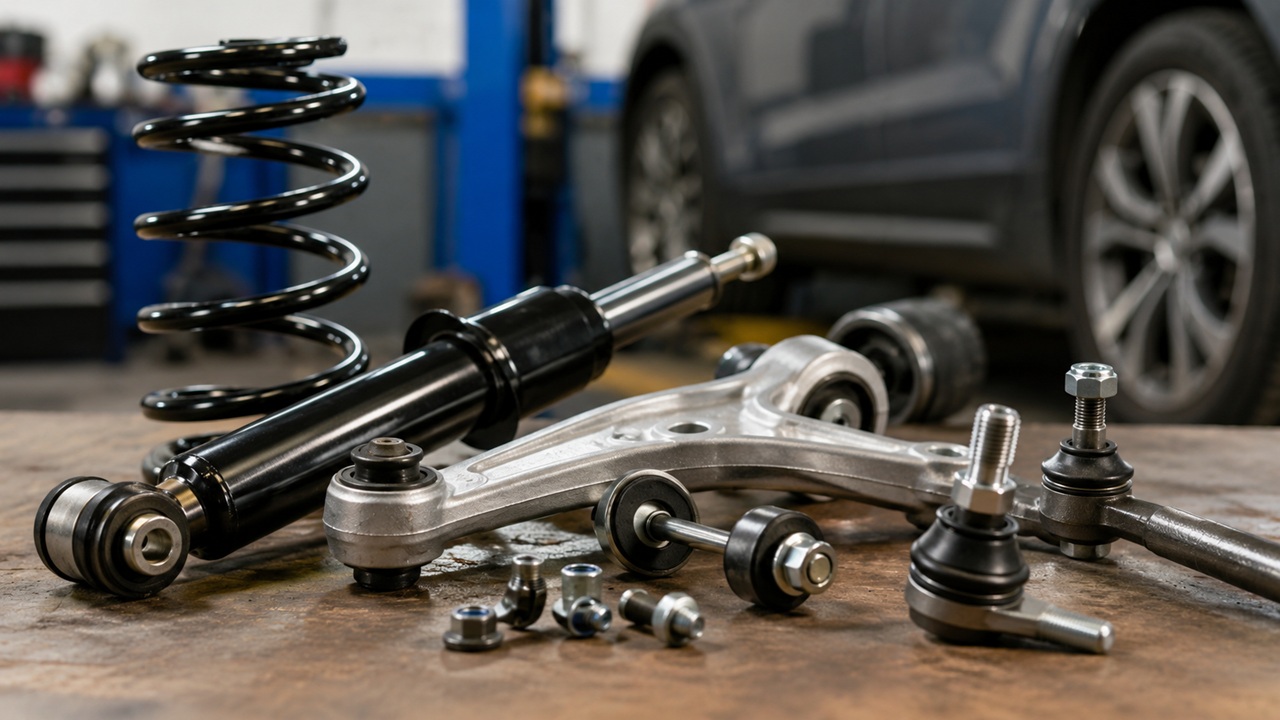
A conventional suspension is made from several separate components rather than one replaceable system. Depending on the vehicle, a repair estimate may involve shocks or struts, control arms, bushings, ball joints, springs, sway bar links, mounts, or related steering components.
That distinction matters because there is no meaningful single price for “fixing the suspension.” Replacing a worn sway bar link is a completely different job from replacing two front struts or a control arm assembly.
If you have symptoms but do not yet know which component has failed, start with a proper inspection rather than choosing a repair from the symptom alone. Our guide to checking a car’s suspension explains the basic inspection process without assuming that every noise or handling problem requires the same part.
Suspension Repair Cost by Component
Shocks and Struts
If your diagnosis specifically calls for new struts, see our strut replacement cost guide for front and rear pricing, parts, labor, and alignment.
Shock and strut jobs are among the more expensive common suspension repairs because parts can be costly and strut replacement may require significant disassembly. Current U.S. repair estimators place many shock-or-strut replacement jobs around the four-figure mark, although simpler shock applications can cost considerably less.
The most important question is how many units are included. A quote might cover one damaged corner, both front struts, both rear shocks, or all four dampers. Comparing those totals without checking quantity can make one shop appear far more expensive when it is actually quoting twice as much work.
Shocks and struts are also not interchangeable terms. If you are unsure which type your car uses or why the labor differs, see our shocks vs. struts explanation.
Control Arms
If your estimate specifically includes a control arm, see our control arm replacement cost guide for parts, labor, alignment, and what may be included in the assembly.
A control arm repair can become expensive because some modern assemblies include bushings and a ball joint rather than allowing every worn piece to be serviced separately. A current U.S. national reference for a complete control arm replacement is roughly $800–$900, but individual vehicles can fall well below or above that level.
Before approving the work, check whether the estimate is for an upper or lower arm, left or right side, and whether new bushings or a ball joint are already included in the assembly. Those details can explain much of the difference between two quotes.
Control Arm Bushings
A worn bushing can sometimes be replaced without replacing the entire control arm. In other applications, however, pressing the old bushing out and installing a new one can require enough labor that a complete preassembled control arm becomes the more practical repair.
That is why a “bushing repair” can range from a relatively modest job to several hundred dollars. Ask whether the shop is replacing only the bushing or the complete arm and whether the quoted part already includes other wear items.
Ball Joints
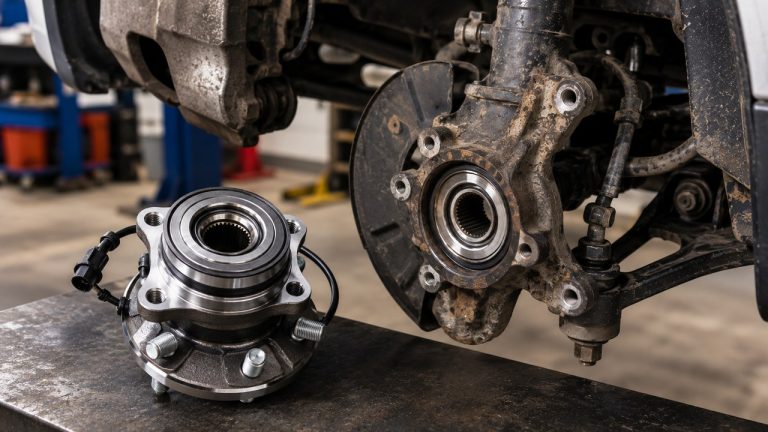
Current U.S. estimates place a typical ball joint replacement at roughly $300–$500, with labor representing a significant part of the bill. The exact design matters: on some cars the ball joint can be replaced independently, while on others it is supplied as part of a control arm assembly.
A quote for a complete arm therefore should not be compared directly with another shop’s price for a standalone ball joint. Confirm that both estimates use the same repair method and include the same components.
Tie Rods
Tie rods are steering components, but they commonly appear on the same front-end repair estimate as suspension work. A typical national reference is around $250–$350 for a tie rod replacement before location-specific differences and related work.
The estimate should identify whether the inner or outer tie rod is being replaced and on which side. Because changing tie-rod length directly affects toe alignment, a wheel alignment is normally part of the repair process or an additional line on the estimate.
Sway Bar Links
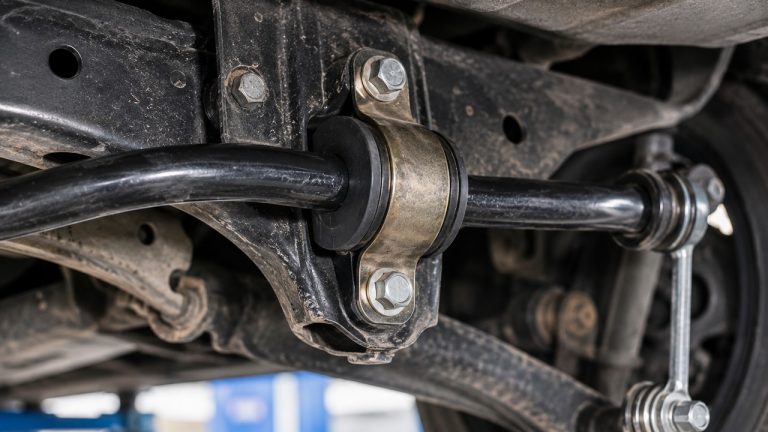
Sway bar links are generally one of the less expensive suspension-related repairs. Depending on the vehicle and labor rate, a single link can cost around $100–$400 installed, with many mainstream applications toward the lower part of that range.
Again, quantity matters. Some shops may quote one failed link while others recommend replacing both sides of the axle. Neither approach should be judged from the total alone without checking the actual scope.
Coil Springs
Coil-spring pricing depends heavily on suspension design, access, whether the spring surrounds a strut, and whether both springs on the axle are being replaced. Because spring replacement has its own labor and safety considerations, we keep the detailed pricing separate in our coil spring replacement cost guide.
Parts vs. Labor: Where Does the Money Go?
Suspension repair prices are often split between two large categories: the component itself and the time required to install it. A relatively inexpensive part can still produce a large bill when access is difficult, hardware is seized, or several surrounding components have to be removed.
| Cost Item | Why It Changes |
|---|---|
| Parts | OEM versus aftermarket, vehicle type, component design and whether the part is sold as an assembly |
| Labor | Access, shop hourly rate, corrosion, special tools and required disassembly |
| Alignment | Needed when the repair changes wheel position or steering geometry |
| Hardware | New bolts, nuts, mounts, bearings or other single-use components |
| Diagnostics | Inspection or measurement needed to confirm the failed component |
Do not assume that the shop with the cheapest part has the cheapest total repair. Labor can outweigh the component cost on jobs involving pressed bushings, seized fasteners, tightly packaged struts, or extensive front-end disassembly.
One Side, a Pair, an Axle or All Four?
This is one of the most important details on any suspension estimate.
- One side means one left or right component, such as one control arm or ball joint.
- One corner generally refers to the suspension around one wheel.
- A pair usually means matching left and right components on the same axle.
- One axle means front or rear, not necessarily every suspension component on that axle.
- All four normally refers to all four shocks or dampers, not a complete suspension rebuild.
For components whose wear affects ride balance or damping, a technician may recommend replacing both sides of an axle even if only one side has obviously failed. Other components can sometimes be replaced individually. The correct choice depends on the component, condition of the opposite side, vehicle design, and manufacturer service information.
Will You Need a Wheel Alignment?
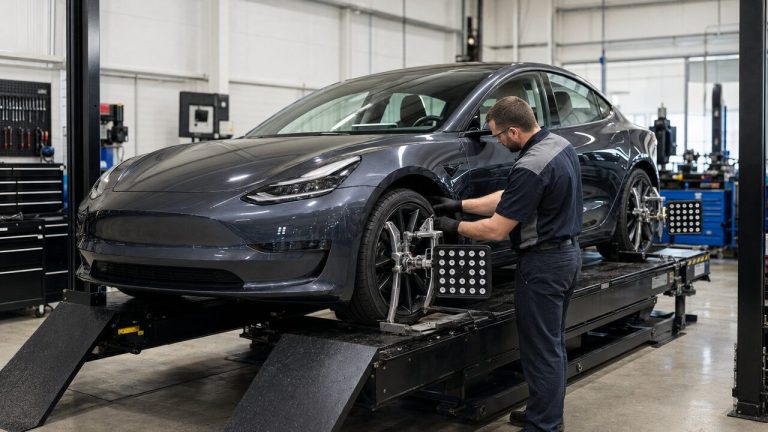
Some suspension repairs alter the position or geometry of the wheel and should be followed by an alignment. Tie rods are a clear example because their adjustment directly affects toe. Control-arm, ball-joint, strut, spring, and other repairs may also require or justify an alignment depending on the vehicle and what was disturbed.
Do not assume every suspension repair automatically requires the same alignment procedure. Our separate guide explains when an alignment is needed after suspension work and when it may not be necessary.
Why Two Suspension Repair Quotes Can Be Hundreds of Dollars Apart
A large difference between estimates does not automatically mean one shop is overcharging. Compare the details first.
- Different quantities: one shop may quote one component while another quotes a pair.
- Different assemblies: a complete control arm may include bushings and a ball joint that another estimate lists separately.
- Different parts grades: OEM, OE-equivalent and lower-cost aftermarket parts can have very different prices.
- Different labor rates: dealership and independent-shop hourly rates vary substantially by region.
- Alignment: one quote may already include it while another adds it later.
- Corrosion: seized or rusted hardware can add labor and replacement fasteners.
- Related wear: a technician may find another legitimately worn component while the suspension is disassembled.
Dealer vs. Independent Shop
An independent repair shop will often have a lower labor rate and may offer more choices between OEM and quality aftermarket parts. A dealership may use factory parts and vehicle-specific procedures but usually carries higher labor and parts pricing.
For a conventional mechanical suspension repair, price alone should not decide where the work is done. Look for a shop that can clearly identify the failed component, explain why replacement is required, specify the part being installed, and state whether alignment or calibration is included.
How to Compare a Suspension Repair Estimate
A useful written estimate should make it possible to answer the following questions before you approve the repair:
- What exact component has failed?
- Which side or axle is affected?
- How many components are being replaced?
- Is the part OEM, OE-equivalent or aftermarket?
- Does the assembly include bushings, mounts or ball joints?
- How much of the quote is parts and how much is labor?
- Is a wheel alignment included?
- Are diagnostic charges, shop supplies, taxes and fees included?
If two written estimates answer those questions differently, their totals are not directly comparable yet.
When a High Suspension Quote Can Be Legitimate
A four-figure suspension estimate is not automatically excessive. Costs rise quickly when several worn components share labor, when the repair requires complete assemblies, or when an alignment is included.
For example, a front-end estimate could legitimately contain two control arms, related ball joints or bushings, new hardware, several hours of labor and a final alignment. That is fundamentally different from replacing one sway bar link.
What should raise questions is a vague estimate that simply says “suspension repair” without identifying the component, quantity or reason for replacement.
What About Air or Adaptive Suspension?
The prices above are intended primarily for conventional mechanical suspension systems. Air springs, electronic dampers, compressors, valve blocks and electronically controlled systems can cost substantially more and may require model-specific diagnosis or calibration.
If your vehicle uses factory air suspension, use our separate air suspension replacement cost guide rather than applying conventional shock, spring or control-arm pricing to the entire system.
Can You Keep Driving With a Suspension Problem?
That depends on what has failed. A mild noise from a worn noncritical component is very different from a loose ball joint, damaged control arm, broken spring or steering component with excessive play.
If the vehicle cannot track straight, a wheel appears out of position, a spring is broken, there is severe looseness, or handling has suddenly become unpredictable, do not keep driving simply to postpone the repair. Have the vehicle inspected. The consequences of delaying different faults are covered separately in our guide to what happens when suspension problems are ignored.
Frequently Asked Questions
How much does it usually cost to fix a car suspension?
A relatively simple suspension repair can cost a few hundred dollars, while major components commonly push the bill toward $800–$1,300 or more. A multi-component front-end repair can cost several thousand dollars. The failed part and quantity matter more than the word “suspension.”
What is the cheapest suspension repair?
Sway bar links and some individual bushings are often among the less expensive common repairs. Actual cost depends on access, parts availability and whether the component can be serviced separately.
What suspension repairs are usually the most expensive?
Strut assemblies, complete control arms, multiple worn front-end components and electronically controlled or air-suspension parts can produce much higher bills than simple links or joints. This guide does not treat a complete suspension replacement as the same job as repairing one failed component.
Should shocks and struts be replaced in pairs?
Replacing matching dampers on the same axle is commonly recommended when both have similar mileage or wear because damping differences can affect ride and handling. However, the correct repair depends on the vehicle, component condition and manufacturer guidance.
Does suspension repair include wheel alignment?
Not always. Some shops include alignment in the written estimate, while others list it separately. Whether it is required depends on the component replaced and the vehicle’s suspension geometry, so always confirm before comparing quotes.
Is a suspension repair worth doing on an older car?
Compare the confirmed repair cost with the vehicle’s overall condition rather than its age alone. A $300 joint or link repair on an otherwise reliable older car is a very different decision from several thousand dollars of suspension work combined with other major mechanical problems.
Judge the Quote by the Repair Scope
The most useful answer to “How much does suspension repair cost?” is not one national average. It is an itemized price for the exact failed component, the number of parts being replaced and the labor required on your vehicle.
Before approving a suspension repair, confirm whether the estimate is for one side or a pair, whether related parts are included in the assembly, and whether alignment and additional fees are already part of the total. Once those details match, comparing two quotes becomes far more meaningful—and much less likely to result in paying for work you did not realize was included.