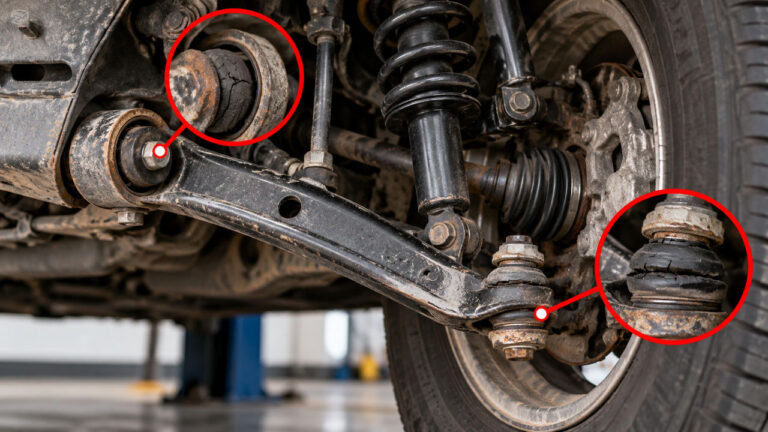
Ball Joint Grease Gun: Best Types, Couplers & Buying Guide
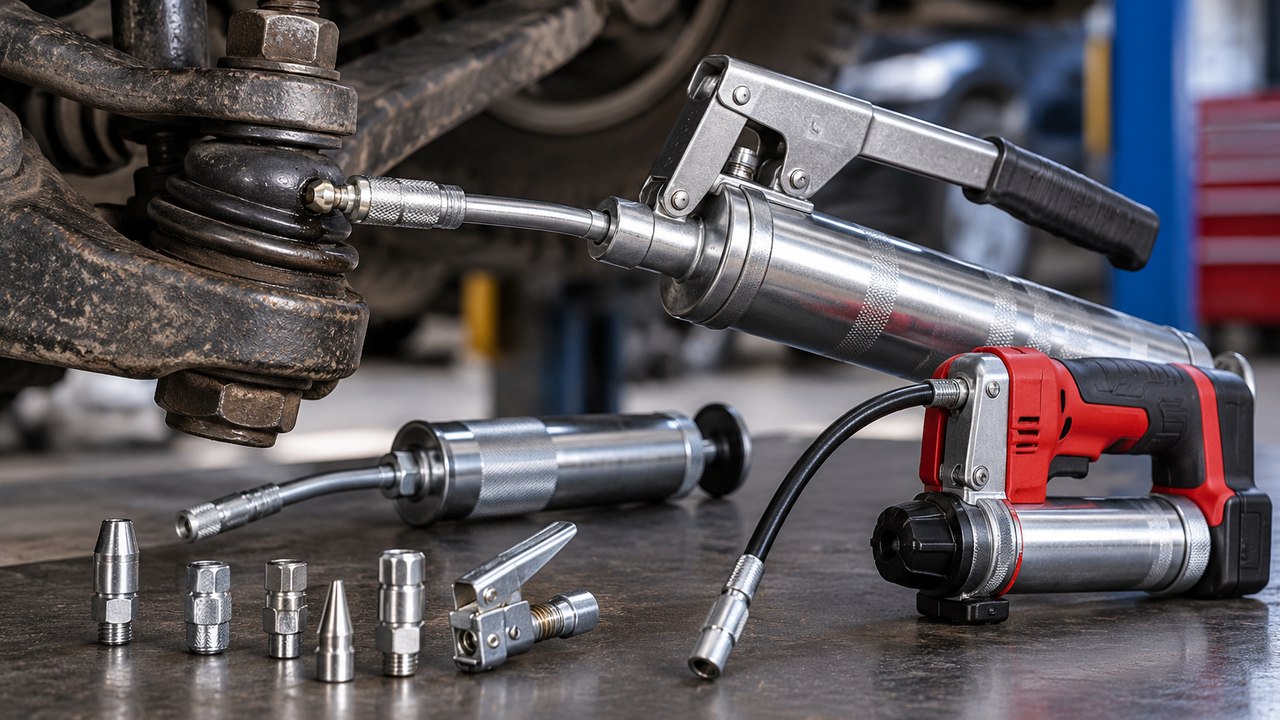
The best ball joint grease gun for most home mechanics is a manual pistol-grip model with a flexible hose and a reliable Zerk fitting coupler. It lets you operate the gun with one hand, position the hose with the other, and add grease gradually without relying on a powerful motor. A standard 14 oz cartridge gun is a practical all-around choice; a compact 3 oz model can make more sense for occasional maintenance.
If you regularly service trucks, trailers, tractors, or an entire fleet, a cordless grease gun becomes more attractive. But for a couple of greaseable ball joints, a 10,000 PSI rating and a battery-powered pump aren’t necessarily advantages. Being able to reach the fitting, maintain a good seal, and control grease delivery matters more.
Before buying anything, check that your ball joints actually have grease fittings. Many original-equipment joints are sealed and don’t require a grease gun. If yours are serviceable, here’s how to choose the right gun, coupler, hose, and adapters without paying for features you won’t use.
Best Grease Gun for Ball Joints: Quick Recommendations
You don’t need the same equipment for maintaining two ball joints once a year as you would for greasing dozens of chassis fittings every week. The best choice depends on how often you’ll use it, the available clearance around the fittings, and whether you already own other lubrication equipment.
| Your situation | Recommended grease gun | Why it fits |
|---|---|---|
| Most DIY car and truck maintenance | 14 oz manual pistol-grip gun with flexible hose | Good balance of control, reach, capacity, and versatility |
| Only a few grease fittings, occasional use | 3 oz mini grease gun | Compact, inexpensive, and easier to store |
| Frequent chassis lubrication | Heavy-duty manual pistol-grip or lever-action gun | Suitable for repeated servicing without batteries |
| Large numbers of fittings or commercial maintenance | Cordless grease gun with controllable output | Reduces repeated hand pumping and saves time |
| Recessed or awkward ball joint fittings | Manual gun with flexible hose and suitable compact coupler | Access becomes more important than maximum pressure |
| Approved flush or low-profile service fitting | Compatible gun with manufacturer-specified needle-nose adapter | Allows servicing of the designated fitting without puncturing the boot |
Our default recommendation: buy a decent pistol-grip grease gun that accepts common U.S. 14 oz cartridges, includes an air-bleed feature, and has a flexible hose. Spend extra on a better coupler if your current one leaks, gets stuck, or won’t reach the fitting.
A fancy gun won’t help if its coupler is too large to fit between a lower ball joint and the surrounding axle or steering hardware. Check the fittings on your vehicle before ordering.
Types of Grease Guns: Which Is Best for Ball Joints?
Grease guns all do the same basic job: push lubricant from a reservoir through a hose or extension into a grease fitting. The differences are how you operate the pump, how much lubricant it holds, and how easily you can control the output.
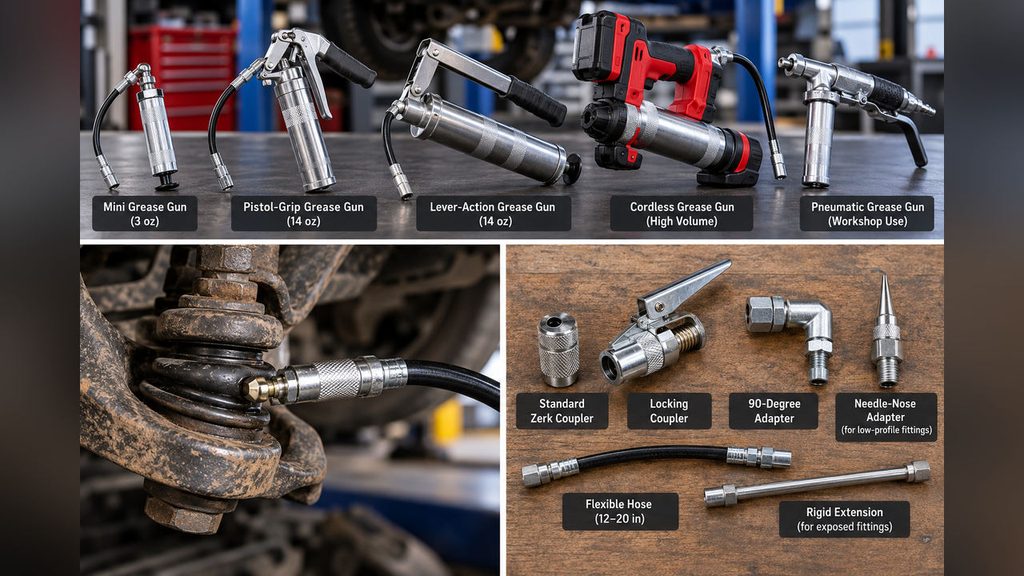
Pistol-Grip Grease Gun: Best Overall for DIY Mechanics
A pistol-grip gun uses a hand-operated trigger or squeeze handle. You can usually hold the gun in one hand and guide the flexible hose with the other, which is especially useful when the Zerk fitting sits behind a control arm or steering knuckle.
This style is a sensible starting point for someone maintaining a pickup, SUV, or older car with greaseable suspension and steering joints. It’s also useful for sway bar components, tie rod ends, and other serviceable fittings when their manufacturers specify grease-gun lubrication.
Not all pistol-grip guns deliver the same amount per squeeze. Some require numerous strokes to empty a cartridge, which isn’t a problem when you’re adding small amounts to ball joints. In fact, manageable output can make it easier to stop at the correct fill point.
The trade-off is hand effort. If you’re servicing a large machine with many fittings, squeezing a manual trigger repeatedly can become tiring. For routine automotive suspension maintenance, though, that usually isn’t a dealbreaker.
Lever-Action Grease Gun: More Leverage, Less Convenience in Tight Spaces
A lever-action gun has a longer pumping handle. That mechanical advantage can help deliver grease against resistance, and heavy-duty lever guns are common in workshops and agricultural maintenance.
There’s a catch when you’re underneath a vehicle: operating a lever often takes both hands. If you’re also trying to hold a hose onto a difficult fitting, the job gets awkward quickly.
A locking coupler can solve part of that problem because you won’t need to hold the nozzle in place while pumping. Even so, a pistol-grip gun is generally more convenient for the small, confined spaces around passenger-vehicle ball joints.
If you already have a good lever-action gun, there’s no reason to replace it just for two grease fittings. Try a suitable hose and coupler before purchasing an entirely new tool.
Mini Grease Gun: Good for Occasional Maintenance
A mini grease gun typically uses a smaller cartridge, commonly around 3 oz in the U.S. It’s easier to fit into a toolbox and may be all you need if your vehicle has only a handful of serviceable joints.
It also wastes less storage space if you need to keep a dedicated grease gun loaded with a particular lubricant. That’s handy when you don’t want to mix chassis grease with products used for other equipment.
Pay close attention to the included accessories. Some inexpensive mini guns arrive with a short rigid extension, which may work on an exposed fitting but become frustrating near a front axle or brake assembly. Others have unusual outlet connections or fewer hose options.
Before choosing one, check that it accepts a compatible flexible hose and replacement coupler. The smaller barrel isn’t much help if you can’t physically reach the Zerk fitting.
Cordless Grease Gun: Better for High-Volume Work
Cordless grease guns from manufacturers such as Milwaukee and DEWALT are designed for frequent maintenance. They use a battery-powered pump rather than manual strokes, and many offer long hoses, variable output, work lights, and air-bleed systems.
Those features are valuable if you maintain several trucks, trailers, tractors, or heavy equipment. A long hose and powered pump can save considerable effort when dozens of fittings need attention.
For a ball joint, however, powered delivery requires restraint. A motorized gun can add grease quickly and generate substantial pressure. If you keep squeezing the trigger against a blocked fitting or a joint that has reached its fill limit, you can damage a dust boot or other components.
A cordless model isn’t inherently unsuitable for ball joints, but it should be used only where the joint manufacturer permits it and with appropriate control over output. Don’t buy one simply because its pressure rating is higher than a manual gun’s.
Pneumatic Grease Gun: Mostly a Workshop Tool
Air-powered grease guns connect to a compressed-air supply. In a professional shop with air lines already installed, they can be convenient for repetitive lubrication.
For occasional ball joint maintenance at home, a pneumatic setup is usually unnecessary. You need an appropriate compressor, regulated air supply, compatible hose and fittings, and enough control to avoid overfilling small joints.
Unless you’re already using pneumatic lubrication equipment for other work, a manual pistol-grip model is the simpler purchase.
What to Look for When Buying a Ball Joint Grease Gun
Product listings love headline pressure ratings, but the details that determine whether a grease gun is pleasant to use are usually less dramatic. A hose that reaches the joint, a coupler that grips properly, and a pump that primes without a fight will matter every time you service the vehicle.
1. A Flexible Hose With Enough Reach
Ball joint fittings aren’t always positioned where a rigid metal extension can approach them directly. Lower ball joints may be partially obstructed by a control arm, axle shaft, steering knuckle, or nearby bracket.
A flexible hose allows the grease gun to remain in a comfortable position while you guide the coupler onto the fitting. For an ordinary manual gun, a hose in roughly the 12–20 inch range can be a practical starting point, provided it reaches the fittings on your vehicle.
Longer isn’t automatically better. A long hose can be awkward to store and route, and it leaves more grease in the line. Commercial cordless guns often include much longer hoses because they’re intended for large equipment and frequent use.
Look for a properly rated hose with secure end fittings and adequate flexibility. Don’t sharply kink it or use it to pull the coupler sideways off a Zerk.
2. A Coupler That Seals and Releases Easily
The coupler is the small fitting at the end of the gun’s hose. It grips the grease nipple and directs pressurized lubricant through the fitting’s check valve.
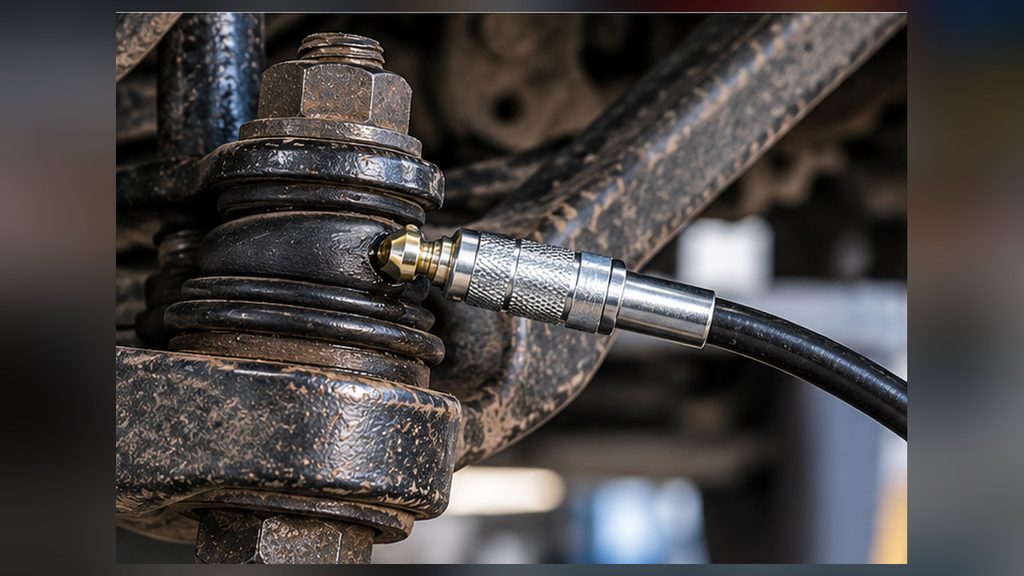
A poor coupler can turn a simple job into a mess. Grease leaks around the connection, the gun slips off under pressure, or the jaws grip so tightly that removing it becomes a struggle.
Standard adjustable couplers can work perfectly well when they’re correctly matched and maintained. Locking models add a release mechanism that keeps the connection secure without constant hand pressure.
Still, check the physical size. Some locking couplers have a wider nose or body than conventional ones. A coupler that seals beautifully on an exposed fitting may be too bulky to reach a recessed Zerk on your truck.
3. Controlled Grease Delivery, Not Just Maximum PSI
You’ll see grease guns advertised at 3,000, 5,000, 8,000, or even 10,000 PSI. These are tool capability ratings, not recommendations for how much pressure to apply to a ball joint.
Normal grease flow into a serviceable joint doesn’t require you to deliberately reach the tool’s maximum pressure. Pressure rises when grease encounters resistance, and a clogged fitting or blocked passage can cause that pressure to increase sharply.
For suspension servicing, controlled output and a reliable stopping point are more valuable than chasing the highest number on the package. A manually operated gun makes it easier to feel changes in resistance, although even a hand gun can generate damaging pressure.
Never use extra pressure to force grease into a joint that refuses to accept it. The problem could be a blocked Zerk, incorrect coupler, air in the tool, or a component that isn’t designed to receive more grease.
4. An Air-Bleed Valve and Easy Priming
One of the most irritating problems with a new grease gun is pumping the handle and getting nothing out. Grease is in the barrel, but trapped air prevents the pump from drawing it properly.
An air-bleed valve can make cartridge changes and initial priming easier. A sturdy follower rod, dependable plunger seal, and clear loading instructions also help.
If you’ve never owned a grease gun, don’t underestimate this feature. A moderately priced tool that primes reliably is usually a better ownership experience than an impressive-looking gun that’s constantly fighting airlocks.
5. Cartridge Size and Grease Compatibility
In the United States, common grease gun cartridge sizes include small 3 oz cartridges and full-size cartridges sold as 14 or approximately 14.5 oz, depending on the product and equipment specifications.
Do not assume every grease cartridge fits every grease gun. Verify the barrel dimensions and supported cartridge type, particularly when buying imported equipment or switching between standard and compact guns.
Also choose the lubricant before committing to a cartridge system. Some ball joints require specific grease formulations, and a cartridge of the wrong chemistry is no bargain even if it fits the barrel.
Our ball joint grease guide explains NLGI #2, GC-LB chassis ratings, lithium-complex grease, synthetic formulations, and manufacturer-specific moly requirements.
Grease Gun Couplers and Adapters for Ball Joints
Sometimes the grease gun itself is fine. The problem is the last inch of the connection. Ball joints can have standard raised Zerks, angled fittings, or special low-profile service points, and each arrangement needs a suitable attachment.
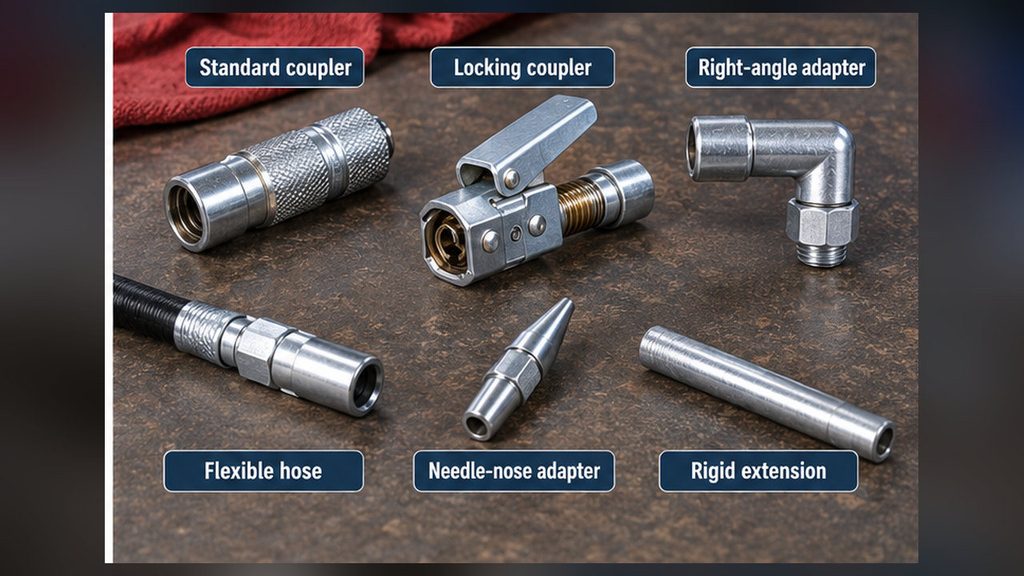
| Attachment | Best use | Important limitation |
|---|---|---|
| Standard grease gun coupler | Accessible conventional Zerk fittings | May leak or be difficult to release if worn or poorly adjusted |
| Locking grease coupler | Frequent servicing and secure connections | Check its outer diameter and release clearance |
| Flexible grease hose | Fittings behind control arms or other obstacles | Must be rated and compatible with the gun |
| 90-degree or right-angle adapter | Specific fittings with restricted approach angles | Requires clearance for the adapter body and correct connection type |
| Needle-nose service adapter | Approved flush or low-profile grease fittings | Not intended to puncture a sealed ball joint boot |
| Rigid extension | Exposed fittings with a straight approach | Often unsuitable for recessed or angled suspension fittings |
Standard Zerk Couplers
Most conventional greaseable automotive ball joints use a hydraulic-type grease fitting, commonly called a Zerk. A standard coupler contains jaws that grip the fitting while grease passes through its spring-loaded check valve.
Some conventional couplers allow jaw tension to be adjusted. If grease leaks at the fitting, the problem may be a loose or worn coupler rather than a defective ball joint.
Don’t confuse the fitting on the ball joint with the threaded connection on the grease gun. Many replacement couplers use a 1/8-inch NPT female hose connection, but that does not mean the Zerk installed in your suspension has 1/8-inch NPT mounting threads. Grease fittings come in different thread sizes and designs.
Before buying a replacement coupler, check both its grease-fitting compatibility and the thread used to attach it to your hose.
Locking Couplers: Useful, but Check Clearance
A locking grease coupler uses a lever, sliding sleeve, or similar mechanism to secure the jaws around a Zerk fitting. Once locked, you can often operate the gun without holding the coupler in place.
LockNLube is one familiar example. Its coupler uses four locking jaws and a thumb-operated release mechanism, and the manufacturer offers rebuildable seals and jaws. That’s useful for a tool that will see frequent use.
The important catch is physical clearance. The standard LockNLube coupler, for example, has a front diameter of approximately 5/8 inch. Before buying a similarly sized attachment, make sure there is enough space around the Zerk to engage it and operate the release.
If your existing coupler fits a very tight opening, don’t assume an upgraded locking model will fit just because both attach to standard grease nipples.
Needle-Nose Adapters for Low-Profile Ball Joint Fittings
This is one of the most misunderstood grease gun accessories.
Certain aftermarket ball joints have a low-profile, flush, or recessed grease fitting because a conventional nipple would interfere with nearby steering or axle components. Those joints may require a manufacturer-approved needle-nose adapter that presses against the designated service inlet.
MOOG documents applications where a needle-nose adapter is used to reach a flush, angled grease passage. In that design, the adapter actuates the check valve of the service fitting. It is not intended to pierce the dust boot.
That’s an important distinction. A pointed accessory sold as a grease gun needle is not permission to inject grease through an otherwise sealed rubber boot. Piercing the boot can compromise its protection against water and grit.
Check the part number and servicing instructions before buying an adapter. For a conventional exposed Zerk, a standard coupler is generally the right attachment. For a designated low-profile service port, use the adapter specified for that component.
Right-Angle Adapters and Grease Fitting Clearance
Some grease fittings point toward a control arm, frame member, or other component that blocks a straight approach. A right-angle adapter may provide access without moving surrounding parts.
But angled adapters have their own physical dimensions. The elbow may be too large to fit into a narrow pocket, and adding multiple extensions increases the number of connections that can leak.
Before ordering a 90-degree adapter, check the direction of the grease fitting, the space around it, and the type of coupler connection required. A flexible hose and compact straight coupler may already solve the problem.
Real Grease Gun Options Worth Comparing
Rather than label an untested tool the best, it’s more useful to look at what established manufacturers actually offer. The following are examples of grease gun designs with published specifications, not a ranking based on hands-on durability testing. Availability, included accessories, and individual model specifications can change.
LockNLube Premium Pistol-Grip Grease Gun
LockNLube’s premium pistol-grip gun is a useful example of a tool designed around manual operation and coupler convenience. The manufacturer lists a 14 oz cartridge capacity, a 20-inch hose, an air-bleeder valve, and a 1/8-inch NPT outlet connection.
For a DIY mechanic who wants a full-size manual gun, those specifications cover many practical requirements. The flexible hose gives useful reach, and a quality coupler can make it easier to connect and disconnect from common grease fittings.
It’s worth checking which coupler and accessories are included with the exact version being sold. Also verify that the coupler’s physical dimensions suit the ball joints on your vehicle.
Milwaukee M18 Two-Speed Grease Gun
Milwaukee’s M18 two-speed grease gun is intended for more demanding lubrication work. The manufacturer lists a maximum pressure of 10,000 PSI, a long flexible hose, and selectable settings for pressure or grease flow.
That’s a very different ownership proposition from a small manual grease gun. The Milwaukee is better suited to someone servicing many fittings regularly, especially if they already use M18 batteries for other tools.
For occasional ball joint maintenance, the extra capability can be unnecessary. High output means you need to pay close attention to the installed joint’s service instructions and stopping point.
DEWALT 20V MAX Cordless Grease Gun
DEWALT also offers cordless grease guns with variable-speed triggers, flexible hoses, and high maximum pressure capability. The DCGG571 family, for example, is specified with a 42-inch flexible hose and up to 10,000 PSI maximum pressure.
The long hose and powered delivery are useful when servicing several vehicles or equipment with difficult-to-reach fittings. They won’t make a sealed ball joint serviceable, and they don’t justify forcing grease into a blocked Zerk.
If you’re considering this type of gun, compare the complete kit price with a tool-only version, including the battery and charger you’ll actually need. Also check the exact model because hose length, output controls, and supplied equipment can differ.
What About an Inexpensive Mini Grease Gun?
Don’t overlook it. If the only serviceable components on your car are a couple of ball joints or tie rod ends, a basic mini gun may be the most sensible tool in the box.
Before picking the cheapest one available, inspect the hose and coupler specification. A budget mini gun with a rigid extension that cannot reach your fittings is a frustrating purchase, no matter how little it costs.
I’d put money toward a useful hose and dependable coupler before paying extra for an unusually high pressure rating.
3 oz vs. 14 oz Grease Gun: Which Size Should You Buy?
The grease cartridge capacity determines how much lubricant the gun can hold, not how much grease the ball joint needs. A 14 oz gun doesn’t automatically pump more grease with each stroke than a 3 oz gun, and neither size makes an unsuitable lubricant safe to use.
| Feature | 3 oz mini gun | 14 oz full-size gun |
|---|---|---|
| Storage | Compact and easy to carry | Larger barrel and overall footprint |
| Grease capacity | Suitable for infrequent, small jobs | Better for multiple fittings or regular servicing |
| Cartridge availability | Requires compatible small cartridges | Widely used full-size U.S. cartridge format |
| Hose options | Varies considerably by model | Many models support flexible hoses and aftermarket couplers |
| Best buyer | Occasional DIY user | General home mechanic or frequent user |
For a first grease gun that you’ll use beyond the front suspension, I’d generally choose the full-size pistol-grip model. If you need to keep a small quantity of a special grease separate from your other lubricants, a mini gun has a legitimate advantage.
Whichever size you choose, check the exact cartridge dimensions listed by the gun manufacturer. Similar-looking cartridges are not always interchangeable, especially across U.S. and metric-market equipment.
Do You Need a High-Pressure Grease Gun for Ball Joints?
Not specifically. Grease guns need enough pressure capability to deliver lubricant through their hose and into a serviceable fitting, but a ball joint should never be treated as something that must withstand the gun’s advertised maximum output.
There are three figures worth keeping separate:
- Maximum pressure: The highest pressure the gun may be capable of generating under specified conditions.
- Grease output: How much lubricant the tool delivers per stroke, trigger movement, or unit of time.
- Component service limit: The fill procedure and restrictions specified by the ball joint manufacturer.
The first number is often advertised in large print. The third is the one that determines how the joint should be serviced.
A manual gun is not harmless simply because it lacks a motor. It can still generate substantial pressure, particularly if the outlet is obstructed. Likewise, a powered gun with controlled flow is not automatically dangerous when used according to the correct procedure.
Never keep pumping solely to overcome resistance from a Zerk that won’t accept grease. Investigate the fitting, tool, and joint instead of assuming more pressure will solve it.
What Grease Fitting Does Your Ball Joint Have?
Before ordering a grease gun kit, inspect the actual component. Many newer vehicles use sealed factory ball joints, and aftermarket replacements may have a different lubrication design from the parts originally installed.
Here’s the important distinction:
| What you find | Tool requirement |
|---|---|
| Standard raised Zerk fitting | Compatible grease gun with conventional Zerk coupler |
| Angled or recessed raised Zerk | Compact coupler, flexible hose, or suitable angled access attachment |
| Manufacturer-approved flush service fitting | Specified needle-nose or low-profile service adapter |
| No fitting or approved grease inlet | Usually no grease gun servicing; verify that the joint is sealed |
| Damaged fitting, torn boot, or excessive joint play | Inspection or repair before attempting lubrication |
The last row matters. A grease gun is a maintenance tool, not a way to fix a ball joint that has worn beyond its service limits.
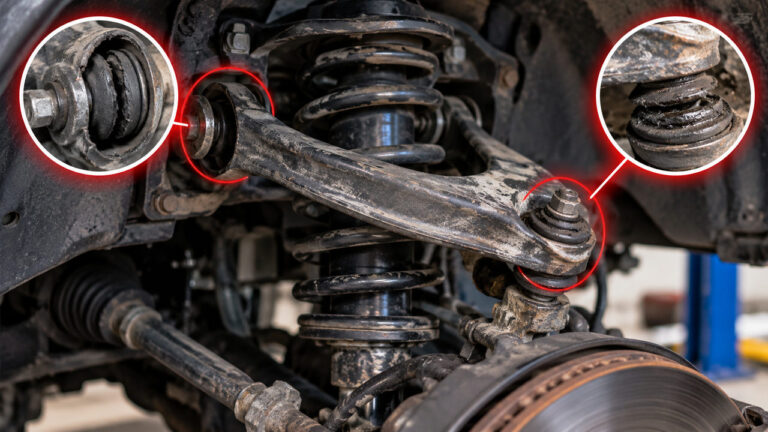
Also remember that upper and lower ball joints may have different access requirements. Some vehicles use a lower ball joint with an angled fitting because a straight grease nipple would interfere with a nearby axle shaft. Others have no upper ball joint in the conventional sense because they use a MacPherson strut layout.
Checking your exact vehicle and replacement-part numbers can save you from buying an adapter you’ll never use.
A Simple Buying Checklist Before You Order
If you’re comparing two grease gun kits online, run through these questions before making a decision. They’re more useful than a list of marketing claims about maximum pressure.
- Can you identify the fitting? Confirm whether the ball joint uses a standard Zerk, a low-profile service port, or no grease inlet.
- Will the coupler physically fit? Check the space around the fitting and whether the release mechanism can be operated.
- Does the hose reach comfortably? Choose a flexible hose long enough to access the fitting without pulling against the surrounding suspension.
- Can you control the output? A manageable manual stroke or adjustable powered delivery is preferable to uncontrolled grease flow.
- What cartridges does it accept? Verify the exact cartridge size and availability of the grease your ball joint requires.
- Is it easy to prime? An air-bleed valve and clear loading instructions can prevent unnecessary frustration.
- Can you replace the coupler or hose? Standard serviceable connections make the tool easier to maintain and adapt.
- How often will you use it? A basic manual gun may be sufficient for occasional suspension work; frequent fleet maintenance can justify cordless equipment.
One more thing: don’t confuse a grease gun kit with a complete suspension maintenance kit. A package containing several nozzles may look generous, but only one or two of those attachments might work on your vehicle.
Common Problems With Grease Guns and Couplers
Even a decent grease gun can misbehave. Before blaming the tool or forcing the handle harder, use the symptom to narrow down what’s happening. This is a quick equipment-focused checklist, not a replacement for the full ball joint greasing procedure.
| Problem | Likely cause | First thing to check |
|---|---|---|
| Gun pumps but no grease emerges | Airlock, empty cartridge, or priming issue | Check grease supply and the manufacturer’s bleeding procedure |
| Grease leaks around the Zerk | Poorly seated, worn, or incompatible coupler | Inspect and reseat the coupler before pumping |
| Coupler won’t release | Jaw tension or pressure still holding the connection | Use the coupler’s intended release mechanism |
| Coupler cannot reach the fitting | Restricted clearance or incorrect attachment | Check compact, angled, or low-profile accessories |
| Handle suddenly becomes very hard to operate | Restricted grease flow or blocked service inlet | Stop; check the gun and fitting rather than forcing pressure |
| Grease flows freely outside the vehicle but not into the joint | Connection, fitting, or joint-service issue | Identify the fitting and follow its manufacturer’s service guidance |
Always test a freshly loaded grease gun away from the vehicle before attaching it to a ball joint. That quick check confirms whether lubricant is reaching the end of the hose.
If the tool works but the joint will not accept grease, don’t assume the solution is a bigger gun. The fitting may be blocked, the connection may be incorrect, or the part may require a special servicing procedure.
For the complete process—including how to identify the right fitting, avoid overfilling the dust boot, and deal with a joint that refuses grease—see our step-by-step guide to greasing ball joints.
Is Buying a Grease Gun Worth It for One Car?
That depends on how many serviceable fittings the vehicle has and whether you’re likely to use the tool again.
If you own an older pickup with greaseable upper and lower ball joints, tie rod ends, and steering linkage components, a grease gun can become a regular part of maintenance. A dependable manual gun is an investment you can use repeatedly.
If your modern car has sealed suspension joints, there may be nothing to grease with a gun. Buying one because you heard that ball joints should be lubricated at every oil change would be a waste.
For someone servicing a single aftermarket greaseable joint, paying a shop to perform the work may be more practical than purchasing a gun, hose, coupler, and a full cartridge of specialized grease. The economics change if you have several vehicles or additional equipment with serviceable fittings.
Our suspension lubrication cost guide explains the factors that affect what a professional service may cost.
Frequently Asked Questions
What kind of grease gun do I need for ball joints?
For most greaseable automotive ball joints, a manual pistol-grip grease gun with a flexible hose and compatible Zerk coupler is a practical choice. Make sure it accepts the required grease cartridge and can physically reach the fitting on your vehicle.
Is a mini grease gun good enough for ball joints?
Yes, if it has adequate capability, uses the correct lubricant, and can connect securely to the ball joint’s service fitting. A 3 oz mini gun can be sufficient for occasional maintenance. The quality and fit of its hose and coupler may matter more than its small cartridge capacity.
Do ball joints require a special grease gun?
Usually not. A serviceable ball joint with a conventional Zerk accepts grease from a compatible general-purpose grease gun. Some low-profile or recessed fittings require a specific adapter, and sealed joints without approved service ports are not intended for routine grease-gun lubrication.
How much PSI should a ball joint grease gun have?
There is no single PSI rating that every ball joint requires. A grease gun’s maximum pressure capability is not the pressure you should deliberately apply during servicing. Choose a suitable tool and follow the joint manufacturer’s fill instructions. Never force grease into a blocked fitting by increasing pressure.
Can I use a cordless grease gun on ball joints?
Potentially, when the component manufacturer permits it and you can control the grease delivery appropriately. Cordless guns are particularly useful for frequent maintenance, but their high flow rates and pressure capability require care around small ball joint dust boots.
What is the best grease gun coupler for ball joints?
A good coupler should seal securely on the Zerk fitting, release without damaging it, and fit into the available space. Standard adjustable couplers work for many applications; locking couplers are convenient for frequent use. A compact coupler may be preferable when clearance is tight.
Can I grease ball joints with a needle attachment?
Only when the needle-nose adapter is approved for the ball joint’s designated grease fitting or service inlet. Certain MOOG applications, for example, use low-profile fittings that require this approach. Do not puncture an intact sealed dust boot with a grease needle as routine maintenance.
Will a grease gun work on a sealed ball joint?
Not if the joint is genuinely sealed and has no approved lubrication port. Those joints are usually assembled with grease and protected by a boot intended to remain intact. A grease gun doesn’t convert a non-serviceable joint into a serviceable one.
Can I use the same grease gun for ball joints and other suspension parts?
Yes, if the components are serviceable and the gun contains a lubricant approved for each application. When different grease formulations are required, avoid mixing them or contaminating components with an unsuitable product. Separate grease guns can be convenient if you regularly use incompatible or specialized lubricants.
Is a grease gun with a flexible hose better than a rigid extension?
Usually for automotive suspension work. A flexible hose lets you approach ball joint fittings from different angles without moving the entire grease gun into the same tight space. A rigid extension remains useful for exposed fittings with a clear, straight approach.
The Grease Gun We’d Choose for Most Ball Joints
For an ordinary home garage, I’d choose a full-size manual pistol-grip grease gun, a flexible hose, and a coupler that fits the actual Zerk fittings on the vehicle. It’s a straightforward setup that works for routine chassis maintenance without bringing unnecessary battery weight, cost, or output into the job.
A mini gun is perfectly reasonable if you’re only servicing a few joints. A cordless model earns its place when you have many fittings to maintain regularly. And a locking coupler can be a worthwhile upgrade—but only if there’s room to use it.
Before spending anything, confirm that your ball joints are greaseable, identify their fittings, and check which lubricant they require. The right tool is the one that connects properly, delivers grease with control, and lets you stop before the joint is overfilled. Everything else comes second.