Sway Bar Bushing Replacement Cost: Parts & Labor
Sway bar bushing replacement usually costs about $150 to $350 on many vehicles in the United States, including parts and labor. The bushings themselves are often inexpensive. What makes some jobs surprisingly costly is where the sway bar is mounted and how difficult the brackets are to reach.
On an accessible truck or SUV, changing a pair of bushings can be a relatively quick repair. On another vehicle, nearly identical-looking rubber bushings may sit above a subframe or behind other components, turning a cheap part into a several-hundred-dollar labor bill.
The Bushings Are Cheap. Access Is What Costs Money.
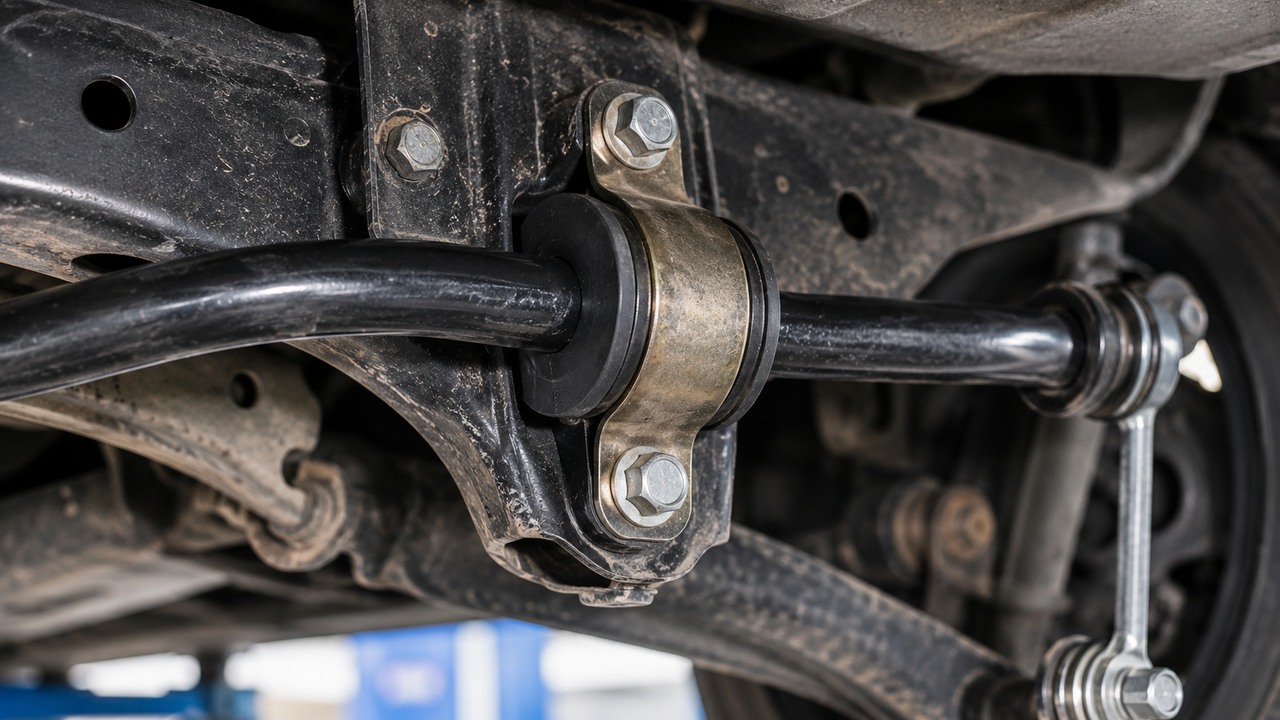
A sway bar is held to the vehicle by rubber or synthetic bushings that wrap around the bar and sit inside metal brackets. Most vehicles use two mounting bushings on each sway bar.
The replacement bushings themselves may cost only around $20 to $80 for a pair on many mainstream vehicles. That does not mean the entire repair should cost $50.
The technician still has to lift the vehicle, reach the mounting brackets, remove rusty hardware, open or remove the brackets, fit the correct bushings and reassemble everything. If the brackets are tucked above a subframe, steering rack or other major component, labor becomes the dominant expense.
| Situation | Useful U.S. Planning Range |
|---|---|
| Simple, accessible bushing replacement | About $120–$250 |
| Typical pair of sway bar bushings | About $150–$350 |
| Higher labor or difficult access | About $300–$500+ |
| Subframe or major access work required | $500–$800+ possible |
| Bushings only, parts | Often about $20–$80+ |
| Wheel alignment | Usually not required for a straightforward bushing-only job |
Those figures are planning ranges rather than a quote for every vehicle. Labor time matters far more here than the retail price of the rubber parts.
What Do Sway Bar Bushings Actually Do?
The sway bar, also called an anti-roll bar or stabilizer bar, twists as the left and right sides of the suspension move differently. Its job is to help control body roll during cornering.
The mounting bushings secure that bar to the chassis or subframe while still allowing it to rotate slightly as the suspension moves.
They also isolate metal-to-metal contact and help prevent the bar from knocking against its brackets.
As the rubber ages, it can harden, crack, shrink or wear away. The bar may then move inside the bracket instead of being held firmly.
Sway Bar Bushings, Links and the Bar Are Three Different Repairs
This distinction matters because all three parts are commonly described as a “sway bar problem,” even though the repair cost can be very different.
- Bushings: mount the sway bar to the chassis or subframe.
- Links: connect the ends of the sway bar to the suspension.
- Sway bar: the long steel anti-roll bar itself.
If the small end links are worn rather than the mounting bushings, see our sway bar link replacement cost guide.
If the actual steel bar is bent, cracked or badly corroded, that is a different repair again. We cover it separately in our complete sway bar replacement cost guide.
Why Can a $30 Bushing Job Turn Into a $500 Repair?
If you receive a surprisingly high quote, first look at the labor procedure rather than the price of the bushings.
On some vehicles, both brackets are visible and easy to reach from underneath. Remove a few bolts, open the brackets, swap the bushings and reinstall them.
On others, the sway bar mounting points can be blocked by the steering rack, exhaust, engine cradle or subframe. The technician may need to loosen or lower surrounding components just to get a wrench onto the bracket bolts.
Rust adds another variable. A seized bracket bolt can turn a routine job into drilling, cutting or thread repair.
That is why comparing sway bar bushing quotes by parts price alone is misleading.
Front Sway Bar Bushing Replacement Cost
Front sway bar bushings often fall around $150 to $350 installed when the brackets are reasonably accessible.
Front bars can also be the difficult ones. They may run close to the steering rack, drivetrain and front subframe, leaving very little space around the bushing brackets.
If the shop quotes several hours of labor, ask whether the repair procedure requires the subframe or another large assembly to be loosened for access. That can legitimately move a front bushing job well beyond the typical range.
Rear Sway Bar Bushing Replacement Cost
Rear bushings can be very inexpensive to replace when the sway bar is exposed beneath the vehicle. On a simple layout, approximately $120 to $300 can be realistic.
But rear does not automatically mean easy. Exhaust routing, rear differentials, fuel tanks, subframes and multi-link suspension components can restrict access on some vehicles.
Some cars also use a front sway bar but no rear sway bar, so there may be no rear mounting bushings to service.
Do You Replace One Sway Bar Bushing or Both?
Most conventional sway bars use two chassis-mount bushings, and they are commonly replaced as a pair.
They have usually experienced the same mileage, age and environmental exposure. Replacing both also avoids doing nearly the same access work twice if the second old bushing begins making noise shortly afterward.
There can be exceptions. A bushing damaged by a localized oil leak, impact or installation problem may fail independently. The repair should still be based on inspection rather than a rule that every rubber component must always be replaced in pairs.
Rubber vs. Polyurethane Sway Bar Bushings
Factory bushings are commonly rubber. Rubber is inexpensive, isolates noise well and allows the suspension to behave as the manufacturer intended.
Polyurethane bushings are popular in performance applications because they can reduce compliance and may last well when correctly installed and lubricated.
That does not automatically make polyurethane the best choice for a normal street repair. A stiffer bushing can transmit more noise or vibration, and some designs need periodic lubrication to prevent squeaking.
If the goal is simply to eliminate noise and restore factory behavior, an OE-style rubber bushing is often the straightforward choice.
The Bushing Has to Match the Sway Bar Diameter
Sway bar bushings are not selected only by vehicle model. The inside diameter of the bushing needs to match the diameter of the bar at the mounting point.
Some vehicles were built with different sway bar diameters depending on suspension package, engine, drivetrain or trim level.
A bushing that is too large can leave excessive clearance and allow the bar to knock around. One that is too small may not fit correctly in the bracket or can bind the bar.
That is one reason universal-looking inexpensive bushings should not be purchased on appearance alone.
Common Signs of Worn Sway Bar Bushings
Worn bushings often announce themselves through noise before they create dramatic handling symptoms.
- clunking over small bumps or broken pavement
- rubbery squeaking as the suspension moves
- knocking from near the center of the axle rather than directly at the wheel
- visible cracking or deformation of the bushing
- a polished or rusty witness mark where the sway bar has been moving inside the bushing
- excessive side-to-side movement of the sway bar
Those symptoms are not unique to sway bar bushings. End links, control arm bushings, strut mounts and ball joints can all create suspension noises.
If the source has not been confirmed yet, our suspension clunk and rattle diagnostic guide is a better starting point than replacing parts based on noise alone.
Can Worn Sway Bar Bushings Affect Handling?
They can, especially when badly worn.
The bushings are supposed to locate the sway bar securely. If the bar can shift substantially inside its mounts, some of its response can be delayed or reduced when the vehicle corners.
That said, a slight bushing squeak does not automatically mean the vehicle has lost major roll control. The severity of the wear matters.
Can Bad Sway Bar Bushings Cause Uneven Tire Wear?
Worn sway bar bushings are not normally a direct cause of uneven tire wear. They do not set toe, camber or caster.
If a vehicle has both bushing noise and abnormal tire wear, there may be another suspension or alignment issue at the same time.
Do You Need an Alignment After Sway Bar Bushing Replacement?
Usually not for a straightforward bushing-only replacement. Removing the mounting bushings and brackets does not normally change wheel alignment settings.
There is an important exception: access.
If the repair requires loosening or lowering a subframe, removing control arms or disturbing another component that affects suspension geometry, an alignment check may be appropriate afterward.
Our alignment after suspension repair guide explains why the answer depends on what was actually disturbed during the job.
Can You Drive With Worn Sway Bar Bushings?
Minor bushing wear is generally not the same immediate failure risk as a tie rod or ball joint that is close to separating.
However, badly deteriorated bushings can allow excessive bar movement, create persistent knocking and reduce the anti-roll system’s effectiveness.
If the vehicle’s handling has changed noticeably, the sway bar is shifting substantially, or another suspension component may also be loose, the vehicle should be inspected rather than assuming the noise is harmless.
Should the Sway Bar Links Be Replaced at the Same Time?
Not automatically.
The links should be checked for joint play, torn boots, corrosion and damaged hardware while the suspension is being inspected. If they are tight and undamaged, replacing them solely because the mounting bushings are worn adds unnecessary parts to the job.
If both bushings and links are worn, doing the repairs together may save some duplicated setup time and avoids returning shortly afterward for another sway bar-related noise.
When Does the Whole Sway Bar Need Replacement Instead?
Worn rubber bushings generally do not mean the complete steel sway bar needs replacement.
The complete bar becomes a concern when it is bent, cracked, fractured, severely corroded or damaged where the bushings contact it.
If corrosion has deeply reduced the bar’s diameter at the bushing mounting surface, simply fitting new bushings may not locate the bar correctly.
How Long Does Sway Bar Bushing Replacement Take?
On an accessible suspension, replacing both bushings can be a relatively short shop job. The brackets may be directly exposed underneath the vehicle and held by only a few fasteners.
On a difficult design, the actual bushing swap may take minutes while reaching the bushings takes hours.
That difference explains why labor guides and shop estimates vary so much from one model to another.
Can You Replace Sway Bar Bushings Yourself?
Accessible sway bar bushings can be a reasonable DIY repair for someone already comfortable lifting and supporting a vehicle safely.
The basic repair may involve removing the bushing brackets, opening split bushings around the bar and reinstalling the brackets to the correct torque.
Problems begin when access is restricted, bracket bolts are seized, the bar must be repositioned or a subframe needs to be loosened. At that point, a simple rubber-bushing replacement can become an advanced suspension job.
Never work beneath a vehicle supported only by a jack.
How to Read a Sway Bar Bushing Quote
Instead of comparing only the final number, ask the shop four questions:
- Are both mounting bushings included? Most sway bars use a pair.
- Why is the labor time what it is? Ask specifically whether subframe or steering-rack access is involved.
- Are links or the complete sway bar included too? Those are separate repairs.
- Is alignment included, and why? A basic bushing swap normally does not need it, but related access work might.
If the estimate contains several suspension repairs rather than only the sway bar bushings, our general suspension repair cost guide can help put the full bill into context.
Frequently Asked Questions
How much does sway bar bushing replacement cost?
About $150 to $350 is a useful planning range for many U.S. vehicles. Simple jobs can cost less, while restricted access or subframe work can push the total to $500 or considerably more.
How much do sway bar bushings cost?
The bushings themselves are often inexpensive, commonly around $20 to $80 or more for a pair. Labor can cost several times more than the parts.
Should sway bar bushings be replaced in pairs?
Usually, yes. Both mounting bushings normally have the same age and mileage, and much of the labor overlaps. An isolated failure can be an exception.
Are sway bar bushings the same as sway bar links?
No. The bushings mount the sway bar to the chassis or subframe. The links connect the ends of the bar to the suspension.
Do sway bar bushings require an alignment?
Not normally when only the bushings are replaced. Alignment may be worth checking if the repair procedure requires moving the subframe or disturbing other alignment-related components.
What does a bad sway bar bushing sound like?
Common complaints include clunking, knocking or squeaking over bumps and rough pavement. Those noises can also come from links and other suspension components, so diagnosis matters.
Can I replace only the bushings instead of the whole sway bar?
Usually, yes. If the steel bar is straight, structurally sound and not badly worn at the mounting surfaces, the bushings can normally be serviced separately.
Before Approving the Repair, Check the Labor
Sway bar bushings are a good example of why the price of a suspension part does not tell you the price of the repair. A pair of inexpensive rubber bushings can be quick to replace on one vehicle and buried behind hours of disassembly on another.
For many cars, trucks and SUVs, $150 to $350 is a sensible starting budget. If your quote is substantially higher, ask where the bushings are located and what has to be removed or lowered to reach them. That answer is usually more useful than comparing the cost of the rubber parts online.