Steering Stabilizer Replacement Cost: Parts & Labor Prices
Steering stabilizer replacement costs about $240 to $273 on average in the United States, including roughly $170 for the part and $70 to $103 for labor, according to RepairPal’s national estimate. That is a useful starting point, but your actual bill can be lower or considerably higher depending on the vehicle, replacement part, and shop.
On a Jeep Wrangler, for example, a basic steering damper may be inexpensive and quick to replace. A premium off-road stabilizer, seized mounting hardware, or an additional steering repair changes the calculation. Before paying for a new damper, it also matters whether the damper is actually causing the complaint. A steering wheel that shakes after hitting a bump doesn’t automatically mean the stabilizer has failed.
Steering Stabilizer Replacement Cost: Parts and Labor
RepairPal’s nationwide estimate provides a useful baseline for a conventional steering stabilizer replacement. The figures below cover the damper and installation, not a complete front-end repair or any additional problems discovered during inspection.
| Cost Item | U.S. Estimate |
|---|---|
| Replacement steering stabilizer | About $170 |
| Labor | $70–$103 |
| Total replacement cost | $240–$273 |
| Taxes, fees, or additional repairs | Not included |
Source: RepairPal national Steering Stabilizer Replacement Cost Estimate, checked October 2026. These are national estimates, not guaranteed local prices.
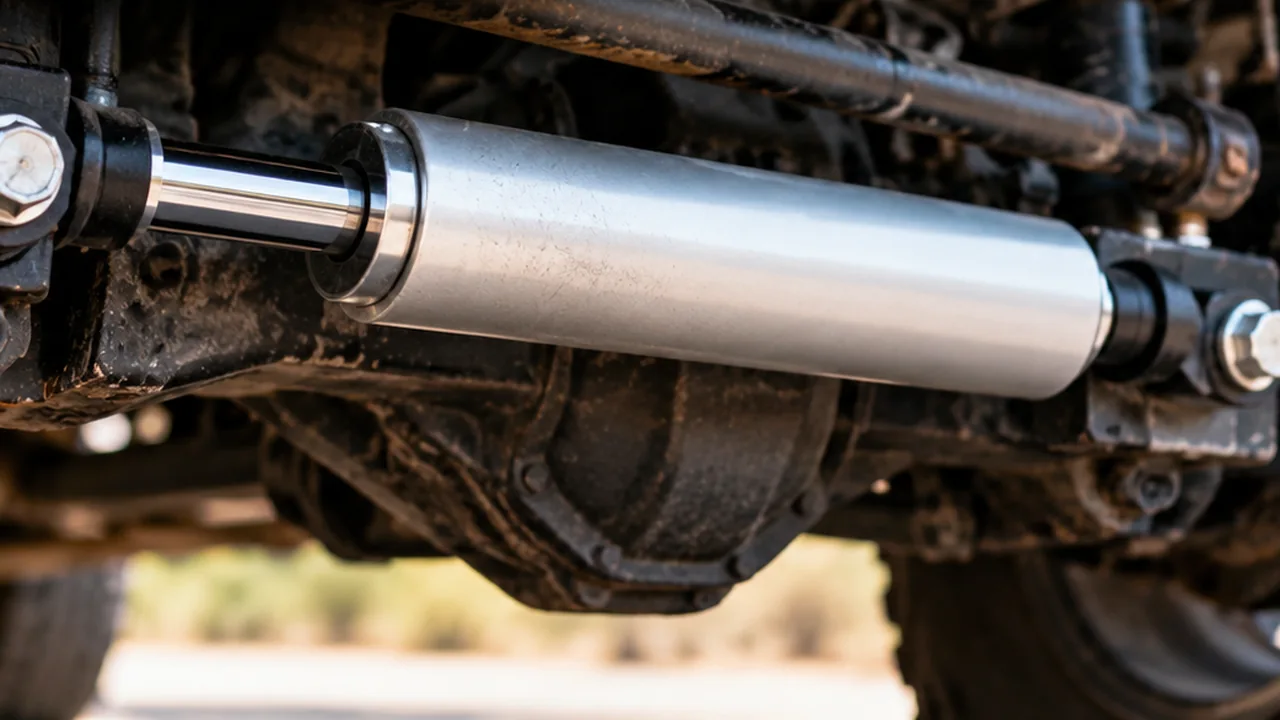
A simple replacement doesn’t usually require extensive disassembly. On many trucks and Jeeps, the damper is attached to the steering linkage and an axle or chassis bracket with mounting fasteners. Access, corrosion, and the exact mounting arrangement determine how much work is involved.
One important detail: steering stabilizer and steering damper generally mean the same component. If your estimate uses one name and the parts catalog uses the other, that alone isn’t a problem. Just confirm you’re buying the correct part for your vehicle.
How Much Does the Steering Stabilizer Itself Cost?
Replacement-part prices vary more than you might expect. A conventional aftermarket damper for a common Jeep application can cost substantially less than a premium remote-reservoir unit. The latter isn’t automatically a better purchase for a stock daily driver.
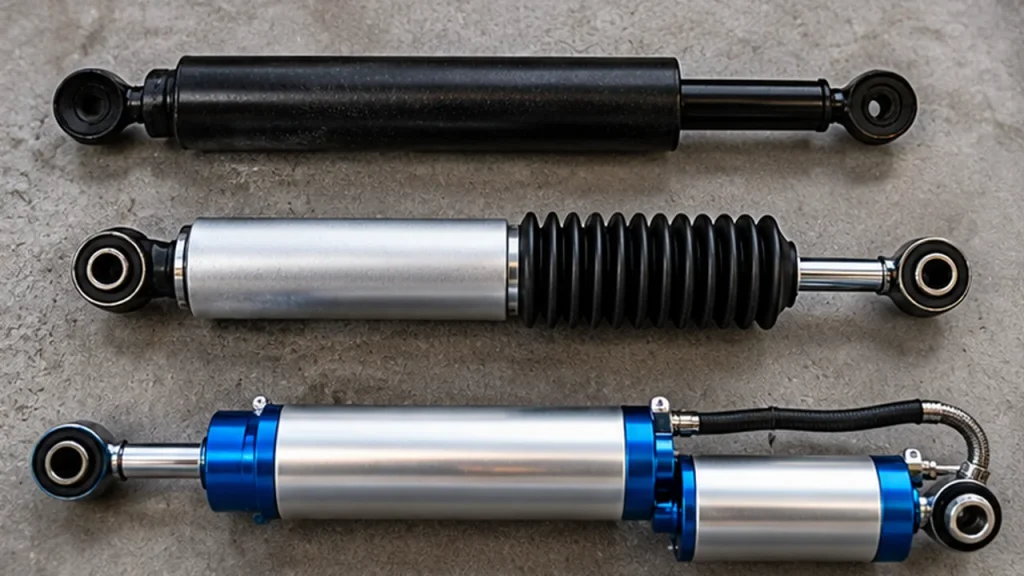
These approximate parts-only ranges reflect examples available for Jeep steering dampers in U.S. replacement-parts listings. They should not be treated as universal prices for every make and model.
| Steering Stabilizer Type | Typical Parts-Only Range |
|---|---|
| Standard aftermarket replacement | $60–$120 |
| OEM replacement | Approximately $55–$160 |
| Premium or performance damper | $150–$400+ |
Not every factory stabilizer falls within these ranges. Some application-specific OEM parts cost considerably more, and an upgraded dual-stabilizer setup may require additional mounting brackets or hardware.
OEM vs. Aftermarket: Which Is Worth Paying For?
For an otherwise stock vehicle, a properly matched OEM-quality replacement is usually the sensible starting point. It should provide the damping characteristics intended for that steering system without adding unnecessary resistance or changing the mounting layout.
Aftermarket doesn’t necessarily mean inferior. Established manufacturers offer direct-fit replacements, and some are designed for heavier tires or off-road use. The critical questions are whether the part fits the vehicle, works correctly through the full steering travel, and supplies the necessary hardware.
Don’t choose a stabilizer solely because its body is larger or the advertisement promises to eliminate steering wobble. More damping cannot compensate for a loose steering joint.
Jeep Wrangler Steering Stabilizer Replacement Cost
The Jeep Wrangler is one of the vehicles most frequently associated with steering stabilizer replacement. Its solid-front-axle steering layout makes damper condition, track-bar mounting, steering linkage, and tire setup particularly relevant when diagnosing front-end shake.
YourMechanic publishes both a Wrangler-wide average and individual model-year estimates. Looking at those figures side by side shows why a single national price cannot describe every Wrangler repair.
| Jeep Wrangler Example | Published Estimate |
|---|---|
| Wrangler average across listed applications | $143 |
| 2018 Wrangler, 3.6L V6 | About $191 |
| 2018 Wrangler shop/dealer range | About $225–$304 |
| 2007 Wrangler, 3.8L V6 | About $390 |
Source: YourMechanic’s published Jeep Wrangler Steering Damper Replacement estimates, checked October 2026. Figures are rounded where appropriate and may change by location, vehicle configuration, and provider.
Notice that the 2018 Wrangler estimate is below RepairPal’s national range, while the listed 2007 example is higher. That doesn’t make either source wrong. They’re describing different mixes of vehicles, parts, and service pricing.
For a Wrangler owner, the useful question isn’t simply, “What’s the average?” It’s whether the shop is replacing only the factory-style steering damper or quoting additional steering work, upgraded hardware, or a different stabilizer arrangement.
Check Jeep Steering Damper Campaign V41 Before Paying
Some 2018–2019 Jeep Wrangler JL vehicles were included in FCA’s Customer Satisfaction Notification V41, concerning steering dampers that might not adequately control steering oscillation. The manufacturer issued instructions for replacing affected dampers, including specific installation requirements.
This was a customer satisfaction campaign, not a blanket safety recall covering every Wrangler. Applicability depends on the vehicle identification number and campaign records. If your Wrangler falls within the affected model years, contact an authorized Jeep dealer with your VIN and ask whether V41 or another applicable steering-damper coverage program remains available before authorizing an out-of-pocket repair.
You can review the official FCA V41 steering damper service instructions archived by NHTSA. Don’t assume that a standard safety-recall lookup will display every manufacturer customer satisfaction campaign.
Why Steering Stabilizer Replacement Quotes Vary
Two shops can quote different prices for what sounds like the same repair. Sometimes that’s simply a difference in labor rates. Other times, one estimate includes work that the other leaves out.
Before comparing totals, check these factors:
- Vehicle and steering design: A readily accessible factory damper usually costs less to replace than an application with difficult mounting access or modified steering components.
- Part selection: An OEM-style damper, premium performance stabilizer, and complete dual-stabilizer kit aren’t interchangeable pricing categories.
- Mounting hardware: Rusted bolts, damaged brackets, worn mounting bushings, and required replacement fasteners can increase the bill.
- Diagnostic work: A shop may need to investigate steering shake before it can reasonably confirm that the damper needs replacement.
- Additional repairs: Loose tie rods, track-bar connections, ball joints, damaged tires, or alignment problems are separate issues with separate costs.
Ask whether the quoted labor covers only installing the new damper or also diagnosing the original complaint. Those are different services. A low advertised replacement price isn’t much help if you later discover the actual problem was somewhere else.
Does Steering Stabilizer Replacement Require an Alignment?
Usually not when only the steering stabilizer is replaced. A conventional damper does not normally establish wheel toe, camber, or caster. Removing and installing it at the original mounting points generally doesn’t change those settings.
However, an alignment check may be justified if the vehicle already pulls, the tires wear unevenly, the steering wheel is off-center, or other steering and suspension parts are being replaced. Modified steering brackets or geometry changes may also require additional inspection.
For typical U.S. pricing and the difference between front-end and four-wheel service, see our wheel alignment cost guide. Alignment shouldn’t be added automatically to an otherwise straightforward damper replacement without a reason.
How to Tell Whether the Steering Stabilizer Is Actually Bad
A steering stabilizer is essentially a damper acting on the steering linkage. It resists sudden, unwanted steering movements and helps reduce shocks transmitted from the road to the steering wheel. Like other hydraulic dampers, it can lose effectiveness as it ages or becomes damaged.
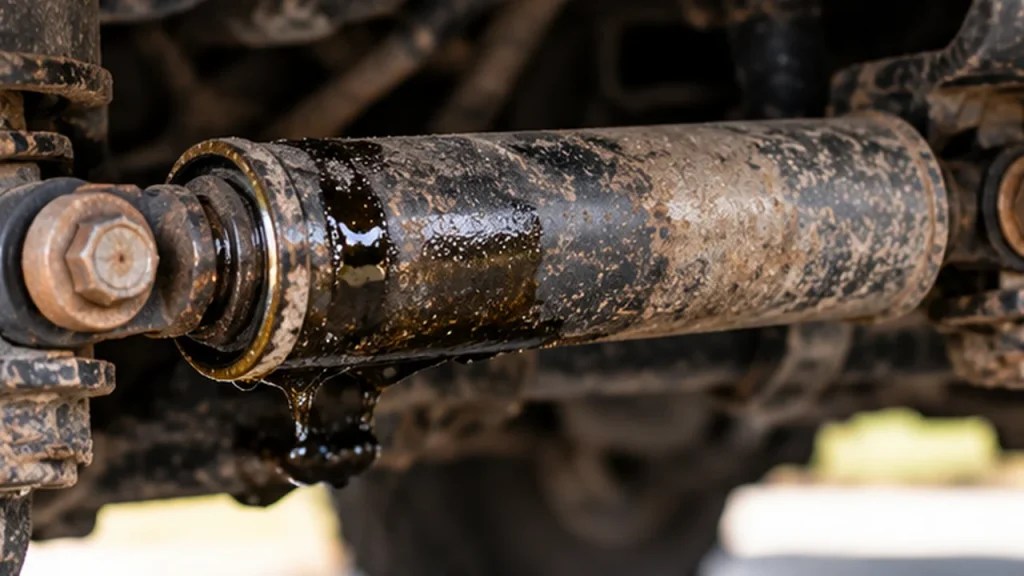
The strongest reasons to suspect the component are physical evidence of damage or abnormal damping behavior, not just a vague sensation of loose steering.
- Visible hydraulic fluid leakage: Fresh oil around the damper body or shaft can indicate a failing seal. Surface dirt alone is not proof of a leak.
- Damaged mounting bushings: Torn rubber, excessive movement, or loose mounting hardware can allow unwanted noise or motion.
- Bent shaft or damaged housing: Impact damage can interfere with normal damper operation.
- Abnormal damping resistance: A technician may find insufficient or inconsistent resistance when checking the unit according to the vehicle’s service procedure.
- Steering shimmy or harsh kickback: These complaints may accompany a failing stabilizer, but they can also come from other front-end faults.
Some steering dampers are gas-charged, and their normal behavior can differ from other designs. A rod extending or resisting movement doesn’t prove that every stabilizer is good or bad. Use the manufacturer’s inspection criteria rather than judging the unit by a single improvised test.
If the steering wheel has noticeable free play, don’t overlook the actual steering linkage. Our bad tie rod symptoms guide explains what worn steering joints can feel like and how their faults are distinguished from other suspension problems.
Will Replacing a Steering Stabilizer Fix Death Wobble?
No, not reliably. A new steering stabilizer can reduce vibration or steering kickback, and replacing a defective damper may improve a particular shimmy complaint. But severe, sustained steering oscillation—often called death wobble—requires an investigation of the complete front-end system.
This distinction matters because a stronger damper can sometimes make the steering feel calmer without correcting a loose or worn part. The vehicle may seem improved until another bump triggers the same violent shaking.
Depending on the vehicle, a technician may need to inspect:
- Track bar bushings, bolts, mounting brackets, and unwanted movement.
- Tie rod and drag link ends for looseness or damage.
- Ball joints and other components controlling front-wheel position.
- Tire condition, wheel damage, balance, and appropriate inflation pressures.
- Steering and suspension alignment against the manufacturer’s specifications.
- Modified suspension geometry and related mounting hardware.
A defective steering damper may be part of the diagnosis, but the replacement should be supported by an actual finding. If the issue instead involves worn tie rods, the repair scope and price will be different. Our tie rod replacement cost breakdown covers that separate job.
If the inspection instead reveals a worn drag link joint, replacing the steering stabilizer won’t correct that mechanical play. The drag link is a separate steering component with its own repair costs. Compare vehicle-specific estimates in our drag link replacement cost guide
Don’t continue driving to reproduce violent steering oscillation. If the vehicle shakes severely or becomes difficult to control, pull over safely and arrange a professional inspection or towing.
Can You Replace a Steering Stabilizer Yourself?
On many vehicles, yes. A direct-fit steering damper replacement can be a manageable DIY job for someone comfortable working around suspension and steering components. Access is often straightforward, and the component generally has mounting connections at both ends.
For a simple replacement, a prepared home mechanic may save the labor portion of the bill—roughly $70 to $103 using RepairPal’s national estimate. The actual savings depend on the shop quote and whether special tools, hardware, or additional repairs are needed.
Before attempting the job, confirm the following:
- The vehicle uses a serviceable steering damper and the replacement matches the VIN, model year, and steering configuration.
- The mounting brackets and fasteners are in sound condition.
- You have the correct service information, tightening specifications, and any required new bolts or nuts.
- The installed damper will not bind or interfere with surrounding components throughout the required steering travel.
- The vehicle can be safely supported whenever the procedure requires work underneath it.
Never work beneath a vehicle supported only by a jack. If mounting hardware is seized or a bracket appears damaged, stop rather than forcing a steering component into position. The repair must follow the specific manufacturer’s instructions, including any orientation or fastener requirements.
There’s little benefit in saving an hour of labor if the replacement ends up incorrectly fitted. And if the vehicle has serious steering shake, diagnosing that problem comes before deciding whether the damper is a suitable DIY repair.
Are Heavy-Duty Steering Stabilizers Worth the Extra Cost?
Sometimes, particularly on trucks and Jeeps fitted with larger, heavier tires. A correctly matched heavy-duty stabilizer may help control steering kickback during off-road driving and reduce unwanted vibration transmitted through the wheel.
For a stock vehicle used mainly on paved roads, though, replacing a worn factory unit with a good direct-fit equivalent is usually enough. Paying more doesn’t guarantee better steering feel, and excessive or poorly matched damping can create its own problems.
Single vs. Dual Steering Stabilizers
A single stabilizer is the normal arrangement on many factory-equipped vehicles. Dual-stabilizer kits add a second damper, usually with application-specific brackets and hardware. They are often marketed toward lifted trucks and vehicles with oversized tires.
That doesn’t mean two dampers are automatically better than one. The correct choice depends on the steering design, tire setup, available mounting clearance, and whether the components are matched to the vehicle. A properly functioning single stabilizer can be entirely adequate.
More importantly, neither a premium single unit nor a dual kit should be installed as a substitute for repairing loose steering linkage, damaged track-bar mounting points, or other defects.
Steering Stabilizer Replacement Questions
These are a few practical questions worth resolving before purchasing a damper or scheduling the work.
How Long Do Steering Stabilizers Last?
There is no dependable universal replacement interval. Some steering stabilizers remain effective for many years, while others wear sooner because of road conditions, impacts, contamination, or heavy use. Replace the part when inspection confirms a problem, not simply because the vehicle has reached a particular mileage.
Can You Drive Without a Steering Stabilizer?
Some vehicles were designed without one, but that doesn’t mean a vehicle originally equipped with a steering stabilizer should have it removed. A missing or failed factory damper can increase steering kickback or vibration, and the consequences depend on the steering design and the condition of the rest of the system.
If a stabilizer has broken loose, is interfering with steering movement, or the vehicle is shaking violently, do not continue driving. Have the condition assessed before using the vehicle again.
Is a Steering Stabilizer the Same as a Shock Absorber?
They use similar damping principles, but they serve different purposes. A suspension shock absorber controls movement of the suspension as the wheel moves up and down. A steering stabilizer damps unwanted movement in the steering linkage. They are not interchangeable parts.
Is a Steering Stabilizer the Same as a Sway Bar?
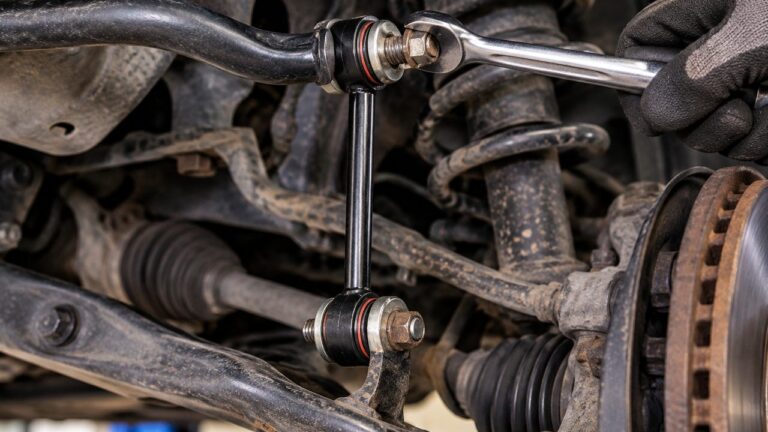
No. A steering stabilizer reduces unwanted steering movement, while a sway bar—also called an anti-roll or stabilizer bar—helps resist body roll during cornering. A sway bar link connects that bar to the suspension; it is not a steering damper.
If a parts list mentions a stabilizer bar link rather than a steering stabilizer, check the diagnosis carefully. They are different repairs. Our sway bar link replacement cost guide covers the former.
Why Does the Steering Wheel Still Shake After Replacement?
The replacement may not have addressed the underlying cause. Tire and wheel problems, loose steering joints, track-bar movement, incorrect alignment, or installation issues can leave a shake unchanged. The next step is diagnosis, not automatically fitting another or stronger damper.
Before You Approve a Steering Stabilizer Replacement Quote
A $250 quote for a conventional steering stabilizer isn’t inherently unreasonable, given the national estimate. But the number alone doesn’t tell you whether the repair is necessary or whether the correct part is included.
Before authorizing the work, ask the shop these four questions:
- What confirmed the stabilizer has failed? Ask whether the problem is leakage, damaged mounting hardware, abnormal resistance, or another documented fault.
- Which part is being installed? Confirm its brand, part number, vehicle compatibility, and whether it’s a standard replacement or an upgrade.
- What does the total include? Check labor, new hardware, diagnostic charges, shop fees, taxes, and any proposed alignment.
- Is the vehicle eligible for manufacturer coverage? This is especially worth checking for applicable Jeep steering-damper campaigns before paying out of pocket.
For a straightforward, confirmed damper failure, replacement can be a relatively modest steering repair. The expensive mistake is paying for the stabilizer when the real problem is a worn joint, loose track bar, or something else that the new damper cannot fix. Get that distinction right first, then compare the price.