Lower Ball Joint Replacement Cost: Parts & Labor
Lower ball joint replacement typically costs about $250 to $650 per side on a mainstream vehicle in the United States. A straightforward car can fall near the lower end, while trucks, SUVs, pressed-in joints, rusted hardware, expensive parts, or a ball joint that comes only with the complete lower control arm can push the repair toward $800 or more per side.
The biggest reason lower ball joint prices vary is the suspension design. Some joints bolt in, some must be pressed out with special tools, and others are not serviced separately at all because the replacement ball joint is supplied as part of a complete lower control arm assembly.
Lower Ball Joint Replacement Cost at a Glance
| Job | Useful U.S. Planning Range | What to Confirm |
|---|---|---|
| One lower ball joint | About $250–$650+ | Bolt-in, pressed-in or integrated design |
| Both front lower ball joints | About $500–$1,100+ | Whether both sides actually need replacement |
| Truck or SUV lower ball joint | About $300–$800+ per side | Heavy-duty parts and labor difficulty |
| Lower control arm with integrated joint | About $400–$1,200+ per side | Complete arm rather than joint-only repair |
| Wheel alignment | Often about $90–$200 | Whether it is needed and included |
These are planning ranges rather than fixed quotes. The exact year, make, model, suspension design, parts choice, shop labor rate, and condition of the mounting hardware matter far more than a national average.
What Is a Lower Ball Joint?
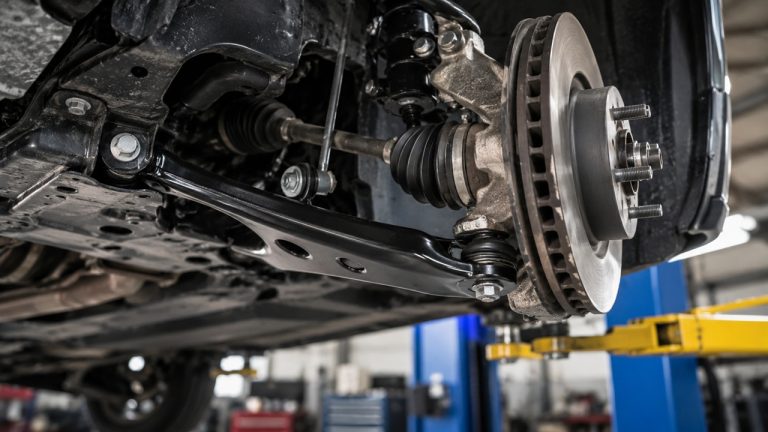
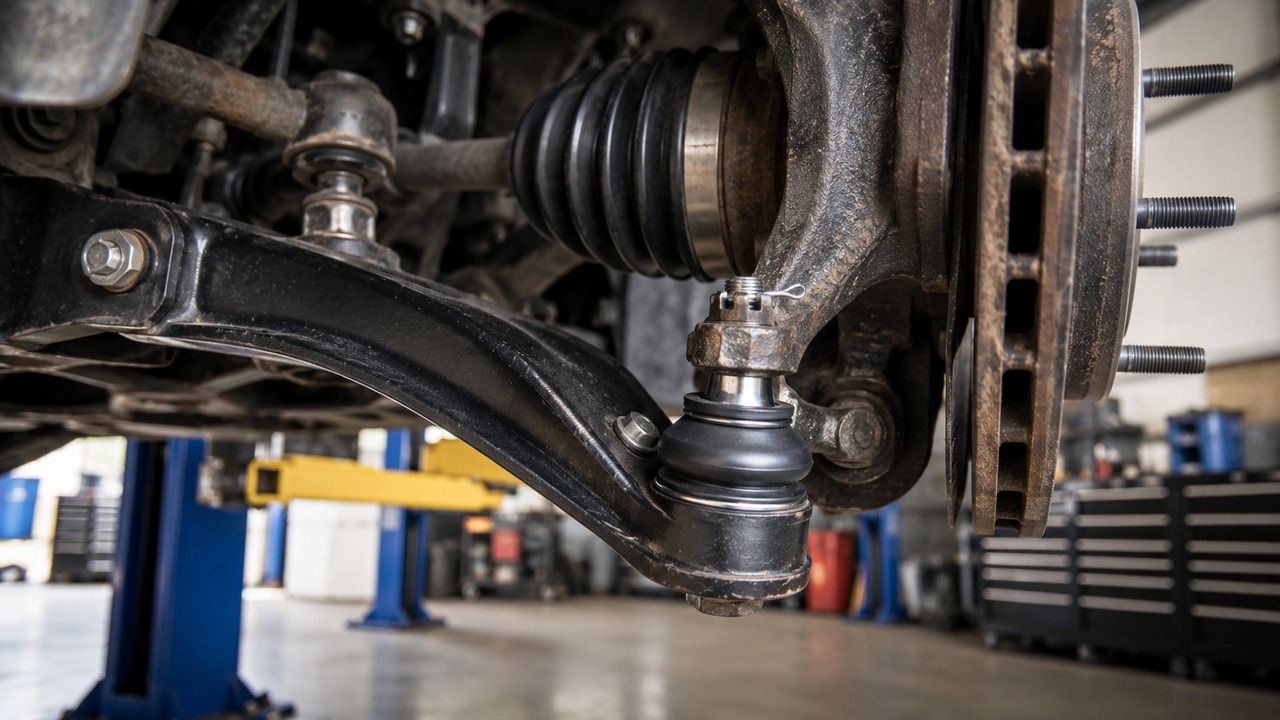
A lower ball joint connects the lower control arm to the steering knuckle or wheel carrier while allowing the wheel to move with both the suspension and steering.
Many front suspension designs place substantial load through the lower joint. The joint must move freely through different angles while keeping the wheel located accurately relative to the rest of the suspension.
If your repair estimate simply says “ball joint” without identifying whether it is upper or lower, start with our broader ball joint replacement cost guide.
Parts vs. Labor Cost
The replacement joint itself can be relatively inexpensive. Labor is often what makes a lower ball joint repair costly, especially when the old joint must be pressed out of the control arm or steering knuckle.
| Cost Item | Typical Effect on the Bill |
|---|---|
| Lower ball joint | Often about $40–$180+, depending on vehicle and quality |
| Labor | Often about $150–$400+, with pressed-in joints costing more |
| Lower control arm assembly | May replace the joint and arm together |
| Hardware | Corroded or damaged fasteners can add parts and labor |
| Alignment | May be recommended or required after the repair |
A $70 ball joint can therefore become a $400 or $500 repair once installation labor is added. The cheapest part price alone tells you very little about the final shop bill.
Pressed-In vs. Bolt-In Lower Ball Joints
The mounting design is one of the biggest cost factors.
Pressed-in lower ball joints
A pressed-in lower ball joint is held tightly inside the control arm or steering knuckle and normally requires a ball joint press, hydraulic press, or application-specific adapters for removal and installation.
Access can be limited, and years of corrosion can make the joint extremely difficult to remove. That additional time is why a relatively inexpensive pressed-in joint can produce a surprisingly high labor charge.
Bolt-in lower ball joints
Bolt-in designs can be simpler when the mounting hardware is accessible and in good condition. The technician removes the fasteners, separates the joint from the knuckle, and installs the replacement without pressing the joint into the arm.
Rusty bolts, damaged threads, or limited access can still turn a simple-looking job into a more expensive repair.
Lower Ball Joint vs. Lower Control Arm Replacement
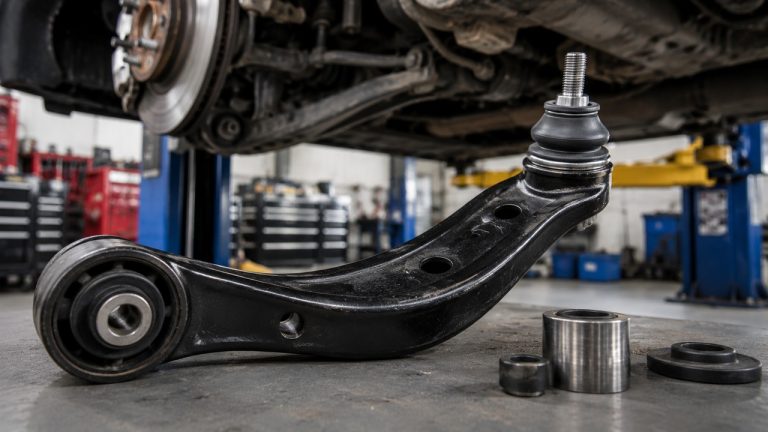
Some vehicles allow the lower ball joint to be replaced independently. Others use an assembly where the joint is supplied with, or effectively integrated into, the complete lower control arm.
Even when the ball joint is separately serviceable, replacing the entire arm can sometimes make economic sense if the control arm bushings are already worn or the labor required to press the joint into the old arm is substantial.
If the shop recommends replacing the complete arm rather than only the joint, compare the estimate with our lower control arm replacement cost guide.
How Much Does One Lower Ball Joint Cost to Replace?
For one side, roughly $250 to $650 is a useful planning range for many cars and crossovers.
A simple bolt-in joint on a mainstream passenger car can cost less. A pressed-in lower joint on a truck or SUV can easily move toward $500 to $800, particularly when corrosion, heavy-duty components, or difficult access increase labor.
If the joint cannot be replaced separately and the complete lower control arm is required, the final bill can exceed the normal ball-joint-only range.
How Much Does It Cost to Replace Both Lower Ball Joints?
Replacing both front lower ball joints commonly costs around $500 to $1,100 or more.
The total is not always exactly twice the cost of one side because some inspection, setup, and alignment expenses overlap when both joints are replaced during the same visit.
Full-size trucks, 4WD vehicles, heavily corroded suspensions, or designs requiring extensive press work can exceed that range.
Do Lower Ball Joints Need to Be Replaced in Pairs?
No universal rule requires lower ball joints to be replaced in pairs. Replacement should normally be based on actual wear, damage, or manufacturer specifications.
The opposite side should still be inspected carefully. Both joints operate under similar mileage and road conditions, so if one is badly worn, the other may also be approaching the end of its service life.
But if one joint was damaged by an impact and the opposite side remains tight and within specification, replacing a healthy joint solely to create a pair may not be necessary.
Do You Need an Alignment After Lower Ball Joint Replacement?
An alignment should generally be considered after lower ball joint replacement, although the exact requirement depends on the vehicle and repair procedure.
If the lower control arm is removed, alignment adjustment points are disturbed, or the worn joint had enough play to affect wheel position, checking alignment after the repair is particularly sensible.
Some suspension designs allow a ball joint to be replaced without changing any adjustable geometry, so alignment is not universally mandatory after every joint replacement.
Ask the shop whether alignment is required for your specific vehicle and whether it is included in the quoted price. Our guide to alignment after suspension replacement explains the difference between repairs that normally disturb geometry and those that may not.
Why Lower Ball Joints Can Cost More on Trucks and SUVs
Trucks and large SUVs frequently use heavier suspension components designed to handle greater vehicle weight, towing loads, rough roads, and off-road use.
The lower ball joints may be physically larger, fitted more tightly, and surrounded by heavier control arms, steering knuckles, four-wheel-drive hardware, or other components that increase labor.
Lift kits and oversized tires can also change suspension angles and loads, while off-road use can expose the joints to additional contamination and impact forces.
For these reasons, a lower ball joint job that costs $300 on a compact car can legitimately cost $700 or more on a truck.
OEM vs. Aftermarket Lower Ball Joints
Parts quality can make a noticeable difference in the final bill.
OEM lower ball joints are intended to match the manufacturer’s original specifications and can cost considerably more than economy aftermarket components.
Aftermarket options range from inexpensive sealed joints to premium or heavy-duty parts with grease fittings, stronger materials, larger bearing surfaces, or designs intended for demanding truck and off-road use.
Ask for the manufacturer and part number when comparing repair estimates. Two shops can quote the same labor procedure while using parts with very different prices and specifications.
Why a Lower Ball Joint Quote Can Exceed $800
A high estimate deserves examination, but it is not automatically excessive. Legitimate reasons include:
- a heavy-duty truck or SUV application
- an expensive OEM or premium ball joint
- a severely corroded pressed-in joint
- removal of additional suspension or 4WD components
- replacement of the complete lower control arm
- damaged or seized mounting hardware
- additional suspension repairs found during inspection
- wheel alignment after installation
- higher dealership or regional labor rates
If the estimate contains several suspension repairs rather than only the lower ball joint, compare the complete scope with our car suspension repair cost guide.
How to Compare Two Lower Ball Joint Quotes
- Confirm the exact joint. Make sure the estimate specifically identifies the lower ball joint and the correct side.
- Check the quantity. Determine whether the price covers one joint or both front lower joints.
- Ask how the joint is mounted. Pressed-in and bolt-in joints can require very different labor.
- Find out whether the control arm is being replaced. An integrated ball joint changes the repair scope completely.
- Get the brand and part number. Compare OEM, premium aftermarket, and economy parts on equal terms.
- Review labor and hardware. Corrosion and seized fasteners can legitimately add time.
- Check the alignment. Ask whether it is appropriate for the vehicle and already included.
A $550 quote can be better value than a $400 estimate if the higher price includes a premium joint, difficult press labor, new hardware, and alignment while the cheaper quote does not.
Symptoms of a Bad Lower Ball Joint
A worn lower ball joint can create several symptoms, although none of them proves by itself that the joint has failed.
- clunking or knocking over bumps
- loose or vague steering
- vehicle wandering or pulling
- uneven or accelerated tire wear
- squeaking during steering or suspension movement
- a torn or leaking ball-joint boot
- measurable movement between the control arm and steering knuckle
Tie rods, wheel bearings, control arm bushings, tires, and alignment problems can cause similar symptoms. The diagnosis should confirm excessive play or physical damage rather than relying on noise alone.
If the vehicle feels unstable or requires constant steering correction, our guide to a car that feels loose or wanders while driving covers the broader causes.
Can You Drive With a Bad Lower Ball Joint?
A badly worn lower ball joint should not be ignored. The joint is part of the connection that keeps the wheel assembly located relative to the suspension.
If a severely worn ball joint separates, the steering knuckle can move away from the control arm and the wheel can collapse out of its normal position. That can cause an immediate loss of vehicle control.
Severe looseness, visible wheel movement, loud clunking, unstable steering, or a technician identifying a joint close to separation should therefore be treated as a prompt-repair issue rather than normal maintenance that can be postponed indefinitely.
Can You Replace a Lower Ball Joint Yourself?
Lower ball joint replacement can range from an intermediate DIY job to a difficult repair requiring specialized equipment.
A bolt-in joint can be relatively manageable for an experienced home mechanic. Pressed-in lower ball joints are more demanding because they require the correct press and adapters and can need substantial force to remove safely.
The vehicle must be safely lifted and supported, the ball joint stud separated from the steering knuckle correctly, and all suspension hardware tightened according to the manufacturer’s procedure and torque specifications.
If the joint is heavily corroded, requires removal of the control arm, or you do not have the correct press and lifting equipment, professional replacement is usually the safer option. Never work underneath a vehicle supported only by a jack.
Frequently Asked Questions
How much does lower ball joint replacement cost?
About $250 to $650 per side is a useful U.S. planning range for many vehicles. Trucks, SUVs, pressed-in joints, corrosion, premium parts, and integrated lower control arms can push the price higher.
How much does it cost to replace both lower ball joints?
Replacing both front lower ball joints commonly costs roughly $500 to $1,100 or more. Heavy-duty trucks and difficult pressed-in designs can exceed that range.
Do lower ball joints need to be replaced in pairs?
Not automatically. The opposite joint should be inspected because both sides may have similar mileage and wear, but replacement should normally be based on actual condition rather than a universal pair rule.
Is a lower ball joint part of the control arm?
It depends on the vehicle. Some lower ball joints can be replaced independently, while others are supplied as part of the complete lower control arm assembly.
Do you need an alignment after replacing a lower ball joint?
Alignment is commonly considered after lower ball joint replacement, particularly when the control arm or adjustable suspension points are disturbed. The exact requirement depends on the vehicle and repair procedure.
How long does lower ball joint replacement take?
A straightforward job can take roughly one to three labor hours per side. Pressed-in joints, rust, restricted access, and lower control arm removal can increase the time substantially.
Can a bad lower ball joint cause uneven tire wear?
Yes. Excessive movement at the lower ball joint can allow wheel geometry to change while driving and contribute to abnormal tire wear. Alignment, tires, and other suspension components can produce similar wear patterns.
Compare the Repair Scope Before Comparing the Price
For many vehicles, approximately $250 to $650 per side is a useful starting budget for lower ball joint replacement. The real number depends heavily on how the joint is installed and whether it can be serviced separately.
Confirm whether the quote covers one side or both, whether the joint is bolt-in or pressed-in, whether the lower control arm must also be replaced, what brand of component will be installed, how much labor is included, and whether alignment is part of the final price. Once those details match, comparing lower ball joint replacement quotes becomes much more meaningful.