Control Arm Bushing Replacement Cost: Parts & Labor
Control arm bushing replacement typically costs about $300 to $600 per side on a mainstream vehicle in the United States. Current national repair estimates cluster around the low-to-mid $400 range, but labor-intensive press work, corrosion, difficult access, premium vehicles, or replacing multiple bushings can push the total substantially higher.
The surprising part is that the rubber bushing itself is often inexpensive. Much of the bill comes from removing the control arm, pressing the old bushing out, installing the new one correctly, reinstalling the arm, and checking the wheel alignment afterward.
Control Arm Bushing Replacement Cost at a Glance
| Job | Useful U.S. Planning Range | What to Confirm |
|---|---|---|
| One side, bushings only | About $300–$600+ | Number of bushings and press labor |
| Both sides | About $600–$1,100+ | Whether both arms actually need bushing service |
| Parts only | Often about $30–$150+ | OEM, aftermarket and number of bushings |
| Complete control arm instead | About $500–$1,200+ per side | Whether new bushings and ball joint are included |
| Wheel alignment | Often about $90–$200 | Whether it is needed and included |
These are planning ranges rather than fixed quotes. Some vehicles use inexpensive serviceable bushings, while others make bushing-only replacement difficult enough that installing a complete control arm can be nearly the same price or even the better value.
What Is a Control Arm Bushing?
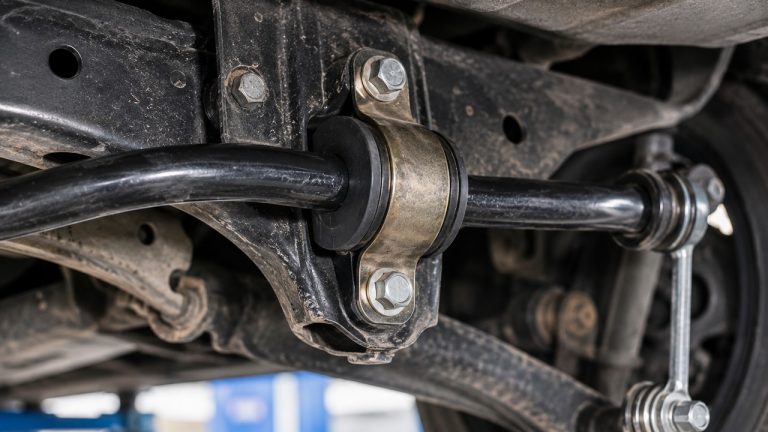
Control arm bushings sit between the control arm and the vehicle’s frame, body, or subframe. They allow the arm to pivot as the suspension moves while helping isolate vibration and control unwanted movement.
Most conventional bushings use bonded rubber surrounding an inner metal sleeve. Some vehicles use hydraulic bushings containing fluid for additional vibration isolation, while aftermarket performance applications may use polyurethane or other materials.
As the rubber ages, it can crack, tear, separate from its sleeve, soften, or develop excessive movement. The metal control arm itself may still be perfectly usable even though the bushing has failed.
Parts vs. Labor Cost
Control arm bushing replacement is one of those repairs where labor can cost far more than the actual replacement part.
| Cost Item | Why It Matters |
|---|---|
| Replacement bushings | Often relatively inexpensive compared with installation labor |
| Control arm removal | The arm may need to come completely off the vehicle |
| Press work | Old bushings may need to be pressed out and new ones installed with special tooling |
| Hardware | Seized, damaged or single-use mounting bolts can increase cost |
| Alignment | May be recommended or required after disturbing control-arm mounting points |
A shop may spend more time removing, pressing and reinstalling the arm than it spends on the replacement bushing itself. That is why a $40 or $60 part can still produce a several-hundred-dollar repair bill.
Why Bushing Replacement Requires So Much Labor
A control arm bushing is normally installed with a tight interference fit. It is not usually a component that can simply be pulled out by hand and pushed back into place.
The technician may need to remove the complete control arm, position it in a hydraulic press or use application-specific tools, press out the old bushing without damaging the arm, clean the bore, orient the new bushing correctly, and press it to the specified depth.
Corrosion can make every stage harder. Inner sleeves can seize to mounting bolts, rubber can separate while leaving the metal shell trapped in the arm, and surrounding exhaust or subframe components can restrict access to the mounting hardware.
Bushings Only vs. Replacing the Complete Control Arm
This is the most important comparison when evaluating a control arm bushing estimate.
If the metal arm is in excellent condition and replacement bushings are readily available, pressing new bushings into the original arm can make sense. You keep the original arm and pay primarily for new bushings and the labor required to install them.
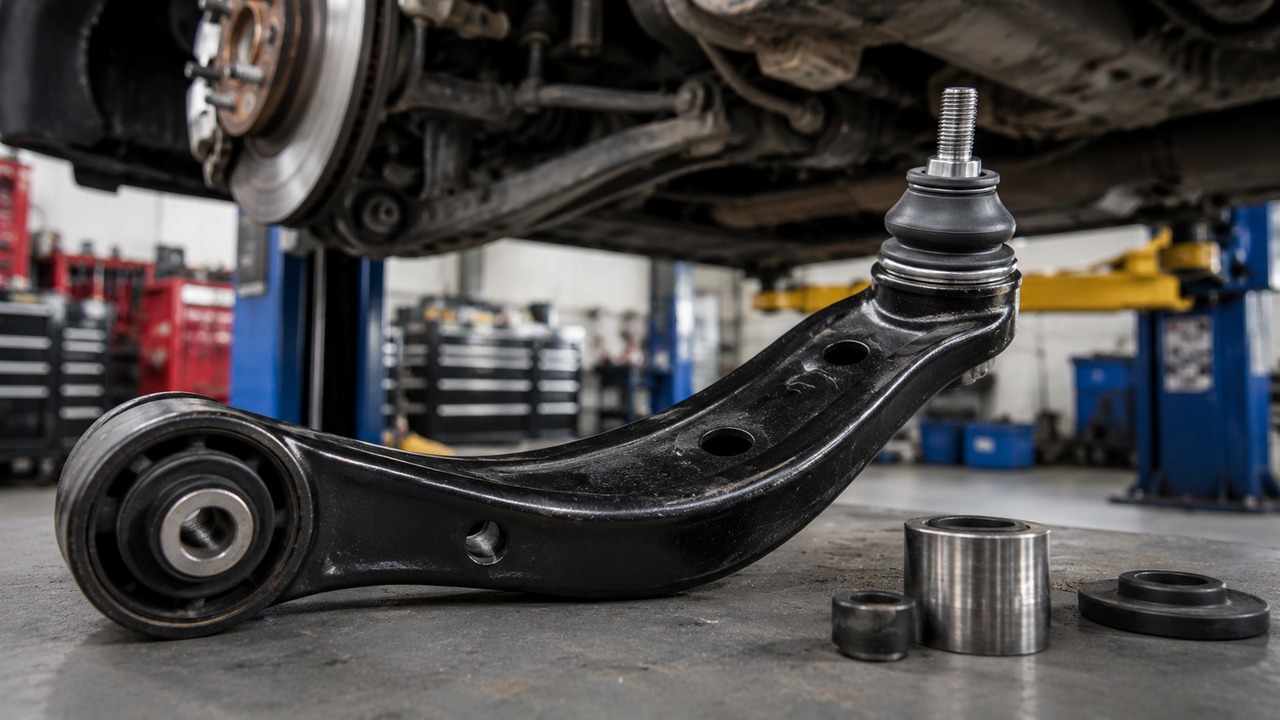
But a complete replacement control arm commonly arrives with new bushings already installed and may also include a new ball joint. That can eliminate press work and renew several wear components at the same time.
If your shop recommends replacing the entire assembly rather than only the bushings, compare the quote with our control arm replacement cost guide.
When Is Replacing the Whole Control Arm Cheaper?
A complete arm can become the better economic choice when the difference in parts cost is smaller than the additional press labor required for bushing-only service.
Replacing the complete assembly becomes especially attractive when:
- the new arm already includes all required bushings
- the ball joint is also worn
- the original arm is rusted, bent or damaged
- the old bushings require substantial press labor
- quality complete aftermarket arms are inexpensive for the vehicle
- the replacement arm comes with new hardware or additional wear components
The shop should be able to show you both options when both are technically possible: bushing-only parts and labor versus the installed cost of a complete arm.
What if the Ball Joint Is Worn Too?
A worn ball joint can change the economics completely. If the original arm needs new bushings and a new ball joint, buying a complete assembly containing both can reduce labor and simplify the repair.
If the diagnosis is specifically for the joint rather than the bushings, our ball joint replacement cost guide explains standalone ball-joint pricing and when the complete arm may be required.
Front Control Arm Bushing Replacement Cost
Most control arm bushing repairs involve the front suspension. Many passenger vehicles use one lower control arm on each front corner with one or two inner bushings connecting the arm to the subframe.
For a mainstream car or crossover, roughly $300 to $600 per side is a useful planning range for bushing-only replacement. Vehicles with hydraulic bushings, difficult arm removal, expensive OEM parts, or substantial corrosion can cost more.
Do not automatically use lower-control-arm-specific pricing for every front suspension, however. If the diagnosis specifically identifies the lower control arm bushings, see our lower control arm bushing replacement cost guide. Different designs use upper and lower arms, radius arms, thrust arms, tension struts, or multiple links with their own bushings and labor procedures.
Rear Control Arm Bushing Replacement Cost
Rear suspension designs vary considerably more than typical front suspensions. A multilink rear setup can contain several arms and bushings controlling toe, camber, longitudinal movement, and wheel position.
Rear control arm bushing replacement can therefore range from a relatively simple few-hundred-dollar repair to a much larger job when several arms must be removed or the rear suspension needs a complete alignment afterward.
Always confirm the exact arm and bushing listed on the estimate rather than comparing a generic rear-control-arm price with a front lower-control-arm repair.
Do Control Arm Bushings Need to Be Replaced in Pairs?
There is no universal rule requiring control arm bushings to be replaced in pairs. Replacement should be based on the condition of each bushing and the suspension design.
However, bushings on opposite sides of the same axle often have similar mileage and exposure to heat, road salt, oil contamination and suspension movement. If one is badly deteriorated, inspecting the corresponding bushing on the opposite side is sensible.
If both sides are visibly cracked, separated or allowing excessive movement, replacing both during the same visit can reduce repeated labor and allow the alignment to be completed once.
Do You Need an Alignment After Control Arm Bushing Replacement?
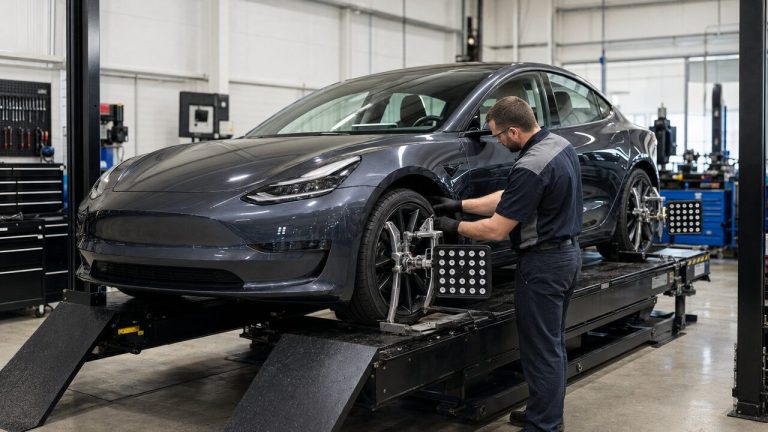
An alignment is commonly recommended after control arm bushing replacement, but the exact requirement depends on the vehicle and the mounting points disturbed during the repair.
The control arm helps locate the wheel, and some suspension systems use eccentric bolts or other alignment adjustments at the control arm mounts. Removing and reinstalling the arm can therefore alter camber, caster or toe.
On other designs, the arm may return to a fixed position with little or no adjustment available at that mounting point. Even then, checking alignment can be sensible if worn bushings previously allowed the wheel to move outside its intended position.
Ask whether alignment is included in the estimate. Our guide to alignment after suspension replacement explains why the requirement varies between suspension jobs.
Rubber vs. Hydraulic vs. Polyurethane Bushings
Rubber bushings
Conventional rubber bushings are the most common. They provide a balance of compliance, noise isolation, and suspension control and are normally the best choice when restoring factory-like ride quality.
Hydraulic bushings
Some vehicles use fluid-filled hydraulic bushings to provide more sophisticated vibration isolation. These can cost more than simple solid-rubber bushings and may visibly leak when they fail.
Polyurethane bushings
Polyurethane bushings are common in performance and enthusiast applications. They can reduce unwanted suspension movement and sharpen response but may transmit more noise and vibration than factory-style rubber bushings.
Do not compare the installed price of a stock rubber bushing with a complete performance-bushing kit without considering the different purpose and installation requirements.
Why a Control Arm Bushing Quote Can Exceed $600
A high quote deserves examination, but several legitimate factors can push a bushing-only repair above the typical range:
- multiple bushings being replaced on the same arm
- hydraulic or expensive OEM bushings
- substantial press labor
- seized inner sleeves or mounting bolts
- heavy rust or corrosion
- difficult control arm access
- additional suspension disassembly
- replacement hardware
- wheel alignment after installation
- higher dealership or regional labor rates
If the estimate includes several suspension repairs in addition to the bushings, compare the complete scope using our car suspension repair cost guide.
How to Compare Two Control Arm Bushing Quotes
- Confirm the exact arm and position. Check front or rear, left or right, and upper or lower where applicable.
- Check the number of bushings. One control arm can contain more than one bushing.
- Ask whether the arm is removed from the vehicle. This can account for much of the labor charge.
- Ask whether press labor is included. Bushing removal and installation may be billed separately from control arm removal.
- Compare bushing quality. OEM, aftermarket rubber, hydraulic and polyurethane components are not directly equivalent.
- Compare the whole-arm option. Ask what a complete replacement control arm would cost installed.
- Check the ball joint. If it is worn too, a complete control arm may make more economic sense.
- Check alignment. Determine whether it is recommended for the vehicle and already included.
A $500 bushing-only quote is not necessarily worse than a $650 complete-control-arm estimate, and the reverse can also be true. The better repair depends on the condition of the original arm, ball joint, bushings, and the amount of labor required for each option.
Symptoms of Worn Control Arm Bushings
Control arm bushing wear can produce several symptoms, although none is unique to the bushings.
- clunking or knocking during acceleration, braking or bumps
- steering that feels loose or inconsistent
- vehicle wandering or requiring frequent correction
- changes in wheel alignment
- uneven or accelerated tire wear
- visible cracking, tearing or separation in the rubber
- excessive movement of the control arm during inspection
Ball joints, tie rods, wheel bearings, shocks, tires and alignment problems can create similar symptoms. If the vehicle feels unstable or wanders while driving, our loose suspension and wandering guide covers the wider diagnosis.
If the primary symptom is abnormal tire wear, our guide explains how worn suspension components can affect tire wear.
Can You Drive With Bad Control Arm Bushings?
Mild cracking in an aging rubber bushing is different from a bushing that has completely separated or is allowing significant control arm movement.
As wear becomes severe, the wheel can move farther from its intended position during braking, acceleration and cornering. That can affect steering precision, alignment, tire wear and vehicle stability.
A bushing that is visibly torn through, separated from its sleeve, leaking hydraulic fluid, or allowing substantial arm movement should be repaired rather than ignored indefinitely.
Can You Replace Control Arm Bushings Yourself?
Control arm bushing replacement is usually an advanced DIY repair because removing and installing the bushings correctly often requires a hydraulic press, dedicated bushing tools, or application-specific adapters.
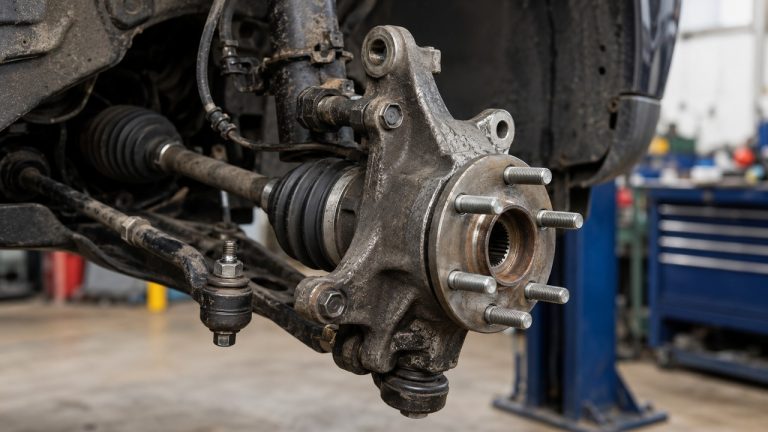
The control arm may need to be completely removed from the vehicle, which means safely supporting the vehicle, separating suspension joints, removing high-torque mounting bolts, and reinstalling everything to the correct specification.
Bonded rubber bushings may also need to be tightened with the suspension at its specified ride-height position. Tightening them while the suspension hangs at full droop can preload the rubber and shorten bushing life.
If you do not have the correct press equipment, lifting equipment and suspension experience, replacing the complete control arm or having a shop perform the bushing work is usually the more practical option. Never work underneath a vehicle supported only by a jack.
Frequently Asked Questions
How much does control arm bushing replacement cost?
About $300 to $600 per side is a useful U.S. planning range for many vehicles. Current national estimates cluster around the low-to-mid $400 range, but difficult press work, corrosion, multiple bushings and expensive vehicle-specific parts can increase the total.
How much are control arm bushings themselves?
The bushings themselves can often cost only about $30 to $150 for a set, depending on the vehicle and whether they are OEM, aftermarket rubber, hydraulic or performance components. Labor is often the larger part of the repair.
Is it cheaper to replace bushings or the whole control arm?
Bushings cost less as individual parts, but replacing the complete control arm can be similar in total installed price when bushing replacement requires extensive press labor. A complete arm may also include new bushings and a ball joint.
Do control arm bushings need to be replaced in pairs?
Not automatically. The corresponding bushings on the other side should be inspected because they often have similar age and mileage, but replacement should normally be based on actual condition.
Do you need an alignment after replacing control arm bushings?
Alignment is commonly recommended after control arm bushing replacement, particularly when the control arm or adjustable mounting points are removed. The exact requirement depends on the vehicle and suspension design.
How long does control arm bushing replacement take?
A straightforward bushing job can require roughly two to four labor hours per side because the control arm often has to be removed and the bushings pressed out and installed. Corrosion and difficult access can increase the time substantially.
Can bad control arm bushings cause uneven tire wear?
Yes. Severely worn bushings can allow the control arm and wheel position to move outside their intended geometry, contributing to uneven tire wear. Alignment, tires and other suspension components can cause similar wear patterns.
Compare Bushing-Only Cost With a Complete Arm
For many vehicles, roughly $300 to $600 per side is a useful starting budget for control arm bushing replacement. But this is one repair where the cheapest individual part does not necessarily produce the cheapest installed solution.
Ask how many bushings are being replaced, how much labor is required to remove and press them, whether the original control arm and ball joint are still in good condition, what a complete replacement arm would cost, and whether alignment is included. Comparing those two complete repair options is the best way to decide whether bushing-only replacement actually saves money.