Can Bad Shocks or Struts Cause Uneven Tire Wear?

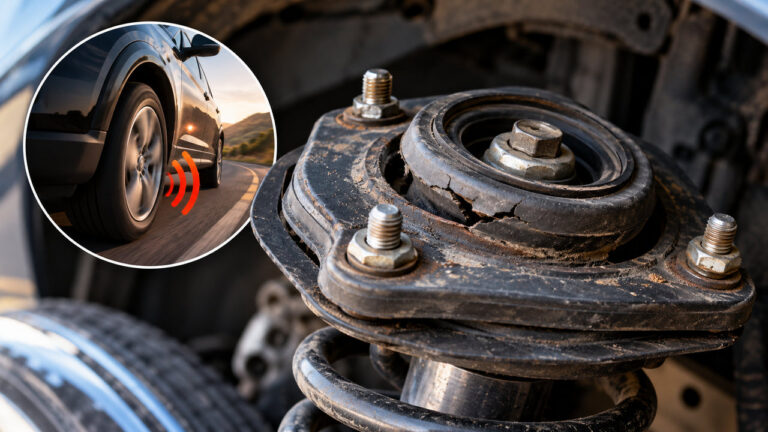
Yes, bad shocks or struts can cause uneven tire wear. When they no longer control suspension movement correctly, a tire may bounce or lose consistent contact with the road. This commonly produces cupping or scalloped patches around the tread.
However, worn shocks are not the only possible cause. Inner-edge, outer-edge, center and both-shoulder wear more often point toward alignment, tire pressure or other damaged steering and suspension components. The wear pattern helps determine what should be inspected.

How Bad Shocks and Struts Wear Tires
Springs support the vehicle, while shocks and struts damp or control the movement of those springs. Their job is not simply to make the ride comfortable; they also help the tires maintain consistent contact with the road.
When a shock or strut loses damping ability, the wheel can continue moving after the vehicle crosses a bump. Repeated bouncing changes the load applied to the tread. Instead of wearing evenly, sections of rubber can develop alternating high and low spots.
This pattern is commonly called tire cupping or scalloping. Monroe’s technical guidance on uneven tire wear also identifies worn shocks and struts as one cause of cupping because they allow the tire to bounce.
If you are unsure which component your vehicle uses, see our comparison of shocks and struts.
What Does Tire Wear From Bad Shocks Look Like?
The pattern most closely associated with weak shocks or struts is a series of uneven dips or scalloped patches distributed around the tire’s circumference. Running your hand over the tread may reveal alternating raised and lowered areas.
- Cupping or scalloping: Repeated high and low patches around the tread.
- Patchy wear: Irregular areas that do not form one continuous worn edge.
- Noise that changes with speed: Cupped tires may produce a humming or rhythmic road noise.
- Vibration: Uneven tread can create vibration that becomes more noticeable at particular speeds.
Cupping does not prove that the shocks are bad. Wheel imbalance, bent wheels, damaged tires, worn wheel bearings and loose steering or suspension components can create similar wear. The complete assembly must be inspected before replacing parts.
Tire Wear Patterns and Their Likely Causes
| Tire wear pattern | Common possible causes |
|---|---|
| Cupped or scalloped patches | Worn shocks or struts, wheel imbalance, bent wheel, bearing or suspension looseness |
| Inner edge worn | Excessive negative camber, incorrect toe or worn suspension components |
| Outer edge worn | Alignment, aggressive cornering, suspension wear or incorrect camber |
| Both shoulders worn | Underinflation or overloading |
| Center worn | Overinflation |
| Feathered tread blocks | Incorrect toe alignment |
| One isolated flat spot | Locked wheel during braking, tire damage or prolonged parking in some cases |
These patterns are clues, not a final diagnosis. More than one fault can exist at the same time. For example, a worn control-arm bushing may change alignment as the vehicle moves, while an unbalanced wheel creates additional cupping.
Can Bad Struts Cause Inner or Outer Tire Wear?
Bad struts can contribute to inner- or outer-edge wear, but that pattern usually involves an alignment problem rather than weak damping alone. A bent strut, damaged upper mount, sagging spring or worn connected component may change camber or toe.
A conventional shock absorber normally does not locate the wheel or determine its alignment. Therefore, a weak standalone shock is more commonly associated with bouncing and cupping than continuous wear on only one edge.
Do not assume that replacing shocks will correct edge wear. The vehicle’s ride height, steering and suspension components should be inspected, followed by an alignment measurement when appropriate.
Other Suspension Parts That Can Damage Tires
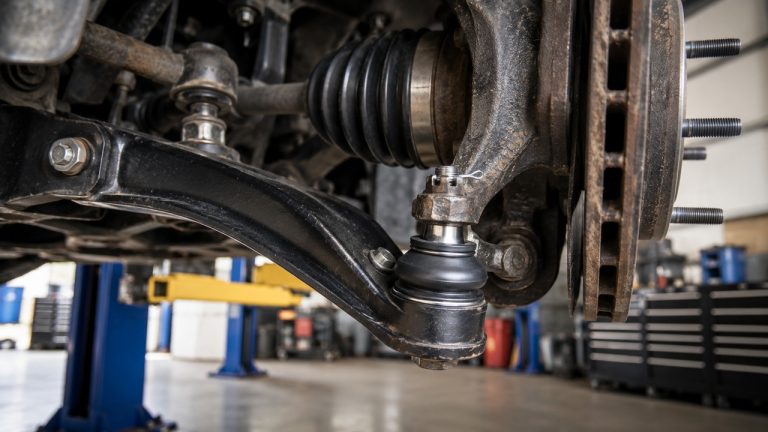
Ball Joints
A worn ball joint can allow unwanted wheel movement and alter alignment while driving. Possible signs include clunking, wandering, steering vibration and inner- or outer-edge tire wear. Severe wear can become a safety risk.
Tie Rod Ends
Tie rods control wheel direction. Excessive play can change toe as the vehicle moves, causing feathering, rapid edge wear, vague steering or wandering.
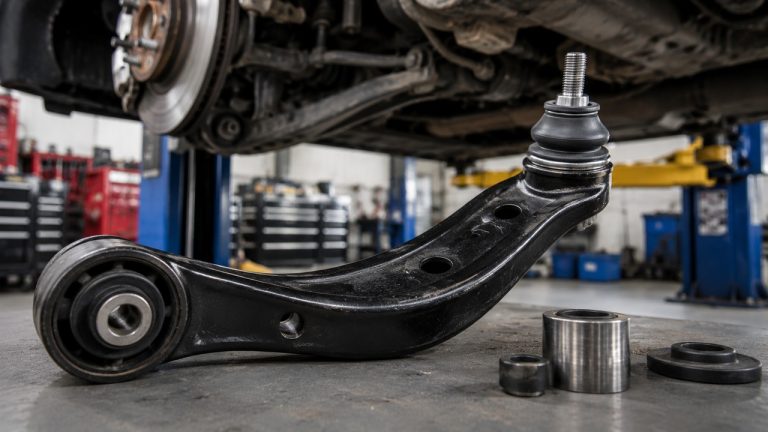
Control Arms and Bushings
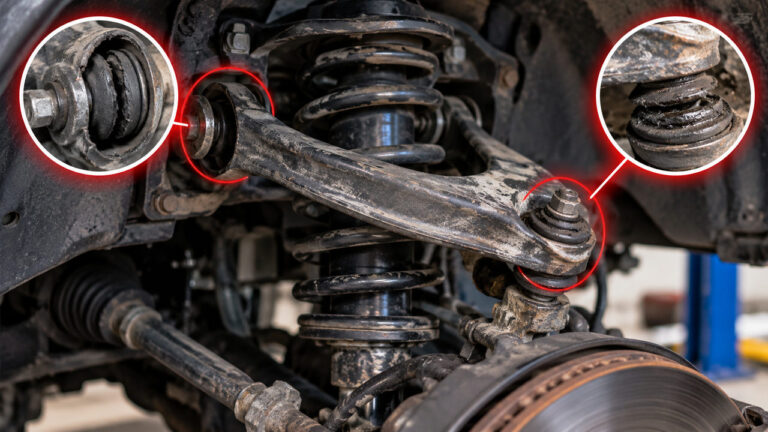
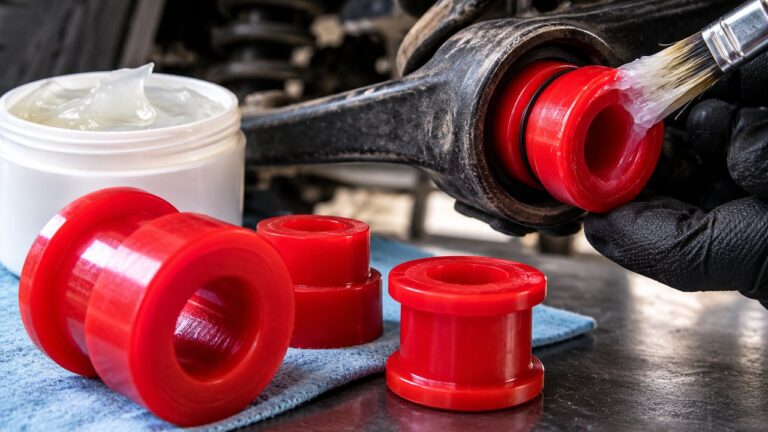
Control arms locate the wheel, while their bushings limit unwanted movement. A torn bushing or bent arm can allow alignment angles to shift under braking, acceleration or cornering.
Springs
A broken or sagging spring can lower one corner and change suspension geometry. This may produce uneven tire wear and reduce available suspension travel.
Wheel Bearings
A worn bearing can permit wheel movement, noise or vibration and may contribute to abnormal wear. A wheel that visibly wobbles or feels physically loose requires immediate inspection.
Signs Your Shocks or Struts May Be Worn
- The car continues bouncing after a bump.
- The body rolls or sways excessively in turns.
- The front dives noticeably during braking.
- The rear squats excessively during acceleration.
- You see excessive fluid leakage from a shock or strut.
- You hear knocking from a worn mount or suspension component.
- The tires show cupping or scalloped patches.
- The car feels floaty or unstable at highway speeds.
These symptoms overlap with other faults. Our guide for a car that feels loose while driving explains how tires, alignment and steering components can produce similar handling problems.
How to Check Your Tires for Uneven Wear
- Park safely: Use a flat surface, select Park or a gear and apply the parking brake.
- Check cold tire pressure: Use the specification on the driver’s door-jamb placard or in the owner’s manual.
- Inspect the complete tread: Look across the inner edge, center and outer edge—not only the most visible shoulder.
- Compare all four tires: A pattern on one wheel may suggest a localized fault; matching patterns can indicate pressure or alignment issues.
- Feel for cupping carefully: With the vehicle stationary, move your hand across the tread and look for alternating high and low areas.
- Check tread depth: Measure several points across each tire rather than relying on one reading.
Do not crawl underneath a vehicle supported only by a jack. If you find exposed cords, a bulge, deep cuts, severe irregular wear or tread below the legal limit, avoid driving and have the tire assessed.
The National Highway Traffic Safety Administration’s tire safety guidance recommends regular checks of tire pressure, tread and damage.
Will Replacing Shocks Fix Uneven Tire Wear?
Replacing the failed component can stop the cause from creating additional wear, but it cannot restore rubber that has already worn away. A cupped tire may continue producing noise or vibration even after new shocks are installed.
The correct repair sequence is usually:
- Inspect the tires, wheels, bearings, steering and suspension.
- Repair worn, loose, bent or leaking components.
- Balance the wheels if required.
- Measure and correct alignment after repairs when necessary.
- Replace tires that are unsafe or too unevenly worn to remain serviceable.
An alignment alone cannot repair a loose ball joint, damaged bushing or weak shock. Similarly, installing new shocks will not correct tire pressure, wheel imbalance or alignment faults. Read our guide on whether you need an alignment after replacing suspension parts.
Can Tire Rotation Correct Suspension Wear?
Rotation can help distribute normal wear, but it does not fix the mechanical cause of abnormal wear. Moving a damaged or severely cupped tire may transfer its vibration or noise to another position.
Diagnose and repair the underlying problem first. Then follow the vehicle and tire manufacturer’s approved rotation pattern and interval if the tires remain safe to use.
When Should You Stop Driving?
Arrange an immediate inspection and avoid driving if:
- A tire has exposed cords, a bulge, separation or rapid pressure loss.
- A wheel visibly wobbles or appears tilted.
- The vehicle suddenly pulls, wanders or becomes difficult to control.
- You hear loud grinding or repeated heavy clunking.
- The steering wheel develops substantial free play.
- Uneven wear has reduced part of the tread to an unsafe depth.
Ignoring the cause can damage new tires and reduce steering, braking and stability. See what else may happen if you ignore suspension problems.
Frequently Asked Questions
Can bad shocks cause uneven tire wear?
Yes. Weak shocks can allow the wheel to bounce instead of maintaining consistent road contact. This can create cupped, scalloped or patchy tread wear.
Can a bad strut cause tire wear?
Yes. A worn strut can contribute to cupping through poor damping. A bent strut, worn mount, damaged spring or connected suspension fault may also alter alignment and cause inner- or outer-edge wear.
Can bad ball joints cause uneven tire wear?
Yes. Ball-joint wear can permit unwanted wheel movement and change alignment while driving. Edge wear, feathering, clunking, wandering and steering vibration are possible signs.
Do bad shocks always cause tire wear?
No. A shock may be worn before a clear tread pattern appears, and tire wear can have many other causes. Assess handling symptoms, component condition, wheel balance, pressure and alignment together.
Do you need new tires after replacing bad struts?
Not automatically. The tires may remain usable if tread depth and condition are safe and wear is minor. Tires with severe cupping, exposed cords, structural damage or insufficient tread need replacement even after the suspension is repaired.
The Bottom Line
Bad shocks and struts can cause tire wear, particularly cupping or scalloped patches created by uncontrolled wheel movement. Continuous inner- or outer-edge wear is more likely to involve alignment or another worn suspension component. Inspect the whole tire, steering and suspension system before buying parts, repair the mechanical cause first and then assess alignment, balance and tire condition.