Why Does My Car Creak When I Get Out? Causes and Fixes
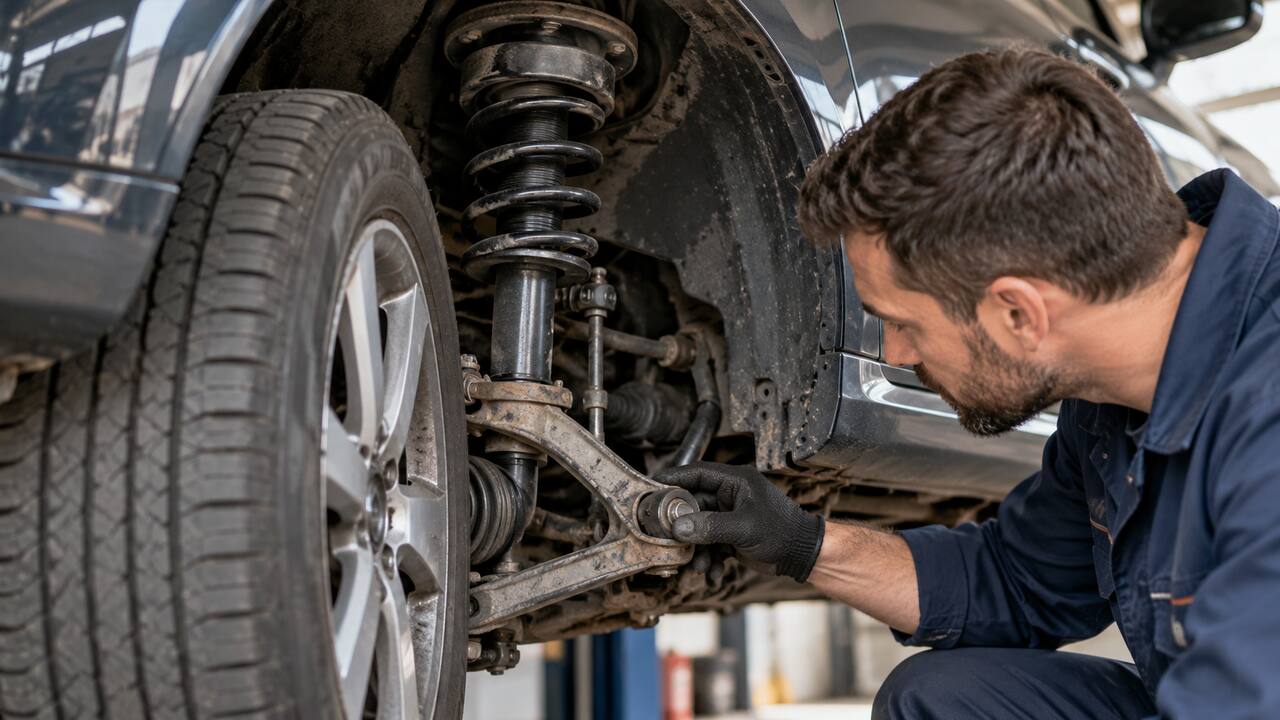
A car that creaks when you get out is usually reacting to a change in weight. As your weight leaves the seat, the body rises slightly and the suspension moves. This can expose dry or worn bushings, damaged spring isolators, worn ball joints, strut mounts, or another component that moves under load.
The noise is not always caused by the suspension. A parking brake, brake pad, door hinge, seat frame, or body panel can produce a similar sound. The location of the creak and when it occurs provide the best clues.
Why Does a Car Creak When You Get Out?
Getting out of the car removes weight from one side of the vehicle. The springs extend, the control arms change position, and rubber suspension components twist slightly. A healthy system normally does this quietly.
If a rubber bushing has dried out, a joint has lost lubrication, or two components are rubbing, that small movement can create a noticeable creak. This explains why the noise may occur while entering or leaving the car even when you do not hear it during normal driving.
| When or Where It Creaks | Possible Cause |
|---|---|
| As the body rises after you leave the seat | Control arm bushing, spring isolator, or strut mount |
| From the rear with the parking brake applied | Parking brake or rear brake movement |
| While getting in, getting out, and driving over bumps | Worn suspension bushing, ball joint, spring seat, or mount |
| Only while turning the steering wheel | Ball joint, tie-rod end, or upper strut bearing |
| Inside the passenger compartment | Seat frame, seat rail, trim, or door hinge |
| After rain or during cold weather | Moisture or temperature affecting rubber bushings |
Most Common Causes
Several suspension components can creak as the vehicle rises when you get out, but the noise can also come from the brakes or interior. The following causes are worth checking, starting with common sources of friction and wear.
1. Dry or Worn Suspension Bushings
Bushings are rubber or polyurethane cushions positioned between moving suspension components. They reduce vibration and prevent direct metal-to-metal contact.
As bushings age, they can harden, crack, separate, or become contaminated by oil. A worn control arm or sway bar bushing may creak when the suspension changes position as you enter or leave the car.
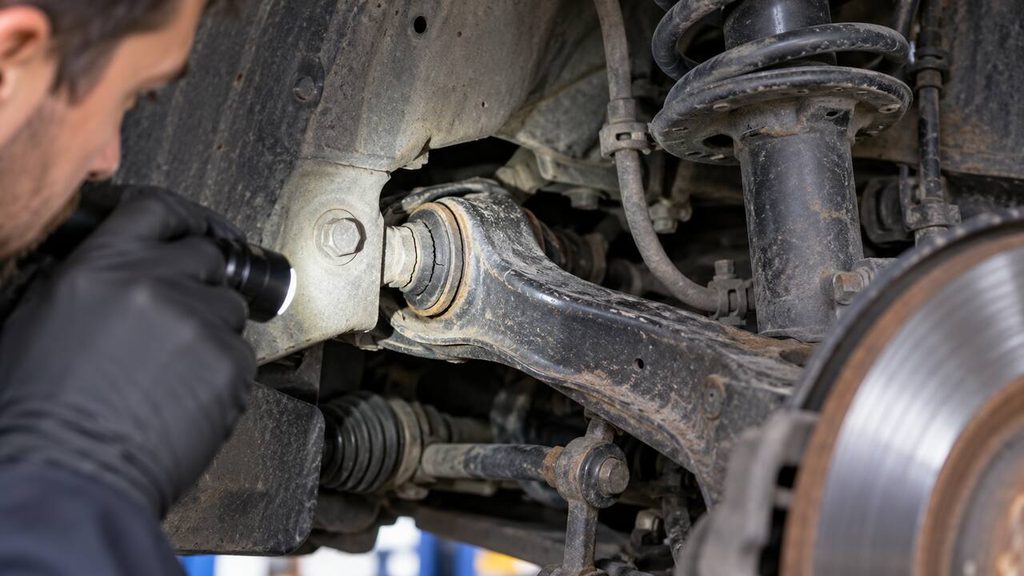
A cracked bushing normally needs replacement. Applying a random spray may silence it temporarily without repairing the underlying wear.
2. Damaged Spring Isolators
Many coil springs sit against rubber pads called isolators. These prevent the metal spring from rubbing directly against its mounting surface.
If an isolator becomes compressed, displaced, or torn, the spring may creak as it extends when you get out. Rust around the spring seat can produce a similar noise.
3. Worn Ball Joints
Ball joints allow the suspension and steering to move through different angles. A damaged protective boot can let lubricant escape and allow water or dirt into the joint.
A dry or worn ball joint may squeak or creak as weight transfers through the suspension. Additional symptoms can include loose steering, uneven tire wear, vibration, or clunking over bumps.
Ball joints are safety-critical components. A joint with excessive movement must be professionally inspected and replaced rather than simply lubricated.
4. Strut Mount or Upper Bearing Wear
The upper strut mount connects the strut assembly to the vehicle body and often contains rubber and a bearing. A worn mount may creak when the body rises, when driving over bumps, or when turning the steering wheel.
If the noise changes while steering at low speed, the upper strut bearing deserves particular attention. Mounting hardware should also be inspected for damage or incorrect tightening. Our guide to bad strut mount symptoms explains the additional signs and checks.
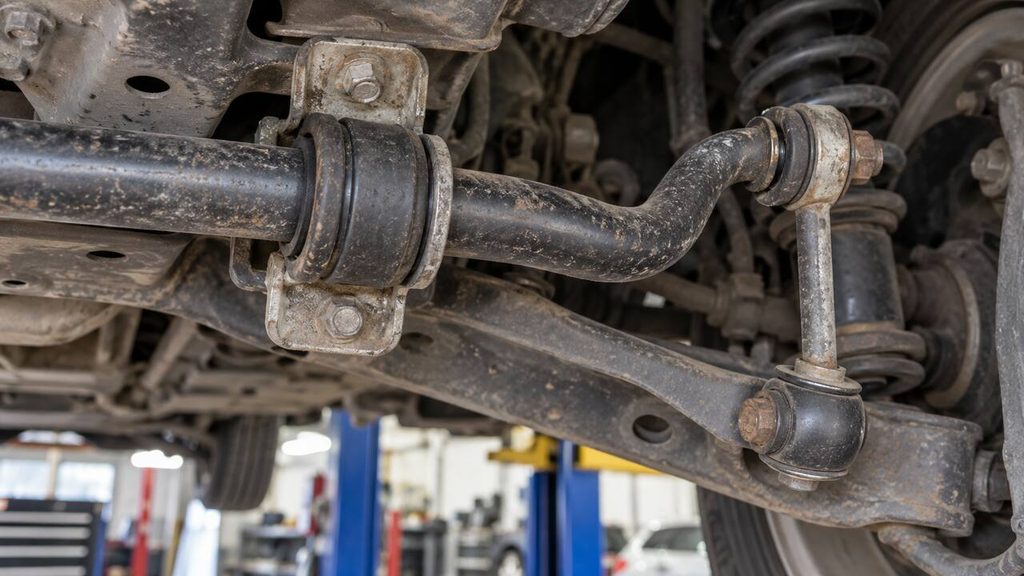
5. Sway Bar Bushings or Links
The sway bar connects the suspension on opposite sides of the vehicle. When you get out, the weight change on one side can make the bar rotate inside its bushings.
Dry sway bar bushings may creak, while worn links more commonly produce knocking or clunking. The noise may become more noticeable when entering a sloped driveway or driving over an uneven surface. If inspection confirms worn bushings, our step-by-step sway bar bushing replacement guide covers the repair.
6. Broken or Corroded Coil Spring
A cracked coil spring or corroded spring seat can make noise as the suspension unloads. Look for a vehicle corner sitting lower than the others, a visible break, rust flakes, or a sharp spring end near the tire.
Do not drive if a broken spring could contact the tire or brake hose. Our coil spring replacement cost guide explains the likely parts and labor expenses.
7. Parking Brake or Rear Brake Movement
A creak from the rear is not necessarily suspension-related. When the parking brake is applied, a small amount of vehicle movement can make the brake components shift and produce a creak.
If the sound occurs only while parked with the brake applied and disappears when it is released on a safe, level surface, the parking brake or rear brakes may be responsible. Do not test this on a slope or anywhere the vehicle could roll.
8. Seat, Door, or Body Noise
Before assuming the suspension is failing, listen carefully to where the noise originates. A seat rail, seat frame, door hinge, weather seal, exhaust hanger, or loose trim panel can creak as your weight moves.
If the noise seems to come from inside the cabin rather than near a wheel, inspect these areas first.
How to Find the Source Safely
You can perform several basic checks without dismantling the suspension.
- Park on a flat surface. Switch off the engine, select Park or a gear, and secure the vehicle properly.
- Open the doors and windows. This makes it easier to determine whether the noise comes from inside the cabin or beneath the vehicle.
- Reproduce the weight change. Have another person enter and leave the car while you listen from a safe position beside each wheel.
- Press down gently on each corner. If the same corner creaks as the body moves, the cause is more likely to be in that area of the suspension.
- Turn the steering wheel while stationary. A noise that appears while steering may point toward a ball joint, tie-rod end, or strut bearing.
- Inspect visible rubber components. Look for cracking, separation, deformation, or oil contamination.
- Check the springs and ride height. Look for broken coils, corrosion, displaced isolators, or one corner sitting unusually low.
Never crawl under a vehicle supported only by a jack. Finding movement in a loaded suspension often requires a drive-on lift and an assistant. A technician can use this setup to locate the noise while the vehicle’s weight remains on its wheels.
How to Fix the Creaking
The correct repair depends on which component is producing the noise. Some problems involve serviceable joints that need lubrication, while damaged bushings, mounts or springs usually require replacement. Use this table to match a confirmed cause with the appropriate repair:
| Cause | Appropriate Repair |
|---|---|
| Dry serviceable joint | Lubricate using the manufacturer-specified grease and procedure |
| Cracked or separated bushing | Replace the bushing or complete control arm, depending on its design |
| Damaged spring isolator | Replace the isolator and inspect the spring seat for corrosion |
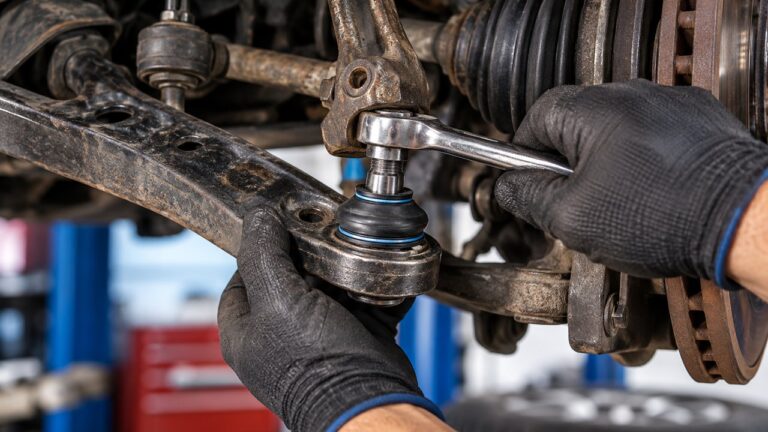
| Worn ball joint | Replace the joint or control arm and check alignment when required |
| Damaged strut mount or bearing | Replace the mount or bearing and inspect the strut assembly |
| Broken coil spring | Replace the correct spring and inspect the opposite side |
| Parking brake or brake movement | Have the brake hardware inspected, adjusted, or replaced as needed |
| Loose seat or door component | Tighten or repair the affected interior or body component |
Should You Spray Lubricant on a Creaking Suspension?
Do not spray a general-purpose lubricant over every suspension component. Petroleum-based products can damage certain rubber materials, attract dirt, contaminate brakes, and hide a failing part without fixing it.
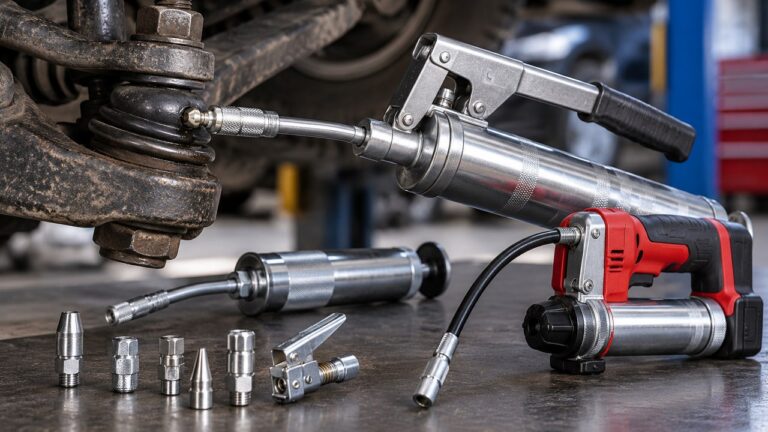
Some serviceable joints have grease fittings and require a specified chassis grease. Polyurethane bushings may instead need a manufacturer-approved lubricant applied to specific sliding surfaces. Our guide to polyurethane bushing grease explains which lubricants to consider and why spraying the outside often fails. Many factory rubber bushings and sealed joints are not designed to be lubricated externally at all.
Identify the component first and follow its manufacturer’s service instructions. If you are unsure, have a mechanic diagnose the noise before applying anything. For more detail, see our guide on how to lubricate suspension components safely.
Is It Safe to Drive With a Creaking Suspension?
A minor creak does not automatically mean the vehicle is about to fail, but the sound should not be ignored. The same noise can come from a harmless dry bushing or a safety-critical ball joint or broken spring.
Stop driving and arrange an inspection if the creak is accompanied by:
- Loose, wandering, or unpredictable steering.
- A tire rubbing against the body or suspension.
- One corner of the vehicle sitting much lower.
- A visible broken spring or a ball joint that appears loose or separated.
- Strong clunking, grinding, or metallic scraping.
- Excessive bouncing or instability.
- Uneven tire wear combined with poor handling.
If the vehicle also feels loose while moving, consult our guide to loose suspension symptoms while driving.
Frequently Asked Questions
Why does my car creak when I get in and out?
Your body weight compresses and releases one side of the suspension. This movement can expose a dry bushing, damaged spring isolator, worn joint, strut mount, or another component that rubs as the vehicle changes height.
Why does the rear of my car creak when I get out?
Common rear causes include sway bar bushings, control arm bushings, spring isolators, shock mounts, or a broken coil spring. Movement in the parking brake or rear brakes can also create a similar sound.
Can cold weather make suspension bushings creak?
Yes. Low temperatures can temporarily make rubber components stiffer, making an existing noise more noticeable. A creak that repeatedly returns should still be inspected for wear or damage.
Will new shocks stop a suspension creak?
Only if the noise actually comes from a shock, strut, or its mounting hardware. Replacing shocks will not repair a worn control arm bushing, ball joint, spring isolator, or parking brake problem. Diagnosis should come before replacement.
Why does my suspension creak but not clunk?
A creak often results from dry rubber, friction, or a joint moving slowly under load. A clunk more commonly suggests excessive clearance or a loose component. These are useful clues, but either noise can have multiple causes.
Next Steps When Your Car Creaks as You Get Out
Begin by confirming whether the sound comes from a wheel area, the brakes, or inside the cabin. If pressing down on one corner reproduces the creak, inspect the bushings, spring seat, ball joint, and strut mount in that area.
Do not replace parts or spray lubricant based on the noise alone. A proper inspection can distinguish a minor irritation from a component that affects steering, tire clearance, or vehicle stability.