Wheel Speed Sensor Replacement Cost: Parts, Labor & ABS Prices
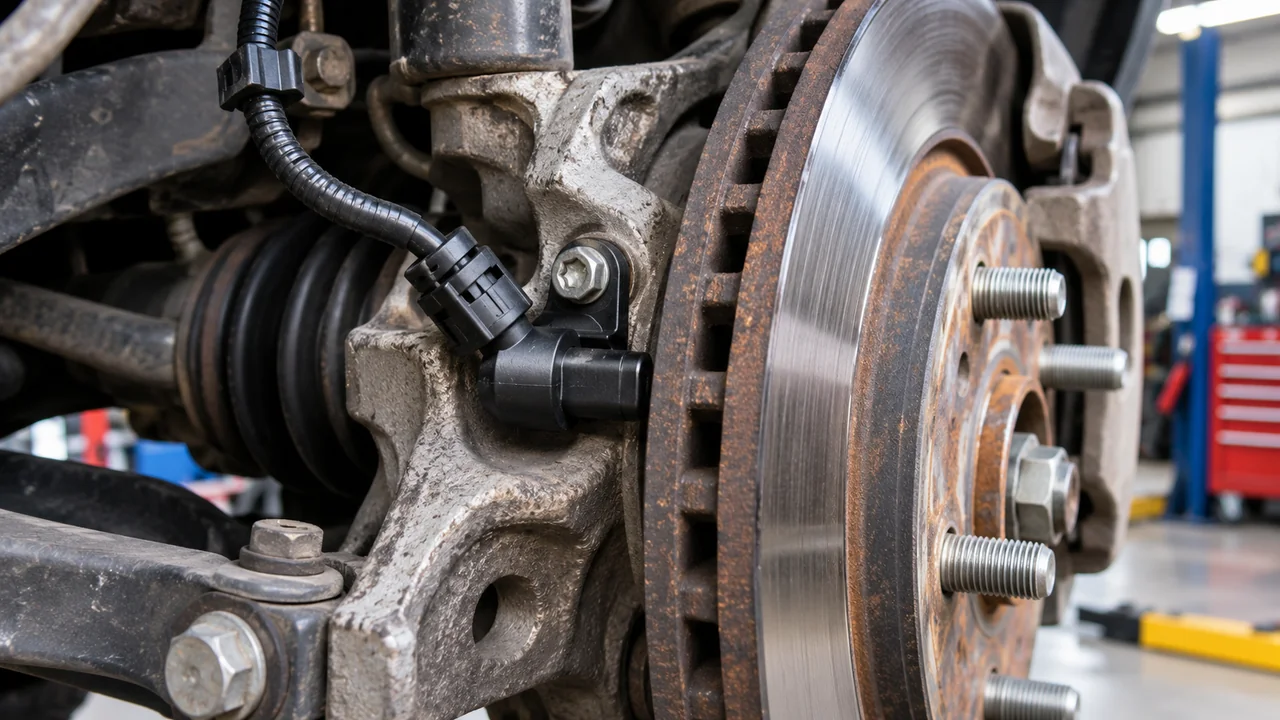
Wheel speed sensor replacement costs $234–$310 on average in the U.S., including parts and labor. RepairPal’s September 2026 estimate puts the sensor at $145–$179 and installation at $89–$131. That’s for replacing a wheel-speed sensor—not automatically for a complete wheel hub, damaged wiring or every problem that turns on the ABS warning light.
A quote near $250 is therefore not unusual. Neither is a much cheaper bill on a vehicle with an easy-to-reach sensor. But if you’ve been quoted $600 or $800 for one corner, ask what is actually being replaced. A sensor stuck in a rusty knuckle, a damaged magnetic encoder or a sensor packaged with a bearing can change the job substantially.
You’ll also see this called an ABS wheel speed sensor replacement or ABS sensor replacement. In this guide those names mean the sensor that reports wheel rotation to the anti-lock braking system—not the tire-pressure sensor (TPMS), transmission speed sensor or steering angle sensor.
Wheel Speed Sensor Replacement Cost: Parts, Labor and Extras
RepairPal’s nationwide estimate is a starting point for one failed sensor. It is not a fixed price that every shop or dealer has to match. The sensor’s location, vehicle design, corrosion and local labor rate can all matter more than the size of the part.
Here is the published breakdown, with the possible extras separated so you can spot them on an invoice.
| Cost item | U.S. price reference | What to check |
|---|---|---|
| Replacement sensor | $145–$179 | RepairPal’s estimated parts component |
| Installation labor | $89–$131 | RepairPal’s estimated labor component |
| Installed total | $234–$310 | Typical nationwide RepairPal estimate |
| ABS fault diagnosis | Extra if not included | Confirm which wheel and why the sensor is blamed |
| Wiring, connector or tone-ring work | Vehicle- and fault-dependent | Not automatically part of sensor replacement |
| Hub or wheel bearing replacement | Separate repair | Only if the encoder or bearing assembly requires it |
| Taxes and shop fees | Varies | Excluded from the national estimate |
Source: RepairPal, Wheel Speed Sensor Replacement Cost Estimate, updated September 3, 2026. Its $234–$310 range is a national estimate, not a vehicle-specific guaranteed quote. Related repairs and local taxes are excluded.
Jerry publishes a different, broader consumer-facing range of $189–$357+. YourMechanic’s vehicle examples go lower and higher still: its listed 2016 Chrysler 300 job is $173, while its 2013 Infiniti QX56 example is $402. Those figures aren’t directly interchangeable because the cars, parts selections and pricing methods differ. Together, they make one point: you need a VIN-specific estimate, not a universal price tag.
How Much Is the ABS Wheel Speed Sensor Part Alone?
The published $145–$179 is RepairPal’s average estimated part cost for the job, not the retail price of every sensor. Some bolt-in aftermarket sensors cost far less; a factory sensor with an integral wiring lead or a less common application may cost considerably more. A shop’s parts price can also differ from the amount you see on an online parts listing.
When comparing two replacements, match the exact wheel position, connector, wire length and factory part number. A listing described as “fits Ford F-150” is not enough if the truck’s year, driven axle or brake package uses a different harness.
Why Labor Can Be More Than the Sensor
On an accessible wheel, the actual removal may be brief. On a rusty vehicle, the sensor can break while coming out or a seized fastener can turn a routine job into careful extraction and cleanup. Some applications require additional brake or hub disassembly. A shop should explain which operation it is charging for rather than treating all ABS sensors as one-hour jobs.
Front vs. Rear Wheel Speed Sensor Replacement Cost
Front and rear ABS sensor replacement costs are not necessarily the same. There’s no honest nationwide price that applies to every front sensor or every rear sensor. Access and the way the axle is built decide the difference.
Front Wheel Speed Sensor: What Changes the Quote?
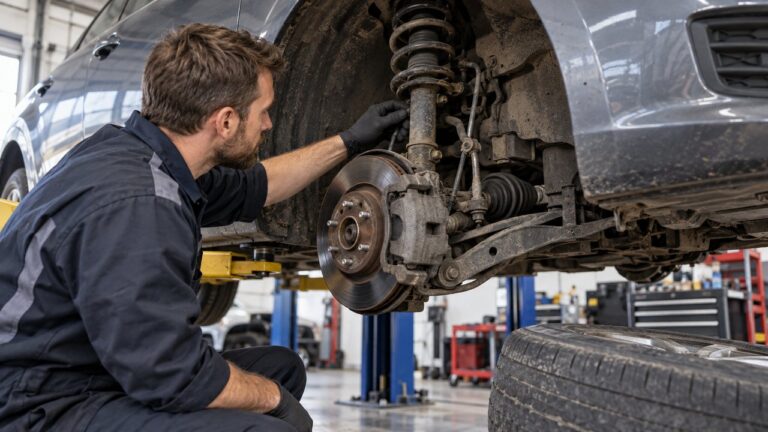
Front sensors are often mounted near the steering knuckle or hub, with wiring that follows the suspension and steering movement. The harness may need to be routed through clips and past the strut or brake components. On a front-wheel-drive vehicle, axle and bearing design can affect access; on a truck, corrosion around the mounting bore can be the expensive surprise.
When a shop says it must remove the complete hub just to change the front sensor, ask whether the manufacturer service procedure actually requires that for your car. Sometimes it does. On other designs the sensor is a separate bolt-in component.
Rear ABS Sensor: Easy on One Car, Awkward on Another
At the rear, a sensor may sit in the hub or knuckle, or in the axle housing on certain drivetrain layouts. Wiring can be exposed to road spray and damage around the rear suspension. Some vehicles use individual rear wheel sensors; older designs may monitor a rear axle differently. Don’t assume you have four identical parts merely because the dash reports an ABS fault.
For either axle, get the quote labeled left front, right front, left rear or right rear. That simple detail prevents ordering the wrong component and makes estimates easier to compare.
Wheel Speed Sensor Replacement Prices by Vehicle
Brand alone tells you surprisingly little. Consider these RepairPal model-wide estimates, which demonstrate why an owner of a Corolla might see a higher bill than the owner of a pickup. They’re published ranges for the named model, not a promise for every engine, year or ZIP code.
The figures below are for the wheel speed sensor replacement service, not four sensors at once.
| Vehicle | Published installed estimate | Source |
|---|---|---|
| Ford F-150 | $184–$264 | RepairPal |
| Chevrolet Silverado 1500 | $180–$252 | RepairPal |
| Honda Civic | $230–$265 | RepairPal |
| Honda Accord | $244–$280 | RepairPal |
| Honda CR-V | $163–$260 | RepairPal |
| Nissan Altima | $289–$378 | RepairPal |
| Toyota Camry | $336–$498 | RepairPal |
| Toyota Corolla | $396–$520 | RepairPal |
Source: RepairPal’s wheel speed sensor estimator, vehicle-model comparisons checked November 2026. These are broad model estimates; model year, location, equipment, repairs and taxes may change the result.
Notice that “Japanese sedan” and “full-size truck” are not useful pricing categories by themselves. The correct sensor, its serviceability and the specific repair procedure matter. If you have a dealer quote, ask whether the factory part is required and if any harness or encoder components are bundled into it.
Before Replacing the Sensor, Rule Out These Three Problems
This is the part I would want a shop to explain before authorizing a $300 repair. The ABS computer can flag a wheel-speed signal that is missing or unreasonable without proving the sensor electronics have failed. Replacing a good sensor leaves the real problem—and your warning light—in place.
Broken Wires and Corroded Connectors
Sensor leads live near moving suspension components, water, road salt and tire debris. A wire can break internally where it flexes, a retaining clip can come loose, or corrosion can reach a connector terminal. An intermittent reading that changes when the wheel turns or the suspension moves deserves an inspection of the harness, not just the sensor tip.
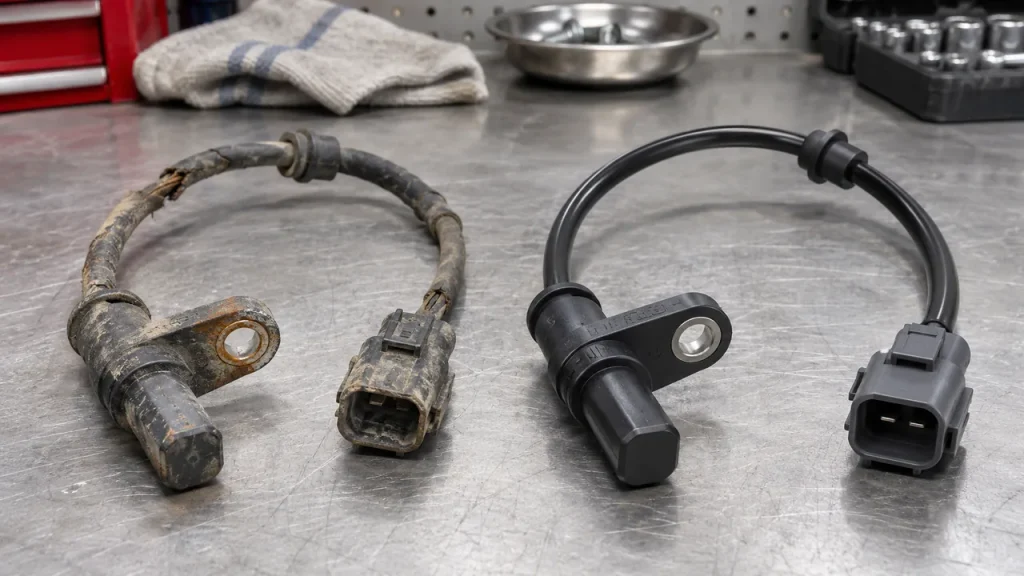
Ask whether the technician checked power or signal integrity according to the vehicle’s system design. An open-circuit trouble code can point to a damaged wire or connector as easily as it points to the sensor itself.
Cracked Tone Ring or Damaged Magnetic Encoder
The sensor needs a rotating target to read. Depending on the vehicle, that may be a toothed tone ring (also called a reluctor ring) or a magnetized encoder built into the wheel bearing seal. A cracked ring, heavy corrosion or physical damage can make the signal disappear or fluctuate even when the sensor is new.
That is a major difference between an ABS sensor quote and a hub quote. If the encoder is part of a sealed bearing, the repair may require replacing the bearing or hub rather than just the external sensor. The wheel hub assembly replacement cost guide covers that larger job and its separate parts-and-labor prices.
Bearing Play, Rust Buildup and the Sensor Air Gap
Wheel-bearing looseness can disturb the relationship between the sensor and its target. Rust under a sensor mounting flange can also increase the air gap and weaken the signal. These faults are particularly worth considering when the ABS activates unexpectedly just before the car stops, rather than showing a permanent warning lamp.
GM has documented wheel-speed faults where the correct investigation includes tire-size checks, harness inspection, debris, sensor air gap, bearing looseness and reluctor damage before a new sensor is fitted. Its bulletin PIT5937A applies specifically to certain 2019–2024 Silverado 4500HD, 5500HD and 6500HD trucks; it is an example of sound diagnosis, not a repair instruction for every GM vehicle. You can read the official GM technical bulletin hosted by NHTSA.
If the bearing itself has play, rumbling or physical damage, compare that separate repair in our wheel bearing replacement cost guide. A code mentioning the wheel speed sensor alone does not establish that a bearing is worn.
How Mechanics Confirm Which Wheel Speed Sensor Failed
An ordinary engine-code reader isn’t always enough. ABS faults are stored in the ABS or brake-control system, and an instrument cluster warning doesn’t tell you whether the fault sits at a left-front sensor, in its wiring or in the rotating target.
A useful diagnosis combines fault codes, live wheel-speed information and a physical inspection. Before paying for four sensors, I would want to know what the technician saw on the scan tool.
- Read ABS-specific diagnostic trouble codes: Identify the wheel location and the manufacturer’s exact failure description, not just the abbreviated generic label.
- Compare live wheel-speed readings: Look for a wheel that drops out, spikes or disagrees with the others under the conditions where the fault occurs.
- Inspect the harness and connectors: Check for chafing, corrosion, loose terminals and damage after brake or suspension work.
- Check the sensor and rotating target: Look for debris, incorrect mounting, damaged tone-ring teeth or a compromised magnetic encoder.
- Check the bearing and tires where relevant: Excessive wheel play or a mismatched tire circumference can affect the interpretation of wheel-speed data.
- Verify the repair: Confirm the original fault no longer returns and the ABS system completes its appropriate checks.
Does Code C0035 or C0040 Mean You Need a Sensor?
Not by itself. Codes in the C0035/C0040 family are associated with front wheel-speed circuits on various GM systems, but manufacturers use their own code definitions and subcodes. Other vehicles use different numbers entirely. The description on the scan tool, the vehicle-specific test chart and the live data are what turn a code into a diagnosis.
The same caution applies if a shop points to a rear-wheel code. A fault described as “signal erratic” may come from the ring or bearing target rather than a dead sensor. Don’t authorize a part solely because the word sensor appears in the DTC description.
ABS Pulsing at Very Low Speed, Even With No Warning Light
There’s a less obvious symptom: the pedal pulses as if ABS is activating while you ease toward a stop on dry pavement. This can happen when one wheel’s speed signal drops out prematurely. Rust at the sensor mounting surface, an excessive air gap or a damaged tone ring are possible explanations, depending on the design.
This is not proof of a faulty sensor and it’s not a substitute for inspecting the actual brakes. Unexpected low-speed ABS operation should be assessed promptly, especially if stopping distance feels affected.
What Makes an ABS Wheel Speed Sensor Repair Expensive?
A tiny sensor can produce a large estimate because most of the bill isn’t the electronics. It can be access, corrosion, a separate wiring repair or the fact that the part sold for that vehicle is more than a simple probe.
A Sensor That Breaks During Removal
If a sensor is seized in its mounting bore, removal can require additional labor. A technician may need to clean the mounting surface, repair damaged threads or deal with a sensor body that has snapped off. That work isn’t reflected in a best-case labor allowance.
Ask the shop to contact you before charging for unexpected extraction or hub disassembly. A sensible estimate identifies that risk in advance when heavy corrosion is visible.
OEM Parts, Harness Length and Integrated Designs
Genuine factory sensors and quality aftermarket replacements may differ in price, connector fit and the supplied lead length. A sensor can look identical in a product photo but use a different connector or sensing design. Correct fitment matters because the ABS controller expects a specific electrical signal.
Some hub designs include an encoder ring without including a replaceable sensor, while others package more components together. Be precise about what the new part actually contains. Don’t compare a $40 loose sensor with a $350 hub-and-bearing unit as though they’re the same purchase.
Signs of a Bad ABS Wheel Speed Sensor
The most familiar sign is an ABS warning light, often accompanied by traction-control or stability-control warnings. But there is no symptom that identifies a single bad wheel-speed sensor with certainty; the same warnings can come from the ABS module, wiring, steering inputs or other brake-system faults.
ABS, Traction Control and Stability-Control Lights
When the ABS controller loses confidence in a wheel-speed signal, it may switch off ABS, traction control or electronic stability functions and illuminate the corresponding indicators. The vehicle may still have conventional braking, but it can lose the electronic help that prevents wheel lockup or manages traction during slippery stops.
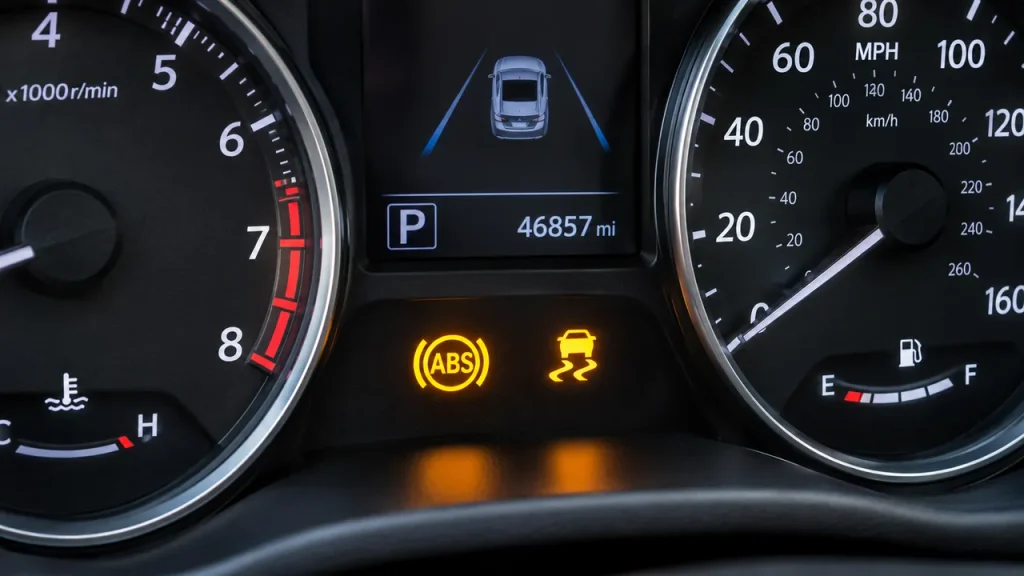
On some vehicles a wheel-speed signal problem can also affect driver-assistance functions. Which warnings appear depends on the model, so avoid using a single lamp as a parts-shopping list.
Speedometer Problems or Unexpected ABS Operation
Some vehicles use wheel-speed information elsewhere in the instrument cluster or powertrain network, so an erratic speedometer or related warning can accompany an ABS problem. That’s not universal; many vehicles derive speed from other sources. A speedometer symptom warrants diagnosis rather than assuming it is the same sensor.
An ABS pedal that pulses at walking speed on a dry road may be more revealing than the warning lamp. Mention the exact speed and conditions to the technician; a road test and wheel-speed comparison can be more useful than replacing a sensor at random.
Don’t Confuse Wheel Speed With Steering Angle
Wheel-speed sensors measure wheel rotation. The steering angle sensor measures where the driver is pointing the steering wheel. Both can influence stability-control warnings, but they’re separate components with different repair costs. If the diagnostic report says “steering wheel position,” our steering angle sensor replacement cost guide covers that separate diagnosis and the possibility of electronic recalibration.
What Happens During Professional Sensor Replacement?
For a serviceable bolt-in sensor, the technician identifies the faulty corner, accesses the sensor, releases its wiring and mounting hardware, fits the correct replacement and secures the harness away from rotating or moving parts. An ABS scan and verification follow. The precise order and removal requirements depend on the vehicle.
There is usually no reason to replace all four sensors because one failed. Nor should a sensor-only job automatically turn into an ABS hydraulic module replacement or brake-fluid bleed; those operations need their own justification.
How Long Does a Wheel Speed Sensor Replacement Take?
A straightforward bolt-in replacement can often be handled within roughly an hour or two of shop time, but a published time for one vehicle should never be applied blindly to another. Corrosion, access and extra diagnosis can stretch the visit. Ask for the labor hours on your estimate, especially if a shop quotes several hours.
Do You Need an Alignment After Replacing an ABS Sensor?
Normally not for the sensor alone. Removing and replacing a bolt-in wheel-speed sensor does not change toe, camber or caster. An alignment could be justified if the job also involves suspension or steering disassembly that affects geometry, but it should not be added simply because the ABS light was on.
The same logic applies to electronic calibration: a replacement wheel-speed sensor doesn’t automatically require a steering-angle relearn or camera calibration. The manufacturer procedure determines whether additional checks are needed.
Is It Safe to Drive With a Bad Wheel Speed Sensor?
If the yellow ABS warning is on and the brakes otherwise feel normal, the car may still stop with its conventional hydraulic brakes. However, ABS, traction control or stability assistance may be unavailable when you need them. Get the fault diagnosed promptly, avoid hard or slippery-road driving where possible and follow the warnings in your owner’s manual.
If the red brake warning light is illuminated, the brake pedal feels abnormal, braking performance changes or the vehicle is difficult to control, stop in a safe place and have it assessed rather than assuming it’s a harmless sensor fault. A dashboard message is not enough to rule out a separate hydraulic or mechanical brake problem.
Questions Drivers Ask About Wheel Speed Sensor Costs
These come up when someone has an ABS warning, a quote from a shop and a replacement sensor listed online for a fraction of the price.
Is $500 Too Much to Replace One Wheel Speed Sensor?
It’s above RepairPal’s national $234–$310 estimate, but it isn’t automatically excessive. A difficult-to-access sensor, seized hardware, a premium OE part or additional diagnosis may explain it. Ask for the part number, labor allowance and confirmation that the quote is truly for a standalone sensor. If a hub is included, compare it as a different repair.
Do All Four ABS Wheel Speed Sensors Have to Be Replaced Together?
No. They are not routine wear items that must be replaced as a set like certain brake components. Replace a particular sensor when its failure has been established. Multiple simultaneous faults call for a wider check of wiring, power supply, module data and wheel-related conditions, not four automatic replacements.
Can Cleaning a Wheel Speed Sensor Fix the ABS Light?
Sometimes debris or rust at the mounting area affects a sensor’s signal, and cleaning or restoring the correct gap can solve the problem. A cracked sensor, failed internal electronics or broken harness will not recover just because the tip is wiped clean. The diagnosis should identify the mechanism before promising a cheap fix.
Will Disconnecting the Battery Clear an ABS Sensor Fault?
It will not repair failed hardware or wiring. A warning may disappear temporarily or return as soon as the module detects the same problem. Some vehicles require an ABS-capable scan tool to clear stored codes or complete their verification cycle. A blank dashboard after a reset is not proof the system is fixed.
Can I Buy the Part and Replace It Myself?
On an accessible sensor the mechanical work can be modest for someone who knows how to lift and support a vehicle safely. The hard part may be identifying the correct fault, handling a seized mounting point and verifying the ABS signal afterward. Avoid guessing with brake-system warnings; if hub or bearing removal is required, professional work may be the better choice.
Is an ABS Sensor the Same as a TPMS or Vehicle Speed Sensor?
No. A tire-pressure monitoring sensor measures tire pressure; a wheel-speed sensor tracks rotation for ABS and related systems. The term vehicle speed sensor can refer to transmission or drivetrain speed measurement on some models. Search by your ABS diagnostic code and exact wheel location so you’re pricing the correct component.
How to Compare Two ABS Wheel Speed Sensor Quotes
Imagine one shop quotes $260 and the other $680. The difference might be labor rates, but it might also be one shop diagnosing a faulty sensor and the other quoting a complete hub. You can’t tell from the totals. Ask for an itemized estimate before approving either repair.
These six questions usually settle the biggest uncertainties:
- Which wheel and which fault? Request the ABS code, any manufacturer subcode and the test result identifying the failed corner.
- What was ruled out? Ask about harness damage, the tone ring or magnetic encoder, bearing play and mounting corrosion.
- Exactly what part is included? Get the sensor or assembly’s VIN-matched number and whether it includes a wiring lead or hub component.
- How much labor? Separate installation time from diagnostic time and any additional extraction or brake disassembly.
- What else is being charged? Ask whether clearing ABS faults, a test drive, alignment or an unrelated brake service is included and why.
- What happens if the light returns? Confirm the repair warranty and whether further diagnosis is included.
The national $234–$310 range is a helpful reference, not a verdict on your mechanic’s bill. A fair quote identifies the failed component and fixes the wheel-speed signal without selling you a hub, four sensors or an ABS module you don’t need. The cheapest part is no bargain if the warning light comes back on during the drive home.