Tire Rotation Cost: Average Prices & What You Pay

Tire rotation usually costs about $20 to $70 in the United States. Independent tire shops and service centers can be toward the lower end, while dealerships or higher-labor-rate shops may charge more. The service can also cost $0 if free rotations were included when you bought the tires.
That price is for moving the existing wheel-and-tire assemblies to different positions on the vehicle. It does not automatically include wheel balancing, alignment, tire repair or replacement.
How Much Should a Tire Rotation Cost?
| Service | Useful U.S. Planning Range |
|---|---|
| Standard tire rotation | About $20–$70 |
| Independent tire shop | Often about $20–$50 |
| Dealer or higher-cost shop | About $40–$80+ possible |
| Rotation included with tire purchase | May be free |
| Rotate and balance all four | Often about $80–$160 |
| Wheel alignment | Separate service |
The biggest reason tire rotation prices look inconsistent online is that shops package the service differently. One $25 quote may be rotation only, while a $120 invoice may include balancing, inspection or another maintenance service.
Why Tire Rotation Can Sometimes Be Free
Many tire retailers include future rotations when you buy a set of tires from them.
The offer may apply for a certain number of years, for the usable life of the tires or only at participating locations. Some packages also include balancing or flat-repair benefits, while others cover rotation alone.
If you purchased your current tires from a tire chain or local shop, check the original invoice before paying another business for a rotation. You may already have the service included.
What Happens During a Tire Rotation?
The technician removes the wheels and moves them to different positions on the vehicle according to an appropriate rotation pattern.
The purpose is to prevent one position from wearing through its tires much faster than the others. Front and rear tires do not experience identical loads: steering, braking, drive torque and vehicle weight distribution all affect wear.
After the wheels are repositioned, the lug nuts should be tightened correctly to the manufacturer’s specification.
Not Every Car Uses the Same Rotation Pattern
A generic diagram showing tires crossed from one corner to another does not apply to every vehicle.
The correct pattern depends on the tires, wheel sizes and drivetrain layout.
- Non-directional tires may allow front-to-rear and cross-axle patterns.
- Directional tires normally stay on the same side unless they are removed from the wheels and remounted.
- Staggered wheel-and-tire setups may prevent normal front-to-rear rotation.
- A matching full-size spare may sometimes be incorporated into a five-tire pattern.
The vehicle owner’s manual and tire manufacturer’s guidance are more reliable than assuming every four-tire vehicle uses the same pattern.
Directional Tires Change the Rules
A directional tire is designed to rotate in one specific direction when the vehicle moves forward.
Moving a mounted directional tire from the left side of the vehicle to the right side would reverse its intended rotation unless the tire is removed from the wheel and remounted.
That is why directional tires are commonly moved front-to-rear on the same side rather than crossed diagonally.
Staggered Tires May Not Be Rotatable Front to Rear
Some performance vehicles use wider rear tires than front tires. The wheel diameters may be the same while the widths differ, or the front and rear tires may use completely different sizes.
In that situation, you cannot simply move a rear wheel to the front.
If the tires are also directional, rotation options may be extremely limited. That makes correct pressure and alignment even more important because the tires cannot be freely moved around the vehicle to even out wear.
How Much Does Tire Rotation and Balancing Cost Together?
A combined tire rotation and balancing service commonly costs roughly $80 to $160 for all four wheels, although shop pricing varies.
Those are two separate services performed during the same visit:
- Rotation changes each wheel’s position on the vehicle.
- Balancing corrects uneven weight distribution in each tire-and-wheel assembly.
A tire does not automatically need rebalancing simply because it was moved to another corner. If you want the separate pricing and symptoms of imbalance, see our wheel balancing cost guide.
Does an Oil Change Include Tire Rotation?
Sometimes, but not automatically.
Some shops sell maintenance packages combining an oil change, tire rotation and basic inspection. Others charge for rotation separately.
When comparing prices, check whether the advertised package includes the rotation or merely includes a tire-pressure and tread inspection.
How Often Should You Rotate Your Tires?
A common interval is roughly 5,000 to 8,000 miles, but the vehicle and tire manufacturer’s schedule should take priority.
Some drivers conveniently rotate the tires at every oil change when the maintenance intervals are similar. Others follow a separate tire schedule.
The important part is consistency. Waiting until one pair is badly worn can eliminate much of the benefit that rotation was supposed to provide.
Why Front Tires Often Wear Faster
Front tires usually handle steering and a significant share of braking forces. On front-wheel-drive vehicles they also transmit engine torque to the road.
That combination can make them wear more quickly than the rear tires.
Rotation allows tires that spent thousands of miles doing the harder front-axle work to spend time in a less demanding position, helping the set wear more evenly overall.
AWD Does Not Make Tire Rotation Unnecessary
All-wheel drive distributes propulsion across more than one axle, but it does not guarantee that all four tires wear at exactly the same rate.
Steering, braking, weight distribution, alignment and suspension geometry can still create different wear patterns between positions.
Keeping tread depth relatively consistent can be particularly important on AWD vehicles because large circumference differences between tires may affect some driveline systems.
Tire Rotation Cannot Undo Existing Tire Damage
Moving a worn tire to another position does not restore the rubber that has already disappeared.
If one shoulder is already heavily worn, rotation may change where that tire sits on the vehicle, but it does not repair the underlying tread damage.
The useful question becomes why the uneven wear happened in the first place.
When Uneven Wear Means More Than “Time to Rotate”
Normal differences between front and rear wear are exactly what tire rotation is designed to manage.
More severe patterns can point toward another problem:
- one-sided shoulder wear
- rapid inner-edge wear
- cupping or scalloped tread
- one tire wearing dramatically faster than the other three
- feathered tread blocks
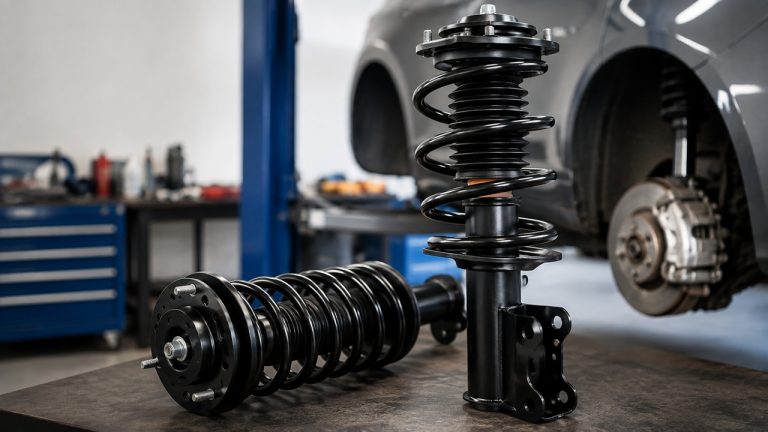
Alignment, worn steering parts, weak shocks or struts and incorrect tire pressure can all contribute. Our guide to suspension problems and uneven tire wear covers those causes in more detail.
Tire Rotation Does Not Replace an Alignment
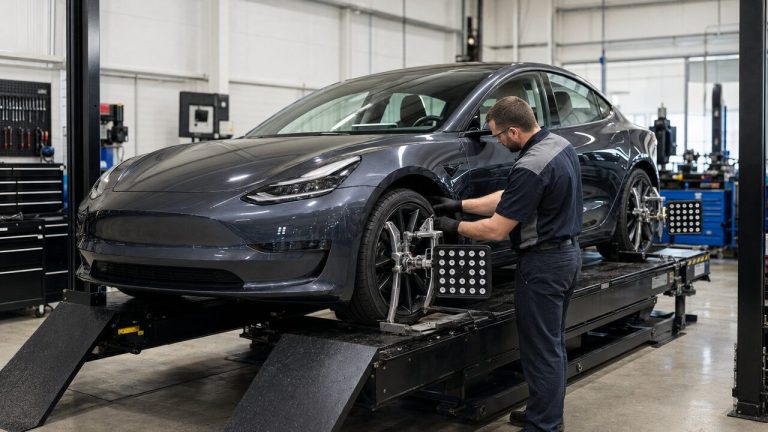
A vehicle that pulls, has an off-center steering wheel or produces a strong alignment-related wear pattern does not become aligned simply because the tires were moved around.
Rotation changes tire positions. Alignment changes suspension and steering geometry.
If the tire wear points toward toe, camber or caster rather than normal position-to-position wear, see our wheel alignment cost guide.
Should Tires Be Rotated Before or After Alignment?
If both services are needed during the same visit, the exact order matters less than making sure the tire condition and suspension are inspected before final alignment decisions are made.
A technician may rotate the tires first so the vehicle leaves with the intended tire positions and then perform alignment measurements. The shop may also inspect the existing wear pattern before moving anything because it provides useful diagnostic information.
What matters is that an alignment problem is corrected rather than hidden by simply moving the worn tires to different corners.
How Long Does a Tire Rotation Take?
A straightforward professional tire rotation typically takes about 15 to 30 minutes.
The visit may take longer if the shop also performs balancing, tire-pressure service, brake inspection, oil service or other maintenance.
Large wheels, heavy truck tires, locking lug nuts or seized hardware can also add time.
Can You Rotate Tires Yourself?
Yes, provided you can lift and support the vehicle safely.
A DIY rotation normally requires a suitable jack, properly rated jack stands, a lug-wrench or socket setup and a torque wrench.
The vehicle should be supported at manufacturer-approved lifting points, and the lug nuts should be tightened in the correct sequence and to the specified torque.
You also need to know the correct rotation pattern. Moving directional or staggered tires incorrectly can defeat the purpose of the job.
What a Good Tire Rotation Visit Can Reveal
The service itself is simple, but removing all four wheels gives the technician an opportunity to notice problems that are easy to miss from outside the vehicle.
- uneven tread wear
- sidewall damage
- embedded nails or screws
- abnormal wheel movement
- brake or suspension concerns visible with the wheel removed
- incorrect or uneven tire pressures
That inspection value is another reason a professional rotation can be worth more than the few minutes required simply to swap wheel positions.
Tire Rotation Cost FAQ
How much does a tire rotation cost?
A standard tire rotation commonly costs about $20 to $70 in the United States. Some tire shops charge less, while dealerships and higher-labor-rate locations may charge more.
What is the average tire rotation cost?
Current national estimates are around $50 to $70, although tire-service shops frequently advertise standalone rotations closer to $20 to $50.
Can tire rotation be free?
Yes. Many tire retailers include future rotations when you buy tires from them. Check your original purchase agreement because eligibility and duration vary.
How much does tire rotation and balancing cost?
A combined rotation and balancing service commonly costs around $80 to $160 for all four tires. Balancing is a separate procedure and is not automatically required every time the tires are rotated.
How often should tires be rotated?
A common interval is approximately 5,000 to 8,000 miles, but your vehicle and tire manufacturer’s recommended schedule should take priority.
Do directional tires need rotation?
Yes, but mounted directional tires usually stay on the same side of the vehicle and move front-to-rear because they are designed to rotate in a specific direction.
Can staggered tires be rotated?
Not front-to-rear when the front and rear wheel or tire sizes differ. Some staggered setups offer only limited side-to-side options, and directional tires can restrict rotation further.
Does tire rotation fix uneven wear?
It can help equalize normal wear differences between tire positions, but it cannot reverse tread damage that already exists or correct alignment and suspension faults causing abnormal wear.
Rotation Is Cheap—Replacing Tires Early Is Not
A tire rotation is one of the least expensive maintenance services on a vehicle. Its value comes from preventing one or two tire positions from wearing out long before the rest of the set.
The important part is not simply moving the tires on a schedule. Use the service to watch how each tire is wearing. If abnormal wear continues after rotation, the next step should be diagnosing alignment, pressure or suspension problems rather than continuing to shuffle damaged tires around the car.