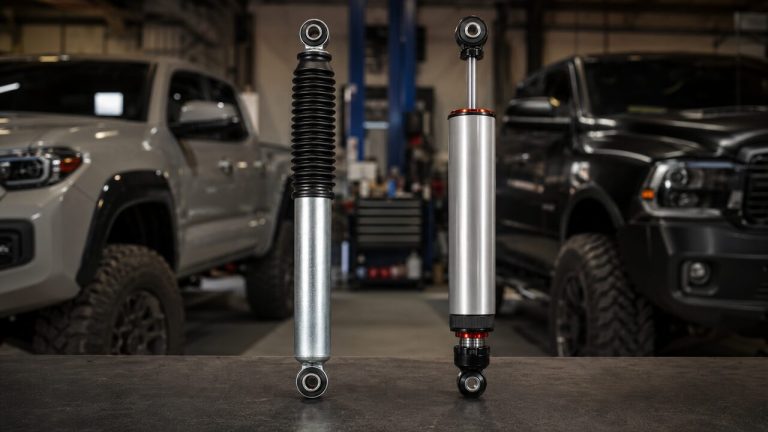
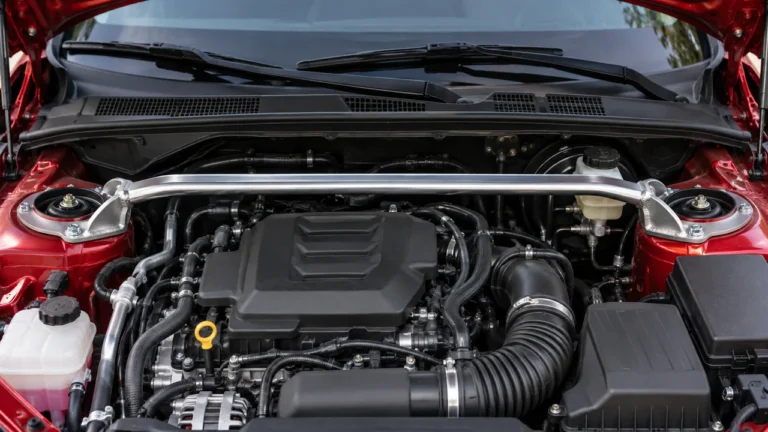
GMC Canyon Lift Kit: Best Heights, Tires & Fitment by Year
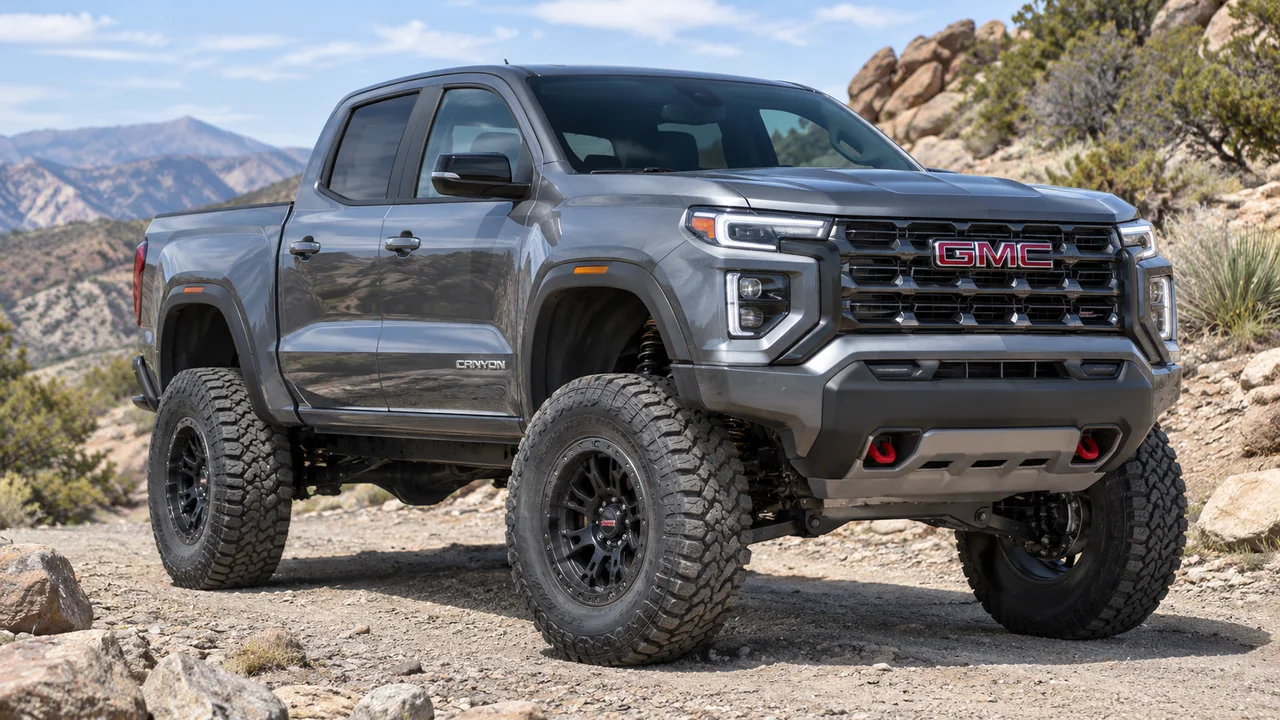
For a 2023 or newer GMC Canyon, a good lift kit is one that works with the height the truck already has. The Elevation, AT4 and Denali start with a factory two-inch lift; the AT4X starts three inches up, and the AT4X AEV Edition already comes on 35-inch tires. An additional 1.5–2.5 inches is a sensible range to investigate for an eligible non-AT4X truck. For older Canyons, the choice can be quite different: a 2005 may need torsion-bar hardware, while a 2016 needs a system designed for its front struts.
If you want the best GMC Canyon lift kit for your particular build, settle the tire and wheel requirements before deciding on the advertised height. A six-inch system is not necessarily a better way to fit a 33-inch tire than a smaller, trim-specific package. The comparisons here cover U.S.-market Canyons, with published fitment examples rather than universal clearance promises.
Choose Your Lift by the Canyon You Own
Use this chart to narrow the options before shopping. The suggested aftermarket heights are changes from the applicable factory configuration, not total elevation above a standard Colorado or a hypothetical unlifted Canyon.
| Canyon configuration | First option to investigate | Main fitment question |
|---|---|---|
| 2004–2012, torsion-bar front end | Mild key-based lift or dedicated 4-in system | 4WD or high-stance 2WD; remaining travel |
| 2004–2012, coil-spring 2WD | Coil-spring-specific suspension lift | Correct front suspension and steering hardware |
| 2015–2022, conventional truck | 2–3-in matched suspension package or taller full kit | Engine, drive type, wheel clearance |
| 2021–2022 AT4 | Retain factory setup or approved suspension upgrade | Existing Off-Road Performance Edition hardware |
| 2023+ Elevation / AT4 / Denali | 1.5–2.5-in additional lift; dedicated 3-in option on AT4 | Factory lift, wheel diameter and trim approval |
| 2023+ AT4X | Stock or DSSV-compatible additional lift | Damper travel and tire goal |
| 2024+ AT4X AEV Edition, where offered | Keep factory 35s unless there is a defined need | AEV-specific approval, bump stops and body clearance |
A leveling kit can still be the right answer if the only problem is the nose-down stance. For the general distinction between raising the front and lifting the whole vehicle, see our leveling kit vs. lift kit guide. Here the priority is finding a complete Canyon application that meets the tire and suspension requirements, including the rear height where relevant.
2023 and Newer Canyon: The Factory Lift Changes the Calculation
The third generation is the one most likely to produce confusing lift-kit descriptions. GMC gives its regular Canyon trims a raised, wide-track chassis from the factory. According to the 2026 Canyon specifications, the regular factory increase is two inches, with three inches on AT4X. The current model year of a truck should still be checked separately against the kit listing.
Elevation and Denali: Both Start Above the Conventional Colorado
The Elevation is not the Canyon equivalent of an unlifted Colorado WT. A kit listing for a standard-height Colorado may leave the GMC out, even if the trucks share the basic platform. That matters on an Elevation that has never left the pavement just as much as on one being built for trails.
Denali adds another practical issue: its factory wheel package. The 2026 Denali has 20-inch wheels, and a suspension kit that allows a particular 17-inch aftermarket combination may not support those original wheels. If keeping the diamond-cut factory wheels is part of the plan, start there. Do not assume the Denali name implies the electronic shock system found in a Sierra 1500 Denali.
ReadyLIFT makes the distinction explicit in its 2023–2026 SST application announcement. The 69-33250 is a 2.5-inch system for Elevation, AT4 and Denali, while 69-33200 is a two-inch system for AT4X. The former is not a taller version of the latter that can simply be fitted to the same truck. The manufacturer discusses 33-inch-class tire combinations, not an unrestricted 35-inch fitment.
GMC Canyon AT4 Lift Kit: Decide Whether You Need 33s or 35s
On a modern AT4, the suspension already provides a considerable amount of height. If the truck will carry camping equipment and drive several hundred highway miles between trails, keeping some factory rake and choosing a moderate tire can be more useful than trying to match the height of a heavily modified truck in a photograph.
For a more ambitious build, the Zone Offroad 3-inch AT4 system for 2023–2026 is designed around the raised factory suspension. It retains the front struts, adds revised upper control arms and offers a choice of rear shocks. Its published 35×11.50 tire combination uses a 17×8.5 or 17×9 wheel with 5.5 inches of backspacing; trimming may be needed. The manufacturer excludes AT4X and limits this application to AT4 and Trail Boss, rather than all Canyon trims.
That tire is an inch narrower than a 35×12.50. If the shop quotes the latter without consulting another approved application, ask how it has established clearance around the control arms, bumper and wheel opening. A narrow 35 can be a deliberate choice, not a compromise in lift height.
AT4X: Why the Same Spacer Package Can Produce a Different Lift
Multimatic DSSV dampers are part of the reason to buy an AT4X. There is little sense in discarding a working factory damper system just to install a generic lift, unless the objective is an engineered suspension conversion with a different performance target.
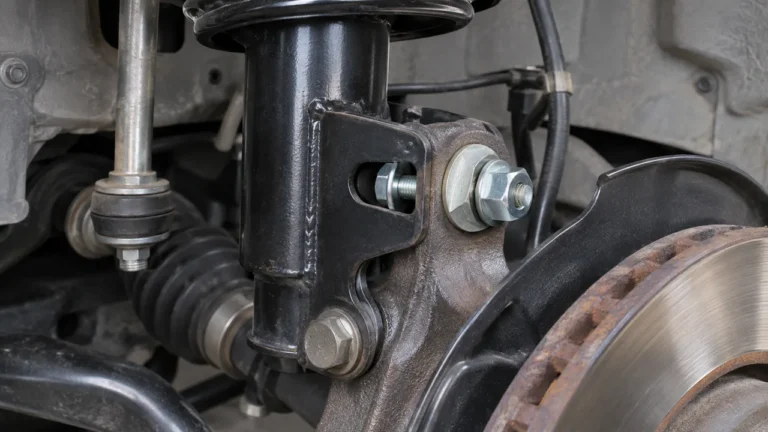
The Cognito 110-91242 application gives a particularly useful illustration. The listing covers eligible 2023–2025 AT4 and AT4X trucks. On the AT4, the package uses both a strut spacer and spring preload spacer for a two-inch front change. On the AT4X, the preload spacer is omitted and the front increase is one inch. Cognito explains that the AT4X starts with less extension travel and that the preload component is incompatible with the DSSV strut. Its listed tire limit is 33 inches tall and 11.5 inches wide.
That is a front-only example, not a recommendation to add separate rear spacers. It shows why the components and starting suspension must be considered together. An AT4X owner planning a full lift should compare how the system preserves front and rear damper travel rather than assuming more preload means better trail performance.
AT4X AEV Edition: A 35-Inch Build That GMC Has Already Done
The 2024 AT4X AEV Edition announcement describes a 4.5-inch factory lift, 35-inch Goodyear mud-terrain tires, enlarged fender openings, AEV steel bumpers and an in-bed spare. That is 1.5 inches of factory lift beyond the ordinary AT4X. The factory package is a useful reference for what a coordinated 35-inch build involves.
Buying a set of AEV-style wheels and raising an ordinary Canyon to the same advertised height does not reproduce those body and protection changes. Equally, an owner who already has the AEV package should not order an AT4X aftermarket kit without confirming that the additional factory height and AEV equipment are expressly covered. An approved tire and wheel combination for the ordinary AT4X is not automatically a tested AEV combination.
Is the Genuine GMC 1.5-Inch Lift Kit Worth Buying?
If warranty concerns and retaining factory shocks are important, the genuine accessory deserves a place on the shopping list. But it has more restrictions than its broad Canyon fitment label suggests.
GM Part 84914657: What Comes With It
The GMC 1.5-inch suspension lift kit (84914657) uses the original dampers and supplies spacer hardware, a striker cap, a rear anchor plate and U-bolts. It is a coordinated front-and-rear accessory rather than a new performance coilover system. On an eligible truck with healthy shocks, that may be exactly what the owner wants.
GMC states that the kit is designed to preserve the operation of specified driver-assistance functions and not void the New Vehicle Limited Warranty if properly installed, subject to warranty terms. It recommends dealer installation. That statement is specific to this accessory, not a general warranty assurance for every lift sold for a Canyon. Include the dealer’s installation price when comparing the package with an aftermarket system.
The Fitment Table and the Product Restrictions Do Not Agree
The accessory page’s broad vehicle table includes AT4X, but its detailed compatibility notes expressly exclude AT4X and Denali. The same notes exclude trucks equipped with 20- or 22-inch wheels and call for accessory rock sliders or assist steps on certain 17- or 18-inch wheel configurations with a sunroof. Treat those detailed exclusions as a stop sign, even if a general model filter says the item fits.
Give the dealer the VIN, wheel size and roof configuration before buying. Ask it to confirm the exact part number and all required accessory hardware. Swapping wheels on an excluded truck does not by itself establish approval. For a Denali or AT4X, investigate a dedicated aftermarket system instead of trying to work around the genuine kit’s restrictions.
Lift Kit Fitment on Older Canyon Models
The Canyon has three distinct U.S. generations. There was no U.S. model-year Canyon for 2013 or 2014. The older truck is worth identifying carefully because listings sometimes group several GM compact pickups and share model names across international markets.
| Model years | Front suspension family | What to identify |
|---|---|---|
| 2004–2012 | Torsion bars or conventional coils, depending on configuration | Actual spring layout, drive type, factory high stance |
| 2015–2020 | Coil-spring front strut | Gas or diesel, 2WD/4WD, All Terrain or Denali equipment |
| 2021–2022 | Second-generation strut platform | AT4, Off-Road Performance Edition, Elevation, Denali |
| 2023–2026 | Third-generation raised chassis | Elevation/AT4/Denali versus AT4X; AEV where equipped |
| 2027 onward | Check current model-year applications | Written approval of the specific kit and trim |
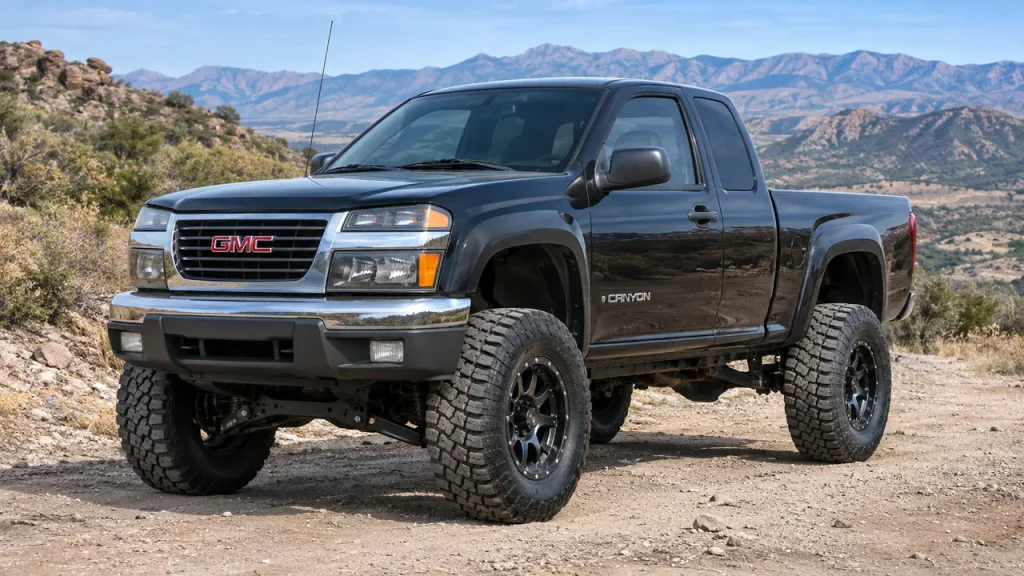
2004–2012: A 2WD Canyon Can Still Have Torsion Bars
This is the first thing to settle on a 2005 or 2006 GMC Canyon lift kit search. Some high-stance two-wheel-drive trucks use the torsion-bar arrangement found on 4WD applications; ordinary 2WD coil-spring versions require different hardware. The presence of a long spring bar running rearward from the lower control arm is a better clue than the presence or absence of a front differential alone.
For torsion-bar trucks, read our torsion bar key guide before choosing a modest lift. On an early Canyon, inspect the steering linkage, ball joints, wheel bearings, spring anchors and rear leaf mounts before paying for larger tires. A higher front resting position can leave too little downward travel if the previous owner has already adjusted the keys.
A four-inch kit for an early Canyon is a substantial change. Check the original suspension, drive type and the instructions for the exact part number, including the rear leaf or add-a-leaf option. Old listings and secondhand kits can be incomplete. If replacement brackets or required steering pieces are unavailable, it may make more sense to rebuild the original suspension and choose a modest tire instead.
2015–2020: All Terrain, All Terrain X and the First Denali
A 2016 GMC Canyon lift kit belongs to the second-generation platform. The front strut and rear leaf-spring layout is different from the early truck, and the 2.8L Duramax diesel introduces another fitment consideration. Do not transfer spring or damper specifications from an early five-cylinder Canyon to a later diesel or 3.6L V6 simply because the advertised height is the same.
The All Terrain package and the All Terrain X equipment deserve attention on used trucks. In the 2020 lineup, the latter included 31-inch DuraTrac tires, so a buyer looking for the appearance of a Canyon on 31s might already have the desired tire class. Check whether the truck has been leveled since new and whether its existing shocks and wheels are worth retaining. A second-generation Denali with 20-inch wheels presents different priorities from an All Terrain used on rocky roads.
2021–2022 AT4: Look for the Off-Road Performance Edition
A 2021 GMC Canyon AT4 is not the same raised chassis as the 2023 AT4. The earlier AT4 offered 31-inch-class off-road tires, and its optional Off-Road Performance Edition added a front leveling arrangement and removed the lower front air dam, among other changes. On a used example, identify this package before interpreting the height claimed by another lift-kit seller.
A shop should measure the actual front and rear ride heights and check the existing spacer or spring arrangement. Adding a kit designed for an untouched second-generation Canyon on top of existing factory accessory hardware is not automatically approved. This distinction matters more than whether a photograph of the lifted truck looks similar to your own.
A Taller Second-Generation Kit That Covers the Duramax
The BDS 5.5-inch suspension system for 2015–2022 4WD trucks is a useful example for buyers who need more than a small height increase. BDS lists diesel fitment and up to 33-inch tires, but prohibits reinstallation of stock 17- and 18-inch wheels. It recommends aftermarket 20-inch wheels with no more than 5.25 inches of backspacing and warns that certain wheel combinations require additional steering-stop work.
Compare that with the intended use of an All Terrain or AT4 on 17-inch trail wheels. The taller system may force a new wheel purchase and a different sidewall arrangement. A moderate lift with an approved wheel you already own could be the better build, even when the larger kit accommodates the engine and model year.
33s or 35s? Real Tire Fitment Beats a Lift-Height Rule
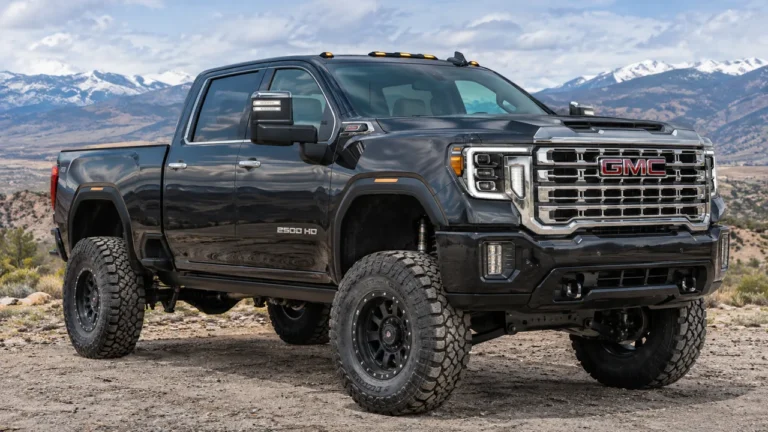
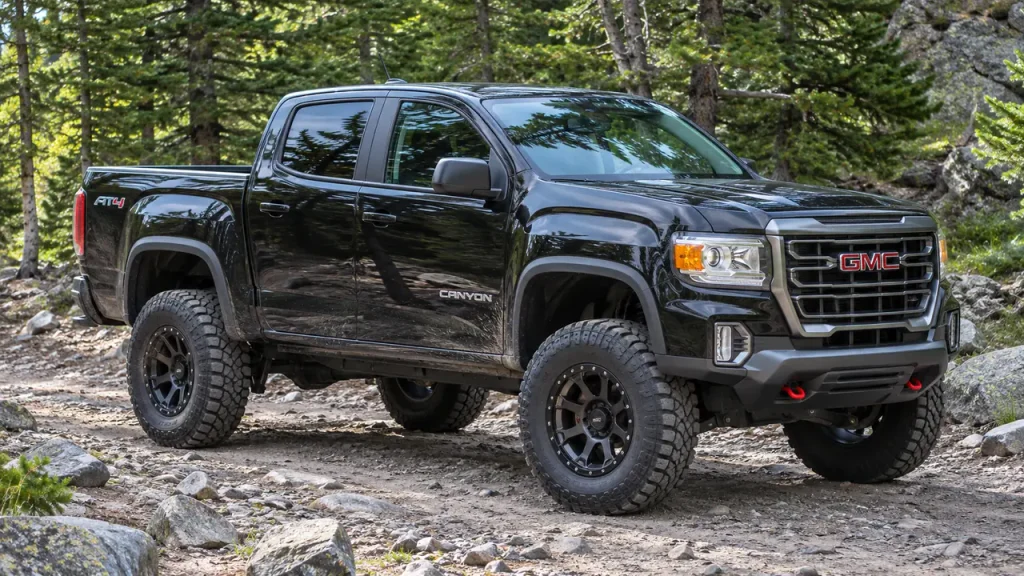
A Canyon with a lift kit is often pictured with wide tires and wheels that sit far outside the body. The useful detail for a buyer is the wheel specification behind the photograph. The examples below use manufacturer recommendations for the exact applications discussed, not clearance guarantees for every truck.
| Specific application | Published tire target | Wheel details and restrictions |
|---|---|---|
| Cognito 110-91242, eligible 2023–2025 AT4/AT4X | Up to 33 in tall, 11.5 in wide | Up to 9 in wheel width; maximum 0 mm offset per listing |
| Zone 3 in, eligible 2023–2026 AT4 | 35×11.50 | 17×8.5 or 17×9; 5.5 in backspacing; possible trimming |
| Zone dedicated AT4X system, 2023–2026 | 35×12.50 | 17×8.5 or 17×9; 5 in backspacing; possible trimming |
| BDS 5.5 in, eligible 2015–2022 4WD | Up to 33 in | Recommended aftermarket 20 in; max 5.25 in backspacing |
| Rough Country 4 in, eligible 2023–2026 4WD | 305/55R20 | 20×9; 0 mm offset in chart; AT4X excluded |
The AT4X row refers to the Zone Offroad dedicated AT4X system. Its description mentions 3.5 inches while the title and front-height specification say three inches. The specifications list a two-inch rear increase. The maker describes retaining the original DSSV dampers at both ends. Clarify the delivered height and components with Zone before ordering, and do not assume the AEV Edition is approved just because the product page lists AT4X.
Why 285/75R17 and 33×11.50 Are Not the Same Tire
The nominal metric diameter of a 285/75R17 is about 33.8 inches; a 285/70R17 is about 32.7. Some catalog descriptions group both in the 33-inch class. Their actual measured dimensions also depend on construction and the measuring rim. That is enough of a difference to change clearance at the back of the front wheel opening.
On a newer Canyon, check the tire on both sides at full steering lock and through the safe suspension range. The upper control arm, liner and front bumper can all become limiting points. A larger tire diameter raises the rear axle housing by approximately half the diameter increase in unloaded geometric terms; a suspension lift alone does not increase clearance beneath that solid axle.
The 2015 and 2023 Wheel Bolt-Pattern Changes
The first and third generations use the six-lug 6×139.7 pattern, while 2015–2022 trucks use 6×120. Six holes do not make the wheels interchangeable. Even where bolt patterns match, hub diameter, mounting hardware, wheel barrel shape and brake clearance must be confirmed. This is particularly important if you are moving a wheel set from an old Canyon to a new one.
A new steering knuckle can also impose a different wheel requirement from the stock truck. Use our wheel offset and backspacing guide to interpret a manufacturer’s wheel chart. Do not assume that moving the tire outward always cures rubbing: it can increase the sweep of the tire through the opening and put additional leverage on the hub and steering system.
When a 4-Inch or 6-Inch Canyon Lift Makes Sense
If the goal is more than a mild stance change, compare the entire suspension package. A taller crossmember system and a modest spacer-based system can solve different problems even if the finished truck appears similar.
A Four-Inch System Can Require New Wheels for a 33-Inch Tire
The Rough Country 13230-config four-inch 4WD system for 2023–2026 uses replacement knuckles and excludes AT4X. Its fitment notes require aftermarket 20-inch wheels because the revised tie-rod position interferes with the original wheels. The published chart includes a 305/55R20 on a zero-offset 20×9 wheel. That tire calculates to approximately 33.2 inches in diameter.
A Denali owner may like the 20-inch appearance but still be unable to use the original wheels. An AT4 owner may prefer a smaller approved wheel with more tire sidewall. This is why the total price and intended driving surface are important alongside the height in the product name. Ask the manufacturer how the advertised height is referenced on the factory-raised Canyon.
Six Inches: Buy for a Specific Build, Not a Number
A six-inch lift can be appropriate for a deliberately tall street build, but it is not necessary simply to obtain 35s on every Canyon. Dedicated systems for the third-generation AT4 and AT4X illustrate how different wheel and body arrangements can change the amount of lift needed. A standard four- or six-inch kit should never be assumed compatible with DSSV suspension.
Look at the new crossmembers, steering geometry, rear lift arrangement and shock options. The rear may be raised a different amount from the front. Also consider the height of the garage opening, the bed when loading a motorcycle or camping gear, and the hitch position. Bigger wheels and tires can add unsprung mass and alter steering, braking and effective gearing.
What About a Replacement Coilover or a Body Lift?
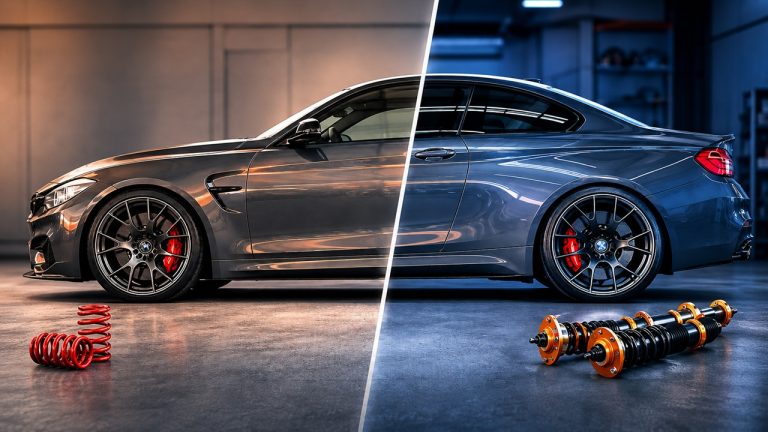
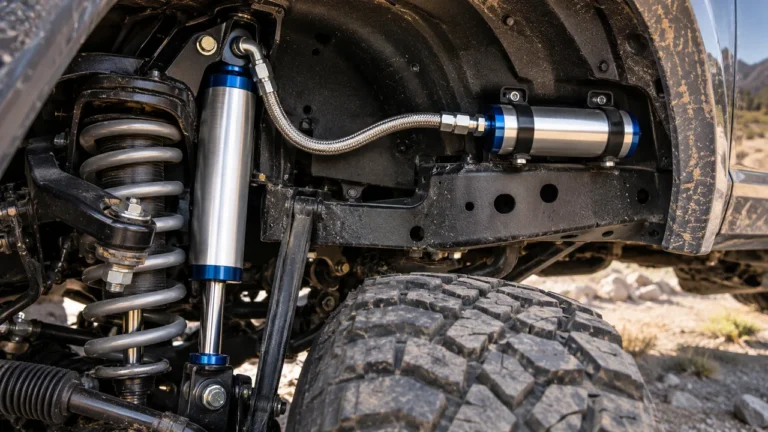
A matched replacement coilover package can make more sense than adding spacers to worn dampers, particularly on a second-generation Canyon. Check the correct spring for the engine and added equipment. A replacement damper should not become the suspension travel stop. Our shock length calculator helps check mount-to-mount requirements when comparing separate shocks; it is not a vehicle fitment checker.
A body lift raises the body relative to the chassis rather than correcting suspension geometry. It can affect bumper and body clearances without giving the suspension additional travel. Do not stack a body lift, strut spacer and factory accessory simply to reach an advertised total unless the complete combination is specifically approved. For shared GM platform context, see our Chevy Colorado lift kit guide, while keeping the GMC trim and wheel requirements separate.
Budget for the Finished Canyon, Not Just the Box of Parts
A basic front spacer package may cost well under $200, while full suspension systems can run into four figures before installation. The genuine 1.5-inch GMC accessory is another price point between those extremes. These are hardware-budget categories, not installed quotes; wheel replacement and labor can easily change the order of the comparison.
Before approving an installation, ask the shop to provide a written estimate covering the actual truck and tire combination. The useful questions are specific enough to compare two quotes on equal terms:
- Which exact part number and revision fits the VIN, drivetrain, trim and existing suspension?
- What additional front and rear height is expected from the current stance?
- Which wheel width, offset, backspacing and tire model have been approved, and is trimming needed?
- Will the factory dampers, bump stops, brake lines and ABS wiring remain within their intended operating range?
- Which alignment, headlamp aiming, tire-size correction and applicable driver-assistance checks are included?
- What inspection and fastener re-torque schedule does the kit manufacturer require?
For towing or overlanding, tell the shop about the typical bed load and tongue weight. A heavy winch bumper or permanent camping equipment may also change the front or rear spring requirements. The truck should retain appropriate load capacity, usable suspension movement and safe hitch geometry after the work. A lift does not increase the certified GVWR, axle ratings or tow rating.
Frequently Asked Questions About GMC Canyon Lift Kits
These questions come up when comparing older and newer Canyon applications. The answers are buying guidance; the exact kit manufacturer’s current instructions and exclusions remain the final fitment reference.
What is the best lift kit for a GMC Canyon daily driver?
For a modern Elevation or AT4, a moderate approved lift is usually the first option to compare, and stock height may be sufficient if the planned tires already fit. On a 2015–2022 truck, a matched two- to three-inch suspension package can be appropriate. Pick the lowest height that meets the intended tire and driving requirements.
Can I put 35-inch tires on a GMC Canyon with a 3-inch lift?
Some third-generation trim-specific systems list 35-inch combinations with specified aftermarket wheels and possible trimming. That is not proof that any three-inch kit, any Canyon or any 35×12.50 will work. Earlier trucks can be much more restrictive. Check the exact tire width, wheel position and body clearance.
How much lift does the GMC Canyon AT4 have from the factory?
The third-generation AT4 starts with a two-inch factory lift. The third-generation AT4X has three inches and the 2024 AT4X AEV Edition was introduced with 4.5 inches. Do not apply those figures to the second-generation 2021–2022 AT4.
Does GMC sell a factory-approved lift kit for the Canyon?
Yes. GM part 84914657 is a genuine 1.5-inch suspension accessory for eligible trucks. It excludes AT4X, Denali and certain wheel configurations according to the detailed product notes. Have a GMC dealer confirm the VIN and additional accessory requirements before ordering.
Can I lift an AT4X without replacing the DSSV shocks?
Yes, dedicated systems are available that retain the factory dampers. Confirm front and rear travel and the exact trim approval. On the AEV Edition, obtain explicit approval for that package rather than assuming ordinary AT4X fitment is sufficient.
Does a Chevy Colorado lift kit fit a GMC Canyon?
Many products are shared, but the factory suspension height and trim coverage are not identical across both models. A third-generation Colorado WT kit is not automatically suitable for a Canyon Elevation, and an AT4X requires the correct specialized suspension application. Use the exact manufacturer part number and vehicle listing.
Will a lift void my GMC Canyon warranty?
GMC makes a specific warranty statement for its genuine accessory when properly installed, subject to its terms. An aftermarket kit is a different matter; warranty coverage depends on the terms and circumstances of the claim. Ask the dealer and kit maker about coverage before installation rather than assuming every affected component will be covered.
Can I use a 2026 Canyon lift kit on a 2027 model?
Only if the manufacturer explicitly lists the later year and your equipment. Some part numbers may carry forward, but a shared chassis name or unchanged appearance is not sufficient. Check the current product restrictions, especially on factory-raised or AEV-equipped trucks.