Nissan Pathfinder Lift Kit: Best Heights, Tires & Fitment by Year
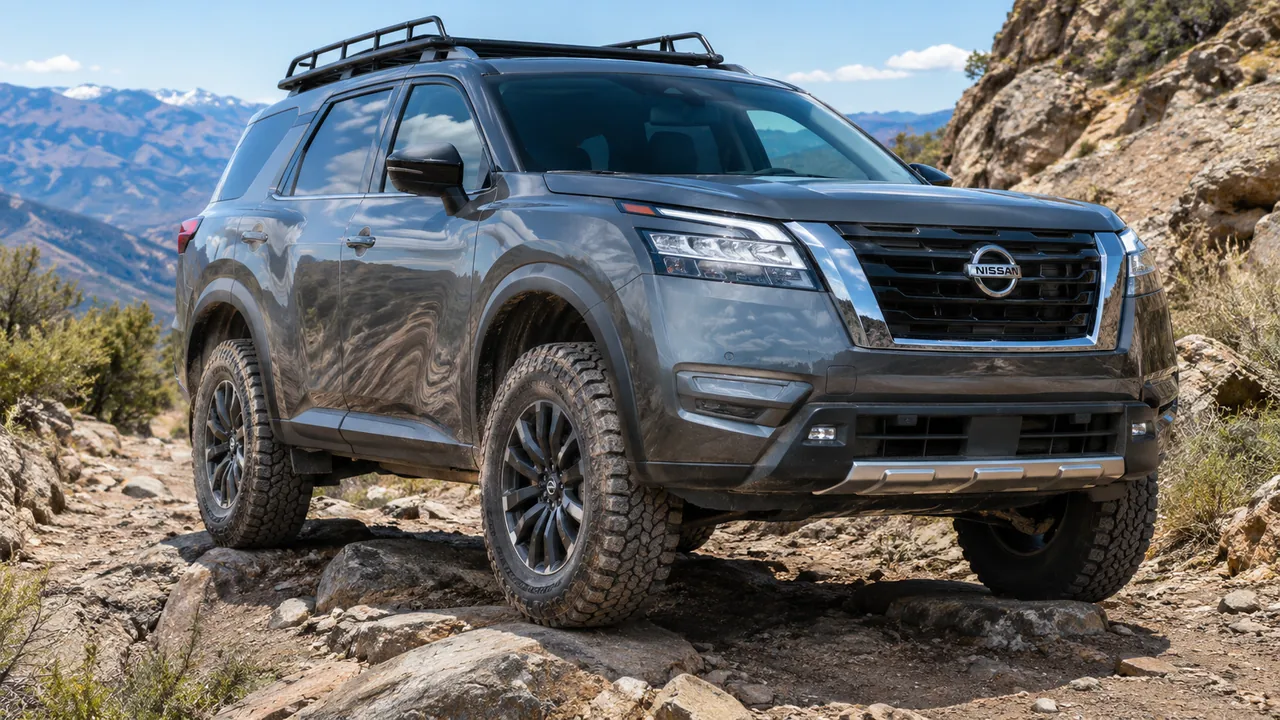
The best Nissan Pathfinder lift kit is not the same for a 2001 truck and a 2025 Rock Creek. For a WD21 (1987–1995), start with a modest torsion-bar and rear-coil upgrade; for an R50 (1996–2004), compare a mild spring lift with a documented two-inch system; for an R51 (2005–2012), a matched two-inch suspension package is a sensible first choice. On the newer R52 and R53, a roughly 1.2-inch spring or matched strut system is a more conservative starting point. The Rock Creek already has a raised, off-road-tuned suspension, so confirm its separate fitment before ordering parts.
A Pathfinder has changed construction more than once in its lifetime. That explains why two kits labeled for a Nissan SUV can contain completely different hardware. The useful question is not which brand offers the most height, but which system fits the actual chassis, leaves enough suspension movement and clears the tires you intend to buy.
Nissan Pathfinder Lift Kit Options by Generation
The following options cover U.S. model years. Heights are nominal catalog figures, not measured increases on a particular vehicle. A worn suspension, heavier accessories or a raised factory trim can change the result. Where a manufacturer does not identify an exact combination, obtain confirmation before buying.
| Pathfinder generation | Lift worth comparing | Main buying check |
|---|---|---|
| 1987–1995 WD21 | Mild torsion-bar correction or 4×4 Parts SPDL0111 arm-and-coil package | Steering linkage, ball joints, rear coil height, shock travel |
| 1996–2004 R50 | Old Man Emu mild springs or 4×4 Parts SPBDCOIL two-inch spring set | Strut-to-tire clearance, strut housing condition, rear axle location |
| 2005–2012 R51 | Matched Old Man Emu, Dobinsons or Alldogs/Bilstein suspension | V6 or V8, rear independent suspension, alignment range |
| 2005–2012 R51, taller build | High Road three-inch system with Garage 23 rear subframe hardware | Front geometry, rear mounting provisions, brake lines and drivetrain |
| 2013–2020 R52 | Dobinsons nominal 30 mm spring system | Actual drivetrain, spring load, strut travel and alignment |
| 2022–2026 R53 | Dobinsons nominal 1.25-inch matched system | Exact strut and spring references, trim and load |
| 2023 and newer R53 Rock Creek | Keep the factory setup or choose a specifically approved upgrade | Existing factory lift, additional height, tire clearance and calibration |
If the only problem is a tired set of springs, repair may be the better purchase. Restoring lost height often makes a bigger difference to an old Pathfinder than putting taller springs on worn struts. Conversely, an R51 intended for rough trails can justify a more comprehensive system than a family R53 used mainly on pavement.
1987–1995 WD21: Lift the Original Pathfinder Without Neglecting the Steering
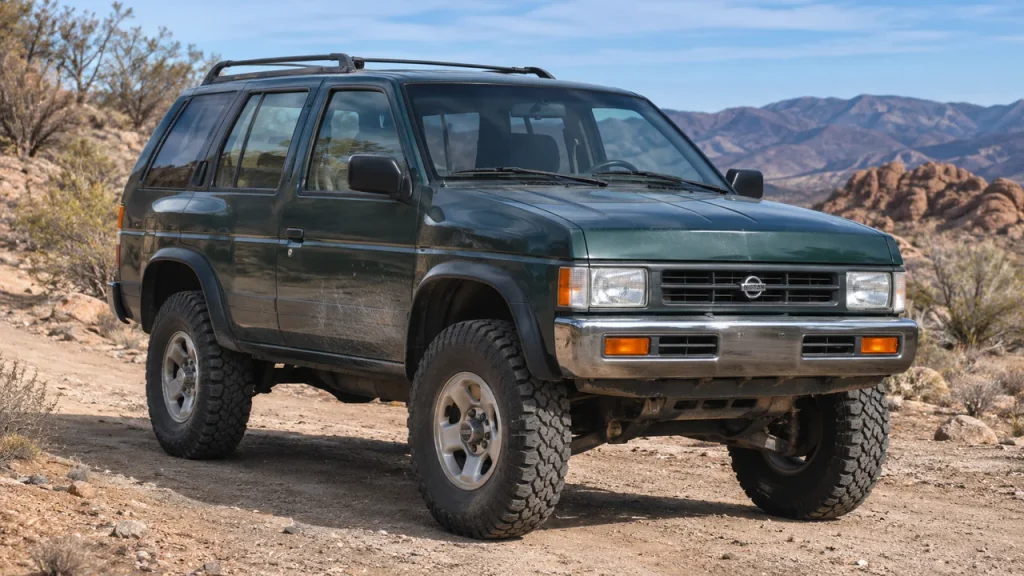
The original U.S. Pathfinder has a separate frame, independent torsion-bar front suspension and a coil-sprung solid rear axle. The rear is an important distinction from the leaf-sprung first-generation Xterra and many related Nissan pickups. A rear shackle kit or leaf-spring block is not the hardware to order for a WD21.
What to inspect on a 1995 Pathfinder first
With decades of service behind these trucks, a low or uneven front end may be a symptom rather than a styling problem. Check the torsion-bar anchors, control-arm bushings, ball joints and steering linkage. The idler arm, center link and tie-rod ends deserve particular attention when larger tires are planned. Inspect the rear spring seats, locating links and frame attachment points for corrosion, too.
The front torsion bars can be adjusted within the vehicle’s service specifications, but lifting the resting position uses some of the available extension travel. Turning an adjuster is not the same as installing a stronger spring or a longer damper. Our torsion bar ride-height adjustment guide explains that distinction and why alignment and remaining droop matter. Start with the measured condition of your particular truck rather than a fixed number of turns.
A 2.5–3-inch WD21 kit is more than a torsion-bar adjustment
Automotive Customizers lists the SPDL0111 suspension package for 1987–1995 2WD and 4WD Pathfinders. It is marketed in the 2.5–3-inch lift category and includes replacement tubular upper control arms and rear coils advertised at 1.5 inches, rather than three-inch rear springs. Shocks are not included. This is a good example of why an advertised lift height is not a complete description of front and rear hardware.
Ask how the front height will be established and which shocks suit the resulting travel. Do not assume the upper arms by themselves add the advertised height. If the truck has permanent bumper or winch weight, check whether its torsion bars are appropriate for that load. A revised arm can improve joint geometry, but it cannot repair steering play or a damaged mounting point.
Could you use a body lift instead?
A compatible body lift is possible in principle because the WD21 has separate body and frame structures. It may provide body clearance for tires without raising the suspension by the same amount. It does not lift the rear axle housing, add suspension travel or fix steering clearance. See our body lift versus suspension lift comparison before deciding which objective matters more.
Any used body-lift kit needs its full model-specific hardware and instructions, including provisions for steering, cooling, bumpers and other body-to-frame connections. Given the age of the WD21, the ability to source replacement pieces is as important as the price of the kit.
1996–2004 R50: Why the 2001 Pathfinder Needs a Different Approach
The R50 switched to Nissan’s integrated body structure, known as MonoFrame. It uses front struts and a five-link, coil-sprung solid rear axle. A 2001 or 2002 Pathfinder therefore has neither the WD21’s front torsion-bar setup nor the R51’s independent rear suspension. This generation deserves particular attention because much of the surviving aftermarket is intended specifically for it.
The two-inch R50 spring kit and the 1999.5 parts split
A common search result is the Automotive Customizers or AC two-inch lift. The 4×4 Parts SPBDCOIL spring set contains four coils and is listed for the 1996–2004 Pathfinder and related Infiniti QX4. The supplier calls for aftermarket wheels with a specified backspacing and recommends alignment hardware and suitable dampers. It also gives a 31-inch tire example. That is a much more useful shopping specification than simply knowing the springs are two inches taller at their intended operating load.
The same supplier separates complete suspension packages for the early and facelift R50: SPBDPKG3 for 1996–1999 and SPBDPKG2 for 1999.5–2004. Their listed damper and mount contents differ. Even if the four springs span the entire generation, do not infer that every complete strut assembly, mount or shock package has identical fitment. Give the supplier the production date and VIN when buying for a 1999 truck.
When choosing a 2001 Nissan Pathfinder lift kit, remember that this model year introduced the 3.5-liter VQ35DE in place of the earlier 3.3-liter V6. A spring specification should account for the actual engine and permanent accessory weight, particularly if a front bumper and recovery equipment have been added. Do not buy heavy-load springs solely because they are marketed as the more capable option.
Old Man Emu or a full two-inch spring lift?
Old Man Emu and Dobinsons offer load-oriented springs for the R50. Some OME applications provide a considerably smaller nominal lift than the AC two-inch set. That is not a defect: a spring selected for a particular load and damping combination may suit a daily driver better than one selected to maximize height. Confirm the actual spring references and expected front and rear change on your truck.
If the front struts need replacement, include upper mounts, bearings, boots and bump stops as appropriate. A spring that raises the truck toward the top of the available strut stroke can leave little rebound travel. A knock when the front wheels extend over a dip may indicate topping out or another worn component, not simply a normal characteristic of lifted suspension. Have the cause investigated before going taller.
Check the strut housing before spending money on an R50
There is a Pathfinder-specific safety issue worth addressing before a lift. NHTSA campaign 11V244000 concerned corrosion at the front strut housing on certain 1996–2004 Pathfinders and 1997–2003 Infiniti QX4s. Vehicles exposed to road salt were a particular concern. Check the truck’s history and recall status with Nissan’s VIN recall lookup and a dealer, especially if the online record is incomplete for an older vehicle.
A previous recall repair does not prove the entire structure remains sound today. Have the mounting area inspected for corrosion and damage before changing spring or wheel loads. If structural deterioration is found, resolve it before installing a lift; a fresh strut mount cannot compensate for a compromised body attachment.
What is a subframe drop on a Pathfinder R50?
R50 owners sometimes refer to an SFD, or subframe drop, when discussing builds taller than a conventional spring lift. Rather than placing body blocks between a detachable body and frame, a designed SFD changes the position of the front subframe relative to the integrated body and provides corresponding suspension and steering provisions. Its purpose includes managing front driveline and suspension geometry as body height increases. It is not a conventional body lift.
The rear is a separate engineering problem. As a solid axle moves away from the body, the Panhard rod travels through an arc and can shift the axle sideways relative to the body. Rear link angles, driveshaft movement, brake hoses and damper lengths also change. A complete taller build needs appropriate axle-location and clearance provisions, not merely front spacers and long rear springs.
An SFD also does not make every low component higher by the advertised amount. The relocated subframe and the rear differential can remain limiting points. If an older kit lacks structural brackets, hardware or documentation, do not reproduce those pieces from photos. Have a specialist assess the complete system and current availability before buying.
R50 strut clearance, wheels and alignment
The front strut’s lower spring seat can be a limiting point even when there is generous space at the top of the fender. Raising the body does not necessarily increase the distance between the tire and that seat. Wheel width and backspacing become important when moving to larger tires, which helps explain the AC kit’s wheel requirement.
Some R50 packages recommend eccentric strut alignment bolts. This is a different application from the lower-control-arm eccentrics used on the later R51. Our camber bolt fitment guide explains why the attachment point and original bolt dimensions matter. Obtain the actual alignment readings after installation, and do not rely on a maximum advertised adjustment range to correct bent or worn parts.
2005–2012 R51: Choose a Kit That Includes the Independent Rear End
Nissan returned to a ladder-frame layout for the R51, using double-wishbone front suspension with coil-over dampers. At the rear, the spring sits separately from the shock in an independent double-wishbone arrangement. That rear architecture is a decisive difference from the contemporary Frontier and Xterra. Our Nissan Xterra lift kit guide covers the related SUV’s own applications; its rear leaf hardware is not an R51 solution.
A two-inch system for a 2006 or 2012 Pathfinder
For a road and trail vehicle, a modest matched spring-and-damper system can replace aging parts and improve the loaded stance without a major geometry conversion. Old Man Emu and Dobinsons offer different spring load options. The Alldogs R51 Bilstein package uses front 5100 dampers and rear 4600 dampers with its own coils and front alignment eccentrics. Do not assume a rear 5100 is part of that package simply because it is described as a Bilstein lift.
The R51 is available in U.S. 4.0-liter V6 and, from 2008, 5.6-liter V8 versions, with the latter offered on selected 4WD models. The heavier front configuration and different driveline provisions deserve a separate application check. A catalog for an overseas diesel Pathfinder is not automatically valid for either U.S. gasoline truck. Tell the supplier which engine is installed, whether the vehicle is 2WD or 4WD and how much permanent accessory weight it carries.
How the High Road three-inch system raises the rear
The High Road R51 Bilstein three-inch package is a useful example of a taller solution. Its front setup combines 5100 dampers with OME springs and aftermarket upper arms, while the rear uses a Garage 23 subframe relocation package and 4600 shocks. It also includes front alignment parts, longer sway-bar links and brake-line provisions. An ICON front-coilover variant is offered as another configuration.
Relocating the rear suspension mounting structure as a unit can preserve more of the original arm geometry than obtaining all the height from longer rear coils. It also changes the installation requirements and does not mean the lowest rear brackets will gain the full advertised height. Ask the supplier to confirm the exact engine and drive application and how the rear driveline and brake lines are accommodated. Have alignment checked at both ends even if a catalog suggests the original rear settings should remain unchanged.
What limits the R51 front end as it gets taller?
On the R51, the upper control arm passes close to the coil bucket when the suspension extends. A tall top spacer can create interference, and a longer shock may allow more extension than a CV shaft or ball joint can safely use. Revised arms, appropriate dampers and bump stops need to be designed together. Check steering at both locks and suspension travel throughout its permitted range.
At the rear, a separate spring and shock need compatible lengths and mounting geometry. If an alignment shop runs out of rear camber or toe adjustment after a spring lift, more front height will not fix that problem. Inspect seized eccentric bolts and worn bushings before choosing the kit, particularly on a vehicle that has seen winter road salt.
2013–2020 R52: A Small Lift Can Be Enough
The fourth-generation U.S. Pathfinder returned to a unibody crossover design. It has front struts, independent rear suspension and a different drivetrain arrangement from the R51. A lift that suits the older ladder-frame truck does not become compatible simply because both vehicles carry the Pathfinder name. A modest increase in height is generally the more practical route for a family vehicle with the R52 platform.
A documented 30 mm spring option
The Dobinsons R52 spring catalog lists C45-420 for the standard front load, C45-422 for an additional 110–165 pounds up front and C45-421 or C45-423 at the rear depending on load. The nominal height is 30 mm, about 1.18 inches, marketed in the 1.25-inch class. These are spring choices, not permission to stack spacers or extend an original shock beyond its intended range.
Check whether the front and rear dampers can be retained with the selected springs. The U.S. product page primarily lists coil springs, so establish whether separate struts and shocks are needed rather than assuming a four-damper package is included. Also confirm fitment for the actual drivetrain and engine, including unusual configurations such as the earlier hybrid, before ordering.
Is a two-inch spacer a better purchase?
Not necessarily. A spacer may be economical when the original springs and struts are healthy, but it changes the suspension’s resting position and sometimes its extension limit. On a crossover, front CV articulation, rear toe and camber, and available damper stroke can be more important than the height gain. A 2WD model still has front drive axles, so it is not exempt from those front-end checks.
Do not combine raised springs and spacers solely to reach a round two-inch figure. If the vehicle cannot be aligned correctly or develops vibration after the work, have its geometry investigated instead of accepting those symptoms as the price of a lift. For an R52 driven mostly on highways, retaining predictable braking and handling is a more useful objective than maximizing parked fender height.
2022 and Newer R53: Rock Creek Is Not the Standard Suspension
The fifth-generation Pathfinder retained the unibody layout and adopted a nine-speed automatic in place of the earlier CVT. In the U.S., the generation starts with model year 2022, although some overseas and aftermarket listings start at 2021. The regular grades (which vary by model year) and the raised Rock Creek should be checked separately rather than treated as one height baseline.
How much lift does the Rock Creek already have?
Nissan’s 2023 Pathfinder introduction specifies a 5/8-inch suspension lift and off-road suspension tuning for the new Rock Creek. For the 2025 model, the manufacturer’s specifications give 7.7 inches of minimum ground clearance for Rock Creek versus 7.1 inches for the other grades. Those figures are consistent with a modest factory height difference, not a two-inch factory lift. The 2025 Rock Creek also uses 265/60R18 all-terrain tires.
The Rock Creek name was used on an earlier R52 appearance package, too. Do not order an R53 kit for a 2019 or 2020 Rock Creek simply because the badge matches. When choosing a 2024 or 2025 Nissan Pathfinder lift kit, establish whether its advertised height is measured from the standard R53 or from the factory-raised Rock Creek. Adding a catalog number to the original lift mathematically can overstate the result.
The Dobinsons 1.25-inch R53 package
The Dobinsons U.S. R53 system currently lists a nominal 30 mm height change with replacement front struts, coils and separate rear shocks and springs. It identifies the GS45-064B left and right struts and GS45-065 rear shocks. The U.S. listing pairs the front struts with C45-410 springs, whereas Dobinsons’ global R53 catalog and the Alldogs package also identify C45-428 front springs. Ask which combination is intended for your actual vehicle; the different references should not be assumed interchangeable.
For the rear, the catalog distinguishes standard-load C45-421 springs from the heavier C45-423 option. A heavy rear spring is intended for sustained added weight, not for an occasional suitcase or weekend trip. If the vehicle is normally empty, the extra spring rate can make the ride less comfortable and may change the unloaded height.
The U.S. product title covers 2021–2026 at the time of comparison. That is not explicit approval for every Rock Creek configuration or the 2027 model. Have the supplier confirm the exact year, grade, drivetrain and expected additional height in writing before buying. The manufacturer should also specify which front strut seat position is appropriate; do not select the higher setting solely to obtain more lift.
What to check after lifting a 2024 or 2025 Rock Creek
A newer Pathfinder has more systems depending on correct vehicle attitude than an old WD21. Have the shop follow Nissan’s service procedures for headlight aim and any necessary radar, camera or steering-related calibration. Verify that parking and driver-assistance functions remain normal, and check steering and suspension clearance at full load as well as when the truck is empty.
If a mild lift cannot be installed without compromising the intended suspension movement, keep the factory setup. The Rock Creek is already a useful starting point for gravel roads and camping access. A more suitable all-terrain tire in an approved size may achieve the actual goal without modifying the springs at all.
How Much Tire Can Each Pathfinder Generation Handle?
A 31-inch or 33-inch label is a shorthand, not a physical measurement. The following sizes illustrate the difference in nominal diameter and width. They are comparison examples, not a list of approved fitments. Actual tire dimensions vary by model and measuring rim.
| Tire size | Nominal diameter | Nominal width | Comparison context |
|---|---|---|---|
| 235/75R15 | 28.9 in | 9.3 in | Older SUV size reference |
| 265/70R15 | 29.6 in | 10.4 in | Older 15-inch wheel example |
| 265/70R16 | 30.6 in | 10.4 in | 31-inch class |
| 265/65R17 | 30.6 in | 10.4 in | R51 factory-size example |
| 265/60R18 | 30.5 in | 10.4 in | R53 Rock Creek factory example |
| 255/50R20 | 30.0 in | 10.0 in | R53 20-inch wheel example |
| 275/65R18 | 32.1 in | 10.8 in | Larger metric tire to investigate |
| 285/70R17 | 32.7 in | 11.2 in | 33-inch class, requires wheel and vehicle approval |
| 31×10.50R15 | 31 in (labeled) | 10.5 in | Flotation-size comparison, check brakes and wheels |
31-inch tires on an R50
The AC two-inch spring listing is a useful reference because it associates a 31-inch tire with a wheel-position requirement. The front spring seat and the inner sidewall can conflict even if the tread has room beneath the fender. The rear tire must also clear the body when the solid axle moves upward and sideways. Have the actual tire and wheel combination checked rather than copying the dimensions from another R50 photograph.
33s on an R51 or a newer Rock Creek
A 33-inch-class tire may be feasible on certain modified R51s, but a two- or three-inch lift is not proof of fitment. A wider tire can reach the liner at steering lock or contact suspension components during compression. Verify the wheel, tire, brake clearance and spare storage before ordering. On the newer R53, the factory Rock Creek 265/60R18 is roughly 30.5 inches in nominal diameter; moving to a 33-inch tire would be a substantial change, not a minor replacement.
The R53’s limited published aftermarket lift range is another reason to avoid assuming that 33s will fit. Seek a tested combination for the specific vehicle and kit, rather than stacking spacers or removing structural or crash-related parts to make the tire clear.
Why a wheel that bolts on can still be wrong
The R50 uses a 6×139.7 mm bolt pattern, while the R51 uses 6×114.3 mm. The newer R52 and R53 use 5×114.3 mm. Confirm the exact bolt circle, hub bore, fastener seats, brake clearance and load rating for the model year. Our wheel offset and backspacing guide explains how the wheel’s width affects its position. In particular, the 3.75-inch backspacing wording used by some older R50 kit listings should be clarified with the supplier: physical backspacing is a distance, not a negative offset measurement.
Moving the wheel outward may improve inner clearance but worsen the tire’s sweep toward the bumper or liner. Check the spare as well; a large tire that fits the wheel opening may not fit its original storage space, and a mismatched spare can be unsuitable for a four-wheel-drive system.
The Installer’s Quote Should Match the Pathfinder’s Real Use
Prices vary widely with age and hardware. A spring-only lift can be a few hundred dollars in parts, while complete damper systems often reach four figures before labor. A taller subframe system or an old vehicle with corroded alignment bolts may cost considerably more. Do not compare a four-spring price with a complete kit including arms, dampers and mounting hardware as though the two packages were equivalent.
For a Pathfinder carrying passengers, cargo or a trailer, retain sufficient suspension travel at normal driving weight. Higher springs and larger tires do not increase the certified payload or towing rating. Extra equipment consumes payload, while a changed hitch height and tire diameter can affect trailer attitude, braking and effective gearing.
Send these details to the shop before accepting a quote. The objective is to verify the complete suspension, rather than find out halfway through installation that the correct rear parts or alignment hardware are missing.
- U.S. model year, production date where relevant, VIN, generation, engine, drivetrain and trim.
- Current suspension condition, measured ride height, existing lift and any corrosion or recall-related repairs.
- Exact front and rear spring, damper, arm or subframe hardware and the manufacturer’s approved configuration.
- Wheel size, offset, backspacing, tire model, load rating and spare-tire plan.
- Permanent accessory weight, typical passengers and cargo, towing use and desired loaded stance.
- Alignment, clearance checks, required calibrations, replacement wear parts, labor and fastener reinspection.
After installation, obtain the alignment report and have the installer verify steering clearance, usable suspension movement, bump-stop engagement, brake and ABS routing and driveline operation. Investigate any new clunk, severe vibration, rubbing or unstable steering before resuming normal use. A good lift should leave the Pathfinder suited to the job you bought it for.
Nissan Pathfinder Lift Kit FAQs
These answers address common buying questions across the five U.S. generations. An exact manufacturer application and physical clearance check take priority over a general lift-height recommendation.
What is the best lift kit for a 2001 Nissan Pathfinder?
A mild load-matched spring system is a reasonable starting point for road use. The AC two-inch R50 spring set is another option for a taller build, with suitable dampers, wheels and alignment hardware. Check strut housing condition and recall history first, and confirm the late-R50 application.
Can I put a three-inch lift on a 1995 Pathfinder?
A WD21-specific arm-and-coil package is worth comparing, provided its steering, torsion bars, shock travel and rear geometry are suitable. A three-inch advertised package does not necessarily raise the front and rear by the same amount. Do not use later Pathfinder strut spacers.
Does a 2004 Pathfinder lift kit fit a 2006 model?
Not as a complete suspension system. The 2004 R50 has front struts and a coil-sprung solid rear axle; the 2006 R51 uses a separate frame and independent rear suspension. The front and rear lift hardware must be selected for the correct generation.
Can I lift a 2012 Pathfinder V8 with a V6 kit?
Only when the manufacturer explicitly approves the exact V8 configuration. Engine weight, spring specification and drivetrain provisions can differ. Confirm the complete kit, not just the front mounting pattern.
Can I use a body lift on an R50 Pathfinder?
Not a conventional body-on-frame lift. The R50 has an integrated body structure. A subframe drop is a different engineered modification and requires its own suspension, steering and driveline provisions.
Does the 2025 Pathfinder Rock Creek need a lift?
Not necessarily. It already has a modest factory height advantage and off-road-tuned suspension. If you need more clearance, compare a kit specifically approved for the Rock Creek and establish the additional height from its actual starting position.
Will a two-inch Pathfinder lift fit 33-inch tires?
There is no universal answer across these generations. The tire width, wheel position, brake clearance and suspension movement all matter. Some R51 builds may accommodate a suitable 33-inch-class tire, but that does not establish the same result on an R50, R52 or R53.
Is a 2022 Pathfinder lift kit compatible with a 2027 Rock Creek?
Do not assume so. A shared generation name does not extend a manufacturer’s approved year range or establish raised-trim compatibility. Obtain confirmation for the exact product and vehicle before ordering.