Nissan Titan XD Lift Kit: Best Heights, Tires & Diesel Fitment
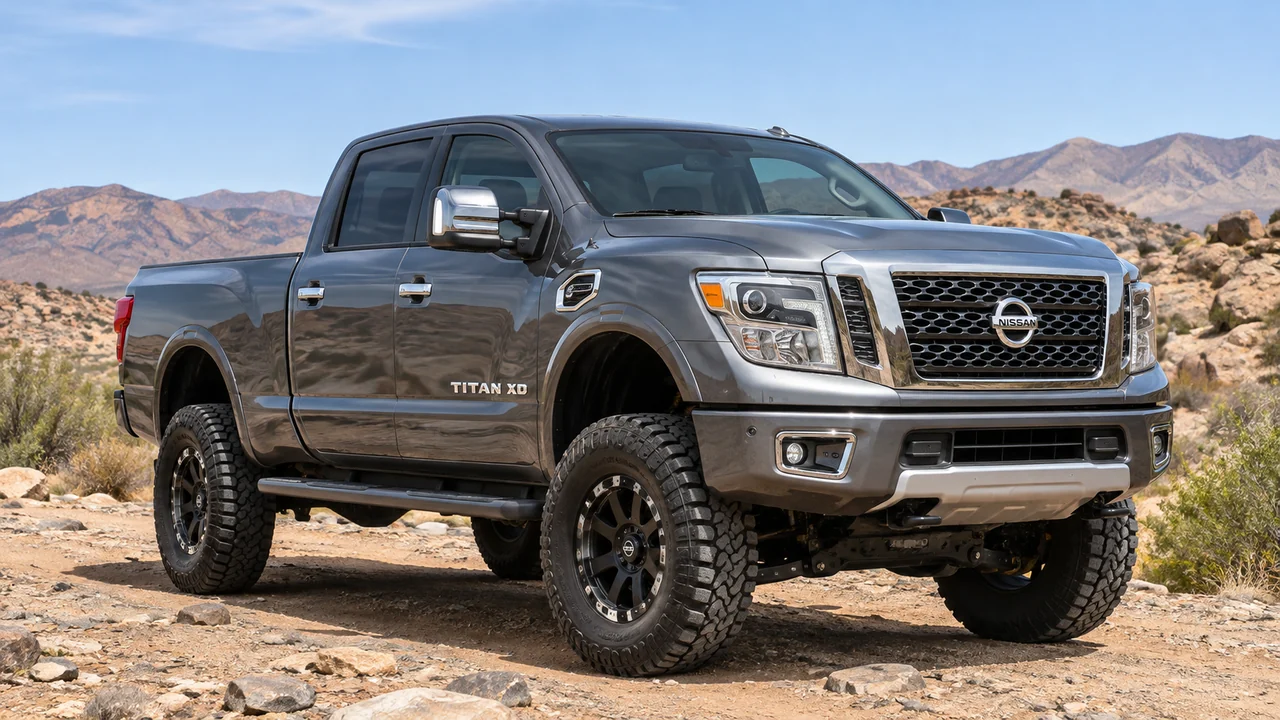
The best Nissan Titan XD lift kit for a truck that tows or hauls is often a modest one. A 2-inch front level is usually the first option worth considering, provided the kit explicitly fits your trim. A 3-inch system with revised upper control arms or XD-specific coilovers is a better candidate for a truck that spends time off pavement. If the goal is wide 35-inch tires, a documented 6-inch 4WD kit is the more predictable starting point. None of those recommendations should be taken from a regular Titan parts catalog. The XD has its own chassis, and a 2016 Cummins truck is not necessarily set up like a 2024 gasoline PRO-4X.
The most expensive mistake in choosing a Nissan Titan XD lift kit may be buying one that fits the truck but does not suit the job. A front spacer can make an empty pickup look level while leaving it nose-high under trailer tongue weight. A new set of dampers, on the other hand, can improve control without requiring a big change in stance. Decide what you actually need before picking the height.
Nissan Titan XD Lift Kit Options at a Glance
These are specific XD applications worth comparing. The model years refer to U.S. trucks, and the height figures are the nominal kit ratings, not measurements from an individual fender. Read the current application notes for the exact configuration before ordering.
| Kit or system | Best reason to consider it | Application to check | Tire example or limit |
|---|---|---|---|
| Rough Country 868, 2-inch front level | Reduce factory rake on an otherwise healthy truck | 2016–2024 4WD; 2016–2019 RWD; excludes PRO-4X | 32×11.50R20 on specified 20×9 wheels |
| ReadyLIFT 66-4620, 2-inch front level | Modest stance change on an early XD | 2016–2019 2WD/4WD; excludes PRO-4X | 285/60R20 or nominal 33×11 on a 9-inch wheel |
| Zone Offroad, 2-inch front and rear | Keep more of the original front-to-rear height relationship | 2016–2024 XD 4WD; confirm trim | 32-inch class on specified wheels |
| Rough Country 836-series, 3-inch system | Revised front upper arms with spacer-based lift | 2016–2024 4WD; 2016–2019 RWD; verify trim and options | 285/65R18 or 285/55R20 on listed wheels |
| ICON K83031, 2.5–3-inch adjustable system | Replace dampers and front spring assemblies for performance | Manufacturer lists 2016–2023 XD, 2WD/4WD; verify engine and trim | Check current wheel and tire approval |
| Rough Country 877-series, 6-inch system | Tall 4WD build with wide 35s | 2016–2024 XD 4WD; gas or diesel | 35×12.50R20 on 20×9, 0 or +1 mm offset; minor trimming listed |
The chart is also a reminder that a kit advertised at two inches can mean two different things: a front-only correction or a system that raises both ends. On a working XD, those are different purchases. A PRO-4X owner should skip any kit that explicitly excludes the trim, even if the hardware looks like it would bolt up.
The XD Chassis and the Model Years That Matter
The XD occupies a space between conventional half-ton pickups and heavier-duty trucks. It has independent front suspension with coil springs around the dampers, a solid rear axle on leaf springs, and a reinforced frame. Those familiar suspension types do not make the parts interchangeable with the regular Titan.
For example, Nissan specifies a 151.6-inch wheelbase for the 2024 XD Crew Cab, compared with 139.8 inches for the regular Titan. The XD also uses a distinct frame. That matters when crossmembers, rear driveline parts and suspension brackets are being relocated. If you have the lighter truck instead, our regular Nissan Titan lift kit guide covers its two generations and compatible systems.
2016 and 2017: Identify the Engine Before Shopping
The early XD was sold with either the Cummins 5.0-liter V8 turbo diesel or the Endurance 5.6-liter gasoline V8. The 2016 model year is especially important because the XD arrived ahead of the redesigned regular Titan. A listing that just says 2016 Nissan Titan may not tell you enough about the vehicle it actually supports.
If you recently bought a used 2017 Titan XD, decode the VIN, check the engine and drivetrain, and inspect the suspension for existing modifications. The truck may already have aftermarket upper arms or a spacer hidden above the coil spring assembly. Ordering another leveling kit based on the apparent stance risks adding height to a suspension that has already been altered.
2018–2019: The Last Diesel Model Years
Both engines remained available through the 2019 model year. Early XD configurations also included different cab and bed combinations and rear-wheel drive or four-wheel drive. Do not assume the rear spring specification or driveshaft is identical across every truck. If a used lift package came from a different cab or drive configuration, get the individual part numbers checked before treating the whole package as compatible.
2020–2024: Gasoline and Four-Wheel Drive
The diesel was dropped for 2020, and the later U.S. XD lineup was built around the gasoline Crew Cab 4×4. By 2024 the grades were SV, PRO-4X and Platinum Reserve. A product title saying 2016–2024 2WD/4WD may simply describe the full family of applications. Rough Country, for instance, separately lists RWD fitment through 2019 and 4WD fitment through 2024 for its smaller XD kits. The detailed vehicle table is more useful than the headline.
Cummins Diesel vs. Gas: What Actually Changes When You Lift an XD?
The two engines are not just an engine-selection box on a parts website. Their weight and the corresponding factory spring specifications affect static ride height, damper requirements and how much useful travel remains after a lift. On the diesel, especially, an accessory-loaded front end is worth weighing before committing to replacement springs.
The Diesel Truck Starts Heavier
Nissan’s 2016 Crew Cab specifications list a curb weight of 7,257 pounds for the diesel PRO-4X 4×4 and 6,517 pounds for its gasoline counterpart. That is a 740-pound difference in the published whole-vehicle figures. It is not a measurement of the extra weight on the front axle, but it illustrates why a suspension recommendation based solely on the gas truck can be misleading.
A steel bumper and winch add more weight toward the front of either version. If you choose a spring-and-damper replacement, tell the supplier about that equipment and the engine. A spring intended for a lighter configuration may sit lower than expected; one selected for a heavily equipped truck may ride unnecessarily firmly on an empty gasoline XD. Actual axle weights are useful for custom or heavily loaded builds.
Can Both Engines Use the Same Spacer Lift?
Yes, when the specific spacer kit is approved for both engines. A spacer does not replace the original coil spring, which is one reason some XD applications can cover both gas and diesel. The Rough Country 868 leveling kit is a concrete example. Its application includes both engines, but excludes PRO-4X. The shared engine approval does not remove that separate trim restriction.
What the spacer cannot do is restore a tired spring or repair a leaking damper. Nor does it create additional spring load capacity. If a diesel XD sits unusually low at the front, diagnose the sag or excessive accessory load before adding a spacer to conceal it. Have the original ride-height difference and remaining extension travel checked.
Choosing Coilovers for a Heavy Front End
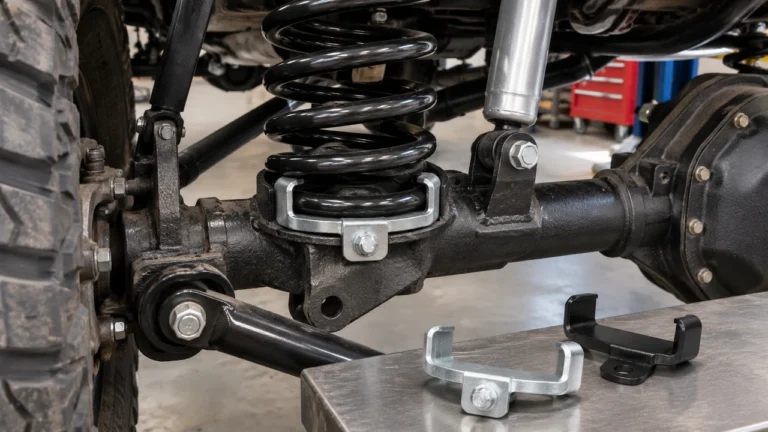
A threaded spring perch is useful for setting ride height within the coilover manufacturer’s intended range. It should not be used to force an unsuitable spring to carry a load it was not selected for. Additional preload changes the resting position of the suspension; it does not make a linear spring stiffer. Ask the manufacturer whether the assembly has engine-specific spring options and how its nominal lift was established.
The question to ask is whether the truck will have useful compression and droop at normal driving weight, not whether the technician can make both front fenders reach a target number on the tape measure. Confirm damping suitability as well, particularly if the truck will repeatedly travel over washboard or carry substantial recovery equipment.
Choosing Between a Level, a Full 2-Inch Lift and a 3-Inch System
These heights overlap in shopping results, but the hardware may be completely different. The distinction is especially important if you need to retain the XD’s loaded stance or are replacing worn original suspension components.
Two Inches at the Front Only
Measure from each wheel center vertically to the fender with the truck unloaded, then repeat with its usual cargo if possible. A front-only level removes some of the factory rake. An owner who frequently pulls a trailer may want to retain part of that difference rather than have an exactly level truck in the driveway.
For a 2016–2019 standard XD, ReadyLIFT 66-4620 uses upper strut extensions and explicitly excludes PRO-4X. Its listed tire example is 285/60R20 or a nominal 33×11 on a 9-inch-wide wheel. Despite older wording on the page referring to 2016 and up, the detailed application ends at 2019; do not assume later models are included without confirmation. Rough Country’s 868 is another front-only option with later model-year coverage.
Two Inches at Both Ends
Zone Offroad sells a different kind of two-inch package for the XD 4WD: front and rear lift components, revised upper control arms and a choice of rear shock packages. It is listed for 2016–2024. This is an example of why comparing a complete two-inch system with a pair of leveling spacers by price alone does not work. The former changes both ends of the truck and provides additional geometry-related hardware.
If you carry permanent bed equipment or tow regularly, retaining the relative front and rear height can be useful. But a two-inch rear spacer is not a cure for insufficient leaf-spring support. The correct rear setup depends on how the truck behaves with its real load.
Three Inches Without Replacing the Factory Front Dampers
The Rough Country 836-series XD kit is a useful example of the next step up. It combines front strut spacers with revised forged aluminum upper control arms; the purpose of those arms is to accommodate the changed geometry and joint angles. The system also raises the rear. Its listed tire combinations include a 285/65R18 or 285/55R20 on a 9-inch wheel with +18 mm offset. Do not interpret the extra inch of advertised lift as permission to install any 35-inch tire.
The product family is specifically for the XD. It lists 2016–2024 4WD and 2016–2019 RWD applications. Older catalog references may show different trim exclusions or option combinations, so a PRO-4X owner should request explicit confirmation of the exact kit and shock configuration rather than relying on an old advertisement.
A 3-Inch Lift With Replacement Coilovers
If the original dampers are already worn or you want more consistent suspension response on rough roads, compare a matched replacement system. The ICON K83031 Stage 1 system is listed by its manufacturer for 2016–2023 XD trucks. It pairs adjustable front 2.5-series coilovers with 2.0-series rear shocks, rear blocks and U-bolts. The published front height range is 2.5–3 inches; upper arms are shown as an optional additional purchase on that product page.
That is a different investment from the 836 spacer package. Select it because the replacement assemblies and their travel and damping characteristics suit the way you drive, not simply because the advertised lift is similar. Confirm the engine, trim and model year; a 2024 owner should not extend the published ICON application without written approval.
What About the Nissan Dealer Lift Kit?
There is also a historical factory-authorized option worth knowing about if you buy a used XD. In 2018, Nissan announced a dealer-installed ICON system for selected Crew Cab 4×4 trucks, with adjustable coilovers offering up to three inches of lift and no structural cutting or drilling. The original Nissan announcement explains the program. It does not establish current availability, present-day warranty coverage or interchangeability with every aftermarket ICON package. If a seller describes an XD as having the factory lift, ask for the installed part numbers and invoice before ordering replacement components.
PRO-4X: Keep the Bilsteins or Change the Suspension?
A Titan XD PRO-4X deserves its own decision, even if a standard XD with the same engine is parked beside it. Nissan’s original XD specifications include Bilstein monotube dampers on PRO-4X models. The factory off-road package is part of the starting point, and a lift that removes its useful damping or leaves too little extension travel is not much of an upgrade.
Read the Exclusion, Not Just the Vehicle Dropdown
Both the 868 and 66-4620 front levels exclude PRO-4X. The fact that a product is sold for a 2017 XD diesel or a 2024 XD gasoline truck does not supersede a trim exclusion. The correct response is to identify a package specifically approved for the off-road trim, not to reduce the advertised lift mentally and assume the geometry will work.
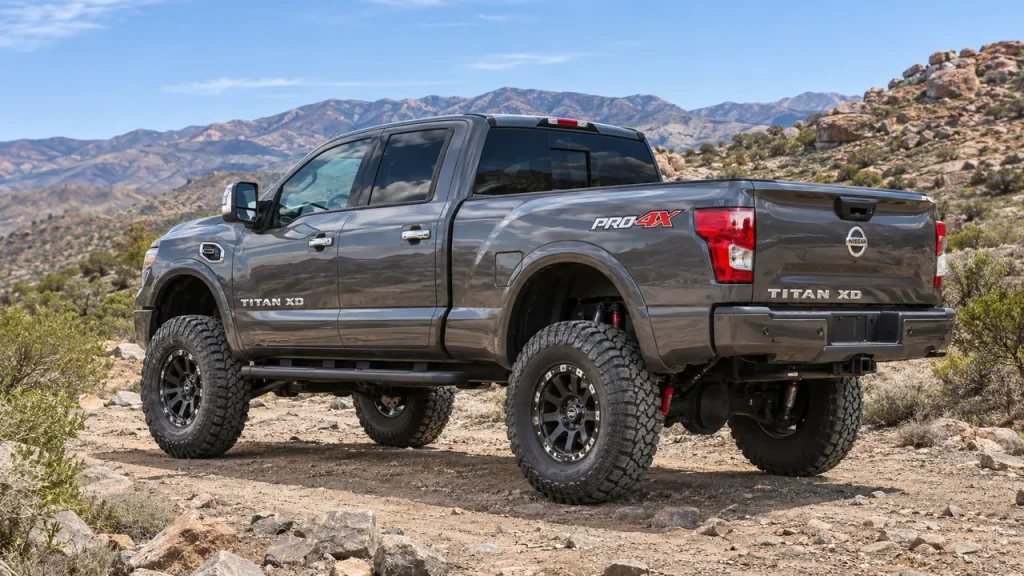
Measure the actual truck before using any claim about a factory PRO-4X lift. Tire diameter, spring specification, payload options and the standard trim used for comparison all influence its resting height. An aftermarket height figure may also use a different reference vehicle. The number you need is the additional height on your particular truck.
Upper Control Arm Clearance and Droop
The XD’s upper arm passes near the upper spring mounting structure as the suspension extends. A taller spacer may put the joint at an unfavorable angle or reduce clearance near the coil bucket. An arm designed for a lifted XD can improve those conditions, but it cannot compensate for a damper, axle shaft or brake hose working outside its limits.
Have the shop inspect the complete front suspension through its permitted movement, including the steering range. A metallic clunk when a wheel unloads should be investigated rather than accepted as normal after a lift. Ask for camber, caster and toe readings after installation. If the available alignment range is insufficient, the solution may be compatible correction hardware or a different height, not forcing an adjustment beyond its design.
Six Inches: What the Titan XD 4WD System Includes
For a wide 35-inch tire build, the practical advantage of a documented tall suspension kit is that the manufacturer has addressed more than the static position of the front spring. It can also mean a much less reversible installation and a larger bill for the finished truck.
The Rough Country 877-series six-inch system covers 2016–2024 XD 4WD vehicles and lists both gas and diesel engines. The manufacturer states that cutting and drilling are required, but exhaust changes are not required for its intended applications. Replacement steering knuckles, crossmembers and the underbody protection arrangement distinguish this type of system from a simple leveling kit. Confirm the trim and selected strut option before purchase.
The Lift Is Not Six Inches of Extra Clearance Everywhere
The rear axle housing stays at the centerline of the rear wheels. A six-inch suspension lift raises the frame relative to that housing, but the axle gains ground clearance only when the tire radius increases. At the front, a relocated differential or crossmember can sit below the newly raised frame. Inspect the lowest vulnerable components of the finished truck rather than judging its ground clearance from the fender gap.
Wheelbase matters off road, too. The long XD can still contact a crest between the axles even with a taller suspension. Raising it enough to avoid one obstacle may make it less convenient to tow with or climb into every day. If most of your miles are highway towing miles, that trade may not be worthwhile.
A Six-Inch Kit Is a Four-Wheel-Drive Application Here
The 877-series vehicle table specifies 4WD. A 2016 or 2017 XD with rear-wheel drive needs an independently approved tall system; leaving differential-related parts out of a 4WD package is not a valid conversion. The steering components, hubs, springs and frame-side attachment points must all be supported by the intended application. Do not buy a used tall lift with missing structural brackets or undocumented modifications.
33s and 35s on the Titan XD: Read the Wheel and Tire Pairing
The 2024 XD PRO-4X uses LT275/65R18 tires, which are nominally about 32.1 inches tall. That is not the 275/70R18 size used on the regular Titan PRO-4X. The distinction matters when working out how much larger the new tire really is. The dimensions below are calculated from the size markings, not measured tire diameters or fitment guarantees.
| Tire size | Nominal diameter | Nominal width | Where it fits the comparison |
|---|---|---|---|
| LT275/65R18 | 32.1 in | 10.8 in | 2024 XD PRO-4X factory example |
| 285/65R18 | 32.6 in | 11.2 in | 836-series wheel chart example |
| 285/55R20 | 32.3 in | 11.2 in | Alternative 836-series example |
| 285/60R20 | 33.5 in | 11.2 in | 66-4620 listed size |
| 295/60R20 | 33.9 in | 11.6 in | 877-series chart alternative |
| 35×12.50R20 | 35 in (labeled) | 12.5 in | 877-series wide tire example |
Can a 2-Inch XD Level Fit 33s?
Some combinations can. ReadyLIFT’s early XD application lists 285/60R20, but the Rough Country 868 chart lists smaller options, including 32×11.50R20 on a 20×9 wheel with +18 or +20 mm offset. Both are sold as two-inch lifts. This is precisely why the tire approval should come from the selected product instead of an internet rule based on lift height.
Check the actual tire’s published width and diameter as well as the wheel’s dimensions. A different tread shoulder or sidewall profile may contact the liner even when its size marking matches the tested example. Make sure the proposed tire also supports the truck’s axle loads.
Will a 3-Inch Lift Clear 35-Inch Tires?
A custom truck may achieve it, but the common 836-series examples in the table above do not establish approval for a 35×12.50. That wider tire sweeps through a larger area during steering. Raising the static ride height alone does not establish clearance when the suspension compresses. If the tire is outside the documented combination, have the actual build evaluated before committing to the wheels and tires.
For comparison, the 877-series six-inch chart lists a 35×12.50R20 on a 20×9 wheel with zero or +1 mm offset, with minor trimming noted. It also lists 295/60R20 alternatives. That is more useful than a general statement that six inches will fit 35s: it identifies the wheel position, tire size and expected clearance work together.
Six Lugs Do Not Establish Wheel Compatibility
The XD uses a 6×139.7 mm bolt pattern, also known as 6×5.5 inches. Check the hub fit, fastener specification, lug-seat shape and brake clearance before buying wheels that were previously fitted to a regular Titan or another six-lug pickup. The wheel’s load rating is especially important on an XD used for hauling.
Offset and backspacing affect both inner clearance and the tire’s sweep near the bumper and liner. Our wheel offset versus backspacing guide explains how to compare the different measurements in suspension and wheel catalogs. Do not choose a deep negative offset solely to clear the upper arm: moving the tire outward can create a different interference at the fender. Test the wheel and tire through steering and usable suspension movement before considering the combination approved.
Build the Rear Around the Trailer, Not the Empty Stance
A Titan XD may be used for conventional bumper-pull towing or equipped with a factory-style gooseneck hitch. Lift height changes the relationship between the truck and trailer. A suspension kit does not increase the vehicle’s certified payload, gross axle weight ratings or towing limits, regardless of the new spring or block height.
Rear Blocks, Spring Condition and Axle Wrap
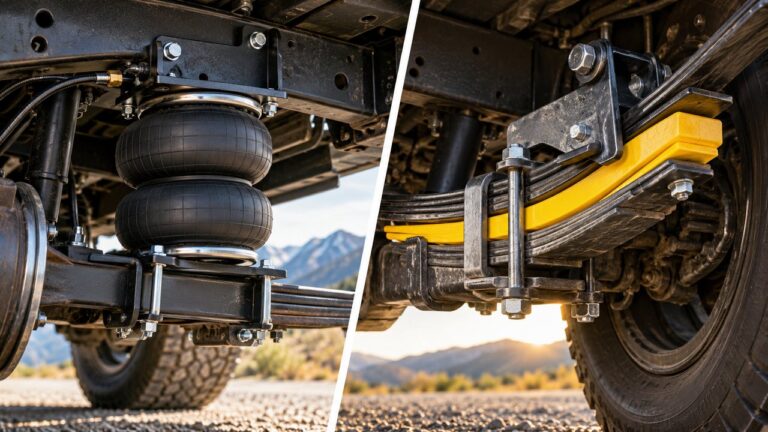
A rear block adds height without adding spring rate. On a truck that already has a factory block, the actual height change is the difference between the old and new block dimensions. A tall block also increases the distance between the axle and spring pack, which can aggravate axle wrap under torque. That is a particularly relevant check on an early Cummins XD under heavy use.
Use the engineered replacement block, locating features and matching U-bolts specified for the selected kit; do not stack blocks. If the rear springs are sagging under permanent equipment, inspect their condition and consider a load-appropriate spring solution. Our rear lift block fitment and safety guide explains block height and spring-seat compatibility in more detail.
Rear Shock Length Is Not the Advertised Lift Height
The selected rear shock must accommodate the actual movement between its mounting points without bottoming internally or becoming an unintended extension stop. A shock that works on one two-inch kit may not suit a different rear spring or block arrangement. The shock length calculator can help compare documented mount-to-mount dimensions and catalog shock lengths; it is not a substitute for a qualified installer’s clearance check. Check the brake hoses and bump stops through the permitted suspension travel as well.
Gooseneck Clearance and Loaded Ride Height
Raising the rear of the truck raises the bed rails and the bed-mounted hitch. On a gooseneck trailer, check trailer attitude and clearance above the bed sides during turns and uneven transitions; static clearance on level pavement is not the entire story. Make sure the trailer can be set to an appropriate height without creating a clearance or stability problem. For a conventional trailer, check the ball height and use correctly rated hitch equipment.
Keep useful rear-high rake if the truck needs it under load, and verify the axle weights with the trailer attached. A lifted XD with heavier wheels and tires or a steel bumper has less available payload for the same certified vehicle rating. New driveline vibration, steering instability or unusual tire contact after installation needs investigation before towing.
What to Put on the Installer’s Quote
A parts-only price tells you very little about a completed XD. Basic front levels can cost a few hundred dollars or less; arm-and-spacer packages commonly start in the mid-hundreds; replacement coilover systems and tall crossmember lifts can cost substantially more. Labor, tires, wheels and alignment are separate considerations. Our lift kit installation cost guide provides broader U.S. planning ranges, including the work that is easily overlooked.
For this truck, a useful written quote should identify the following items before the parts are ordered.
- XD model year, VIN, 2WD or 4WD, engine and trim, including whether the truck has factory PRO-4X dampers.
- Actual front and rear ride height, existing suspension modifications and any permanent bumper, winch or bed equipment.
- The selected kit part number, exact strut or coilover option, revised arms where required, rear lift components and any alignment hardware.
- Proposed wheel width, offset, load rating, actual tire model and size, and any documented trimming or structural installation requirements.
- Normal cargo and trailer use, loaded stance, hitch clearance, labor, alignment and post-installation checks.
After the work, obtain the alignment report, confirm steering and brake-line clearance, and check the headlight aim and speedometer accuracy. On equipped trucks, follow Nissan’s procedures for any required camera or radar calibration. Ask about the kit maker’s fastener reinspection schedule before collecting the truck. A good installation includes these checks, not just a photograph of the new stance.
Nissan Titan XD Lift Kit FAQs
The following answers cover the most common fitment decisions for early diesel and later gasoline XD trucks. The exact manufacturer application and approved wheel and tire combination take priority over a general height recommendation.
What Is the Best Lift Kit for a 2016 Nissan Titan XD Diesel?
For a standard truck used primarily on the road, a mild XD-specific level approved for the Cummins is a reasonable choice if the original springs and dampers are healthy. For regular trail use, compare a revised-arm system or replacement coilovers with suitable spring specifications. A PRO-4X needs separate trim approval.
Does a 2017 Titan XD Lift Kit Fit a 2024 XD?
Some do, but not all. The Rough Country 868 and 836 families list later XD 4WD applications, while ReadyLIFT 66-4620 is listed through 2019. Verify the exact part number, engine, drivetrain and trim instead of assuming every 2017 product fits a later gas truck.
Can I Install a Regular Titan Lift Kit on a Titan XD?
Only if the exact product explicitly includes the XD. The chassis, suspension specifications and structural kit requirements differ. A shared six-lug pattern or a similar-looking front coilover does not establish compatibility.
Will a 2-Inch Level Work on My Titan XD PRO-4X?
Only with a kit specifically approved for that trim. The ReadyLIFT 66-4620 and Rough Country 868 both exclude PRO-4X. Retaining the Bilsteins is possible with an appropriate approved package that preserves safe operating travel; do not use an excluded spacer.
Does the Titan XD Need New Upper Control Arms With a 3-Inch Lift?
Some systems require them and include them, as the 836-series does. Other matched coilover packages have different geometry requirements. Follow the selected system’s instructions and verify joint angles, clearance and alignment rather than using lift height as the sole rule.
Can a Titan XD Run 35s With a 3-Inch Lift?
Some custom combinations can, but a three-inch lift does not guarantee clearance for every 35. A documented tall system such as the 877-series has a specific 35×12.50R20 wheel pairing and trimming note. Verify the proposed tire and wheel combination with the installer before buying.
Do I Need a Diesel-Specific Rear Lift Kit?
Not necessarily. Some complete XD kits cover both engines. The rear choice is also affected by cab, spring configuration, cargo and trailer weight. Use the hardware that the selected kit specifies for your actual truck, and do not assume new blocks correct weak springs.
Does Lifting a Titan XD Reduce Its Towing Capacity?
A lift does not raise the certified ratings, and modifications can affect the practical ability to tow safely. Added weight consumes payload, larger tires change effective gearing and a higher stance changes hitch geometry and handling. Follow Nissan’s ratings and the kit maker’s towing restrictions, and check the loaded truck and trailer together.