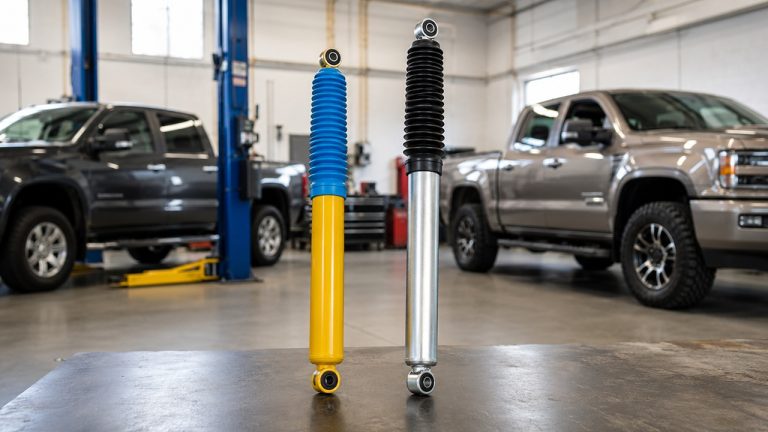
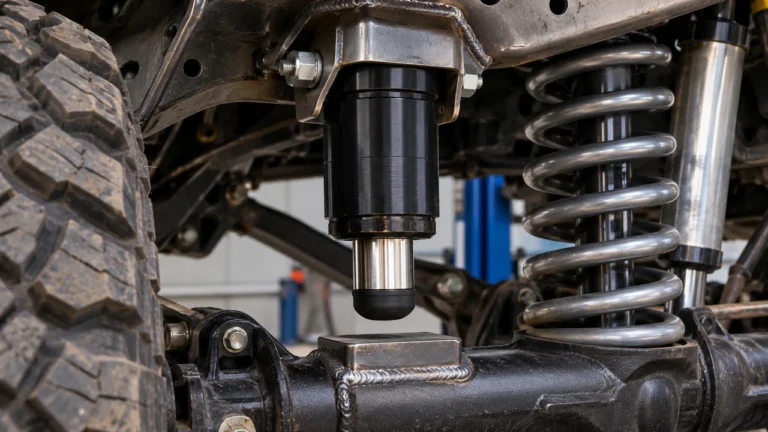
Nissan Titan Lift Kit: Best Heights, Tires & Fitment by Year
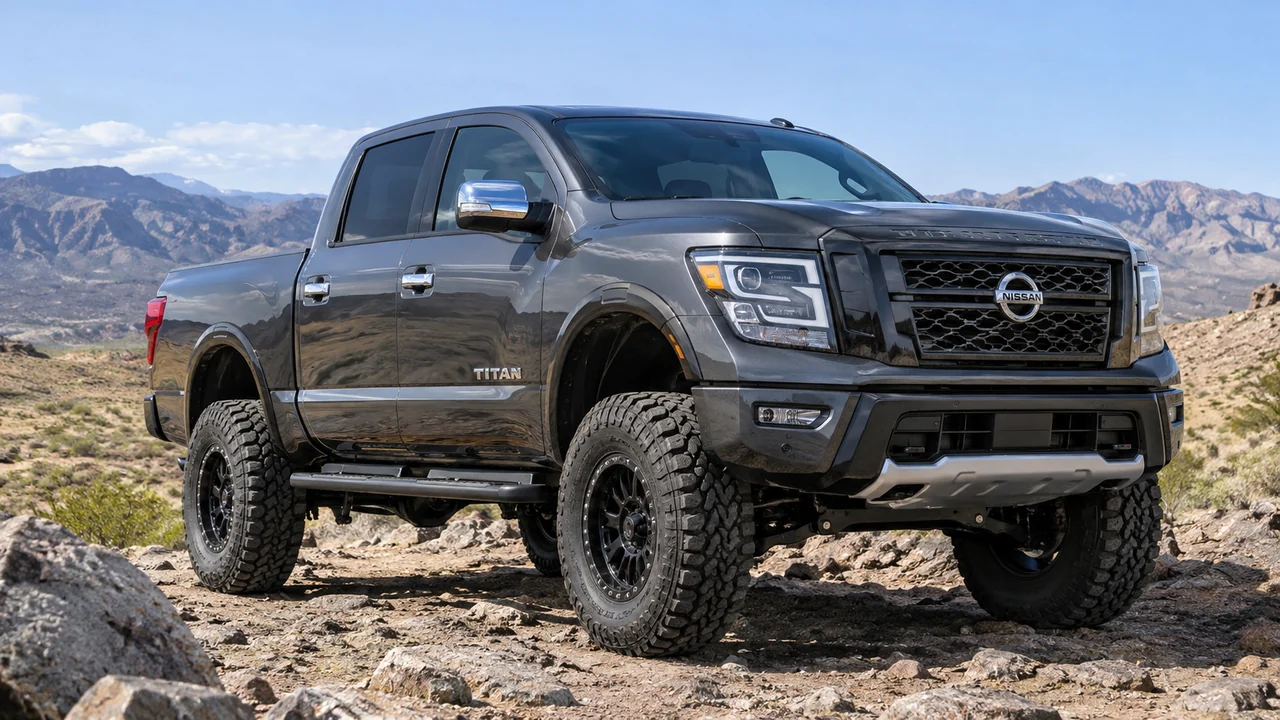
A 2-inch front level is a sensible starting point for a standard Nissan Titan used mainly on the road, while a 3-inch suspension lift with appropriate upper control arms is worth comparing for regular trail use. Both can accommodate certain 33-inch tire combinations. If you want wide 35s, a properly engineered six-inch system, or a four-inch kit with explicit tire approval, may be a better route than trying to squeeze them under a tall spacer lift. The right Nissan Titan lift kit depends on the model year, drivetrain and whether you have a PRO-4X. The Titan XD requires a separate fitment check.
Before shopping for parts, decide whether the truck needs more front tire clearance, better suspension performance or simply a taller stance. Those are three different jobs. A Titan on worn shocks and heavy 35-inch mud tires can ride worse after an expensive lift than it did before the work.
Which Lift Height Makes Sense for a Nissan Titan?
Use these starting points to narrow down your choices. They apply to the conventional U.S.-market Titan pickup, not the XD. The heights are nominal kit ratings; the actual change at the fender depends on factory equipment, spring condition and vehicle weight. Tire sizes are targets to investigate, not unconditional fitment approvals.
| Lift height or type | Best use | Tire size to investigate | Main requirement |
|---|---|---|---|
| Stock or mild 1–1.5-inch level | Towing, commuting, PRO-4X retaining factory dampers | Factory size or modest increase | Trim-specific approval and remaining droop |
| 2-inch front leveling kit | Reduce nose-down rake | 32–33 inches | Coil-bucket and alignment clearance |
| 3-inch suspension lift | Daily driver with regular trail use | 33-inch class | Matched upper arms, front assemblies and rear hardware |
| 4-inch system | Moderate tall build, particularly older Titan applications | 33–35 inches, kit dependent | Steering knuckles or spindle application, wheel clearance |
| 6-inch suspension system | Tall build on wider 35s | 35-inch class | Correct generation, drivetrain, wheels and structural installation requirements |
There is no reason to buy six inches of lift just because a tire shop calls a 275/70R18 a 33. That tire is already close to 33 inches in nominal diameter and came on certain Titans from the factory. A 35×12.50, by contrast, is a much wider and taller package. It needs room as the front wheels turn, not just a visible gap above the tread.
What if you only want to remove the factory rake?
Measure the difference between the front and rear wheel-center-to-fender heights before choosing a spacer. Take measurements on level ground with the truck in its normal working configuration. If it regularly carries tools or a trailer tongue load, leave some rear-high rake. Removing all of it when empty can leave the headlights pointed upward when loaded. Our leveling kit versus lift kit comparison explains the broader differences; on the Titan, the deciding factor is often whether the original front suspension and rear leaf springs are already doing their jobs well.
Identify Your Titan Before Ordering Suspension Parts
Nissan used independent double-wishbone front suspension and a leaf-sprung solid rear axle on both generations of the regular Titan. That common layout explains why some small suspension upgrades span a long range of years. It does not mean that a large crossmember lift, complete loaded strut or rear block is interchangeable across every truck with a Titan badge.
2004–2015: first-generation A60
The original Titan used the 5.6-liter Endurance V8, with rear-wheel-drive and four-wheel-drive versions. A 2004 or 2005 truck may have spent years towing or working off pavement. Inspect the lower arm bushings, ball joints, strut mounts, leaf springs, steering components and frame mounting points before adding height. A sagging spring can make a new two-inch kit appear to produce a much larger lift on one side than the other.
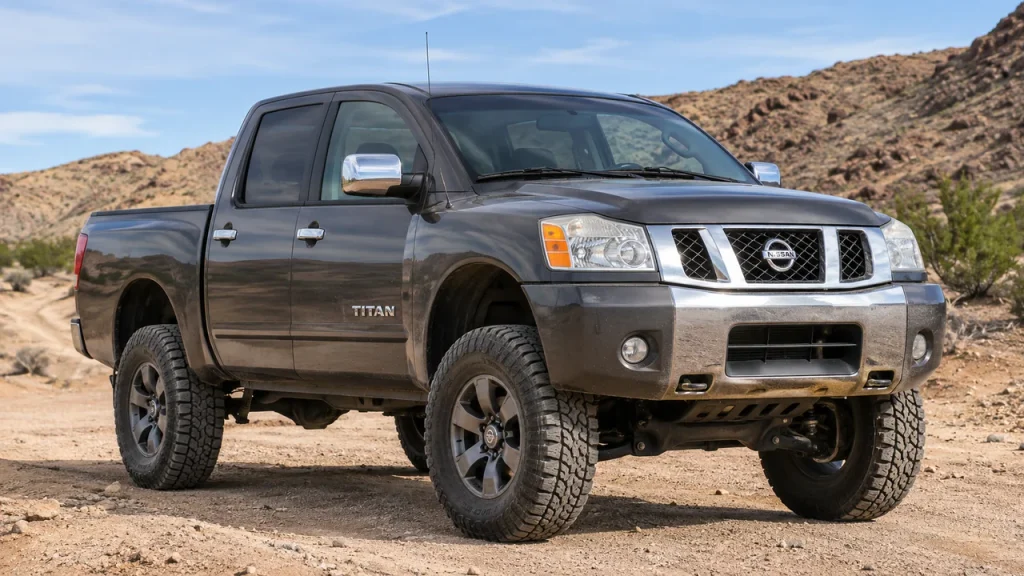
For an early 2WD Titan, a model-specific spindle lift is another possible route. It changes the relationship between the wheel hub and suspension attachment points without relying entirely on additional spring preload. A 4WD knuckle must accommodate the front axle and hub assembly, so a 2WD-only spindle is not an alternative for a four-wheel-drive truck. Check whether the replacement parts also change track width and require different wheels.
2017–2024: second-generation A61
The regular half-ton Titan returned as a redesigned 2017 model. It retained a V8 and the same broad suspension layout, but larger suspension kits should be selected for the newer chassis. A 2017 Titan owner may see a two- or three-inch product listed for both generations while the six-inch systems are separated. That is normal: a spacer or arm is a different engineering problem from a package that relocates lower suspension pivots and the front differential.
For 2020 through 2024 trucks, take extra care with catalog descriptions. A product sold as fitting the second generation may not cover the last model years or every option within its family. The latest model-specific fitment record and installation instructions matter more than a marketplace title. Have the supplier confirm the exact configuration by VIN if its documents disagree.
Why 2016 is a warning sign in a Titan parts listing
The U.S. 2016 model-year pickup was the Titan XD, introduced before the redesigned regular Titan arrived for 2017. Some parts catalogs use a continuous 2004–2024 heading even though their detailed regular-Titan applications skip 2016. Do not interpret that headline as permission to install a conventional Titan kit on a 2016 XD. The XD has its own heavier-duty chassis and related suspension hardware. Confirm the vehicle designation rather than relying on the registration date or the appearance of the front grille. Our Nissan Titan XD lift kit guide covers the separate diesel and gasoline applications.
The same caution applies to the Frontier. A Titan swap on a smaller Nissan pickup involves a different set of compatibility questions, not the installation of an ordinary Titan lift kit. If that is the project you are planning, use our Nissan Frontier lift kit and Titan swap guide instead.
Two Inches or Three? Compare the Actual Front Suspension Parts
A pair of inexpensive spacers and a package with replacement upper arms may both appear under the same suspension lift search. Look beyond the height rating. A useful comparison identifies which parts of the original front assembly remain, how the lift is achieved and whether the kit provides a way to correct the alignment.
A top spacer is not the same as a replacement top hat
A spacer above the complete spring-and-damper unit moves that unit relative to the chassis. A replacement top hat can instead change spring seating and preload within the assembly. These designs affect extension and compression limits differently. A concrete example is ReadyLIFT’s 66-4204 kit, which uses a replacement upper mount and specifies alignment cams. It excludes both PRO-4X and XD. Its product heading ends at 2019 while the detailed description extends through 2021; confirm the later years directly before ordering.
For a 2022–2024 4WD Titan, Rough Country also catalogs a separate 861 two-inch kit, excluding PRO-4X. Do not assume that a basic leveling part ordered for a 2017 truck is the best match for a 2024 truck merely because the advertised height is identical. Check the actual part number, whether rear hardware is included and how the manufacturer expects the front assembly to be installed.
What a 3-inch Nissan Titan suspension lift adds
Three inches is a useful middle ground when the objective is more than a front-end cosmetic change. For example, the Rough Country 834-series system uses revised upper control arms and offers different damper configurations for conventional Titans. The manufacturer excludes 2WD and PRO-4X from its optional replacement-strut configuration, even though the broader product family lists 2WD and 4WD applications. This is an important distinction when configuring the kit.
An upgraded upper control arm can improve ball-joint operating angle or provide additional room at the coil bucket. It does not automatically increase safe wheel travel. The front damper, bump stop, sway bar, brake hose and, on a 4WD truck, CV axle must still work together. If the original dampers are already leaking, a properly matched replacement assembly may make more sense than paying to reinstall them with a spacer.
Coil-bucket contact and the alignment problem
The upper arm swings close to the spring mounting structure as the suspension extends. If a lift lets the arm touch the coil bucket before the damper reaches its intended extension limit, the truck may knock when a front wheel unloads. A clunk can also originate from a loose mount, a worn ball joint or a topping-out shock, so noise alone does not identify the problem. Have a qualified shop inspect clearance through the usable suspension range.
Some Titans also have fixed bolts at the lower control arm pivots instead of alignment eccentrics. Nissan service information identified this issue on certain first-generation trucks. A lift can reveal a lack of adjustment that was not a problem at factory height. The proper lower-arm cam hardware allows changes to camber and caster; it is not the same part as a small eccentric bolt used on a MacPherson strut. See our camber bolt fitment guide for that distinction. Inspect the frame tabs and existing hardware, and ask for an alignment printout rather than assuming new arms alone will solve the problem.
Lifting a Nissan Titan PRO-4X Without Losing Its Factory Advantages
The PRO-4X is not simply an SV with a different badge. Nissan’s 2015 specifications identify Rancho shocks for the first-generation PRO-4X, while the 2017 and 2024 specifications identify Bilstein off-road dampers on the later truck. A recommendation based on the 2024 suspension therefore should not be copied directly onto a 2015 PRO-4X.
Does the PRO-4X already have a factory lift?
Some lift suppliers account for approximately one inch of factory height difference on PRO-4X models. That is a fitment warning, not a universal measurement of every PRO-4X relative to every other trim. Springs, factory equipment, tire diameter and the reference model used by the kit maker all influence the comparison. Ask whether the lift rating is additional height on your exact truck or a target height relative to a standard Titan.
A generic two-inch spacer that specifically excludes PRO-4X is not made compatible by assuming it will produce only one inch of extra height. The exclusion may concern travel or component geometry as well as the final stance. If keeping the original Bilsteins is important, start with a mild kit explicitly approved for that trim and generation. If replacing the dampers, choose a package engineered for the PRO-4X rather than a standard 4WD replacement strut with a similar length.
When the original tire is already nearly a 33
The 2024 PRO-4X came with 275/70R18 all-terrain tires on 18-inch wheels. Its factory tire is nominally about 33.2 inches tall. If you want more trail capability, it may be more productive to keep a similar tire diameter, choose a suitable tread and improve damping than to raise the truck simply to claim a 33-inch tire size. A jump to 35s is a different decision and should be planned as a complete wheel and suspension package.
Four- and Six-Inch Titan Lifts: Read the Small Print First
Tall lift systems can use new steering knuckles, crossmembers, differential relocation on 4WD models and revised rear hardware to obtain height while controlling component angles. They are not equivalent to stacking multiple small leveling kits. Four inches may sound like a modest step up from three, but the hardware and installation requirements can change substantially.
Is a 4-inch lift the sweet spot?
Four-inch packages and spindle-based options exist for earlier Titans, especially the 2004–2015 generation. Some older kits may be discontinued or available only through remaining inventory. For a second-generation truck, do not assume there is an equivalent system simply because a listing says Nissan Titan. If the current manufacturer cannot identify the correct brackets, steering parts and instructions for the exact application, choose a supported height instead. A complete and documented three-inch kit is preferable to an incomplete four-inch kit.
2004–2015 six-inch systems
The Rough Country 875-series six-inch kit is a useful example of the checks a first-generation owner needs to make. Its revised knuckles prevent reuse of the factory wheels. It also identifies possible rear driveshaft clearance work on 2011-and-newer applications within that generation and front valance modification with certain wide 35s. The optional replacement struts exclude PRO-4X and 2WD. Those details are more valuable than the six-inch label alone.
On an older truck, budget for seized bolts, corroded mounting points and worn steering or suspension joints. Replacing parts while the suspension is apart may avoid paying twice for alignment and labor. If the condition of the frame is in doubt, have it examined before buying the kit rather than after the installer has begun cutting or drilling.
2017–2024 six-inch systems
For the newer regular Titan, Rough Country’s 878-series 4WD system expressly includes PRO-4X and excludes XD; it requires cutting and drilling. At the time of comparison, its heading ended at 2023 but the vehicle table included 2024. A 2024 owner should get written confirmation of the selected part number before ordering. Do not extend its 4WD approval to a 2WD truck.
A tall kit can raise the frame and body considerably without producing an equal increase in rear differential clearance. On the Titan’s solid rear axle, larger tires are what raise the axle housing off the ground. The same distinction matters at the front if a crossmember or differential relocation bracket sits lower than the surrounding chassis. For trail use, compare the lowest vulnerable parts rather than only the height at the rocker panel.
33s and 35s: Tire Fitment Depends on the Wheel, Too
The regular Titan uses a 6×139.7 mm (6×5.5-inch) wheel bolt pattern. That number does not guarantee a wheel clears the brake caliper or the replacement knuckle. The following nominal tire dimensions illustrate why two sizes commonly described as 33s can require different space. Actual inflated diameters and widths depend on the tire model and measuring rim.
| Tire size | Nominal diameter | Nominal section width | Where it belongs in the comparison |
|---|---|---|---|
| 265/70R18 | 32.6 in | 10.4 in | Factory-size example on standard trims |
| 275/70R18 | 33.2 in | 10.8 in | Factory PRO-4X example |
| 275/60R20 | 33.0 in | 10.8 in | Factory 20-inch-wheel example |
| 285/65R18 | 32.6 in | 11.2 in | Wider alternative at similar diameter |
| 285/75R18 | 34.8 in | 11.2 in | Narrower near-35-inch target |
| 295/70R18 | 34.3 in | 11.6 in | Intermediate large-tire target |
| 33×12.50R18 | 33 in (labeled) | 12.5 in | Wide 33-inch class |
| 35×12.50R20 | 35 in (labeled) | 12.5 in | Wide 35-inch class |
Can a Titan run 33s with a 2-inch leveling kit?
Often, yes, if the particular wheel and tire are approved for the application. The difference between the 275/70R18 factory PRO-4X tire and a 33×12.50 is mostly width, not additional nominal height. That extra width can move the inner sidewall toward the upper arm or the outer shoulder toward the fender liner. A tire advertised as the same diameter can therefore rub where the original tire did not.
Check the manufacturer’s exact wheel width and offset, not just the tire size. ReadyLIFT’s 66-4204 chart, for instance, specifies a 9-inch-wide wheel with +12 mm offset for its 33×12.50 example. That is not a promise for a different kit or a PRO-4X. Even with the recommended dimensions, the installer should test the actual tire at steering lock and through suspension movement.
Will a 3-inch lift clear 35s?
Some custom builds achieve it, but three inches of static lift does not establish clearance for every 35-inch tire. A narrower 285/75R18 may be easier to package than a 35×12.50 on a wide, negative-offset wheel, yet its extra radius still consumes space at the front and rear of the wheel opening. If the desired tire is outside the kit maker’s tested combinations, the solution is not automatically a thicker spacer. Review the build with an installer before buying the tires.
A useful reference point from the six-inch 878-series chart is a 35×12.50R20 on a 20×9 wheel with zero offset. The 875-series chart for the first generation, by contrast, lists a 35×12.50R18 with an 18×9 wheel at −12 mm offset. The figures belong to those specific kits, not a general Titan fitment rule. Our wheel offset and backspacing guide explains how to compare wheel specifications without confusing the two measurements.
Clearance at the caliper, knuckle and front liner
A wheel with the correct lug pattern and sufficient rim diameter can still fail to clear the steering knuckle because of spoke shape or inner-barrel geometry. Conversely, pushing a wheel farther outward to gain suspension clearance can increase its sweep toward the front bumper or rear liner at full lock. Larger brake packages and aftermarket knuckles make this especially important on older Titans. Verify the hub fit, lug seat, wheel load rating and usable clearance with the actual hardware. Do not assume a spare wheel will fit the modified front axle just because it still fits the rear.
Rear Lift, Towing and Driveline Behavior
The Titan is a full-size pickup, and many owners use it to tow. That changes the priorities for the rear suspension. A rear block can add ride height but does not increase leaf spring rate or restore the capacity of a worn spring pack. A replacement leaf pack or a compatible helper system may be appropriate for sustained load, but neither raises Nissan’s certified payload or tow rating.
Choose the rear hardware for the truck you actually drive
A truck with a heavy trailer or permanent bed equipment may need a different rear setup from a truck built for weekend shows. Preserve useful rake and suspension travel under load. Verify rear shock compressed and extended lengths, bump-stop engagement and brake hose reach rather than simply extending the rear by the same number of inches as the front. Use the kit-specific blocks, locating features and U-bolts; do not stack blocks to correct an unexpected stance.
Axle wrap, pinion angle and vibration
Tall rear blocks increase the leverage that axle torque applies to the leaf springs. Under hard acceleration or heavy loading, axle wrap can contribute to wheel hop and changing driveline angles. A properly designed traction-bar system may help in some builds, but should not bind the suspension through normal travel. A new vibration after lifting also deserves a driveline inspection: driveshaft joints, operating angles, available clearance and correct installation must be checked before blaming the tires or adding arbitrary shims.
Larger tires and heavier wheels also change effective gearing, braking response and the weight available for cargo. Check the trailer hitch height, tire load capacity and speedometer accuracy after the work. A lifted truck that feels acceptable empty may behave differently when towing. Keep the manufacturer’s towing and payload limits as the upper bounds regardless of the suspension upgrades.
Compare Kits by the Finished Truck, Not the Box Price
Rough Country provides a broad comparison of basic leveling parts, upper-arm systems and tall lifts. ReadyLIFT offers alternatives for modest height changes, and model-specific spring-and-damper packages from other suspension specialists may be worth considering if ride quality or trail performance matters more than height. There is no meaningful brand winner without first choosing the hardware type and confirming the application.
What should the budget include?
Basic leveling hardware can start around $100, a three-inch upper-arm package can start in the mid-hundreds, and tall crossmember systems can exceed $1,000 before labor or wheels. Those are parts-only price categories, not installed quotes. Replacement struts, higher-spec rear shocks and supporting components can move the final price considerably. Our lift kit installation cost guide covers broader U.S. labor and alignment budgets.
Request a written quote showing the selected part number and configuration. A low price is less useful if it omits alignment cams, requires a different set of wheels or depends on reusing dampers that are already worn. Ask the installer to include any cutting or drilling and whether the truck can be returned to its original configuration.
The information to send before you order
Give the supplier enough detail to verify the complete build. These checks are particularly useful when a catalog combines multiple Titan generations or offers several front strut options under one product number.
- Model year, regular Titan or XD, trim, VIN, 2WD or 4WD, and any factory off-road package.
- Current front and rear ride heights, existing modifications and condition of the original dampers.
- Desired tire model and size, wheel diameter, width, offset and brake clearance requirements.
- Whether the selected front option retains the factory assembly or uses a new spring-and-damper unit, and whether revised arms and alignment cams are included.
- Permanent accessory and cargo weight, trailer use, and the rear block or leaf spring configuration.
- Any required crossmember, knuckle or differential changes, replacement wheels, labor, alignment and calibration.
After installation, obtain the alignment readings and have the shop confirm steering and suspension clearance, hose and ABS-wire routing, fastener torque and driveline operation. Check headlight aim and, on equipped trucks, any required camera or radar calibration following Nissan’s service procedures. Follow the kit maker’s reinspection schedule. Do not continue driving normally with new rubbing, severe vibration, clunks or steering instability.
Nissan Titan Lift Kit FAQs
These quick answers address the decisions that come up most often when comparing Titan suspension kits. Exact model-year approval and the chosen wheel-and-tire combination still take priority over a general recommendation.
What is the best lift kit for a 2017 Nissan Titan?
A mild level suits a daily-driven standard Titan that mainly needs less rake. A matched three-inch system with appropriate upper arms is worth comparing for more regular trail use. Choose the correct 2WD or 4WD and trim application; a 2017 PRO-4X should not automatically receive the same replacement struts as an SV.
Can a 2004 Titan use a 2017 Titan lift kit?
Some small leveling kits and upper-arm packages have applications across both generations. Tall systems and complete damper options may not. Use the manufacturer’s detailed application list for the exact part number rather than assuming everything on a newer Titan will bolt onto the earlier chassis.
Can I lift a Titan PRO-4X and keep the Bilsteins?
Yes, with a kit explicitly designed to retain the factory dampers on the applicable PRO-4X. Keep the lift conservative and verify available shock travel and upper-arm clearance. Do not use a spacer or replacement strut that excludes the trim.
Does a Titan lift kit fit the Titan XD?
Not unless the exact product is expressly approved for the XD. Some small components may have shared applications, but many complete kits are separate. The 2016 model year is a particularly important clue that you need to check the XD application rather than assume standard Titan fitment.
Can a 2WD Nissan Titan use a 4WD lift kit?
Only if the manufacturer approves that exact kit configuration for both. Front spring ratings, steering knuckles, hubs and driveline provisions can differ. A kit family advertised for 2WD and 4WD may still restrict optional loaded struts to 4WD.
Do I need new upper control arms with a 2-inch Titan level?
Not necessarily. Follow the selected kit’s requirements and verify ball-joint movement, coil-bucket clearance and alignment range. If a high-clearance arm is specified, include it in the build rather than accepting metal-to-metal contact at extension.
Will a six-inch Titan lift fit 35-inch tires on stock wheels?
Not automatically. Some six-inch systems require aftermarket wheels to clear their replacement knuckles. Check the exact rim diameter, width, offset, spoke shape and tire model in the manufacturer’s instructions. Trimming may still be required with a wide 35.
Does lifting a Titan increase its towing capacity?
No. The original vehicle ratings still apply. A different rear spring package may improve loaded ride height, but larger tires, added accessories and increased center-of-gravity height can affect towing behavior. Keep the truck within its certified limits and verify hitch setup after lifting.