Coilovers vs Air Suspension: Which Is Better for Your Car?

Coilovers are usually the better choice for frequent track use, precise chassis tuning, lower cost, and mechanical simplicity. Air suspension is usually better when you want on-demand ride-height changes, easier clearance over obstacles, or a show-car stance without driving at that parked height.
For a daily driver, neither system is automatically more comfortable or better. Ride quality depends on spring rate or air-spring characteristics, damper tuning, suspension travel, installation quality, tires, alignment, and the height at which the car is driven. A well-engineered air suspension can handle impressively, while quality street coilovers do not have to produce a harsh ride.
Coilovers vs Air Suspension: Quick Comparison
| Category | Coilovers | Air suspension | Typical winner |
|---|---|---|---|
| Track and autocross use | Consistent, lighter, and straightforward to tune | Can perform well when properly engineered, but adds hardware and complexity | Coilovers |
| Ride-height adjustment | Adjusted mechanically with tools | Can raise or lower from a controller | Air suspension |
| Daily comfort | Ranges from compliant to very firm | Can be comfortable, but depends heavily on setup and driving height | Depends on setup |
| Initial cost | Usually lower | Usually higher for a complete system | Coilovers |
| Installation complexity | Fewer components | Adds air lines, wiring, management, compressor, and usually a tank | Coilovers |
| Potential failure points | Mechanically simpler | Additional bags, lines, fittings, valves, compressor, and electronics | Coilovers |
| Show-car stance | Fixed parked height unless manually adjusted | Can air out when parked and return to driving height | Air suspension |
| Driveway and speed-bump clearance | Height cannot normally be changed from the cabin | Can temporarily raise the vehicle | Air suspension |
What Are Coilovers?
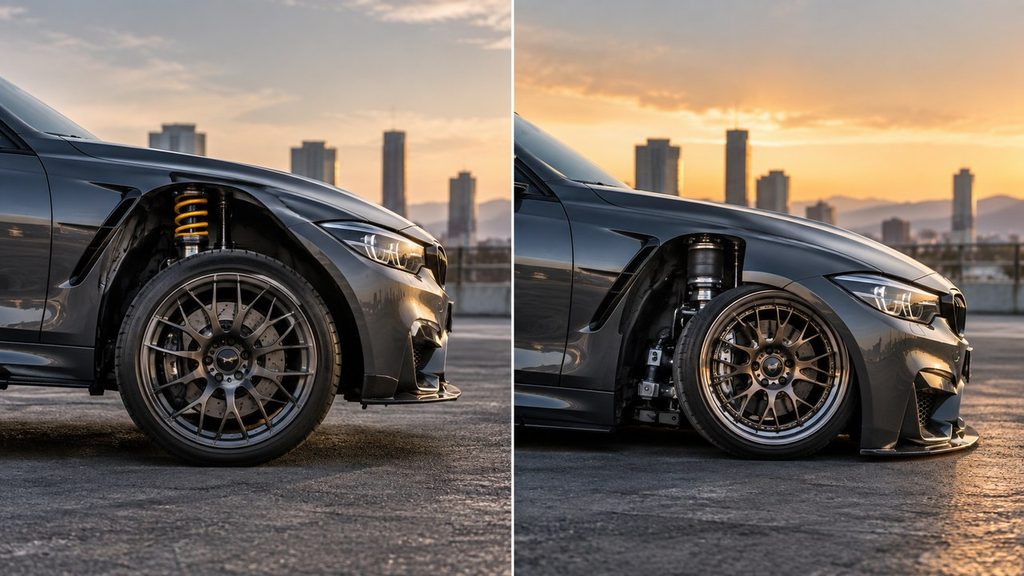
A coilover combines a steel coil spring and a shock absorber or strut in one assembly. The name comes from “coil over shock.” Most aftermarket coilovers use a threaded spring perch, threaded body, or both to adjust ride height, while some also provide adjustable rebound or compression damping.

It is important to separate ride height, spring rate, and damping. Moving a threaded perch or lower mount changes ride height on many designs, but it does not automatically change the spring rate. Spring rate is changed by fitting a different spring, while a damping adjuster changes how the shock controls suspension movement.
If your main decision is whether to use complete coilovers or retain conventional dampers with shorter springs, see our lowering springs vs coilovers comparison.
Advantages of Coilovers
- Direct and predictable handling: Quality coilovers can reduce unwanted body movement and provide precise chassis response.
- Mechanical simplicity: They do not require a compressor, tank, manifold, air lines, or electronic height management.
- Tuning options: Depending on the kit, ride height and damping may be adjustable, while different springs can be fitted when another spring rate is required.
- Lower system weight: A coilover installation normally adds less hardware than a complete air-management system.
- Lower entry cost: A reputable coilover package usually costs less than a comparable complete air suspension.
Disadvantages of Coilovers
- Ride height is not adjustable from the cabin: Changing it normally requires tools and may require lifting the vehicle.
- Cheap or track-focused kits can ride harshly: Excessive spring rate, poor damping, or insufficient travel can make a daily driver uncomfortable.
- Incorrect adjustment can hurt performance: Lowering too far can cause bottoming, poor suspension geometry, tire contact, or inadequate damper travel.
- They still require maintenance: Threads can corrode or seize, dampers can leak, and adjustable components should be inspected periodically.
What Is Air Suspension?
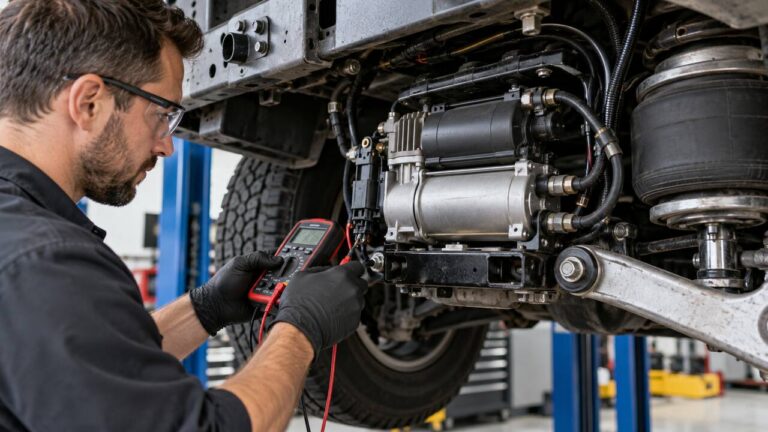
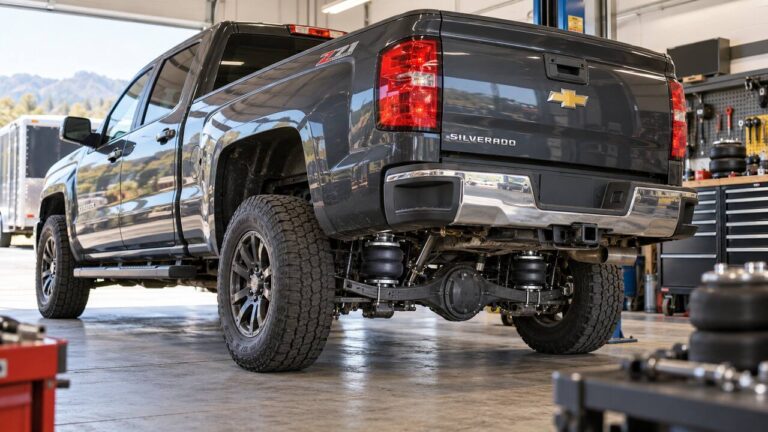
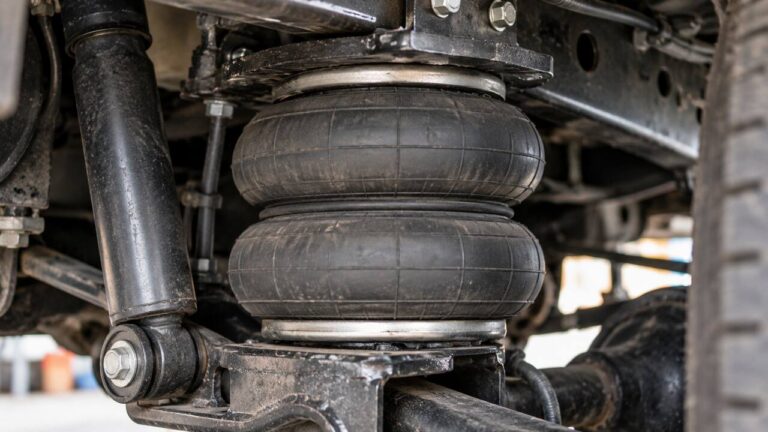
In a complete aftermarket air-suspension conversion, flexible air springs replace the steel springs that support the vehicle. A typical performance system also uses matched dampers or air struts plus a compressor, air tank, valve manifold, air lines, wiring, controller, and management system.
Inflating or deflating the air springs changes vehicle height. Depending on the management system, presets may be based on air pressure, measured ride height, or a combination of both. This allows the driver to return to a normal driving height, raise the car for an obstacle, or lower it for parking and display.
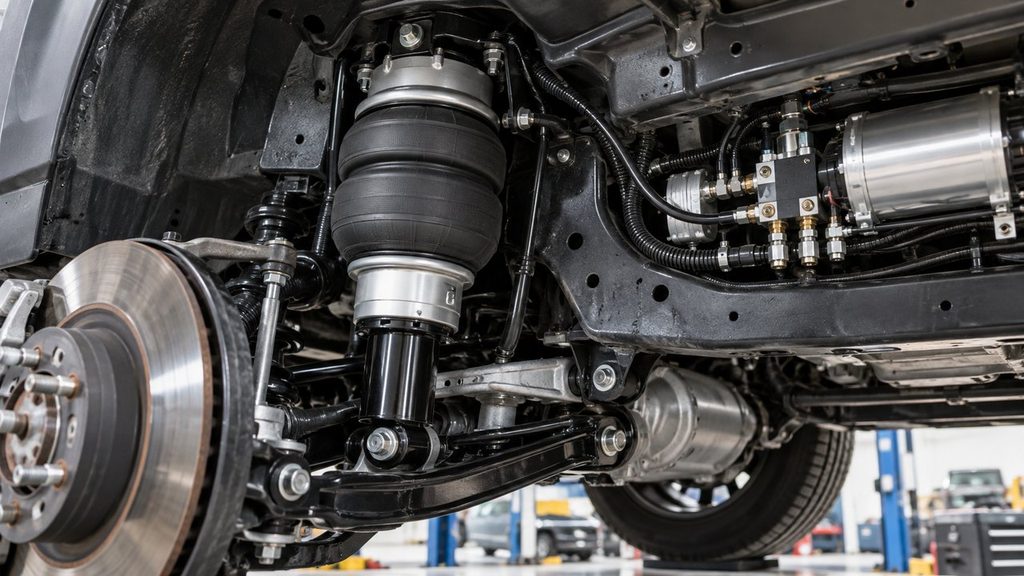
A height button should not be treated as a simple “soft” or “stiff” control. Air pressure, air-spring volume, suspension position, available travel, and damper tuning all affect how the car rides. Driving excessively low can reduce usable suspension travel and make the ride worse even though the vehicle uses air springs.
Advantages of Air Suspension
- On-demand height adjustment: Raise the vehicle for steep driveways or obstacles and lower it again when clearance is no longer needed.
- Repeatable presets: Modern management systems can store commonly used pressure or ride-height settings.
- Potential for good ride quality: Correctly sized air springs, matched dampers, and adequate travel can produce a comfortable street setup.
- Height compensation with suitable management: Systems using height sensors can help return the vehicle to a target ride height as passengers or cargo change the load.
- Strong visual appeal: Airing out a vehicle provides a parked stance that fixed-height coilovers cannot reproduce while retaining useful driving clearance.
Air suspension does not increase a vehicle’s legal Gross Vehicle Weight Rating. Height compensation should never be treated as permission to exceed the manufacturer’s weight limits.
Disadvantages of Air Suspension
- Higher total cost: A complete system requires substantially more hardware than a basic coilover installation.
- More complex installation: Air lines must be routed safely, wiring protected, and the compressor, tank, manifold, and controller mounted correctly.
- More potential failure points: Leaks can develop at an air spring, fitting, line, valve, or seal, while excessive compressor operation can shorten compressor life.
- Additional weight and space: Air-management hardware adds weight and may occupy trunk or cargo space.
- Installation quality matters: Poor line routing, inadequate suspension travel, unsuitable driving height, or incorrect alignment can create reliability and handling problems.
Which Handles Better: Air Suspension or Coilovers?
For repeated track days, autocross, and performance-focused driving, coilovers are usually the more practical choice. They are mechanically simpler, normally require less supporting hardware, and make it straightforward to build the setup around known spring rates, damping, ride height, alignment, and corner weights.
That does not mean every coilover handles better than every air suspension. A cheap or poorly matched coilover kit can perform worse than a properly developed air setup. Modern performance air suspension can deliver strong grip and body control when its air springs, dampers, alignment, management, and driving height are properly engineered.
The practical difference is consistency and complexity. Coilovers normally provide the simpler path to a dedicated performance setup, while air suspension combines capable handling with far greater ride-height flexibility.
Which Is Better for Daily Driving?
For daily driving, there is no automatic winner. Air suspension is attractive when a low car regularly encounters steep driveways, parking ramps, speed bumps, or other situations where temporary extra clearance is useful. Coilovers suit drivers who can choose one sensible driving height and leave it there.
Comfort also depends more on tuning than on the word “air” or “coilover.” A car driven too low or too close to its bump stops can feel harsh with either system. Likewise, a street-focused coilover with appropriate springs and dampers can be comfortable enough for everyday use.
If daily ownership is your main concern rather than choosing between these two upgrade types, our air suspension daily-driving guide covers comfort, reliability, maintenance, and long-term trade-offs in more detail.
Ride-Height Adjustment: The Biggest Difference
Ride-height flexibility is the clearest advantage of air suspension. With the appropriate management system, a driver can switch between stored settings without leaving the vehicle. That is useful for steep driveways, speed bumps, parking ramps, loading situations, and show-car use.
Coilover height is set mechanically. Depending on the design, adjustment may involve a threaded lower mount, threaded spring perch, or both. Once properly set, the height normally stays there until the hardware is adjusted again.
Changing suspension height can affect toe, camber, suspension travel, and other geometry. After installing either system or making a substantial driving-height change, see our guide explaining when an alignment is needed after suspension work.
Cost: Coilovers vs Air Suspension
Prices vary widely by vehicle, brand, adjustability, management system, and installation quality. As a broad U.S. parts-only budget, many quality coilover kits fall around $1,000 to $4,000 or more, while complete aftermarket air-suspension setups commonly reach approximately $2,500 to $6,000 or more before professional installation. Premium vehicle-specific systems can exceed either range.
The comparison should include every component required to make the system work safely. A complete air setup may require air struts or bags, management, a compressor, tank, manifold, controller, lines, fittings, wiring, mounting hardware, labor, and alignment. Coilover installation is normally simpler, although professional setup, corner balancing, replacement mounts, or adjustable control arms can increase its total cost.
| Expense | Coilovers | Air suspension |
|---|---|---|
| Main components | Vehicle-specific coilover assemblies | Air springs or struts plus air-management hardware |
| Installation labor | Usually lower | Usually higher because of plumbing, wiring, and component mounting |
| Alignment | Normally required | Normally required at the normal driving height |
| Possible long-term repairs | Dampers, mounts, bearings, springs, or seized adjusters | Air springs, lines, fittings, compressor, valves, sensors, or electronics |
Reliability and Maintenance
Coilovers have fewer components, but they are not maintenance-free. Road salt and dirt can damage exposed threads, adjustment collars can seize, top mounts and bearings can wear, and dampers can eventually leak or lose performance. Keeping threaded bodies clean and following the manufacturer’s service instructions helps preserve adjustability.
Air suspension adds components that should be inspected periodically, including the air springs, lines, fittings, wiring, compressor mounting, valves, and moisture-management hardware. A small leak can make the compressor cycle too often and shorten its life. If a vehicle starts losing height while parked, see our guide to finding and repairing an air suspension leak.
There is no honest universal lifespan for either system. Climate, road contamination, mileage, product quality, installation, driving height, and maintenance all affect durability.
Which Should You Choose?
Choose Coilovers If:
- You regularly attend track days or autocross events.
- You prioritize predictable handling and chassis tuning.
- You want a lowered stance but do not need to change height from the driver’s seat.
- You prefer a mechanically simpler system with fewer supporting components.
- You want to keep the total build cost below that of a complete quality air system.
Choose Air Suspension If:
- You regularly need extra clearance for driveways, ramps, or speed bumps.
- You want selectable ride-height presets.
- A very low parked stance is an important part of the build.
- You accept the additional installation cost and system complexity.
- You have access to a competent air-suspension installer or have the experience to install and troubleshoot the system correctly.
Five Setup Details That Matter More Than the Label
- Vehicle-specific engineering: Choose a kit designed for the car’s axle loads, mounting points, and suspension geometry.
- Damper quality: The shock absorber has a major effect on body control and ride quality in both systems.
- Usable suspension travel: An extremely low vehicle may ride on or near its bump stops regardless of whether it uses steel or air springs.
- Correct alignment: Toe, camber, and other geometry can change when ride height changes.
- Installation and tuning: A premium system can still perform badly if it is installed, routed, aligned, or adjusted incorrectly.
Frequently Asked Questions
Is air suspension better than coilovers?
Air suspension is better when on-demand ride-height adjustment, obstacle clearance, and a very low parked stance are priorities. Coilovers are usually better for a simpler, lighter, lower-cost, and more track-focused setup. Neither is universally better.
Are coilovers more comfortable than air suspension?
They can be. Comfort depends on the complete suspension setup rather than spring type alone. Quality street coilovers may ride better than poorly configured air suspension, while a well-engineered air system may be more comfortable than aggressive track-focused coilovers.
Can air suspension handle as well as coilovers?
A well-designed performance air suspension can provide strong handling. Coilovers nevertheless remain the more common choice for repeated track and autocross use because they offer a mechanically simpler way to build around known spring rates, damping, ride height, and chassis settings.
Are coilovers cheaper than air suspension?
Usually. A complete air-suspension conversion requires air springs or struts plus management hardware, plumbing, wiring, a compressor, and often a tank. Coilovers normally require fewer components and less installation labor, although premium motorsport coilovers can still be expensive.
Do you need an alignment after installing coilovers or air suspension?
Yes. Replacing suspension components or changing the normal driving height can alter toe and camber. The vehicle should be aligned at its intended driving height after installation and checked again after significant height changes.
Which system is better in winter?
Coilovers are mechanically simpler, but exposed threads can corrode if they are not cleaned and protected. Air systems add lines, fittings, valves, and moisture-management requirements. Either can work in winter when the components are suitable for the climate and maintained correctly.
Are airbags and air suspension the same thing?
In suspension discussions, “airbags” usually refers to the flexible air springs that support the vehicle. A complete air suspension includes those air springs plus the dampers and the hardware required to supply and control air pressure. They should not be confused with occupant safety airbags.
Final Verdict
Choose coilovers for frequent performance driving, simpler ownership, lower total cost, and a ride height that rarely needs to change. Choose air suspension when on-demand clearance, selectable driving heights, and a show-car stance are important enough to justify the additional hardware and complexity.
For most performance-focused drivers, quality coilovers are the more straightforward answer. For drivers who will genuinely use height adjustment in everyday life, a properly engineered and installed air suspension can be worth the extra cost. In either case, product quality, usable suspension travel, damping, alignment, and installation matter more than the label alone.