Do You Need an Alignment After Replacing Suspension Parts?

You should have the wheel alignment checked after replacing any suspension or steering part that can change toe, camber, caster or ride height. This includes most strut, tie-rod, control-arm, ball-joint, spring, steering-rack and subframe repairs.
An alignment is not automatically required after every suspension job. Replacing a standalone shock absorber, sway bar link or sway bar bushing usually does not alter wheel geometry if no alignment-related component is loosened. The correct answer depends on the vehicle’s suspension design and exactly what was removed.
Which Suspension Repairs Require an Alignment?
| Repair | Alignment afterward? | Why |
|---|---|---|
| MacPherson strut replacement | Usually yes | The strut can locate the steering knuckle and affect camber or toe |
| Standalone shock replacement | Usually no | A conventional shock normally controls movement without locating the wheel |
| Outer or inner tie rod | Yes | Tie-rod length directly establishes toe |
| Steering rack replacement | Yes | Tie rods are disconnected and steering position must be verified |
| Control arm replacement | Usually yes | The arm helps locate the wheel and affects alignment geometry |
| Ball joint replacement | Recommended | Its position can affect wheel location, depending on the suspension design |
| Coil spring replacement | Recommended | A change in ride height can alter camber and toe |
| Strut mount replacement | Usually yes | The upper mounting point may influence camber or caster |
| Subframe removal or movement | Yes | Subframe position can change suspension and steering geometry |
| Sway bar link or bushing | Usually no | These parts normally control body roll without setting wheel angles |
| Wheel bearing or hub | Usually no | Replacement normally preserves geometry if other parts are not disturbed |
| CV axle replacement | Usually no | The axle does not set alignment, though the repair method may disturb other parts |
“Usually” is important. Vehicle designs and repair procedures differ. If a technician loosens the strut-to-knuckle connection, control-arm mounting points, tie rods or subframe to complete another repair, an alignment check may still be necessary.
Alignment Check vs. Alignment Adjustment
Having the alignment checked does not mean every angle will require adjustment. The equipment first measures the vehicle and compares the results with the manufacturer’s specifications.
- Alignment check: Measures wheel angles and identifies whether they are within specification.
- Alignment adjustment: Corrects adjustable angles that are outside specification.
- Diagnostic alignment: Can reveal bent, incorrectly installed or nonadjustable components when measurements cannot be brought into specification.
This distinction matters because some vehicles provide limited factory adjustment. A measurement can still identify a problem even when correcting it requires repositioning a subframe, replacing a bent component or installing a manufacturer-approved adjustment part.
Why Suspension Work Can Change Wheel Alignment
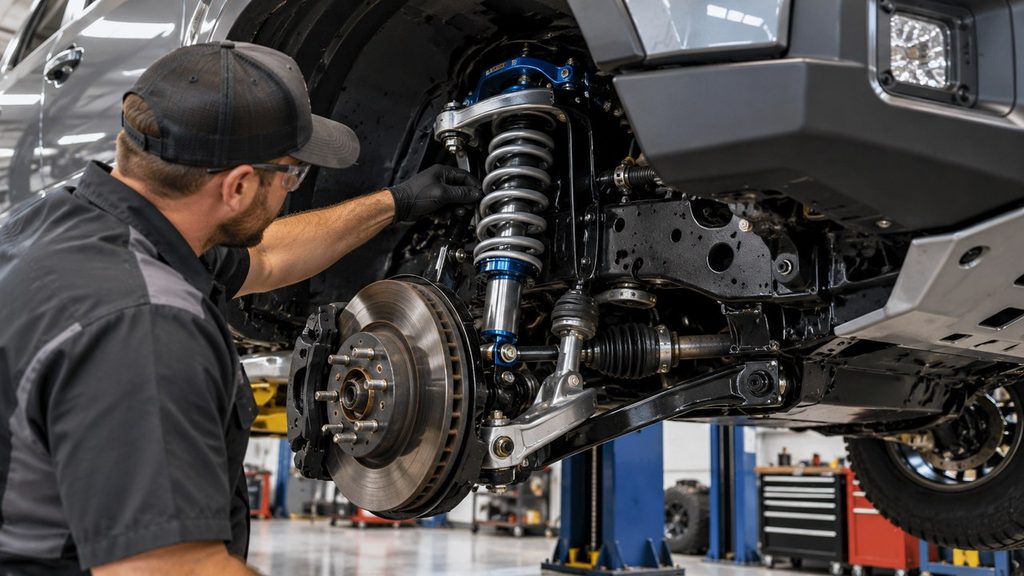
Suspension components determine where each wheel sits relative to the vehicle. Replacing, moving or loosening one of those locating points can change three primary alignment angles:
Toe
Toe describes whether the fronts of the tires point slightly toward or away from each other when viewed from above. Tie rods directly control front toe on most vehicles. Incorrect toe can cause rapid tire wear, feathered tread and an off-center steering wheel. Our toe-in vs. toe-out comparison explains how each direction affects handling, stability and tire wear.
Static toe should not be confused with toe-out on turns. As the steering moves away from straight ahead, Ackermann steering geometry and toe-out on turns determine how much more sharply the inside front wheel turns than the outside wheel.
Camber
Camber is the inward or outward tilt of the wheel when viewed from the front. Our camber angle guide explains positive vs. negative camber, tire wear and how the angle affects handling. Strut position, control arms, ball joints, ride height and damaged components can affect it.
Caster
Caster describes the forward or rearward tilt of the steering axis when viewed from the side. It influences straight-line stability and steering return. Our caster angle guide explains positive vs. negative caster, cross-caster and how the angle affects steering behavior. Control-arm position, strut mounting points and subframe position can affect caster on some vehicles.
Hunter Engineering’s alignment information also identifies camber, caster and toe as the principal measurements used during a wheel alignment.
Do You Need an Alignment After Replacing Struts?
Usually, yes. A structural strut commonly attaches to the steering knuckle and helps hold the wheel in position. Small differences in the replacement part, mounting holes or installation position can alter camber and toe.
Some designs do not provide adjustment at the strut, and certain strut replacements may not materially change alignment. Even then, measuring the angles protects the tires and verifies that the repair returned the vehicle to specification. Where an approved camber adjuster is available, our camber adjustment walkthrough explains the different adjustment methods and why toe must be checked afterward.
Monroe recommends checking alignment after strut and steering or suspension component replacement, while noting that some suspension designs and standalone shock absorbers are exceptions.
Do You Need an Alignment After Replacing Shocks?
Usually not if they are standalone shock absorbers. A conventional shock controls suspension movement but normally does not determine the wheel’s static position. Replacing it without loosening alignment-related components should not change toe, camber or caster.
An alignment may still be appropriate if:
- The vehicle already pulls or has uneven tire wear.
- Other steering or suspension components were replaced simultaneously.
- The suspension ride height was changed.
- Control arms, strut rods, tie rods or the subframe were loosened for access.
- The old shock was bent after a severe impact and other damage is possible.
Our shocks vs. struts comparison explains why the alignment answer differs between these components.
Alignment After Tie Rod or Steering Rack Replacement
If you are budgeting for the repair itself, see our tie rod replacement cost guide for parts, labor, inner versus outer tie rods, and alignment costs.
An alignment is required after replacing an inner or outer tie rod. Counting exposed threads or matching the new tie rod to the old one can place the wheel close enough for assembly, but it is not an accurate substitute for measuring toe.
Steering-rack replacement also requires alignment because the tie rods are disconnected. The technician should verify toe, center the steering wheel and confirm that the rack and steering system are correctly positioned.
Alignment After Control Arms or Ball Joints
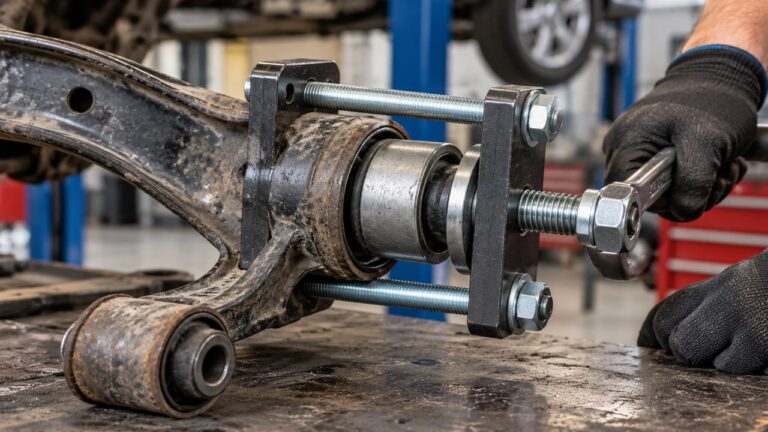
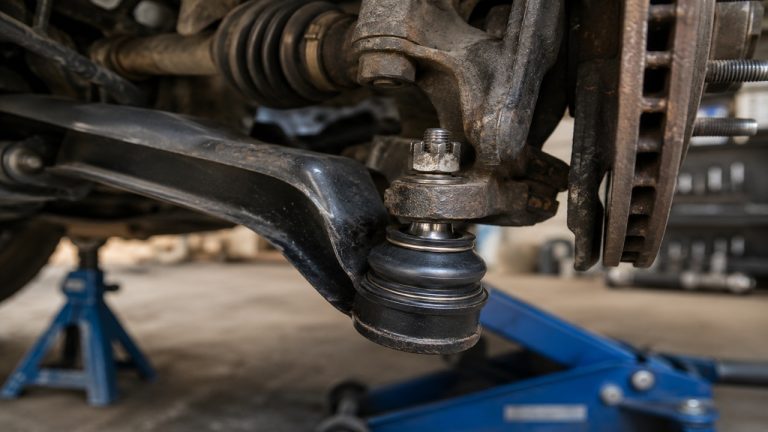
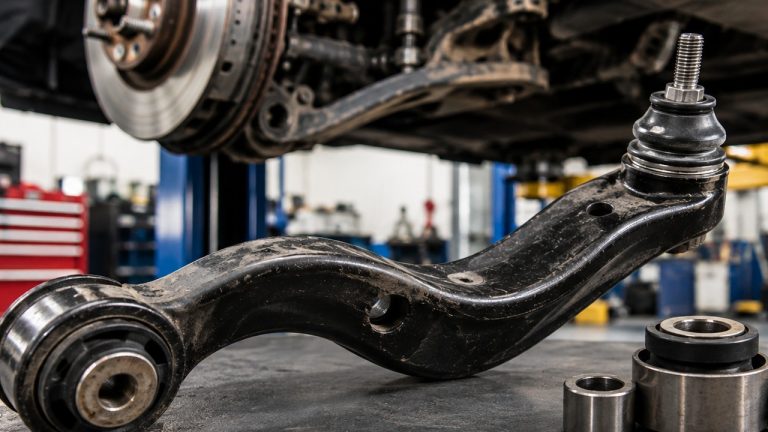
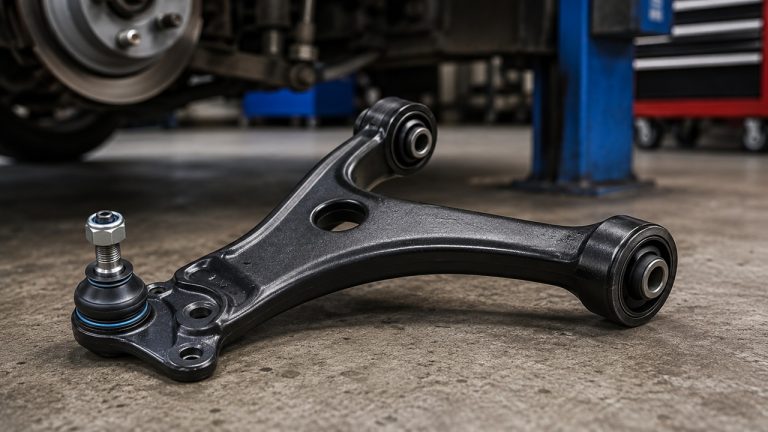
Control arms and ball joints help locate the wheel as the suspension moves. Replacement can change wheel position because of manufacturing tolerances, bushing preload, slotted mounting points or differences between the worn and new parts.
An alignment check is strongly recommended, particularly when:
- The control arm uses eccentric alignment bolts or slotted mounts.
- The replacement ball joint position is adjustable.
- The old component had substantial play or was bent.
- The vehicle had pulling, wandering or abnormal tire wear before repair.
Alignment After Springs, Lowering or Lift Kits
Any intentional or unintended change in ride height can affect alignment. Lowering springs, lift kits, coilovers, sagging springs and replacement springs with a different installed height can change control-arm and tie-rod angles. If you are choosing how to raise a truck, our guide to the difference between a leveling kit and a lift kit explains how each approach changes ride height and suspension geometry.
After a ride-height change, the vehicle should be at its final operating height, with all components correctly installed and tire pressures set, before alignment. Follow the suspension manufacturer’s instructions regarding any settling period or required retorque.
Does Replacing Sway Bar Links Require an Alignment?
Replacing sway bar links or sway bar bushings normally does not require alignment. The sway bar connects suspension movement from side to side to reduce body roll, but its standard mounting points do not set toe, camber or caster.
An alignment may still be justified if other suspension components were loosened, the vehicle has existing alignment symptoms or the sway bar repair followed an impact that may have damaged additional parts.
Do You Need a Four-Wheel Alignment?
A four-wheel alignment measures all four wheels and compares the rear thrust line with the vehicle centerline. It is usually the better choice for modern vehicles, especially those with adjustable rear suspension. Our wheel alignment cost guide compares typical 2-wheel and 4-wheel alignment prices.
Even when only front components were replaced, rear measurements can reveal why the steering wheel is off-center or why the vehicle does not track correctly. On vehicles with a nonadjustable solid rear axle, the rear can still be measured to identify damage or thrust-angle problems.
Signs You Need an Alignment After Suspension Work
- The steering wheel is crooked while driving straight.
- The vehicle pulls or drifts on a level road.
- The car wanders or requires frequent steering corrections.
- The tires begin wearing on one edge or show feathering.
- The steering does not return normally after a turn.
- Stability-control or steering-angle warnings appear after repair.
- The vehicle behaves differently during braking or cornering.
Do not wait for visible tire damage before checking alignment. A small toe error can wear tires before the driver notices obvious pulling. Our guide explains how suspension and alignment problems affect tire wear.
What an Alignment Cannot Fix
An alignment adjusts or verifies wheel angles; it does not repair loose, worn or bent components. Before adjustment, the technician should inspect the steering and suspension because alignment settings may not hold if parts can move.
- Loose tie rods or ball joints must be replaced.
- Torn control-arm bushings may need replacement.
- Bent wheels or suspension components require repair.
- Damaged or incorrectly inflated tires need separate attention.
- A worn wheel bearing cannot be corrected with alignment adjustments.
- Incorrect ride height must be diagnosed before final alignment.
If the car still feels unstable after suspension work, review the possible causes of a car feeling loose while driving.
What Happens During an Alignment?
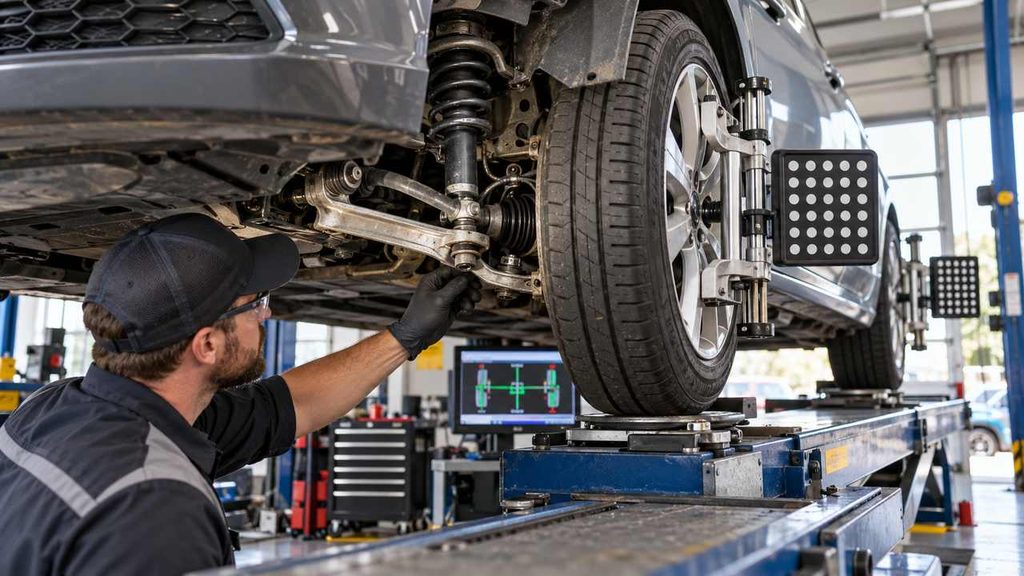
- Pre-alignment inspection: Tire pressure, tire condition, ride height and steering or suspension looseness are checked.
- Vehicle setup: Alignment targets or sensors are installed and the equipment identifies the vehicle specification.
- Initial measurement: Toe, camber, caster and rear thrust angle are recorded where applicable.
- Adjustment: Available adjustment points are corrected according to manufacturer procedures.
- Steering-wheel centering: The wheel is held and verified in its straight-ahead position.
- Final report: Before-and-after measurements confirm the result or identify a remaining mechanical issue.
Frequently Asked Questions
What suspension parts affect alignment?
Tie rods, steering racks, struts, strut mounts, control arms, ball joints, springs and subframes can affect alignment. Bushings and wheel bearings can also allow movement that makes alignment readings or handling inconsistent.
Can I drive before getting an alignment after suspension work?
Follow the repairer’s instructions. A short, careful trip to an alignment shop may be reasonable when the vehicle is stable and toe is approximately set, but do not drive if steering is abnormal, a wheel is visibly misaligned or the vehicle is difficult to control.
Does an alignment need to be done immediately after replacing struts?
It should be checked as part of the completed repair or as soon as practical afterward. Waiting for uneven tire wear to appear can turn a measurement problem into a tire-replacement expense.
Do rear shocks require an alignment?
Standalone rear shock replacement normally does not change alignment. An alignment may still be needed if adjustable rear links, control arms, the subframe or ride height were changed during the repair.
Does replacing a wheel bearing require an alignment?
Usually not when the hub or bearing is replaced without disturbing alignment-related mounting points. Check alignment if the bearing failed after an impact, other components were loosened or handling and tire-wear symptoms remain.
When Should You Get an Alignment After Suspension Work?
Get an alignment check after replacing struts, tie rods, a steering rack, control arms, ball joints, springs or any component that changes ride height or wheel location. Standalone shocks, sway bar links and sway bar bushings usually do not require one unless other alignment-related parts were disturbed.
When the repair method or suspension design is uncertain, measuring the alignment is safer and usually less costly than discovering the problem through prematurely worn tires.