Bad Sway Bar Link Symptoms: Noises & How to Check
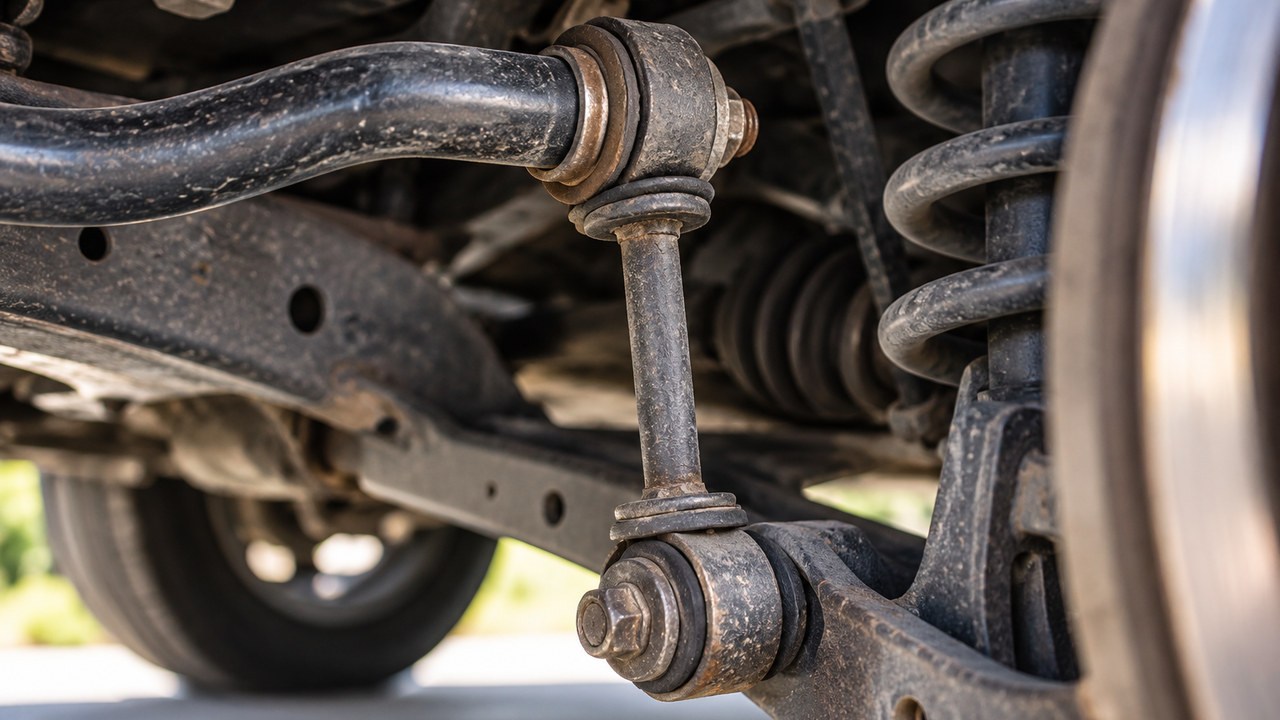
The most common bad sway bar link symptoms are a clunk, knock, or rattle when driving over bumps, particularly at low speeds on uneven pavement. You might hear it entering a sloped driveway, crossing a pothole, or driving along a rough residential street. A badly worn link may have noticeable play at its joints, while a broken or disconnected link can reduce the sway bar’s ability to control body roll.
But there’s a catch: a noisy sway bar link can sound almost identical to a worn ball joint, loose strut mount, or damaged sway bar bushing. And a link can start rattling long before it affects the way the car handles.
The quickest way to narrow it down: Pay attention to when the noise occurs, locate the link at the affected suspension corner, and look for looseness, damaged rubber boots, worn bushings, or broken mounting hardware. The strongest evidence is unwanted movement at the link itself, not just a familiar-sounding clunk.
If the vehicle suddenly feels unstable, a suspension component is hanging loose, or anything appears close to contacting a tire or brake hose, stop driving and have it inspected before continuing.
What Does a Bad Sway Bar Link Sound Like?
Most people describe the sound as a short metallic clunk, knock, clicking noise, or light rattle from somewhere near a wheel. It can be surprisingly difficult to pinpoint from the driver’s seat.
Imagine creeping into a parking lot where the driveway slopes across the sidewalk. One front wheel rises before the other. You hear a distinct knock, but the car feels perfectly normal once you’re on flat pavement.
That’s a familiar situation in which a worn sway bar end link deserves inspection. The uneven wheel movement makes the stabilizer system react, and excessive clearance in a link joint can allow its internal parts to knock against one another as the load changes.
A badly worn joint may rattle repeatedly across broken asphalt. A link with loose mounting hardware might produce a heavier knock. A bushing-style link with deteriorated rubber may sound different again.
One useful distinction: A sway bar link doesn’t normally produce a continuous humming noise that rises with road speed. A steady hum or growl points more strongly toward tires, wheel bearings, or other rotating components. A clicking noise that occurs primarily while accelerating through a tight turn raises questions about the CV axle instead.
These aren’t absolute rules. Suspension noises travel through the chassis, and the component you hear isn’t necessarily directly below the sound. Still, describing the exact driving situation is much more useful than telling a mechanic that the front end is simply noisy.
Five Signs Your Sway Bar Link May Be Bad
A loose end link and a completely broken one don’t always produce the same symptoms. These are the signs worth looking for, starting with the one most drivers notice.
1. Clunking or Rattling Over Small Bumps
A worn end link often announces itself on roads that don’t look particularly bad. Small potholes, patches in the asphalt, expansion joints, and slightly uneven pavement can all make the link knock.
Many modern sway bar links use small ball-and-socket joints at both ends. As their bearing surfaces wear, clearance develops inside the joint. Instead of transmitting force smoothly between the suspension and anti-roll bar, the loose parts may knock when the direction of force changes.
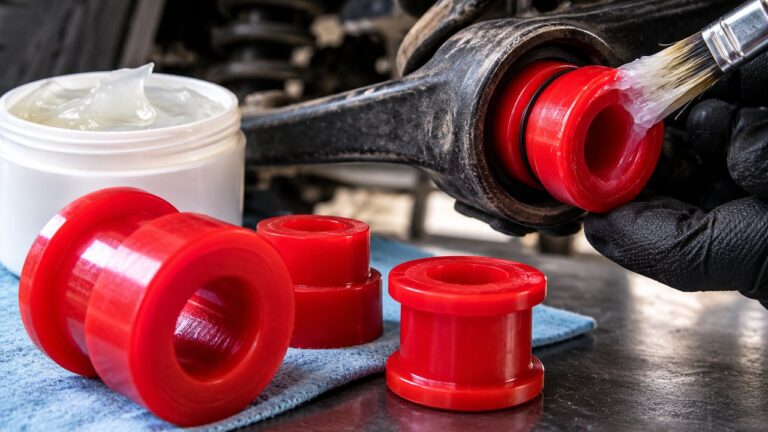
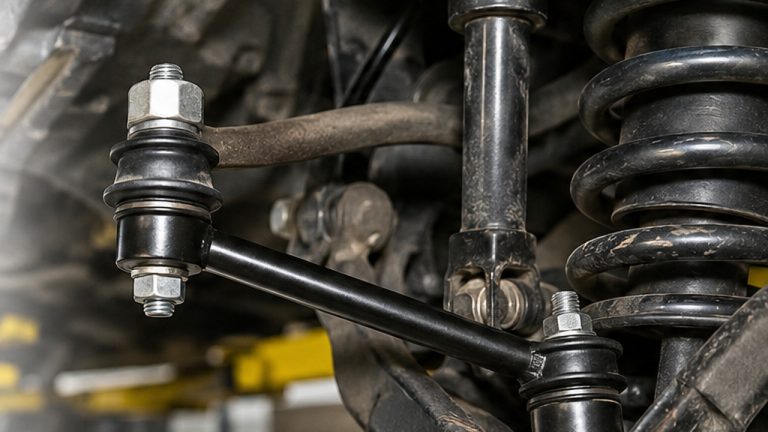
On older or different suspension designs, the link may consist of a bolt, sleeve, washers, and rubber or polyurethane bushings. Cracked or compressed bushings can allow the hardware to move and make a similar noise.
The noise may be more noticeable with a window open, when driving beside a wall, or while crossing an uneven driveway. Those surroundings can make an existing noise easier to hear; they don’t prove where it originates.
2. Knocking When Entering Driveways or Making Slow Turns
Here’s another common complaint: the car is quiet on a smooth road, but makes a knock as you turn into a gas station or maneuver over a raised parking-lot entrance.
As the vehicle leans and its wheels move through different amounts of suspension travel, the stabilizer bar twists. Its end links transfer that movement between the bar and the suspension.
If a link joint has excessive clearance, the changing forces may expose the looseness. You hear a knock during the transition, sometimes followed by another as the suspension settles.
However, the turning motion itself isn’t enough to identify the link. Strut bearings, upper mounts, control arm bushings, and steering components can also make noise during low-speed maneuvering.
Notice whether the sound occurs when the steering wheel turns on level ground, when the suspension moves over an uneven surface, or only when both things happen together. Those details help determine what should be inspected first.
3. More Body Roll When Cornering
The sway bar helps resist the vehicle’s tendency to lean during cornering. For it to work as intended, its links need to connect the bar securely to the suspension.
If a link breaks or becomes completely disconnected, that anti-roll bar may lose much or all of its intended effectiveness at that axle. The vehicle can lean more during turns and may respond differently to sudden direction changes.
There’s an important difference between a loose joint and a broken link, though.
A link with a little internal wear may still transmit substantial force through the sway bar. It can make an irritating noise without causing an obvious handling change. By contrast, a disconnected end link can substantially alter the operation of the stabilizer system.
Don’t deliberately take corners faster to test for body roll. If the vehicle feels unexpectedly unstable during normal driving, have the suspension inspected rather than trying to reproduce the problem aggressively.
4. Torn Dust Boots, Rust, or a Visibly Damaged Link
Sometimes the clearest warning sign is something you can see.
On a ball-joint-style sway bar link, each joint generally has a protective boot to retain lubricant and keep water and road debris away from the bearing surfaces.
When a boot tears, moisture and grit can reach the joint. This may accelerate wear and corrosion, particularly where winter road salt is common.
Look for a boot that has split open, grease escaping around the joint, severe corrosion, a bent link rod, or mounting hardware that appears damaged or displaced.
For a bushing-style link, look for missing rubber, crushed bushings, an obviously displaced sleeve, or washers that no longer retain the assembly correctly.
A torn boot is a reason to inspect the link, but it doesn’t establish how much internal wear has developed. A joint can also become loose without an obvious external defect.
5. A Different Feeling During Lane Changes or Corners
Some drivers notice that the car feels less settled when cornering or moving between lanes. If the sway bar connection is seriously compromised, that change is plausible.
But be careful with descriptions such as “loose steering.” A sway bar link is not a tie rod. It doesn’t directly steer the wheels or normally determine their toe angle.
Actual free play in the steering wheel, a delay between turning the wheel and getting a response, or a sudden change in wheel direction deserves a broader steering and suspension inspection.
A badly worn tie rod, for example, can affect steering control in ways that an ordinary rattling sway bar link usually cannot.
Why Uneven Roads Make Sway Bar Link Noise Easier to Notice
Understanding one small detail about the sway bar can make the noise pattern much easier to interpret.
The anti-roll bar is essentially a torsion spring. It runs across the vehicle and connects the suspension on opposite sides. When the left and right wheels move differently, the bar twists and resists that difference in movement.
Now consider two everyday driving situations.
- Both wheels cross a straight speed bump together: In an ideal symmetrical movement, the sway bar rotates through its mounts with relatively little torsional loading.
- One wheel climbs a raised driveway edge before the other: The left and right suspensions move differently, twisting the sway bar and changing the loads transmitted through its links.
That second situation can make a loose link easier to hear. It also explains why a car may rattle over an uneven entrance but remain quiet during much of a normal commute.
Real suspensions aren’t perfectly symmetrical, and impacts can excite several components at once. A sway bar link can still make noise over an ordinary speed bump, while an uneven-road clunk can come from something entirely different.
Think of the road surface as a clue about how the suspension is being loaded, not as a definitive test.
How to Tell If a Sway Bar Link Is Bad
If you’re wondering how to diagnose bad sway bar links, start by separating what you hear on the road from what you can physically confirm. A proper inspection should identify the exact loose joint, bushing, or mounting point.
Safety first: Park on firm, level ground and secure the vehicle before inspecting it. Never crawl beneath a vehicle supported only by a hydraulic jack. Sway bars and suspension components can be under load depending on wheel position, so don’t loosen or disconnect end links as a diagnostic shortcut. Follow the vehicle manufacturer’s lifting and inspection procedure, or have a technician perform checks requiring underbody access.
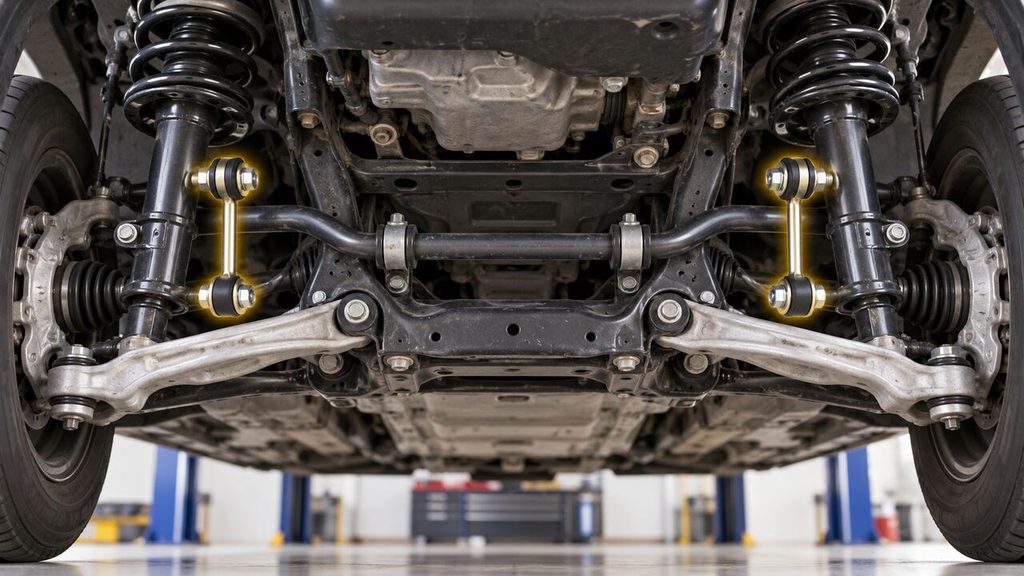
Step 1: Find the Sway Bar and Its End Links
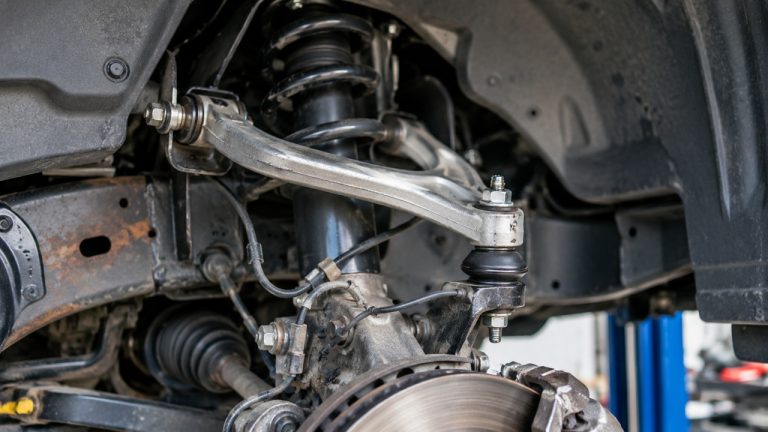
Locate the anti-roll bar running across the vehicle, usually near the front or rear suspension. Follow it toward each end, where a shorter link connects the bar to a strut, control arm, or another suspension attachment point.
On many front MacPherson-strut suspensions, the end link is a narrow metal rod with a small ball joint at each end. One end attaches to the stabilizer bar and the other to a bracket on the strut.
Other vehicles use much shorter links attached to a control arm, including designs with rubber bushings compressed between washers.
Some cars have both front and rear sway bars; others have only one. Don’t assume every vehicle has four end links, and don’t confuse a sway bar link with a tie rod simply because both may have small ball-and-socket joints.
Step 2: Look for Damage Before Testing for Play
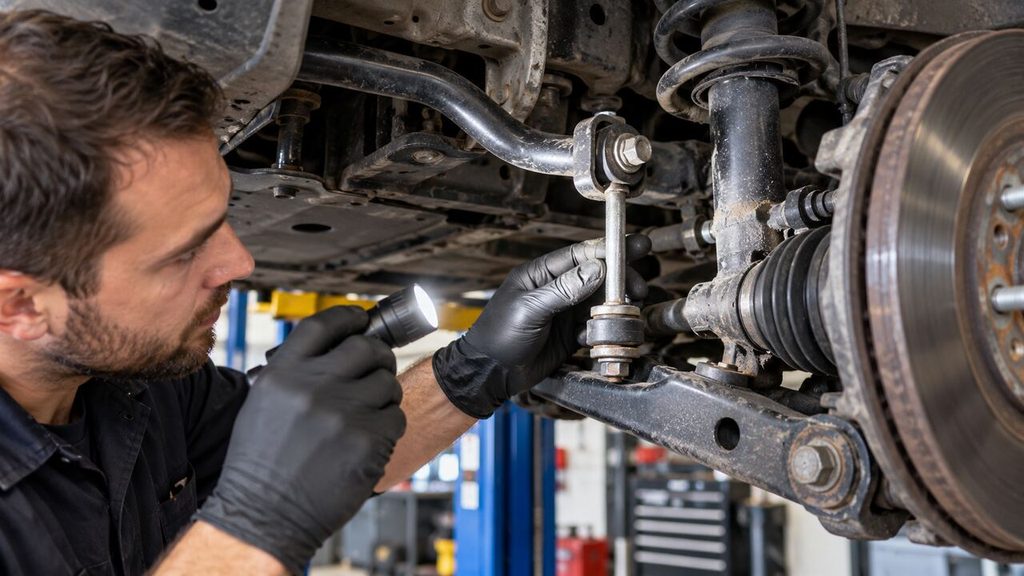
Use a flashlight to inspect the visible portions of both end links and their mounting points. Look for torn rubber boots, grease around the joint, missing bushings, bent metal, damaged studs, and hardware that appears loose or out of position.
Pay particular attention to a link that seems to be hanging at an odd angle or has separated from one of its mounting points.
Also inspect the nearby brake hose, ABS wheel-speed sensor wiring, tire, and suspension components for signs of rubbing or impact. A disconnected rod or damaged stabilizer bar can sometimes move into areas where it doesn’t belong.
Compare the opposite side if the layout is visible. A different-looking link isn’t necessarily defective, but obvious asymmetry following an impact deserves attention.
Step 3: Check Whether the Link Has Unwanted Movement
This is the most important part of confirming the diagnosis.
With the vehicle secured and the suspension supported as required by the manufacturer, a technician can apply controlled force at the link and observe its joints or mounting bushings for unwanted movement.
A worn ball-socket joint may produce a click or knock as its stud moves relative to the housing. A loose retaining nut can make the whole connection shift. A deteriorated bushing-style link can move because the rubber no longer holds its mounting hardware correctly.
However, being able to rotate or articulate a ball-joint-style link isn’t automatically a sign of failure. These joints are designed to change angle as the suspension moves. What matters is excessive clearance or movement where the joint should remain securely located.
The suspension’s loading condition also matters. If one wheel is hanging lower than the other, the sway bar can be twisted and the links may be under substantial force. That preload can make movement difficult to assess and can hide looseness during a casual hand check.
A technician may need to change the approved support position or use chassis-mounted listening equipment to reproduce and locate an intermittent knock. There is no universal amount of hand movement that proves every sway bar link is bad.
Step 4: Distinguish Joint Wear From Loose Hardware
Suppose the end link knocks when the suspension moves. Before condemning the link, find out what actually shifts.
If the ball stud moves abnormally inside its housing, the joint itself may be worn. If the mounting stud and its bracket move together because a retaining nut has loosened, the problem may involve the fastening system rather than internal joint wear.
A damaged mounting hole, missing sleeve, incorrect replacement part, or poorly installed bushing can produce similar symptoms.
Don’t simply tighten questionable hardware by feel. Inspect for damaged threads, distorted brackets, and application-specific hardware requirements. Tightening a damaged connection without addressing its cause can leave the vehicle unsafe.
Step 5: Confirm the Noise Has the Same Source
The final check is whether the physical fault explains the complaint.
A joint with clear excessive play on the same axle that produces a repeatable low-speed clunk is stronger evidence than a slightly weathered boot on an otherwise quiet suspension.
If the link checks out, move on to the bar’s mounting bushings, control arms, strut mounts, ball joints, and nearby brake hardware. Our guide to suspension clunks and rattles covers the wider set of components that can make similar noises.
A confirmed source is worth far more than replacing several inexpensive parts and hoping the noise disappears.
Bad Sway Bar Link vs. Worn Sway Bar Bushings
These two faults are often confused because they’re part of the same stabilizer system. Both can knock over bumps, and both can be affected by the forces produced during cornering.
The difference is their location and function. End links connect the outer ends of the sway bar to moving suspension components. Sway bar mounting bushings support the bar closer to the center of the vehicle, allowing it to rotate while keeping it located within its brackets.
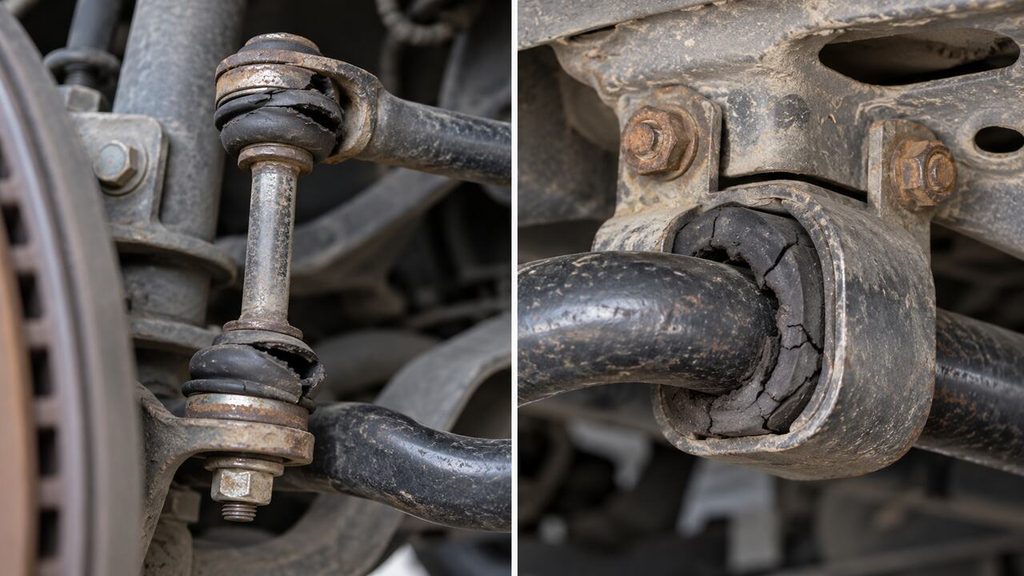
| What you’re checking | Worn sway bar link | Worn sway bar mounting bushing |
|---|---|---|
| Location | Near the end of the sway bar, connecting to a strut or suspension arm | Where the bar passes through a bracket on the chassis or subframe |
| Typical damage | Loose ball socket, torn boot, bent rod, worn link bushings, or damaged fasteners | Cracked, compressed, missing, or incorrectly sized mounting rubber |
| Noise | Clunk, knock, or rattle when suspension loads change | Clunk, creak, squeak, or rattle as the bar moves in its mount |
| Best physical clue | Abnormal movement at the link joint or its attachment | Excessive bar movement inside the mounting bushing or bracket |
| Possible handling effect | Reduced anti-roll performance if the link becomes disconnected | Reduced stability of the bar’s mounting if the bushing has severely deteriorated |
A worn link may produce a sharp clack near the wheel. A loose mounting bushing may allow the bar to shift within its bracket and create a duller knock. But the sound can overlap so much that tone alone is unreliable.
One more detail: the small rubber bushings used in certain bolt-style end links are not the same as the larger bushings that hold the sway bar to the chassis. They may look similar in a parts catalog, but they belong to different connections.
If the inspection identifies the frame-mounted bushings rather than an end link, our sway bar bushing replacement guide explains the correct component, fitment considerations, and installation process.
What Else Can Mimic Bad Sway Bar Link Symptoms?
The sway bar is only one possible source of noise near the wheel well. A driver might hear the same clunk when the actual problem is elsewhere in the front suspension.
The best comparison isn’t which part can make a noise—almost all of them can—but what other evidence appears alongside the noise.
| Suspected part | Overlapping complaint | What helps distinguish it? |
|---|---|---|
| Sway bar link | Clunking or rattling over uneven pavement | Movement localized to an end-link joint or mounting point |
| Sway bar bushing | Clunking, squeaking, or creaking | Excessive movement of the bar within its chassis-mounted bracket |
| Lower ball joint | Knocking, popping, sometimes unstable handling | Unwanted movement between the control arm and steering knuckle |
| Control arm bushing | Dull knock over bumps or during braking | Excessive movement at the inner arm mounting points |
| Strut mount or bearing | Knock, creak, or pop near the upper suspension | Abnormal movement at the mount or noise associated with strut rotation |
| Tie rod end | Knocking, wandering, or steering looseness | Measurable play at a steering linkage joint |
| Loose brake hardware | Rattle or knock near the wheel | Movement at the caliper, pads, or associated hardware |
Two of those alternatives deserve particular attention.
First, a damaged lower control arm bushing can make the suspension knock as braking forces change. A worn lower ball joint can also cause unwanted movement at the steering knuckle. Our bad lower control arm symptoms guide explains how those faults differ and why their safety implications can be more serious.
Second, a loose tie rod can affect the vehicle’s actual steering connection and contribute to abnormal tire wear. If the complaint includes genuine steering-wheel free play rather than only a rattle, check the signs in our bad tie rod symptoms guide.
There’s no advantage in buying sway bar links just because they’re relatively accessible and inexpensive. A few minutes spent locating the actual movement can prevent an unnecessary repair.
Front vs. Rear Sway Bar Link Symptoms
The basic failure mechanism is similar at either axle. A loose joint can knock; a disconnected link can reduce the effectiveness of the associated anti-roll bar. What changes is where you hear the problem and how it affects the vehicle.
Bad Front Sway Bar Link Symptoms
Front links may knock near the front wheel wells when one wheel encounters uneven pavement. Depending on the vehicle, they can connect the sway bar directly to the front struts or lower control arms.
A broken front link may reduce the front anti-roll bar’s contribution to roll resistance, changing the way the vehicle feels during cornering.
But a front-end clunk should not automatically be attributed to the links. Front suspensions contain steering joints, strut bearings, ball joints, and control-arm mountings that all experience road loads.
Bad Rear Sway Bar Link Symptoms
Rear sway bar links can produce a knock from the back of the vehicle, sometimes mistaken for loose cargo or a problem with the rear shocks.
On a rough street, the noise may seem to come from beneath the trunk or cargo area rather than from a particular wheel. That doesn’t necessarily mean the problem is centered between the rear wheels.
A disconnected rear link can change rear roll resistance and potentially alter the vehicle’s handling balance. The effect depends on the suspension design and how much roll stiffness the rear sway bar normally supplies.
Not every vehicle has a rear anti-roll bar, and some designs use integrated or unusual link arrangements. Confirm the actual rear suspension layout before searching for a component that might not exist.
Why Do Sway Bar Links Go Bad?
End links don’t necessarily fail because someone has been driving aggressively. They’re exposed to thousands of suspension movements, road contamination, changing temperatures, and repeated loads during everyday driving.
Common contributors include:
- Normal joint wear: Repeated articulation gradually wears the internal bearing surfaces of ball-and-socket joints.
- Water and dirt intrusion: A damaged dust boot can expose the joint to grit, moisture, and corrosion.
- Road salt and corrosion: Rust can damage studs, mounting hardware, or the link itself, particularly in regions with harsh winters.
- Pothole and curb impacts: A sufficiently severe impact can bend a link, damage a joint, or affect nearby suspension components.
- Aging rubber: On bushing-style end links, rubber can crack, compress, or separate over time.
- Incorrect installation: Wrong link length, damaged fasteners, unsuitable parts, or incorrect tightening can contribute to premature noise or failure.
- Modified suspension geometry: Lifted or lowered vehicles may require application-specific links or mounting arrangements to maintain the intended operating angles and clearances.
There’s no reliable universal mileage at which sway bar links fail. Two identical vehicles can experience very different lifespans depending on their roads, climate, parts, and maintenance history.
And if a replacement link starts knocking almost immediately, don’t assume the new joint is defective. Incorrect mounting, loose hardware, an unsuitable replacement design, or a different worn component can all leave the original noise unresolved.
Can You Drive With a Bad or Broken Sway Bar Link?
It depends on whether the link is merely noisy or has lost its connection, and whether anything else in the suspension is damaged.
A worn but securely attached sway bar link may continue transmitting force despite making noise. That doesn’t mean its remaining service life can be predicted from the sound, or that the joint should be ignored.
A completely broken or disconnected link is a different situation. The sway bar may no longer contribute its designed roll resistance at that axle. This can affect cornering behavior and stability, particularly during an unexpected maneuver.
There’s also a physical hazard if the disconnected end of the link or another part of the assembly can strike nearby components, interfere with a wheel, or damage a brake hose or sensor wire.
When to Stop Driving
Do not continue driving if you discover any of these conditions:
- A broken link, loose bar, or mounting component is dangling or contacting another part.
- The vehicle has developed sudden or significant instability during normal turns.
- Steering or braking behavior has changed unexpectedly.
- A suspension component is rubbing against a tire, wheel, brake hose, or electrical wiring.
- The noise began after a severe impact and there may be additional structural or steering damage.
- A technician has identified a defect that makes the vehicle unsafe to operate.
In those cases, arrange professional assistance or towing. For less severe symptoms, schedule an inspection promptly rather than assuming the problem is harmless because the vehicle still moves normally.
There is no dependable number of miles you can safely drive with an unidentified suspension knock.
What Should You Do After Confirming a Bad Sway Bar Link?
Once the failed connection has been identified, the next step depends on the link’s construction and the condition of its mounting points.
For a conventional sealed ball-joint-style link, replacement is generally the appropriate repair when the joint has excessive internal wear. Grease or spray lubricant cannot restore a worn bearing surface or eliminate mechanical clearance.
Some older bushing-style links use separately serviceable rubber parts, while others are normally replaced as complete assemblies. The correct repair depends on what the manufacturer supplies and how the original link is constructed.
The technician should also inspect the opposite end link, sway bar mounting bushings, brackets, and associated hardware. Both links may have experienced similar wear, but replacement in pairs isn’t automatically required when the opposite side is sound and the manufacturer doesn’t specify otherwise.
If you’re comparing repair estimates, our sway bar link replacement cost guide covers individual versus pair replacement, parts and labor, and the extra complications caused by corroded hardware.
Do You Need an Alignment After Replacing Sway Bar Links?
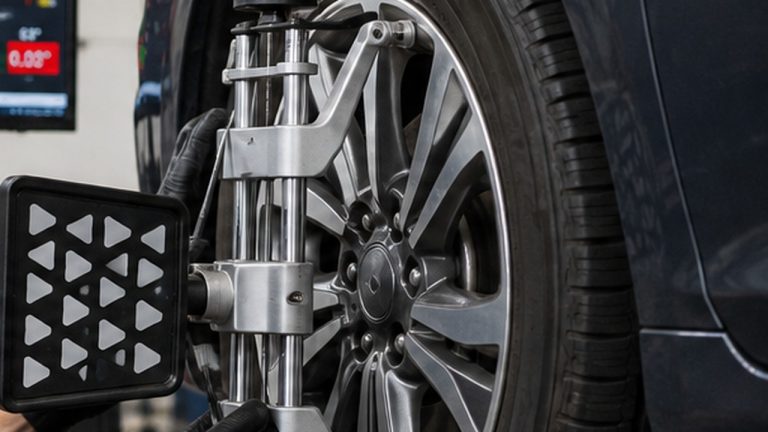
Replacing only conventional sway bar links normally doesn’t change the wheel’s static toe, camber, or caster settings. The links connect the stabilizer bar to the suspension rather than establishing the wheel’s alignment geometry.
However, an alignment check may still be appropriate if other components were removed or replaced, the car already has tire-wear problems, or an impact may have damaged the suspension.
Our alignment after suspension repair guide explains which types of work normally require measuring or adjusting wheel alignment.
Frequently Asked Questions
What is the most common symptom of a bad sway bar link?
A clunking, knocking, or rattling noise over bumps is the most common complaint. It can be especially noticeable on rough roads, uneven driveway entrances, or low-speed suspension movements. However, similar sounds can come from other joints or mountings, so the link needs to be inspected for actual wear or looseness.
Can a bad sway bar link cause vibration?
It can produce knocking or a rattling sensation as the suspension moves. A continuous vibration at a particular highway speed is less characteristic of sway bar link wear and should prompt checks of the tires, wheels, hubs, and related components. Don’t use vibration alone to diagnose an end link.
Can bad sway bar links cause uneven tire wear?
Not usually as a direct cause. Sway bar links don’t set the wheel’s static alignment angles, so abnormal inner-edge wear, outer-edge wear, or feathering is more reason to inspect tire condition, alignment, steering joints, and other suspension components. Tire wear alongside a noisy link may indicate a separate issue.
Can a sway bar link be bad without making noise?
Yes. A damaged dust boot, corroded joint, or deteriorating bushing may be noticed during an inspection before the driver hears a clunk. Some joints only produce noise under particular loads, and the sound may be masked by tire or road noise. Physical inspection remains important.
How can I tell which sway bar link is bad?
The side where you hear a noise can help, but sound travels through suspension structures. Inspect the links on both sides of the affected axle and look for damage or unwanted movement at each joint and mounting point. The location of confirmed looseness is more dependable than the perceived direction of the clunk.
Can a bad sway bar link cause loose steering?
A badly compromised link can affect body-roll control and make the vehicle feel less settled when cornering. But a sway bar link isn’t a steering linkage component. If the steering wheel has excessive free play or the front wheels respond unpredictably, inspect the tie rods, steering gear, ball joints, and related components rather than blaming the sway bar link alone.
Do both sway bar links need replacing if one is bad?
Not necessarily. Both links should be inspected because they often share similar age and exposure, but a good link doesn’t automatically need replacement. Replacing a pair may make sense when both are deteriorated or the manufacturer recommends it. Otherwise, the decision should follow the actual condition and service requirements.
Will a bad sway bar link trigger the check engine light?
A conventional mechanical sway bar link does not normally trigger the check engine light. It doesn’t have a sensor that reports joint wear to the engine computer. If a warning light appears, diagnose the indicated system separately. Vehicles with electronically controlled or active anti-roll systems may have additional components and diagnostic requirements.
The Best Clue Is Where the Movement Happens
A worn sway bar link can make a small bump sound much worse than it really is. That sharp knock on a rough street may come from a tiny amount of clearance inside a joint that has spent years absorbing suspension movement.
But the noise doesn’t tell the whole story. The same corner of the vehicle contains bushings, strut mountings, control arms, steering joints, and brake components that can imitate it.
Start with the circumstances of the noise. Then inspect the end links, their boots, and their mounting hardware. If a joint has excessive play or a link is visibly damaged, you’ve found a meaningful reason for repair. If both links are secure, keep looking instead of replacing them on suspicion.
That’s the difference between recognizing a familiar suspension noise and actually diagnosing it.