Toyota Tundra Lift Kit: Best Height & Fitment by Generation
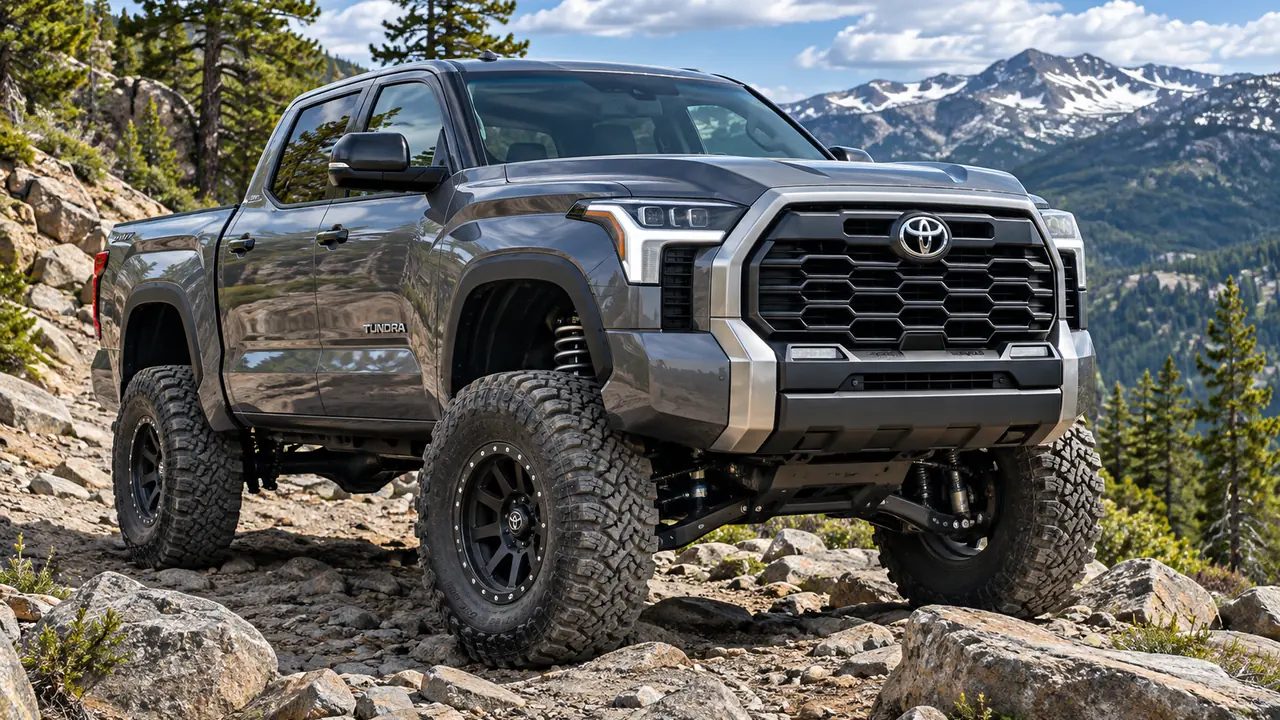
A Toyota Tundra lift kit should be chosen by generation first, then lift height, then factory suspension equipment. For a Tundra that still spends most of its life on pavement, about 2–3 inches is usually a more practical target than a 6-inch build. The catch: a 2006 Tundra, a 2018 Tundra and a 2025 Tundra do not take the same hardware. The 2022 redesign is especially important because Toyota replaced the rear leaf springs with a multi-link coil-spring suspension, with rear air suspension available on some trucks.
If you want a quick buying direction, a mild front leveling system suits a near-stock daily driver; a properly matched 2–3-inch suspension package is the more versatile street-and-trail option; and a 4–6-inch kit belongs to a truck being built around larger tires and the supporting driveline work. None of those heights guarantees that a specific tire clears at full steering lock or compression. Use the table, then read the generation and trim sections before ordering anything.
Which Toyota Tundra Lift Kit Makes Sense for Your Truck?
The best starting point depends on what the truck carries and how often the front suspension actually reaches full compression. An empty commuter, a tow vehicle and a Tundra loaded for an overland trip can look similar in a parking lot but ask very different things of springs and shocks.
| Your Tundra and goal | Sensible starting point | What to verify before buying |
|---|---|---|
| Stock-height daily driver; reduce nose-down rake | Roughly 1–2-inch front leveling setup | Loaded rake, factory shock travel, 2WD/4WD |
| 2000–2006 Tundra on mild trails | Vehicle-specific 1.5–2.5-inch system | First-generation mounting points, rear leaf hardware, age-related wear |
| 2007–2021 Tundra, street and occasional trails | Well-matched 2–3-inch lift | Upper-control-arm angles, CVs on 4WD, rear leaf arrangement |
| 2022+ Tundra without special rear suspension | 2–3-inch front/rear package | Coil-spring rear parts, TRD equipment, hybrid fitment |
| TRD Pro, AVS or load-leveling rear air | Kit explicitly approved for that equipment | Stock shock mounts, sensors, ride-height control and exclusions |
| 35s or 37s with frequent trail use | Complete kit designed around actual tire and wheel | Body-mount clearance, wheel offset, compression stops and alignment |
A Tundra lift kit advertised as “3 inch” may raise the front three inches but the rear only one or two. That is not necessarily misleading; reducing factory rake is a common goal. What matters is whether those front and rear numbers suit your loads, towing setup and tire plan. If the product description does not show both ends separately, find the installation sheet before deciding.
Check the Generation Before You Compare Lift Heights
Three distinct Tundra platforms appear in US lift-kit catalogs. A seller may group years for convenience, but a product that fits the front of one truck should never be assumed to fit its rear—or another generation—without a manufacturer application listing.
2000–2006: First-Generation Tundra
This is the truck behind searches such as “2006 Toyota Tundra lift kit,” “2005 Tundra lift kit” and “2000 Tundra lift kit.” It uses independent front suspension and rear leaf springs, but that does not make it interchangeable with a later model. Kit catalogs may split 2WD and 4WD, cab configurations, or hardware details; older Tundras also commonly have worn bushings and corroded fasteners that make a supposed quick installation less straightforward.
For a tidy, useful older truck, I would investigate good replacement front struts or a modest lift before jumping to a tall suspension package. A cheap spacer can raise the nose without doing anything for worn dampers. If the goal is a 6-inch lift on a 2004 or 2006, confirm that a complete first-generation kit actually exists for the exact truck and includes its required front geometry changes. “Universal Tundra 6 inch” is not a sufficient fitment claim.
2007–2021: Second Generation, With Leaf Springs Out Back
The second generation covers a long stretch of model years, from early 2007 trucks through the final 2021 models. The rear remains leaf-sprung; the front uses independent suspension. A listing that says “2007–2021” is a useful lead, not a substitute for reading the notes. Some larger kits separate early and later model years, and TRD Pro-equipped trucks can require a different approach to their factory shocks.
For a daily-driven 2014, 2017 or 2020 Tundra, consider whether the real objective is a slightly taller stance or increased controlled travel. Those are different purchases. If you are fitting aftermarket front coilovers, check their actual operating height and the upper-control-arm requirements. If the rear is going up, find out whether the package uses replacement leaves, add-a-leafs, blocks or a combination. Each changes the result differently under load.
2022–Present: Third Generation, With a New Rear Suspension
The 2022 Tundra is not a cosmetic update of the old platform. Its rear suspension moved from leaf springs to a multi-link solid axle with coils; available load-leveling rear air adds another layer of complexity. That one change rules out many 2007–2021 rear kits, even where the advertised height looks identical. Front lift parts, control arms and electronics also need current-generation fitment approval.
This is why searches for a 2023, 2024, 2025 or 2026 Tundra lift kit should lead you to a 2022+ application, with the exact model year confirmed in the current catalog. The third-generation TRD Pro, i-FORCE MAX hybrid, TRD Sport, AVS-equipped trucks and rear-air trucks may appear as separate options or exclusions. Do not buy a standard coil-spring kit for an air-suspension Tundra on the assumption that the rear pieces can simply be left out.
Tundra Parts Are Not Tacoma Parts
Both trucks use independent front suspension and both appear in many of the same aftermarket catalogs. That overlap has caused plenty of confusing search results. The full-size Tundra has its own chassis dimensions, suspension hardware, spring loads and mounting details. A kit photographed on a Tacoma is not proof of Tundra compatibility. If you are shopping for the midsize pickup instead, our Toyota Tacoma lift kit guide covers its distinct generations and suspension changes.
How Much Lift Does a Toyota Tundra Actually Need?
A lift number describes ride-height change under a manufacturer’s reference conditions; it does not describe the entire capability of the system. Spring rate, shock travel, suspension alignment and tire width all matter. The sensible height is the lowest one that accomplishes the job without creating avoidable problems for steering and everyday use.
1–2 Inches: Leveling a Working Truck
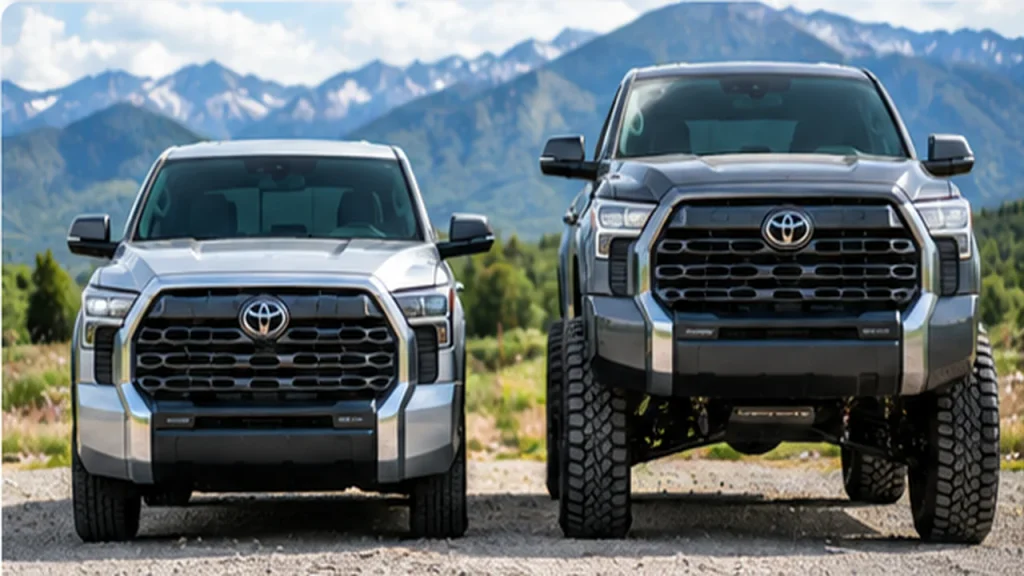
A small front change is enough to make many otherwise stock Tundras look more level. That is particularly appealing on a truck that commutes, runs highway miles and sees occasional dirt roads. Front strut spacers, preload collars and replacement adjustable-height struts are different ways of achieving that stance. They are not equally suitable for every trim or lift amount, so check how each method affects available rebound travel and the upper-control-arm position.
The overlooked issue is rear load. A Tundra that looks level with an empty bed can squat when a trailer is attached or a load of materials goes in. Before removing all of the factory rake, measure the truck with the equipment it normally carries. A modestly nose-down empty truck may be the better towing vehicle. The choice between a simple front adjustment and a full suspension system is discussed in our leveling kit vs lift kit comparison.
2–3 Inches: The Versatile Street-and-Trail Range
This is where many Tundra owners find a reasonable compromise. The truck gains a visibly taller stance, while a properly designed package can still have predictable steering, appropriate shocks and practical entry height. That last point matters on a full-size pickup: climbing into a lifted Tundra several times a day gets old sooner than the photos suggest.
A 3-inch Tundra lift kit should be judged by its parts list. One model might include matched front coilovers, rear spacers or springs, replacement shocks and alignment-correcting arms. Another may be chiefly spacers. Neither should be sold as equivalent solely because the advertised lift is the same. For 4WD trucks, pay particular attention to front CV-joint operating angles and what the manufacturer requires at the stated height.
3.5–4 Inches: More Than Just Taller Struts
The middle ground between a mild lift and a full 6-inch system can suit a truck that needs a larger tire and sees regular off-road use. It is also the point where comparing kits by front strut height becomes especially misleading. Some systems lower or reposition suspension components to maintain acceptable angles, while others rely on different arms or more comprehensive hardware.
Ask whether the package needs cutting, crossmember changes, a differential relocation, replacement skid-plate brackets or special wheels. Check front and rear lift measurements separately. A full-size Tundra with a high front and nearly stock rear can have an awkward loaded stance even when the product photograph looks excellent.
6 Inches: A Dedicated Tire-and-Geometry Project
A 6-inch Tundra lift kit is common enough to appear across several generations, but it is not a quick way to improve a normal daily driver. These packages often involve front crossmembers, steering or spindle arrangements, front differential relocation on 4WD versions, rear lift hardware and wheel-backspacing requirements. Installation cost and the number of parts involved tend to rise sharply compared with a mild lift.
If you are building for larger tires, this height may be justified, but investigate the whole truck. Can the spare fit? Will the garage door clear? Is the rear spring or air system covered by the kit? Will the truck still tow and load the way you need? The most expensive surprise is finding out halfway through installation that your exact model’s steering, factory skid plate or special suspension package needs extra parts not in the advertised price.
8–12 Inches: Why an Extreme Height Changes the Question
People do search for 8-inch and even 12-inch Tundra lifts. At that point the project is less about choosing the next suspension upgrade and more about designing a heavily modified vehicle. Driveshaft angles, braking, tire leverage, steering components, axle gearing, visibility and stability all deserve professional planning. Taller tires may provide actual differential clearance, but suspension lift alone raises the body and frame rather than lifting an axle housing above the ground.
For a truck expected to remain comfortable, dependable and easy to service, an extreme lift is rarely the efficient way to reach an ordinary tire goal. Confirm that the truck’s intended use really requires it instead of beginning with a height seen on someone else’s build.
Toyota’s TRD 3-Inch Lift Kit: What You Get and What You Don’t
Toyota has offered a genuine TRD suspension lift for the third-generation Tundra. That matters because owners often assume an official 3-inch option will fit every 2022-and-newer model or automatically authorize oversized tires. Neither assumption is safe.
Three Inches Front, Two Inches Rear
Toyota describes its TRD kit as providing 3 inches of front lift and 2 inches of rear lift on eligible Tundras. The published system uses TRD-tuned front coils, Bilstein-tuned front and rear dampers, forged upper control arms developed with Roush, and related hardware. That is a different proposition from a two-piece front spacer. It is designed as an integrated vehicle-specific package with Toyota Safety Sense compatibility in the approved applications.
Toyota also reports an increase in ground clearance for its particular approved setup. Treat that as a specification for the TRD-equipped reference truck, not a promise that any aftermarket 3-inch lift will produce the same clearance change. Ground clearance is measured at defined points, and some of those measurements behave differently on independent front suspension than on a solid rear axle.
The Fitment Exclusions Are Important
The original Toyota TRD lift kit announcement identifies eligible four-wheel-drive Tundras with the i-FORCE or i-FORCE MAX powertrain and specified bed configurations. It also explicitly excludes the TRD Pro, TRD Sport, vehicles with Adaptive Variable Suspension (AVS) and those with the optional air suspension. Actual factory- or dealer-installed availability can depend on the model year and configuration, so have a dealer check your VIN against the current part catalog.
Gas and hybrid versions may use different parts, even when the kit name is nearly identical. A hybrid badge does not automatically rule the genuine Toyota kit out, but the correct engine-specific application is essential. The exclusion that matters most to a buyer is the one in the current installation instructions, not the broad “2022+” text above a retailer’s shopping filter.
Fog Lights and Tire Size Are Easy to Miss
There is an unusual trade-off in Toyota’s parts documentation: selecting the official TRD lift can require removing the factory fog lights. Toyota’s parts listings also recommend original-equipment wheel and tire sizing and warn that different or oversized combinations may rub or affect warranty coverage. This directly contradicts the casual idea that buying the official kit guarantees space for 35s or 37s.
If your real goal is a particular 35-inch tire, ask the dealer and installer to verify that exact tire, wheel and front-body clearance independently of the lift purchase. Do not assume Toyota’s Safety Sense approval is also approval for every aftermarket wheel offset. Those are separate questions.
TRD Pro Is a Different Starting Point
The third-generation TRD Pro already has specialized FOX suspension hardware and a factory front lift relative to some other Tundras. Installing generic height-increase parts on top of that setup can change spring and damper positions in ways a standard Tundra kit was never tested for. The official TRD 3-inch accessory’s TRD Pro exclusion does not mean the Pro cannot be lifted; purpose-designed aftermarket options exist, but they need explicit TRD Pro fitment.
The same caution applies to earlier TRD Pro Tundras with factory performance dampers. Know whether the product retains the factory shocks, replaces them, or uses an approved extension. Comparing the advertised inch figure without knowing which starting suspension it assumes tells you very little.
Trims and Options That Change Tundra Lift-Kit Fitment
Two Tundras from the same model year can need different parts. That is especially true when the order sheet includes TRD equipment, hybrid power or a height-adjustable rear suspension. Instead of relying on the grille badge alone, identify the equipment actually installed on the truck.
TRD Off-Road and TRD Sport
A TRD Off-Road package changes the factory damper and off-road equipment specification, while the TRD Sport is oriented differently and may start at a lower ride height. Those differences affect measured lift, wheel clearance and whether a manufacturer considers the kit compatible. A 3-inch claim based on one trim may not yield the same hub-to-fender change on another.
With the TRD Sport in particular, do not infer compatibility with Toyota’s official lift from the fact that both products use the TRD name. Some aftermarket companies list TRD Sport-specific options, but the official Toyota system has its own exclusions. Check the product’s current fitment notes rather than trying to adapt a standard-trim kit after purchase.
i-FORCE MAX Hybrid Versus Gas V6
A 2022+ i-FORCE MAX Tundra has a different powertrain configuration and vehicle weight distribution from an otherwise similar non-hybrid truck. Front spring choices and the resulting lift height may be affected. A manufacturer may offer one kit covering both engines or separate part numbers and specifications; either approach is legitimate if the application data confirms it.
Do not assume that a hybrid cannot be lifted or that every V6 kit is hybrid-safe. Read the exact engine restriction and check for any instructions concerning wiring, cooling components, skid plates and suspension sensors. For a truck with multiple factory options, a VIN-based fitment check is worth the effort.
Rear Air Suspension and AVS
The 2022+ Tundra’s optional load-leveling rear air suspension is not the same thing as a conventional rear coil spring. A generic rear coil spacer does not belong under an air spring. The system uses its own height-control logic, sensors and approved movement range. Some specialized lift kits are designed to work with rear air and, where equipped, AVS; others specifically exclude both.
Be precise here: air suspension and AVS are related optional features on some configurations, but they are not words to treat as interchangeable in every parts listing. If a kit claims air compatibility, verify the exact rear suspension package, sensor links, hose routing, shock travel and height-calibration procedure. Preserving functionality means more than making the truck sit taller in a photograph.
2WD Versus 4WD
Many small leveling products cover both drivetrains, but larger lifts often use different front components or separate applications. A 4WD Tundra has front axle shafts and a front differential whose position and operating angles must be considered. A 2WD truck lacks that front-drive hardware, yet it still needs proper control-arm and steering geometry.
If an expensive 6-inch system is advertised for both 2WD and 4WD, make sure the exact kit you are buying includes the correct pieces for your version. A parts diagram or installation sheet is much more reliable than a universal fitment badge.
Rear Lift Hardware: Why the 2022 Redesign Matters So Much
Many owners focus on the front because that’s where leveling spacers and big tires attract attention. On a pickup, the rear often determines whether the finished truck is useful. Towing, bed loads and the type of spring all affect the result, and Toyota changed that foundation for the third generation.
2000–2021 Leaf Springs: Blocks, Add-a-Leafs or Replacement Packs
On the first two generations, rear height may be changed by a correctly specified block and U-bolt package, an add-a-leaf, or replacement leaf packs. These are not interchangeable solutions. A block alters the spring-to-axle spacing; it does not increase the spring pack’s carrying rating. An add-a-leaf changes pack behavior and may stiffen the ride. Replacement springs can be chosen for load, lift and spring condition, but need the correct length and mounting dimensions.
For trucks that haul regularly, the rear setup deserves as much scrutiny as the new front stance. If you encounter rear blocks in a kit, our rear lift block guide explains how height, U-bolt fit and axle-wrap considerations differ from changing the springs themselves. A stack of mismatched blocks is not a sensible shortcut to a taller truck.
2022+ Rear Coils: Different Parts, Different Travel Checks
Standard third-generation Tundras use coil springs on a multi-link rear axle. That allows replacement coils or a properly designed coil spacer to change rear ride height, but the shock length, brake and sensor wiring, sway bar and link angles still need to work through compression and droop. A leaf-spring block has no legitimate role in this arrangement.
There are applications where a small rear spacer makes sense, especially when matching a front lift. What it cannot do is magically create more spring capacity for a heavy camper or make a short shock longer. Our rear coil spring spacer guide covers the component-specific limits; for a Tundra, use only a kit approved for the third-generation rear suspension.
Air-Equipped Trucks: Keep the Height-Control System in the Plan
Rear air suspension is attractive for carrying variable weight because it can adjust ride height under specified conditions. Lifting the front without considering how the rear reacts may produce a stance that changes with load or selected driving mode. Improvised sensor-link changes can also affect how the system responds, so a conventional coil-kit instruction sheet is not enough.
The safe approach is to buy an air-specific kit whose maker describes the height-control strategy and any calibration required. If a product page lists both “rear coil” and “rear air” in the same broad vehicle filter, find the actual part number and confirm which configuration it covers. That single check can prevent an expensive wrong order.
Will 33-, 35- or 37-Inch Tires Fit After the Lift?
There is no single Tundra tire-size chart that works across 26 model years and every wheel. True tire diameter, section width, wheel offset, body-mount shape, bumper design and available compression travel matter. A truck can have plenty of space above the tire at rest and still rub at full steering lock.
33s and 34s: Often a More Practical Upgrade Than They Sound
For a road-driven Tundra, a moderate all-terrain tire can provide the stance and durability you want without needing to redesign the front suspension. Some near-stock trucks will accept an appropriately sized tire with little lift, but that does not mean every wheel and offset clears. Tire width can create contact before overall diameter does.
If a retailer advertises 33-inch compatibility, check the actual metric tire size it tested. The nominal number on the sidewall is not always the measured outside diameter. The right wheel can matter more than another half-inch of front lift.
35s: Check the Body Mount and Wheel Position
Thirty-five-inch tires are a common goal for a lifted Tundra and a common source of unpleasant surprises. On many builds, the limiting point is not the gap at the top of the fender. It can be the body mount, inner liner, bumper corner or a suspension component contacted at steering lock. Some combinations require careful trimming or body-mount work even with a nominal 3-inch lift.
Make the installer specify the exact tire model, size, wheel width and offset. Ask for checks at both steering locks and during controlled suspension compression. Our 35-inch tire lift-height guide explains the wider fitment variables; the Tundra-specific decision is which generation and suspension package will clear that chosen combination.
37s: Bigger Than a Lift-Height Decision
A 37-inch-class tire changes steering effort, effective gearing, braking demand, spare-tire storage and the loads on front-end components. A large suspension lift can make room, but it does not automatically solve interference at the cab-side body mount or maintain the correct driveshaft and steering angles. Tire selection also affects how much cutting and wheel-offset compromise is necessary.
For a serious 37-inch build, compare kits that openly specify supporting parts and wheel requirements instead of shopping by advertised lift height alone. On a 2022+ truck, make sure the selected package addresses the actual rear suspension. On an older truck, look carefully at front crossmember, differential and steering arrangements before accepting a six-inch package as complete.
Wheel Offset and Backspacing: The Detail That Rewrites the Chart
A wider wheel or more negative offset can move the tire outward to avoid contact with an upper control arm, but it may then hit the outer fender or bodywork under compression. Keeping the wheel farther inboard can reverse the problem. A lift manufacturer’s example fitment is usually tied to a particular wheel width and offset; a different setup may not behave the same way.
Do not forget where the spare goes or how the truck behaves with a loaded bed. Larger tires are heavier, and a matching full-size spare may be awkward in the standard location. Work out that logistics problem before investing in the lift rather than after the new wheels arrive.
What Type of Tundra Lift Kit Is Worth Buying?
Catalogs tend to put every spacer, leveling strut and complete suspension package under the same lift-kit label. To compare them fairly, look at what they replace, what they retain and which suspension limits they actually address. Expensive parts are not automatically better, but a sparse kit is not a bargain if it needs half a dozen unplanned additions.
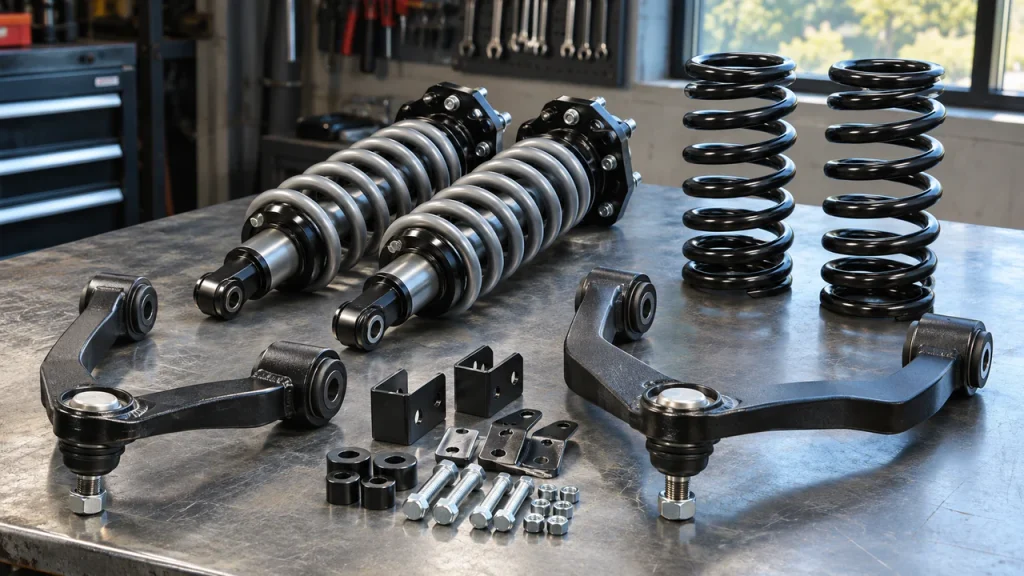
Strut Spacers and Preload Collars
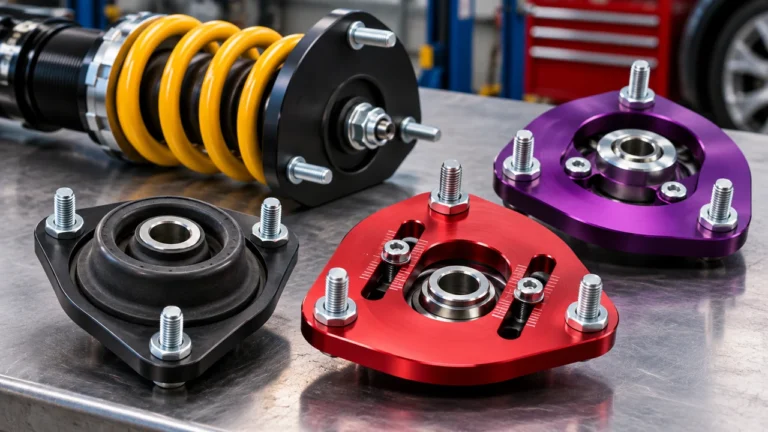
A front strut-top spacer can change installed ride height while retaining many factory components. A preload collar changes the spring’s installed position and can alter how much extension travel remains. Their details vary by design. Neither method should be described as producing exactly the same suspension behavior as longer replacement coilovers.
They are worth considering for modest street-focused changes on a mechanically healthy truck. Ask about the approved maximum height, factory shock compatibility, and the manufacturer’s position on upper-control-arm clearance. A damaged or leaking original strut should not be disguised by a leveling kit.
Replacement Coilovers and Matched Shocks
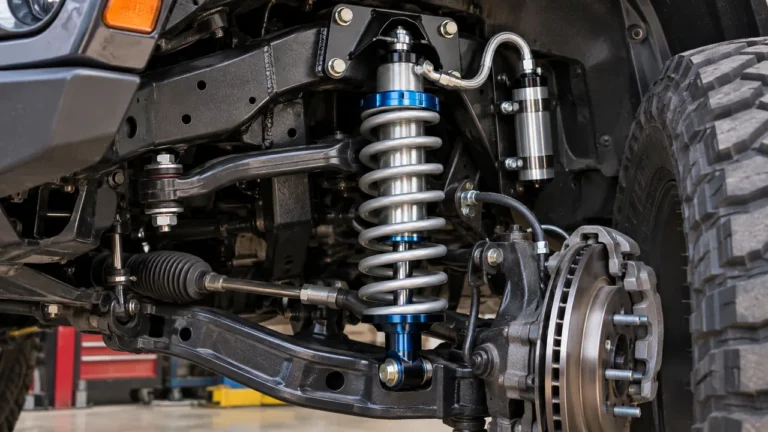
A replacement front coilover provides an opportunity to select damping, spring rate and sometimes adjustable ride height for the way the truck is used. Bilstein, FOX, Eibach, ICON, Dobinsons and other companies offer different approaches, but the brand badge alone is less useful than the actual shock model and application. Reservoir shocks can offer advantages under repeated high-speed heat loads without being necessary for a pavement-heavy commuter.
If you carry a winch bumper or other permanent front weight, spring selection may be as important as damper price. Ask whether the quoted lift was measured on an unladen non-hybrid Tundra, a heavier hybrid or a truck with accessories. The same coilover may yield different final heights on each.
Complete 4–6-Inch Suspension Systems
Big lifts often use crossmembers, relocated suspension pivots, steering-related parts, differential-position changes on 4WD trucks and rear lift components. They can provide the room needed for a particular tire setup when properly engineered. They also introduce more installation complexity and more ways for a single incompatible trim option to derail the project.
An honest product page should tell you what cutting, drilling, wheel backspacing, skid-plate modification and extra parts are required. “Bolt-on” does not necessarily mean no irreversible modifications anywhere in the job. Read the current installation guide before buying.
Brands: Read the Kit, Not the Ranking
Rough Country, BDS, ReadyLIFT, ICON, FOX, Bilstein, Dobinsons, Westcott Designs and Toyota’s own TRD accessory program all appear in the Tundra market. Their offerings range from small stance adjustments to engineered long-travel or taller suspension packages. Recommending a single manufacturer for every Tundra would ignore the major generation and equipment differences.
A better comparison asks whether the kit is actually for your 2WD or 4WD, whether it accepts factory TRD or AVS hardware, whether it covers rear air, and what shocks, arms, brackets and calibration procedures are included. A maker with clear fitment exclusions may be doing you a favor compared with a seller claiming that one box fits everything.
Parts That Make or Break a Tundra Lift
Suspension height changes geometry. The Tundra’s independent front suspension is particularly sensitive to the relationship among control arms, CV axles on 4WD trucks, steering and shock travel. A well-sorted mild lift can drive better than a taller setup that ignores those limits.
Upper Control Arms, Ball-Joint Angles and Caster
As the front rises, the upper control arm works at a different angle. Depending on the lift and the factory alignment range, aftermarket arms may provide more appropriate ball-joint clearance and a better route back to the intended caster setting. That does not mean every two-inch leveling kit requires replacement arms; it means the kit should specify when they are recommended or mandatory.
After installation, get actual alignment measurements. If the Tundra wanders, pulls or has poor steering return, do not accept “that’s how lifted trucks drive” as an explanation. Inspect tire pressure, steering joints, caster, toe and the rest of the front suspension before adding another component in hope of masking the problem.
Front CV Axles and Differential Drops on 4WD Trucks
Raising the front suspension changes CV-joint operating angles. The amount of lift, available droop and axle-shaft geometry determine whether the stock setup remains within a safe range. Some third-generation kit makers specify a differential-drop kit or high-angle CV shafts at certain heights; others engineer a complete arrangement with different suspension geometry.
There is no universal “all Tundras over two inches need a diff drop” rule. Read the exact manufacturer’s requirements and compare them with the intended driving conditions. Our differential drop kit guide explains what these parts can and cannot correct. On a 2WD Tundra, front CV angle is simply not the same issue, though control-arm and steering geometry still matter.
Shock Extension, Bump Stops and Brake-Line Reach
A lift can create extra space around the tires at ride height while leaving the shocks or brake hoses short of the movement expected on a trail. If a shock bottoms out before the suspension’s designed compression stop, it can be damaged. At full droop, brake hoses, wheel-speed wiring and air or hydraulic lines must remain free of tension. Coil springs also need to stay properly seated throughout the designed travel.
These checks are not glamorous, but they distinguish a suspension system from a collection of parts. A specialist should cycle the suspension safely under controlled conditions and follow the kit’s bump-stop and extension instructions. More droop on a spec sheet is not helpful if another component becomes an unintended travel limiter.
Skid Plates, Crossmembers and Driver-Assistance Hardware
Aftermarket crossmembers may change ground clearance at some chassis points even while raising the body. Factory skid plates and lower splash panels sometimes need replacement brackets or may no longer fit. On newer Tundras, cameras, radar alignment, wiring and other driver-assistance equipment add concerns beyond the mechanical suspension.
Toyota’s own TRD kit addresses Toyota Safety Sense compatibility for its approved application, but that should not be interpreted as a blanket endorsement of every aftermarket modification. Ask the installer what inspections or calibrations the vehicle and kit actually require. The correct answer depends on the model and components changed, not just the words “Toyota Tundra” on the box.
What Does a Toyota Tundra Lift Kit Cost?
The price range is wide because a front leveling spacer and a complete 6-inch suspension conversion are barely comparable products. US retail listings can show simple leveling hardware around the low hundreds, while full packages with replacement shocks, control arms and structural brackets can run into several thousand dollars. These are broad planning ranges, not quotes or guaranteed current prices.
Parts Price Versus Installed Price
As a rough buying framework, inexpensive leveling components can start around $100–$300; more complete mild suspension systems often move into the mid-hundreds or low thousands; and advanced 4–6-inch kits can cost several thousand dollars before labor. Brand, shock specification, generation and included hardware can move the price considerably. Toyota’s genuine TRD package sits in a different category from a bare front spacer because it includes multiple suspension and alignment-related components.
Do not compare a $200 box against a $2,000 package as if the only difference were the badge. Add the shocks, upper control arms, rear hardware, fasteners, any needed differential or steering work, alignment, and the cost of the actual tires and wheels you intend to run.
Labor, Alignment and Unexpected Extras
Labor depends heavily on whether the installer is fitting a simple front leveling kit or altering crossmembers and suspension mounting points. Older trucks may need seized fasteners, worn bushings or rust issues addressed. Third-generation air- or AVS-equipped trucks may require additional setup and electronic checks. For broader US labor ranges, see our lift kit installation cost guide; your own estimate should itemize the parts and all post-installation work.
Make sure the quote says whether wheel alignment, recalibration where required, travel checks, and a fastener reinspection are included. If a shop’s price excludes “miscellaneous parts,” ask what that could cover. The cheapest initial total is not always the lowest final bill.
Will an Aftermarket Lift Void My Warranty?
A lift does not automatically cancel every part of a vehicle’s warranty. A particular failure or claim may depend on whether the modification caused or contributed to the problem, along with the warranty terms and applicable law. That is different from assuming the manufacturer must cover damage caused by an improperly installed lift or oversized tire combination.
Toyota’s genuine TRD kit has its own fitment, installation and warranty conditions, and Toyota warns separately about non-OEM wheels and tires on its parts listings. Before paying, ask the dealer or kit manufacturer for the written conditions applicable to your specific vehicle and proposed modifications. Keep invoices and installation documentation.
Before You Order: Seven Checks That Prevent Expensive Mistakes
Most wrong-kit purchases are avoidable. A few measurements and one careful read of the installation sheet can save the cost of shipping heavy parts back—or discovering too late that the truck needs a different rear suspension package.
- Identify the exact truck. Record year, VIN, trim, 2WD or 4WD, gas or i-FORCE MAX hybrid, and any factory TRD package.
- Identify the rear suspension. Confirm leaf, coil or load-leveling air; also check for AVS and factory height-control equipment.
- Measure the current stance. Note hub-to-fender height at all four corners on level ground with the truck normally loaded.
- Define the actual tire and wheel. Record complete tire size, wheel diameter and width, offset/backspacing, and where the spare will go.
- Read the manufacturer’s fitment notes. Look for TRD Pro, TRD Sport, hybrid, AVS, air-suspension and model-year exclusions.
- Check the whole suspension travel. Confirm control arms, front CVs on 4WD models, shock length, bump stops, brake hoses, steering and body-mount clearance.
- Price the installed system. Include rear hardware, alignment, electronics checks when applicable, tires, wheels and any follow-up inspection.
If you cannot answer one of these questions from the product instructions, ask the manufacturer or an experienced Tundra installer before placing the order. A truck that sits at the advertised height but cannot move through its intended travel safely is not a finished lift.
Toyota Tundra Lift Kit FAQ
These are the questions that usually remain after the year, trim and lift-height decision. There are useful starting answers, but none replaces a fitment check for the exact kit and truck.
Is a 3-Inch Lift Enough for 35-Inch Tires on a Tundra?
It can be enough for some setups, but height alone does not guarantee clearance. The truck’s generation, tire’s actual measurements, wheel offset, liner and body-mount position, and suspension compression all matter. The manufacturer may specify an exact wheel-and-tire combination and require trimming; use that specification rather than a parking-lot photograph.
Can I Put a 2007–2021 Lift Kit on a 2022 or Newer Tundra?
Not unless the manufacturer explicitly approves the particular part for both generations. The 2022 rear suspension changed from leaf springs to a multi-link coil system, and the new platform has different mounts and equipment. A matching advertised lift height does not establish compatibility.
Is the Toyota TRD 3-Inch Kit Better Than an Aftermarket Kit?
For an eligible truck whose owner values a Toyota-engineered and Toyota Safety Sense-compatible package, it is a serious option. It also has specific trim and suspension exclusions, factory fog-light implications and Toyota’s tire-sizing recommendations. An aftermarket kit may be a better fit for a particular tire, load or performance goal, but it needs its own technical verification.
Does Toyota’s TRD Lift Fit the Tundra TRD Pro?
Toyota’s announced genuine 3-inch TRD accessory specifically excludes the TRD Pro. That does not rule out all aftermarket lifts: some are designed and listed for the Pro’s factory FOX suspension. Check the exact year and the kit’s own TRD Pro fitment statement.
Can You Lift a Tundra With Rear Air Suspension?
Yes, with a system expressly designed for the truck’s rear air and associated height-control equipment. An ordinary rear coil spacer or leaf block is not an appropriate substitute. Verify the exact part number, sensors, air-system movement and any calibration procedure.
Does a 6-Inch Tundra Lift Require Different Front CV Axles?
That depends on the suspension architecture and how the kit repositions the front differential and control arms. Larger lifts on 4WD trucks frequently require specific driveline or differential-related provisions. Follow the particular kit’s instructions, not a blanket rule based on inches alone.
Will a Lift Increase My Tundra’s Towing or Payload Rating?
No. A lift does not increase the factory tow, axle or payload limits. Larger wheels, tires, bumpers and other modifications can add weight, while changes to rake and hitch height may affect the towing setup. Choose springs and shocks for the load you actually carry and stay within the truck’s published ratings.
Is a Leveling Kit Bad for a Tundra?
Not inherently. A well-designed, correctly installed leveling kit on a healthy truck can be an appropriate mild modification. Problems are more likely when the lift exceeds the kit’s approved height, uses the wrong suspension application, leaves inadequate shock travel or removes rake needed for regular towing. Alignment and clearance checks matter after even a modest change.
Are 2025 and 2026 Tundra Lift Kits the Same as 2022 Kits?
They belong to the same third-generation family, but do not treat a broad 2022+ claim as an unconditional guarantee. Current manufacturer application charts may add model-year, trim, suspension or equipment exclusions. Use the exact kit part number and installation revision for your truck.
Should I Choose 2 or 3 Inches for a Daily-Driven Tundra?
If the main goal is reducing rake and fitting a modest tire, start by looking at 1–2 inches. If you want a more substantial stance, a carefully matched 2–3-inch kit often makes more sense than an extreme lift. The deciding details are how much weight the truck carries, tire clearance at full compression and whether the kit keeps steering and shock travel in a well-controlled range.