Tie Rod Replacement Cost: Parts, Labor & Alignment
Tie rod replacement typically costs about $250 to $500 per side on a mainstream vehicle in the United States, including parts and labor. A simple outer tie rod end can cost less, while an inner tie rod, heavy corrosion, difficult steering-rack access, premium parts, or replacing multiple components can push the total considerably higher.
The biggest reason tie rod prices look inconsistent online is that “tie rod replacement” can mean different things. One estimate may cover only an outer tie rod end, another may include an inner tie rod, and another may quote both sides plus a wheel alignment.
Tie Rod Replacement Cost at a Glance
| Job | Useful U.S. Planning Range | What to Confirm |
|---|---|---|
| One tie rod replacement | About $250–$500+ | Inner or outer tie rod |
| Outer tie rod end | About $150–$350+ | Usually easier to access |
| Inner tie rod | About $250–$500+ | Rack boot removal and special tooling |
| Both sides | About $450–$900+ | Which inner/outer components actually need replacement |
| Wheel alignment | Often about $90–$200 | Normally important after tie rod work |
These are planning ranges rather than fixed quotes. Current national estimates place many conventional tie rod jobs around the $300 range, but the exact suspension and steering design, parts quality, labor rate, corrosion, and repair scope can move the final bill substantially.
What Does a Tie Rod Do?
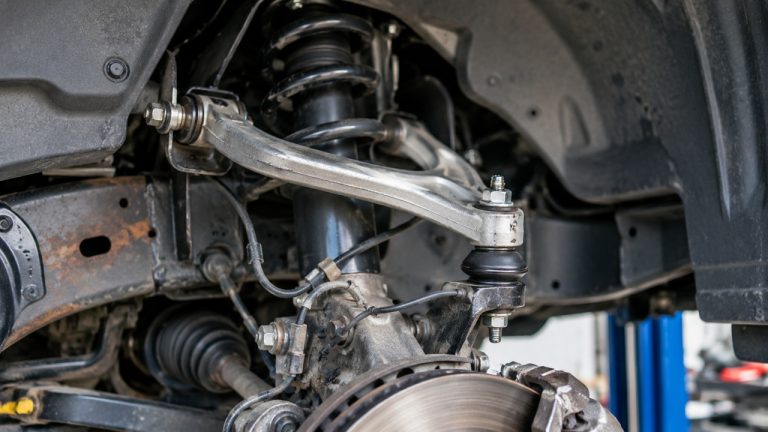
Tie rods connect the steering rack or steering linkage to the steering knuckle at the wheel. When you turn the steering wheel, the tie rods transmit that movement so the front wheels change direction.
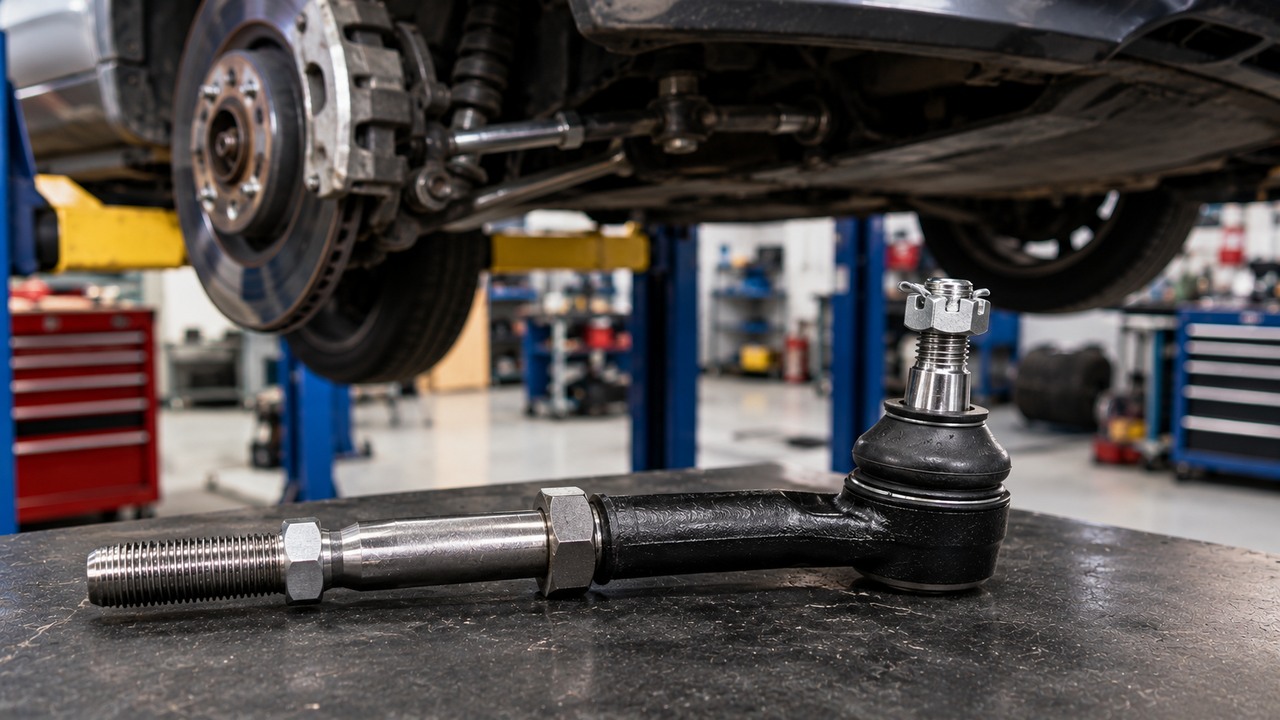
Most rack-and-pinion steering systems use an inner tie rod connected to the steering rack and an outer tie rod end connected to the steering knuckle. The inner and outer sections are joined by threads that also allow the vehicle’s toe alignment to be adjusted.
Because tie rods directly influence steering and wheel alignment, excessive play can cause loose steering, wandering, irregular tire wear, and difficulty keeping the vehicle pointed straight.
Tie Rod vs. Tie Rod End: Are They the Same?
The terminology can be confusing. Many shops and parts catalogs use “tie rod end” primarily for the outer tie rod end, while the complete steering linkage includes both an inner and outer section.
That is why a search for “tie rod end replacement cost” can produce prices that look very different from a quote for an inner tie rod. The repair procedures are not identical.
This guide covers tie rod replacement generally. When comparing an actual estimate, always identify whether the shop is replacing the inner tie rod, outer tie rod end, or both.
Outer Tie Rod Replacement Cost
An outer tie rod end is usually the more accessible part of the assembly. On many vehicles, roughly $150 to $350 per side is a useful planning range including parts and labor.
The outer end is attached to the steering knuckle and threaded onto the inner tie rod. When access is good and the threads are not heavily rusted, replacement can be relatively straightforward.
Corrosion can change that quickly. A seized adjusting sleeve, rusted jam nut, damaged taper, or frozen threads can add substantial labor.
Inner Tie Rod Replacement Cost
Inner tie rod replacement is commonly more expensive because the component connects directly to the steering rack and usually sits underneath a protective rack boot.
A useful planning range is roughly $250 to $500 or more per side. The technician may need to remove the outer tie rod, loosen or remove the rack boot, use a dedicated inner-tie-rod tool, and then reassemble the steering linkage.
Limited access around the subframe, engine, exhaust, or steering rack can increase labor further.
Parts vs. Labor Cost
Tie rod parts are often relatively inexpensive compared with the total repair bill. Labor, corrosion, and alignment can easily equal or exceed the price of the replacement component.
| Cost Item | Typical Effect on the Bill |
|---|---|
| Outer tie rod end | Often about $30–$120+ |
| Inner tie rod | Often about $40–$150+ |
| Labor | Usually higher for inner tie rods than outer ends |
| Hardware | Rusty nuts, sleeves or damaged threads can add cost |
| Wheel alignment | Normally added after tie rod replacement |
A $50 tie rod end can therefore turn into a $250 or $300 repair after labor and alignment. That does not necessarily mean the shop is overcharging; the installed repair involves more than the replacement part itself.
How Much Does It Cost to Replace One Tie Rod?
For one conventional tie rod repair, approximately $250 to $500 is a useful starting range.
An easy outer tie rod end can cost less. An inner tie rod, expensive OEM part, heavily corroded steering linkage, premium vehicle, or difficult access can move above $500.
Before comparing prices, check whether the quote includes alignment. A $280 repair without alignment is not directly comparable with a $400 estimate that includes the complete job.
How Much Does It Cost to Replace Both Tie Rods?
Replacing tie rod components on both sides commonly costs around $450 to $900 or more, depending on whether the work involves outer ends, inner rods, or both.
The total is not always exactly twice the one-side price because the vehicle normally needs only one alignment after all steering repairs are complete.
A vehicle needing both inner and outer tie rods on both sides can exceed $1,000, especially when labor rates are high or rust makes disassembly difficult.
Do Tie Rods Need to Be Replaced in Pairs?
Tie rods do not automatically have to be replaced in pairs. Replacement should normally be based on actual looseness, wear, boot damage, corrosion, or other measurable defects.
The opposite side should still be inspected carefully. Tie rods on both sides of the vehicle see similar mileage, steering movement, road contamination, and impacts, so one worn component can be a reason to inspect the others closely.
But if only one tie rod has excessive play and the opposite side remains within specification, there is no universal rule requiring replacement of a healthy component solely to create a pair.
Do You Need an Alignment After Tie Rod Replacement?
Yes, a wheel alignment is normally recommended after tie rod replacement. Tie rod length is directly involved in setting front-wheel toe, so removing and replacing a tie rod changes one of the steering geometry adjustments.
A technician may count exposed threads or measure the original position before removal to keep the vehicle reasonably close to its previous setting, but that is not a substitute for a proper alignment.
Driving with incorrect toe can cause the steering wheel to sit off-center, make the vehicle wander, and wear tires rapidly.
Our guide to alignment after replacing suspension parts explains why tie rod work is one of the repairs where alignment is particularly important.
Why Tie Rod Replacement Can Cost More Than Expected
A high quote is not automatically unreasonable. Several factors can increase the final price:
- inner tie rod replacement rather than only an outer end
- seized or rusted adjusting threads
- a damaged tie rod sleeve or jam nut
- difficult steering-rack access
- expensive OEM or premium steering components
- replacement of both inner and outer tie rods
- additional worn steering or suspension parts
- wheel alignment after installation
- higher dealership or regional labor rates
If the estimate contains several suspension or steering repairs rather than only a tie rod, use our broader car suspension repair cost guide to compare the complete scope of the bill.
Tie Rod vs. Ball Joint: Why the Diagnosis Matters
Tie rods and ball joints can produce similar symptoms, but they perform different jobs.
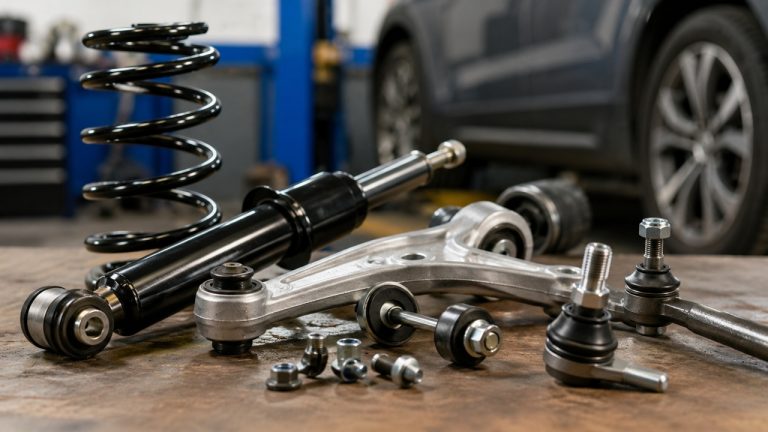
The tie rod is part of the steering linkage and transfers steering-rack movement to the wheel. A ball joint connects a control arm to the steering knuckle while allowing steering and suspension movement.
If the shop actually diagnosed a ball joint rather than a tie rod, use our ball joint replacement cost guide instead of applying tie rod pricing to that repair.
OEM vs. Aftermarket Tie Rods
Tie rods are available at very different price and quality levels.
OEM components are designed to match the manufacturer’s original steering system and can cost more. Aftermarket choices range from inexpensive economy parts to premium heavy-duty or greaseable tie rod ends.
Ask the shop for the brand and part number when comparing estimates. Two quotes can use the same labor time while installing components with very different prices, warranties, and construction.
How to Compare Two Tie Rod Replacement Quotes
- Confirm inner or outer. Do not compare an outer tie rod end quote with an inner tie rod repair.
- Check the side and quantity. Determine whether the estimate covers one component, both sides, or inner and outer tie rods together.
- Get the brand and part number. Compare OEM, premium aftermarket, and economy components fairly.
- Review the labor. Inner tie rods and heavily corroded steering components normally require more work.
- Check hardware. Seized adjusters, jam nuts, boots, and sleeves can add parts and labor.
- Check the alignment. Determine whether the quoted price includes the post-repair alignment.
- Review additional steering repairs separately. Ball joints, control arms, wheel bearings, and other components should have their own diagnosis.
A $400 quote that includes a quality tie rod, labor, new hardware, and alignment may be better value than a $280 quote that excludes alignment and uses a cheaper part.
Symptoms of a Bad Tie Rod
A worn tie rod can create several steering and tire symptoms, but none proves by itself that the tie rod is the cause.
- loose or vague steering
- vehicle wandering or pulling
- steering wheel vibration or shimmy
- clunking during steering movement
- uneven or rapid front tire wear
- a steering wheel that no longer sits centered
- measurable looseness at the tie rod end
Ball joints, wheel bearings, control arm bushings, tires, alignment problems, and other steering components can create similar symptoms.
If the car feels unstable or constantly requires steering correction, our guide to a car that feels loose or wanders while driving covers the wider diagnosis.
If uneven tire wear is the main symptom, see our guide to suspension-related tire wear.
Can You Drive With a Bad Tie Rod?
A tie rod with significant play should not be ignored. The tie rod is a critical part of the steering connection between the steering rack and the wheel.
If a severely worn tie rod end separates, the wheel can turn independently of the steering system and the driver can lose directional control.
Mild wear found during an inspection is different from a joint with severe looseness, but obvious steering play, unstable handling, major clunking, or a technician identifying a tie rod close to separation should be treated as a prompt-repair issue.
Can You Replace a Tie Rod Yourself?
Outer tie rod end replacement can be an intermediate DIY job for someone experienced with steering and suspension work. Inner tie rod replacement is usually more difficult because special tools and access to the steering rack may be required.
The vehicle must be safely lifted and supported, the tie rod end separated from the steering knuckle correctly, and all steering hardware tightened to the manufacturer’s specifications.
Even when the new tie rod is installed in approximately the same position as the old one, a professional wheel alignment is normally required afterward.
If you do not have safe lifting equipment, the correct tie rod tools, or experience working with steering components, professional replacement is usually the safer option. Never work underneath a vehicle supported only by a jack.
Frequently Asked Questions
How much does tie rod replacement cost?
About $250 to $500 per side is a useful planning range for many U.S. vehicles. Simple outer tie rod ends can cost less, while inner tie rods, corrosion, difficult access, and premium parts can cost more.
How much does a tie rod end replacement cost?
An outer tie rod end commonly costs around $150 to $350 installed on a mainstream vehicle. The final total depends on parts quality, labor, corrosion, and whether alignment is included.
Is an inner tie rod more expensive to replace?
Usually, yes. Inner tie rods are less accessible because they connect directly to the steering rack and normally sit beneath the rack boot. Specialized tools may also be required.
Do tie rods need to be replaced in pairs?
Not automatically. The other side should be inspected because both components may have similar mileage, but replacement should generally be based on actual wear or damage.
Do you need an alignment after replacing a tie rod?
Yes, wheel alignment is normally recommended after tie rod replacement because tie rod length directly affects the vehicle’s toe setting.
How long does tie rod replacement take?
An accessible outer tie rod end can often be replaced in about one labor hour, while an inner tie rod or corroded steering system can take considerably longer. Alignment adds additional shop time.
Can bad tie rods cause uneven tire wear?
Yes. Excessive tie rod play can allow toe to change while driving, which can cause rapid or uneven tire wear. Incorrect alignment and other worn suspension components can produce similar patterns.
Make Sure the Quote Identifies Inner or Outer
For many vehicles, approximately $250 to $500 per side is a useful starting budget for tie rod replacement. But the figure becomes useful only after you know exactly which part of the steering linkage is being replaced.
Confirm whether the quote is for an inner tie rod, outer tie rod end, or both; how many sides are being repaired; which parts will be installed; how much labor is included; and whether alignment is part of the final price. Once those details match, comparing tie rod replacement quotes becomes much more meaningful.