Steering Column Replacement Cost: Parts & Labor
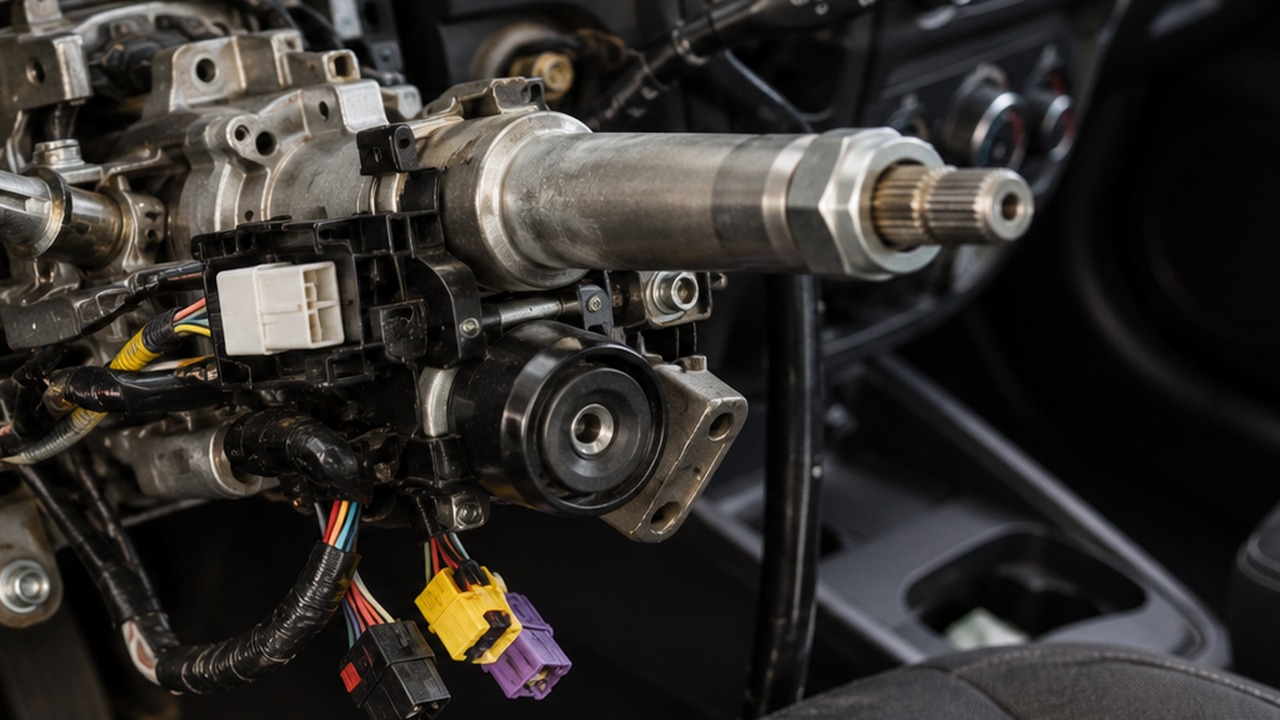
Steering column replacement can cost roughly $500 to $1,500 on many vehicles, while modern columns with electric power steering, motors, sensors or other integrated electronics can reach $1,000 to $2,500 or more. The price varies so widely because “steering column repair” does not always mean replacing the entire assembly.
A clicking tilt mechanism, worn bearing, failed adjustment motor or intermediate steering shaft may require a smaller repair. Before approving a complete column, the important question is exactly which component has failed.
What Is Actually Included in the Steering Column?
The steering column is the structure that connects the steering wheel to the lower steering system. It supports and transmits steering input while also providing a mounting point for several components inside the cabin.
Depending on the vehicle, the column assembly may include or support:
- the main steering shaft and column housing
- tilt and telescoping mechanisms
- column bearings and bushings
- steering locks or ignition-related components
- electric adjustment motors
- torque or position sensors on some systems
- electric power steering assistance on some vehicles
- wiring and connections associated with steering-wheel systems
The steering wheel airbag is also mounted directly in front of the column, which makes safe disassembly more important than on many ordinary mechanical repairs.
Steering Column Replacement Cost by Type
| Repair Situation | Useful U.S. Planning Range |
|---|---|
| Basic or conventional steering column replacement | About $500–$1,200 |
| More complex complete column assembly | About $800–$1,500+ |
| Column with integrated electric assist or electronics | About $1,000–$2,500+ possible |
| Individual column component repair | Can cost substantially less than complete replacement |
| Programming or steering-angle calibration | Vehicle dependent |
| Wheel alignment | Normally not required for column-only replacement |
These ranges are better used for planning than as fixed prices. A simple mechanical column in an older vehicle and a modern electronically assisted column can share the same name while being completely different parts.
Steering Column Repair vs. Complete Replacement
The keyword “steering column repair cost” covers several different outcomes, and this is where unnecessary replacement can become expensive.
The whole column may not need replacement if the fault is isolated to a serviceable component such as:
- a bearing or bushing
- a tilt or telescoping mechanism
- an adjustment motor
- a coupler or joint
- an ignition or locking component
- an intermediate steering shaft below the column
Whether those components are separately serviceable depends on the vehicle. Some manufacturers sell individual parts, while others package several components into a larger steering-column assembly.
Complete replacement becomes more likely when the column structure itself is damaged, internal play cannot be corrected separately, a collapsible section has been compromised or an integrated electronic assembly has failed in a way that is not practically serviceable.
Steering Column vs. Rack and Pinion
The steering column and steering rack are connected, but they are not the same component.
The column begins at the steering wheel and transfers the driver’s rotation toward the steering gear. The rack and pinion sits much lower in the vehicle and converts that rotation into the lateral movement that turns the front wheels.
If the fault is in the steering gear rather than inside the cabin-side column assembly, see our rack and pinion replacement cost guide.
This distinction matters because both failures can produce steering play, binding or unusual noises, yet the repair procedure and cost are completely different.
The Intermediate Steering Shaft Is Not the Complete Column
Another common source of confusion is the intermediate steering shaft.
This shaft and its universal joints connect the lower portion of the steering column to the steering gear. Wear there can create clunks, looseness, binding or a rough sensation through the steering wheel.
Replacing an intermediate steering shaft is generally a smaller job than replacing the complete steering column, so a diagnosis of “steering shaft play” should not automatically become a quote for an entire column assembly.
Why Modern Steering Columns Can Be So Expensive
Older steering columns were primarily mechanical structures. Modern versions can be much more complicated.
Depending on the vehicle, the assembly may contain powered tilt and telescoping adjustment, torque sensing, steering-position sensing, memory functions or even the electric motor that provides steering assistance.
That changes both parts cost and labor. A basic mechanical column might be available as an inexpensive replacement assembly, while an OEM electrically assisted column can cost well over $1,000 before installation.
Electric Power Steering Can Change the Entire Repair
Not every electric power steering vehicle places the assist motor in the same location.
Some systems provide electric assistance at the steering rack. Others use a motor mounted on or integrated with the steering column.
On a column-assisted EPS design, a fault in the motor, torque sensor or control electronics can make the steering column assembly much more expensive than a conventional mechanical unit.
Some vehicles may also require diagnostic initialization, steering-angle calibration or other manufacturer-specific procedures after the repair.
A Failed Adjustment Motor Does Not Always Mean a Bad Column
Power tilt and telescoping steering wheels often use electric motors to move the column.
If the steering wheel no longer moves when the adjustment switch is pressed, the problem could be the motor, switch, wiring, control module or mechanical adjustment system rather than the structural steering column.
That diagnosis matters because an adjustment motor alone can already be a several-hundred-dollar repair, while replacing an entire electronically equipped column can cost considerably more.
Symptoms of a Bad Steering Column
Possible steering column problems include:
- excessive play felt directly at the steering wheel
- clunking or knocking inside the column area
- binding or stiffness while turning
- rough or notchy steering-wheel movement
- tilt or telescope adjustment that will not lock correctly
- a steering wheel that moves vertically or laterally when it should not
- electric steering warnings on column-assisted EPS vehicles
- problems following collision damage around the steering column
These symptoms still do not prove that the complete column has failed. Loose steering can originate in several other steering and suspension components, which we cover in our guide to a car that feels loose or wanders while driving.
Why Clunking Can Be Difficult to Diagnose
A clunk felt through the steering wheel may come from the column, but the sound can travel through connected steering components.
Possible sources include a column bearing, intermediate shaft joint, steering rack mounting point, tie rod or another suspension component.
A technician may isolate the steering column from the lower steering system during diagnosis to determine whether the binding or play is inside the column or farther downstream.
What Collision Damage Can Do to a Steering Column
Modern steering columns are designed with collapsible sections as part of the vehicle’s crash-safety system.
After a significant frontal collision, the column may be compressed, distorted or otherwise damaged even if it does not look obviously broken from the driver’s seat.
A column that has collapsed or suffered structural crash damage should not simply be stretched, straightened or reused without following the vehicle manufacturer’s repair requirements.
Why Labor Is More Than Just Removing a Few Bolts
The column itself sits inside the passenger compartment, but replacing it can involve much more than unbolting the assembly from the dashboard.
Depending on the vehicle, the technician may need to:
- disable the supplemental restraint system safely
- remove the steering-wheel airbag
- remove the steering wheel and trim panels
- disconnect column wiring and switches
- disconnect the lower steering shaft
- support and remove the column assembly
- transfer reusable components if required
- install and correctly center the replacement column
- reconnect the steering shaft and electrical systems
- perform any necessary programming or calibration
That combination of mechanical, electrical and airbag-related work explains why labor can remain significant even when the replacement column itself is relatively inexpensive.
Does the Steering Wheel Have to Come Off?
For many complete steering-column replacements, yes.
The steering wheel commonly has to be removed to access the column assembly and transfer necessary components. That normally means handling the driver’s airbag and steering-wheel electrical connections.
Those connections can include horn circuits, steering-wheel controls and other systems depending on the vehicle.
What About the Clock Spring?
The clock spring allows electrical circuits to maintain contact while the steering wheel rotates.
A failed clock spring can cause airbag warnings, horn problems or steering-wheel controls that stop working, but it does not automatically mean the steering column itself has failed.
During column replacement, the clock spring may need to be transferred, centered correctly or replaced if damaged. The exact procedure is vehicle specific.
Does Steering Column Replacement Require a Wheel Alignment?
A conventional steering column replacement does not normally change the wheel-alignment angles by itself.
Toe, camber and caster are established by components farther down in the steering and suspension system. Replacing the column inside the cabin generally does not alter those adjustments.
However, steering-wheel centering and electronic steering-angle calibration are separate issues. A modern vehicle may need a steering-angle sensor reset or calibration even though a mechanical wheel alignment is not required.
If other steering or suspension components were replaced at the same time, our alignment after suspension repair guide explains when an alignment becomes appropriate.
Steering Angle Calibration Is Not the Same as Alignment
This distinction is particularly important on newer vehicles.
A wheel alignment physically adjusts the direction and angles of the wheels. Steering-angle calibration tells electronic systems what the vehicle considers the straight-ahead steering position.
Depending on the vehicle, that information may be used by stability control, electric power steering and driver-assistance systems.
A repair estimate can therefore include calibration without necessarily including a conventional four-wheel alignment.
New, Used or Remanufactured Steering Column?
Parts availability can dramatically change the final bill.
A new OEM column gives the clearest specification match but can be expensive, especially when motors or electronics are integrated into the assembly.
Used columns can cost substantially less but come with unknown wear, and electronically equipped versions may introduce compatibility, coding or part-number concerns.
Remanufactured steering columns exist for some applications, particularly where common internal wear items can be rebuilt reliably.
When comparing quotes, ask whether the quoted part is new OEM, new aftermarket, remanufactured or used rather than comparing price alone.
Can You Drive With a Bad Steering Column?
A steering column is part of the mechanical path between the steering wheel and the road wheels, so significant structural play, binding or failure should be treated seriously.
Not every column-related fault has the same urgency. A failed power tilt motor that leaves the wheel securely locked in one position is different from a loose joint, binding shaft or column that no longer remains structurally secure.
If the steering wheel has abnormal free movement, steering binds unpredictably, the column shifts physically or the problem followed collision damage, the vehicle should be inspected before normal driving continues.
How Long Does Steering Column Replacement Take?
A complete steering column replacement commonly requires several labor hours.
The actual time depends on dashboard access, airbag removal, steering-wheel equipment, wiring, column design and whether electronic calibration is necessary afterward.
Transferring switches, trim or other components from the old column can also add time even when the main column assembly is straightforward to remove.
Can You Replace a Steering Column Yourself?
This is generally an advanced repair.
Unlike many suspension jobs, steering-column work takes place directly around the driver’s airbag and supplemental restraint system. Improper procedures can create a deployment hazard or damage expensive safety components.
The column and steering shaft also have to remain correctly indexed so the steering wheel and steering gear are centered relative to each other.
Vehicles with EPS, steering-angle sensors or other electronic systems may additionally require a scan tool and manufacturer-specific calibration procedures after installation.
Why One Steering Column Quote Can Be Twice Another
Before assuming the more expensive estimate is excessive, check whether the shops are quoting the same repair.
- complete column vs. individual component repair
- new OEM vs. used or remanufactured assembly
- mechanical column vs. column-assisted electric power steering
- tilt/telescoping motors included or transferred
- new sensors or electronics
- airbag and steering-wheel disassembly time
- programming or calibration
- additional intermediate shaft or coupler repairs
Questions to Ask Before Replacing the Complete Column
- What exactly has failed inside the steering column?
- Can the failed bearing, motor, coupler or other component be serviced separately?
- Has the intermediate steering shaft been ruled out?
- Has the steering rack been ruled out?
- Is the replacement column new, remanufactured or used?
- Does the assembly include EPS motors, sensors or adjustment motors?
- Will programming or steering-angle calibration be required?
- What warranty applies to the part and labor?
Frequently Asked Questions
How much does steering column replacement cost?
A complete steering column replacement can cost roughly $500 to $1,500 on many vehicles. Modern assemblies with integrated electric power steering, motors or electronics can reach $1,000 to $2,500 or more.
How much does steering column repair cost?
It depends on what has failed. Repairing an individual bearing, adjustment motor, coupler or other serviceable component can cost substantially less than replacing the complete column. The diagnosis should identify the specific failed part first.
Is a steering shaft the same as a steering column?
No. The intermediate steering shaft connects the lower portion of the column to the steering gear. It can often be replaced separately and is generally a smaller repair than complete steering column replacement.
Is the steering column the same as the rack and pinion?
No. The column carries steering-wheel rotation down from the driver. The rack and pinion is the steering gear that turns that rotation into side-to-side movement at the front wheels.
Does steering column replacement require an alignment?
Normally not when only the column is replaced. However, some vehicles require steering-angle sensor calibration or electronic initialization, which is different from mechanically aligning the wheels.
Can a bad steering column cause clunking?
Yes. Internal play, worn bearings or joints can cause clunking felt through the steering wheel. An intermediate shaft, rack mount, tie rod or suspension component can produce similar symptoms, so the source should be isolated before replacing the column.
Can a steering column be repaired instead of replaced?
Sometimes. Whether repair is practical depends on the failed component and whether the manufacturer or aftermarket supplies it separately. Structural damage, crash damage or certain integrated electronic failures may require complete replacement.
Does electric power steering mean the whole column must be replaced?
Not necessarily. Electric steering systems vary by vehicle. The failure may involve a motor, sensor, module, wiring, column assembly or the steering rack, so proper diagnosis is essential before replacing a complete EPS-equipped column.
Find the Failed Part Before Buying the Whole Column
The biggest mistake with steering column repair is treating every click, clunk or steering fault as proof that the entire assembly needs replacement. A smaller bearing, joint, motor, coupler or intermediate shaft can create symptoms in the same area for much less money.
When the complete column really is damaged, compare exactly what each replacement assembly includes and whether programming or calibration is part of the estimate. With modern steering systems, those details matter far more than the words “steering column” on the invoice.