Lower Control Arm Replacement Cost: Parts & Labor
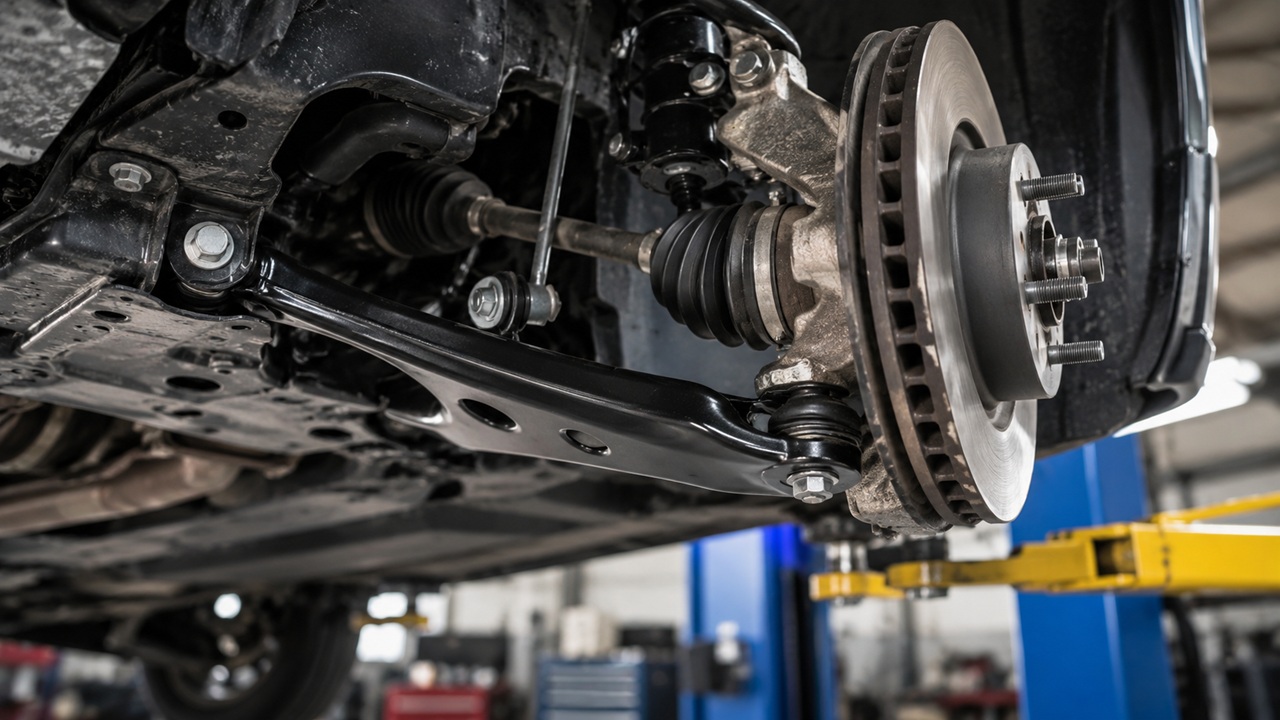
Lower control arm replacement typically costs about $300 to $900 per side on a mainstream vehicle in the United States. Replacing both sides can commonly run about $600 to $1,500 or more, depending on the vehicle, parts used, labor time, corrosion, and whether a wheel alignment is included.
The biggest pricing difference comes from what the replacement arm actually includes. Some lower control arms are sold as complete assemblies with new bushings and a ball joint already installed, while others require some of those components to be transferred or replaced separately.
Lower Control Arm Replacement Cost at a Glance
| Job | Useful U.S. Planning Range | What to Confirm |
|---|---|---|
| One lower control arm | About $300–$900+ | Parts included and labor time |
| Both lower control arms | About $600–$1,500+ | Whether both sides actually need replacement |
| Mainstream car or crossover | Often about $300–$700 per side | Aftermarket vs. OEM parts |
| Truck, SUV or premium vehicle | Often about $500–$1,200+ per side | Arm design, material and access |
| Wheel alignment | Often about $90–$200 | Whether it is included in the quote |
These numbers are planning ranges, not fixed prices. A simple stamped-steel arm on an economy car can be relatively inexpensive, while a forged aluminum arm with an integrated ball joint on a truck, SUV, or luxury vehicle can push the bill well above the average.
What Is a Lower Control Arm?
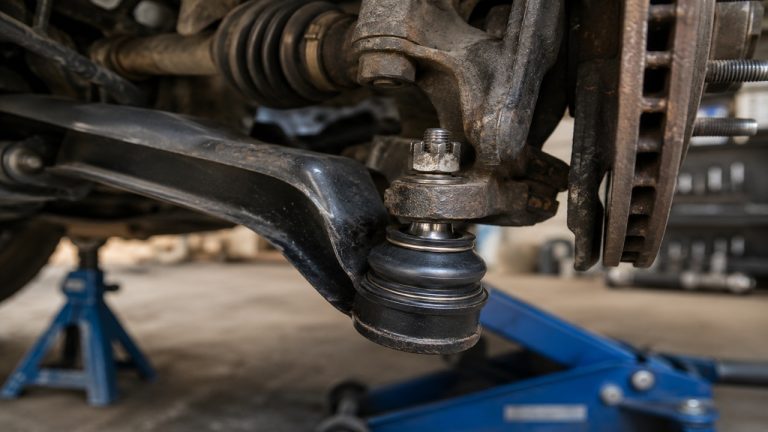
The lower control arm connects the lower part of the wheel or steering-knuckle assembly to the vehicle’s frame or subframe. It allows the suspension to move while helping maintain the wheel’s position relative to the vehicle.
The arm normally pivots on rubber or hydraulic bushings at the chassis end and connects to the steering knuckle through a ball joint on many front suspension designs.
This page focuses specifically on lower control arms. If your estimate simply says “control arm” without identifying its position, start with our broader control arm replacement cost guide.
Parts vs. Labor Cost
A typical lower control arm job can be divided into the arm itself, installation labor, possible additional hardware, and alignment.
| Cost Item | Typical Effect on the Bill |
|---|---|
| Lower control arm | Often about $80–$400+, with premium and OEM parts costing more |
| Labor | Often about $150–$400+ per side depending on access and corrosion |
| Ball joint | May already be included in the complete arm assembly |
| Bushings | Often preinstalled in a complete replacement arm |
| Hardware | Seized, damaged or single-use fasteners can increase cost |
| Alignment | Frequently added after the repair if not already included |
Labor is where seemingly similar jobs can become very different. One lower arm may be accessible after removing only a few fasteners, while another can involve seized bolts, restricted access, subframe interference, or other components that must be moved first.
How Much Does One Lower Control Arm Cost to Replace?
For one side, roughly $300 to $900 is a useful starting range for many vehicles. Mainstream cars with inexpensive aftermarket assemblies can land toward the lower end, while trucks, premium vehicles, aluminum suspension components, and OEM parts can raise the total substantially.
Do not compare a $350 online estimate with a $750 shop quote until you know whether both figures include the same things. The more expensive estimate may include a complete arm assembly, ball joint, bushings, new hardware, labor, and alignment.
How Much Does It Cost to Replace Both Lower Control Arms?
Replacing both lower control arms can commonly cost around $600 to $1,500 or more. The total is not always exactly twice the one-side price because some inspection, setup, and alignment costs overlap.
However, replacing both sides should not be automatic. Lower control arms are not like shock absorbers, where matching damping across an axle is an important reason to replace a pair.
If one arm is bent from an impact and the opposite arm remains in good condition, replacing only the damaged side may be appropriate. If both sides have similarly deteriorated bushings or ball joints, replacing both during the same visit can be reasonable.
Does a Lower Control Arm Include the Ball Joint?
Many replacement lower control arm assemblies include a new ball joint, but not all of them do. The answer depends on the suspension design and the replacement part selected. If the diagnosis specifically calls for the joint rather than the complete arm, see our lower ball joint replacement cost guide.
This matters because a quote using a complete arm with an integrated ball joint may look more expensive than a quote for the arm alone. In reality, the first estimate may include an additional component that would otherwise require separate parts and labor.
Ask for the exact part number and check whether the ball joint is included before comparing prices between shops.
What About the Lower Control Arm Bushings?
Lower control arm bushings are another important pricing variable. Complete replacement arms commonly arrive with new bushings already installed, making the entire arm a bolt-in assembly.
On some vehicles, however, the bushings can be serviced separately. That can reduce the parts cost but may require pressing the old bushings out and installing new ones, which increases labor. If the diagnosis is specifically for the bushings rather than the complete arm, see our lower control arm bushing replacement cost guide.
For that reason, replacing only the bushings is not automatically cheaper than installing a complete control arm. The correct comparison is total installed cost, not simply the price of the individual part.
This article does not use lower control arm bushing replacement as its primary repair scope; bushing-only service should be evaluated separately when that is what the diagnosis specifically calls for.
Do You Need an Alignment After Lower Control Arm Replacement?
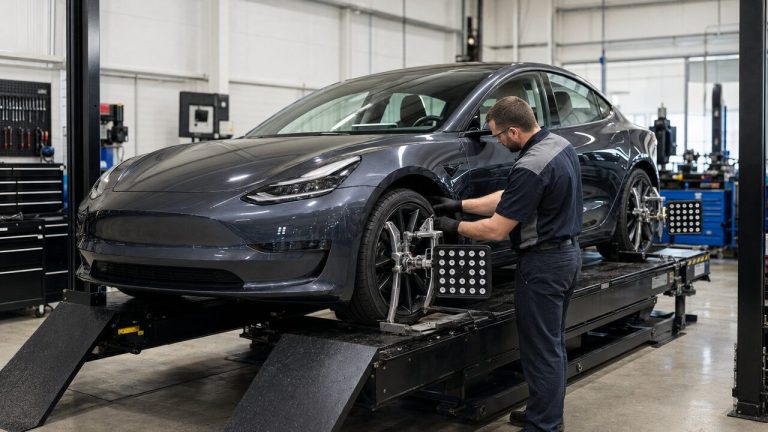
A wheel alignment is commonly recommended after lower control arm replacement and may be required depending on the suspension design and which mounting points were disturbed.
The lower control arm helps locate the wheel, and some vehicles use eccentric bolts or other adjustment points at or near the control arm mounts. Replacing the arm can therefore change camber, caster, toe, or the relationship between those settings.
Ask whether the alignment is already included in the estimate. Our guide to alignment after suspension replacement explains why the answer depends on the component and vehicle design.
Front Lower Control Arm Replacement Cost
When people search for lower control arm replacement, they are often referring to the front suspension. Many passenger cars use one lower control arm on each front corner, particularly with MacPherson-strut-style suspension systems.
For a mainstream car or crossover, front lower control arm replacement often falls around $300 to $700 per side. Trucks, SUVs, luxury vehicles, and complex suspension designs can easily exceed that range.
The actual price depends much more on the specific vehicle and assembly than on the word “front.” A simple steel arm and an aluminum arm containing expensive integrated components are fundamentally different parts.
Rear Lower Control Arm Replacement Cost
Rear suspension designs vary much more widely. Some independent rear suspensions use multiple arms or links, and manufacturers do not always use identical terminology for each component.
A rear lower control arm can therefore cost anywhere from a few hundred dollars to well above $1,000 depending on the vehicle, part design, labor access, and alignment procedure.
Before using a generic lower-control-arm price for a rear suspension repair, confirm the exact component name and part number listed on the estimate.
Why Trucks and SUVs Can Cost More
Lower control arms on pickups and SUVs can be physically larger, heavier, and more expensive than those used on small passenger cars. Some also use large bushings, integrated ball joints, forged or cast construction, or suspension geometry designed for higher loads.
Additional factors such as four-wheel drive hardware, underbody protection, larger fasteners, corrosion, and limited access can increase labor time.
This is why a $400 lower control arm repair on a compact car and a $1,000 repair on a truck can both be reasonable even though the basic component has the same name.
OEM vs. Aftermarket Lower Control Arms
Parts choice can change the invoice by several hundred dollars.
OEM lower control arms are supplied to meet the vehicle manufacturer’s original specification and are often the most expensive option. Aftermarket parts range from inexpensive economy assemblies to premium replacements designed to match or improve on the original component.
Do not compare quotes without knowing the brand and part number. A very cheap aftermarket arm and an OEM assembly are not equivalent simply because both fit the same vehicle.
Also compare what each assembly includes. Bushings, ball joints, brackets, and hardware can make a higher-priced complete arm better value than a cheaper bare component.
Why a Lower Control Arm Quote Can Exceed $1,000
A four-figure estimate for one side deserves scrutiny, but it is not automatically excessive. Several legitimate factors can push the price above typical mainstream ranges:
- expensive OEM or aluminum control arm assemblies
- integrated ball joints and bushings
- truck, SUV, luxury, or performance applications
- seized or heavily corroded mounting bolts
- subframe or surrounding-component interference
- additional damaged hardware
- higher dealership labor rates
- wheel alignment after installation
If the estimate also contains several other suspension components, use our car suspension repair cost guide to evaluate the broader repair instead of judging the entire bill from the lower control arm price alone.
Should You Replace the Whole Arm or Only the Failed Part?
This depends on what actually failed and how the vehicle is designed.
If the metal arm is bent, cracked, badly corroded, or otherwise damaged, replacing the complete assembly is the straightforward repair. A complete arm can also make sense when both its bushings and ball joint are worn.
If only one replaceable bushing or ball joint has failed and the rest of the arm is in good condition, servicing that individual component may be possible. Whether it saves money depends on parts availability, required tools, and labor time.
A good estimate should explain exactly what is worn and why the shop recommends a complete lower control arm rather than an individual serviceable component.
How to Compare Two Lower Control Arm Quotes
- Confirm the exact arm. Check front or rear, left or right, and verify that the estimate specifically identifies a lower control arm.
- Check whether the price is for one side or both. This is one of the biggest reasons online prices appear inconsistent.
- Ask whether the ball joint is included. Some complete assemblies contain it and some do not.
- Check the bushings. Determine whether they are preinstalled in the replacement arm or charged separately.
- Get the brand and part number. This allows a real comparison between OEM, premium aftermarket, and economy parts.
- Review the labor scope. Rust, seized fasteners, subframe interference, or additional disassembly can legitimately increase labor.
- Check alignment. Find out whether it is required for the vehicle and whether the quoted total includes it.
A $650 quote can be better value than a $500 quote if the higher figure includes a complete quality assembly, necessary hardware, labor, and alignment while the cheaper estimate does not.
Symptoms of a Bad Lower Control Arm
A lower control arm is normally replaced because the arm itself is damaged or because attached bushings or joints have deteriorated enough to affect wheel control.
- clunking or knocking over bumps
- steering that feels loose or inconsistent
- vehicle wandering or pulling
- uneven or rapid tire wear
- visible cracked or separated control-arm bushings
- excessive movement at the ball joint
- a visibly bent or damaged control arm after an impact
These symptoms are not unique to a lower control arm. Tie rods, ball joints, wheel bearings, tires, alignment problems, and other suspension components can produce similar behavior.
If the main complaint is that the vehicle feels unstable or difficult to keep straight, our guide to a car that feels loose or wanders while driving covers the wider diagnosis.
Can You Drive With a Bad Lower Control Arm?
It depends on what has failed and how severe the damage is. Mild bushing wear is very different from a bent arm, a severely loose ball joint, or a mounting point that can no longer control the wheel correctly.
Because the lower control arm helps locate the wheel, severe failure can affect steering, braking stability, alignment, and tire contact with the road. A vehicle with obvious wheel movement, severe clunking, unstable steering, or structural damage should be inspected promptly rather than driven until the problem becomes worse.
Can You Replace a Lower Control Arm Yourself?
Lower control arm replacement can be an intermediate-to-advanced DIY repair depending on the vehicle.
The vehicle must be safely raised and supported, the ball joint separated correctly, suspension hardware removed without damaging surrounding components, and all critical fasteners tightened to the manufacturer’s specifications.
Some suspension bushings must also be tightened with the suspension positioned at normal ride height. Tightening a bonded rubber bushing while the suspension hangs at full droop can preload the rubber and shorten its service life.
Rust, seized bolts, inaccessible mounting points, and the need for a wheel alignment can make professional replacement the more practical option. Never work underneath a vehicle supported only by a jack.
Frequently Asked Questions
How much does it cost to replace a lower control arm?
About $300 to $900 per side is a useful planning range for many U.S. vehicles. Economy cars can cost less, while trucks, SUVs, luxury vehicles, OEM parts, corrosion, and difficult labor can push the price above $1,000.
How much does it cost to replace both lower control arms?
Replacing both sides commonly costs roughly $600 to $1,500 or more. The total is not necessarily exactly double the one-side price because some labor and alignment expenses can overlap.
Should lower control arms be replaced in pairs?
Not automatically. The opposite side should be inspected, especially if both arms have similar mileage, but a good lower control arm generally does not need replacement solely because the other side has failed.
Does lower control arm replacement include the ball joint?
Many complete lower control arm assemblies include a new ball joint, but others do not. Check the exact part number and repair estimate before comparing prices.
Does lower control arm replacement include bushings?
Complete replacement arms commonly include new bushings already installed. Some designs allow the bushings to be replaced separately, so confirm exactly what the quoted assembly contains.
Do you need an alignment after replacing a lower control arm?
Alignment is commonly recommended after lower control arm replacement and may be required depending on the suspension design and mounting points disturbed during the repair. Check whether alignment is included in the quote.
How long does lower control arm replacement take?
Many straightforward jobs require roughly 1.5 to 3.5 labor hours per side, but seized hardware, corrosion, limited access, or surrounding components can increase the time significantly.
Compare What Is Included Before Comparing the Price
For most drivers, roughly $300 to $900 per side is a useful starting budget for lower control arm replacement. But a national average becomes useful only after you know the exact repair scope.
Confirm whether the estimate covers one side or both, whether the replacement arm includes bushings and a ball joint, which brand of part will be installed, how much labor is included, and whether alignment is part of the final price. Once those details match, you can make a meaningful comparison between lower control arm replacement quotes.