What Is Steering Axis Inclination (SAI)? Effects & Diagnosis
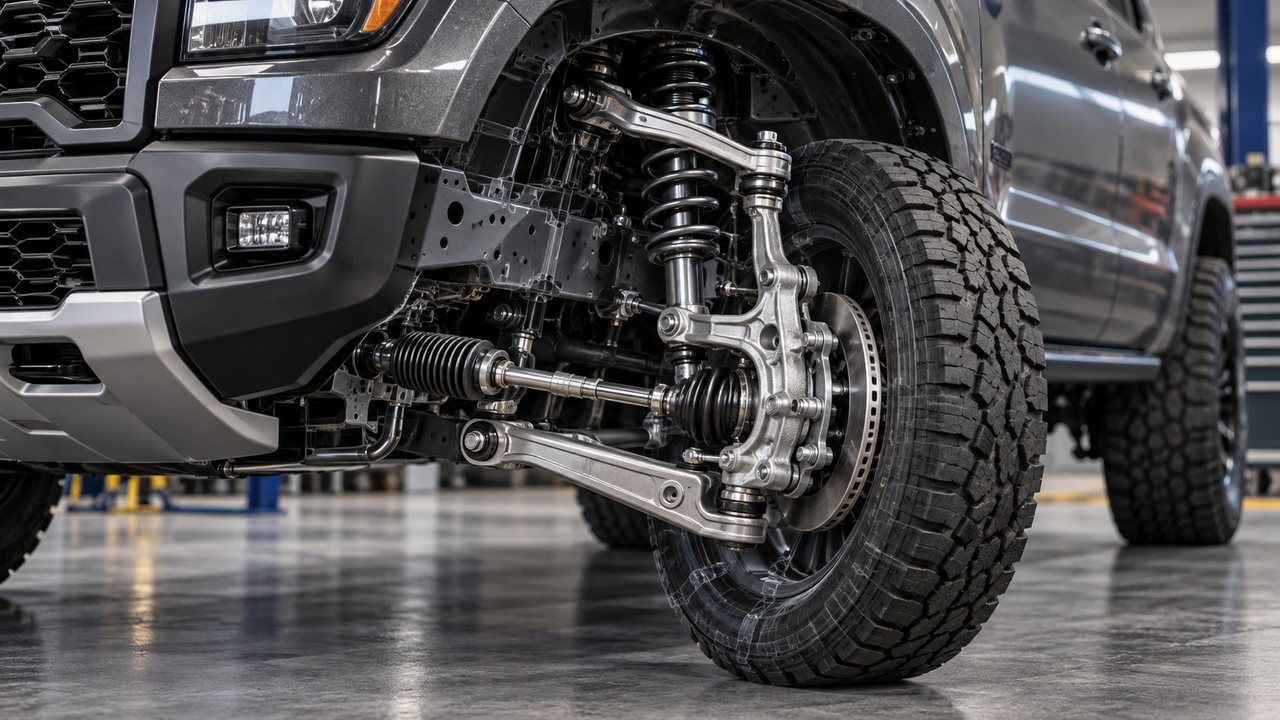
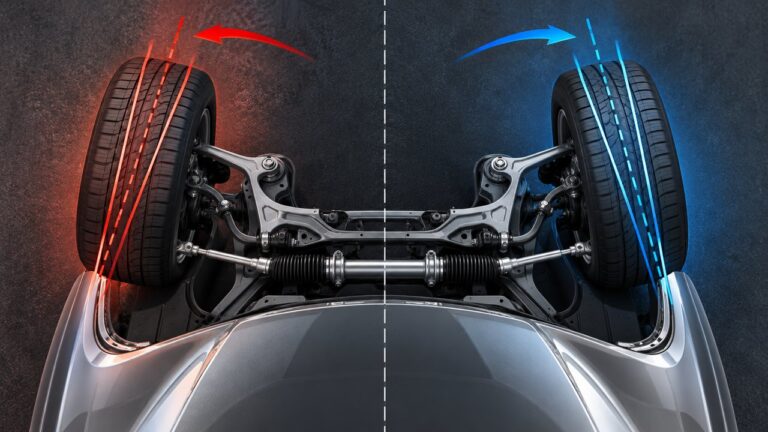
Steering axis inclination (SAI) is the inward tilt of a vehicle’s steering axis when viewed from the front. It is measured in degrees between that imaginary steering-pivot line and true vertical. Also known as kingpin inclination (KPI), SAI influences steering effort, return-to-center behavior and the relationship between the steering axis and the tire contact patch.
Here’s why it matters: SAI is not directly adjustable on most vehicles. If an alignment report shows an unusual steering axis inclination angle, the reading may help uncover a bent control arm, damaged steering knuckle, displaced strut mount or another suspension geometry problem.
One of the most useful diagnostic measurements is the included angle, which combines SAI with the wheel’s camber angle. Comparing those measurements across the front axle can help a technician narrow down what’s wrong without guessing which part needs replacing.
What Does Steering Axis Inclination Actually Measure?
Imagine standing directly in front of a car and looking at its left-front suspension with the wheel removed.
The steering knuckle doesn’t simply rotate around a perfectly vertical line. It turns around an imaginary axis passing through its steering pivots.
In a typical front suspension, the upper end of that axis is positioned farther inboard than the lower end. Connect those points, then compare the resulting line with vertical. The angle between them is the steering axis inclination.
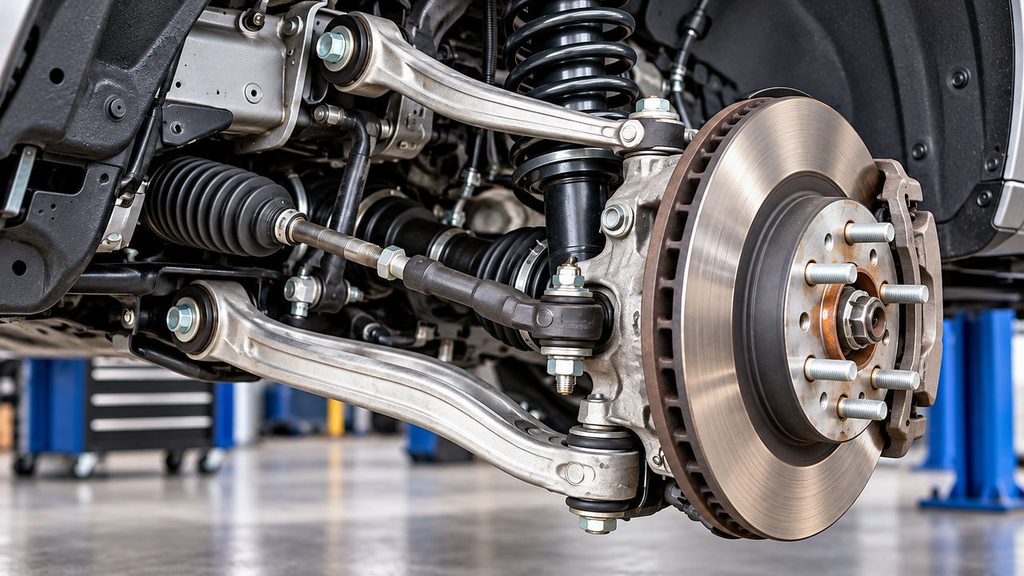
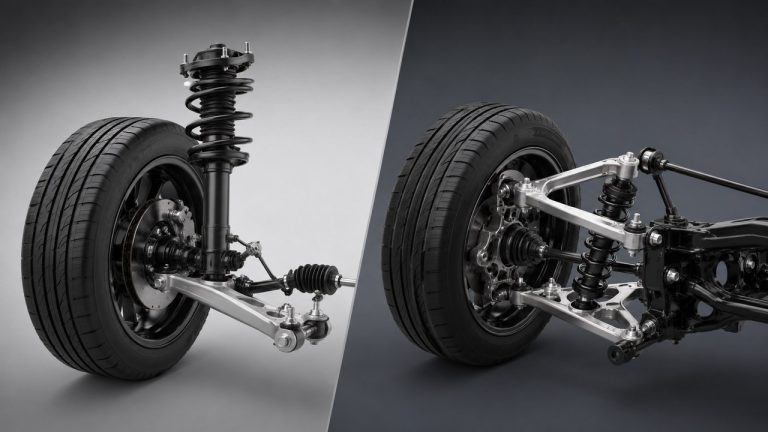
On modern vehicles, the steering axis is usually established by one of two arrangements:
- MacPherson strut: the steering axis generally runs through the upper strut bearing or mount and the lower ball joint.
- Double-wishbone / SLA suspension: the steering axis generally passes through the upper and lower ball-joint centers.
The steering axis is not the same as the centerline of the wheel or the visible slope of the tire. A car can have nearly vertical wheels while its steering axes lean noticeably inward.
SAI is normally expressed as a positive inward inclination. The correct value depends on the suspension design, so a number that is normal for one car should never be treated as the universal target for another.
Is Steering Axis Inclination the Same as Kingpin Inclination?
In normal wheel-alignment terminology, yes. Kingpin inclination (KPI) and steering axis inclination (SAI) describe the same basic front-view steering-axis angle.
The name comes from older steering systems that used a physical kingpin as the pivot around which the wheel assembly turned.
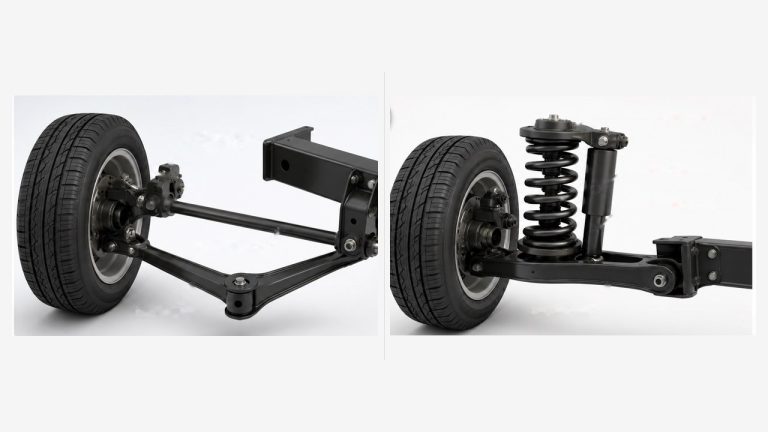
Most passenger cars no longer have that traditional kingpin arrangement. Modern steering knuckles typically pivot through ball joints or strut bearings instead.
That’s why SAI is the more descriptive modern term. You’ll still encounter KPI in engineering textbooks, suspension diagrams, racing discussions and automotive training materials.
If one alignment reference says “KPI” and another says “SAI,” don’t assume they represent different adjustments. Check the definitions and measurement conventions, but in ordinary vehicle alignment they refer to the same steering-axis inclination viewed from the front.
Why Does a Car Need Steering Axis Inclination?
SAI is built into the suspension for several reasons. Its effects are easy to overlook because you don’t normally adjust it during routine service.
Steering Return-to-Center
When the front wheels turn around inclined steering axes, the suspension geometry can produce a small lifting or jacking effect.
Turning the steering wheel changes the relationship between the steering pivots, tire contact patches and vehicle weight. Depending on the geometry, the front of the vehicle may rise slightly as the wheels steer away from center.
Vehicle weight then contributes a restoring tendency that encourages the wheels to return toward their straight-ahead position.
It’s only one part of the story. Caster, mechanical trail, tire self-aligning torque and steering-system friction also influence how readily the wheel returns after a corner.
Steering Effort and Feel
The location and inclination of the steering axis affect how the wheel assembly moves when you turn the steering wheel.
That geometry influences the forces the steering system must overcome. The driver may experience these forces as steering weight, feedback or a change in how naturally the vehicle tracks through a turn.
Power steering assistance can hide much of the effort, but it doesn’t remove the underlying suspension geometry.
Wheel Position and Scrub Radius
Extend the steering axis downward until it reaches the road. Its intersection with the ground is one of the reference points used to determine scrub radius.
The other point is the lateral center of the tire contact patch. The distance between them influences how road forces act around the steering axis.
SAI is one of the design parameters that determines this relationship. Wheel offset, tire dimensions and suspension hardpoints matter too.
Our guide to positive and negative scrub radius explains the road-level distance and why wheel spacers or different offsets can alter steering behavior.
The important distinction is that changing wheel offset can change scrub radius without changing the physical steering-axis inclination itself.
SAI vs. Caster vs. Camber: Which Angle Are You Looking At?
These measurements are easy to confuse because they all involve wheel or steering geometry, but they aren’t interchangeable.
| Measurement | View | What it describes |
|---|---|---|
| Steering axis inclination (SAI) | Front | Inward tilt of the steering pivot axis |
| Caster | Side | Forward or rearward tilt of that steering axis |
| Camber | Front | Inward or outward tilt of the wheel itself |
| Included angle | Front | Angular relationship combining SAI and camber |
SAI and caster actually describe the same three-dimensional steering axis from different viewpoints.
Viewed from the front, its inward inclination is SAI. Viewed from the side, its fore-aft inclination is caster angle.
Camber is different because it measures the orientation of the wheel, not the steering axis. That distinction becomes especially important when diagnosing damage.
What Is Included Angle in Wheel Alignment?
The included angle (IA) combines steering axis inclination and camber on the same front wheel.
It describes the angular relationship between the steering axis and the wheel’s orientation when viewed from the front.
In the common alignment convention, the formula is:
Included Angle = SAI + Signed Camber
Positive camber is added. Negative camber is subtracted because its value carries a minus sign.
For example, imagine an alignment report showing:
- SAI: +12.0°
- Camber: -1.0°
- Included angle: 12.0° + (-1.0°) = 11.0°
If the same wheel instead had +0.5° camber with an unchanged 12.0° SAI, the included angle would be 12.5°.
The numbers are illustrative, not recommended alignment specifications. Different equipment may display signs or derived measurements differently, so the selected vehicle data and equipment convention always take priority.
Why bother with a combined angle? Because camber alone doesn’t tell you whether an unusual wheel position comes from a normal adjustment, a change in steering-pivot location or a damaged component.
For a detailed explanation of positive and negative wheel tilt, see our camber angle guide.
How to Read SAI and Included Angle on an Alignment Report
Let’s look at the kind of situation where these measurements become genuinely useful.
A car arrives at the workshop after striking a curb. The right-front wheel looks slightly out of position, and the driver says the steering no longer feels quite right.
A normal toe correction might improve how the car drives, but it wouldn’t explain why the steering pivot geometry changed.
The technician checks SAI, camber and included angle on both front wheels.
Example 1: Different SAI, Similar Included Angle
| Measurement | Left front | Right front |
|---|---|---|
| SAI | 12.0° | 14.0° |
| Camber | -1.0° | -3.0° |
| Included angle | 11.0° | 11.0° |
Notice what happened. SAI increased by two degrees on the right, while camber became two degrees more negative. The included angle remained the same.
This pattern suggests that the steering-axis position may have shifted relative to the vehicle while the wheel-to-steering-axis relationship remained approximately unchanged.
Possible areas to inspect include the control-arm pivots, strut mounting point, subframe position and other suspension hardpoints.
It does not prove that a particular control arm is bent. The readings help direct the inspection; they don’t replace it.
Example 2: Similar SAI, Different Included Angle
| Measurement | Left front | Right front |
|---|---|---|
| SAI | 12.0° | 12.0° |
| Camber | -1.0° | +1.0° |
| Included angle | 11.0° | 13.0° |
Here, the steering-axis inclination matches on both sides, but the wheel’s camber angle differs considerably.
The technician would investigate whether the camber difference comes from an adjustment setting, the steering knuckle or spindle, the strut assembly or another part controlling the wheel’s orientation.
On an adjustable suspension, the first question may simply be whether one side has been set incorrectly. On a suspension with no camber adjustment, component condition becomes more significant.
Again, the included angle identifies a geometric relationship worth investigating. It does not automatically tell you which component to order.
What Abnormal SAI Readings Can Tell You
The value of SAI becomes clearer when it is read alongside the other alignment measurements rather than treated as an isolated number.
| Observed pattern | Possible direction for diagnosis |
|---|---|
| SAI differs between sides; included angle similar | Investigate steering-pivot locations, control-arm mounting and subframe position |
| SAI similar; included angle differs | Investigate camber setting, knuckle/spindle and wheel-supporting components |
| SAI and included angle both abnormal | Inspect for multiple geometry changes, bent parts or displaced mounting points |
| Both sides show unexpected readings | Verify vehicle selection, ride height, loading and measurement procedure first |
| SAI normal but vehicle pulls | Check caster, camber, tires, braking and other steering or suspension causes |
These are diagnostic clues, not universal fault codes. Vehicle construction, adjustment provisions and the direction of each angle change affect the interpretation.
TreadPlus’s technical guidance on included angle also emphasizes that patterns across SAI and camber are more useful than treating one unusual reading as proof of a specific damaged part.
What Causes Steering Axis Inclination to Be Wrong?
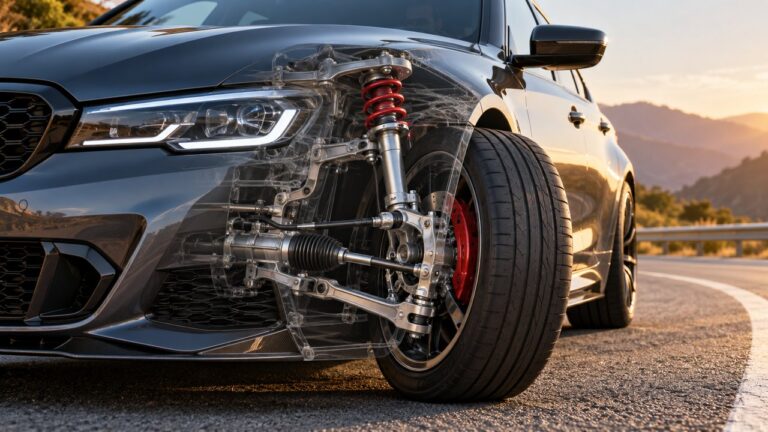
Because SAI depends on the location of the steering pivots, anything that moves those points away from their intended geometry can change the measurement.
A large curb strike, pothole impact or collision is an obvious possibility, but it isn’t the only one.
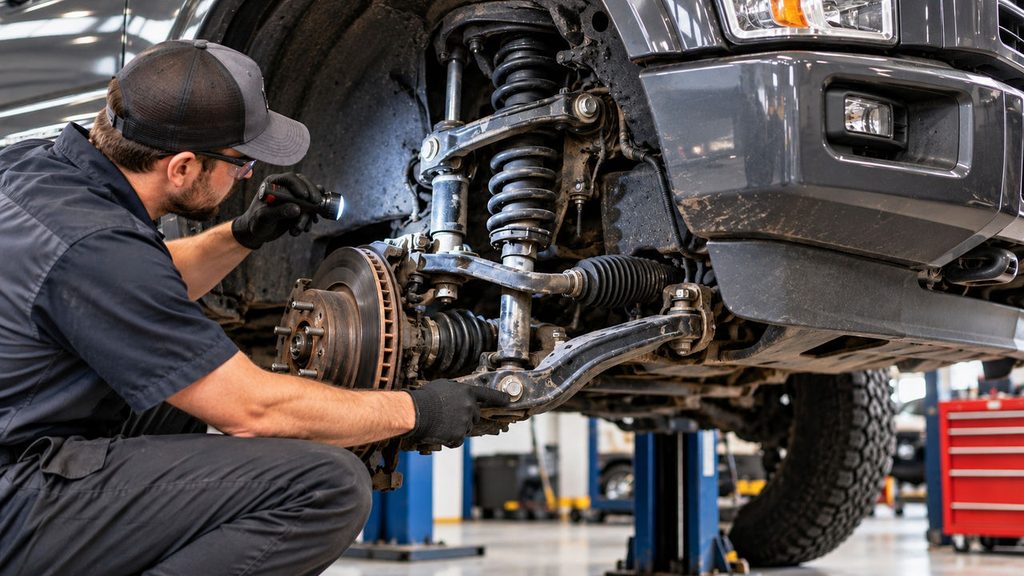
- Bent lower control arm: can move the lower ball joint and alter the steering-axis inclination.
- Damaged upper control arm: can change the upper steering-pivot position on double-wishbone suspension.
- Displaced strut tower or upper mount: can shift the top of the steering axis on MacPherson-strut suspension.
- Shifted subframe: may reposition lower control-arm mounting points relative to the body.
- Worn or damaged ball joints and bushings: can create movement or unreliable measurements.
- Incorrect replacement parts: may position the suspension pivots differently from the intended design.
- Structural collision damage: can move suspension hardpoints even when the wheel alignment can partly be corrected.
A bent steering knuckle or spindle is particularly relevant when included angle or camber also differs from the expected values.
One complication worth remembering: an alignment reading can look wrong because the measuring conditions are wrong. That possibility should be eliminated before condemning expensive suspension or body components.
How Is Steering Axis Inclination Measured?
SAI usually isn’t measured by placing an angle finder against the tire or visually measuring the slope of a strut.
Modern wheel-alignment machines calculate it from changes in wheel orientation as the steering moves through a specified sweep.
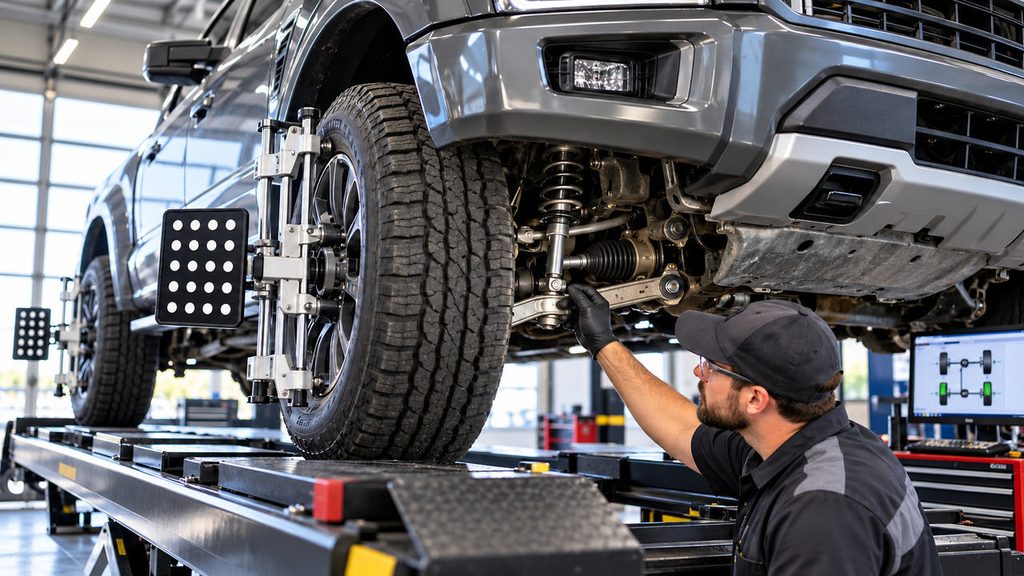
The process is related to measuring caster. The alignment system observes wheel angles at different steering positions and uses those readings to calculate the steering-axis geometry.
For a trustworthy result, several details matter:
- The vehicle must be correctly identified in the alignment equipment.
- Ride height and loading must match the required measurement conditions.
- Tire pressures and suspension condition should be checked beforehand.
- Turn plates must allow the front wheels to move freely.
- Wheel-target runout compensation must be completed correctly.
- The steering sweep must follow the equipment’s required directions and angles.
Even small measurement errors can be significant when comparing left and right diagnostic angles.
Why the Caster Sweep Matters
During a caster sweep, the wheels are steered to specified positions while the alignment equipment observes changes in their orientation.
Those changes contain information about the steering axis in both its front-view and side-view directions.
If a turn plate binds or an alignment target moves, the calculated SAI can become unreliable.
That’s why an unexpected result should normally be confirmed with a fresh measurement before anyone starts replacing steering components.
Can Steering Axis Inclination Be Adjusted?
On most production vehicles, SAI is a nonadjustable alignment angle.
There usually isn’t a dedicated bolt you can turn to increase or decrease SAI the way you might adjust toe or caster on a compatible suspension.
If an unusual SAI reading comes from a bent control arm or displaced mounting point, the repair is generally to restore the affected components to their correct geometry.
That may involve replacing damaged suspension parts, correcting an incorrectly installed component or following a manufacturer-approved subframe positioning procedure.
Some adjustable or modified suspensions can alter steering-pivot positions and therefore affect SAI as a consequence. That doesn’t make it a routine standalone alignment adjustment, and the permitted procedure depends on the specific vehicle.
If a shop tells you that SAI needs correcting, the useful follow-up question is: What is physically causing the measured steering-axis geometry to differ from specification?
Can Incorrect SAI Cause Steering Pull or Uneven Tire Wear?
It can contribute to steering complaints, but SAI isn’t normally the first angle to blame for a specific symptom.
An abnormal steering-axis inclination may be associated with changes in steering returnability, steering effort or the way the car reacts through a corner.
A significant left-to-right difference may also accompany a vehicle that pulls or feels inconsistent. However, a steering pull can come from many other causes, including cross-caster, cross-camber, tire conicity, brake drag and road crown.
As for tire wear, SAI by itself doesn’t produce the same direct tread-scrubbing mechanism as excessive toe.
But the underlying damage that changes SAI may also disturb camber or toe. Those related changes can accelerate uneven tire wear.
If a car has unusual tire wear and an abnormal SAI reading, treat them as potentially related evidence rather than assuming the SAI number alone is wearing out the tire.
Does Changing Wheel Offset, Tire Size or Ride Height Change SAI?
These modifications don’t all affect the same geometry.
Wheel offset and spacers: moving the wheel outward or inward changes the position of the tire relative to the steering axis. It can alter scrub radius substantially without directly changing the steering-pivot inclination.
Larger tires: tire diameter can change where the steering axis intersects the road relative to the tire contact patch. Again, that can affect scrub-radius geometry without necessarily changing the SAI angle itself.
Lowering or lifting the suspension: changing ride height moves the suspension through its operating range. On some independent suspension designs, this changes the positions of the steering pivots and the measured SAI.
The result depends on the control-arm layout, strut geometry and suspension travel. A fixed numerical change in ride height does not produce one universal change in steering axis inclination.
This is why a modified car or truck should be evaluated using its actual suspension design and the correct alignment procedure rather than generic angle targets.
What to Ask When a Shop Finds Abnormal SAI
If an alignment technician reports an SAI problem, the most useful next step is a targeted diagnosis—not immediately approving a list of replacement parts.
Ask to review these findings:
- Left and right SAI: how far apart are the readings, and are they outside any available manufacturer tolerance?
- Camber and included angle: do they suggest a change in wheel orientation or steering-pivot location?
- Caster and setback: is the affected wheel positioned differently fore-and-aft?
- Ride height and suspension condition: were the measurements taken with the vehicle properly prepared?
- Repeat measurement: did the abnormal reading remain after another correctly performed steering sweep?
- Physical inspection: which component or mounting point shows evidence consistent with the measurement pattern?
These questions help distinguish a measured geometry problem from a conclusion based only on one red number on an alignment screen.
If the car has been in a collision, structural measurements may also be necessary. A normal-looking wheel alignment cannot always establish whether all suspension hardpoints have returned to their original positions.
Steering Axis Inclination: Common Questions
Is SAI positive or negative?
On most conventional passenger-car front suspensions, SAI is described as a positive inward tilt of the steering axis when viewed from the front. The actual value depends on the vehicle and the alignment equipment’s reporting convention.
What is a normal steering axis inclination angle?
There is no single correct SAI value for every car. Different suspension designs use different angles. Use the specification for the exact vehicle when available, along with the manufacturer’s permitted side-to-side difference.
Is SAI the same as caster?
No. Both measure the orientation of the steering axis, but SAI is its inward inclination viewed from the front, while caster is its forward or rearward tilt viewed from the side.
Is included angle adjustable?
Not usually as a standalone setting. Included angle is derived from SAI and camber, so it may change when camber is adjusted or when the physical relationship between the wheel and steering axis changes.
Does abnormal SAI always mean a bent steering knuckle?
No. A bent knuckle is one possibility, but a control arm, strut, suspension mounting point, shifted subframe or measurement error may produce an unusual reading. The complete geometry and physical components must be inspected.
Can SAI be measured without an alignment machine?
Specialized manual alignment equipment can measure steering geometry using controlled steering sweeps. A basic angle finder against a stationary wheel isn’t enough to determine SAI accurately.
What an SAI Reading Can—and Can’t—Tell You
Steering axis inclination is one of those measurements that most drivers never think about until an alignment shop finds something unusual.
That’s understandable. Unlike toe, SAI isn’t something you normally adjust to correct tire wear or fine-tune handling.
Its real value is showing how the steering pivots are positioned. When combined with camber and included angle, it can reveal that the geometry no longer matches the vehicle’s intended suspension layout.
The key is to compare the correct measurements, confirm that they’re repeatable and inspect the components indicated by the overall pattern. SAI helps narrow down the problem. It shouldn’t be used as a shortcut to declare a particular component damaged without further evidence.