Shock Absorber Replacement Cost: Parts & Labor
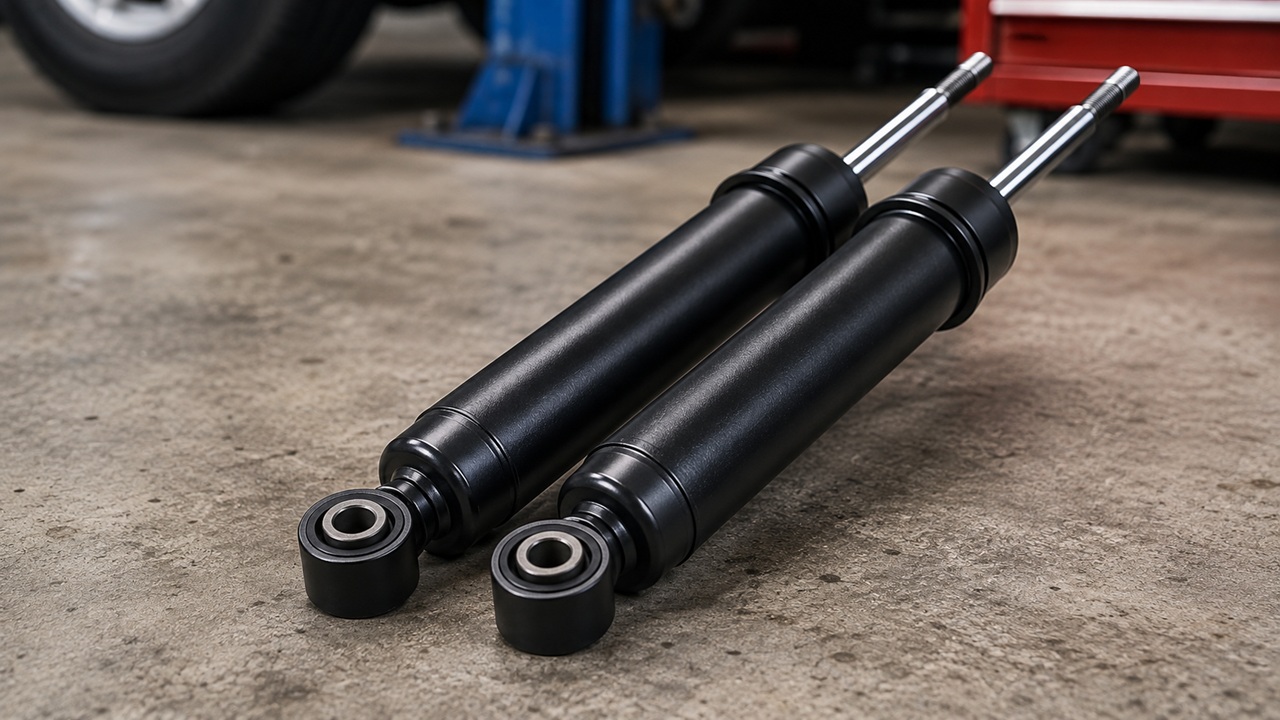
Shock absorber replacement typically costs about $300 to $700 for a pair on a mainstream vehicle in the United States. Many conventional applications land around $400 to $500 per pair, but trucks, heavy-duty shocks, premium parts, difficult access, or additional suspension repairs can push the total higher.
The biggest mistake when comparing shock replacement prices is assuming every quote covers the same thing. One estimate may be for a single shock, another for both shocks on one axle, and another may actually refer to struts rather than standalone shock absorbers.
Shock Absorber Replacement Cost at a Glance
| Job | Useful U.S. Planning Range | What to Confirm |
|---|---|---|
| Single conventional shock | About $150–$400+ | Usually better evaluated as part of an axle pair |
| Pair of rear shocks | About $300–$700+ | Parts quality and labor access |
| Pair of front shocks | About $350–$800+ | Only applies to vehicles using standalone front shocks |
| Four conventional shocks | About $600–$1,400+ | Vehicle must use shocks at all four corners |
These are budgeting ranges rather than fixed prices. The exact cost depends on the vehicle, shock design, parts brand, labor rate, corrosion, and whether related mounts, bushings, or hardware also need attention.
Make Sure Your Vehicle Actually Uses Shocks
Before comparing prices, make sure the component being replaced is actually a standalone shock absorber. Shocks and struts both control suspension movement, but they are not interchangeable terms.
A standalone shock is primarily a damping component. A strut is also a structural part of the suspension assembly and often requires a different replacement procedure. Our shocks vs. struts guide explains the difference in detail.
If your repair estimate specifically calls for struts rather than shocks, use our strut replacement cost guide instead. Strut jobs generally involve a different parts and labor structure and should not be compared directly with shock replacement prices.
Rear Shock Absorber Replacement Cost
Rear shocks are common on cars, SUVs, pickups, and vans that use a separate spring and shock arrangement. Replacing a pair of conventional rear shocks often costs roughly $300 to $700 or more including parts and labor.
Some rear shocks are extremely accessible and can be changed relatively quickly. Others require removal of interior trim, wheel-well liners, seized mounting hardware, or other components before the upper mount can be reached.
Truck and SUV pricing can also vary considerably because replacement choices range from inexpensive OE-style shocks to premium monotube, heavy-duty, towing, and off-road designs.
Front Shock Absorber Replacement Cost
Many modern passenger cars use front struts rather than standalone front shocks, so a “front shock replacement” estimate does not apply universally.
On trucks, SUVs, and other vehicles that do use separate front shock absorbers, a pair can often cost approximately $350 to $800 or more. Labor can increase when access is restricted or mounting hardware is heavily corroded.
Always identify the exact suspension design before using an online price as a benchmark. A quote for two conventional truck shocks is not comparable with a front strut replacement on a passenger car.
Parts vs. Labor
Standalone shocks are often simpler to replace than struts because the coil spring normally remains installed separately. That can make labor a smaller portion of the total on straightforward applications.
| Cost Factor | Why It Changes the Price |
|---|---|
| Shock price | Economy, OE-style, premium and heavy-duty shocks vary substantially |
| Labor time | Access can range from very simple to difficult depending on the vehicle |
| Corrosion | Seized bolts and damaged hardware can add labor and replacement parts |
| Mounts and bushings | Worn mounting components may need replacement at the same time |
| Electronic features | Adaptive or electronically controlled dampers can cost far more than conventional shocks |
Should Shock Absorbers Be Replaced in Pairs?
Yes, replacing matching shocks in axle pairs is the standard recommendation when one has worn out under normal service conditions. Installing one new damper next to an old unit can create different damping behavior from one side of the vehicle to the other.
KYB recommends replacing shocks and struts in pairs to maintain consistent vehicle body and wheel control from side to side.
That normally means replacing both shocks on the same axle, not automatically replacing every damper on the vehicle. If the front and rear components have different mileage, condition, or suspension designs, they should be evaluated separately.
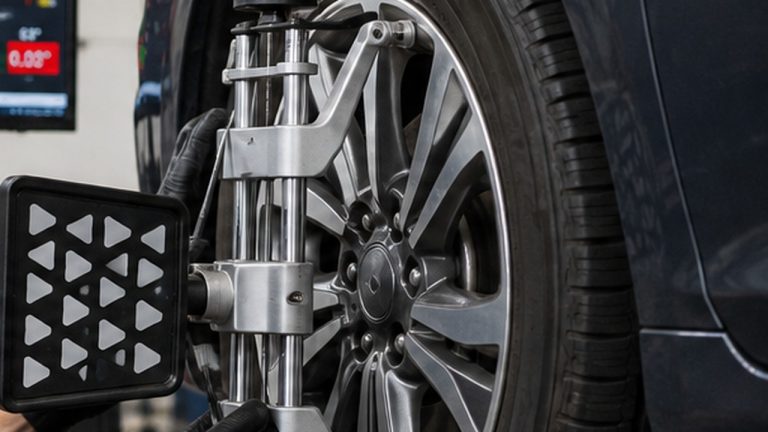
Do You Need an Alignment After Replacing Shocks?
Conventional standalone shock replacement usually does not require a wheel alignment simply because the shock was changed. Unlike many strut installations, removing a separate shock generally does not alter the primary alignment geometry.
However, an alignment may still be appropriate if the vehicle already has uneven tire wear, pulls to one side, has damaged suspension components, or other parts affecting wheel geometry are replaced during the same repair.
Our guide to alignment after suspension replacement explains when the extra service is actually needed.
Why Shock Replacement Prices Vary Between Vehicles
A national average is useful for budgeting, but it cannot account for how different suspension systems are designed. Several factors can turn a relatively inexpensive shock job into a much larger bill.
- Vehicle type: pickup trucks, large SUVs, performance vehicles, and specialty applications may use larger or more expensive dampers.
- Shock technology: basic twin-tube shocks generally cost less than premium monotube, remote-reservoir, adjustable, or electronically controlled units.
- Parts brand: economy aftermarket, premium aftermarket, and OEM parts can have very different prices.
- Access: some shocks are exposed and easy to remove while others have upper mounts hidden behind trim or other components.
- Rust and hardware: seized bolts, damaged threads, broken studs, or deteriorated bushings can increase both labor and parts costs.
- Labor rate: dealership and independent-shop hourly rates can differ substantially by location.
OEM vs. Aftermarket Shocks
OEM shocks are designed to match the vehicle manufacturer’s original specification and can be substantially more expensive than aftermarket alternatives.
Aftermarket parts cover a very wide range. Some are inexpensive replacement shocks intended to restore factory-like behavior, while others are premium products designed for heavier loads, towing, firmer handling, or off-road use.
That is why comparing two estimates only by total price can be misleading. Ask for the exact shock brand and part number. A $350 estimate using entry-level parts and a $600 estimate using premium dampers are not necessarily quotes for equivalent repairs.
What Else Can Increase the Bill?
A shock absorber may not be the only worn component discovered during inspection. The shop may find deteriorated shock bushings, damaged mounts, broken hardware, worn sway bar links, control-arm bushings, ball joints, or other suspension problems.
If the estimate includes several different components rather than just a pair of shocks, compare the complete job using our broader car suspension repair cost guide. That page covers the typical pricing structure for multiple conventional suspension repairs.
Dealer vs. Independent Shop
Independent shops often offer more flexibility in aftermarket parts selection and may charge a lower hourly labor rate. Dealerships are more likely to use OEM components and factory-specific procedures, but the total can be higher.
For a straightforward conventional shock replacement, an experienced independent shop is often capable of performing the same basic mechanical job. Electronically controlled dampers or unusual suspension systems can be different because diagnosis, calibration, programming, or specialized components may be involved.
How to Compare Shock Replacement Quotes
- Check the quantity. Make sure you know whether the quote is for one shock, two shocks, or all applicable corners.
- Confirm that they are actually shocks. If the estimate lists struts, compare it with strut pricing instead.
- Identify the axle. Front and rear jobs can use different parts and require different labor.
- Ask for the brand and part number. This tells you whether two shops are quoting comparable components.
- Check mounts, bushings, and hardware. Determine whether they are included or will be charged separately if needed.
- Review labor and fees. Taxes, shop supplies, corrosion work, diagnostics, and additional repairs can change the final total.
A lower estimate is only genuinely cheaper when the repair scope and parts quality are comparable.
Can You Replace Shock Absorbers Yourself?
Standalone shock absorbers can be considerably more DIY-friendly than struts because replacing them normally does not require compressing a coil spring. On some trucks and older suspension designs, the shock may be held by only a few accessible fasteners.
That does not make every shock replacement simple. Rusted bolts, restricted access, incorrect lifting points, damaged hardware, and high-torque fasteners can turn an apparently easy job into a difficult one.
Always support the vehicle correctly with equipment rated for its weight and follow the manufacturer’s repair procedure and torque specifications. Never work underneath a vehicle supported only by a jack.
How Do You Know the Shocks Need Replacing?
Common reasons for replacing shocks include physical damage, significant hydraulic-fluid leakage, poor body-motion control, excessive bouncing, nose dive, reduced stability, or abnormal tire wear. Because shock performance deteriorates gradually, drivers do not always notice the change immediately.
Do not replace shocks solely because one symptom appears. Tires, springs, bushings, ball joints, alignment problems, and other suspension components can produce similar handling complaints. A proper inspection should confirm that the shocks are actually worn or damaged.
If unusual tire wear is one of the symptoms, our guide explains how worn shocks and struts can affect tire wear.
Frequently Asked Questions
How much does it cost to replace shock absorbers?
A useful U.S. planning range is about $300 to $700 for a pair of conventional standalone shock absorbers. Simple applications can cost less, while premium, heavy-duty, electronic, or difficult-to-access shocks can cost substantially more.
How much does it cost to replace rear shocks?
A pair of conventional rear shocks commonly costs around $300 to $700 or more including parts and labor. The vehicle, parts quality, labor access, and corrosion have a major effect on the final price.
Is it cheaper to replace only one shock?
Replacing one shock reduces the immediate bill, but major shock manufacturers recommend replacing dampers in axle pairs so left-to-right damping remains reasonably consistent.
Do new shocks require an alignment?
Replacing conventional standalone shocks normally does not alter the primary wheel-alignment settings by itself. An alignment may still be needed if other suspension components were replaced or the vehicle already shows alignment-related symptoms.
Are shocks cheaper to replace than struts?
Usually, yes. Standalone shocks are often less expensive and simpler to install because they are not structural suspension members and normally do not require coil-spring disassembly. The actual difference still depends on the vehicle and parts used.
Should I replace all four shocks at once?
Not automatically. Matching shocks should generally be replaced in pairs on the same axle. Replacing all four makes sense when all four are similar in age and condition and the vehicle actually uses standalone shocks at all four corners.
Compare the Repair Scope, Not Just the Total
For many conventional vehicles, about $300 to $700 for a pair of shock absorbers is a useful starting budget. But the number becomes meaningful only after you know whether the quote is for one shock or two, which axle is being serviced, what brand of parts is being installed, and whether additional worn hardware is included.
Most importantly, confirm that the vehicle actually uses standalone shocks at the location being repaired. If the estimate is really for struts, the parts, labor, alignment considerations, and expected price can be substantially different.