Nissan Xterra Lift Kit: Best Heights, Tires & Fitment by Year
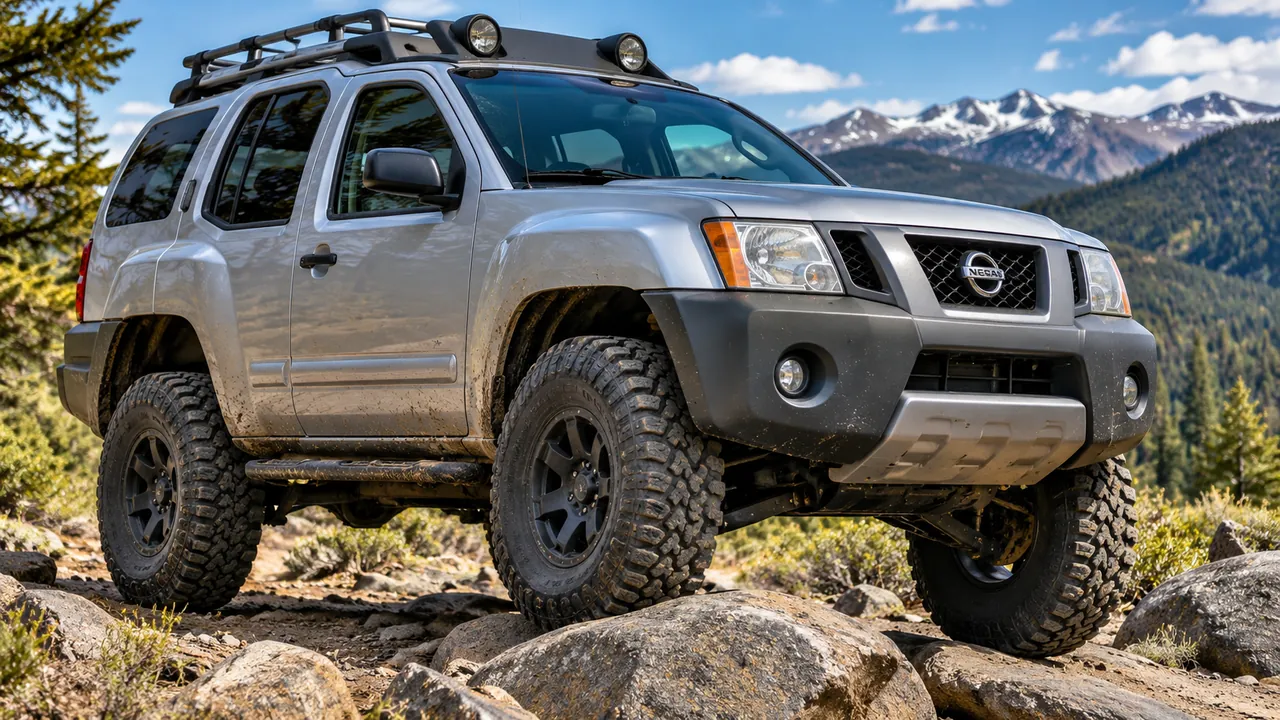
The best Nissan Xterra lift kit depends on whether you own the torsion-bar truck built from 2000 to 2004 or the coil-sprung model sold from 2005 to 2015. For a first-generation Xterra, start with a modest front height correction and rear spring work, or a matched three-inch system with revised upper control arms. For a second-generation Xterra, a two-inch spring-and-shock package is a good starting point for a daily driver that sees trails. A three-inch lift can make sense for a more ambitious build, but only when the front suspension has adequate travel and clearance. If you want 35-inch tires, plan the wheel, steering and body clearance together rather than choosing a lift by its height alone.
There is a good reason not to buy the first Nissan kit that appears in a search. A 2004 Xterra has a different front suspension from a 2005. Even among the newer trucks, a product advertised for both the Frontier and Xterra may have a replacement-strut option that is approved only for the pickup. The distinctions below can save you from buying parts twice.
Start With the Xterra You Have, Not the Lift You Want
These are representative U.S.-market applications and buying routes. The lift figures refer to the advertised system or its intended height range. They are not guarantees of the increase you will see on an old truck with sagging springs, or of clearance for a particular tire.
| Model and intended use | System worth comparing | What to check first |
|---|---|---|
| 2000–2004 WD22, mild daily-driver lift | Factory-range torsion-bar adjustment; modest rear spring upgrade | Existing steering play, front droop and alignment |
| 2000–2004 WD22, 4WD trail build | 4×4 Parts SPAC63219, advertised 3-inch system | Upper arms, idler arm support, rear lift option and shock lengths |
| 2000–2004 WD22, 4WD V6 with worn dampers | Alldogs Offroad first-generation Bilstein 4600 package | Torsion bars, rear add-a-leaf and exact vehicle approval |
| 2005–2015 N50, low-cost stance change | Rough Country 867-series 2.5-inch kit, Xterra-approved configuration | Factory front assembly retained; coil-bucket clearance |
| 2005–2015 N50, mild spring-based lift | Alldogs Spacer Eraser: nominal 2-inch front / 1.5-inch rear | Condition of dampers, rear leaf pack and U-bolt hardware |
| 2005–2015 N50, worn suspension or regular trails | Matched Bilstein 5100 or Old Man Emu spring-and-damper package | Permanent cargo weight, spring selection and usable travel |
| 2005–2015 N50, wider long-travel build | Xterra-specific Titan swap, typically around 3–4 inches in the example discussed below | Front differential, CV shafts, steering and wide-track clearance |
| Either generation, very tall build | Documented generation-specific suspension or body-lift combination | Complete hardware, current support, tire clearance and inspection |
On an Xterra that spends weekdays commuting and weekends on forest roads, the middle of this table is often more useful than its last row. An extra inch of static height is not a substitute for sound steering, controlled damping and a rear spring pack that can support camping equipment.
2000–2004 Xterra: The Torsion-Bar Generation Deserves Its Own Plan
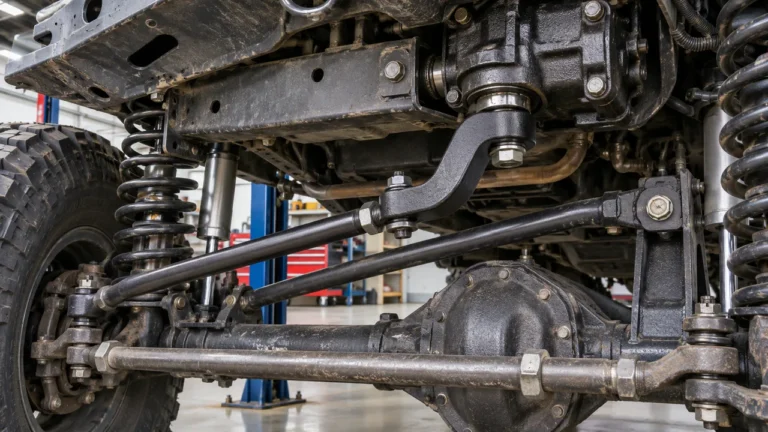
The WD22 is built around a double-wishbone front end with torsion bars and a leaf-sprung solid rear axle. The early truck also uses a steering gearbox and linkage rather than the rack-and-pinion arrangement of the later Xterra. That difference is important when you start adding tire width and changing front control-arm geometry.
2000 and 2001 models: inspect the steering before raising the front
A first-year Xterra is now old enough that its original height is not a reliable baseline. Look for worn upper and lower ball joints, deteriorated bushings, tired dampers, loose tie-rod ends and movement at the idler arm or center link. Inspect the frame and torsion-bar anchors for corrosion or damage. If the truck wanders at its existing height, do not assume that new tires and a lift will solve it.
The early engine options include the 2.4-liter KA24DE four-cylinder and 3.3-liter VG-series V6. The engine and 2WD or 4WD configuration matter when ordering torsion bars and steering or suspension components. A catalog that expressly approves a V6 4WD is not automatically approving a four-cylinder 2WD. Check the original specification before buying parts from a used kit.
What owners mean by a poor man’s lift
The phrase usually describes a budget approach: a modest change to torsion-bar adjustment up front and longer shackles or added leaves at the rear. It can change the stance without buying a complete front suspension system. But the amount that can be gained safely depends on the individual vehicle, not the number of turns on the adjuster.
As the front end moves higher in its existing travel range, it may have less remaining droop. The upper arm can approach its rebound stop, alignment can become difficult and the 4WD CV joints may operate at less favorable angles. A truck that barely allows the wheel to extend into a dip is not better prepared for a trail merely because its fenders sit higher. Our torsion bar ride-height adjustment guide explains how static height, suspension travel and alignment relate. Use the Nissan service specifications and have the adjustment checked before driving.
A real three-inch suspension kit for a 2002, 2003 or 2004 Xterra
A more comprehensive system addresses the front-arm geometry instead of relying only on the torsion-bar adjuster. Automotive Customizers, also known as 4×4 Parts, lists its SPAC63219 three-inch suspension system for 2000–2004 4WD Xterras. Its main distinction is a pair of tubular upper arms intended to accommodate the new operating position, with an idler arm brace and a choice of rear shackles or add-a-leaf hardware. Confirm whether the chosen configuration includes the torsion bars and shocks you need; do not infer that every advertised three-inch package has the same contents.
For a 2WD V6, the same company separately catalogs the SPAC9119 front system. It is not the 4WD package with a few pieces removed. The front-only listing also means you must plan the rear height separately. In both cases, the seller describes the arms as made to order. Establish the delivery schedule and obtain the full hardware list before dismantling your existing suspension.
Is an idler arm brace necessary?
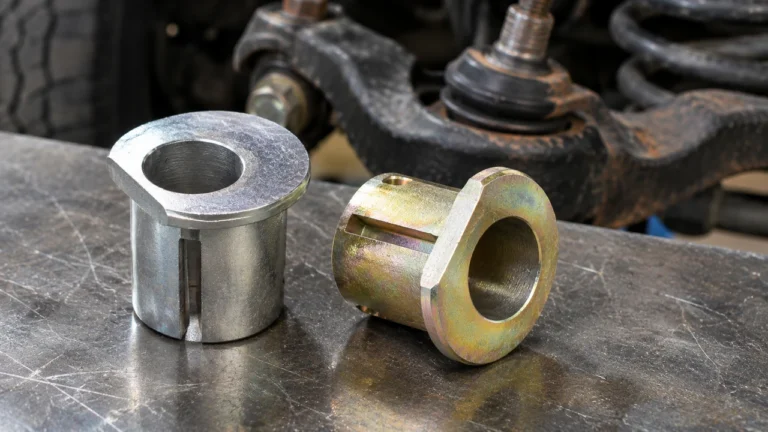
The idler arm supports the steering linkage opposite the steering gearbox. Extra leverage from larger tires and rough terrain can expose wear and deflection there. A purpose-made brace supports that part of the linkage; it does not repair an already worn idler arm or turn the steering assembly into an indestructible system. On an early lifted Xterra, inspect the complete linkage under load and check for interference through steering travel.
Be especially cautious about secondhand upper arms supplied without their correct ball joints, bushings or spacers. A replacement arm is part of the suspension geometry. It must be installed with the intended hardware and checked for safe ball-joint operation, rather than modified to make an incomplete package fit.
Should you replace the original torsion bars?
A healthy original bar may be suitable for a modest adjustment. If the Xterra carries a steel bumper, winch and other permanent equipment, an appropriately rated replacement can be worth considering. Raising the adjuster does not increase the spring rate of the bar itself. A new higher-rate bar, by contrast, changes the spring characteristics and needs to be selected for the vehicle and load.
One available catalog example is the Alldogs first-generation package using Sway-A-Way torsion bars, Bilstein 4600 dampers and a nominal 1.5-inch rear add-a-leaf. Its stated fitment is V6 4WD for 2000–2004, and its damper suitability up to three inches does not mean the package by itself provides three inches at both ends. Establish the front geometry and actual rear spring condition before choosing it for a taller build.
Body Lift or Suspension Lift on the First-Generation Xterra?
A body lift is still a relevant option for the WD22. The body is mounted separately from the frame, so a properly engineered body-lift system can create more room between the tires and the body without changing the static suspension position in the same way as a torsion-bar lift. It does not raise the axles or give the front suspension additional travel.
Why the 2000 model matters even for a body lift
The 4×4 Parts catalog lists a dedicated three-inch body lift, SPBL4093, for the 2000 Xterra and a different part number, BLPA0203XBL, for 2001–2004. The later kit requires an automatic or manual transmission selection. Even if the body blocks look alike, there can be differences in the associated hardware. Do not order a 2001 kit for a 2000 truck without explicit approval.
A complete taller body-lift package has to account for the relationship between the raised body and frame-mounted equipment. The later 4×4 Parts kit, for example, includes provisions for bumper location, cooling-system position and steering and shifter connections, while identifying additional line-extension work. Missing hardware in a used kit may be far more consequential than a missing cosmetic trim piece.
Does three inches of suspension lift plus three inches of body lift make a six-inch Xterra?
It can produce roughly that amount of body height in an idealized combination, but the two changes do different jobs. The suspension portion changes frame position relative to the wheels; the body portion does not. Neither alone makes the solid rear differential six inches farther from the ground. Our body lift versus suspension lift guide covers those differences in detail. Treat a combined system as a complete build, not a shortcut to fitting 35s or avoiding steering and brake checks.
2005–2015 Xterra: Choose Springs and Dampers Before Extra Height
The second-generation N50 has independent double-wishbone front suspension with a coil spring around the damper and a solid rear axle on leaf springs. Many front suspension upgrades overlap with the contemporary Frontier. Rear spring and shock selections still need to be approved for the Xterra SUV. If you are actually building the pickup, use our Nissan Frontier lift kit guide instead.
The Rough Country 2.5-inch kit: read the option restrictions
The Rough Country 867-series 2.5-inch kit lists 2005–2015 Xterra 2WD and 4WD applications. The fitment notes, however, reserve its optional lifted front struts for the Frontier. That makes a difference when configuring a kit online: an Xterra listing with a choice of upgraded struts is not proof that every option fits the SUV. Confirm the Xterra-approved front configuration and rear hardware before paying.
The kit family also publishes example wheel-and-tire pairings. Use these with its exact application notes, not as a universal approval for an Xterra with a different wheel position. A front spacer may be economical when the original damper and spring are in good condition, but it is less attractive if you are going to pay labor to remove worn components and then reinstall them.
The RCKilla replacement: a spring-based two-inch option
Older forum posts often recommend the Alldogs RCKilla kit. Its manufacturer now identifies that package as discontinued and directs customers to the Spacer Eraser kit instead. The newer 2005–2015 application pairs a nominal two-inch front spring with a 1.5-inch rear add-a-leaf and keeps the original overload leaf. It also specifies larger U-bolts that require work to the original U-bolt plates. This is a useful distinction if you are comparing an old parts list with a current package.
A spring-based kit can be a sensible way to reuse healthy dampers while changing ride height. But the original spring and damper are not a blank canvas: the new static position must still leave adequate compression and extension. Confirm the damper length and rear leaf pack condition, particularly if the truck has already been modified.
Bilstein 5100 or Old Man Emu for a camping Xterra?
Bilstein 5100-based systems are worth comparing when the existing dampers need replacement and you want a configurable build. Alldogs offers an Xterra package with its own front coil and rear leaf options, including choices for additional geometry hardware. Avoid treating its optional top spacer as free additional height: the supplier itself warns of possible coil-bucket contact with original arms.
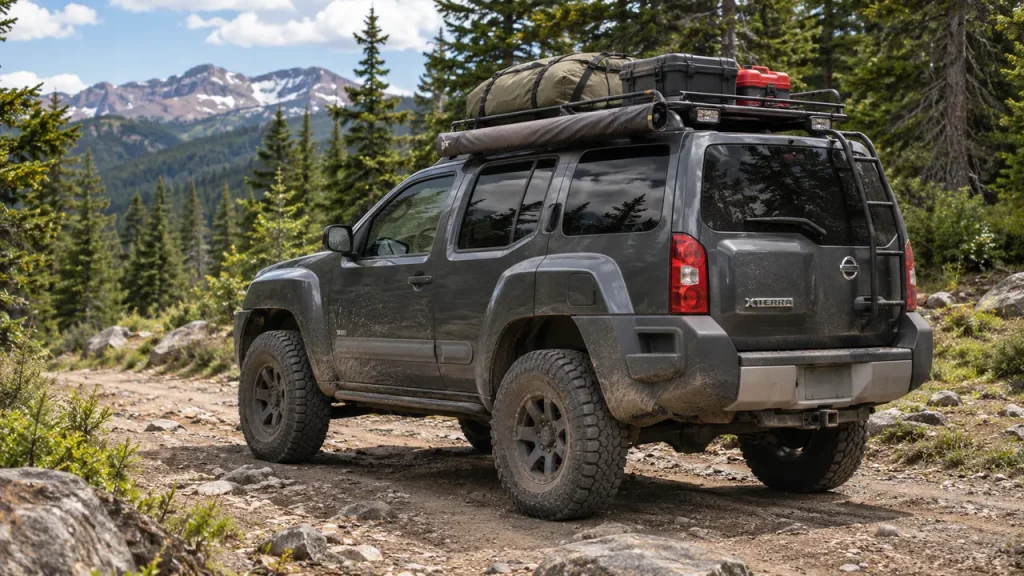
Old Man Emu is another useful route for a truck carrying recovery equipment and camping gear. Its approximately two-inch Xterra packages, as configured by Alldogs, are offered in lighter and heavier load versions. The heavy-load version adds rear leaves and is intended for a substantially equipped vehicle, rather than an empty commuter. A taller empty stance is not a good reason to select the stiffest spring pack. Give the supplier an honest account of equipment that stays on the vehicle all year.
Does every three-inch kit need new upper control arms?
No. Z1 Off-Road, for example, offers a three-inch N50 package with front lift springs, a revised billet top mount, alignment eccentrics and rear shackles. Its design is intended to avoid coil-bucket contact with the original arms, while its own notes warn that worn suspension components can still cause interference. That is a different geometry solution from stacking a tall spacer on an otherwise unchanged assembly. Follow the instructions for the selected system rather than transferring a control-arm rule from another kit.
The Off-Road and PRO-4X Front Suspension: Check Droop and Alignment
A 2009 Xterra Off-Road or a later PRO-4X is not automatically compatible with every standard-trim lift. Nissan’s 2015 PRO-4X specification includes Bilstein gas dampers, a locking rear differential and 265/75R16 all-terrain tires. If those components still work well, decide whether to retain the factory damping or replace it as part of a matched system. A badge alone is not a measurement of shock length or available suspension travel.
Coil bucket contact is not just an annoying noise
Owners often shorten coil bucket contact to CBC. On the N50, the upper control arm passes close to the chassis-side spring mounting structure at extension. A changed damper position or length may allow the arm to contact that structure before the intended travel limit. A knock when a front wheel unloads can be a clue, but it can also come from loose hardware or a worn joint.
High-clearance upper arms may solve an interference problem in a correctly matched system, but they do not protect a CV shaft, brake hose or damper from excessive travel. Have the whole assembly checked through its working range. A truck that is quiet on a smooth street can still have an extension-clearance problem on a rough road.
Camber and caster adjustment after an N50 lift
Inspect the lower-arm pivots for existing adjustable hardware. Some trucks have fixed bolts in positions where a suitable eccentric kit can provide useful alignment correction. An alignment printout is more valuable than an assumption that a particular lift always needs cam bolts. The correct parts are lower-arm alignment hardware, not a universal strut-to-knuckle bolt. Our camber bolt fitment guide explains the distinction. Seized pivot bolts and damaged mounting tabs can also add unexpected work on an older Xterra.
33s and 35s: Fit Tires to the Xterra, Not to an Internet Height Rule
The WD22 and N50 do not start with the same factory tire dimensions or wheel bolt pattern. The 2004 SE, for example, used 265/65R17 tires, while the 2015 PRO-4X used 265/75R16. Here are nominal sizes to compare when planning a build. These are calculated from the markings, not physical measurements or approvals for a particular vehicle.
| Tire size | Nominal diameter | Nominal width | Comparison context |
|---|---|---|---|
| 235/70R15 | 28.0 in | 9.3 in | Smaller first-generation size for comparison |
| 265/70R16 | 30.6 in | 10.4 in | Common factory-size reference |
| 265/65R17 | 30.6 in | 10.4 in | 2004 SE factory example |
| 265/75R16 | 31.6 in | 10.4 in | 2015 PRO-4X factory example |
| 285/75R16 | 32.8 in | 11.2 in | 33-inch class |
| 285/70R17 | 32.7 in | 11.2 in | Alternative 33-inch class |
| 285/75R17 | 33.8 in | 11.2 in | Near-34-inch class |
| 315/75R16 | 34.6 in | 12.4 in | Near-35-inch class |
| 33×12.50R15 | 33 in (labeled) | 12.5 in | Wide 33-inch tire; brake and wheel fitment required |
| 35×12.50R17 | 35 in (labeled) | 12.5 in | Wide 35-inch target |
31s and 33s on a 2000–2004 Xterra
A 31-inch-class tire can be a sensible step for a first-generation truck without turning the steering and gearing into a major project. On a 2004 SE the factory tire is already about 30.6 inches nominally. A wide 33 is a different proposition: both the front fender opening and steering linkage must have clearance, and extra tire mass adds work for the older brakes and steering. A body lift can help body clearance without solving contact at the frame or suspension.
Will a two- or three-inch lift fit 33s on a second-generation Xterra?
A 285/75R16 is a common 33-inch-class candidate. Rough Country’s 867 chart lists that size with a factory 16-inch wheel and minor trimming, along with 265/75R16 on the factory wheel as a smaller alternative. These are chart examples for the product family, not unconditional approval for every trim. The actual tire profile, wheel position and full steering and suspension clearance remain decisive.
A term frequently used in N50 owner discussions is the melt mod, meaning reshaping part of the plastic wheel liner to make room for a larger tire. It is not an engineering substitute for safe clearance. Do not heat or remove wiring, structural parts or crash-related equipment to make a tire fit. Identify what the tire is actually contacting before considering any liner work.
What about 35s and a six-inch lift?
Some custom Xterras use 35-inch tires, but a three-inch lift, a Titan swap or a six-inch advertised system does not establish clearance by itself. The wider tire can rub the front body, frame or suspension as it steers. A larger rear tire also has to fit as the solid axle articulates. Gearing, braking, spare-tire storage and drivetrain loads become more important at this point. Historical CALMINI catalogs include tall N50 systems; availability and completeness need direct confirmation. Do not substitute a six-inch Frontier kit simply because some smaller front parts are shared.
The bolt pattern changed between generations
The early Xterra uses a 6×139.7 mm bolt pattern; the N50 uses 6×114.3 mm. A six-lug wheel removed from a Titan or an early Xterra therefore is not automatically suitable for the newer SUV. Even the correct pattern does not guarantee hub fit or brake clearance. The wheel offset and backspacing guide explains how wheel width changes the comparison. Moving a wheel outward may clear a control arm but increase its sweep toward the liner. Check the planned spare for the same limitations.
Titan Swap on the N50: When Wider Travel Is Worth the Work
For some Xterra owners, the objective is not an extra inch of body height but more useful front wheel movement. That is the case for an engineered Titan swap, which uses wider front suspension geometry and matching steering and driveline components. It is a different project from installing a stock-width three-inch spring kit.
Identify the front differential before buying the CV shafts
The Alldogs N50 Titan swap package with ICON dampers is an example of a system advertised at approximately three to four inches of lift. Its parts specification distinguishes extended CV shaft NI8433 for the R180 differential from NI8203 for the M205. The supplier lists different steering and lower-arm parts and offers the required original-equipment components as an option. Confirm the differential actually installed in your truck; a rear locker or PRO-4X badge is not evidence that the front differential has already been swapped.
A wider front axle track affects fender coverage and trail width. Rear track does not automatically increase with the front. Wheel spacers cannot reproduce the longer-arm geometry or travel of a properly designed swap. Have the supplier match the arms, tie rods, coilovers, CV shafts and brake lines, and establish that the bump stops and joints work together through the intended travel.
When to keep the original track width
A conventional spring-and-damper lift is usually easier to live with if the truck spends most of its time on pavement or narrow trails. It also avoids the additional steering and driveline parts of a wide-track build. The Titan swap becomes more compelling when front wheel travel is a real goal and you are willing to pay for the wider system and its associated fitment checks.
The Rear Leaf Pack Can Decide How Well the Lift Actually Works
The rear of an Xterra may carry a spare wheel, drawer system, recovery tools and camping equipment that the truck never used to carry. A front lift selected from an unloaded photo cannot tell you how a worn rear spring pack will behave once all that weight is aboard.
Shackles, add-a-leaf or complete replacement springs?
A longer shackle changes the spring mounting geometry, but does not restore the rate of a fatigued leaf pack. An added leaf can change both rate and height; a complete replacement pack allows a more deliberate spring choice. If the existing leaves are cracked, severely corroded or sagging, a taller shackle is not a repair. Choose rear hardware for the actual weight and maintain usable bump travel.
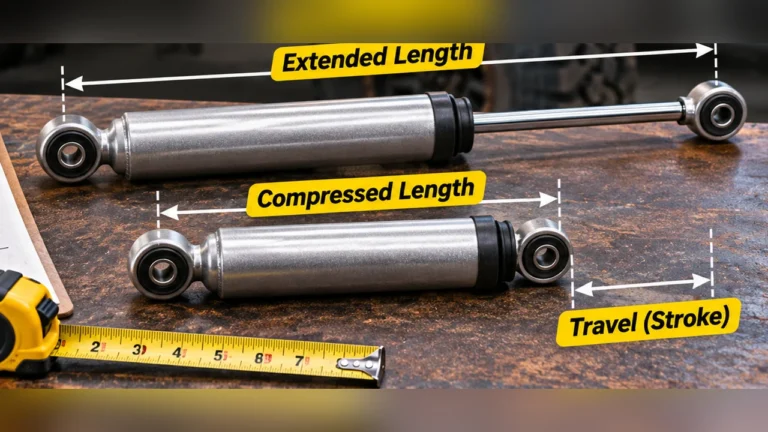
Check the rear damper’s compressed and extended dimensions, bump stops, brake hoses and axle operating angles. A longer shock is not automatically the correct shock, and a rear lift can reveal driveline vibration. If the rear axle pinion angle needs correction, have it measured in the finished configuration rather than adding a shim based on the advertised height.
Make the installer quote cover the whole truck
A basic level may cost a few hundred dollars or less in parts; revised-arm systems and spring-and-damper packages cost more, and a Titan swap can run into several thousand dollars before fitting. Those broad categories are not installed quotes. For an old Xterra, the cost of worn steering parts, seized alignment bolts, new wheels and tires may outweigh the apparent savings of a cheaper lift. Send the following details to the shop or supplier so the quote covers the actual build.
- Model year, VIN, engine, 2WD or 4WD, and original trim, including Off-Road or PRO-4X equipment where applicable.
- Current ride height, existing modifications, steering condition and front and rear spring condition.
- Exact proposed kit and option numbers, upper arms, alignment hardware and rear spring or shackle selection.
- Permanent accessory weight, typical cargo, tire model and size, wheel width and offset, and spare-tire requirements.
- Whether the truck retains stock track width or uses a Titan swap, plus the actual front differential for a 4WD conversion.
- Labor, alignment, any documented trimming or structural work, and post-installation checks.
After installation, have the shop check steering and suspension movement, brake hose and ABS routing, alignment, driveline operation and headlight aim. Follow the kit maker’s fastener reinspection schedule. Investigate new rubbing, severe vibration or steering instability before using the truck normally, especially on a trail far from help.
Nissan Xterra Lift Kit FAQs
These answers address the most common shopping questions for both U.S. generations. The exact kit instructions and verified vehicle fitment take priority over general lift-height advice.
What is the best lift kit for a 2001 Nissan Xterra?
For a healthy daily driver, a modest factory-range torsion-bar height correction and a suitable rear spring upgrade are worth comparing. A matched three-inch system with revised upper arms and steering provisions makes more sense for a taller trail build. Confirm engine and drive configuration and inspect the steering first.
Can a 2004 Xterra use a 2005 lift kit?
Not as a complete suspension package. The 2004 WD22 has torsion bars at the front and the 2005 N50 uses coil-sprung damper assemblies. Order components specifically approved for your generation, even when an online listing uses a broad Xterra year range.
What is a good lift kit for a 2006 or 2007 Nissan Xterra?
A mild two-inch spring-based system or a matched spring-and-damper package is a good starting point for regular road and trail use. A spacer-based system can be economical on healthy original suspension, provided the exact Xterra application and clearance are established.
Can I lift my Xterra PRO-4X and keep the factory Bilsteins?
Yes, if the selected system expressly permits the original dampers and retains safe usable travel. Check upper-arm clearance, rear shock length and alignment range. If the dampers are worn, a matched replacement package may be the better investment.
Will a two-inch Xterra lift fit 33-inch tires?
Some N50 combinations can fit 33-inch-class tires with a modest lift and appropriate wheel selection. Minor liner work may be necessary. The earlier WD22 has different body, steering and wheel constraints. Confirm the tire size and wheel position for your exact generation.
Do I need to replace the idler arm when lifting a first-generation Xterra?
Only if it is worn, damaged or otherwise unsuitable for the intended build. A compatible idler arm brace can support the steering linkage, but does not repair a worn component. Inspect the whole linkage before adding larger tires.
Is a Titan swap required for a three-inch Xterra lift?
No. There are stock-width systems for the N50 in that height class. A Titan swap is chosen primarily for wider suspension geometry and increased potential front travel. It requires a different set of steering, arm and 4WD axle components.
Can I get a six-inch lift by combining a body lift and a suspension lift?
A compatible combination can increase overall body height by approximately the combined amounts, but it does not create that much axle clearance or suspension travel. Confirm that both systems are approved to work together, and verify steering, shifter, cooling, brake and tire clearance requirements.