Ford Bronco Lift Kit: Best Height, Types & Fitment (2021–2026)
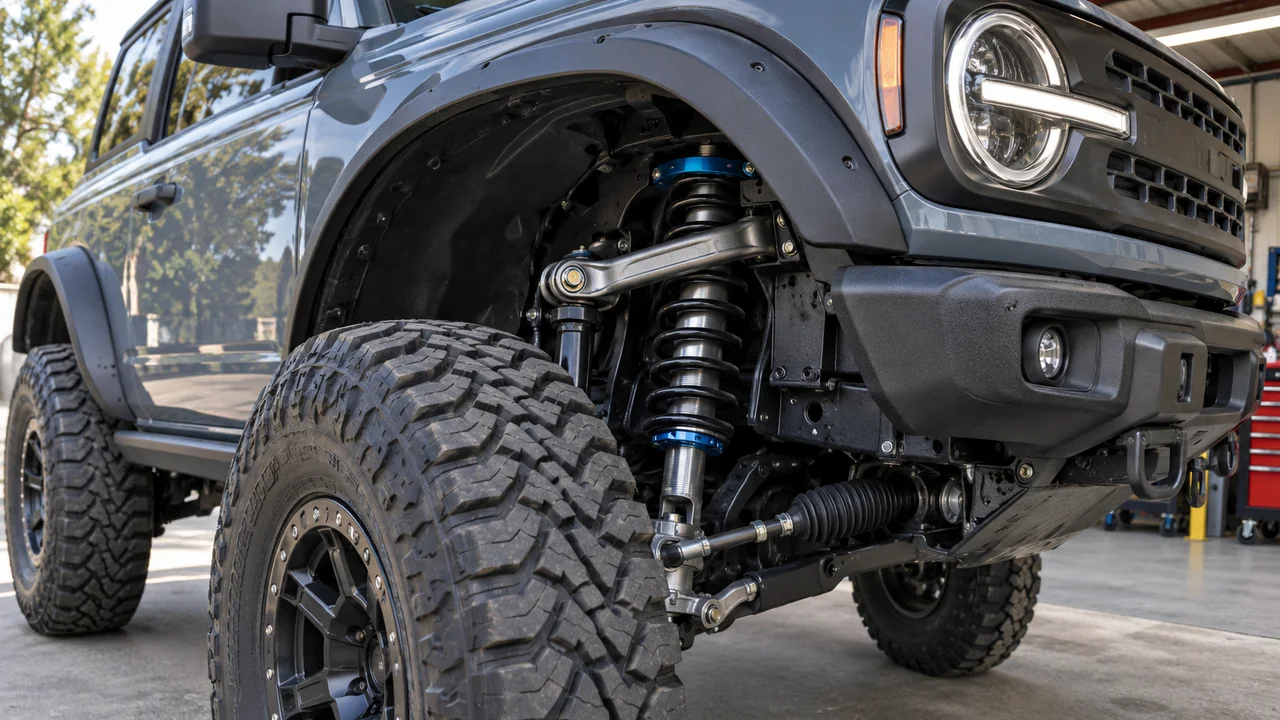
A Ford Bronco lift kit is worth buying only after you identify the suspension that came on your Bronco. For most 2021–2026 non-Sasquatch Broncos used on the road and on moderate trails, a properly matched 1–2-inch suspension lift is a sensible place to start. Want 35-inch tires? You may not need a huge lift, but you do need the right wheel dimensions and clearance checks. Planning 37s or hard off-road use? Choose a more complete system rather than assuming taller spacers will do the job.
Quick buying answer: a Base, Big Bend, Black Diamond or Outer Banks with standard suspension has different options from a Badlands or a Sasquatch-equipped Bronco. HOSS 3.0 FOX-equipped trucks need an explicitly compatible system, and the Bronco Raptor is a separate application. Check two-door versus four-door fitment, too. A product labeled “2021–2026 Bronco” without these details is not enough information to order.
This guide covers the full-size, sixth-generation Ford Bronco sold from 2021 through 2026, not the Bronco Sport or the 1966–1996 classic models. It answers the shopping question first, then gets into why similar-looking kits can behave very differently once the truck leaves the driveway.
Best Ford Bronco Lift Kit: Start With Your Factory Setup
It’s tempting to shop by price and lift height. The better filter is what Ford installed at the factory. Two Broncos from the same model year may have different shocks, spring rates, body weights and suspension travel, so a single lift figure on a product card can be misleading.
| Your Bronco | Sensible kit category to investigate | Check before paying |
|---|---|---|
| Non-Sasquatch with standard shocks | Mild 1–2-inch spacer kit or a matched spring-and-shock package | Confirm actual front/rear lift, 2-door or 4-door fitment and tire clearance |
| Badlands or Sasquatch with Bilstein suspension | Kit expressly intended for Badlands/Sasquatch; compatible adjustable coilovers if needed | Do not substitute a “base shocks only” spacer |
| HOSS 3.0 with FOX internal-bypass dampers | HOSS 3.0-specific lift or a documented complete suspension replacement | Generic HOSS 1.0/2.0 spacers may be excluded |
| Bronco Raptor | Raptor-specific engineered system | Never assume a standard Bronco kit fits |
| Bronco with heavy armor or overlanding load | Load-appropriate springs and dampers rather than height alone | Account for bumper, winch, rack, cargo and actual ride height |
Non-Sasquatch Broncos: Keep the First Upgrade Simple
For a largely stock Big Bend or Outer Banks, a mild, correctly designed lift can create the stance you want without paying for race-oriented shocks. A top-mount spacer may make sense if the original dampers are healthy. If they are tired, replacing them with a matched adjustable shock or coilover setup is a more useful way to spend the labor money.
Do not buy by trim name alone. Verify the suspension fitted to your particular truck and the manufacturer’s exclusions; a special package, previous modification or take-off suspension can change the answer. Some Ford Performance kits are explicitly optimized for Base, Big Bend, Black Diamond and Outer Banks, but that description is not an open invitation to fit them to every other Bronco.
Sasquatch and Badlands: An Already-Tall Starting Point
The Sasquatch package changes more than the wheels. It brings a factory off-road suspension configuration and approximately 35-inch-class tires, depending on model year and equipment. Badlands can also have different suspension and sway-bar equipment from the standard trims. A lift designed around shorter standard shocks may position a Sasquatch suspension outside the range intended by its maker.
Look for a part number that expressly names your suspension package. Companies such as Zone Offroad publish separate two-inch products for base-shock Broncos and for Badlands/Sasquatch applications. That is a useful lesson: a similar photograph and the same advertised lift height do not make those kits interchangeable.
HOSS 3.0 and Raptor: Don’t Shop the Generic Fitment Filter
HOSS stands for High-Performance Off-Road Stability Suspension. The HOSS 3.0 setup uses FOX internal-bypass dampers on relevant configurations, and its packaging and operating requirements differ from the more conventional factory systems. There are purpose-built options, but some lift kits explicitly exclude HOSS 3.0. A generic “fits Wildtrak” label may be incomplete because factory equipment can vary by year.
The Bronco Raptor goes further with its own wider, high-performance suspension architecture. It is not just a Sasquatch Bronco with different fenders. If the product does not explicitly list your Raptor year and equipment, stop there; a standard Bronco lift is not an acceptable substitute.
Two Doors or Four? It Changes the Purchase
A two-door Bronco and a four-door Bronco do not carry their weight over the springs in the same way. The shorter body, rear load and wheelbase affect the spring and damper tune. That is why Ford Performance sells distinct two-door and four-door versions of its two-inch suspension package, rather than one universal box.
Even when the hardware looks identical, check the full application. This matters especially with adjustable coilovers, where a preload setting that delivers a stated height on one body and engine combination may deliver a different result on another.
Ford Bronco Lift Heights: 1, 2, 3 or 4 Inches?
There is no magical number that makes a Bronco “properly lifted.” The best height is the smallest one that achieves your tire, clearance and use goals with a complete, compatible design. More height also means more attention to steering angles, CV joints, rear axle position and the way the vehicle feels on the road.
One-Inch Leveling Kits: Small Change, Real Trade-Offs
If the nose sits slightly low or you only want a subtle change, a one-inch front level may be enough. It is especially worth considering on a Bronco that already has a more capable factory suspension, where a dramatic lift is unnecessary. However, a front-only correction and an all-corner suspension lift are not the same job.
Measure the truck on level ground from the center of each wheel hub to the corresponding fender edge before choosing a height. A Bronco loaded with a winch and steel front bumper may sit differently from one with factory plastic bumpers. Lifting the front on paper without measuring the actual vehicle is guessing.
Two-Inch Lift: The Practical Starting Point
A two-inch lift is common because it changes stance noticeably without requiring the sort of build usually associated with 37-inch tires. For non-Sasquatch vehicles, it can be the sweet spot between appearance, modest extra clearance and everyday handling. It remains important to know whether “two inches” refers to front only, rear only, both axles or a trim-dependent net increase.
As an example of a more complete approach, Ford Performance’s M-18000-B1 four-door two-inch suspension kit replaces front and rear coilover assemblies with Ford/Bilstein-developed components. Its published application covers selected 2021–2026 four-door Broncos but excludes validation for Sasquatch, Badlands, Everglades and Raptor. The matching two-door system has a separate part number, M-18000-B1A. Read those distinctions before treating “Ford Performance lift” as a universal recommendation.
Three-Inch Lift: Where the Supporting Parts Count
At roughly three inches, the conversation moves beyond making the truck look taller. Front control-arm articulation, ball-joint position, remaining droop and driveshaft angles matter. The rear solid axle also changes its position relative to the body as the suspension is raised. Some manufacturers package corrected upper control arms, suitable shocks or axle-position components for these reasons.
A three-inch kit can still be a well-engineered choice for trail use. The problem is buying the least expensive spacer arrangement and assuming it performs the same job as a suspension system designed to work at that height. Ask what the kit does about suspension limits, steering and alignment, not just whether it creates room above the tire at rest.
Four Inches and Beyond: Build a System, Not a Stack
Four-inch Bronco kits vary widely. Some are matched to base-shock vehicles; others work with factory Sasquatch hardware or replace much more of the suspension. The published net height can vary depending on factory trim. A kit sold as “three to four inches” may provide different increases on Base, Badlands and Sasquatch configurations because their original ride heights are different.
For buyers going this tall, it makes sense to compare the total project: control arms, appropriate spring and damper lengths, steering links, rear axle geometry, wheels, tires and alignment. Never stack unrelated spacers to get another inch. If the required end result is beyond the range of one approved kit, choose a different complete system.
Sasquatch, Badlands and HOSS: Why Lift Numbers Differ
Many Bronco lift discussions become confusing because people compare their finished roof height rather than how much the suspension actually changed from its starting position. A factory Sasquatch, a non-Sasquatch Badlands and a base-suspension truck can all sit differently before any aftermarket work begins.
A “Three-Inch Kit” May Not Add Three Inches to Every Bronco
One useful manufacturer example is BDS’s multi-configuration FOX coilover system. Its published net lift figures differ for base, Badlands and Sasquatch versions of the four-door Bronco; the variation is measured against each vehicle’s original suspension, not an imaginary common starting height. That explains why owner photographs can disagree even when the products share an advertised range.
Before ordering, ask the manufacturer for net lift on your exact suspension package. Also ask whether the number describes the front and rear separately. A front lift of three inches paired with a two-inch rear lift changes rake in a different way from a true three-inch all-corner increase.
Does a Sasquatch Bronco Need a Lift to Run 35s?
No, not to run the 35-inch-class tire package it was designed to accommodate at the factory. That is a major reason not to buy a lift purely because you read that 35-inch tires always require three or four inches. The suspension, wheel specification and tire fitment of your particular Bronco matter more than a generic pickup-truck rule.
Replacing the factory tire with a wider 35, installing a different-offset wheel or moving to a more aggressive tread can still create clearance problems. “Factory Sasquatch fits 35s” is not a promise that every 35×12.50R17 combination will clear at every steering and suspension position.
HOSS 3.0 Kits Have Their Own Rules
HOSS 3.0 FOX internal-bypass shocks are not just ordinary dampers painted a different color. Their position-sensitive damping is part of the design, so changing how the assembly sits and travels can affect how the suspension works. Some brands offer separate HOSS 3.0-specific products; others list HOSS 3.0 among their exclusions.
Zone, for example, lists a separate 2.25-inch product for HOSS 3.0-equipped Broncos rather than telling owners to use its base-shock spacer. The safe question is not “Will a spacer physically bolt on?” It is “Has this exact system been engineered and approved for my shock arrangement and vehicle?”
Disconnecting Sway Bars and Off-Road Hardware
A Badlands front stabilizer-bar disconnect is useful off road, but it also makes the underbody equipment different from many other Broncos. A lift that alters steering or control-arm positions must leave adequate clearance for factory components and wiring through the intended travel range. Check the maker’s instructions for the specific combination.
The same goes for added skid plates, winch mounts and heavy front bumpers. They may change the loads the suspension carries. More spring preload can restore visual height, but it is not automatically the right way to compensate for a permanent increase in vehicle weight.
Spacer Lift, Adjustable Shocks or Full Coilovers?
Two suspension packages can have an almost identical stance when parked and feel very different on corrugations or washboard trails. The key is what changes inside the suspension, and what the original components were designed to tolerate.
Top-Mount Spacers Keep the Original Dampers
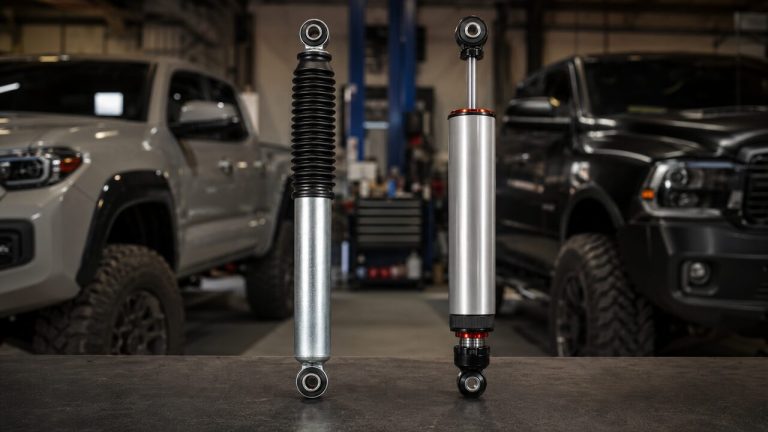
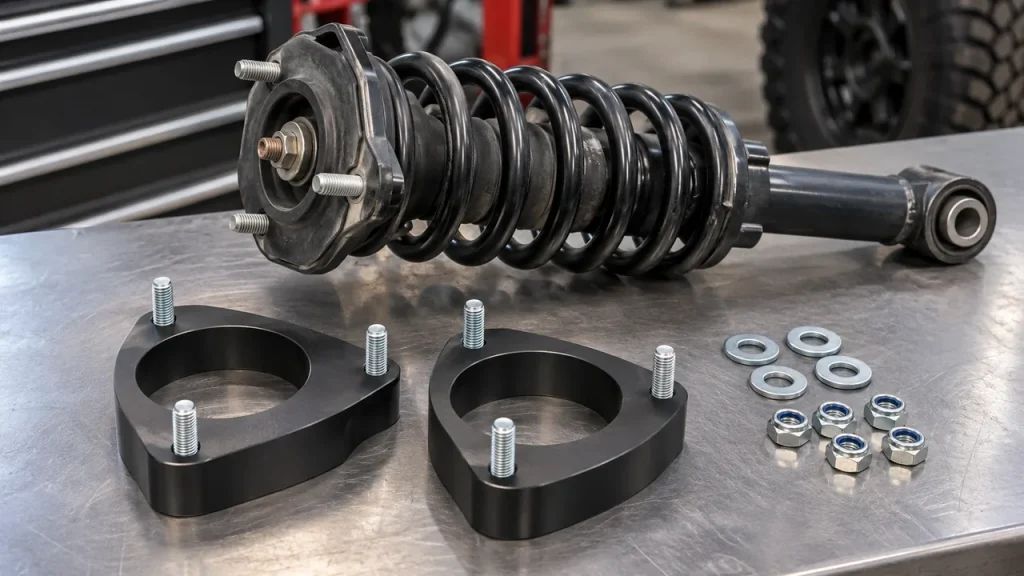
A strut-top spacer changes the mounting position of the factory spring-and-shock assembly. It is an economical choice on an approved application, especially if you are happy with the factory damping and the components are in good condition. It does not magically increase shock stroke, improve damping or correct every angle altered by the change.
Physical spacer thickness and measured vehicle lift are not necessarily equal. The assembly’s position and suspension geometry determine the outcome. Read the actual lift claim from the manufacturer, along with any requirements for retaining or replacing factory bump stops and mounting hardware.
Preload Spacers Change Spring Installation Conditions
A preload spacer works differently from a top-mount spacer. It changes the installed spring relationship and can alter how the vehicle sits within the shock’s available range. The two terms are often blended together in low-quality listings even though the mechanical effects and installation procedures are not the same.
Some designs require disassembling a spring-loaded strut. Coil springs store substantial energy, and shortcuts with unsuitable compressors can be dangerous. If the maker specifies assembled units or particular equipment, do not improvise to save a little on labor.
Height-Adjustable Shocks and Coilovers Offer More Than Stance
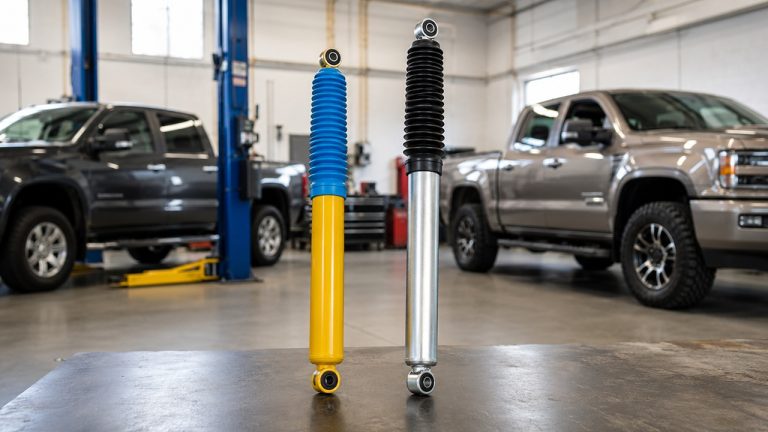
An adjustable shock or purpose-built coilover may allow the spring seat to be positioned within a specified range and can provide different damping from the factory unit. More expensive designs use larger pistons, reservoirs or specific spring rates to manage repeated impacts and heat. Those features have value for some trail drivers; they may be unnecessary for a Bronco used mostly on pavement.
Check the complete contents of the box. A listing that shows an attractive front coilover may sell only the fronts, omit springs, require separate upper mounts or assume you will reuse rear components. Also distinguish a complete bolt-on coilover replacement from a general coilover conversion kit: the current Bronco already uses spring-over-damper assemblies at its four suspension corners.
Replacing Factory Shocks Can Be Better Than Reusing Worn Ones
On a higher-mileage 2021 or 2022 Bronco, paying to remove four tired assemblies and then reinstall them with spacer hardware can be false economy. A matched shock-and-spring system may solve the ride-control problem at the same time as it changes height. That does not mean every owner needs premium remote reservoirs.
Drive the vehicle and inspect the originals first. Leaking dampers, broken mounts, abnormal tire wear or joint looseness are repair issues. A lift should not be purchased as a cosmetic cover for a suspension that already needs maintenance.
Will a Lifted Ford Bronco Fit 33s, 35s or 37s?
Tire fitment is where lift-kit advertising most often oversimplifies the job. A Bronco can clear a tire with the steering straight and still rub at full lock or during suspension compression. Tire diameter is only one dimension; width, wheel offset, fender and crash-bar clearance and the factory suspension package all matter.
| Tire goal | What to investigate on a 2021–2026 Bronco | What the lift alone cannot guarantee |
|---|---|---|
| 33-inch-class tires | Often a modest change or no lift on some configurations | Exact width and wheel clearance |
| 35-inch-class tires | Factory Sasquatch baseline or a carefully matched mild lift on other trims | No rubbing with every wheel offset or 35-inch tire |
| 37-inch-class tires | More complete suspension and tire-clearance plan, frequently with additional parts | Full compression, steering, gearing or crash-bar clearance |
| 38 inches and larger | Specialized, heavily engineered build with substantial clearance work | Everyday drivability or safe fitment from a lift figure alone |
Thirty-Three-Inch Tires Are Not Always a Lift Project
Some Broncos already have generous clearance or factory tires near the 33-inch class. If you are merely replacing worn tires, verify the original size and approved alternate tire dimensions before buying suspension parts. Even a modest increase in width can change contact near a liner or suspension component.
There is little value in adding three inches of height just to fit tires that may clear on the original setup. A careful wheel-and-tire selection sometimes delivers the appearance you want with fewer changes elsewhere.
Thirty-Five-Inch Tires: Factory Sasquatch Is Not a Universal Template
The Sasquatch package demonstrates that a modern Bronco can be engineered around 35-inch-class tires without a large aftermarket lift. A non-Sasquatch truck has a different starting point, so a moderate suspension kit may help, but the original wheels, fender clearance and hardware still decide the outcome.
Before ordering, compare the actual tire specification and rim width with the fitment notes on the chosen kit. A 315/70R17 and a 35×12.50R17 are not automatically identical in measured dimensions. Our 35-inch tire lift requirements guide explains why general lift charts cannot promise a particular wheel-and-tire combination will fit.
Thirty-Seven-Inch Tires Require a Whole-Vehicle Plan
A 37-inch tire changes much more than the view from the driver’s seat. Depending on the Bronco’s suspension, the build may need additional lift, control arms, suitable steering components, tire-clearance modifications, bump-stop considerations and attention to effective gearing and braking behavior. A simple two-inch spacer is not a universal answer.
Do not equate “fits when parked” with trail clearance. At a cross-axle obstacle, one corner may be deeply compressed while the wheel is turned. The contact point may be at a liner, fender edge, bumper area or body bracket rather than directly above the tire. A manufacturer’s published tire limit is valid only with its stated wheel and installation conditions.
Offset, Backspacing and Crash Bars Can Decide the Fit
A more negative wheel offset moves the tire outward on a wheel of equal width. That may improve clearance to an upper control arm but put the outer shoulder closer to a fender or bumper when steering. More positive offset can produce the opposite compromise. The relationship is explained in our wheel offset versus backspacing guide.
Some Bronco tire-fitment discussions mention removing or replacing front crash bars for larger tires. Do not treat cutting factory structural or safety-related components as an automatic, harmless step. Check Ford guidance and the kit maker’s approved clearance solution, including implications for safety equipment, before modifying anything.
Fitment by Year, Door Count and Bronco Trim
The sixth-generation Bronco arrived for the 2021 model year, but “2021+” on a marketplace listing is still not a complete fitment statement. Manufacturers update their applications as trims, shock packages and vehicle equipment change. A kit that was correct for a 2022 non-Sasquatch four-door is not automatically approved for a 2026 model with different factory hardware.
2021–2022 Broncos: Verify the Early Equipment
A 2021 Bronco can have factory suspension and rear hardware details that differ from later builds. Ford’s HOSS 3.0 upgrade instructions, for example, tell some early owners to check for rear stabilizer-bar attachment brackets. That illustrates why installation instructions sometimes include conditions a generic parts retailer leaves out.
For a 2022 Bronco, confirm the actual trim and installed shocks rather than assuming all vehicles from the year are alike. A previous owner may also have fitted take-off Sasquatch components, meaning the vehicle no longer matches the suspension implied by its original trim badge.
2023–2024 Broncos: Wildtrak and HOSS Differences Matter
HOSS 3.0 equipment is especially relevant in searches involving Wildtrak and other performance-oriented packages from these years. Some sellers group their products by HOSS version; others simply say they exclude FOX-equipped vehicles. Either way, the factory shock arrangement is a stronger fitment clue than an exterior badge.
The 2024 model year is also a reminder to verify the current part-revision application. An old forum post about a 2021 kit is useful background, not evidence that its fasteners, damper limits or warranty conditions cover a later vehicle.
2025–2026 Broncos: Don’t Extend Last Year’s Fitment by Guesswork
This is particularly important for searches such as 2025 ford bronco lift kit and 2026 ford bronco lift kit. Some manufacturers now expressly list 2026 applications; others still specify narrower ranges. Take the current official part-number page or installation document over a seller’s generic “2021 and newer” claim.
Find the vehicle’s build information, check two-door or four-door fitment and identify whether it has the standard, Sasquatch, Badlands, FOX or another special suspension configuration. The year alone is insufficient. Packages and factory hardware can change, and an old approval does not automatically cover a new build.
Bronco Sport, Bronco Raptor and Classic Bronco Are Separate Searches
A Bronco Sport is a different vehicle platform and does not use the same lift-kit applications as the body-on-frame Bronco. The Bronco Raptor has its own high-performance suspension design and requires Raptor-specific fitment. Likewise, older full-size Broncos and the original classic generations need parts matched to their completely different front and rear suspension architectures.
If a catalog page mixes all of those vehicles together, narrow it to the exact model before making comparisons. This guide is deliberately about the 2021–2026 non-Sport full-size Bronco; treating the other models as the same job would make the buying advice less useful, not more comprehensive.
What a Lifted Ford Bronco Looks Like: Height vs Tire Size
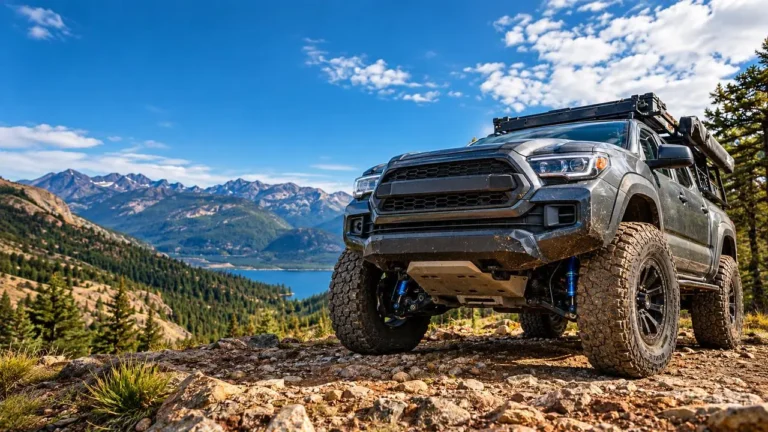
Searches for a Ford Bronco with lift kit often begin with a photograph. That’s understandable: the final stance matters. But two builds that look similarly tall may have very different suspension changes underneath them, especially when one has the factory Sasquatch tires and the other has narrower stock rubber.
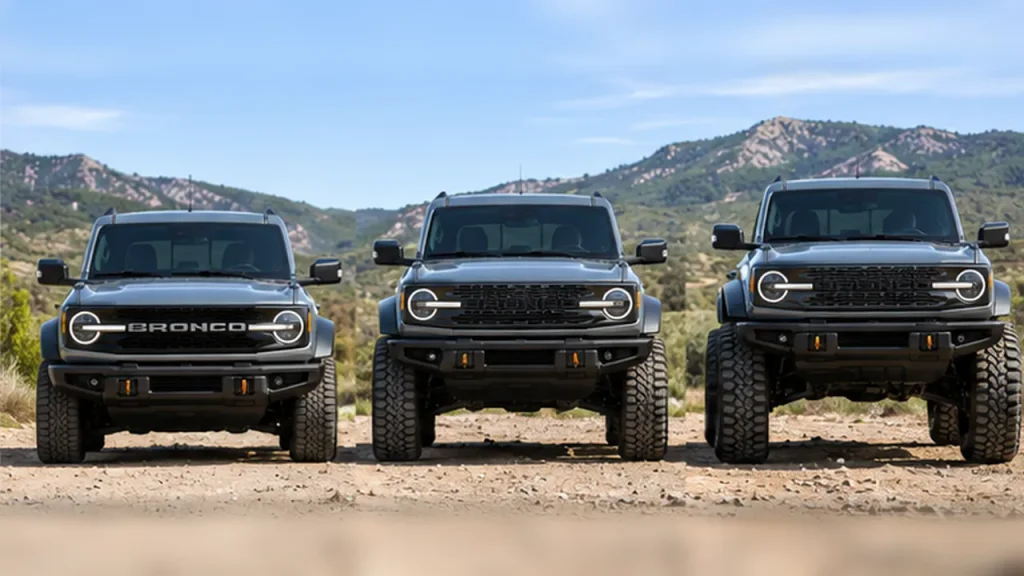
Two Inches Looks Different on a Base Bronco and a Sasquatch
An unloaded standard Bronco with a two-inch suspension increase generally shows more visual separation between the body and tires than it did originally. A Sasquatch starts taller, with bigger tires, so adding a similar advertised amount does not necessarily create the same visual change—or the same net lift according to the kit’s specification.
When using build photographs to judge the result, look for a matching body style, factory suspension, tire diameter, wheel offset and actual fender-height measurements. The right photo is not just the one with the nicest lighting; it is the one closest to the vehicle you own.
Big Tires Can Make a Mild Lift Look Much Taller
Replacing smaller tires with 35s increases the wheel’s visible size and can raise the vehicle approximately half the increase in actual tire diameter at tire-supported points. A modest suspension lift combined with a tire change can therefore look more dramatic than the suspension number suggests.
The reverse is also true. A four-inch lift above small tires can leave a conspicuous amount of open wheel-well space. Decide whether your goal is visual balance, clearance for a specified tire or greater suspension capability before shopping by a photograph alone.
Check Garage Height, Step-In Height and Load Access
A lifted Bronco has everyday consequences that rarely appear in the product glamour shots. Roof racks and rooftop tents add to total garage height. A higher step-in can matter when children or passengers climb aboard, and roof-mounted cargo becomes less convenient to load. If you already use a low parking structure, measure clearance before changing anything.
A bigger tire also changes the position of the spare on the tailgate and may require checking carrier capacity and rear camera visibility, depending on the setup. The look is part of the decision, but it should not hide practical fitment problems that follow the vehicle home.
Suspension Geometry: What a Bronco Lift Kit Must Account For
The current Bronco has independent front suspension and a solid rear axle. That combination is good at its intended work, but it means the front and rear react differently to a suspension height increase. A complete installation must respect both, not merely make all four wheel arches look even.
Front Upper Control Arms, Ball Joints and Droop
As the front ride height increases, the control arms and ball joints operate at different angles. This can affect alignment range and how much extension travel remains available. Some mild-height systems are designed around factory upper arms, while higher kits include corrected arms or specify them as a requirement.
Do not buy an aftermarket upper control arm because someone on a forum says every lifted Bronco needs one. Equally, don’t assume the originals can operate safely at any height. Inspect the approved kit range, joint articulation and clearance. A suspension that tops out sharply over dips has not been made better just because it gained an inch of stance.
CV Shafts and the Front Differential
The front half-shafts have constant-velocity joints whose operating angles change as an independent-front-suspension Bronco is lifted. Higher static ride height can put those joints at more severe positions through the available travel. That does not make every two-inch lift harmful, but it is why very tall spacer combinations should not be treated casually.
Look for the manufacturer’s engineered lift range and instructions addressing droop, differential and CV clearance if relevant. A test drive on smooth asphalt will not prove that every component clears at full extension or under trail articulation.
Tie Rods and Steering Rack Loads
Large, heavy off-road tires can place additional demands on tie rods and the steering system, particularly when the tire is forced against rocks. Some higher-clearance Bronco systems include tie-rod reinforcement components; that inclusion is a sign that the manufacturer has considered more than the visible springs and shocks.
Reinforcement is not a promise that steering parts become indestructible, and simply adding heavier hardware does not correct poor geometry. Use the parts and inspection procedures appropriate to the chosen suspension and wheel/tire package, not a pile of unrelated accessories.
Rear Track Bar and Axle Centering
Unlike the independent front, the Bronco’s solid rear axle is located laterally by a track bar. When the suspension’s ride height changes, the bar swings through a different part of its arc and the rear axle can sit slightly off center. Larger lifts may require an adjustable rear track bar or manufacturer-specified relocation hardware.
This is why a kit that changes the rear springs but says nothing about rear axle position deserves a closer look. Our track bar relocation bracket guide explains the distinction between an axle-side bracket, a frame-side change and a bar-length adjustment. The right correction is vehicle- and kit-specific.
Brake Hoses, ABS Wiring and Electronic Systems
The suspension must not pull brake hoses or wheel-speed sensor wiring tight at full droop. Check routing, sway-bar links and any clearance points required by the installation manual. After the height change, the vehicle may also need headlight aim, wheel alignment and driver-assistance checks.
Ford’s installation documentation for its performance suspension includes procedures for alignment, headlight adjustment and cruise-control radar alignment. That is a useful reminder that installation is a vehicle-level job, not just changing four springs. A lack of warning lights does not establish that every calibration and mechanical clearance is correct.
Ford Bronco Lift Kit Cost and Installation
The installed price can be surprisingly different for two Broncos getting approximately the same lift. A basic spacer package reuses much of the stock hardware. A Ford Performance suspension replacement or a high-end reservoir coilover system includes much more expensive components. Neither price tells you whether it is right for the vehicle.
Budget Spacers and Complete Kits Have Different Jobs
At the entry level, some application-specific spacer products sell for roughly a hundred dollars or a few hundred dollars in parts. Complete spring-and-damper kits can run into four figures, and premium coilovers with arms and supporting hardware can cost several thousand dollars before installation. Those are broad shopping tiers, not fixed prices for all 2021–2026 Broncos.
Compare what is supplied at each price: front versus all four corners, assembled or loose springs, upgraded dampers, upper arms, brake-hose brackets, alignment parts and warranty. A low-cost spacer fitted to an incompatible factory shock is not a bargain, however attractive its sale price looks.
Installation Labor Is More Than Four Corner Bolts
A lift may require spring disassembly, new fasteners, careful torque procedures and suspension checks across its travel. Some Ford kits specify additional steering or sensor procedures. Ask the installer for a written quote covering the kit, labor, required replacement hardware, alignment and any camera or radar-related checks.
Labor varies with region and whether the suspension is rusty, damaged or already modified. For broad U.S. price ranges by kit type, see our lift kit installation cost guide; here the more useful decision is whether the Bronco kit you are comparing includes everything needed for its claimed height.
Alignment and Tire Fitment Are Not Optional Extras
After a suspension height change, a professional alignment should be planned according to the manufacturer’s instructions. Toe, camber and caster may change, and correct steering-wheel position by itself is not proof of alignment. If the shop cannot bring the settings into the approved range, find out why rather than accepting a bad result because the truck looks level.
With new wheels or tires, have the installer confirm clearance at steering lock and throughout the relevant suspension travel. That can reveal a contact point that a parked photograph misses. Tire changes may also affect speedometer indication and the way the vehicle performs in everyday braking and acceleration.
Warranty, Insurance and On-Road Rules
Installing aftermarket suspension parts does not mean every unrelated factory warranty claim automatically disappears. But damage attributable to a modification may not be covered, and some products have their own limited installation and component warranty conditions. Keep invoices and the manufacturer’s instructions, and ask the dealer about any questions specific to your vehicle.
Lift-height, lighting and tire coverage rules vary by location. Verify your state’s requirements and any inspection or insurance implications before ordering parts. Buying a brand-name kit is not the same as receiving blanket approval for every modification or tire size.
What to Check Before Ordering the Kit
You can avoid many expensive returns with ten minutes of careful identification. Write down the truck’s actual configuration and compare it with the manufacturer’s current part number and instructions—not just the shortened title of a marketplace listing.
- Exact vehicle: model year, full-size Bronco (not Sport), and two-door or four-door body.
- Trim and suspension: original or swapped shocks, Sasquatch/Badlands equipment, HOSS version and any Raptor-specific requirements.
- Desired change: net front and rear lift from your current measured ride heights, not just the advertised spacer thickness.
- Wheel and tire package: actual diameter, section width, rim width, offset/backspacing and full-lock clearance.
- Kit contents: front and rear parts, springs, mounts, UCAs, hardware and any required rear track-bar correction.
- Installation requirements: spring-compressor work, new fasteners, torque procedures, alignment and sensor/headlight checks.
- How the Bronco is used: pavement, trails, fast rough roads, towing or added steel bumpers, winch and overlanding gear.
- Documentation: current fitment chart, instructions, exclusions, warranty and a professional quote for the complete job.
Don’t Trust a Single “Fits 2021–2026” Badge
A manufacturer may support a particular year range while excluding Sasquatch, a specific shock package, or the Raptor. A retailer may merge several different products into one catalog entry and show reviews that apply to other variants. Record the SKU and match it directly against the official fitment document.
A particularly revealing example is the separation between Zone’s base-shock kit, Badlands/Sasquatch kit and HOSS 3.0-specific kit. All address the same vehicle nameplate, but their documented applications are not interchangeable. If the seller cannot identify which one suits your suspension, do not let a low price make the decision for you.
Ask the Shop What Happens After Installation
A good quote should say more than “install lift.” Ask whether the shop will inspect joint travel, check brake and ABS routing, measure actual front and rear lift, center the rear axle if the kit calls for it, align the vehicle and check headlights or driver-assistance functions when specified.
It is also worth asking what happens if a 37-inch tire rubs or the steering cannot be aligned within specification. The answer should be a documented fitment or corrective-parts plan, not another spacer added on the spot.
Ford Bronco Lift Kit FAQ
The answers below focus on choosing a compatible suspension kit for the 2021–2026 full-size Bronco. Exact parts and tire combinations still need verification against the current manufacturer’s instructions.
What is the best lift kit for a Ford Bronco?
For a stock non-Sasquatch daily driver, a documented mild spacer or matched two-inch shock-and-spring package is often the sensible choice. For frequent off-road use, a vehicle-specific coilover setup with the necessary geometry corrections may be worth the extra money. There is no single best SKU across Base, Badlands, Sasquatch, HOSS 3.0 and Raptor.
Is a 2-inch lift enough for a Bronco?
Often, yes, if the goal is a more aggressive stance or a modest tire upgrade. It may be insufficient for a particular wide 35-inch tire or a 37-inch build. Check the tire, wheel and factory suspension before deciding based on the advertised height alone.
Can you fit 35s on a non-Sasquatch Bronco with a 2-inch lift?
Some combinations can, but it is not guaranteed. Wheel offset, tire width, front clearance hardware and articulation determine the result. Demand a tire-and-wheel specification from the kit manufacturer rather than accepting an unqualified “fits 35s” claim.
Does a Sasquatch Bronco need a lift kit?
Not simply to run its original 35-inch-class tires. Additional lift is a separate decision for ground clearance, wheel/tire changes or suspension performance, and it must be approved for the Sasquatch shock and spring arrangement.
Can I put a 3-inch lift on a Bronco Badlands?
Only with a system specifically approved for that Badlands configuration, including its shocks, sway-bar equipment and intended ride-height range. A basic-shock spacer that fits a Big Bend should not be assumed to fit Badlands.
Can you lift a Bronco with HOSS 3.0?
Yes, with a compatible kit or engineered suspension replacement. Some products explicitly support HOSS 3.0 and others exclude it, so the actual part number and shock equipment decide. Do not treat all Wildtrak, Sasquatch or FOX-equipped vehicles as identical.
Are two-door and four-door Bronco lift kits the same?
Not necessarily. Body weight, wheelbase, load distribution, springs and shock tuning can differ. Ford Performance uses distinct part numbers for its two-inch two-door and four-door packages. Use the body-style application stated by the manufacturer.
Will a 4-inch lift fit 37-inch tires?
It may be part of a suitable setup, but four inches alone cannot guarantee it. Tire width, wheel offset, full compression, steering clearance and the particular suspension kit still matter. Larger tires may require other components or approved body-clearance work.
Do I need upper control arms after a 2-inch Bronco lift?
Not for every kit. Some mild systems are designed to retain factory arms, while others include or require corrected upper control arms. Follow the kit’s instructions and verify alignment and ball-joint travel rather than assuming a universal rule.
How much does it cost to lift a Ford Bronco?
Parts can range from a relatively inexpensive spacer kit to several thousand dollars for complete high-end suspension systems. Labor, alignment, tires and required geometry or electronic-system work add to the total. Compare complete installed quotes for the actual Bronco configuration.
Can I use a Bronco lift kit on a Bronco Sport or Raptor?
No, not unless the manufacturer specifically lists that separate model and application. Bronco Sport and Bronco Raptor use different vehicle or suspension architectures from a standard full-size Bronco. A shared model name is not proof of compatible mounts, loads or travel.
Buying a Used Bronco That Already Has a Lift
A secondhand Bronco can look perfectly normal while hiding an unknown spacer stack, swapped shocks or incorrect wheel fitment. Before adding more height, identify what is installed now. Compare part markings with manufacturer instructions, record current hub-to-fender measurements, and inspect how the front and rear suspension behave across their working ranges.
If the previous owner fitted Sasquatch take-off shocks to a non-Sasquatch truck, you cannot choose a new kit solely from the original trim or VIN equipment list. The current suspension is the starting point. An inspection and an alignment check can cost far less than trying to correct a mysterious clunk, poor steering feel or uneven tire wear after another lift is added.