What Is Scrub Radius? Positive vs. Negative Explained
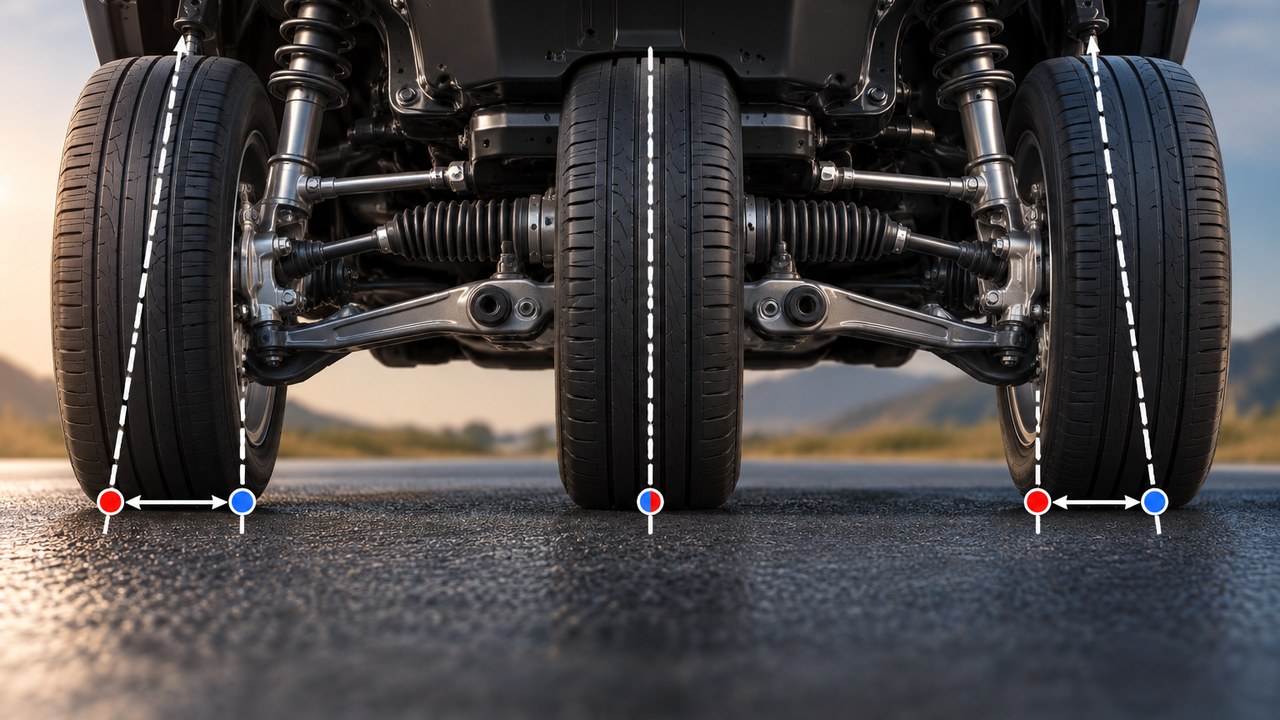
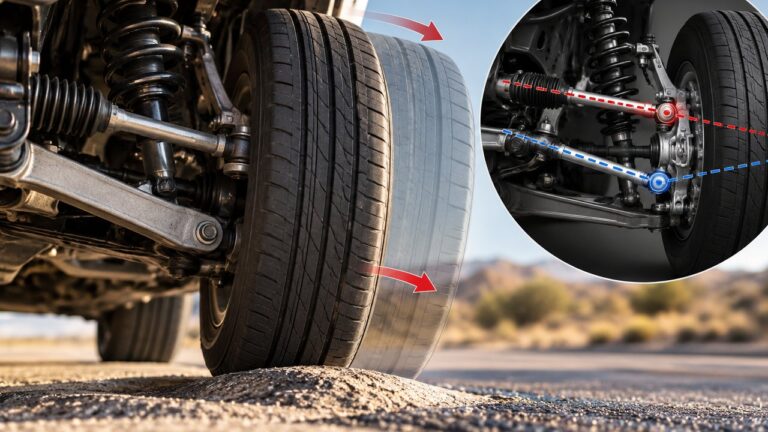
Scrub radius is the horizontal distance at road level between the center of the tire contact patch and the point where the steering axis intersects the ground. That small distance acts like a lever between the road and the steering system, which is why scrub radius can affect steering effort, kickback, torque steer and how a vehicle reacts when braking on surfaces with different levels of grip.
Scrub radius can be positive, negative or zero. Positive scrub radius places the tire-center point farther outboard than the steering-axis intersection. Negative scrub radius places it inboard. Zero scrub radius means the two points meet at the same location on the road.
The important practical point is that scrub radius is engineered as part of the complete front suspension. Changing wheel offset, adding spacers, altering tire diameter or modifying ride height can move the geometry away from its factory relationship even when a conventional alignment still shows acceptable toe, camber and caster.
Scrub Radius Explained in 30 Seconds
Viewed from the front of the vehicle, imagine two points on the road:
- Point 1: the center of the tire contact patch.
- Point 2: where the steering axis would reach the road if you extended it downward.
The horizontal distance between those points is the scrub radius.
When road, braking or acceleration forces act through the tire contact patch, that distance gives those forces leverage around the steering axis. A larger lever arm generally means more of those forces can be felt through the steering system.
| Scrub radius | Steering-axis intersection | Tire contact-patch center | Typical effect |
|---|---|---|---|
| Positive | More inboard | More outboard | More leverage and steering feedback |
| Zero | Same point | Same point | Minimal geometric lever arm |
| Negative | More outboard | More inboard | Can improve stability under unequal braking and reduce torque-steer tendencies |
This guide uses the conventional automotive sign convention above. Some diagrams and calculators may present the geometry differently, so always check how a particular source defines positive and negative before comparing numbers.
Positive vs. Negative vs. Zero Scrub Radius
Positive Scrub Radius
With positive scrub radius, the center of the tire contact patch sits outboard of the point where the steering axis reaches the road.
This creates a lever arm between the road force acting at the tire and the steering axis. Increasing that distance can increase steering feedback and make road impacts more noticeable through the wheel.
A vehicle with excessive positive scrub radius may show more:
- steering kickback over potholes and rough pavement;
- sensitivity to unequal braking forces;
- torque steer on powerful driven front wheels;
- steering effort or heavier steering feel;
- reaction to wheel imbalance or road irregularities.
Positive scrub radius is not automatically bad. Many suspension designs intentionally use some positive scrub. The issue is moving far away from the geometry for which the vehicle was designed.
Negative Scrub Radius
With negative scrub radius, the center of the tire contact patch sits inboard of the steering-axis intersection at road level.
Negative scrub radius is common in many modern front-wheel-drive and all-wheel-drive designs because it can help reduce steering disturbances caused by unequal driving or braking forces.
For example, if one front tire has considerably more braking grip than the other, the steering torque generated by negative scrub geometry can help counter part of the vehicle’s tendency to pull toward the higher-grip side.
It can also help reduce torque-steer tendencies on driven front wheels because the forces generated at the tire act through a different lever-arm direction than they would with a large positive scrub radius.
Zero Scrub Radius
Zero scrub radius occurs when the steering axis reaches the road at the center of the tire contact patch.
It sounds ideal because there is no lateral distance between the two points, but zero is not automatically the perfect target. Vehicle manufacturers design scrub radius together with caster, steering-axis inclination, wheel offset, compliance and the rest of the suspension.
The goal is therefore not simply to modify every vehicle until the scrub radius reaches zero. The goal is to preserve or intentionally engineer the relationship required by that particular suspension.
Why Scrub Radius Matters
Scrub radius matters because tire forces do not act directly through the steering-axis pivot point unless scrub radius is exactly zero.
The greater the distance between those points, the larger the mechanical lever through which road forces can influence the steering.
Steering Feel and Effort
Changing scrub radius can alter how much feedback reaches the steering wheel and how the front tires behave as they turn around the steering axis.
A larger scrub radius can make steering inputs and road texture feel more pronounced. Whether that feels communicative or simply harsh depends on the complete suspension, tire, steering-assistance system and size of the change.
Kickback Over Bumps
When one front tire hits a pothole, rock or sharp road edge, the impact force acts at the contact patch.
If that force is acting through a large lever arm relative to the steering axis, it can generate more steering torque. The driver may feel this as stronger kickback through the steering wheel.
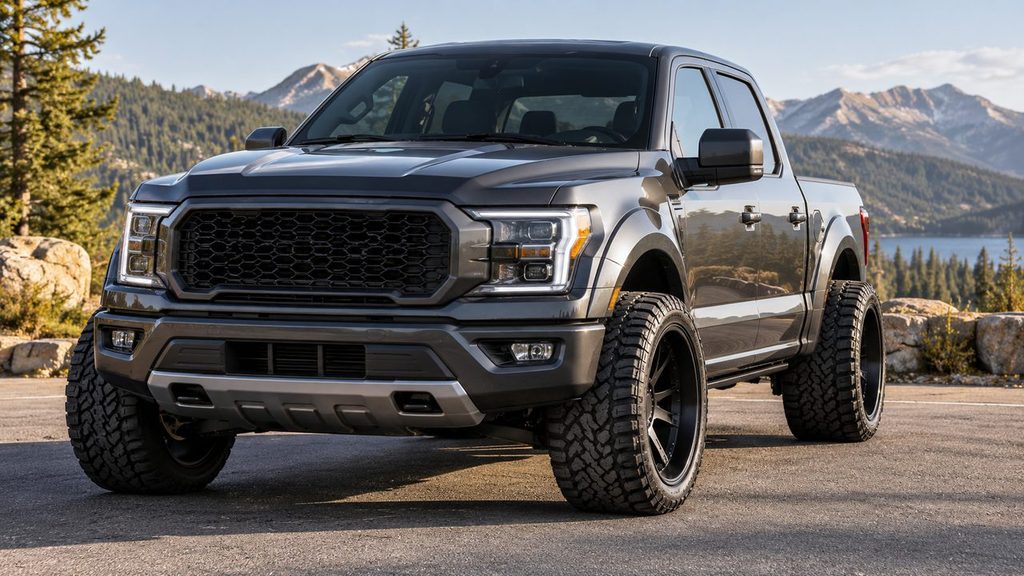
This effect can become particularly noticeable on trucks running large tires and wheels that have been moved significantly outward from their original position.
Braking Stability
Scrub radius also affects what happens when the braking force at one front tire is different from the other.
This can occur during split-friction braking—for example, when one side of the vehicle is on dry pavement while the other is on snow, gravel or another lower-grip surface.
The unequal braking forces create steering moments around the steering axes. Manufacturers can use scrub-radius direction and magnitude as part of the geometry that helps manage those forces.
Torque Steer
On front-wheel-drive and some all-wheel-drive vehicles, uneven drive forces at the front tires can create steering torque under acceleration.
A large positive scrub radius can amplify that effect, while negative scrub radius can be used as part of the vehicle’s strategy to reduce it.
This is one reason changing the wheel position dramatically on a powerful front-wheel-drive car can change steering behavior even when the new wheels physically fit without rubbing.
What Determines Scrub Radius?
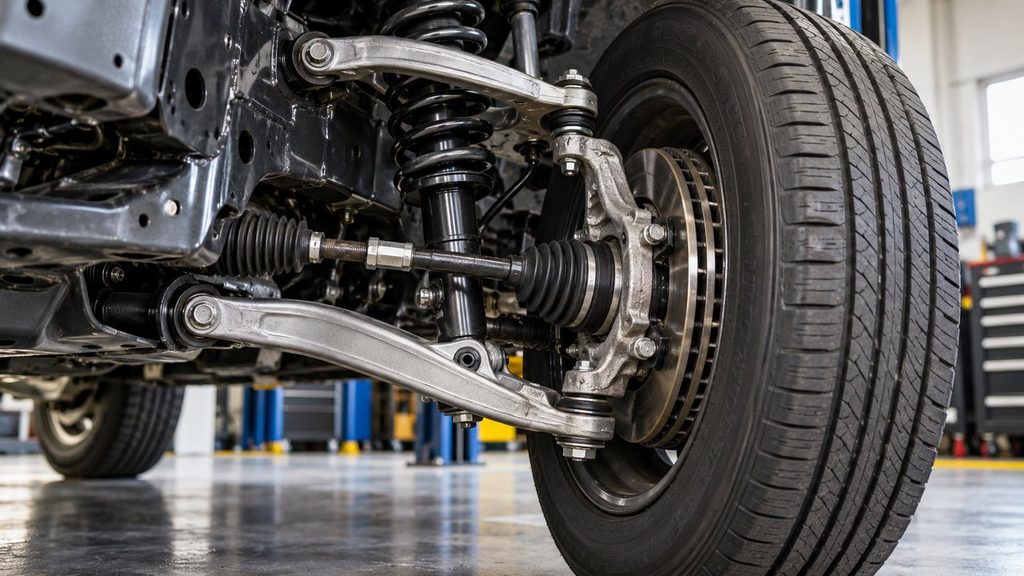
Scrub radius is not set by one component. It results from the relationship between the steering axis and the tire’s position at road level.
| Factor | How it affects scrub radius |
|---|---|
| Steering Axis Inclination / KPI | Determines where the steering axis reaches the road |
| Wheel offset | Moves the tire centerline inward or outward |
| Wheel spacer | Moves the complete wheel and tire outward |
| Tire diameter | Changes road height relative to the inclined steering axis |
| Ride height | Can change suspension angles and steering-axis geometry |
| Knuckle and suspension hardpoints | Define the physical steering-axis location |
Steering Axis Inclination and Kingpin Inclination
The steering axis is an imaginary line around which the front wheel steers.
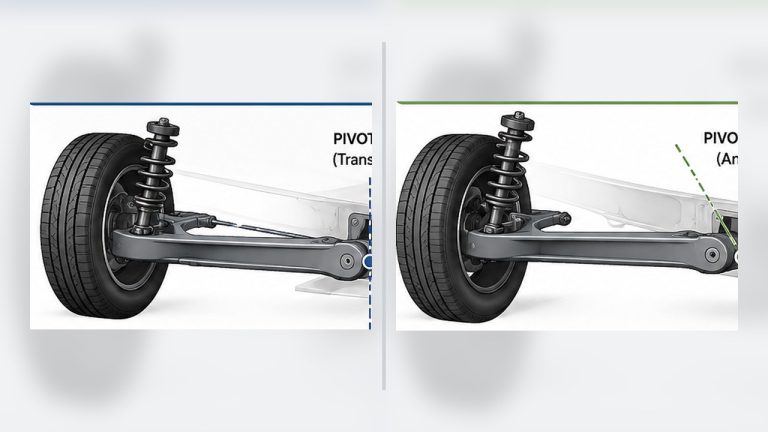
On a double-wishbone or SLA suspension, that line is generally defined by the upper and lower steering-knuckle pivots. On a MacPherson-strut suspension, it typically runs through the upper strut mount and lower ball joint.
Viewed from the front, the inward tilt of this axis is commonly called Steering Axis Inclination (SAI) or Kingpin Inclination (KPI).
Extend that axis until it reaches the road and you have one of the two points needed to establish scrub radius.
Wheel Offset
Wheel offset is one of the easiest ways for an owner to unintentionally change scrub radius because it moves the tire centerline relative to the hub and steering axis.
A lower positive offset—or a more negative offset—typically moves the wheel outward. If the steering-axis ground intersection remains essentially unchanged, that moves the tire contact-patch center outward and makes scrub radius more positive.
A higher positive offset generally moves the tire inward, shifting scrub radius in the opposite direction.
If wheel terminology is the confusing part, our wheel offset vs. backspacing guide explains exactly where offset is measured and how it changes wheel position.
Tire Diameter
Tire diameter can also influence scrub radius because the road surface is effectively farther from or closer to the suspension as tire radius changes.
Because the steering axis is inclined rather than vertical, extending that line to a different road height can move its intersection point laterally.
This means two vehicles using the same wheel offset can still have different scrub-radius geometry if tire diameter or suspension geometry differs.
Ride Height and Suspension Geometry
Lowering or lifting a vehicle can alter the operating angles of control arms, struts and steering components.
Whether that produces a meaningful scrub-radius change depends on the suspension design and how the steering axis moves with ride height. It should not be assumed that every one-inch lift or drop creates the same scrub-radius change on every vehicle.
How Wheel Offset Changes Scrub Radius
Wheel offset and scrub radius are closely related, but they are not the same measurement.
Offset belongs to the wheel. It measures the location of the wheel mounting face relative to the wheel centerline.
Scrub radius belongs to the complete vehicle geometry. It compares the tire contact-patch center with the steering-axis intersection at the road.
Consider a simplified example where no other geometry changes:
- The original wheel is +40 mm offset.
- The replacement wheel is +30 mm offset and otherwise positions the tire similarly.
- The tire centerline moves approximately 10 mm outward.
If the steering-axis intersection stays in the same location, the scrub radius becomes approximately 10 mm more positive.
That does not mean the vehicle now has exactly +10 mm scrub radius. It means the change in wheel position has shifted the existing scrub radius by roughly that amount under the simplified assumptions. The starting factory geometry still matters.
How Wheel Spacers Affect Scrub Radius
A wheel spacer moves the entire wheel-and-tire assembly outward while the suspension steering axis remains in essentially the same location.
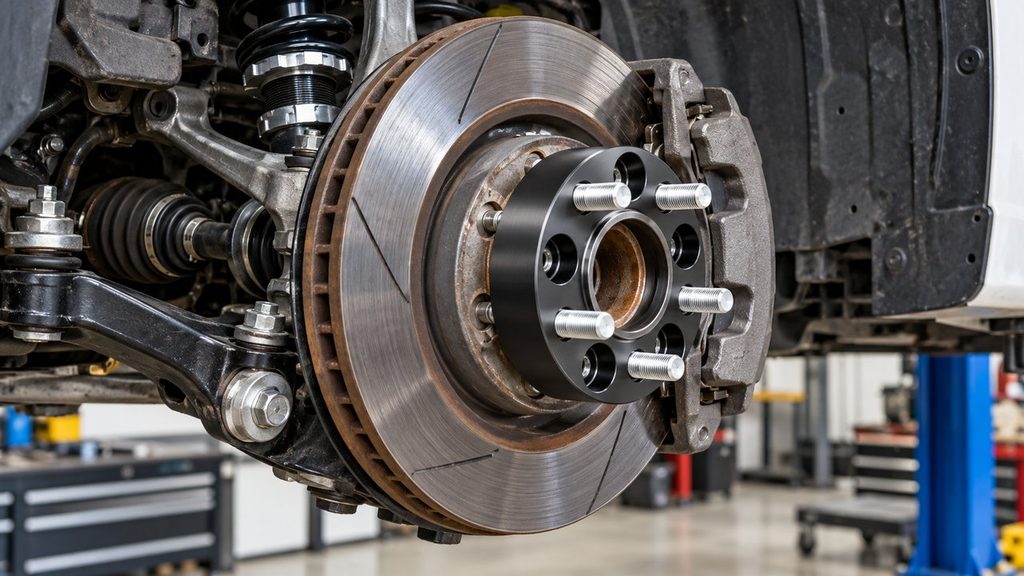
Therefore, a spacer normally makes the scrub radius more positive by approximately the spacer thickness, assuming tire diameter and the rest of the geometry remain unchanged.
For example, adding a 15 mm spacer moves the tire centerline about 15 mm outward. From a wheel-position perspective, that produces approximately the same change as reducing wheel offset by 15 mm.
Scrub radius is only one consequence of doing that. Hardware, bearing leverage, inner and outer clearance and effective wheel offset also matter, which is why those issues are covered separately in our wheel spacers pros and cons guide.
Do Wider Wheels Increase Scrub Radius?
Not necessarily. Wheel width by itself does not determine scrub radius.
If a wider wheel keeps the tire centerline in essentially the same lateral position, the scrub-radius change can be small even though inner and outer wheel clearance change significantly.
The problem is that aftermarket wheel-width changes are often combined with different offsets. A wider wheel with substantially lower offset can move the tire centerline outward considerably, and that lateral movement changes scrub radius.
So instead of asking only whether the new wheel is wider, compare the actual centerline position of the old and new wheel-and-tire packages.
Do Bigger Tires Change Scrub Radius?
They can.
A taller tire raises the hub farther above the road. Because the steering axis is inclined, the point where that axis reaches the road can shift laterally as tire radius changes.
The result depends on steering-axis inclination and the existing wheel position, so a larger tire does not produce one universal millimeter-for-millimeter scrub-radius change.
This is also why calculating scrub radius from wheel offset alone can be misleading. Offset tells you where the wheel sits; it does not fully describe the suspension’s steering-axis geometry.
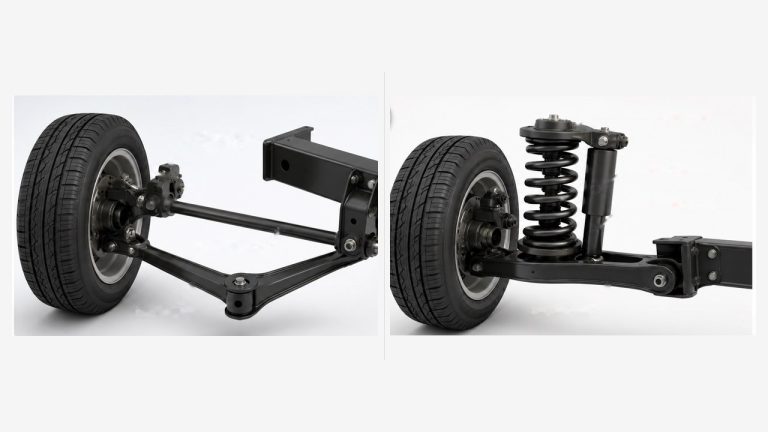
Scrub Radius on MacPherson Strut vs. Double-Wishbone Suspension
The definition of scrub radius stays the same regardless of suspension type, but the steering axis is established differently.
| Suspension design | Typical steering-axis reference |
|---|---|
| MacPherson strut | Upper strut bearing to lower ball joint |
| Double wishbone / SLA | Upper ball joint to lower ball joint |
| Modified performance suspension | Actual upper and lower steering pivot points used by the knuckle |
Because those pivot locations differ, two vehicles can run identical wheels and tires yet have completely different scrub-radius values.
This is why copying another vehicle’s wheel offset does not prove that the same offset is geometrically appropriate on yours.
Scrub Radius vs. Bump Steer
Scrub radius and bump steer can both change how steering feels over uneven roads, but they describe different geometry.
Scrub radius is the lateral distance at road level between the tire contact-patch center and steering-axis intersection.
Bump steer is an unintended change in toe as the suspension moves through bump and droop.
A large scrub radius can increase how strongly road impacts feed torque into the steering wheel. True bump steer occurs because suspension and steering-link arcs change the direction the wheel points during suspension travel.
If the problem is a vehicle that actually changes toe or steers itself as the suspension compresses, our bump steer guide covers that separate geometry in detail.
Can a Wheel Alignment Fix Scrub Radius?
A standard wheel alignment usually cannot restore factory scrub radius if the wheel or tire position has been changed significantly.
An alignment adjusts parameters such as toe, and on applicable suspensions camber and caster. Scrub radius also depends on the relationship between the steering axis and tire centerline.
If aftermarket wheels have moved the tire 25 mm outward, adjusting toe does not move that tire centerline 25 mm back inward.
This explains why a vehicle can receive an alignment printout showing normal toe, camber and caster yet still feel noticeably different after a major wheel-offset change.
TreadPlus similarly notes that changing wheels can alter scrub radius while normal alignment readings remain within specification because conventional toe, camber and caster measurements do not directly measure the contact-patch offset from the steering axis.
How Do You Measure Scrub Radius?
Accurately measuring scrub radius requires identifying both the tire contact-patch center and the steering-axis intersection at the road.
The general geometry is:
- Establish the vehicle at its actual operating ride height.
- Identify the front-view steering axis from the correct suspension pivot points.
- Determine the steering-axis inclination.
- Extend that axis mathematically or graphically to the road surface.
- Establish the lateral center of the tire contact patch.
- Measure the horizontal distance between the two road-level points.
Accurate calculation can require suspension dimensions that are difficult to obtain with the wheel installed, which is why professional alignment or suspension-analysis equipment is preferable when an exact value matters.
For wheel-fitment decisions, it is often easier to compare the change from a known factory configuration. If a new wheel moves the tire centerline 12 mm outward while the suspension geometry and tire diameter remain unchanged, you know the scrub radius has moved approximately 12 mm in the positive direction even if you do not know the vehicle’s absolute factory value.
How Much Scrub Radius Is Too Much?
There is no universal number that defines excessive scrub radius for every car and truck.
A value that works well on one suspension may behave poorly on another because steering ratio, caster, tire size, vehicle weight, power steering, drivetrain layout and suspension geometry all influence the result.
Instead of chasing a generic target, compare modifications with the vehicle’s original geometry and watch for meaningful changes in:
- steering effort;
- kickback over bumps;
- torque steer;
- braking stability;
- straight-line tracking;
- steering feedback;
- tire and suspension clearance.
The farther the wheel-and-tire centerline moves from its engineered position, the more important it becomes to evaluate the complete suspension rather than considering appearance or fender fitment alone.
What Happens When Scrub Radius Becomes Too Positive or Too Negative?
| Large change | Possible effect |
|---|---|
| Much more positive | Stronger kickback and road feedback |
| Much more positive | Greater sensitivity to unequal braking forces |
| Much more positive | More torque-steer tendency on driven front wheels |
| Much more positive | Changed steering effort and feel |
| Much more negative | Steering behavior may feel less natural for a chassis not designed for it |
| Either direction | Vehicle behavior departs from the manufacturer’s intended steering geometry |
These are tendencies rather than guaranteed symptoms. Scrub radius works together with the rest of the suspension, so the same numerical change can feel different on different vehicles.
Scrub Radius FAQ
Is positive or negative scrub radius better?
Neither is universally better. Manufacturers deliberately use positive, negative or near-zero values depending on suspension geometry, steering feel, drivetrain layout and braking behavior. Preserving the intended geometry is usually more important than choosing a sign in isolation.
Is scrub radius the same as wheel offset?
No. Wheel offset is a dimension of the wheel. Scrub radius is a suspension-geometry measurement at the road surface. Changing offset often changes scrub radius because it moves the tire centerline.
Does zero-offset wheel mean zero scrub radius?
No. A 0 mm offset wheel only means its mounting face lies at the wheel centerline. Scrub radius also depends on steering-axis location, tire diameter and the vehicle’s suspension geometry.
Do wheel spacers increase scrub radius?
They normally make scrub radius more positive because they move the tire contact-patch center outward while leaving the steering axis essentially unchanged. The approximate change is similar to the spacer thickness when the rest of the geometry is unchanged.
Does a lift kit change scrub radius?
It can. A lift changes the operating position of suspension components, and larger tires or lower-offset wheels commonly installed with the lift can alter scrub radius further. The actual change depends on suspension design and the complete wheel-and-tire setup.
Can scrub radius cause tire wear?
Large deviations can alter steering forces and tire behavior, but unusual tire wear should not automatically be blamed on scrub radius. Toe, camber, tire pressure, worn suspension parts and driving conditions are more common variables and should also be checked.
Can scrub radius cause steering wheel kickback?
Yes. A larger scrub-radius lever arm gives road impacts acting at the tire contact patch more leverage around the steering axis, which can increase kickback through the steering system.
Check Scrub Radius Before Changing Wheel Position
Scrub radius is easy to overlook because it is not printed on the side of a wheel and may not appear on a standard alignment report. But it is one of the reasons wheel fitment is more than a cosmetic decision.
Lower-offset wheels and spacers can move the tire outward enough to change the lever arm between the contact patch and steering axis. Tire diameter and ride-height changes can alter the relationship further.
That does not mean every aftermarket wheel, spacer or suspension modification creates a problem. It means the final position of the tire relative to the steering axis matters just as much as whether the wheel clears the fender and suspension.
If you are planning a significant fitment change, compare the new wheel and tire position with the factory setup first. Preserving a sensible scrub-radius relationship can help retain the steering feel, braking stability and predictability the suspension was designed to provide.