Why Does My Car Feel Wobbly When Driving? 9 Causes

A car that feels wobbly while driving may have a damaged tire, an out-of-balance wheel, a bent rim, loose wheel hardware, a worn wheel bearing, or play in a steering or suspension joint. The speed at which it happens—and whether you feel it through the steering wheel, seat, or whole body—can help narrow the cause.
Do not assume the suspension is responsible. Tire and wheel faults are common and should be checked first because some can become dangerous quickly. If the wobble started suddenly, is severe, or is accompanied by a thump, tire bulge, grinding noise, or loss of control, slow down smoothly and stop in a safe place.
What Does a Wobbly Car Feel Like?
Drivers use “wobbly” to describe several different sensations. Identifying the closest match is more useful than replacing parts based on the word alone.
| What you feel | Where you feel it | Common first checks |
|---|---|---|
| Slow side-to-side wobble | Seat, floor, or whole body | Tire damage, separated belt, bent wheel, or excessive runout |
| Vibration that increases with road speed | Steering wheel or cabin | Wheel balance, tire condition, bent rim, or hub fitment |
| Steering wheel shakes | Mostly through your hands | Front tire/wheel assembly, front bearing, tie rod, or ball joint |
| Seat or floor vibrates | Rear or center of the vehicle | Rear tire/wheel assembly or driveline |
| Wobble mainly while braking | Steering wheel or brake pedal | Brake rotor, hub, caliper, or suspension play |
| Vibration mainly under acceleration | Floor, seat, or steering wheel | CV axle, driveshaft, mount, or driveline angle |
If the vehicle does not shake repeatedly but instead feels vague, floaty, or difficult to keep in its lane, use our separate guide for a car that feels loose or wanders while driving. That is a directional-control symptom, not necessarily a rotating wheel wobble.
9 Causes of a Car Feeling Wobbly While Driving
1. A Damaged Tire or Separated Internal Belt
A tire can develop internal damage after a pothole impact, curb strike, puncture, or long period of deterioration. A shifted or separated belt may make the tread rotate unevenly even when the outside of the tire does not look badly worn.
This often produces a slow, rolling or “egg-shaped” wobble at neighborhood speeds. The sensation may become a faster vibration as speed rises. Look for bulges, exposed cords, unusual tread distortion, cracking, or a rhythmic thump. An apparently normal exterior does not rule out internal damage, so persistent wobble requires a professional tire inspection.
2. Incorrect or Unequal Tire Pressure
One tire with substantially different pressure can change its shape and stiffness enough to make the vehicle feel unstable. Check all four tires when cold and use the pressure listed on the driver-door placard or in the owner’s manual—not the maximum pressure molded into the tire sidewall.
3. An Out-of-Balance Tire and Wheel Assembly
Wheel imbalance usually creates a vibration within a particular speed range, often becoming more noticeable at highway speed. A missing balance weight, tire replacement, wheel repair, or accumulated debris can change the assembly’s balance.
Front imbalance is often felt through the steering wheel; rear imbalance may be stronger through the seat or floor. Balancing should be performed with suitable equipment. If ordinary balancing does not solve the problem, the shop may need to check tire uniformity, radial-force variation, and wheel runout rather than repeatedly adding weights.
4. A Bent Wheel or Excessive Runout
A pothole or curb can bend a rim so the tire no longer rotates in a true circle. The wheel may appear acceptable from the outside while the inner rim is distorted. Excessive radial runout causes an up-and-down motion; lateral runout causes a side-to-side movement.
A technician can measure runout and separate a wheel problem from tire deformation. Replacing tires or aligning the vehicle will not correct a bent wheel.
5. Loose or Incorrectly Seated Wheel Hardware
If the wobble began immediately after a tire rotation, brake repair, or wheel installation, treat the change seriously. Incorrect seating, debris between the wheel and hub, unsuitable hardware, or improperly tightened lug nuts can prevent the wheel from running correctly.
Do not continue driving a vehicle suspected of having a loose wheel. Have the wheel installation checked using the manufacturer’s tightening sequence and torque specification. Guessing the torque or simply tightening every fastener as hard as possible can damage studs, distort components, or leave the wheel unsafe.
6. A Worn or Damaged Wheel Bearing
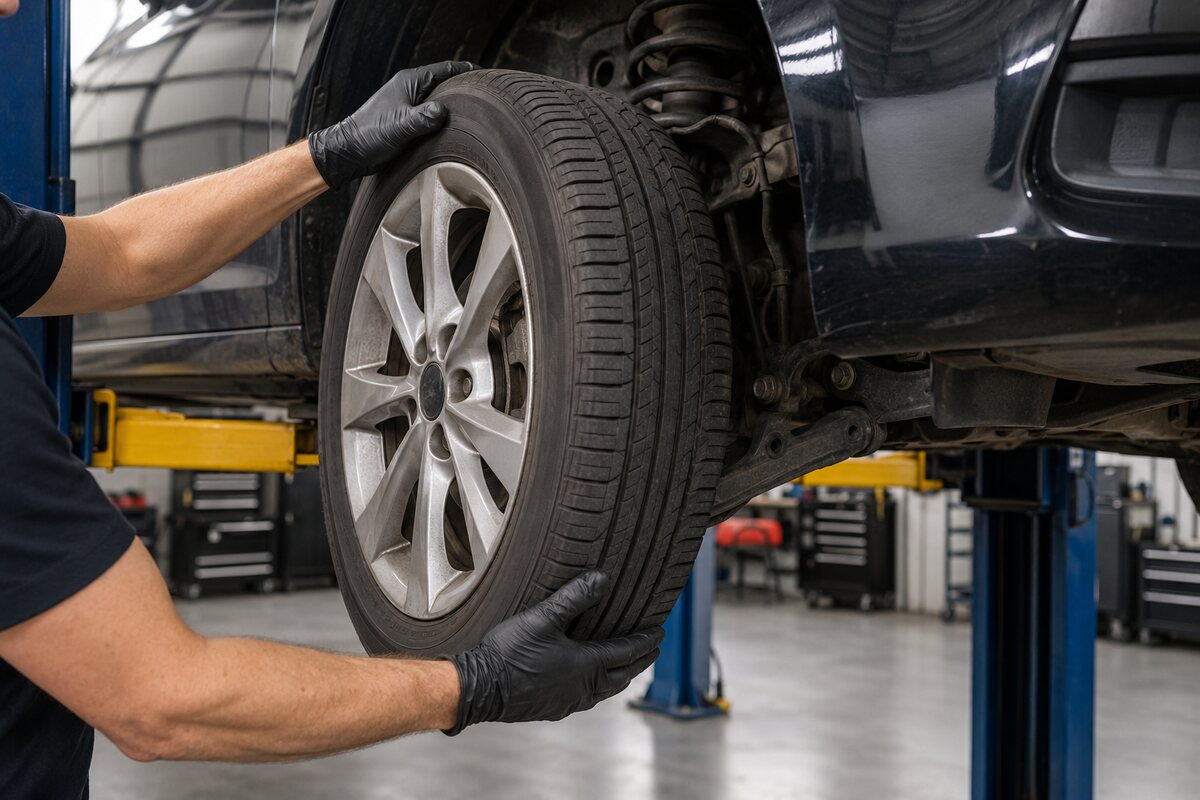
A worn bearing can allow wheel movement, produce a humming or growling noise, and sometimes change sound when the vehicle turns. Not every bad bearing creates obvious play, and play at the wheel can also come from suspension or steering joints.
Bearing diagnosis may require the vehicle to be safely lifted, the wheel rotated, and the source of movement isolated. Do not work beneath a vehicle supported only by its jack, and remember that some bearing designs require load or specialized testing before the fault becomes apparent.
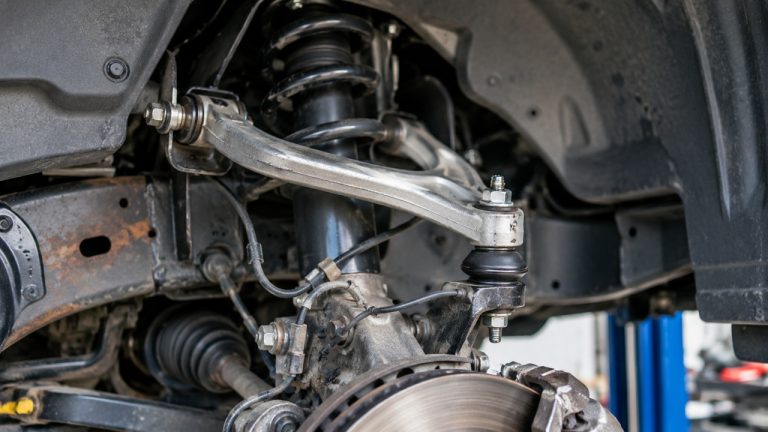
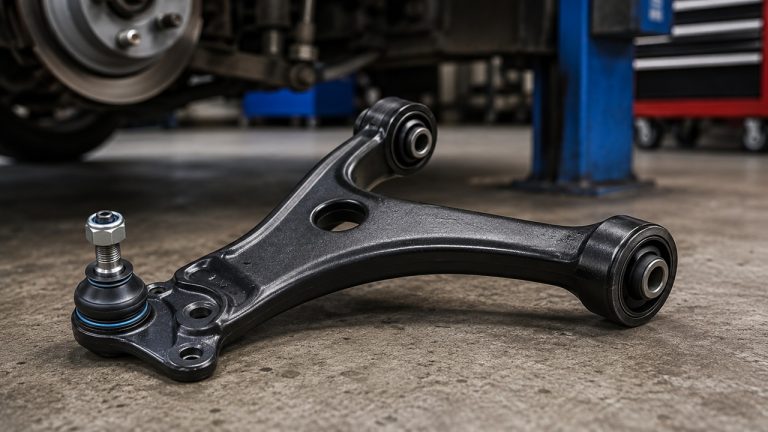
7. Worn Tie Rods, Ball Joints, or Control-Arm Bushings
Tie rods control steering angle, ball joints allow controlled suspension movement, and bushings locate the control arms while isolating vibration. Wear in any of these components can let a wheel change direction or position under load.
Possible clues include clunking, uneven tire wear, imprecise steering, a change during braking or turning, and detectable movement during an inspection. Because several joints can create similar symptoms, identify the component where the play occurs instead of replacing everything near the wheel.
8. Weak Shocks or Struts
Shocks and struts control spring and wheel movement. When damping becomes weak, a tire can lose consistent contact with an uneven road and the body may continue moving after a bump. The result is usually more of a float, bounce, or repeated body motion than a precise speed-related vibration.
Look for excessive bouncing, fluid leakage, nose dive, body roll, or cupped tire wear. A visible stain alone does not prove that a damper is responsible for a wobble. If you are unsure which assembly your vehicle uses, see the practical difference between shocks and struts.
9. Axle, CV Joint, Hub, or Driveline Problems
A bent axle or hub, worn inner CV joint, damaged driveshaft, or driveline-angle problem can create a vibration that is mistaken for wheel wobble. The strongest clue is when the symptom changes with engine load rather than road speed alone—for example, becoming worse during acceleration and easing when you lift off the throttle.
These faults require a different test path from simple wheel balancing. Tell the technician whether the vibration changes while accelerating, coasting, braking, turning, or selecting a different gear.
Why a Car Wobbles at Low Speed but Vibrates at High Speed
A distorted tire or bent wheel may be felt as a slow side-to-side movement when each revolution is easy to distinguish. As road speed increases, those individual movements occur more frequently and merge into a vibration. This pattern makes tire shape, wheel runout, seating, and internal belt damage especially important to check.
By contrast, an imbalance may be barely noticeable at low speed and strongest within a highway-speed range. The symptom can then change again as vehicle speed, suspension resonance, and road surface change. Speed is evidence, but it does not identify the failed part by itself.
Safe Checks You Can Do Before Visiting a Shop
- Record when it happens: note the speed, whether you are accelerating or braking, and whether the road is smooth.
- Identify where you feel it: steering wheel usually points toward the front; seat or floor may point toward the rear or driveline.
- Check cold tire pressure: compare every tire with the vehicle placard specification.
- Inspect visible tire surfaces: look for bulges, cuts, distorted tread, exposed cords, foreign objects, and unusual wear.
- Consider recent events: new tires, rotation, brake work, a pothole, curb strike, long storage, or wheel removal can all be relevant.
- Arrange wheel and tire testing first: ask for balance and runout checks before authorizing unrelated suspension parts.
The NHTSA tire-safety guidance explains why pressure, visible damage, tread condition, and recalls matter. For suspension checks that do not duplicate the tire inspection, follow our guide to checking a car’s suspension safely.
When Should You Stop Driving?
Stop as soon as it is safe and arrange assistance if the wobble is sudden or severe, the steering becomes difficult to control, a tire is visibly bulged or damaged, a wheel appears loose, you hear heavy thumping or grinding, or the vehicle changes direction unexpectedly. Avoid abrupt steering or braking while slowing down unless required to prevent a collision.
A mild vibration still deserves timely inspection. Continuing to drive can worsen tire damage, accelerate uneven or cupped tire wear, and place additional load on bearings and suspension components.
Frequently Asked Questions
Why does my car feel wobbly at slow speeds?
A low-speed wobble commonly points to a distorted tire, internal belt damage, bent wheel, excessive runout, or incorrect wheel seating. Inspect the tires and have the rotating assemblies checked rather than assuming an alignment will fix it.
Why does my car wobble only at highway speed?
Wheel imbalance is a common cause of speed-related vibration, but tire damage, a bent rim, hub fitment, bearings, and steering or suspension play can produce similar symptoms. Where the vibration is felt and whether it changes while accelerating or braking help determine the next test.
Can a bad alignment make a car wobble?
Alignment more commonly causes pulling, an off-center steering wheel, wandering, or uneven tire wear. It can contribute to instability and irregular wear, but a repeated speed-related wobble should also prompt tire, wheel, balance, runout, bearing, and joint checks.
Can bad shocks make a car feel wobbly?
Yes, weak damping can allow excessive bounce and reduce tire control over uneven surfaces. However, a wobble tied closely to wheel speed is more likely to begin with the tire and wheel assembly than with the shocks alone.
Do I need an alignment after fixing the cause?
Balancing or replacing a tire does not automatically require alignment. Replacing tie rods, control arms, struts, or other parts that affect wheel geometry often does. Use the repair procedure and see when an alignment is needed after suspension work.
Diagnose the Rotation Before Replacing the Suspension
Start with the tire and wheel assembly, because damage, pressure, balance, runout, and mounting problems can all create a wobble. Then check bearings, steering joints, suspension parts, and the driveline according to where and when the symptom occurs. A speed-based diagnosis is faster and safer than replacing shocks, struts, or alignment parts without confirming the source.