Radius Arm Drop Brackets: Fitment, Lift Height & Caster
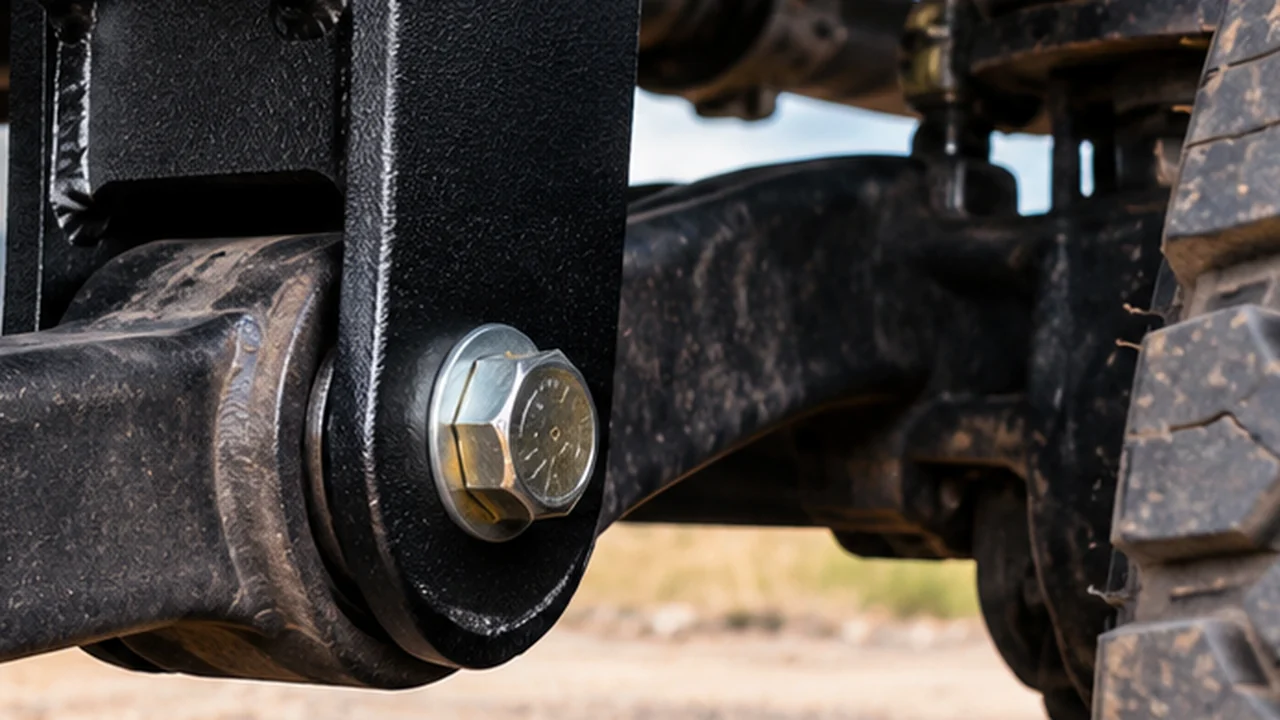
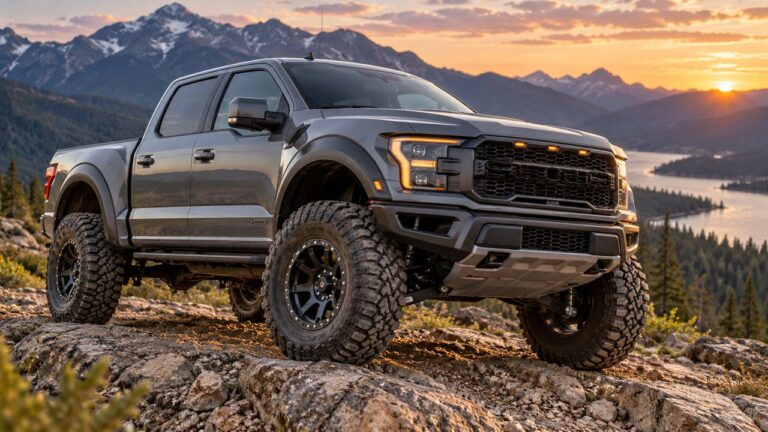
Radius arm drop brackets move the frame-side pivots of the front radius arms on certain lifted solid-axle trucks. The goal is to restore a more suitable arm angle and help recover steering caster, axle placement and suspension behavior after a lift. They can be a smart choice on a Ford Super Duty or Ram HD, but you do not need them just because the front end has been raised. The right answer depends on the truck, the actual lift, and how its suspension geometry was corrected.
Shopping for a kit? Start with three checks: model year and drivetrain, actual front lift height, and whether your existing lift already includes drop brackets or corrected radius arms. Then inspect the manufacturer’s exclusion list. A product advertised for a 3.5-inch lift is not automatically interchangeable with a 3.5-inch drop, and a 2017–2022 Super Duty part should not be assumed to fit a redesigned 2023-and-newer truck.
The brackets discussed here attach to the longitudinal front radius arms of applicable coil-sprung, solid-front-axle trucks. They are not a rear traction bar, a lateral track-bar bracket, or a generic cure for every wandering truck. The purpose here is to choose compatible brackets and understand their trade-offs—not to replace a vehicle-specific alignment or installation procedure.
Do You Need Radius Arm Drop Brackets on a Lifted Truck?
Use the following situations as a shopping filter. A measured alignment and the instructions supplied with your lift are more useful than a blanket rule about how many inches of lift demand a drop.
| Your setup | Drop-bracket decision | What to verify |
|---|---|---|
| Stock-height truck with sound factory geometry | Usually unnecessary | Current caster, bushings, mounts and factory configuration |
| Leveling kit or mild front lift | Maybe, not automatically | Lift-maker geometry requirements and measured caster |
| Front lift around 3–4 inches with original radius arms | Common candidate | Approved bracket height, axle position and arm angle |
| Taller system using its own drop brackets | Do not add a second set | Existing bracket design and complete lift part number |
| Long or caster-adjustable aftermarket radius arms | Depends on the arm system | Whether the arm manufacturer permits or requires a drop |
| Wandering, pulling or harsh ride with unknown cause | Diagnose before buying | Tire setup, alignment, steering components and bushing condition |
| Independent-front-suspension truck | This solid-axle product generally does not apply | Actual front suspension architecture |
A bracket is a geometry-correction component, not a promise of better handling on every truck. If you are still deciding how much height to add rather than which bracket fits a completed build, the broader suspension choices are covered in our leveling kit vs. lift kit comparison.
When the Original Radius Arms Are Still Being Used
A conventional radius arm locates the front axle fore and aft while also resisting the axle housing’s rotation. Raise the chassis relative to a solid axle and the arm sits at a different angle at rest. Repositioning its rear pivot can move that angle back toward the one intended by a particular lift system.
This is why many bracket listings specifically say they work with OEM radius arms. That wording matters. The manufacturer is accounting for the factory arm length, axle mounting points and intended lift range, not just the distance between two bolt holes.
When They Are Unnecessary—or the Wrong Fix
A mild level may already retain acceptable caster and arm geometry. A complete high lift may have relocated the arm pivots as part of its original kit. Either situation can make an additional generic drop counterproductive, even if the truck looks tall enough to “need something.”
Likewise, if the steering wanders because of worn track-bar bushings, incorrect tire pressures, damaged ball joints or loose steering hardware, new radius arm brackets will not repair those faults. Identify the cause before changing another structural mount.
What Radius Arm Drop Brackets Actually Change
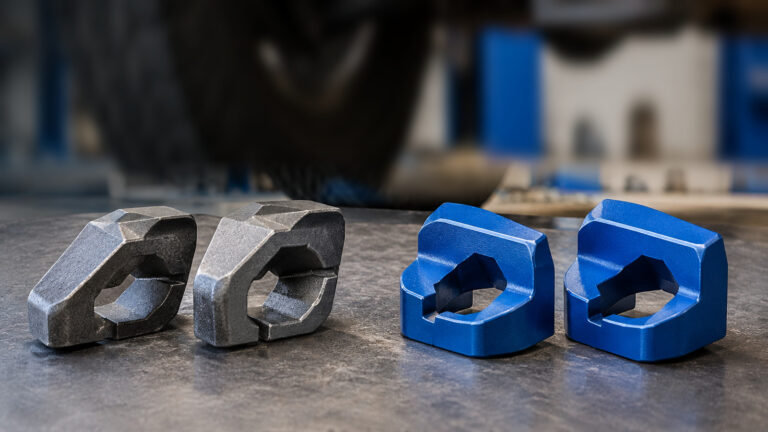
The part is usually a heavy steel bracket assembly that bolts to the existing frame mounting area and establishes a new location for the rear radius-arm pivot. It looks simple on a product page, but that pivot location is doing more work than the name suggests.
Radius Arm Angle and the Front Axle’s Fore-Aft Position
A solid axle with radius arms moves through a constrained arc as the suspension compresses and extends. Lifting the front changes where the axle and arms sit on that arc at normal ride height. Changing the rear pivot position alters the relationship again, potentially bringing the axle closer to its intended longitudinal placement.
But “restores axle location” is not a universal amount or direction. Different bracket patterns, pivot offsets and arm lengths can change the outcome. Some specialist products even provide an optional forward-axle position for clearance; that should be understood as a specific engineered feature, not something every dropped bracket does.
Caster: Why Steering Feel Can Change
Caster describes the fore-aft tilt of the steering axis when viewed from the side. On these solid-axle layouts, axle rotation and radius-arm geometry are connected. A front lift can reduce the positive caster available at ride height, and a purpose-designed bracket may help put it back in a usable range. That can affect on-center feel and the way the steering returns after a turn.
The catch is that a bracket does not set a guaranteed caster number. Tire size, spring height, axle configuration, existing caster hardware and an adjustable arm can all change the final reading. An alignment rack—not a claim printed on a bracket—tells you what the vehicle actually has.
Spring Position, Pinion Angle and the Rest of the Suspension
Changing a front solid axle’s orientation can affect more than steering. The front driveshaft pinion relationship, coil-spring seat alignment and bushing loading can also be influenced by how the axle is located. On certain Ram systems, suppliers specifically mention improving coil bow caused by altered front suspension geometry.
None of this means a radius arm drop will magically solve a front driveshaft vibration or bowed spring on an incompatible truck. The proper target is the complete suspension geometry at ride height and throughout travel.
Which Drop Height Fits a 2.5-, 3.5-, 4- or 6-Inch Lift?
Two dimensions are easy to confuse: the lift height of the truck and the amount by which the radius-arm pivot is relocated. They are related by the bracket’s engineering, but they are not interchangeable measurements. Avoid selecting a part simply because both numbers appear to match.
Around 2 to 2.5 Inches: Check the Approved Correction
At the mild end, some suspension packages need only approved caster hardware or a geometry-corrected arm. Others offer a small radius arm drop to suit a specific 2.5-inch configuration. S&B, for instance, lists a distinct 2023-and-newer Super Duty radius-arm-drop product intended for a 2.5-inch lift.
That listing should be treated as an example of application-specific design, not proof that every 2.5-inch lift requires lowered brackets. Confirm the exact vehicle variant, arm style and corresponding mount instructions before buying.
Around 3 to 4 Inches: Common, but Not Universal
This is a frequent shopping range because the original radius-arm angle may be noticeably different after the lift. ReadyLIFT sells a bracket kit for 2023–2026 F-250/F-350 models derived from its 3.5-inch suspension systems, while other makers offer differently sized drops for similar nominal lift heights.
You can also find products labeled 3.5-inch drop for a range of lifted heights, rather than a 3.5-inch lift specifically. Ask the seller whether the number refers to pivot relocation, vehicle ride-height increase or a system name before comparing listings.
Around 4.5 to 6 Inches and Above: Match a Complete System
Higher lifts introduce additional variables: available steering and driveshaft angles, travel limits, sway-bar links, brake hoses, and the relationship between track bar and drag link. Some companies sell several bracket drop positions for different ranges; others package a bracket with springs, shocks and other geometry parts.
Do not stack two drop brackets or drill an extra hole to chase an advertised dimension. If a high lift needs a particular arm-and-bracket combination or a full long-arm conversion, a bargain universal bracket cannot be treated as an equivalent substitute.
Ford F-250 and F-350: Fitment by Super Duty Generation
Ford Super Duty searches dominate this topic, but year ranges are not a footnote. A useful listing should state the generation, drive configuration, compatible radius arms, recommended lift and any excluded factory options. The three groups below are a practical starting point.
2005–2016 Super Duty: Older Frame and Lift Packages
Several manufacturers offer dedicated bracket systems for these trucks. For example, ReadyLIFT markets its 67-2550 kit for 2005–2016 F-250/F-350 applications and includes lower coil spacers as part of that specific package. That is not the same as a bare pair of brackets for a later truck.
If your 2008 or 2014 Super Duty already has an aftermarket lift, look for the original parts list before ordering. It may include relocated radius arm mounts, caster bushings or other components that change how an add-on is supposed to fit.
2017–2022 Super Duty: Check the Exact Bracket and Lift Range
This generation has its own commonly advertised radius arm drop products. ReadyLIFT identifies bracket kit 67-27350 for 2017–2022 F-250/F-350 4WD, and Carli lists a separate 2017–2022 4×4 system for its 4.5- and 5.5-inch applications. Both belong to the same broad product family, but they are not universal replacements for one another.
Some products also differ in whether they use factory arms or work with a particular adjustable-arm system. Check bolt pattern, bracket reinforcement, axle-side geometry and the installed lift components—not just whether the truck is an F-250 with four-wheel drive.
2023–2026 Super Duty: New Parts and Important Exclusions
The 2023 redesign brought new application-specific parts. ReadyLIFT’s 67-23350 is listed for 2023–2026 F-250/F-350 4WD, and its own fitment notice says the product is not designed for dual-rear-wheel (DRW) trucks. A different manufacturer’s compatible product may have different restrictions, so never turn that one exclusion into a rule for every bracket.
There is another less-obvious issue: on vehicles equipped with auto-leveling headlights, ReadyLIFT specifies companion bracket 67-23610 or 67-23410 with the 67-23350, and explicitly warns against using 67-23210 for that combination. This is the kind of detail a short retailer headline leaves out. Check the official ReadyLIFT 2023–2026 radius arm bracket fitment notes.
Ram 2500 and 3500 Radius Arm Drop Brackets
Ram HD owners also encounter these kits, but Ford Super Duty instructions and brackets do not carry across. The front suspension mount layout, crossmember relationship and model-year equipment are different. Here the part numbers and extra hardware are often the details that decide whether an order is complete.
2014–2018 Ram 2500 and 2013–2018 Ram 3500
Carli markets radius arm drops for these coil-sprung solid-axle Ram platforms and describes them as a way to preserve caster and coil geometry with a compatible front lift. The relevant product family includes CS-DRAD-14. Buyers still need to match vehicle year, 4×4 configuration, actual suspension system and product-specific exclusions.
Look at the coil seat and radius arm configuration rather than assuming every “Ram 2500” search result fits. Certain versions and existing aftermarket suspension parts may change clearance or what hardware can be reused.
2019-and-Newer Ram: Crossmember Hardware Can Be a Separate Requirement
One important detail found in Carli’s component listings is the extended transmission crossmember hardware needed for later trucks. Carli identifies CS-DCM-20-HK for relevant newer applications. Its CS-DRAD-1419 package lists that hardware as included, whereas other versions can require it separately. Product listings can differ, so verify the kit contents by current part number.
Another fitment detail is equipment-specific clearance around an active tuned mass module on certain Hemi leveling-system combinations. This is a good example of why reviewing the installation instructions matters even when the main brackets appear to bolt straight on.
Coil Bow, Ride Feel and the Limits of a Bracket
On some Ram lifts, changing the radius arm pivot position can help restore axle rotation and a more appropriate relationship between the coil spring and its seats. That may improve how the spring sits through travel. It does not prove that every visible coil curve is dangerous, nor that the drop alone fixes a damaged spring or incompatible spacer.
If a Ram steers poorly or rides harshly after a lift, inspect the installed system as a whole. Spring rates, shocks, caster, tire pressure and track-bar position are separate variables. A bracket should be selected for its approved geometry, not used as a diagnostic shortcut.
Drop Brackets vs. Adjustable Radius Arms vs. a Four-Link
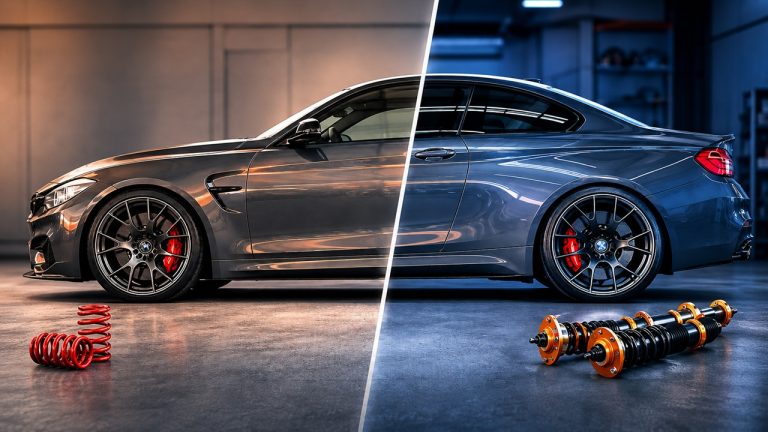
The main alternatives cost different amounts and solve different problems. Many trucks can retain OEM arms with a matched bracket; others benefit from a new arm design or more extensive suspension work. The comparison is about what the chosen system achieves, not which one sounds more heavy-duty.
Keep the OEM Arms and Relocate the Frame Pivots
This is the conventional drop-bracket approach. It preserves the factory arms while moving their frame-side mounting points according to the kit design. The advantages can be simpler parts compatibility and lower cost than replacing complete arms, provided the factory arms and bushings are healthy.
The disadvantages include a bracket hanging lower beneath the chassis and the possibility of interference with other hardware. Strength and ground-clearance claims should be checked against the actual mounting design, reinforcement and intended use.
Replace the Arms Instead—or Use a Matched Combination
Adjustable or longer aftermarket radius arms can offer designed caster correction, tire clearance and joint articulation benefits. Some manufacturers recommend them instead of a drop bracket for certain lift heights; others use a particular arm with a matching drop bracket. There is no universal rule that an adjustable arm automatically removes the need for every dropped mount.
Compare the precise suspension system, not the stand-alone price tag. A replacement arm may have different axle-side mounting requirements and may need alignment parts or matched joints. Never combine an arm that expects the factory pivot position with a drop bracket unless that combination is approved.
Why a Four-Link Conversion Is a Different Project
A four-link system replaces the axle-locating architecture with separate links rather than simply lowering the rear pivot of the factory radius arms. It offers designers greater flexibility in axle path and caster behavior but requires more mounting parts, engineering and maintenance. A bracket kit cannot turn a radius-arm suspension into a four-link.
If the choice is between keeping a straightforward radius-arm truck and converting the entire front suspension for serious off-road use, read our radius arm vs. four-link comparison.
What to Verify Before Ordering a Bracket Kit
A product can be made from excellent steel and still be wrong for your truck. Before comparing finishes and prices, obtain the manufacturer’s current fitment chart and the installation PDF for the exact SKU. This checklist catches most of the costly mismatches.
- Vehicle: exact model year, F-250/F-350 or Ram 2500/3500, 4WD configuration, axle and any relevant trim exclusions.
- Front lift: actual measured gain, not just the name printed on the spring or spacer kit.
- Radius arms: OEM, adjustable or replacement arms, with confirmation that the brackets are approved for that arm type.
- Drop dimension: distinguish frame-pivot relocation from the suspension lift range for which the part is intended.
- Existing components: look for factory or aftermarket drop brackets, crossmembers, caster hardware and track-bar corrections.
- Additional equipment: DRW restrictions, auto-leveling headlights, onboard scales, special shock/coil packages and nearby modules.
- Hardware: bracket pair, correct bolts, nut plates, washers, reinforcements and any crossmember hardware kits.
- Service requirements: approved installation procedure, torque specifications, final alignment and any sensor/headlamp checks.
Do not substitute an aftermarket listing’s generic “fits 2–6 inches” claim for the current application document. If your suspension is a mixture of brands, ask the relevant manufacturers to confirm the combination before purchasing.
Bolt Pattern, Material and Bracket Reinforcement
Look for correct frame-interface geometry, adequate hardware engagement and the reinforcement specified by the manufacturer. Many reputable kits use fabricated, welded steel with a corrosion-resistant finish. But a thicker plate is not enough to establish strength if the loads are routed through an unsuitable frame connection.
Also examine whether the kit is strictly bolt-on or needs an additional hole, nut plate or reinforcement on your year. “No welding” does not necessarily mean “no other fabrication or drilling.” That distinction should be clear before a shop removes the factory mount.
Included Hardware Is Part of Fitment
A pair of brackets pictured on a workbench may not include every fastener needed on a particular model. Some packages reuse specified original hardware; others include new high-strength fasteners and captive nut plates. Crossmember hardware can be a separate item on certain Ram applications.
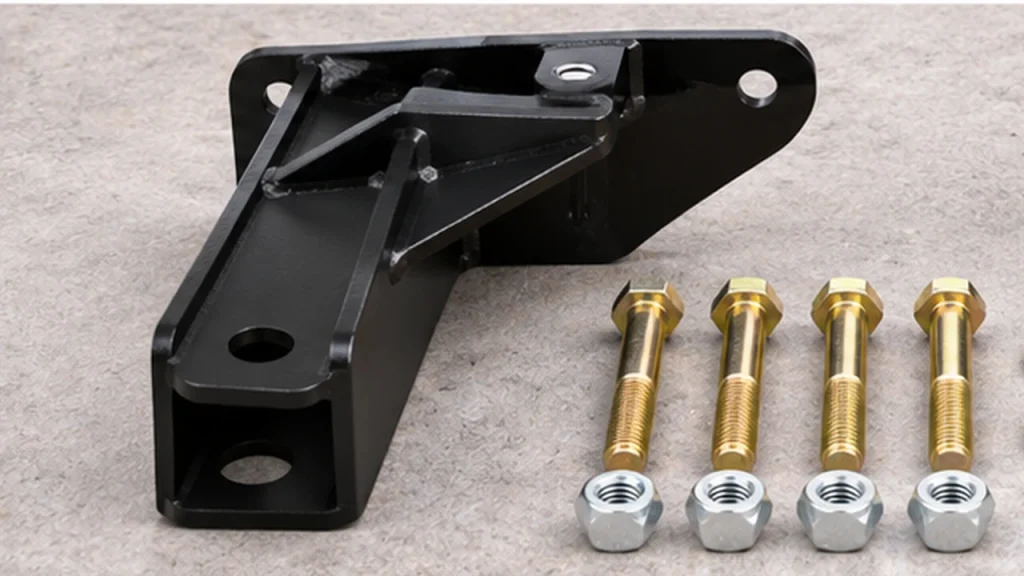
Ask for a complete parts list and verify it against your truck. Bolts with the correct diameter but wrong length, grip, grade or thread engagement are not acceptable substitutes in a structural suspension mount.
Do Factory Options Change the Answer?
Yes. DRW availability, auto-leveling headlights, onboard scales, axle variants and particular trim packages can create legitimate exclusions. On certain newer Super Duty systems, the headlight sensor linkage is mounted near the area being modified. A bracket can fit the frame while still interfering with that linkage unless the intended companion hardware is used.
Treat fitment footnotes as requirements, not optional legal text. They can determine whether the truck remains properly aligned, whether its lighting hardware moves safely and whether the installation can be completed without improvisation.
Caster, Track Bar and Steering: Do Not Confuse the Corrections
A lifted solid-axle truck often needs several geometry changes at once. Radius arm drop brackets are only one of them. Keeping the components’ different jobs straight is the fastest way to avoid buying a part that cannot fix your complaint.
A Drop Bracket Does Not Replace a Caster Measurement
The desired final caster depends on the truck, its tires, the manufacturer’s specifications and the rest of the lift. A bracket moves a pivot by a designed amount; it is not a dial that lets you set any caster reading. The result needs to be checked on an alignment rack after installation.
For the measurement and adjustment methods on different suspension architectures, see our separate guide to adjusting caster angle.
A Track Bar Moves in a Different Direction
The front track bar—or Panhard bar—controls the solid axle’s side-to-side position. Radius arms primarily locate the axle longitudinally and influence its rotation. Lifting the vehicle can alter both systems, and a kit may include both radius arm drops and track-bar relocation hardware.
It is a common naming trap: a radius arm drop bracket is not the same as a track bar drop bracket, and neither is a rear traction bar. The axle-centering role is explained separately in our track bar function guide.
Caster and Front Driveshaft Pinion Angle Interact
On a solid front axle, changing axle rotation can alter both the steering-pivot orientation and the differential pinion’s attitude. More positive caster is not always a free improvement if it creates an unsuitable driveshaft angle. A correct design balances both within the vehicle’s intended operating range.
Be wary of product claims that a single bracket size fixes all high-speed wander and every driveline vibration. Tires, wheels, U-joints, steering linkage and wheel alignment may each require a separate assessment.
Ride Quality, Ground Clearance and Off-Road Travel
Relocating the arm pivot can improve some aspects of a lifted truck’s behavior, but there are also physical compromises. Evaluate the brackets as underbody hardware, not just an invisible alignment correction.
A Better Arm Angle Is Not a Guarantee of a Softer Ride
Some brands describe improved ride behavior because their bracket brings the arm closer to its intended angle and reduces certain bushing loads. That is plausible in a properly matched system. It does not override the spring and shock tune, tire sidewall stiffness, inflation pressure or worn chassis bushings.
If the truck is bouncing, crashing over joints or tracking poorly after a lift, do not assume the radius arm mounts are the only cause. Record the actual alignment, inspect shocks and make sure the full suspension package is operating as designed.
The Brackets May Be the First Thing to Touch an Obstacle
Dropping a frame-side bracket may place a steel corner or bolt head lower than the factory mount. For trucks that spend time on ledges, ruts or rocks, that can be a real drawback. An owner who mostly tows on pavement may care much less about the same change.
Check installed clearance with the vehicle’s actual tires, wheels and skid hardware. A photo of a bracket by itself cannot tell you where the lowest exposed point ends up or how the suspension behaves near full compression and droop.
Check Brake Hoses, Steering and Sensor Clearance
The bracket itself normally does not add wheel travel, but it may be installed as part of a lift that does. Verify the finished system at the approved steering and suspension limits: brake hoses, ABS wiring, steering linkages, track bar and driveshaft must clear their neighboring parts without binding or stretching.
If the chosen kit requires separate bump-stop, track-bar, shock or steering corrections, leave those components in the plan. Dropping the radius arm pivot is not a substitute for completing the rest of a suspension lift.
Installation: Why Structural Mounts Deserve Care
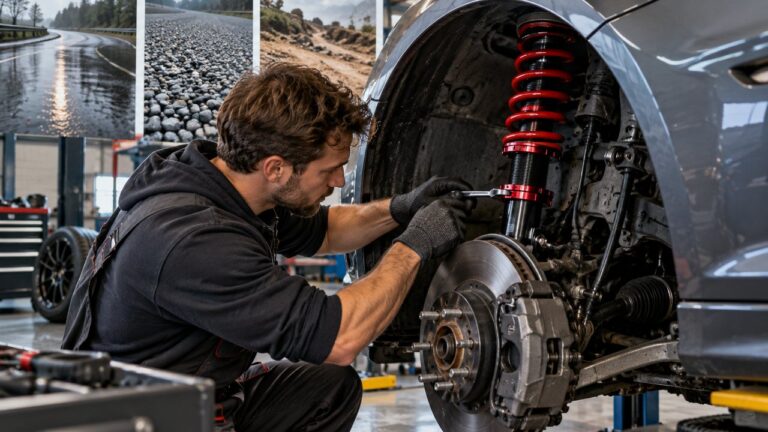
Many radius arm brackets are marketed as bolt-on upgrades. That describes their intended fastening method, not an assurance that the task is safe for every driveway. These mounts carry important longitudinal and braking loads, so preparation and correct support matter.
Support the Truck and Axle Before Loosening a Pivot
A qualified technician should follow the exact vehicle and kit procedures for safely supporting the chassis and axle before disturbing a radius arm connection. The arm may be loaded by suspension geometry, spring force or axle position even when the vehicle is off the ground. Do not rely on a jack alone or loosen both sides without the specified support plan.
If holes do not align or the bracket appears to need force to seat, stop and identify why. Using a bolt to drag an axle into position or stacking makeshift spacers can damage threads and leave the structural joint in the wrong condition.
Torque, Reused Fasteners and Final Bushing Loading
Use the manufacturer’s fastener list and torque instructions for the exact bracket, year and arm configuration. Some joints require particular installation stages or tightening under a specified suspension load. Others use new locking nuts or hardware that must not be reused. There is no safe universal torque figure for all radius arm drops.
After tightening, check bracket seating, hardware clearance and intended bushing orientation. Marking fasteners for inspection does not replace applying the correct torque and following the manufacturer’s recheck schedule.
Alignment, Headlights and ADAS Checks Afterward
Because the part changes an axle-locating pivot, a professional alignment check is strongly advisable after the work. Verify caster and other applicable settings, steering-wheel position, tire clearance and the intended front axle placement. A vehicle that drives straight during a short test may still be outside the approved alignment range.
Newer trucks may also need headlight aim, auto-leveling sensor linkage verification or driver-assistance system checks. These are part of the installation’s final inspection, not unrelated extras to discover after the truck is back on the road.
What Do Radius Arm Drop Brackets Cost?
Pricing varies sharply by brand, platform and whether the package contains reinforcement, extra mounting hardware or companion parts. A lower-priced bracket set might be a complete solution for one lift and an incomplete purchase for another. Avoid basing the decision on the price of two steel brackets alone.
Compare Kit Contents Instead of the Sticker Price
The current product landscape ranges from relatively simple bracket pairs to premium, thick-plate systems costing several hundred dollars. Some ReadyLIFT and PMF-style choices are in a different price category from specialized Carli products. Since prices, stock and promotions change, treat any online figure as a point-in-time quote, not a permanent reference.
Compare the stated lift application, the included bolts and bracing, coating, compatibility with OEM arms, installation conditions and the support available if the part does not match your truck. A missing crossmember hardware kit or special headlight bracket can erase the saving from the cheaper listing.
Budget for Labor, Alignment and Supporting Parts
Labor may include access to heavy fasteners, supporting and positioning the axle, removal of factory mounts, installing reinforcements, and checking clearances. Rust, an existing lift or damaged frame hardware can add complications. An alignment afterward, plus any sensor or headlight work, should be considered separately unless the quote includes it.
For planning the full suspension project rather than only this bracket purchase, our lift kit installation cost guide covers the wider labor and supporting-parts budget.
Radius Arm Drop Bracket Questions Buyers Ask
Product listings frequently answer the easy question—what truck is it advertised for—but leave out the issues owners discover once they compare a real lift kit against their suspension. Here are the practical distinctions to settle before ordering.
Do I need radius arm drop brackets for a 2-inch leveling kit?
Not automatically. Some mild levels keep the suspension within an acceptable operating range, while certain vehicle-specific kits include or recommend a corresponding pivot correction. Check the lift manufacturer’s instructions and measure actual caster rather than treating two inches as a universal threshold.
What is the difference between a 3.5-inch drop and a 3.5-inch lift?
A 3.5-inch lift describes how much the vehicle is raised, while a 3.5-inch radius-arm drop describes a bracket’s nominal pivot relocation. Those measurements do not produce the same geometry on every truck. Select the bracket for its approved lift range, vehicle and radius arms.
Will drop brackets fix steering wander?
They can help when incorrect radius-arm geometry or insufficient caster caused by a lift has been diagnosed. But wander may also involve tires, alignment, track-bar joints, ball joints or steering components. A bracket is not a replacement for inspecting those causes.
Can I use a 2017–2022 F-250 bracket on a 2023 F-250?
Do not assume so. Ford changed the platform for 2023, and major manufacturers publish different kits for those generations. Use the correct manufacturer part number and instructions for the truck’s model year and factory options.
Do radius arm drops fit a dually F-350?
It depends on the product. ReadyLIFT specifically excludes dual-rear-wheel trucks from its 2023–2026 67-23350 bracket kit. That restriction belongs to that part number; do not assume a different brand has the same rating without checking its documentation.
Are drop brackets compatible with aftermarket radius arms?
Only when the arm and bracket makers approve the combination. Some brackets are engineered around OEM arms, while other products support a particular aftermarket arm. Adding both corrections without checking can change caster, axle position and joint loading in unintended ways.
Do I need to realign the truck after installation?
Yes, plan for a professional alignment check. A radius arm bracket changes a structural axle-locating pivot, so the final caster and other applicable steering geometry should be measured and assessed against the suspension and vehicle specifications.
Can a radius arm bracket replace a track bar drop bracket?
No. Radius arms locate the axle fore and aft and influence rotation. The track bar controls side-to-side location. A lift may need both corrections, but they are separate components with different mounting points.
Can I install radius arm drops with an existing lift kit?
Possibly, but first determine which brackets and arms the installed lift already uses. Adding a second correction may cause interference or move the arm pivot outside the engineered configuration. Confirm the combination with the relevant manufacturer before touching the mounts.
The purchase decision comes down to a specific truck and a specific geometry problem: use the drop bracket your lift and radius arms were designed to work with, check every fitment exclusion, and verify the installed alignment. The correct steel bracket is a useful part of a lift system; the wrong one is simply a structural problem with an attractive powder-coated finish.